18 Small Bedroom Storage Ideas for Renters
A small rental bedroom rarely lacks stuff — it lacks somewhere for the stuff to go. The best small bedroom storage ideas do not add another bulky dresser. They claim the volume the room already has: under the bed, behind the door, up one wall and inside the wardrobe, using pieces that roll, hang over a door or simply stand there — no drilling, no deposit drama. These 18 ideas are organized by where the storage hides, so you can work through one zone at a time.
Every idea is screened for renters first: freestanding, over-door, rolling and tension pieces come before anything needing a screw. For the whole-apartment version of this thinking, start with these small apartment storage ideas, then come back to the bedroom.
Before You Buy Anything: Measure, Zone and Screen
Measure four things first: the clearance under your bed frame (floor to the underside of the rails), the width of any gap beside the bed or dresser, the swing of the bedroom and wardrobe doors. Clearance varies a lot by frame, so shop with your own numbers, not a product photo. Then zone by frequency: daily items between waist and eye level, weekly items higher or deeper, seasonal items in the hard-to-reach spots.
Apply two safety screens to every zone. Keep storage clear of heaters, vents and the path to the door — the U.S. Fire Administration’s home fire prevention guidance is a useful check on clearance around heat sources. Tall pieces get the tip-over screen in idea 9. That is the whole system; the 18 small bedroom storage ideas that follow simply fill the zones.
Under and Around the Bed: The Biggest Free Volume
1. Roll Low Bins Under the Bed
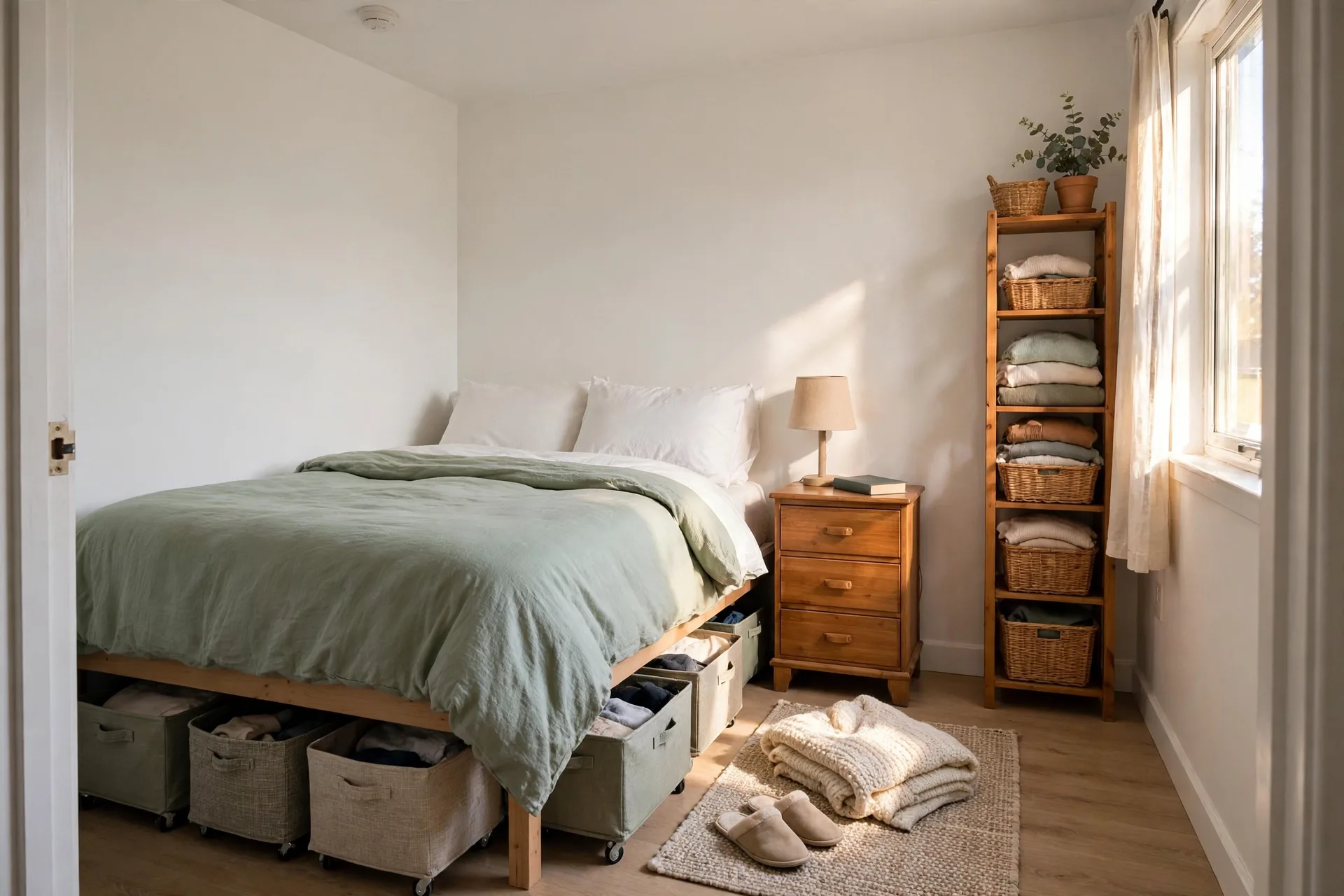
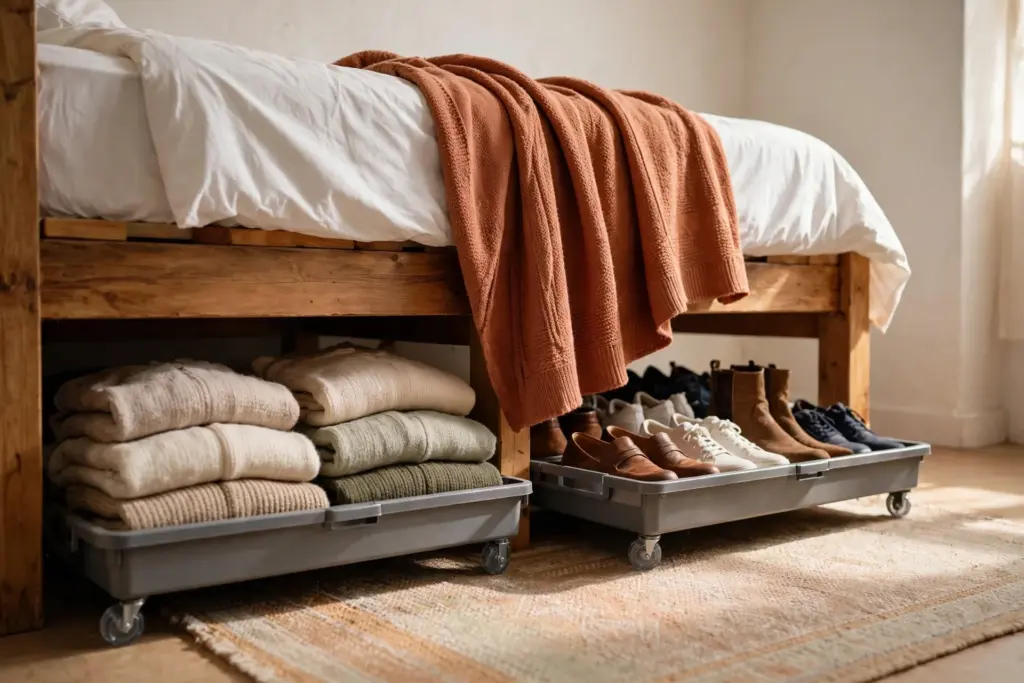
The space under a bed is roughly the footprint of the bed itself, at zero floor cost. Low bins or trays on small caster wheels turn it into drawers you never had: one for shoes, one for folded sweaters, one for spare linens. Wheels matter more than lids — a bin you have to drag gets abandoned, while one that rolls out with a fingertip gets used daily.
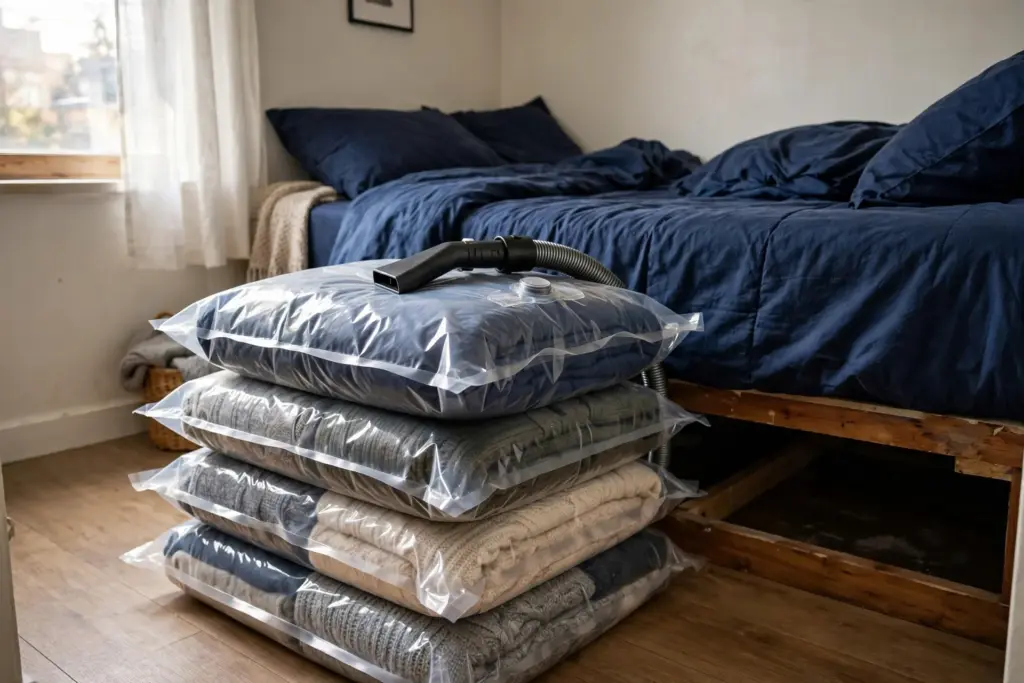
2. Compress the Off-Season Into Vacuum Bags
Vacuum storage bags shrink duvets, winter sweaters and spare pillows into flat slabs that stack two or three deep where one uncompressed pile used to sit. Treat the claim honestly: compression removes air, not all bulk, and delicate natural-fill items do better stored loosely — keep the good duvet in a breathable bag and vacuum-pack the everyday pieces.
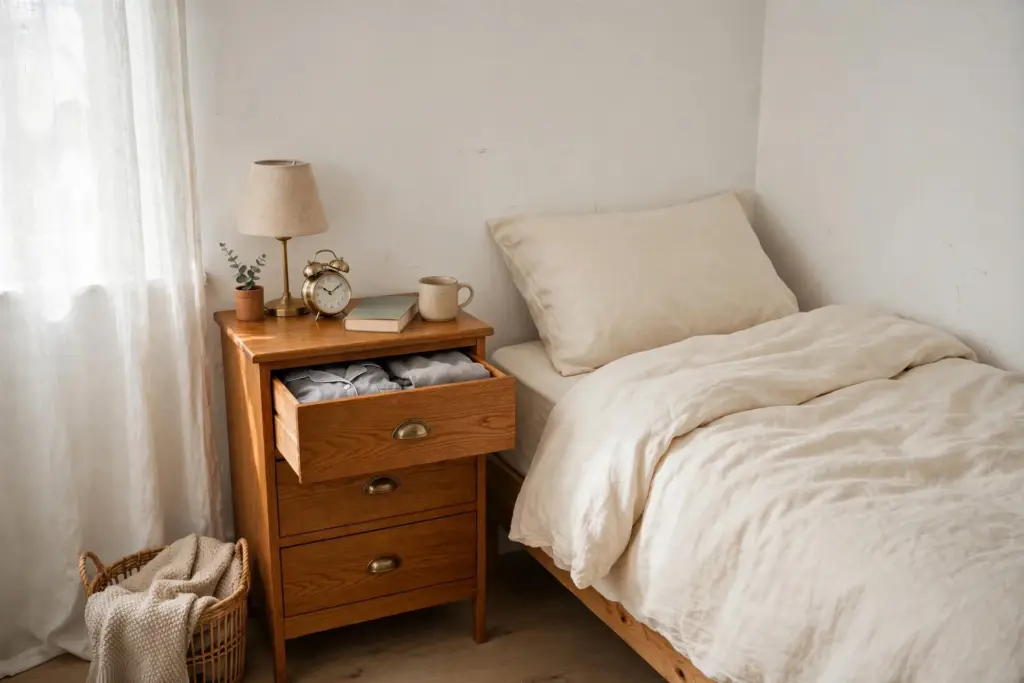
3. Swap the Nightstand for a Small Dresser
A plain side table spends a valuable footprint on one surface and an awkward shelf. A narrow three-drawer chest the same width gives you the lamp-and-book surface on top plus three real drawers underneath — sleepwear, chargers and the bedtime clutter that otherwise migrates across the bed. This single swap is often the highest-capacity change in the room.
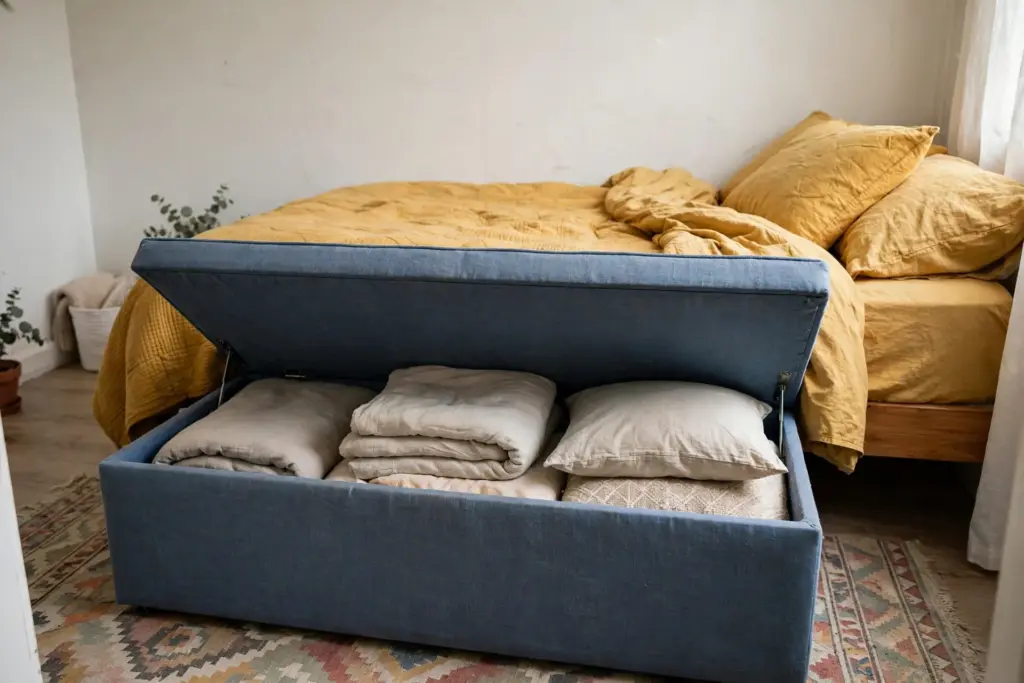
4. Put a Storage Bench at the Foot of the Bed
If there is room to walk past it, a low storage bench at the foot of the bed holds the big soft things — spare blankets, the guest pillow, off-season throws — and doubles as a seat for putting on shoes. Choose a hinged lid.
5. Raise the Bed Only With a Rated Riser Set
When clearance is just too low for bins, bed risers can buy extra inches — with conditions. Use only a complete manufacturer-rated set sold for bed frames, rated for the combined weight of frame, mattress and sleepers, and keep the frame’s center support where the manufacturer requires one. Never improvise height with blocks or books, and skip risers on a frame that already rocks.
Behind and Over Doors: Storage That Swings
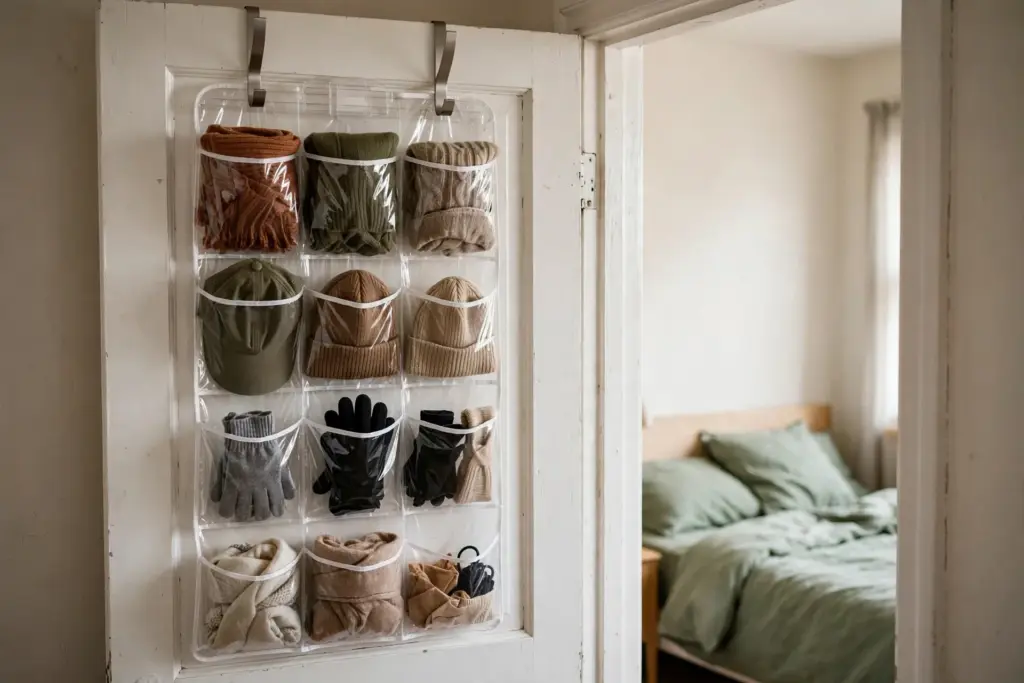
6. Hang a Pocket Organizer Over the Bedroom Door
The back of the door is a full-height storage wall most small bedrooms ignore. A clear-pocket over-door organizer hangs from flat hooks over the top of the door — no screws, no adhesive — and swallows the small things that clutter drawers: scarves, caps, gloves, belts and chargers. Check the hooks fit your door and that it still closes cleanly when loaded.
7. Add an Over-Door Hook Rack for Bags and Robes
A row of over-door hooks works differently from pockets: it takes the bulky hangables — tote bags, a robe, tomorrow’s hoodie — that otherwise colonize the bed or a floor chair. Choose flat-profile hooks that sit flush on the door top, and hang the heaviest item nearest the hinge side, where the door carries weight best. The same door-first thinking transforms a front door, too — see these small entryway storage ideas.
8. Use the Inside of the Wardrobe Door
The wardrobe door’s inner face can hold a slim hanging organizer for ties, belts and jewelry. Keep it genuinely lightweight and test the swing: the organizer must clear the hanging clothes behind it every time the door closes, or it will snag.
Up the Walls Without Drilling: Freestanding and Tension
9. Stand a Tall, Narrow Bookcase in a Corner
Vertical storage is how a small room grows without spreading. A tall narrow bookcase takes books, folded linens and fabric boxes up a corner that fits nothing else. Renter rules are strict: wall anchoring needs landlord permission, so by default choose a unit wide and deep enough to stand stably on its own, load the heaviest boxes on the bottom shelves, keep only light linens up top, and place it on a level floor away from the door swing. The CPSC’s tip-over safety guidance explains why that loading order matters.
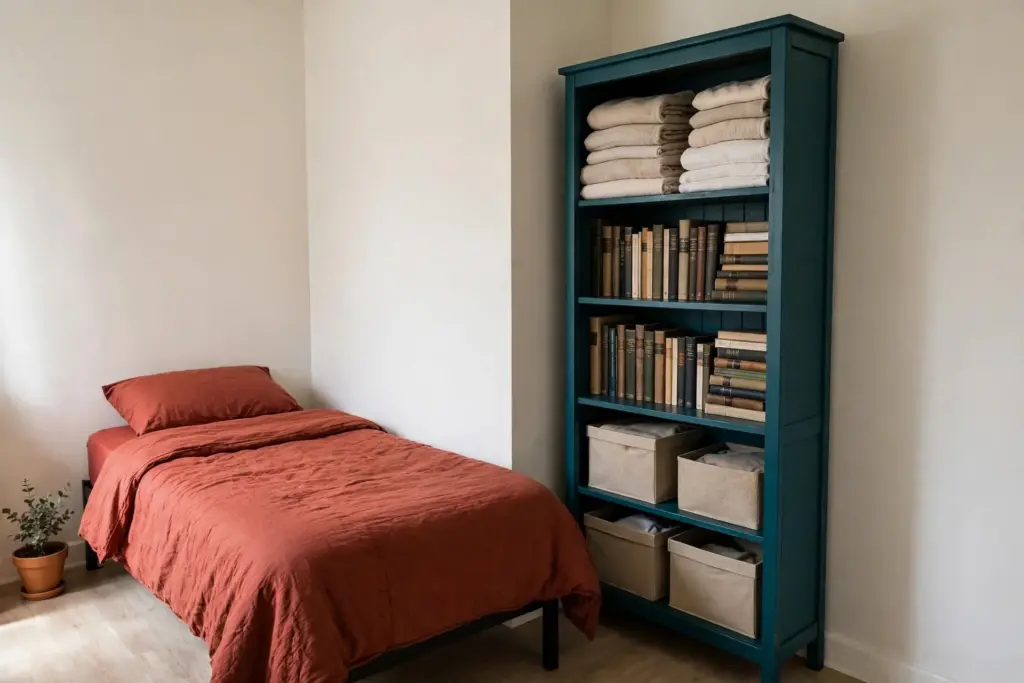
10. Lean a Ladder Shelf Against the Wall
A freestanding ladder shelf needs no fixings in most designs, and its shelves are deepest at the bottom — right for baskets and folded clothes low down, books or a plant up top. Check the feet sit flat and the frame does not flex under load, and follow the same rule: weight low, nothing heavy overhead.
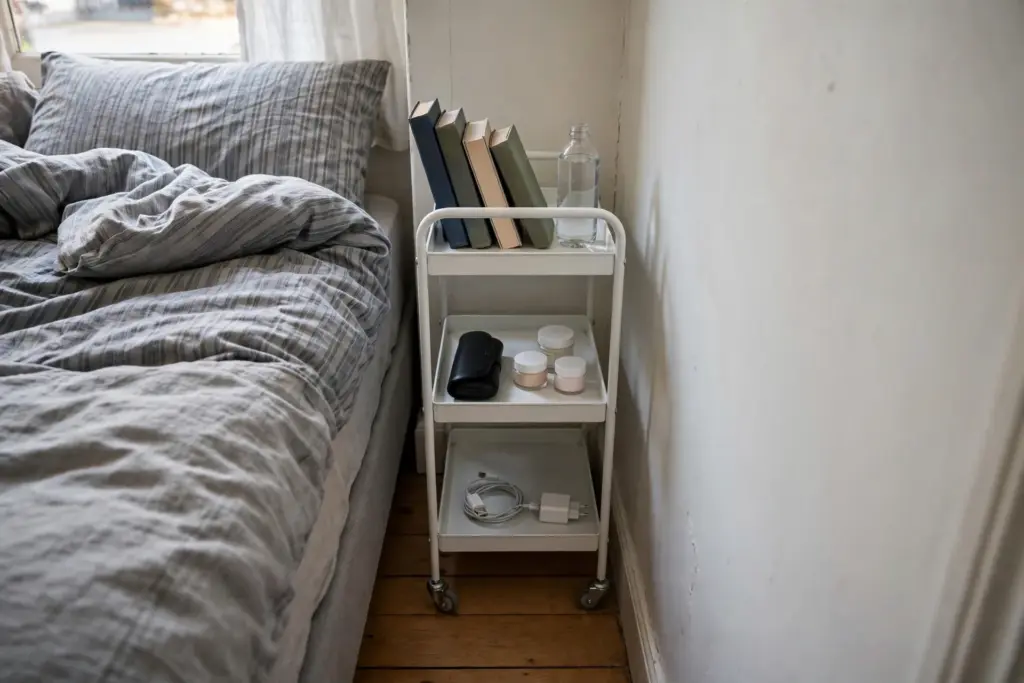
11. Slide a Slim Rolling Cart Into the Dead Gap
Almost every small bedroom has a useless 8-to-12-inch slot — between bed and wall, dresser and door, wardrobe and corner. A slim three-tier rolling cart is built for exactly that slot: books and a water bottle on top, skincare and a glasses case in the middle, chargers at the bottom. It rolls out when you need it and vanishes when you do not.
12. Tension-Fit a Pole for Extra Hanging
A floor-to-ceiling tension pole or tension-mounted corner rack adds hanging space with pressure instead of screws. Fit it exactly to the manufacturer’s ceiling-height range, test it loaded before trusting it with anything breakable, and re-check the tension after the first week as the pads settle.
Furniture That Doubles Up: Hidden Capacity
13. Hide the Clutter in a Storage Ottoman
A storage ottoman is a seat, a footrest and a hiding place in one footprint. It takes the visually noisy things — game controllers, chargers, the spare throw — and makes them disappear behind a cushion lid. Round ottomans tuck into corners more forgivingly than square ones.
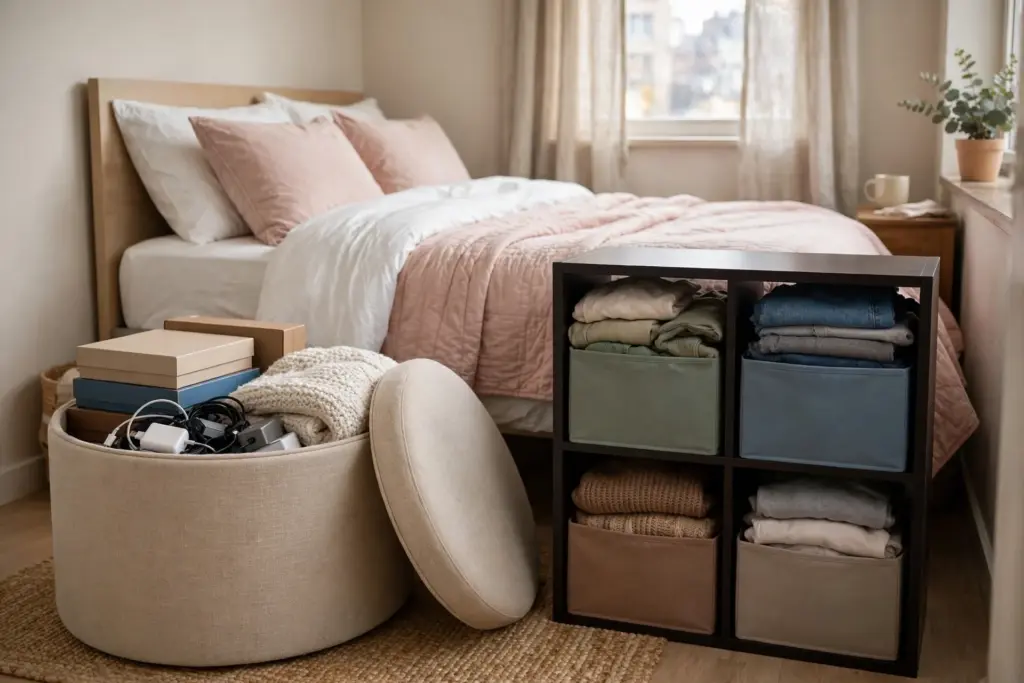
14. Run a Cube Unit With Fabric Bins as a Dresser
A low cube unit with fabric bins works as a dresser at a fraction of the cost and weight. Bins hide visual clutter completely — underwear, tees, gym clothes — while open cubes hold folded stacks you reach for daily. Keep one bin deliberately half-empty as the room’s overflow valve.
15. Choose a Tilt-Out Hamper Over a Laundry Pile
Dirty laundry is storage too, and in a small bedroom it usually lives on a chair. A freestanding tilt-out or lidded hamper gives it a closed, vertical home in a footprint about the size of a shoebox lid — and a closed lid keeps the room looking like a bedroom instead of a laundry basket.
Inside the Wardrobe: Double What You Already Own
16. Add Shelf Inserts and Stackable Bins
Most wardrobe shelves waste their top half. A freestanding shelf insert splits one tall shelf into two levels — folded jeans below, tees above — and stackable bins do the same job with walls, so piles stop avalanching. Measure shelf depth first; kitchen inserts are often too shallow. The step-by-step wardrobe system lives in this guide to small apartment closet organization.
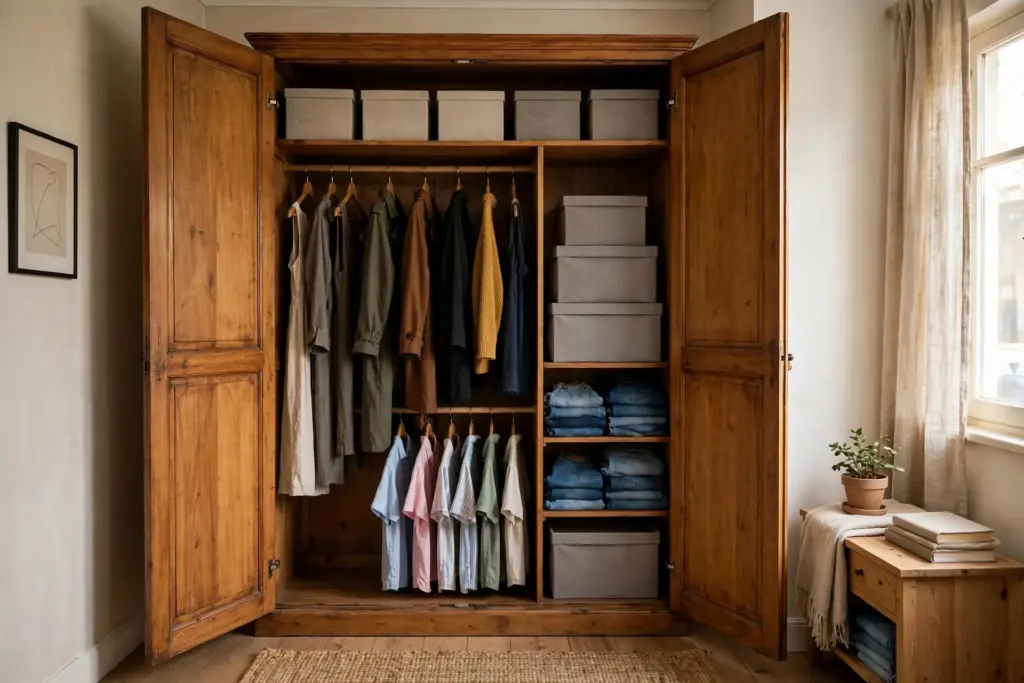
17. Fit a Second Tension Hanging Rod
If most of your clothes are short — shirts, blouses, trousers folded over a hanger — a single high rail wastes the whole space beneath them. A tension rod fitted below the main rail, inside the wardrobe, creates a second short-hanging level with no screws and no damage. Keep longer items at one end, hanging full-length past the lower rod.
18. Reserve the Top Shelf and Wardrobe Top for Rare-Use Boxes
The highest storage in the room is real capacity with a strict rule: only things you reach for a few times a year go up there. Matching labeled boxes for paperwork, holiday items, guest bedding and the off-season vacuum bags from idea 2. If you need a step stool to reach it, it has passed the test.
Frequently Asked Questions (FAQ)
How can renters add bedroom storage without drilling?
Build from the four no-drill families used throughout this guide: under-bed rolling bins, over-door organizers and hooks, freestanding pieces like bookcases, benches and cube units, and tension fittings such as a second wardrobe rod or a tension pole. Together they can double a room’s usable capacity without a single hole; anything wall-mounted needs written landlord permission first.
What is the best storage for a very small bedroom?
Start under the bed, because it is the largest unused volume and costs no floor space: rolling bins for weekly items and vacuum bags for seasonal ones. Next, swap a plain nightstand for a small drawer dresser. Those two changes usually add more usable capacity than any other pair on this list.
Are bed risers safe to use in a rental?
They can be, under conditions: use only a complete manufacturer-rated riser set designed for bed frames, respect its weight rating for frame, mattress and sleepers together, keep the frame’s center support in place where required, and never improvise height with blocks or books. If the frame flexes or the lease is strict, skip risers and size under-bed bins to the existing clearance instead.
How do I keep a tall bookcase safe without anchoring it?
Anchoring is the safest option but needs landlord permission in a rental. Without it, choose a wide, deep, stable unit, place it on a level floor out of the door swing, load the heaviest items on the bottom shelves and keep only light items up top — the loading pattern the CPSC recommends for reducing tip-over risk.