Kitchen Zones Organization: A Method for Small Kitchens
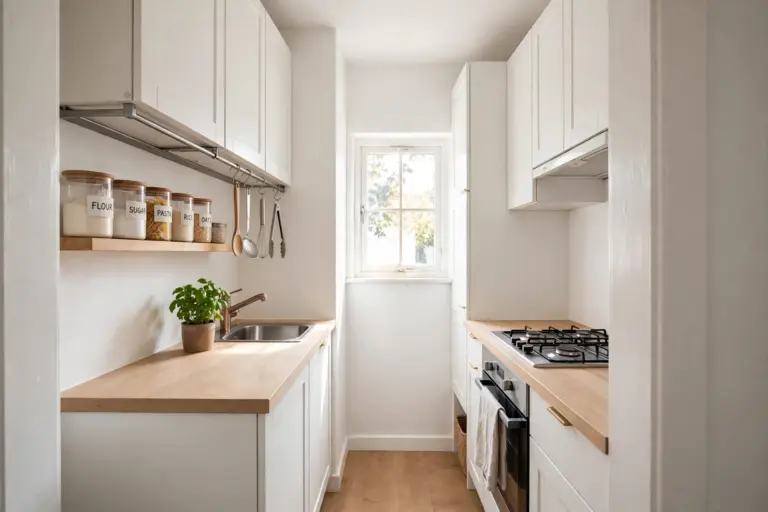
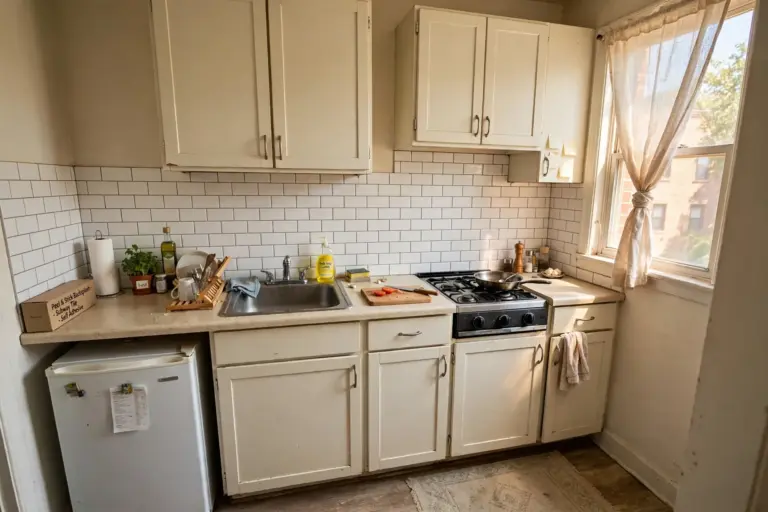
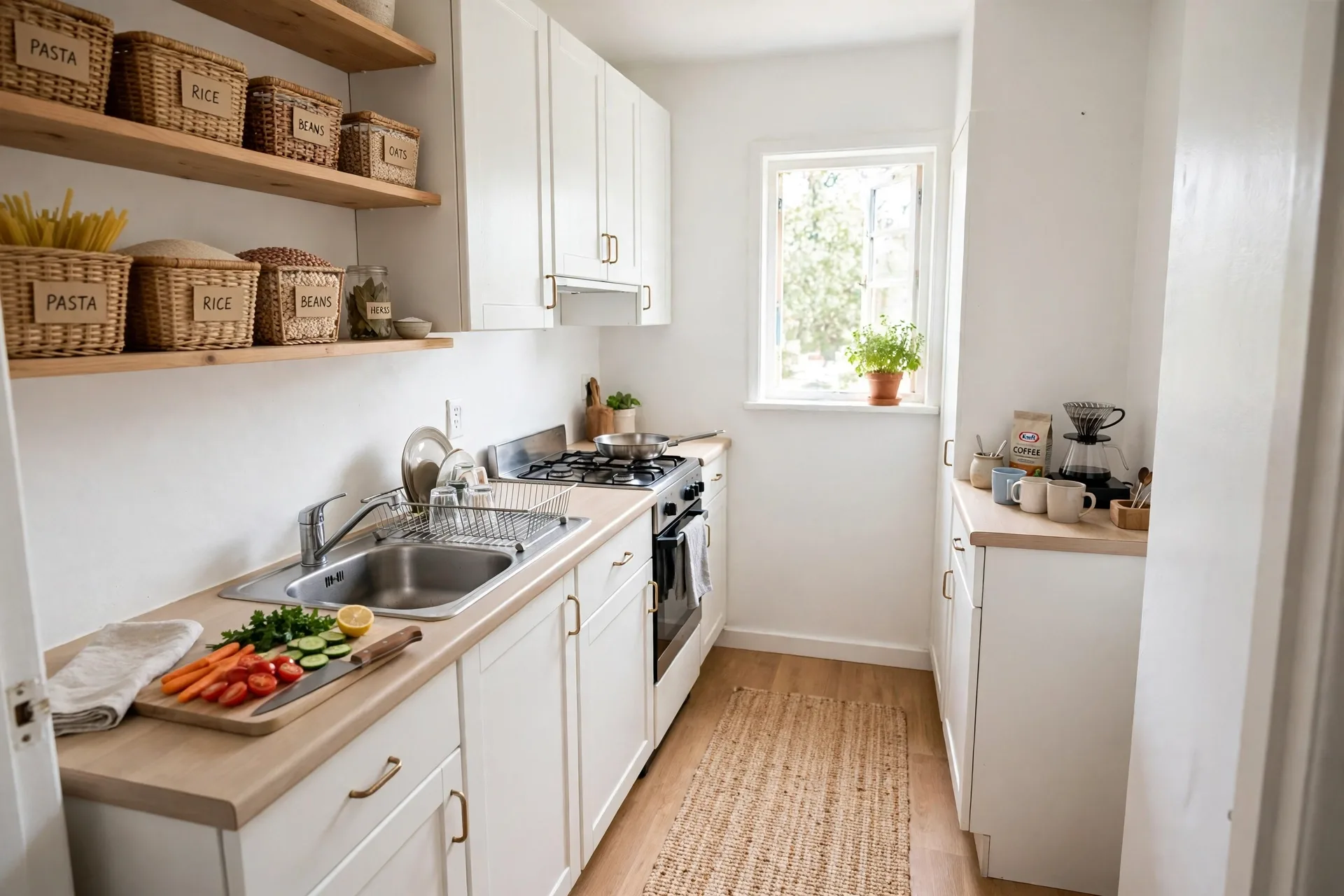
A small rental kitchen can feel impossible to keep tidy — one junk drawer, a counter buried under gadgets, and a pantry where nothing can be found. Kitchen zones organization changes that by giving every task a home instead of giving every object a shelf. Instead of sorting by what things are, you sort by what you do: prep in one spot, cooking in another, cleanup by the sink, food storage in one place, and daily essentials where you can grab them without thinking. The method works especially well in galley kitchens, single-wall layouts, and kitchenettes, because it uses the counters and cabinets you already have — no remodel, no drilling, and no landlord approval needed. Below are the five zones, a fifteen-minute mapping method, and a one-weekend setup plan.
Why Zones Beat Organising by Object
Most small kitchens are organised by object: plates together, pans together, food together. That sounds logical, but it ignores how cooking actually happens. Making dinner is a sequence — you take food out, wash and chop it, cook it, serve it, and clean up — and when everything for one step lives in three different places, every meal becomes a hunt across the kitchen.
Zones fix this by grouping things by task. The cutting board, knives, and mixing bowls live together because they are used together, even though one is a tool and one is a dish. The result is fewer steps and less counter clutter, because putting things away is obvious: everything has one home, and that home is where the task happens. Kitchen zones organization is simply that idea applied to the whole room, zone by zone, instead of cabinet by cabinet. For a broader look at fitting storage into a small rental, see these small apartment storage ideas.
Zone 1: The Prep Zone
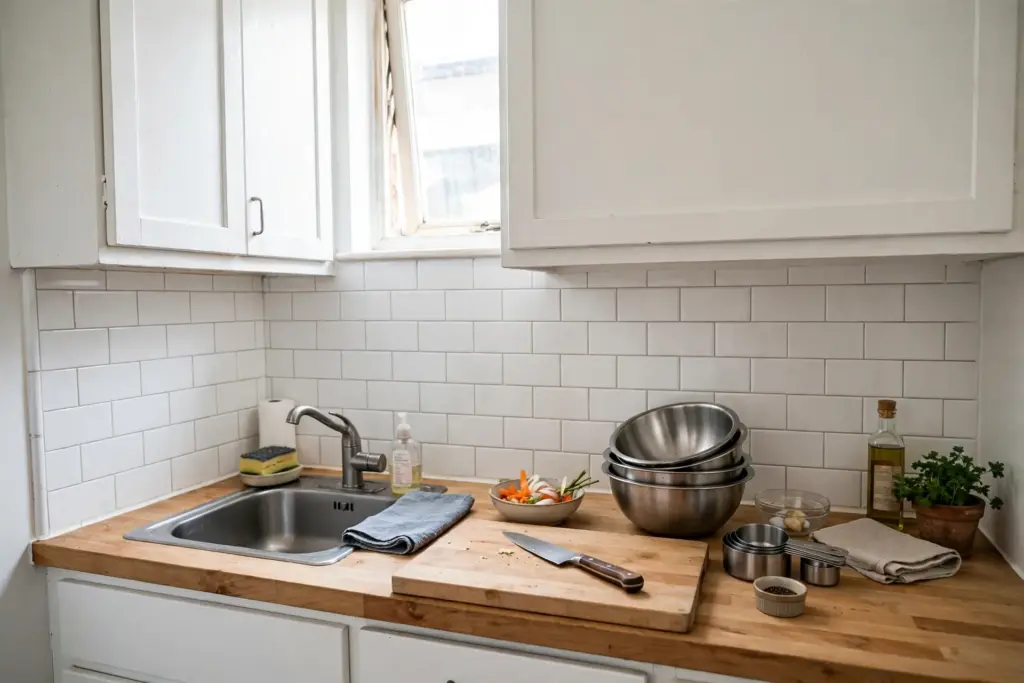
The prep zone is where raw ingredients become dinner, so it needs clear counter space and water nearby.
Keep here: cutting boards, chef’s knife and paring knife, a vegetable peeler, mixing bowls, measuring cups and spoons, and a small bin for scraps. A knife block or a magnetic strip mounted with removable adhesive keeps blades off the counter. If counter space is tight, a cutting board that fits over the sink adds a whole extra prep surface, and it lifts away when you need the sink back. The rule is simple: if you reach for it while chopping, washing, or mixing, it belongs in this zone.
Zone 2: The Cooking Zone
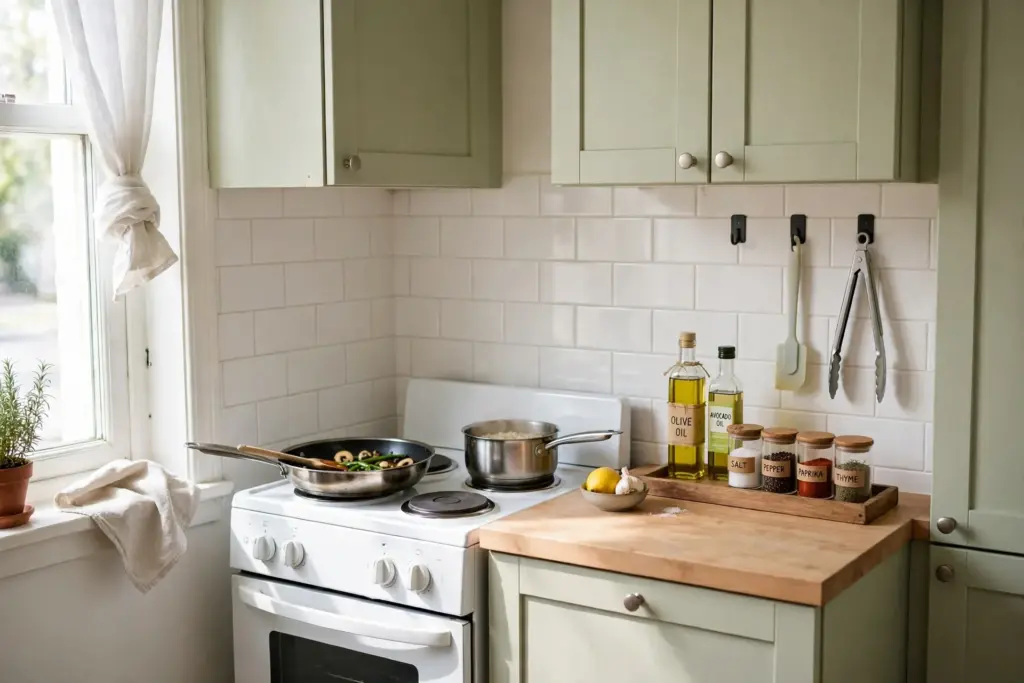
The cooking zone hugs the stove. Everything you need while food is on the heat lives within one step of the burners, so nothing gets abandoned on a hot pan while you search a far cabinet.
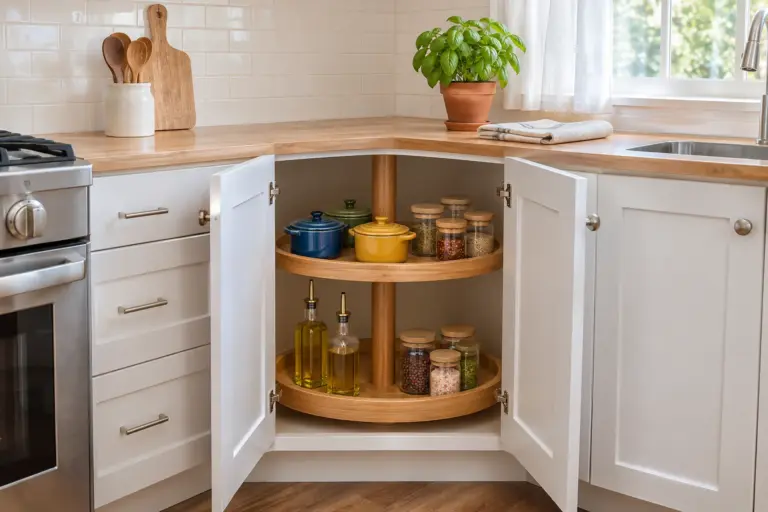
Keep here: the two or three pans you actually use, a spatula, tongs, a wooden spoon, cooking oils, salt, pepper, and the spices you reach for every day. A small tray or turntable inside the cabinet next to the stove corrals oils and sauces, and a rail with removable adhesive hooks on a tiled wall holds the spatula and tongs. Keep the rarely used roasting pan somewhere else — the cooking zone is prime real estate, and only daily tools earn a spot.
Zone 3: The Cleanup Zone
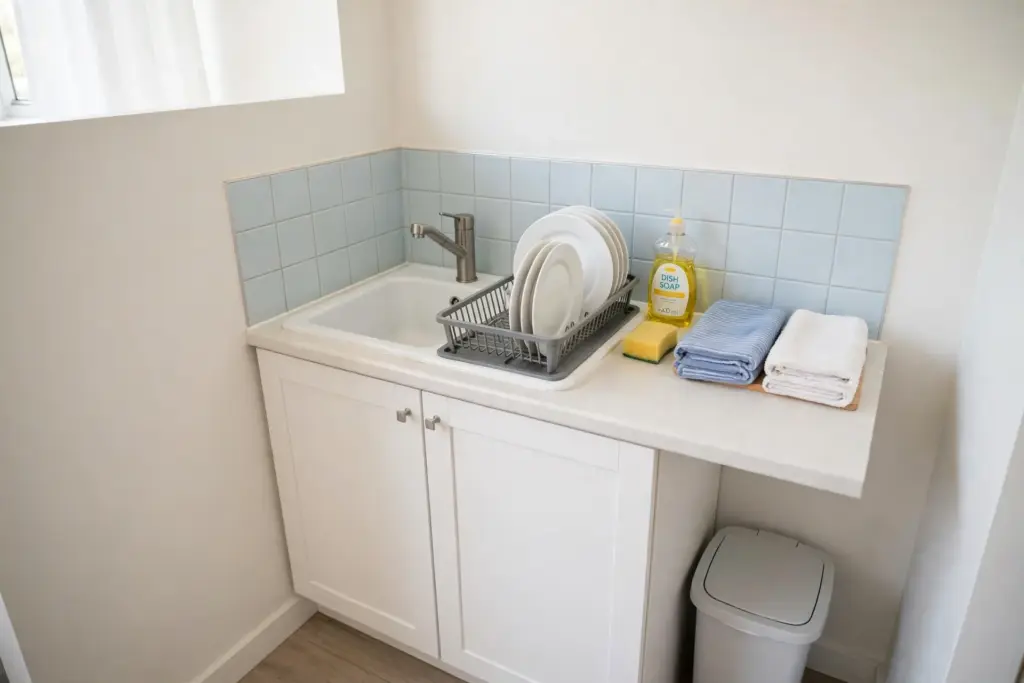
The cleanup zone lives at the sink and the dishwasher, if you have one. Its job is to make the mess disappear fast, so dirty things travel the shortest possible distance and clean things have a short trip back to their shelves.
Keep here: dish soap, a sponge or brush, a drying rack or mat, dish towels, and the bin. Under-sink storage is part of this zone — a small caddy for cleaning supplies and a bin that slides out without catching the pipes. If you have a dishwasher, the cabinets beside it should hold the plates, bowls, and glasses, so unloading is one short move from rack to shelf.
Zone 4: The Food Storage Zone
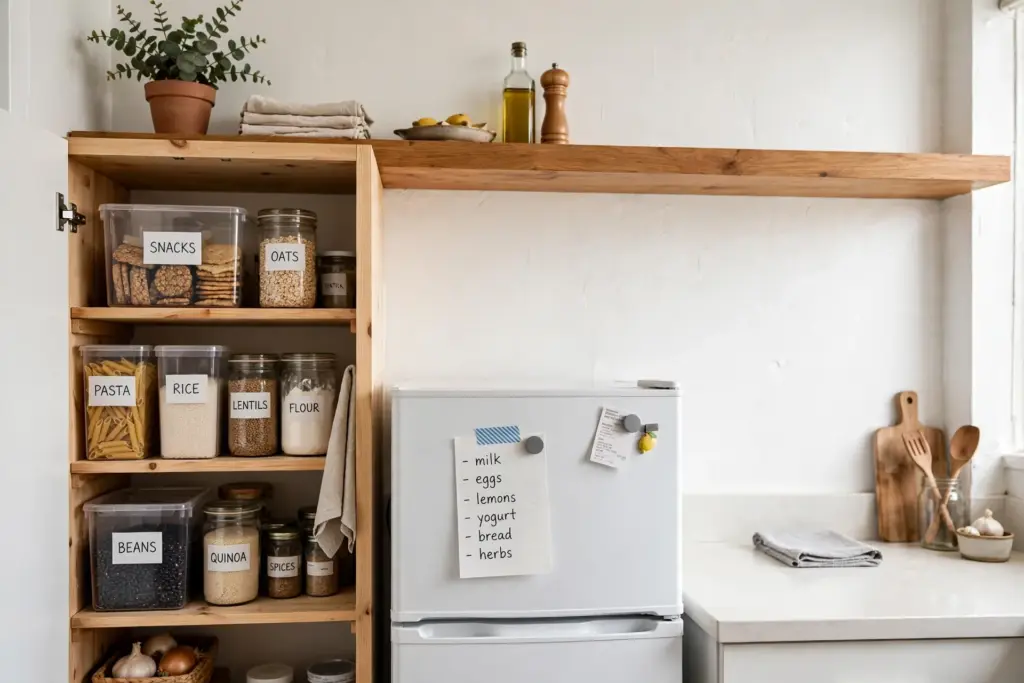
The food storage zone is where groceries land when they come home, and where you look first when you start cooking. It centers on the fridge and the pantry — whether that pantry is a tall cabinet, a single shelf, or a rolling cart in the corner.
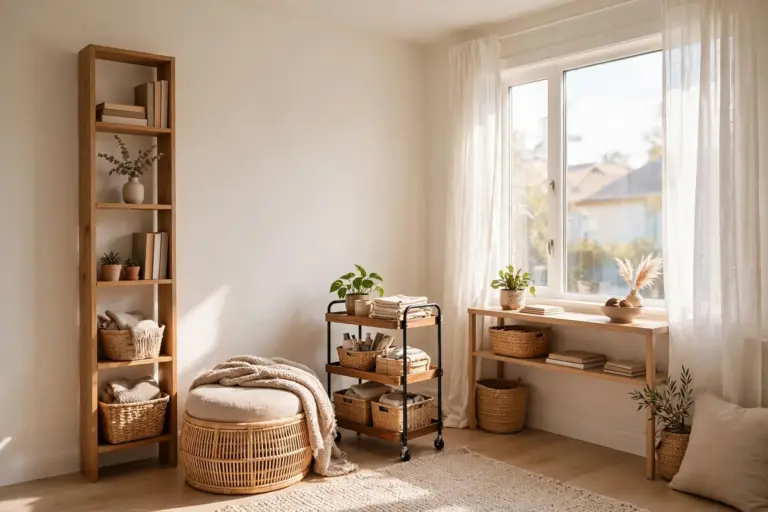
Keep here: dry goods, canned food, snacks, and food storage containers. Group like with like in labeled bins so a quick scan tells you what is running low, and put the things you use most at eye level. If your rental kitchen has no pantry at all, a narrow rolling cart between the fridge and the wall can hold dry goods and roll out when you need it. Keep a shopping list on the fridge door so empties get written down the moment you notice them.
Zone 5: The Daily Essentials Zone
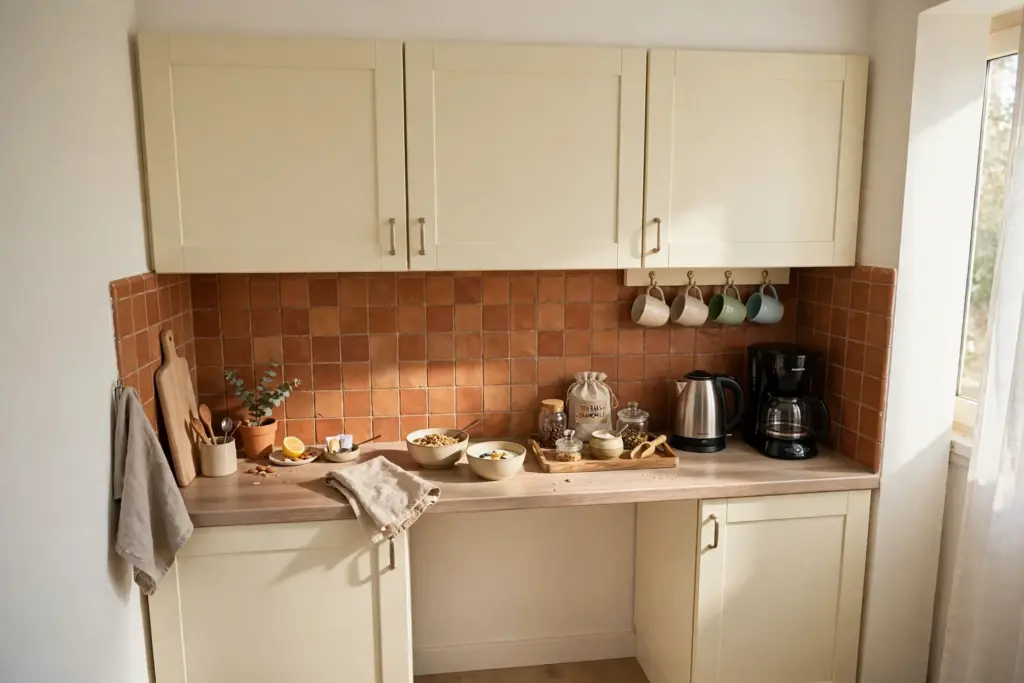
The daily essentials zone is the grab-and-go corner: the things you reach for every single morning and evening without cooking a full meal. It is usually a small stretch of counter near the kettle or the coffee maker, or the top shelf of the cabinet closest to the door.
Keep here: mugs, the coffee maker or kettle, tea and coffee supplies, breakfast bowls, a toaster if you use it daily, lunch boxes, and water bottles. The point is that the morning routine happens in one place — no opening four cabinets before you have had coffee. A small tray keeps the coffee and tea supplies contained and makes the whole corner look deliberate instead of cluttered. In a single-wall layout, this zone often sits at the far end of the counter, away from the stove.
How to Map Your Zones in 15 Minutes
You do not need to measure anything or draw a floor plan. Stand in the middle of your kitchen and name the three anchor points: the fridge, the sink, and the stove. Almost everything you do happens between those three points, and the classic kitchen work triangle — the idea that those three appliances should sit close together — is the reason zones work so well in small spaces. Blum, the hardware maker behind the well-known five-zone kitchen concept, explains how zones group tasks around these anchors on its kitchen planning pages.
Now walk your own routine: make a cup of tea, then imagine making dinner — fridge, sink, counter, stove, sink again. The spots where you keep stopping are your zones, and the places you keep walking to are the gaps. Write each zone on a sticky note and press it where it belongs — prep by the sink, cooking by the stove, cleanup at the sink, food storage by the fridge, essentials by the kettle. Live with the notes for a day or two; if one feels wrong, move it. The map is finished when every daily task happens in one spot without crossing the kitchen.
Your One-Weekend Setup Plan
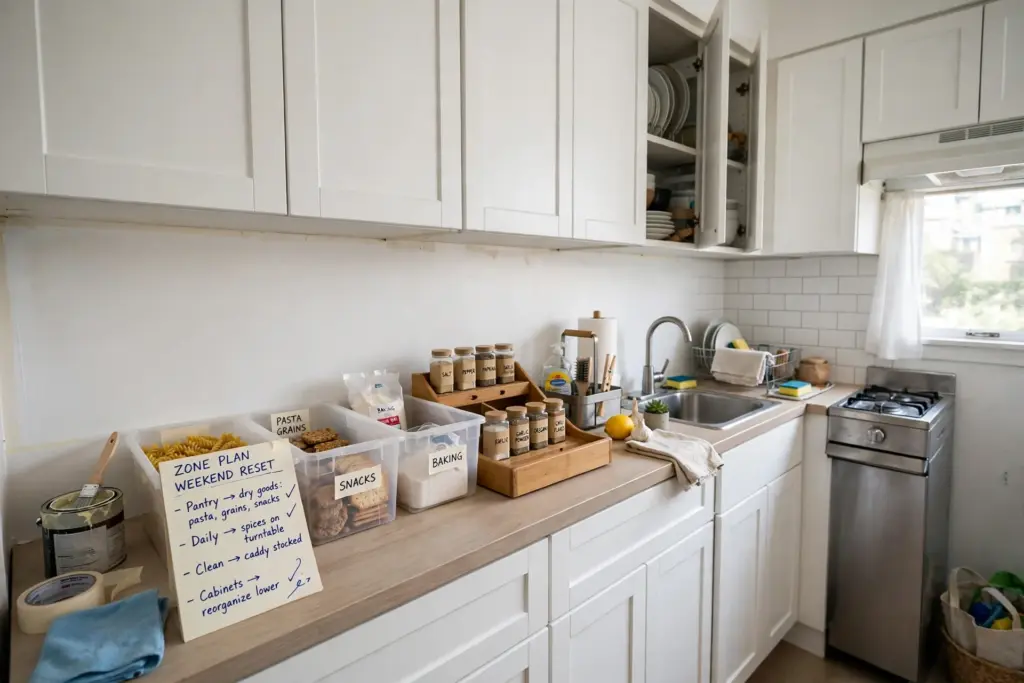
Setting up all five zones takes one weekend, not a renovation, and kitchen zones organization works best when you do it in order, starting with the messiest spot. Saturday morning, empty one zone at a time — never the whole kitchen at once — and sort everything into three piles: stays in this zone, belongs in another zone, and leaves the kitchen.
Saturday afternoon, place the “stays” pile using the zone rules above, and move the “belongs elsewhere” items to their correct zones. Add only the organizers you actually need: a turntable for oils, a tray for the coffee corner, a caddy under the sink, and bins for the pantry. Sunday, cook one real meal in the new layout and notice what is still awkward, then make those small adjustments. By Sunday evening the system should feel natural, because every item finally has a reason to be where it is. A step-by-step zone guide with more layout examples is available in this guide to understanding kitchen zones.
Renter Rules: Keep It Removable
Zones are about placement, not construction, which makes them ideal for rentals. Nothing in this method requires drilling, screwing, or changing the kitchen itself — and that matters, because most leases hold the tenant responsible for damage to cabinets, walls, and fixtures.
Use tension rods inside cabinets to hang spray bottles, removable adhesive hooks on tile for utensils, and freestanding racks and turntables that lift out when you move. Peel-and-stick labels on bins come off cleanly, and a rolling cart is furniture, not a fixture. If you want to mount anything with screws — a knife strip, a rail, a shelf — ask the landlord in writing first and keep the permission with your lease paperwork. Check your lease’s wording on alterations before you start — a five-minute read now beats a deposit dispute later.
Keeping Your Zones Working
A zone system only fails when new things creep in without a home. The fix is a short weekly reset: ten minutes on a Sunday to return strays to their zones, wipe the counters, and check the food storage zone for anything past its best. A monthly check catches bigger drift — the unused gadget, the empty spice jar, the bin that became a junk drawer again.
When something new enters the kitchen, give it a zone before it gets a shelf. A new blender lives in the prep zone only if you will use it weekly; otherwise it belongs in a high cabinet or out of the kitchen entirely. Teach everyone in the household the same rule — one home per item, in the zone where it is used — and the system maintains itself. For drawer-specific ideas, these kitchen drawer organization ideas pair well with the zone method.
Frequently Asked Questions (FAQ)
What are kitchen zones?
Kitchen zones are task-based areas — prep, cooking, cleanup, food storage, and daily essentials — where everything needed for one task lives in one spot. Kitchen zones organization groups items by what you do with them, not by what they are, so you stop crossing the kitchen for things you use together.
Do kitchen zones work in a tiny kitchenette?
Yes — zones work best in small kitchens, because the distances are short and every inch matters. In a kitchenette, zones may share a counter: the prep zone and the cooking zone can be the same stretch of counter at different times, and the daily essentials zone may be a single tray. The idea is the grouping, not the square footage.
How many zones does a small kitchen need?
Five zones cover a small kitchen well: prep, cooking, cleanup, food storage, and daily essentials. If your kitchen is very small, you can merge the daily essentials zone into the prep or food storage zone, but keep the other four separate — merging prep and cleanup is the one combination that causes the most clutter.
Can I set up kitchen zones without drilling or damaging anything?
Yes. Zones are about where things live, not about fixtures. Removable organizers — turntables, bins, tension rods, adhesive hooks, and rolling carts — do the whole job, and nothing needs screws. Ask your landlord in writing before mounting anything permanent.
How long does it take to set up kitchen zones?
One weekend is enough for most small kitchens: map the zones in fifteen minutes, sort and place one zone at a time on Saturday, and cook a test meal on Sunday to catch anything awkward. A weekly ten-minute reset keeps the system working after that.