15 Small Apartment Pantry Ideas for Kitchens With No Pantry
No pantry is the default in small rentals: cabinets fill fast, and groceries end up stacked on counters, balanced on the fridge, or lost behind the pots. These small apartment pantry ideas fix that with no renovation, no screws, and nothing your lease could object to. The 15 ideas are organised by where a pantry hides when there isn’t one — furniture, gaps and wheels, doors and fridge sides, inside your cabinets, and space outside the kitchen. Each is tagged by what it needs (floor space, only a door, or only a cabinet), and everything is freestanding or fully removable.
For the wider system, start with our small apartment storage ideas pillar, then return here for food storage.
Furniture That Becomes the Pantry (Needs Floor Space)
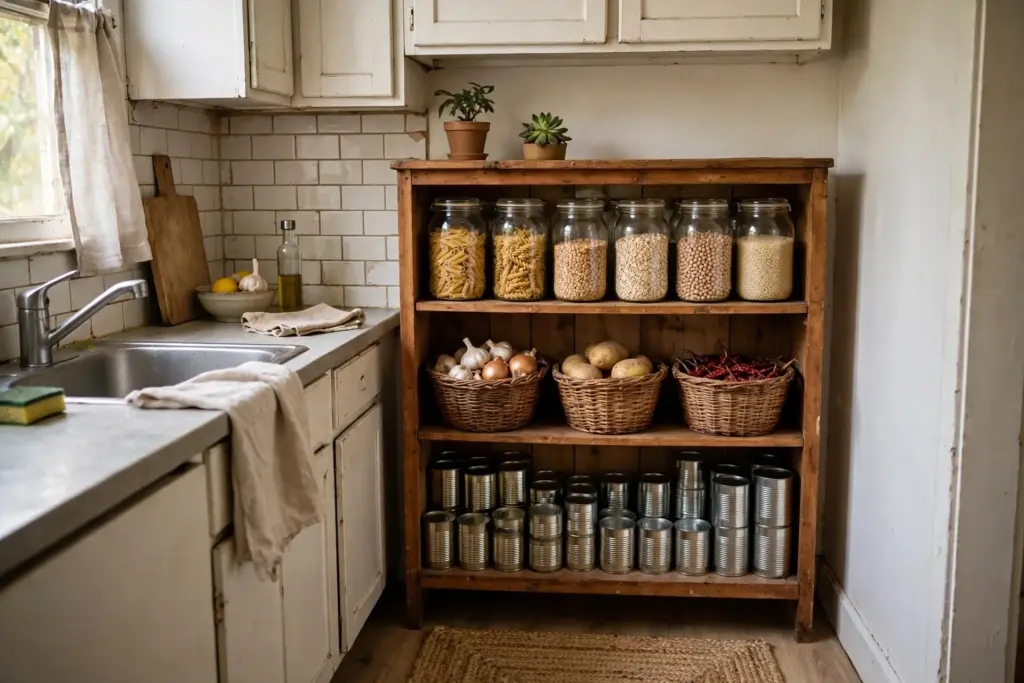
1. Set Up a Bookshelf as an Open Pantry
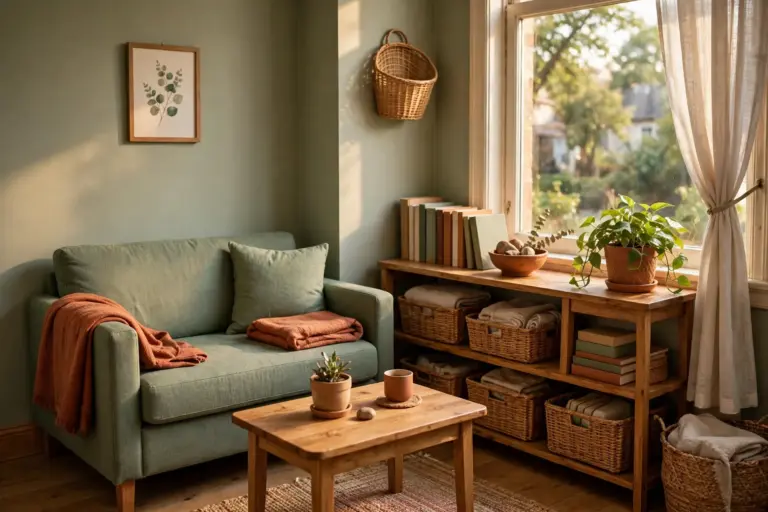
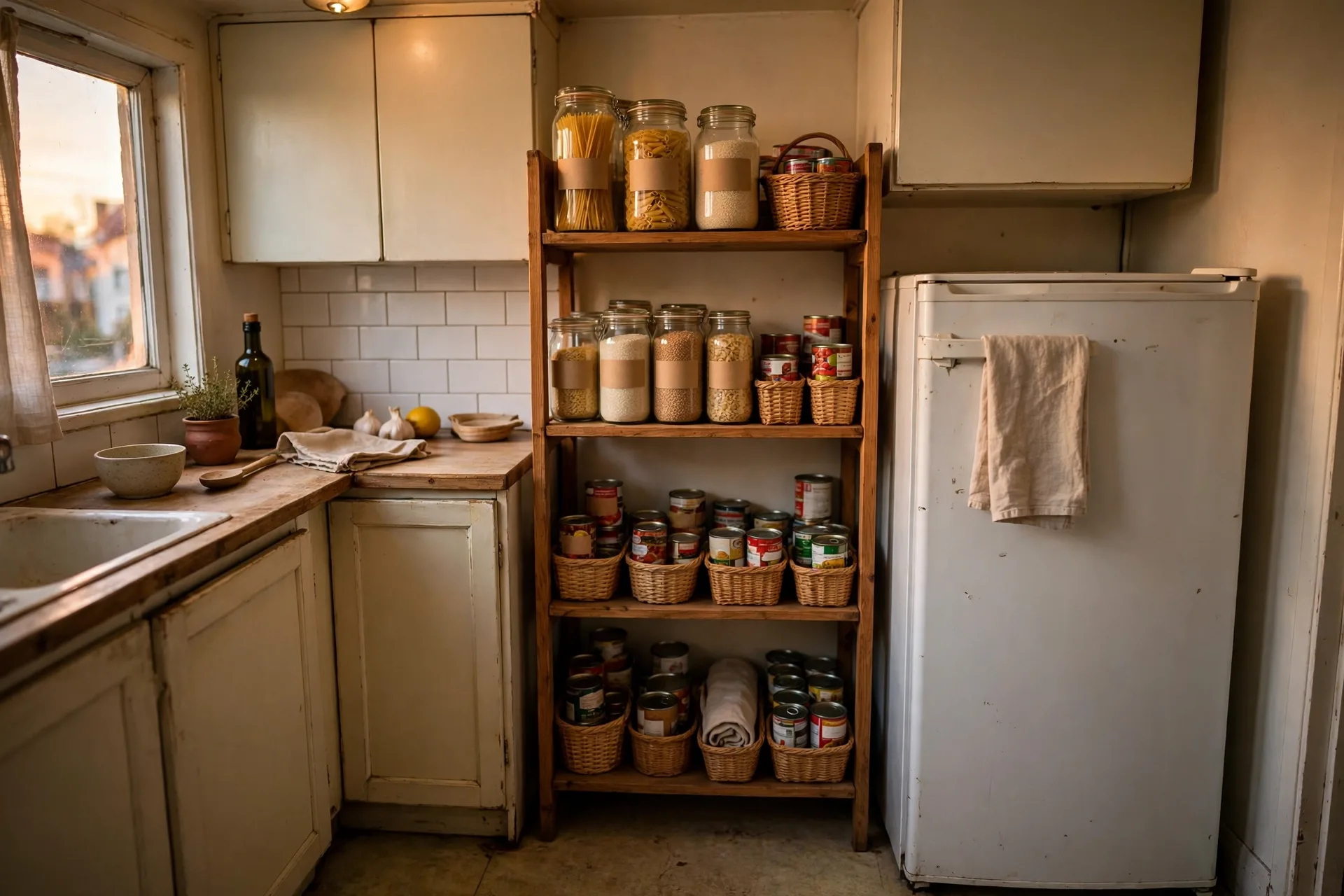
A basic bookshelf — about 24 to 32 inches wide and 10 to 12 inches deep — is the simplest freestanding pantry there is. Heavy cans and bottles go on the bottom shelf, everyday jars and grains at eye level, light packets up top. Matching jars and one basket per shelf for loose packets keep open storage tidy. Keep the unit clear of stove heat and steam. Tall units often ship with an anti-tip strap; if your lease forbids anchors, choose a low, wide unit instead.
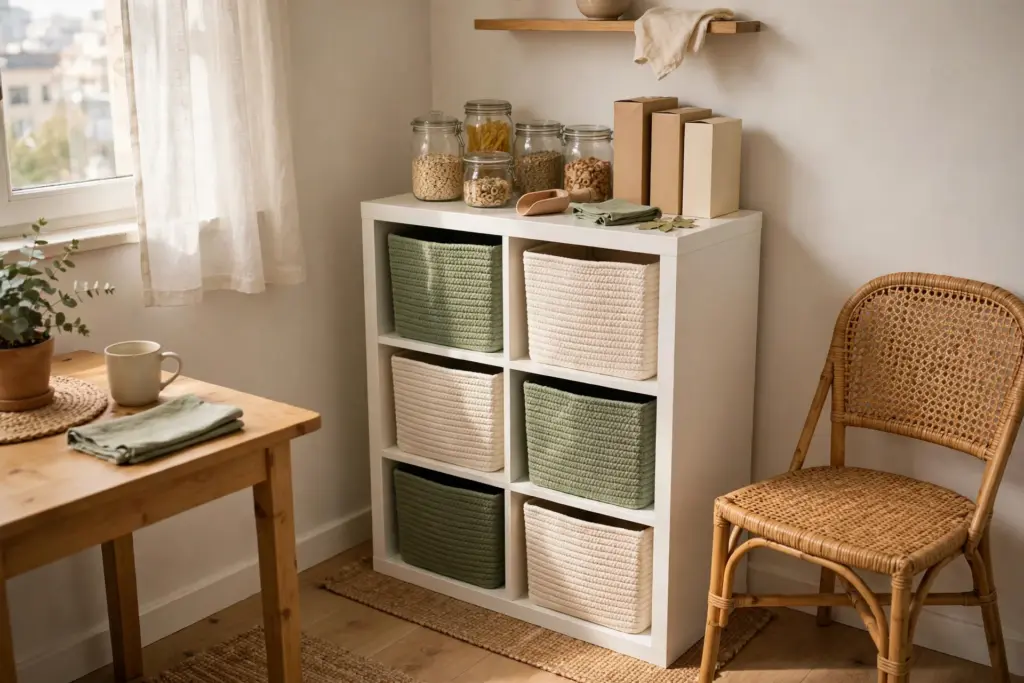
2. Use a Cube Storage Unit With Baskets
A cube unit (the 2×3 or 3×3 grid style) works like a pantry with built-in zones: one cube for breakfast, one for baking, one for snacks, one for backstock. Fabric baskets in the lower cubes hide the messy categories; open cubes up top hold the jars you reach for daily. The shallow, boxy shape fits a dining corner where a bookshelf would look oversized, and at move-out the frame carries as one piece once the baskets are out.
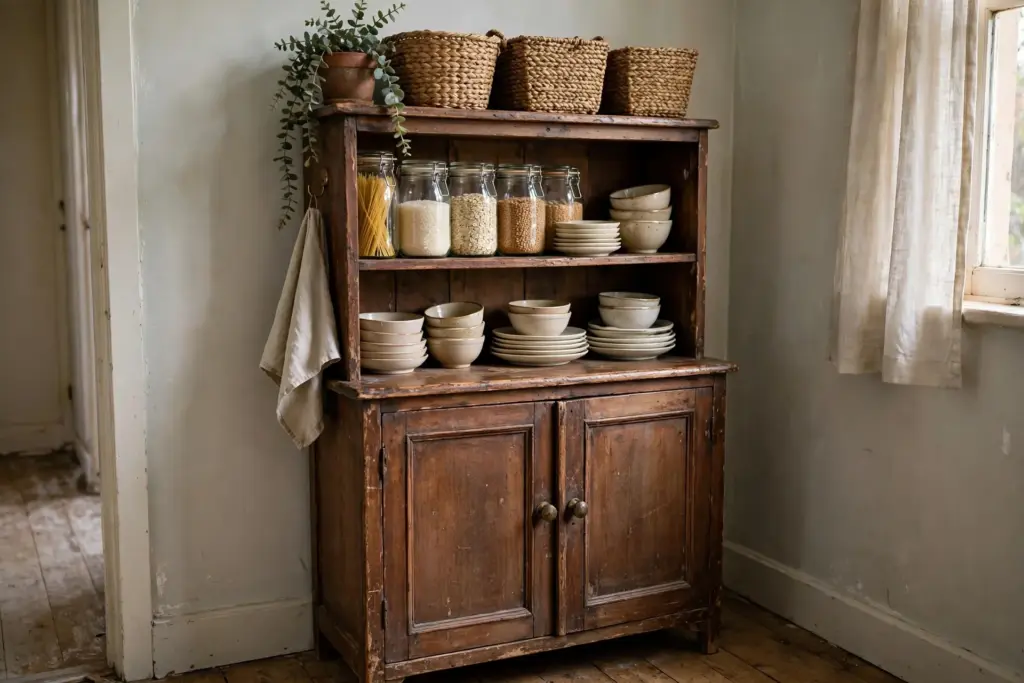
3. Repurpose a Hutch, Sideboard or Cabinet
Before buying new, check the secondhand market: a small hutch or sideboard with doors is a closed pantry, which matters in a studio where open shelves would overwhelm the room. Doors hide mixed packaging; the top becomes extra counter space. Check shelf depth against your tallest items — cereal boxes and oil bottles are the usual failures.
Gaps, Wheels and Corners (Needs Almost No Space)
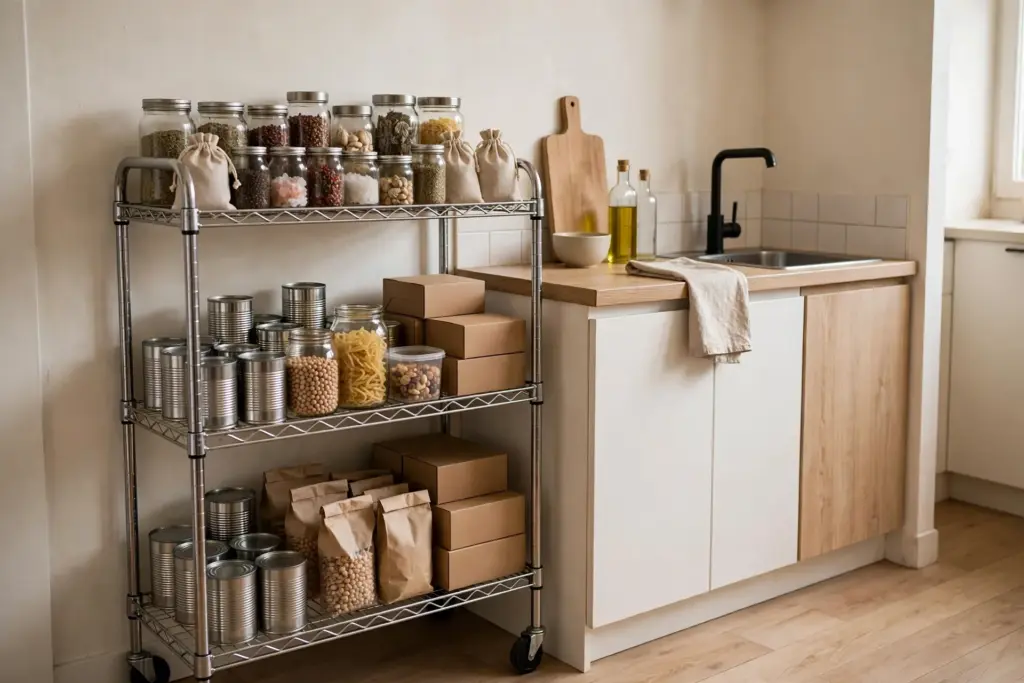
4. Roll In a Three-Tier Cart
A three-tier rolling cart holds a surprising amount, parks in a corner or beside the fridge, and rolls to the counter while you cook. Load it by weight — cans and jars on the bottom tier, boxes in the middle, light packets and produce on top — and lock the casters if your floor slopes. Typical carts are around 17 × 12 inches. One category per tier, and nothing stored on the handle, keeps a cart in the open looking intentional rather than overflow.
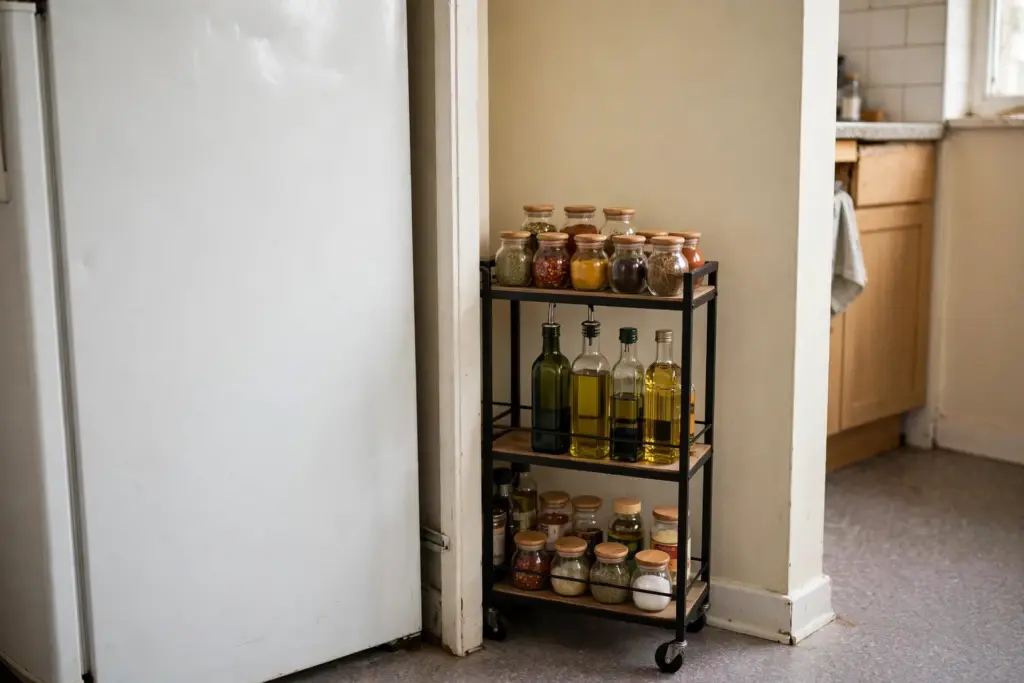
5. Slide a Slim Cart Into the Fridge Gap
The 4-to-8-inch gap between the fridge and the wall or counter is dead space in most small kitchens, and a slim pull-out cart is built exactly for it. Spices, oils and vinegars sit single-file, so nothing hides behind anything else. Measure your gap at floor level and at counter height before ordering — gaps are rarely one consistent width — and keep the cart clear of the fridge’s ventilation area, following the clearances in your appliance manual rather than wedging it tight.
6. Claim the Corner With a Tiered Stand
The corner where counters meet usually collects a fruit bowl and good intentions. A tiered corner stand, small ladder shelf, or stack of sturdy crates turns it into vertical storage for onions, potatoes, bread and overflow produce. Keep it for produce and packaged goods, rotate stock so the oldest comes forward first, and keep it shallow: two rows deep means the back row is forgotten.
Doors and Fridge Sides (Needs Only a Door or a Fridge)
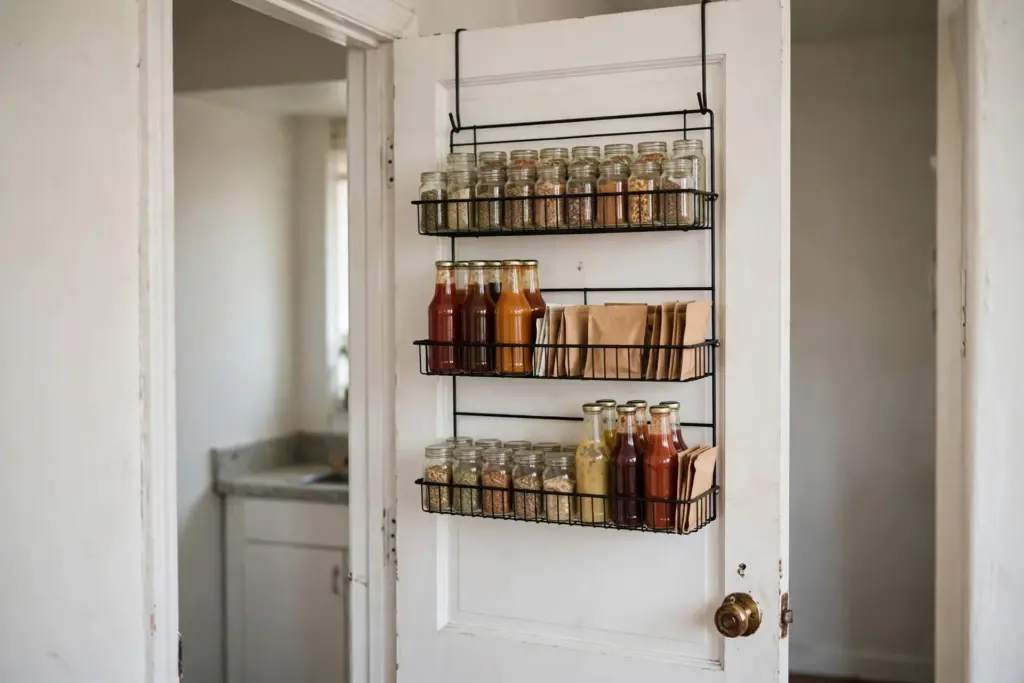
7. Hang an Over-Door Rack
An over-door wire rack adds shelves to the back of a kitchen or closet door with no hardware beyond its own hooks — ideal for spices, sauces and packets. Two checks first: confirm the door still closes fully with the rack loaded (clearances vary), and keep the load modest, since hinges and hollow-core doors have real limits. Felt pads where the rack touches the door stop rattling and protect the paint.
8. Add an Inside-Cabinet-Door Organizer
The inside face of a cabinet door is a flat, wasted surface. A slim rack sized for that door holds spice packets, wraps and lids, freeing a whole shelf inside. Measure the clearance first — the door must close without the rack pushing into stored items. For adhesive models, pick a removable type rated for painted or laminated surfaces and test a hidden spot first.
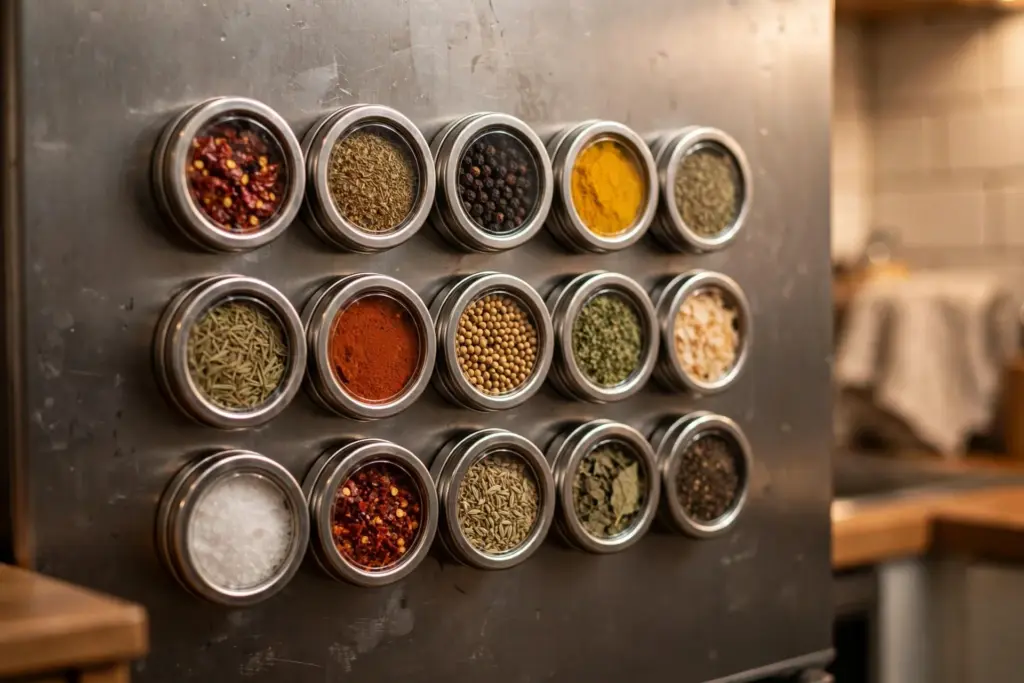
9. Stick Magnetic Spice Tins on the Fridge
If your fridge side is magnetic — test it with any magnet first, as some stainless finishes are not — magnetic spice tins move the whole spice collection out of the cabinets and into plain sight, freeing a shelf for food. Keep the tins on the side away from the stove, since spices degrade faster next to heat and steam. This is the only idea on the list that needs no floor space, no door and no cabinet — just a magnetic surface.
Inside the Cabinets You Already Have (Needs Only a Cabinet)
The cheapest small apartment pantry ideas need no new furniture at all. Our small apartment kitchen storage ideas guide covers the full cabinet system; the four fixes below are its pantry-specific core.
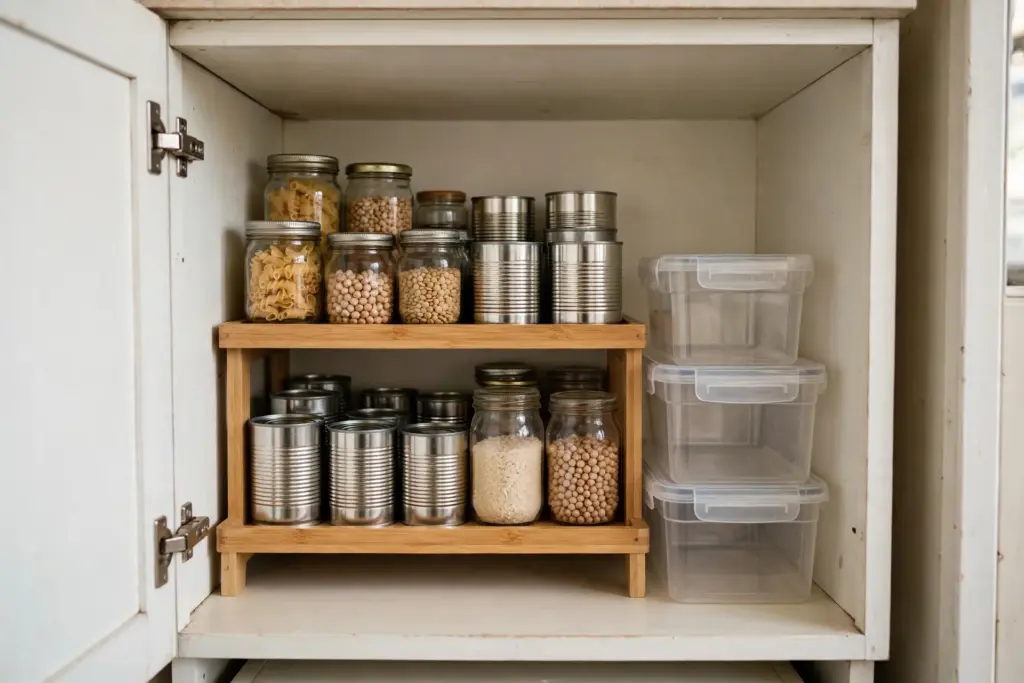
10. Double a Shelf With Risers
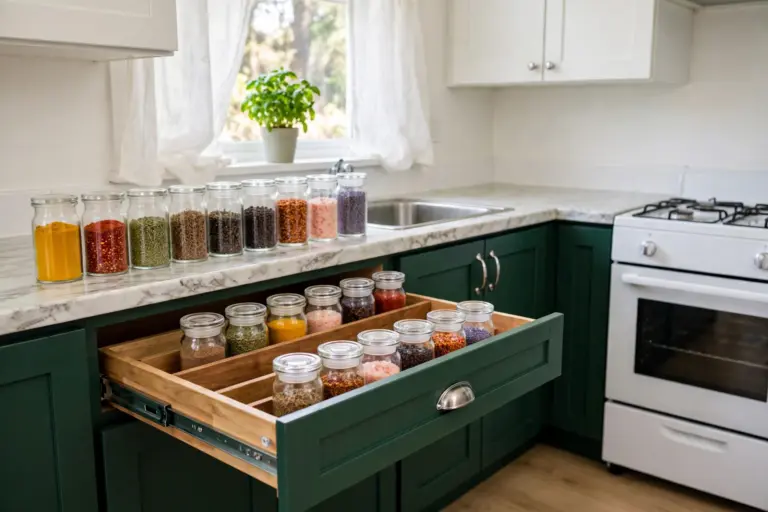
Most cabinet shelves waste their top half: jars stand 5 inches tall in a 12-inch gap. A shelf riser creates a second level, so cans and jars sit in two visible rows instead of hiding behind each other. Weekly items go on the riser, daily items in front. Measure your tallest jar against the remaining clearance first; one riser in each of the two deepest cabinets usually absorbs a full grocery run of overflow.
11. Spin Deep Cabinets With a Lazy Susan
Deep cabinets are where food goes to expire unseen. A lazy Susan turntable, sized a couple of inches narrower than the cabinet, brings the back row to the front with one spin — the right home for oils, vinegars, sauces and jars. Two small turntables beat one oversized one in wide cabinets. Pair it with a rotation habit: new purchases go behind, oldest stock stays in front — the household version of the first-in, first-out practice food-safety guidance recommends.
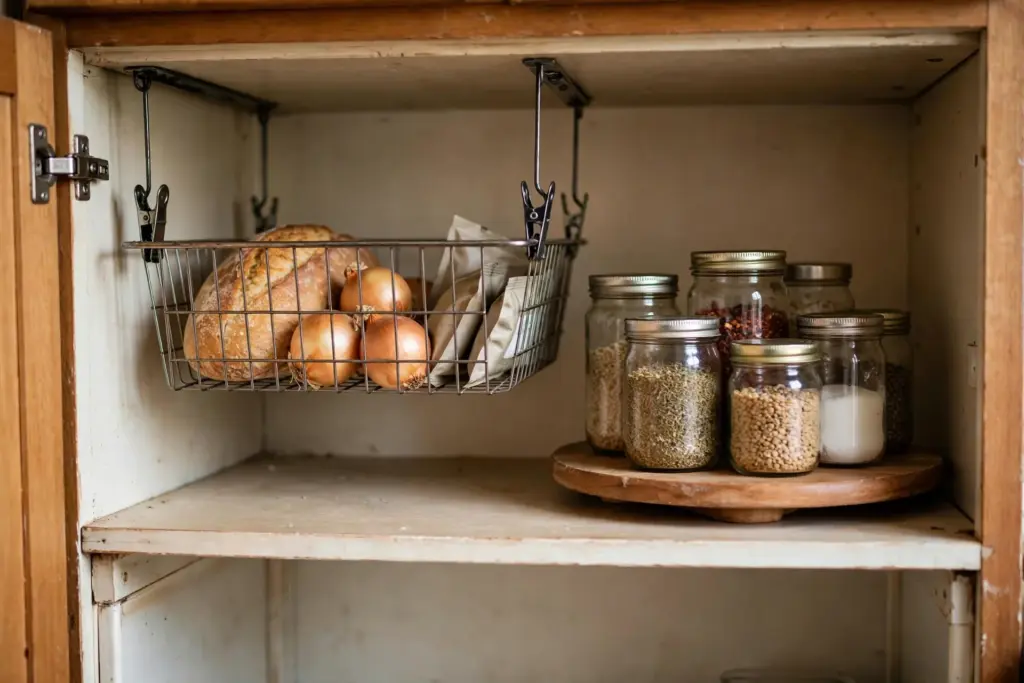
12. Clip Under-Shelf Baskets Into the Empty Air
Under-shelf baskets slide onto a cabinet shelf and hang below it, claiming the empty air above the items beneath. They suit light, bulky things — bread, tortillas, onions, packets — and the shelf below stays usable. Keep the load light and centred so the basket hangs level. With risers, this is how a two-shelf cabinet starts behaving like a four-shelf one.
13. Decant Into Clear Stackable Containers — and Zone Them
Half-empty bags of flour, rice and pasta slump where rectangles stack. Clear, stackable, airtight containers let you see levels at a glance; quality varies, so treat freshness claims as container-dependent. Then zone the result — breakfast, baking, dinner staples, snacks — so every gap is visible at list-making time. Label each lid with contents and date opened, and check stored food against a reference like the Partnership for Food Safety Education’s storage basics when in doubt.
Outside the Kitchen Entirely (Needs a Closet or a Nook)
14. Convert a Hall or Broom Closet
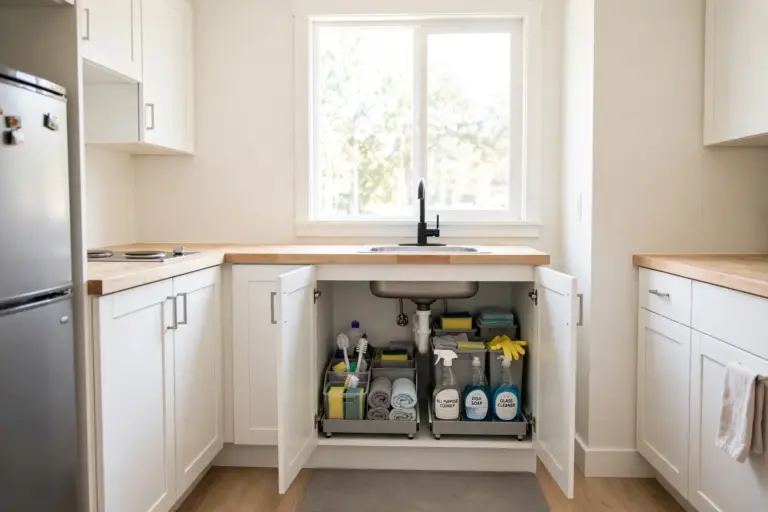
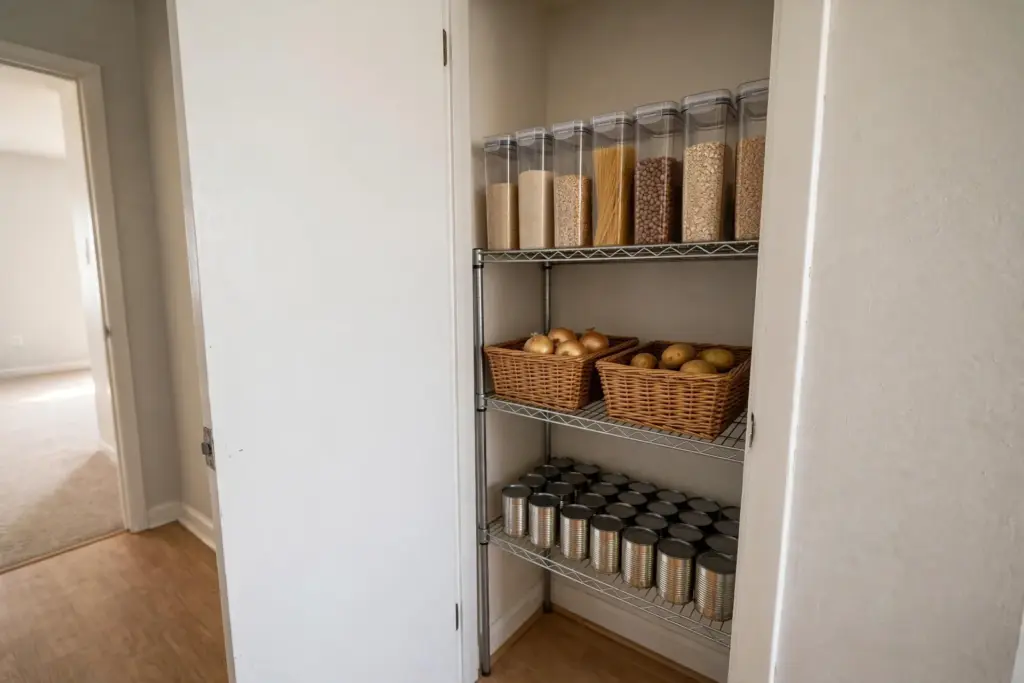
If the kitchen has nothing left to give, the nearest hall closet is the pantry — it just needs shelves. A freestanding wire shelf unit holds backstock and bulk buys while the kitchen keeps only the current week’s food; that split makes the system sustainable. One firm rule: food and cleaning chemicals never share a space, a point food-safety sources such as Oklahoma State University Extension’s food storage guidance state plainly. If the closet holds cleaning supplies now, move those under the sink and give the closet to food alone.
15. Build a Dining-Nook Pantry Station
The last hiding place is the dining area: a narrow console table, a small étagère, or a bench with baskets underneath becomes a pantry station that reads as furniture. Keep it curated — matching baskets, decanted staples, one plant or cookbook on top — and it looks like a styled sideboard rather than overflow. It pairs naturally with the reversible changes in our rental kitchen makeover ideas guide. At move-out it comes apart into a table and baskets in minutes, having never touched a wall.
Keep It Safe, Fresh and Lease-Friendly
Three rules keep a makeshift pantry working. Location: dry goods belong in a cool, dry spot away from stove heat and steam, and food never shares space with cleaning chemicals — under-sink is for supplies, not food. Rotation: shop your zones first, put new stock behind old, and check dates when you reorganise. Weight: heavy items low, light items high, tall units anchored only with landlord permission. The best small apartment pantry ideas are reversible by design — if any product sticks, screws or anchors, check the lease first.
Start with one zone, not all fifteen: cabinet fixes (Ideas 10–13) cost least, a cart (Ideas 4–5) solves the no-floor-space problem, and one furniture pantry (Ideas 1–3) handles bulk. Then browse the kitchen storage archive for the next layer.
Frequently Asked Questions (FAQ)
What is the best pantry solution for a small apartment with no pantry?
Start inside the cabinets: shelf risers, a lazy Susan and clear containers usually double usable space for the least money. Add a rolling or slim cart if floor space is tight, and one freestanding unit for bulk and backstock.
Are over-door pantry racks safe for rental doors?
Generally yes, because they hang from hooks rather than screws. Check that the door still closes fully with the rack fitted, keep the total load modest for the door and hinges, and add felt pads to protect the paint. Test with a light load first.
Where should food never be stored in a small apartment?
Never with or under cleaning chemicals — the under-sink cabinet is for supplies only. Keep dry goods away from direct stove heat and steam too, and avoid warm spots like the top of the fridge for anything you want to keep fresh.
How do I keep a makeshift pantry organised?
Zone it: breakfast, baking, dinner staples and snacks each get a shelf, basket or cube. Use clear containers so levels are visible, label lids with contents and opening date, and rotate stock so the oldest items sit at the front.
Do I need landlord permission for any of these pantry ideas?
Freestanding furniture, carts, risers, turntables and magnetic tins need no permission. Anything that anchors to a wall — including some anti-tip straps — should be checked against the lease first, and screwed or built-in shelving needs written permission in most rentals.