How to Organize a Small Apartment Room by Room
A small apartment rarely feels messy because it is small. It feels messy because everything lands wherever there is space — mail on the kitchen counter, shoes in a pile by the couch, skincare spread across the bathroom sink. The fix is not a bigger unit or a weekend spent buying bins. The fix is a system: one clear home for every category, in the room where that category is actually used. These small apartment organization ideas walk through the whole home room by room, so each space gets set up once and then takes only minutes to reset. Every idea here is renter-friendly: no drilling, no built-ins, and nothing a typical lease would object to. Start with the room that frustrates you most, or work through the plan in order over a single weekend.
Before You Start: The 4 Rules That Make Every Room Work
The small apartment organization ideas that last are not the prettiest ones — they are the ones built on how you actually live. Before organizing a single drawer, set these four rules. They apply in every room that follows, and they are what separate a one-time tidy from a system that survives a busy month.
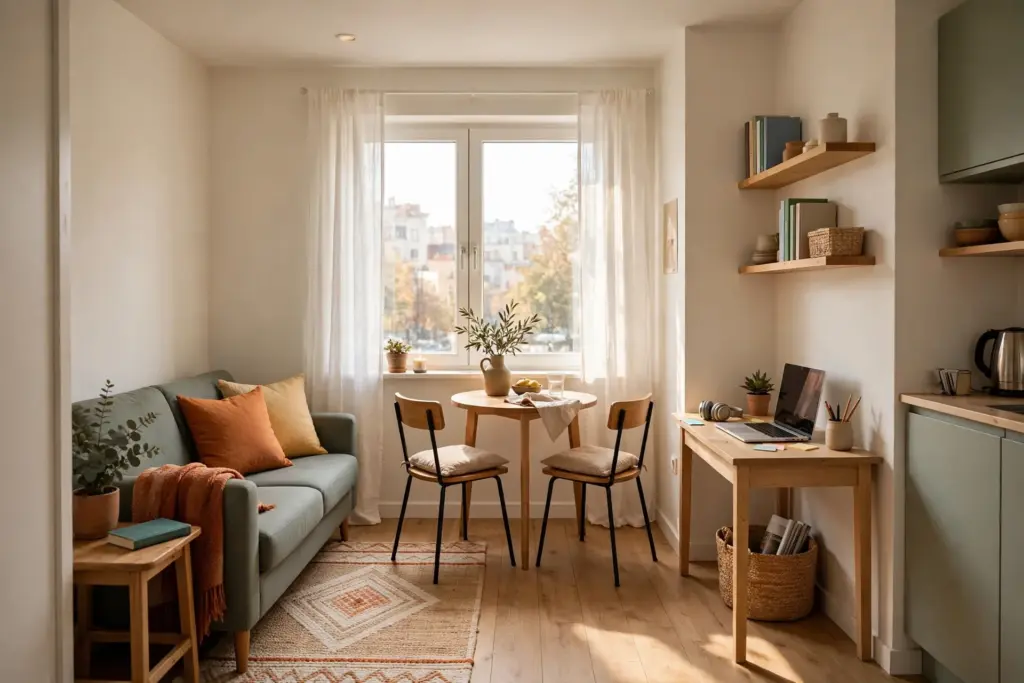
1. Organize by zone, not by storage unit
Divide each room by activity: a landing zone by the door, a coffee zone in the kitchen, a wind-down zone around the couch. Every item belongs to a zone, and zones — not furniture — decide where things live. This is the same thinking behind the full small apartment storage ideas system: when each area has one job, clutter has nowhere ambiguous to land.
2. Store everything where it is used
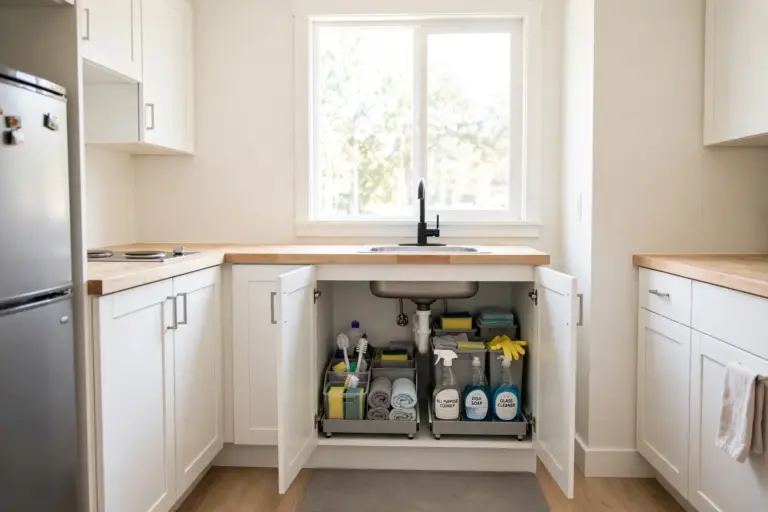
Cleaning spray belongs under the sink it cleans, not in a hall closet across the apartment. Extra light bulbs belong near the lamps. The farther an item lives from where it is used, the less likely it is to be put back — and putting things back is the entire game in a small home.
3. Daily items at arm’s reach, rare items up high or down low
Prime space is the band between your knees and your shoulders. Daily items live there. Seasonal decor, spare linens and the big stockpot go on the highest shelves, under the bed, or on top of cabinets. People who have organized very small homes make the same point about giving each closet and cabinet a single purpose — it ends the daily hunt for things (The Spruce).
4. Contain first, label second
A category is not organized until it has edges: a bin, a basket, a tray, a drawer divider. Measure the shelf before buying the container — retailer guides to small-space organization start with the same advice, because a bin that almost fits wastes more space than no bin at all. Then label it. A label is what lets everyone in the home maintain the system without asking.
Entryway: Build a Landing Zone in Three Feet or Less
Most small apartments have no entryway at all — the front door opens straight into the living room. That makes the entry the highest-impact room to organize, because everything entering the home passes through it. Claim a strip of wall about three feet wide beside the door and give it four jobs: keys, mail, shoes, and the bag or jacket you use daily.
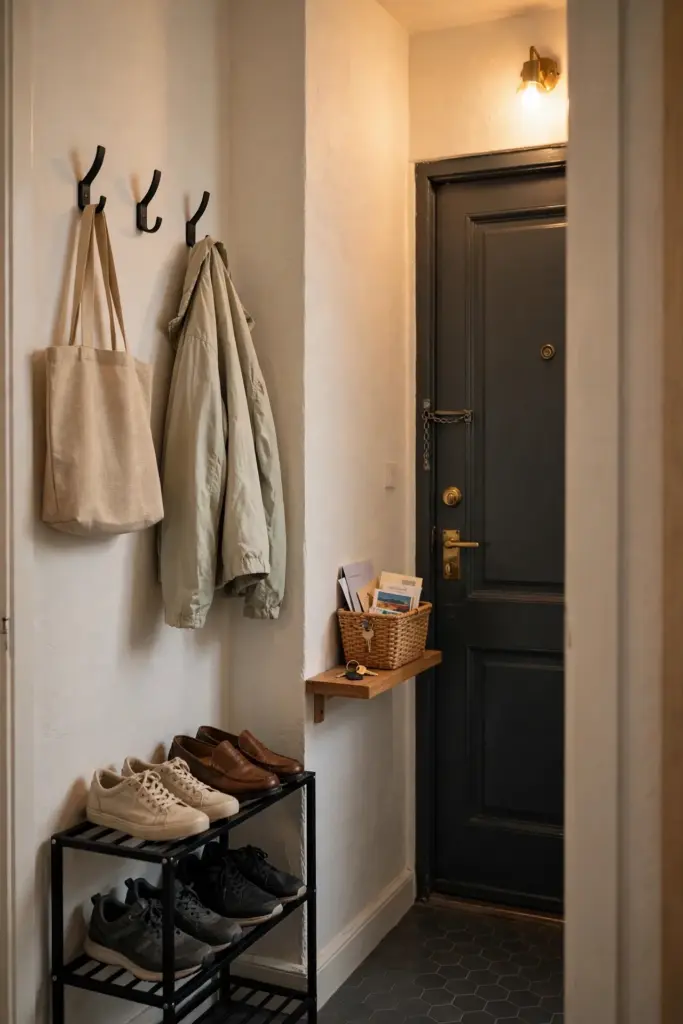
Adhesive hooks rated for the weight of a loaded tote handle bags and jackets without holes; check your lease and the strip’s weight limit before hanging anything heavy. A slim two-tier shoe rack keeps the floor clear, and a small basket on a narrow shelf catches mail before it migrates to the kitchen counter. Limit the rack to the pairs in current rotation and store the rest in the bedroom — the full method is in these small entryway storage ideas. If shoes are the main overflow, the dedicated shoe storage ideas for small apartments cover racks, over-door options and under-bed rotation in more depth.
Living Room: Clear Surfaces, Hidden Storage
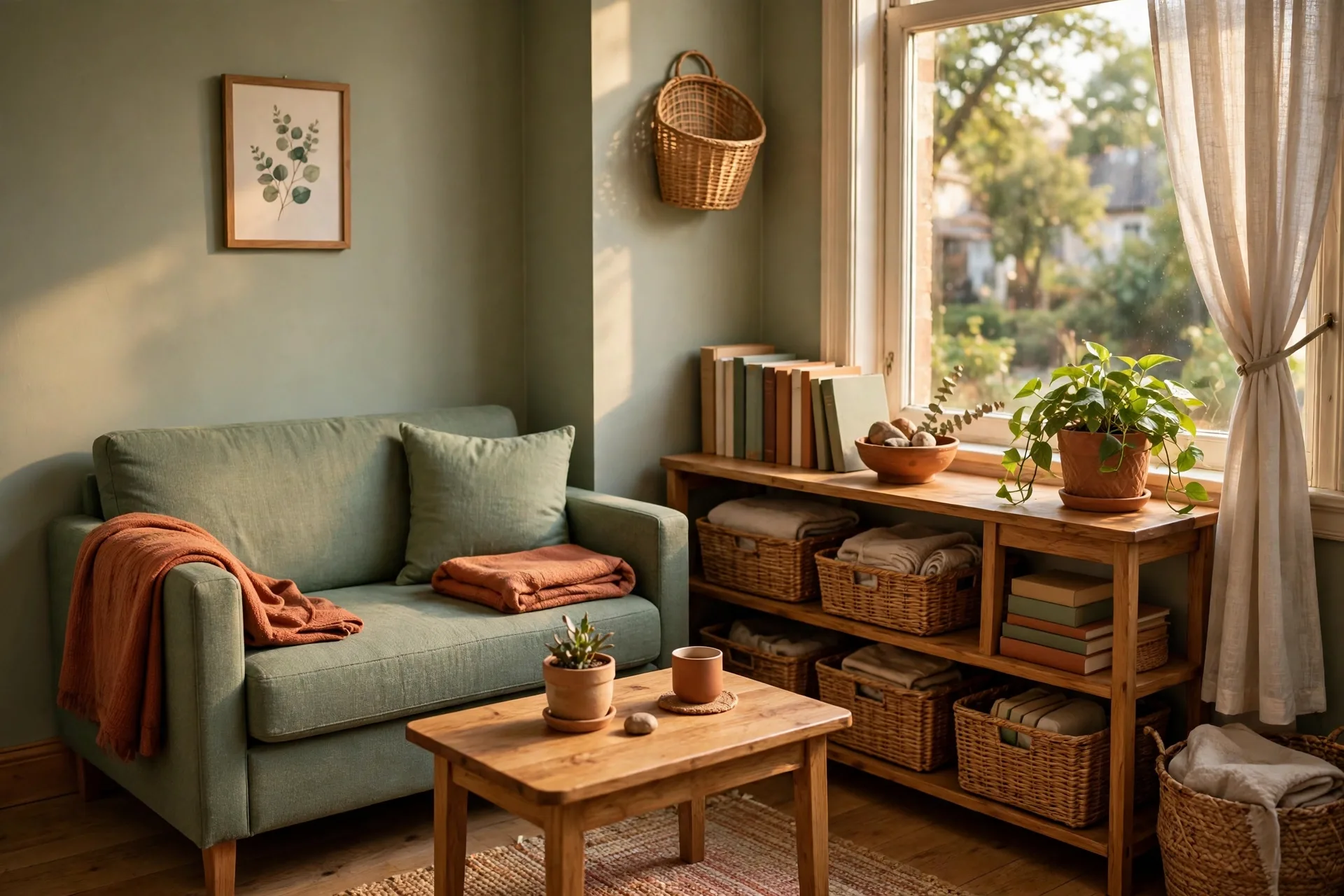
A small living room looks organized or chaotic based on one thing: how much is sitting out. The rule is that every surface holds only items in a container. A tray on the coffee table corrals the remote, coasters and the book in progress. A storage ottoman swallows throw blankets and board games while working as a footrest or extra seat. Baskets slide under side tables and into the gap behind the couch for the things that have no shelf: chargers, craft supplies, pet toys.
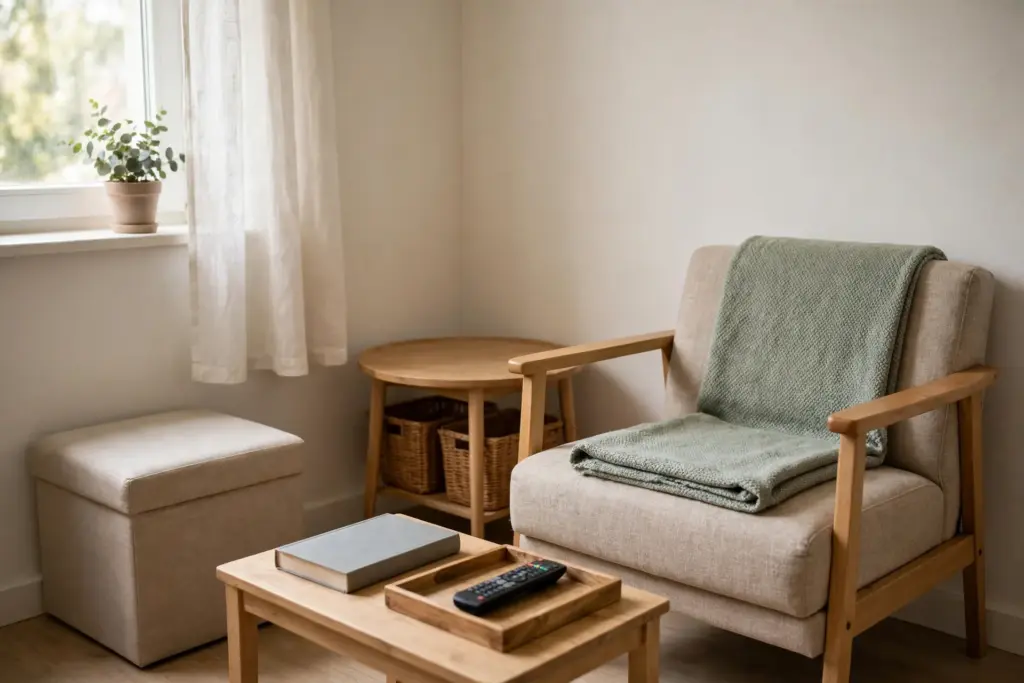
Cords deserve their own fix: a simple cable box hides the power strip, and adhesive clips run charging cables along the back of furniture instead of across the floor. If one corner of the room works as a desk, keep work supplies in a single lidded bin so the corner can clock out at night — these small apartment home office ideas show setups that do not take over the room. Finally, keep one empty basket in the living room as a reset basket: anything that belongs elsewhere goes in it during the evening tidy and gets carried to its room in one trip.
Kitchen: Cabinets First, Counters Last
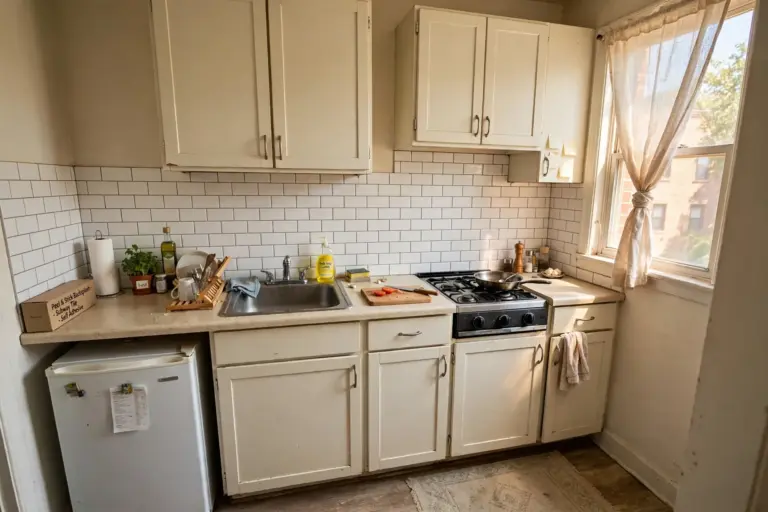
In a small kitchen, counter space is work space, so organization starts inside the cabinets. Shelf risers double the usable height of a cabinet for plates and mugs, and clip-on under-shelf baskets claim the dead air above dishes. A turntable in a deep or corner cabinet ends the lost-bottle problem at the back, and the inside of a cabinet door can hold a slim rack for wraps, lids or spice packets — adhesive versions keep it renter-safe.
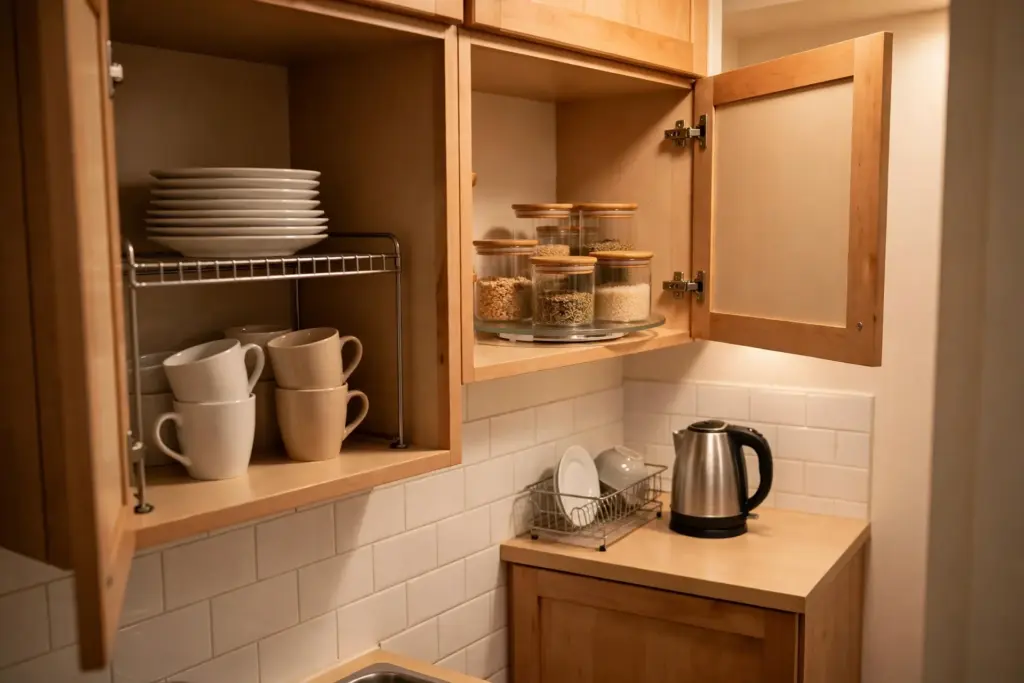
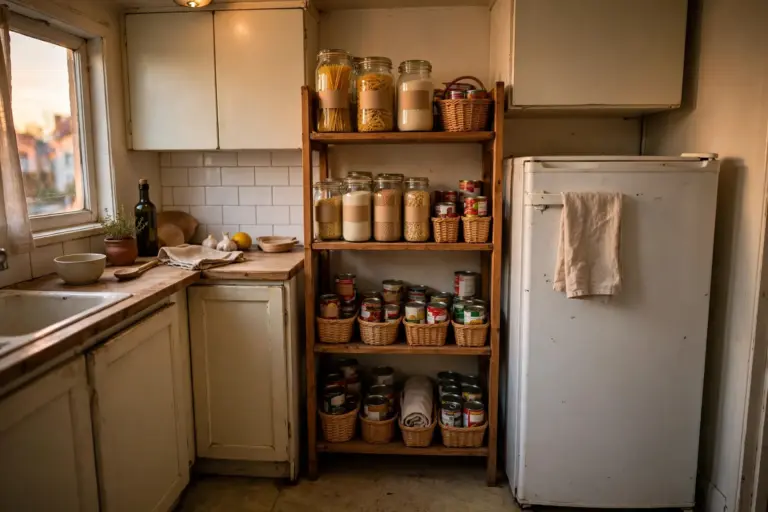
Group what stays in cabinets by task: a prep zone near the stove, a coffee and breakfast zone near the outlet, dishes nearest the dishwasher or drying rack. Then apply the counter rule — only daily appliances earn a permanent spot; everything else goes back in a cabinet after use. For cabinet-by-cabinet detail, see the small apartment kitchen storage ideas guide. No pantry is not a dead end, either: a rolling cart, an over-door rack and a single labeled bin per food category cover most overflow, and these small apartment pantry ideas lay out the no-pantry system in full.
Bedroom and Closet: Treat Them as One System
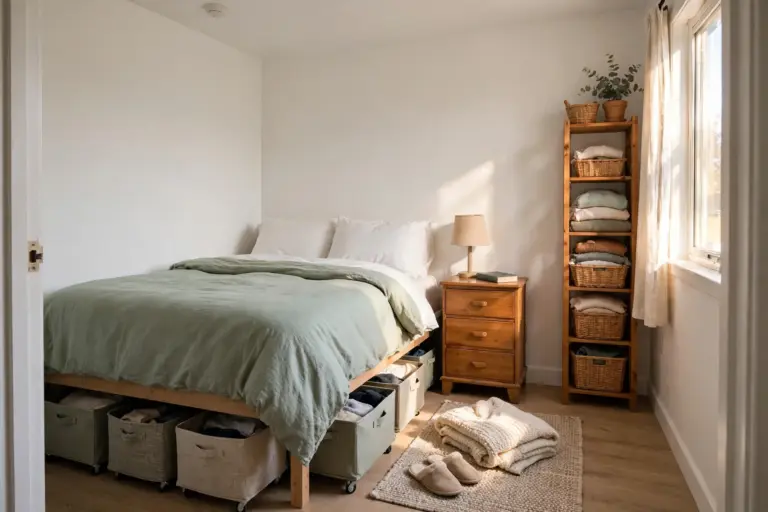
The bedroom and closet fail together or work together. Start under the bed, the largest hidden storage in most apartments: low, lidded bins hold off-season clothes and spare bedding, and a bin that slides easily gets used, while a stuffed bag does not. Measure the clearance under your frame before buying — bin height is the one number that decides whether this works.
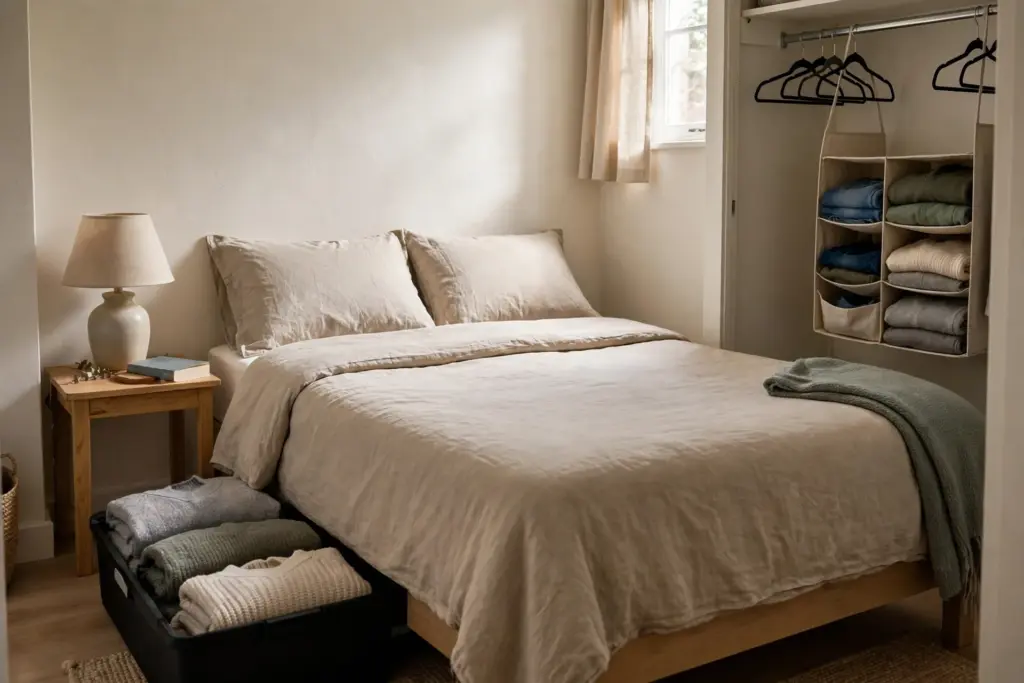
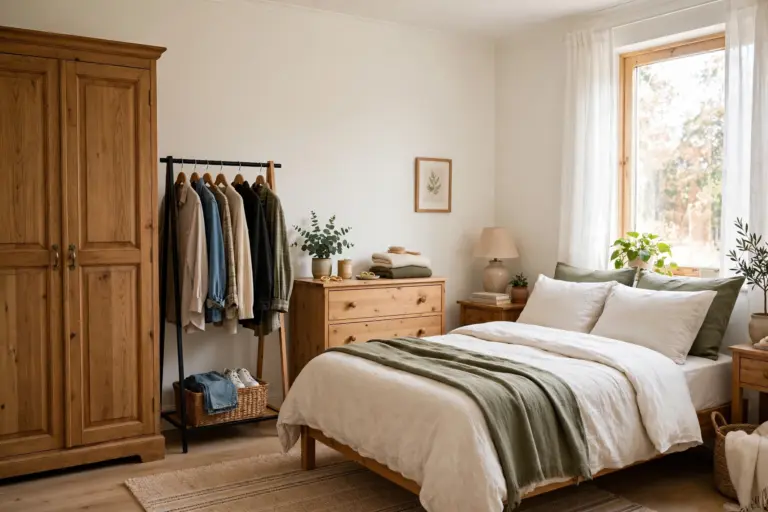
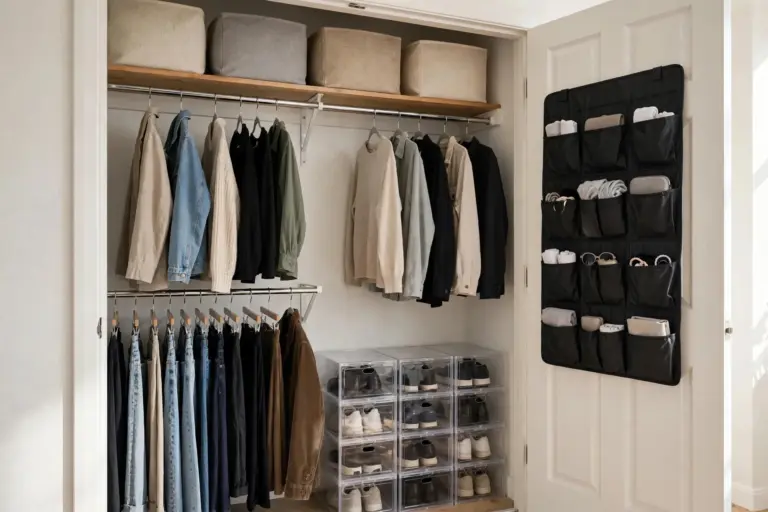
In the closet, switch to slim matching hangers to recover rod space, hang a fabric organizer for folded knits and accessories, and order the rod by frequency: daily clothes at the front, occasion wear at the back. Keep the nightstand to three things — a light, the current book, and a small tray for jewelry and a phone — so the surface never becomes a second dresser. The complete closet sequence is in this step-by-step small apartment closet organization plan, and the small bedroom storage ideas guide covers dressers, corners and under-window space beyond the closet.
Bathroom: A Daily-Use System in the Smallest Room
Rental bathrooms usually offer one sink, no counter and a cabinet that fits almost nothing, so the system has to go vertical and portable. A freestanding over-toilet shelf adds two or three shelves without touching a wall — rolled towels and a backup bin of toilet paper up top, daily products at eye level. On the sink, one tray holds everything used daily; if it does not fit the tray, it does not live on the counter.
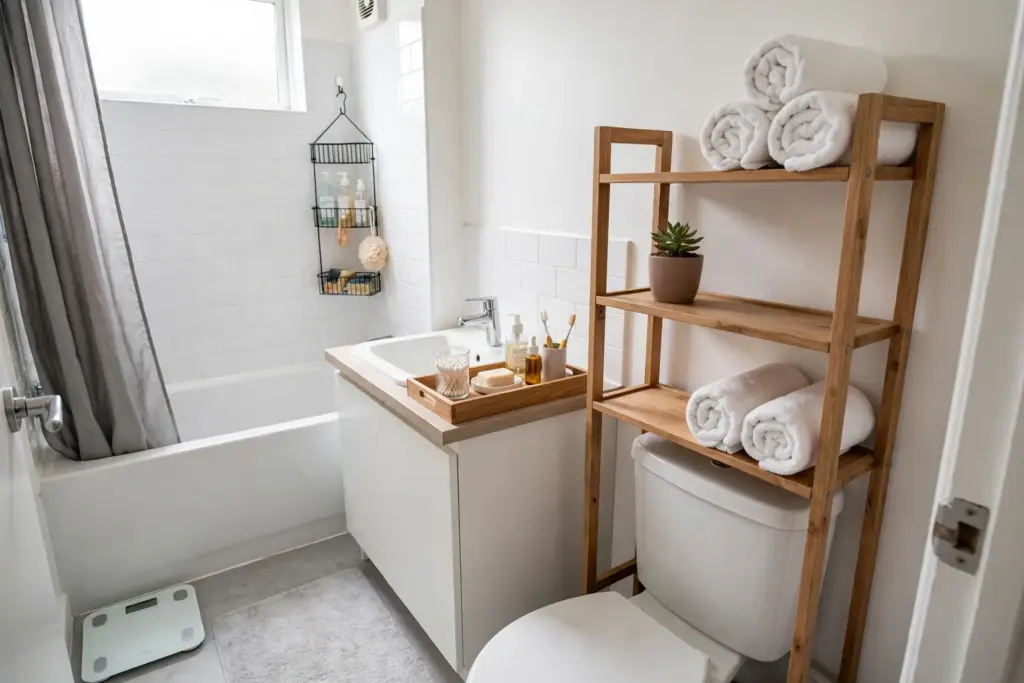
In the shower, a hanging or tension-pole caddy replaces the bottle lineup on the tub edge. Under the sink, two small bins — one for cleaning, one for back-stock — plus a turntable for tall bottles make the dark cabinet usable. Adhesive hooks on the inside of the cabinet door hold hair tools by their cords. The room-by-room bathroom detail lives in these small bathroom storage ideas for renters, and if the room also needs a visual refresh, the renter-friendly bathroom makeover ideas pair well with this system.
The 10-Minute Reset That Keeps the Whole System Working
Organization is not the weekend project; it is the ten minutes after it. Once a day, walk one loop of the apartment with the reset basket: living room strays in, basket emptied room by room, done. Once a week, pick one zone — never a whole room — and check it against its job: anything that drifted in from another zone goes home, and anything unused for a season gets donated or moved to high or under-bed storage. Keep a one-in, one-out rule for the categories that grow fastest in your home, usually clothes, kitchen gadgets and paper. That loop is what makes every room above stay organized without another big clean-out.
Frequently Asked Questions
This short FAQ covers the questions renters ask most about organizing a small apartment: where to start, how to add storage without drilling, and how to zone a studio that has no separate rooms.
What are the best small apartment organization ideas for beginners?
Start where clutter enters and gathers: an entryway landing zone for keys, mail and shoes, clear kitchen counters with organized cabinets behind them, and one labeled container per category in the living room. The most effective small apartment organization ideas for beginners are boring and visible — hooks, trays and bins you can reset in minutes — because a simple system you maintain beats an elaborate one you abandon.
How do you organize a small apartment with almost no built-in storage?
Create storage in the gaps the apartment already has: under the bed, behind doors, above the toilet, on top of cabinets and inside furniture that doubles as storage, like an ottoman or a bench. Freestanding shelves and rolling carts add capacity without installation, and everything can leave with you at move-out.
What should you organize first in a small apartment?
Organize the entryway first, then the kitchen counters. The entry decides whether clutter spreads through the home or stops at the door, and the kitchen counter is the surface most likely to collect paper, bags and random items from every other room. Those two fixes make the rest of the apartment feel calmer within a day.
How can renters organize without drilling holes?
Use adhesive hooks and strips within their stated weight limits, tension rods and poles, over-the-door racks, and freestanding furniture such as shelf units and carts. Check the lease for anything beyond basic adhesive products, keep the packaging so removal follows the manufacturer’s instructions, and photograph walls at move-in so normal wear is documented.
How do you organize a studio apartment when there are no separate rooms?
Replace walls with zones: a rug defines the living area, a low shelf or curtain marks the sleeping area, and a desk corner becomes the work zone. Store each zone’s items inside that zone — bedding near the bed, work supplies at the desk — so the single room still behaves like several small ones.