14 Small Space Craft Storage Ideas That Keep Supplies in Check
Craft supplies have a way of taking over a small apartment. One skein of yarn becomes a basket, the basket becomes a shelf, and before long the dining table is buried under paper, paint, and half-finished projects. These small space craft storage ideas are built for renters: every system below is removable, no-drill or low-impact, and designed to keep supplies visible, reachable, and easy to put away.
The trick is to store supplies by how they are actually used. Paper lives near the cutting mat, paint lives near the brushes, and the current project lives in one portable spot instead of spread across every surface. The 14 ideas below follow that logic, so a small setup stays tidy long after the first weekend of organizing.
Start With a Workflow, Not a Shopping List
Before buying a single bin, sort supplies into three piles: what gets used every session, what gets used weekly, and what is backstock. Daily tools stay within arm’s reach of the work surface, weekly supplies can live a shelf or a door away, and backstock goes into a closet or under the bed. This one sort prevents the most common renter mistake — buying pretty containers first, then discovering nothing fits the way the work actually flows. The pillar guide to small apartment storage ideas covers the wall and closet basics this list builds on.
1. Roll a Project Valet Cart to the Work — and Back
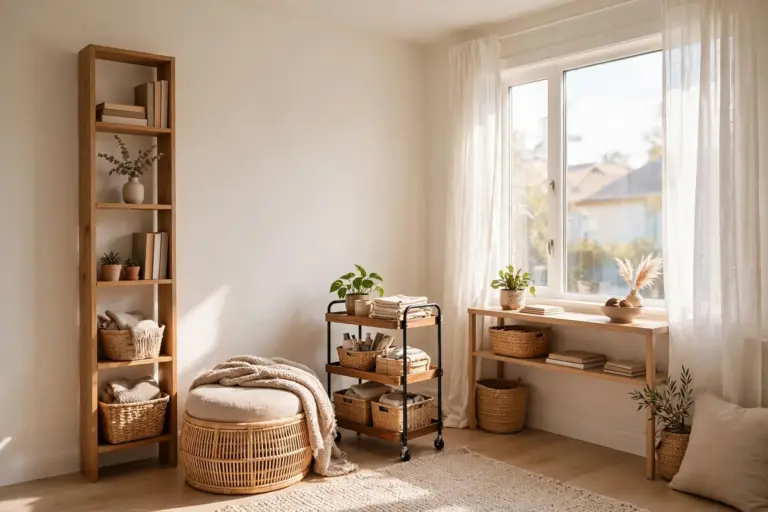
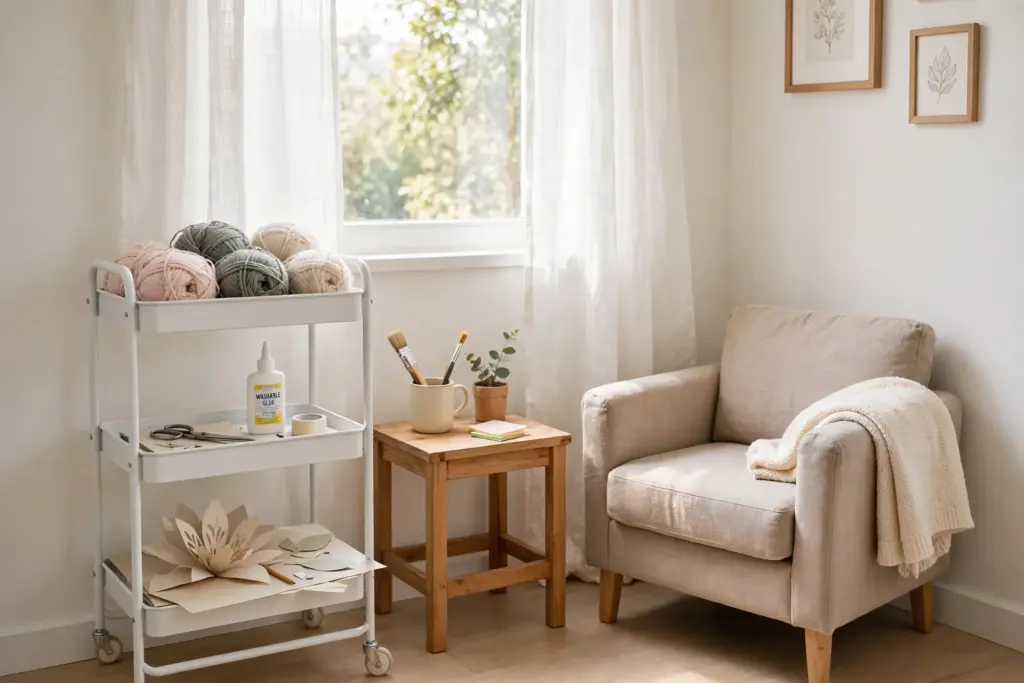
A slim three-tier rolling cart is the hardest-working piece of small space craft storage, because it moves. Load the top tier with the current project’s active supplies, the middle with the tools reached for every session, and the bottom with works in progress. Roll it to the kitchen table to work, then roll it into a closet or a corner when dinner needs the table back.
2. Hang a Pegboard That Changes With Your Crafts
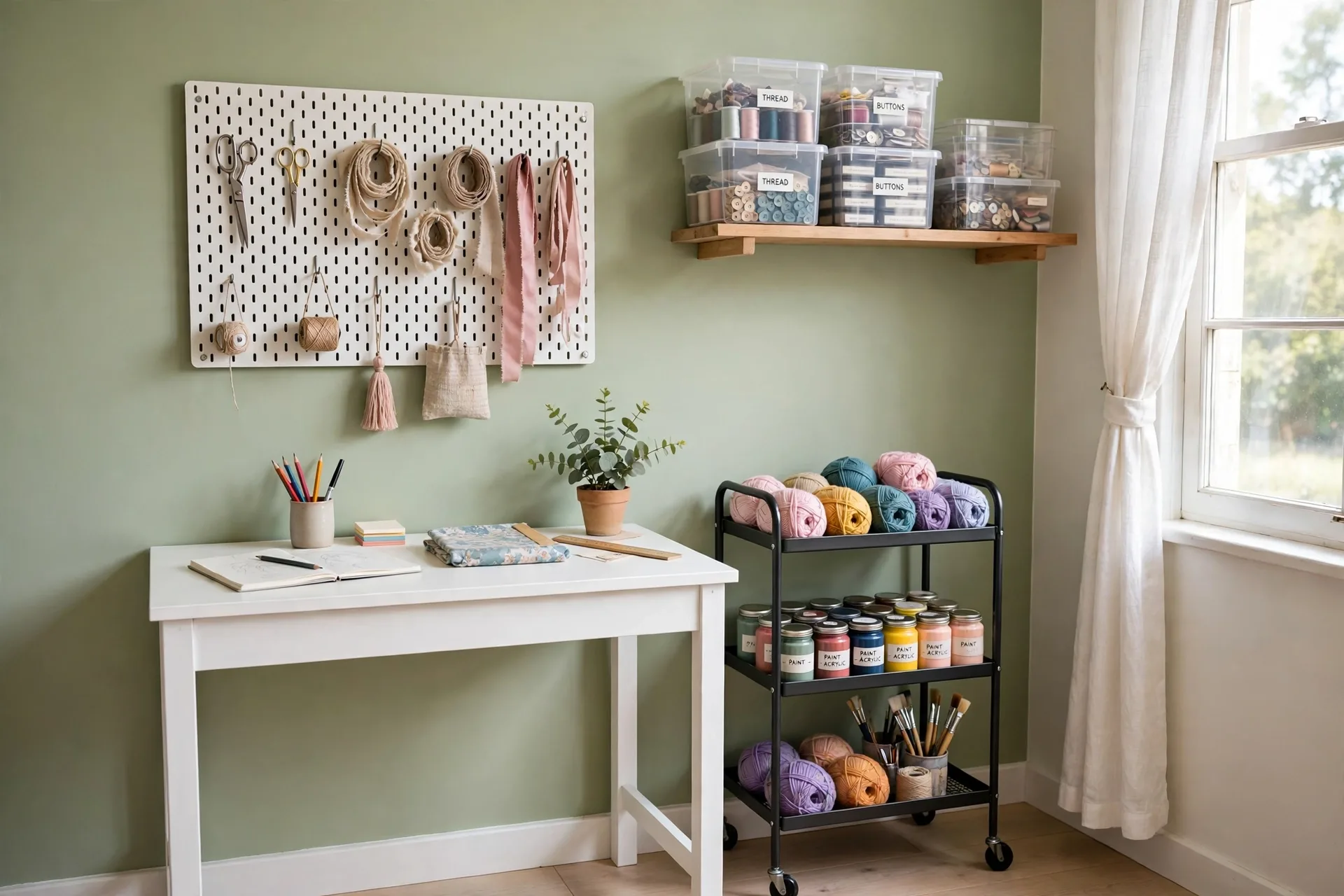
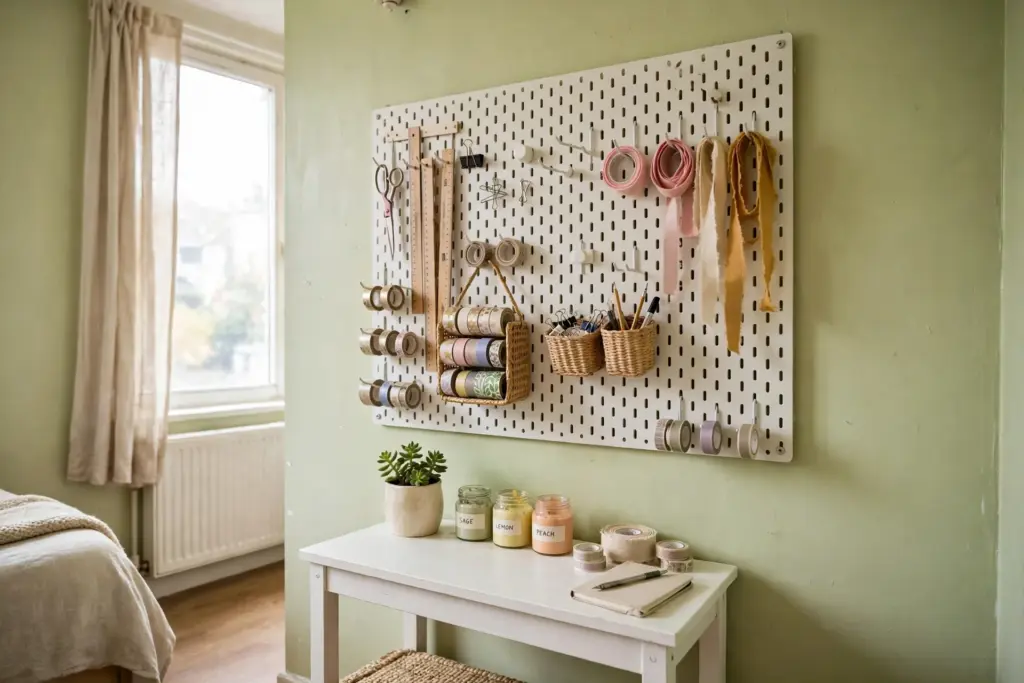
A pegboard turns a blank stretch of wall into flexible storage without eating a centimetre of floor space. Hooks hold scissors, rulers, and rotary cutters; small baskets hold tape, thread, and paint tubes; a short shelf holds the odd-shaped tools that refuse to hang. When the hobby changes, the layout changes in minutes — no new furniture, no new holes.
3. Store Paper Vertically, Like Files
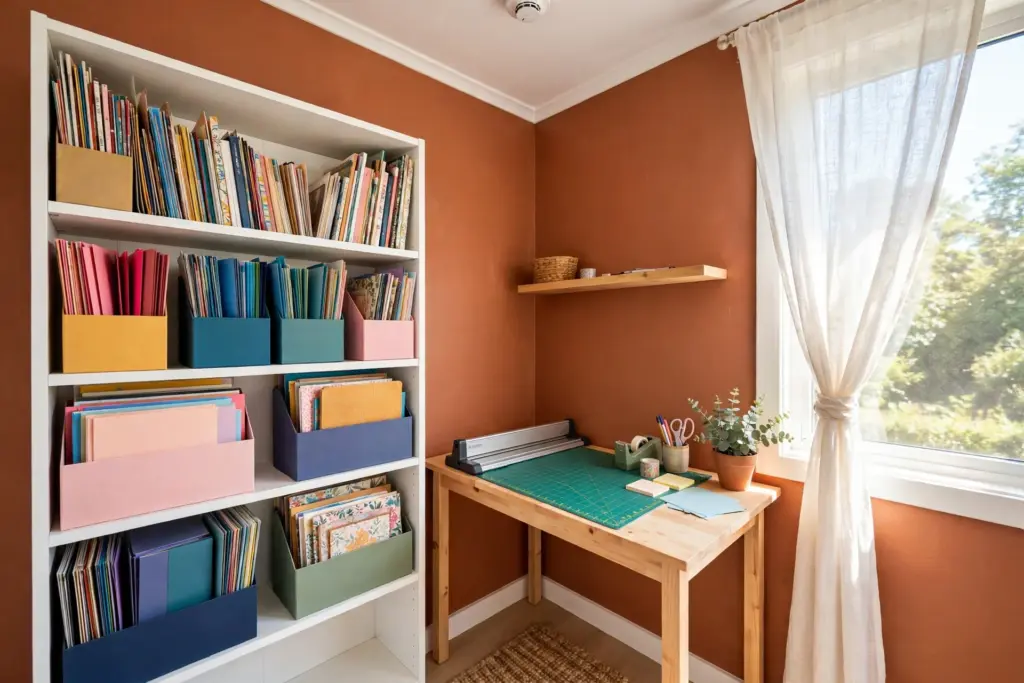
Paper stacked flat turns into a heavy pile where the sheet at the bottom is never the one needed. Stored upright in magazine holders or a desktop file sorter, every colour and pattern is visible at a glance and slides out without disturbing the rest. Sort by type first — cardstock, patterned paper, plain paper — then by colour within each group.
4. Turn a Closet Into a Craft Cabinet
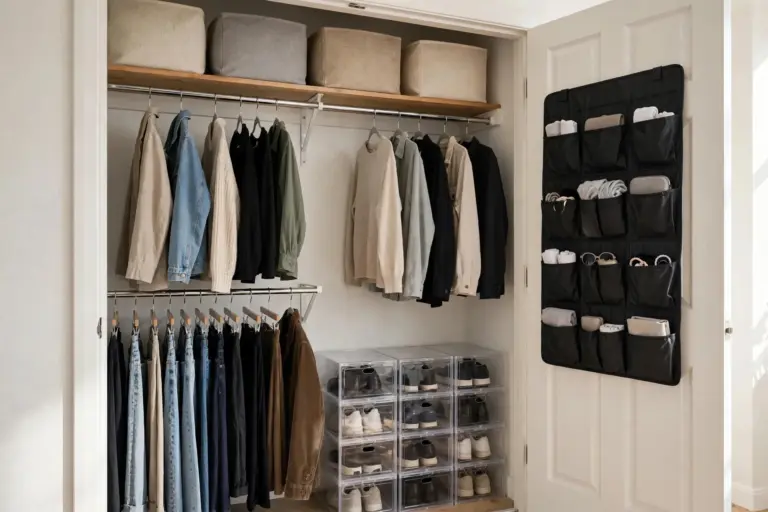
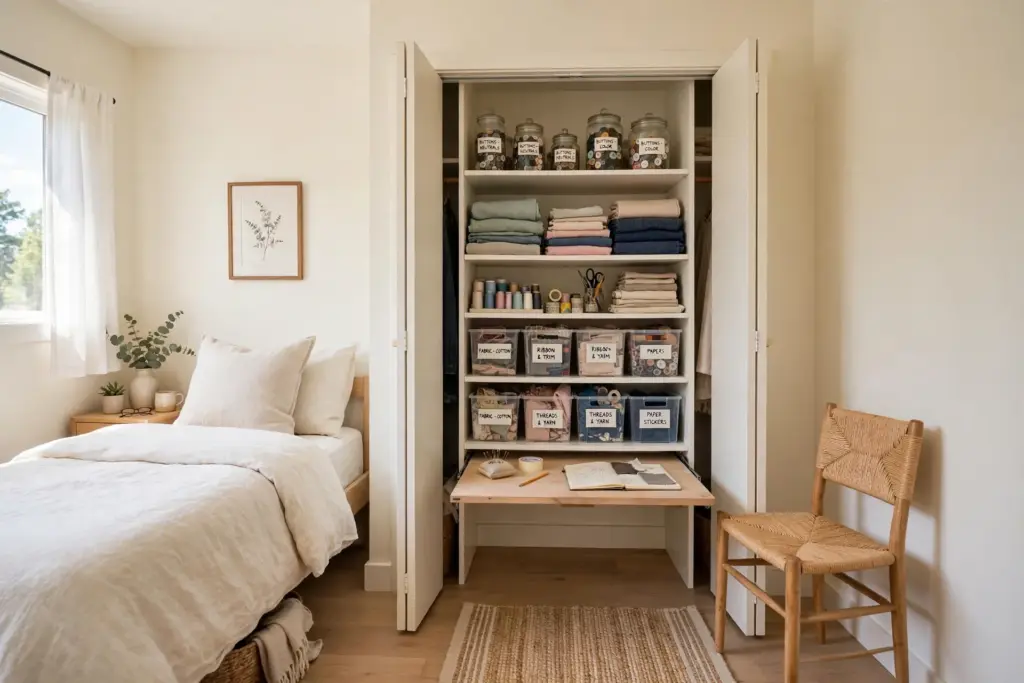
A closet is the closest thing most renters have to a craft room, and it needs surprisingly little work. Remove the hanging rod if it is not needed, add adjustable shelves or a small cube unit, and the closet becomes a closed cabinet where supplies live out of sight but within reach. A fold-out shelf or a small table that slides in and out creates a work surface inside the closet itself.
5. Sort Clear Stackable Bins by Workflow, Not by Colour
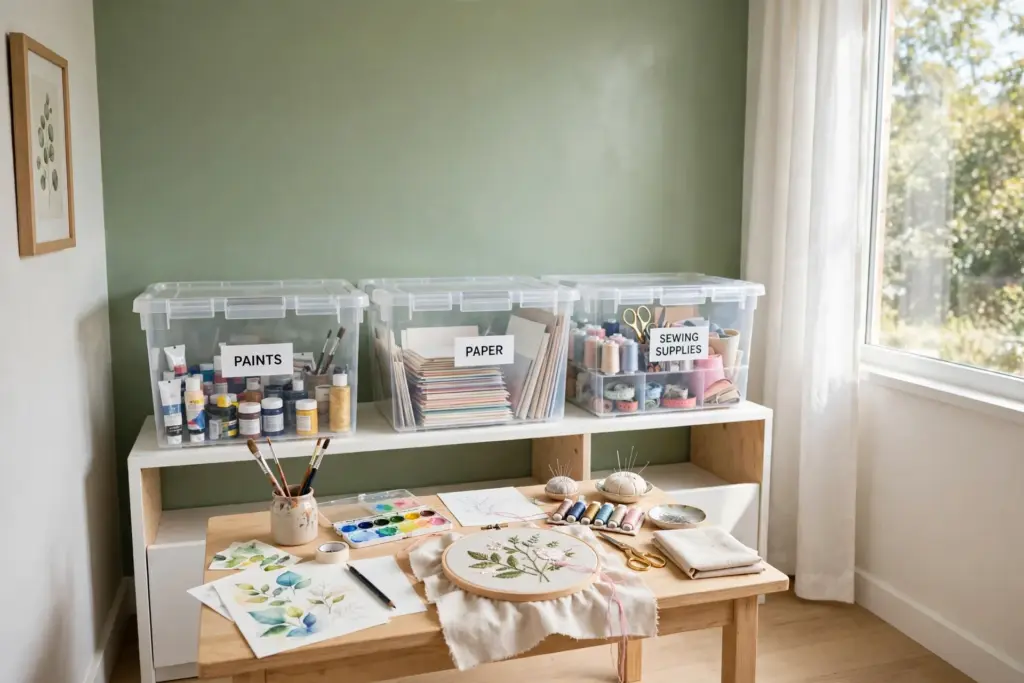
Clear bins earn their place when they are sorted by what gets used together. One bin holds the painting workflow — paints, brushes, palettes, and water cups. Another holds the paper workflow, a third holds sewing. Grab one bin and the whole workflow comes to the table; put it back and the session is packed away.
6. Hang an Over-Door Pocket Organizer
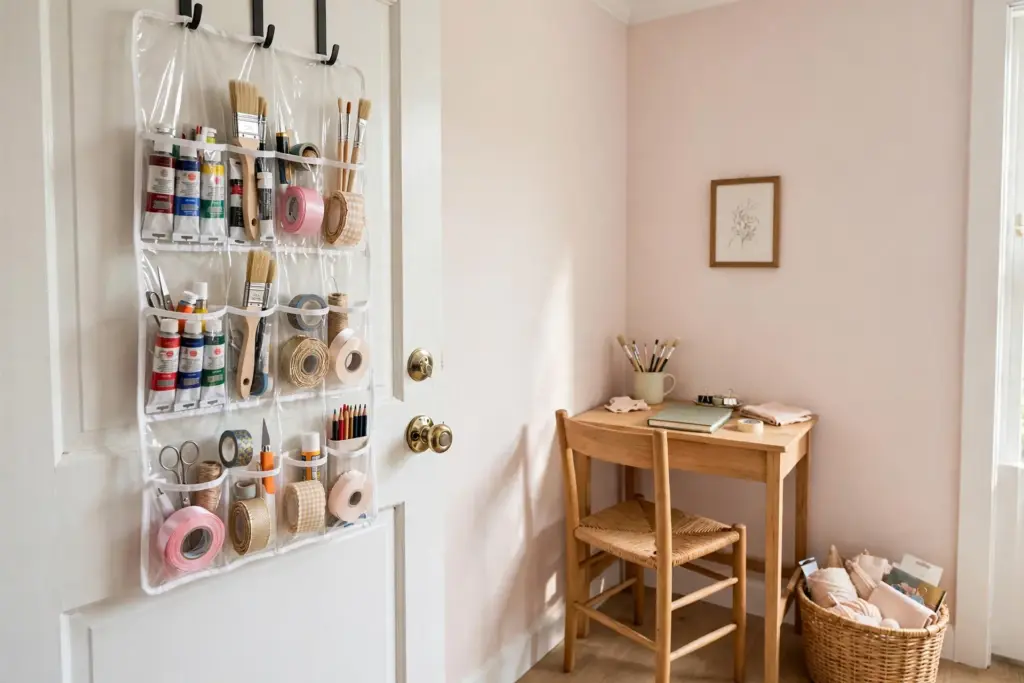
The back of a door is free storage hiding in plain sight. A clear over-the-door pocket organizer hangs from two hooks over the door top — no screws, no adhesive, nothing to repair later — and its pockets hold paint tubes, brushes, ribbon rolls, markers, and small tools in full view. The clear vinyl means supplies can be found without opening a single pocket.
7. Tame Small Parts With Tackle Boxes
Buttons, beads, sequins, eyelets, and findings are the supplies most likely to end up in one tangled bag. Small-parts organizers — the divided tackle boxes sold for fishing — solve this for a few dollars. Each compartment holds one type of part, the lids snap shut, and the whole box stacks with the others on a shelf or inside a bin.
8. Hang Jars Under a Shelf
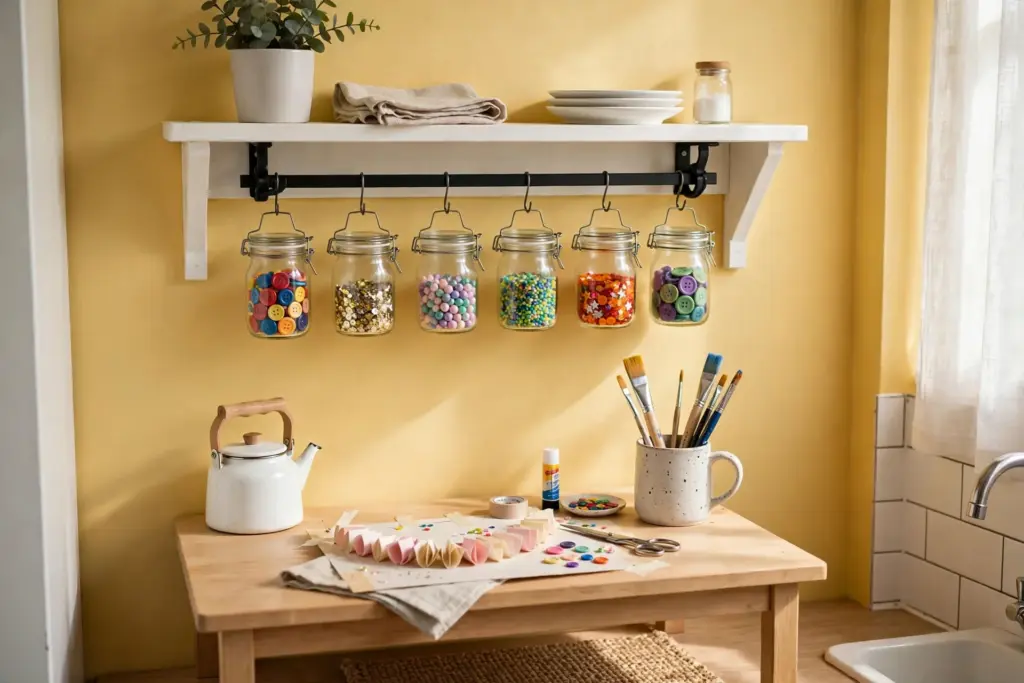
The space under a shelf is usually wasted, but it is perfect for small glass jars of buttons, beads, and sequins. Clamp-on under-shelf racks and rails hold jars by their lids or by hooks, so the contents stay visible from below and a jar can be lifted down with one hand. Nothing sits on the work surface, and nothing hides at the back of a cupboard. The same under-shelf trick works in a small apartment home office, where it holds stationery instead of beads.
9. Fold Down a Work Surface When You Need It
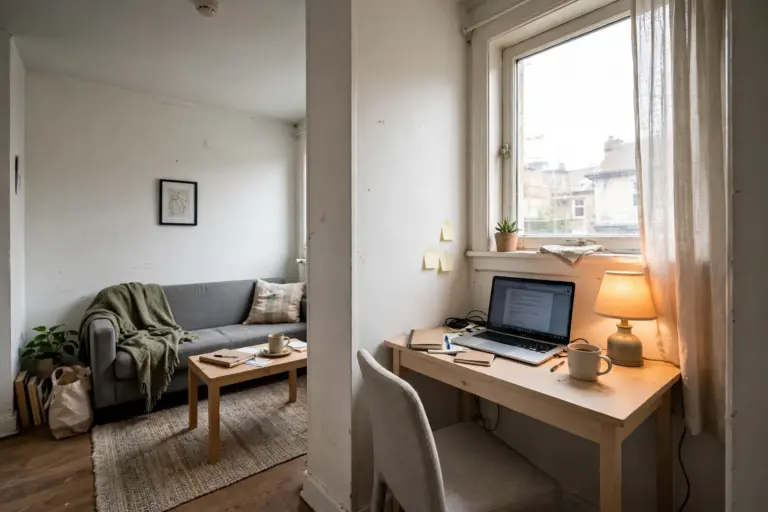
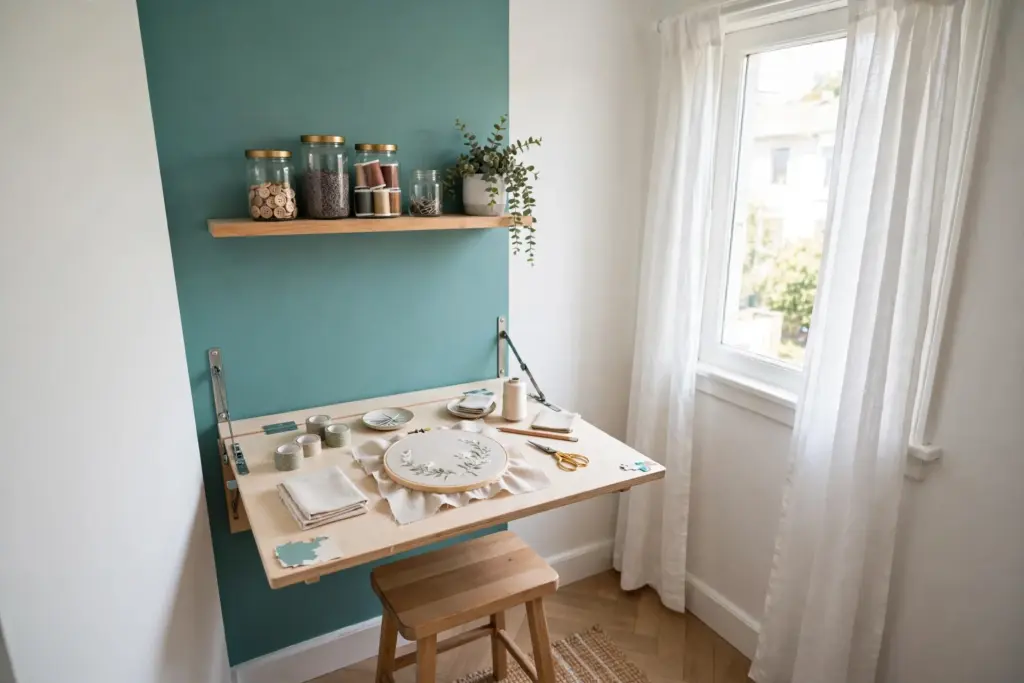
A craft table that is always out takes up floor space a small apartment cannot spare. A wall-mounted fold-down desk or a drop-leaf table gives a full work surface during a session and folds flat against the wall afterwards. Pair it with a pegboard or a small shelf above, so tools live where the work happens even when the table is folded away.
10. Store Cutting Mats Upright in a Slot
Cutting mats warp when they are stacked under heavy boxes, and they slide off shelves when they are leaned loose against a wall. Stored upright in a narrow slot — a dish rack, a file sorter, or a purpose-made mat holder — a mat stays flat, visible, and easy to grab. Keep the slot close to the work surface so the mat goes back in the same motion it came out.
11. Contain Yarn and Fabric in Cubes and Bins
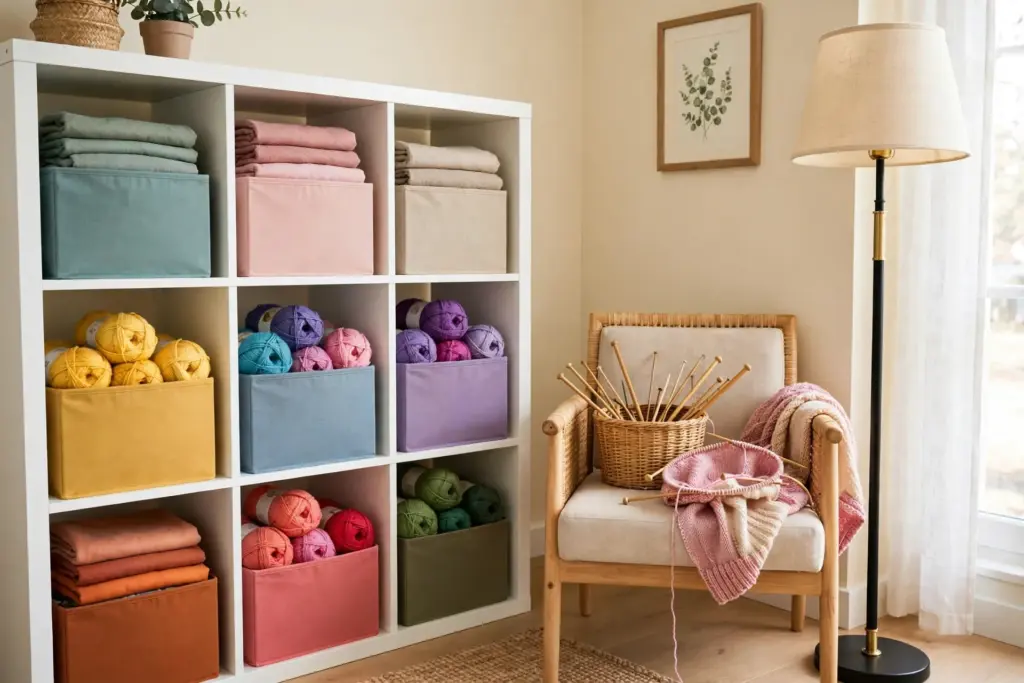
Yarn and fabric are the two supplies that expand fastest, so they need hard boundaries. A cube shelf with fabric bins gives each type a fixed home: one cube for yarn by weight, one for fabric by project, one for works in progress. When a cube is full, the stash is full — that visible limit is the whole point of these small space craft storage ideas. For the broader picture, the small apartment organization ideas guide covers the same zone-by-zone thinking for the rest of the apartment.
12. Pack a Portable Workbox for Each Project
Some crafts do not need a permanent corner at all — they need a box. A portable workbox holds everything one project requires: pattern, fabric or paper, tools, and notions, all in a single lidded container. The box lives on a shelf, travels to the sofa or the park, and returns to the shelf when the project is done. Several small project kits beat one giant craft box every time, because only the active project ever leaves the shelf. The same grab-and-go logic works for desk organization, where one tidy tray holds the day’s work instead of the whole desk drawer.
13. Cap the Stash: One In, One Out
No storage system survives a stash that grows without a limit. The one-in-one-out rule is the cap that makes the other ideas keep working: every new skein, paper pad, or paint set that enters the apartment means one equivalent item leaves — used up, gifted, or donated. The rule works best when it is specific: one new yarn in, one old yarn out.
14. Run a Five-Minute Reset After Every Session
Storage only works if supplies go back where they belong, and the reset is what makes that happen. Set a timer for five minutes at the end of every session: tools back on the pegboard or in the cart, paper back in its holder, scraps in the bin, and the work surface wiped clear. Five minutes is short enough to do even when tired, and the next session starts with a clean desk instead of yesterday’s mess.
Frequently Asked Questions (FAQ)
How do I store craft supplies in a small apartment without drilling?
Use the surfaces that need no holes: a rolling cart for the active project, an over-door pocket organizer for small supplies, clamp-on under-shelf rails for jars, and adhesive strips for lightweight pegboards and hooks. A closet converted with freestanding shelves adds closed storage with zero wall damage. Always check the lease first, since even small screw holes can count against a deposit in some rentals.
What is the best way to organize craft supplies in a closet?
Sort by workflow into labeled clear bins, keep daily tools at eye level, put bulky backstock up high, and heavy items low. A fold-out shelf or small table inside the closet creates a work surface, and closing the doors hides everything when the session ends. One side for crafts and one side for clothes keeps the boundary clear if the closet is shared.
How do I keep yarn from taking over a small space?
Give yarn a fixed, visible limit — one cube shelf or one set of bins — and follow one-in-one-out for every new skein. Store it by weight in clear bins or open baskets, keep only the current project on the work surface, and move backstock into a closet or under the bed. These small space craft storage ideas work because the limit is physical: if the yarn no longer fits its cubes, the stash is too big.
How much craft storage can a renter add without risking the deposit?
Most leases allow freestanding furniture, over-door hooks, adhesive strips, and clamp-on organizers with no risk, since they leave no marks. Small screw holes for a pegboard or shelf are usually repairable with filler, but the lease is the final word — read it before drilling anything. When in doubt, choose the removable option; nearly every idea in this guide needs no holes at all.
More ideas for small-space crafters: The Country Chic Cottage’s small-space craft organization guide covers vertical storage and multi-purpose furniture in depth, and The Hobby Hearth’s 20 craft room organization ideas for small spaces shows the same workflow-first approach with a rolling cart as a project valet.
Keep Reading
- Desk Organization Ideas: 14 Small Apartment Setups That Stay Tidy — the same zone-by-zone system applied to the desk itself.
- Small Apartment Home Office Ideas — carve a proper work zone out of a corner, a closet, or a nook.
- Small Apartment Organization Ideas — the whole-apartment version of the workflow-first approach used here.