Desk Organization Ideas for Small Apartments
A desk in a small apartment has to work harder than a desk anywhere else. It may share a wall with a bed, borrow a corner of the living room, or collect mail, chargers, and notebooks all day. These desk organization ideas are built for that reality: every one works without drilling into walls you do not own, without buying a bigger desk, and without turning a rental corner into a construction project.
The goal is a desk that stays usable on a busy Tuesday, when there is real work to do and very little surface to do it on. Pick one section below, set it up in an afternoon, and feel the difference the next morning.
The Small-Desk Rule: Only the Daily Tools Live on the Surface
Before buying a single organizer, apply one rule: only tools used every day earn a permanent spot on the desktop. For most people that means a laptop or monitor, a keyboard, a pen cup, and a lamp. Everything else — reference books, spare chargers, old notebooks — belongs on a shelf, in a drawer, or in a basket beside the desk.
This rule matters more in a rental because there is no spare room to absorb overflow. When the surface holds only daily tools, there is room to spread out a notebook or sign a form. If an item has not been used in two weeks, it does not live on the desk; it lives nearby, reachable in seconds but not competing for elbow room.
Go Vertical: Use the Wall Above the Desk
Many of the strongest desk organization ideas for a small apartment start on the wall, not on the desk. The wall above a desk is usually empty, and storage there adds zero footprint.
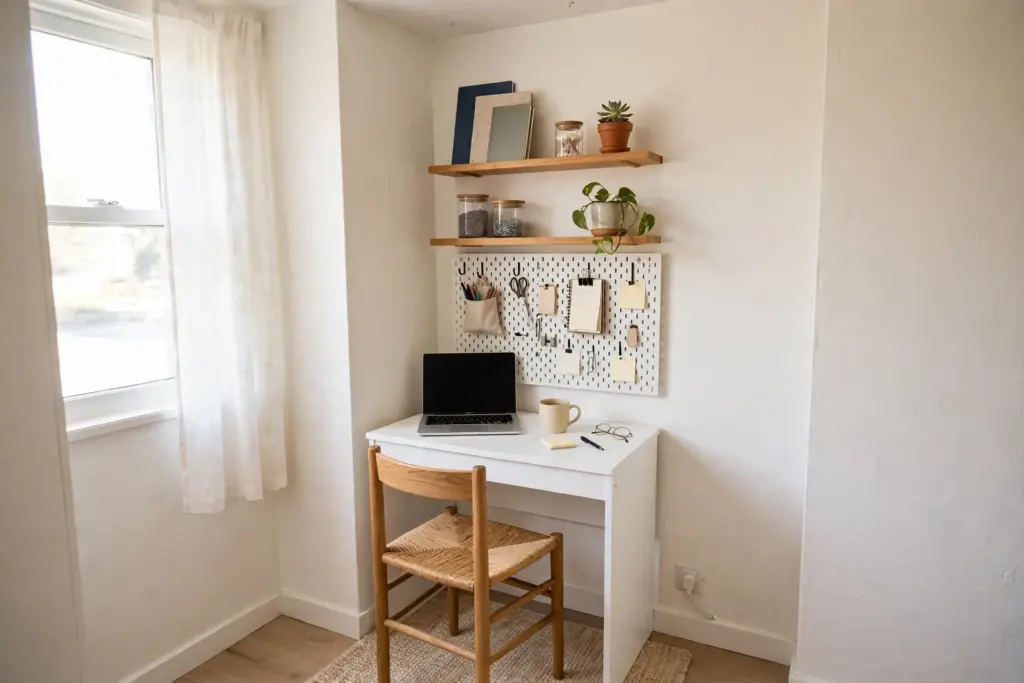
1. Add Floating Shelves Above the Desk
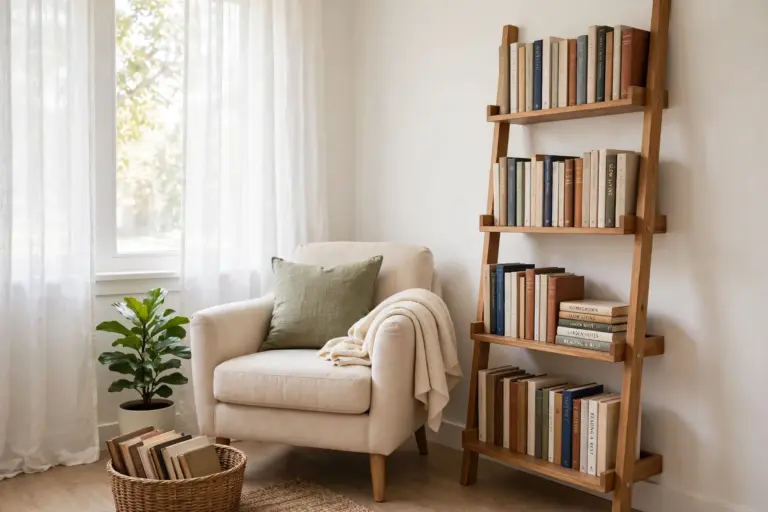
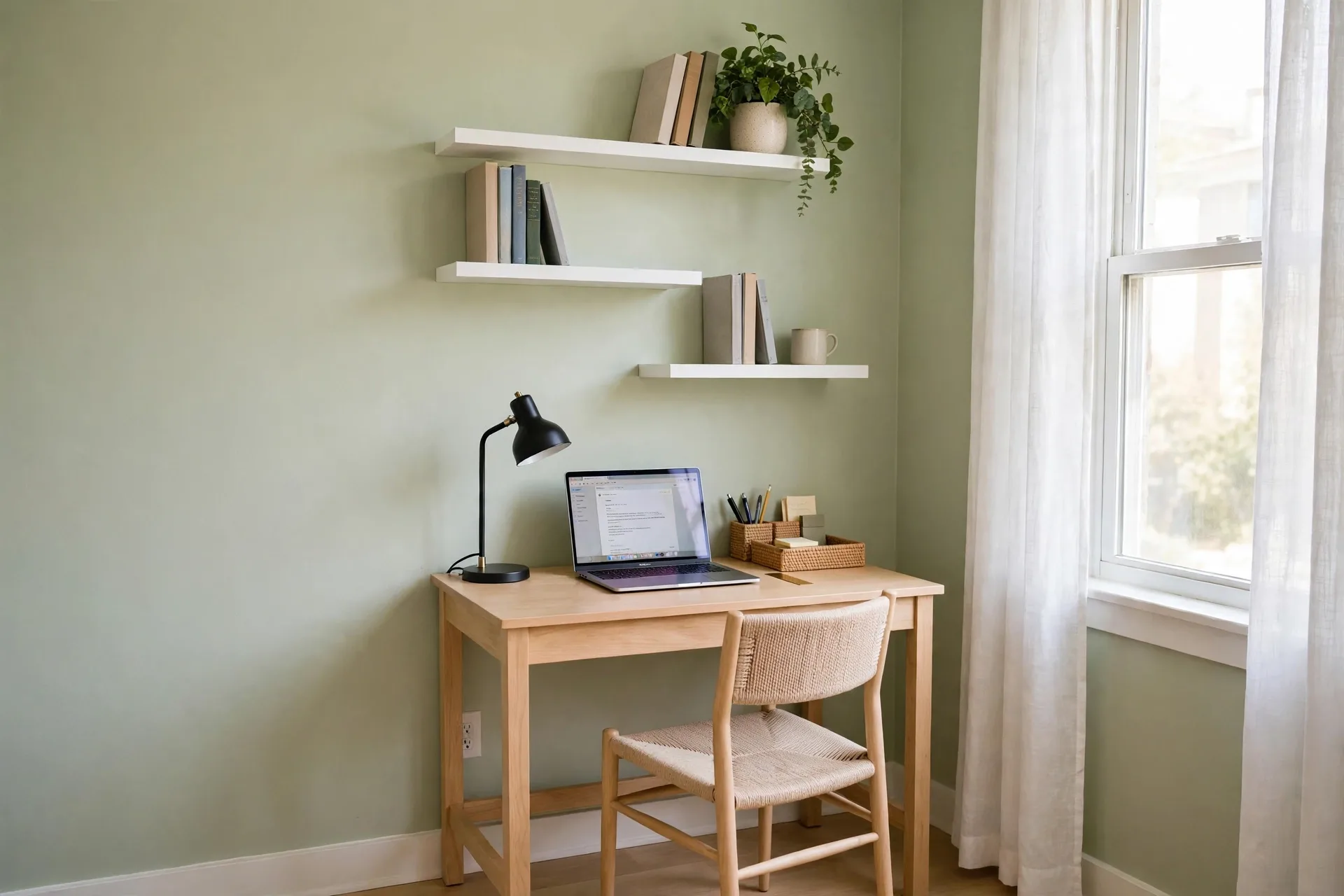
One or two shallow shelves hold books, a plant, and pens, freeing a drawerful of surface. Keep them 8 to 10 inches deep so nothing hangs over the work area. Ask the landlord before drilling and get permission in writing; if drilling is banned, a freestanding leaning shelf gives the same storage with no holes.
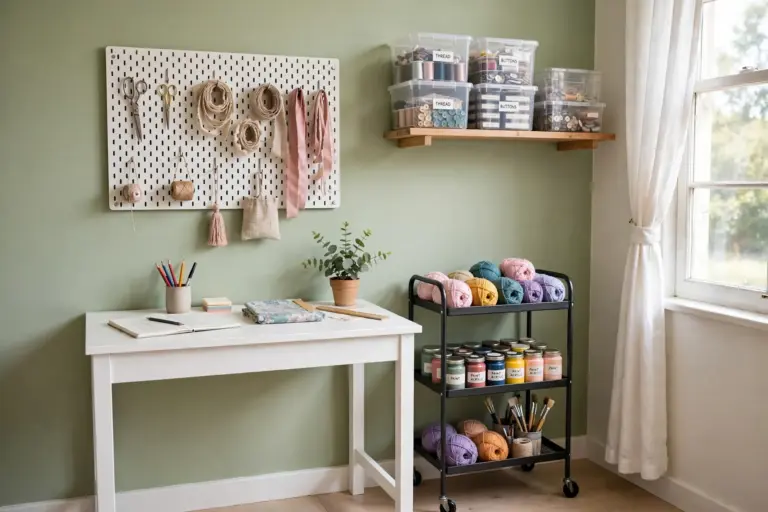
2. Hang a Pegboard Panel for Small Supplies
A pegboard turns a blank wall into a flexible grid for scissors, tape, and small cups, and it can be rearranged whenever the work changes. Choose a panel that leans on the desk or hangs from removable adhesive hooks rated for its weight. Keep heavy items low so nothing pulls the panel forward.
3. Mount a Rail With Hooks and Cups
A short metal rail with S-hooks and hanging cups is the smallest version of wall storage, and it suits renters because adhesive-mounted rails often remove cleanly. Hang one cup for pens, one for scissors, and one hook for headphones, then stop — a packed rail becomes visual clutter.
Contain the Surface: Trays, Drawers, and Caddies
Once supplies have a vertical home, the next job is containing what must stay on or beside the desk. Paper is usually the worst offender, because one pile spreads until it covers half the surface.
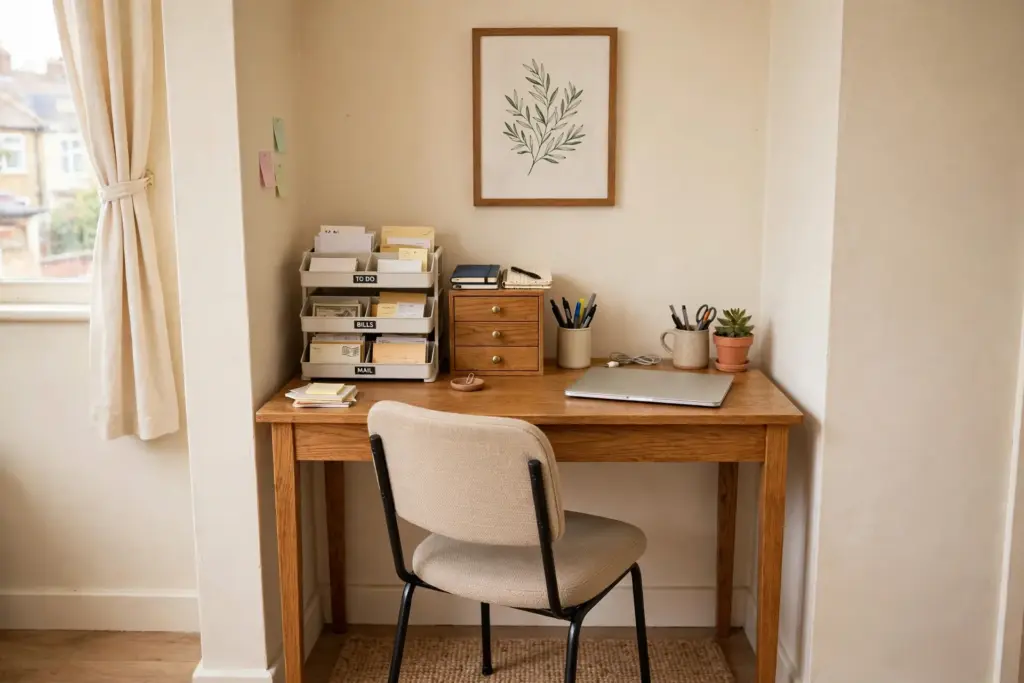
4. Run a Three-Tray Paper System
Set up three trays labeled by action, not topic: To Do, To File, and To Send. Incoming paper goes into exactly one tray the moment it arrives, and nothing sits in an unlabeled pile. A tiered tray at the back of the desk uses vertical space instead of surface. Empty the To File tray once a week.
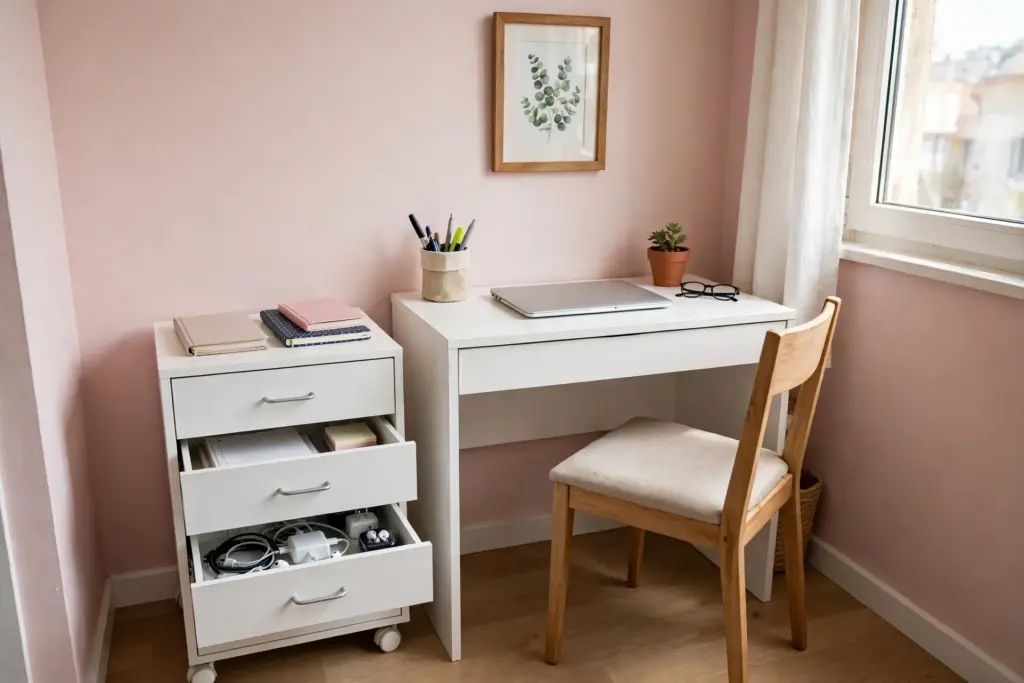
5. Park a Rolling Drawer Caddy Beside the Desk
A narrow rolling drawer unit slides into the gap beside a desk and adds two or three drawers without replacing any furniture. Use the top drawer for daily items like notebooks and chargers, the middle for reference material, and the bottom for rarely used supplies. Measure the gap first, and leave room for the chair.
6. Give Pens One Cup and Drawers One Divider Each
Pen sprawl eats a surprising amount of surface. Keep one cup for the pens actually used, and move the rest into a drawer with a simple divider tray. One divider per drawer keeps chargers from tangling with stationery. If a desk has no drawers, a small freestanding caddy serves the same purpose.
Tame Cables and Tech
Cables are the fastest way for a tidy desk to look chaotic again, and in a small apartment they also become trip hazards in narrow walkways. These systems use clamp-on and adhesive parts, so the desk itself stays untouched.
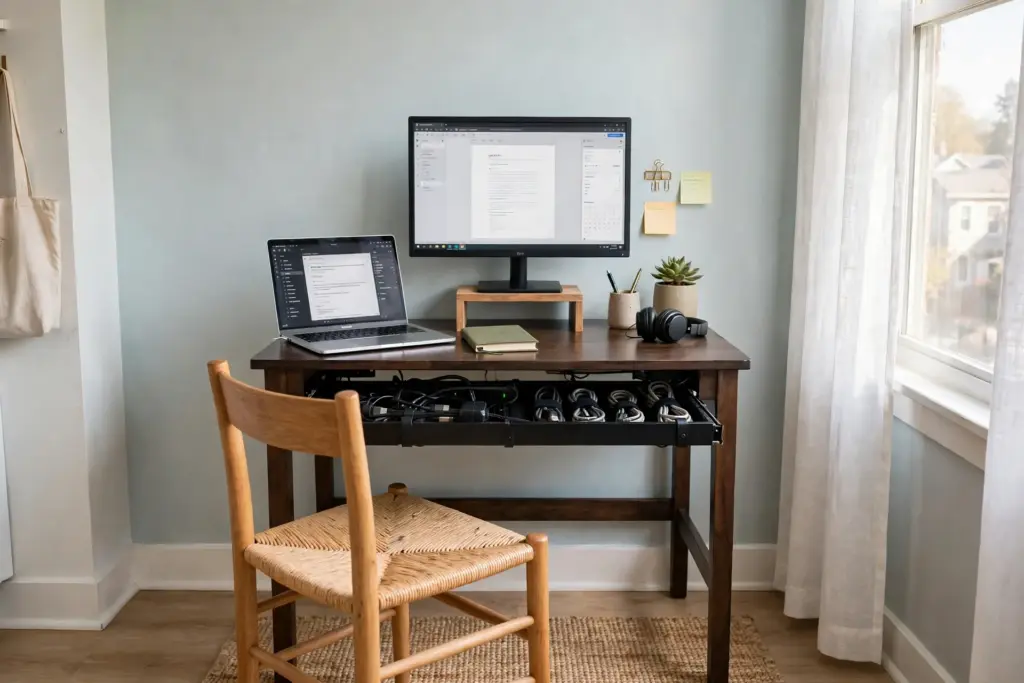
7. Clip a Cable Tray Under the Desk
A clamp-on cable tray hangs under the back edge of the desk and holds the power strip and loose cords off the floor, clearing the footwell and removing a trip hazard. Route cables with reusable ties, leaving slack so plugs are not strained. Keep power bricks ventilated, never run cords under a rug, and do not overload the power strip.
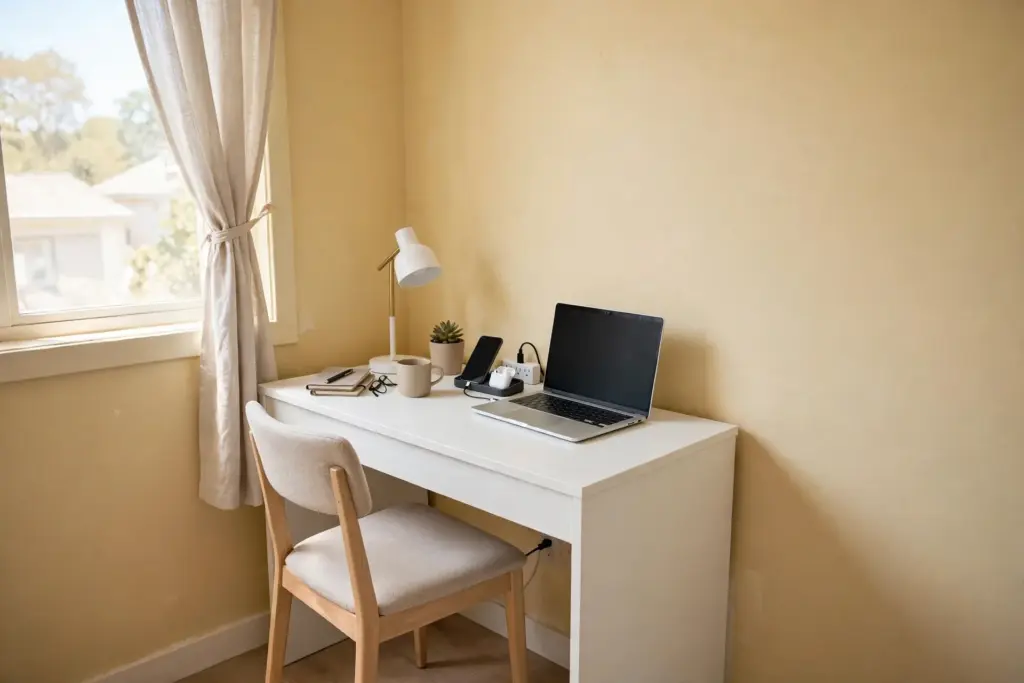
8. Create One Charging Spot for Everything
Pick one corner of the desk — or one small tray on it — as the only place devices charge. A compact charging tray holds the phone, earbuds, and tablet in one place, so chargers stop migrating across the surface. Label each cable at the plug end if several look alike, and keep the charging spot away from drinks.
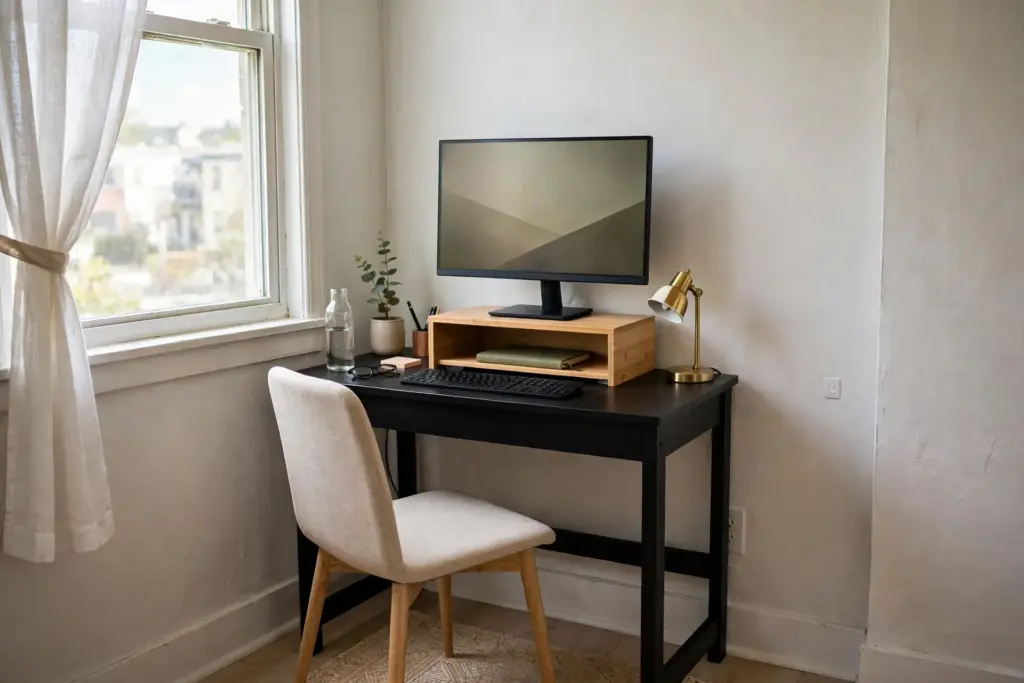
9. Raise the Monitor on a Riser With Storage
A monitor riser lifts the screen toward eye level and turns the dead space underneath into a slot for a notebook or keyboard. For laptop users, a laptop stand plus a separate keyboard achieves the same lift. The Occupational Safety and Health Administration notes that a monitor should sit directly in front of the user, at least 20 inches away. Standard desk height is generally around 29 to 30 inches.
Fold Away and Double Up
Some small apartments cannot spare a permanent desk footprint at all. These systems let a desk appear for work hours and disappear afterwards, or let one piece of furniture earn its floor space twice.
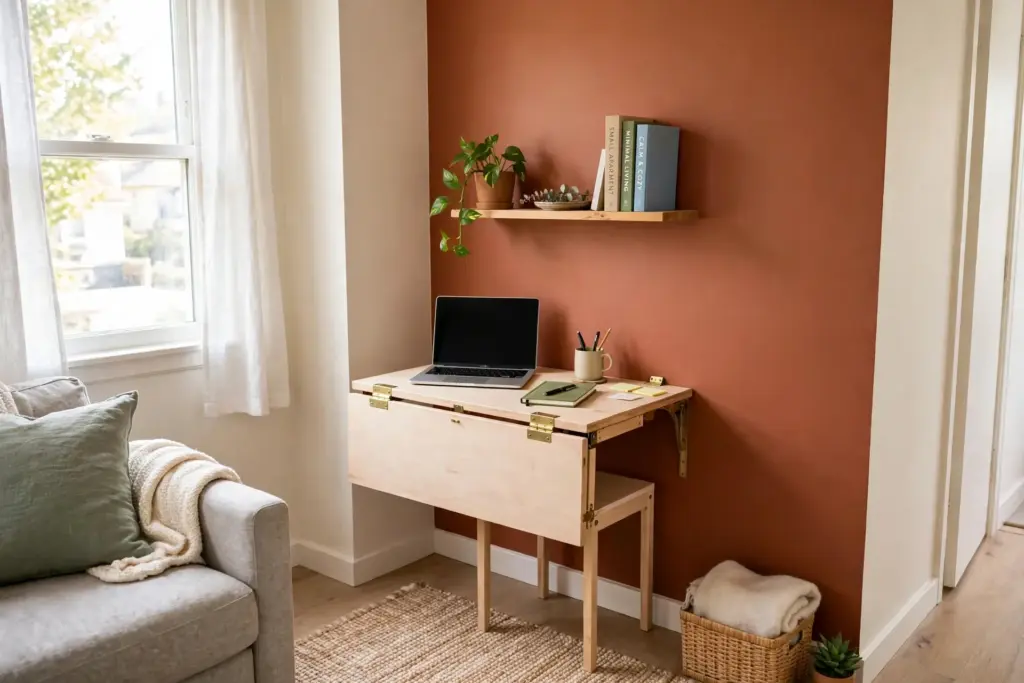
10. Install a Fold-Down Wall Desk
A fold-down desk mounts to the wall and folds flat when not in use, which is ideal for a living-room corner or hallway nook. Wall-mounted versions need screws, so get written landlord permission first and confirm which anchors are acceptable. Renters who cannot drill can use a freestanding folding table that folds flat against a wall instead.
11. Add a Clamp-On Side Shelf for Overflow
A clamp-on shelf grips the edge of the desk and adds a small side platform for a notebook, a drink, or a reference book, without widening the desk itself. This helps when the desk is just a few inches too small for the day’s work, and it removes cleanly at move-out. Check that the clamp fits the desk thickness.
12. Let the Desk Double as a Console or Vanity
When floor space is truly tight, choose a desk that can serve a second role after work hours, such as a console table in an entryway. Work supplies live in the drawer caddy or wall shelves, so the surface can be cleared in two minutes for its evening role. This only works with the shutdown routine below. For whole-home systems, these small apartment organization ideas map out a room-by-room plan.
The 5-Minute Shutdown Reset
Systems fail without a routine that maintains them, and the smallest effective routine is five minutes at the end of the workday. These final two systems are habits, not purchases, and they keep the other twelve working month after month.
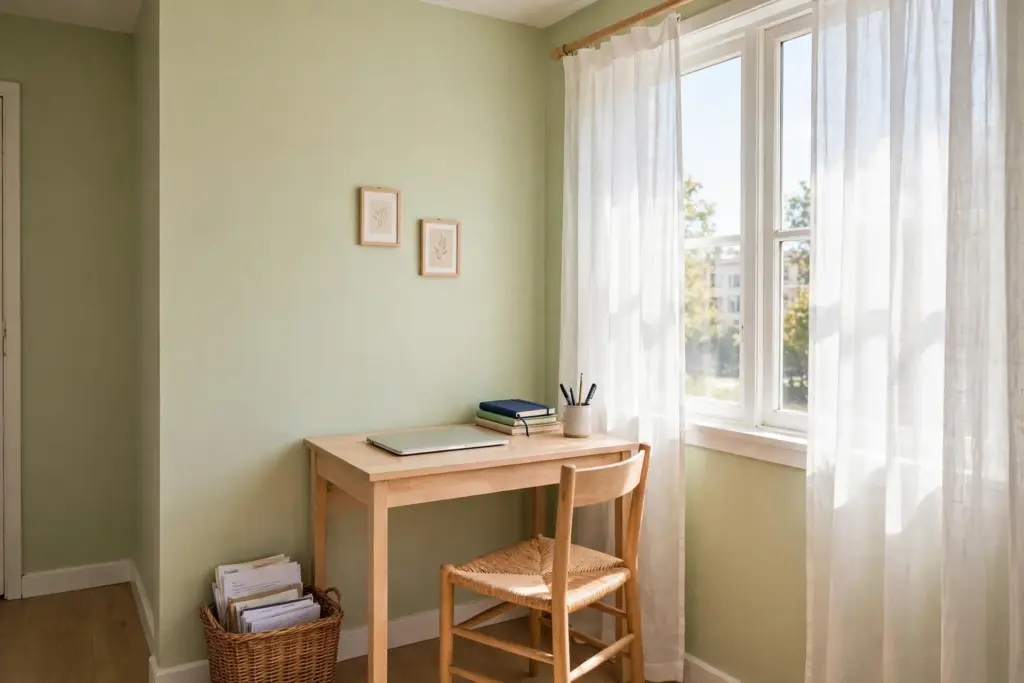
13. Run a Five-Minute End-of-Day Reset
Set a timer for five minutes and do four things: return pens to the cup, file loose paper into the three trays, coil the charging cable back to its spot, and push the chair in. Then close the laptop. The reset works because it is short enough to do even on tired days, and every morning starts at a clean desk.
14. Audit the Desk Once a Week and Remove One Thing
Once a week, look at everything on and around the desk and remove one item that does not belong there — a dead pen, an old receipt, a gadget that never gets used. The item goes to its real home, to recycling, or to a donation box, not to another pile. This weekly audit stops slow creep.
What to Skip in a Small Apartment
Not every organizer helps in a small space. The most durable desk organization ideas are the ones you will actually keep using, so skip anything that eats more surface than it saves. Oversized organizers with a dozen compartments turn a small desk into a storage display; one cup and one tray usually do more. A good test before buying: if the organizer needs its own organizer, it is too big for the desk.
Also skip any fix that risks the deposit. Drilling without permission, heavy adhesive mounts on fresh paint, and screw-in wall systems in a strict lease can all cost more than they save. The renter-friendly default is freestanding, clamp-on, or adhesive rated for removal — and when a wall solution truly needs screws, written permission first, with a no-drill backup ready. For the broader storage picture, these small apartment storage ideas cover renter-safe options room by room, and these small apartment home office ideas show workspaces that do not take over the room.
For desk setup and posture guidance, see the Occupational Safety and Health Administration’s computer workstations desk guide and the U.S. Fire Administration’s electrical and appliance fire safety tips for power strip and cord safety.
Frequently Asked Questions (FAQ)
What are the best desk organization ideas for a tiny apartment?
Start with the wall and the shutdown routine: shelves or a pegboard above the desk, a three-tray paper system, a clamp-on cable tray, and a five-minute end-of-day reset. Those four cover storage, paper, cables, and maintenance.
How can renters hang desk storage without losing a deposit?
Ask the landlord in writing before drilling anything, and keep the reply. Where drilling is not allowed, use freestanding shelves, leaning units, clamp-on trays, and adhesive hooks rated for the load and suited to the wall surface.
How do I keep desk cables tidy without drilling into the desk?
Use a clamp-on under-desk tray for the power strip and cords, reusable ties instead of permanent zip ties, and a single charging spot on the desk. Keep cords out of walkways and never under rugs, and do not overload the power strip.
What desk size works best in a small apartment?
A desk around 40 to 48 inches wide usually fits a laptop, a notebook, and a lamp without dominating a small room, while a depth of about 20 to 24 inches leaves room for a monitor at least 20 inches from the eyes. Standard desk height is generally around 29 to 30 inches.