15 Small Apartment Home Office Ideas That Don’t Take Over the Room
Working from the sofa sounds flexible until the laptop, charger, notebooks and mug have colonized the living room. The best small apartment home office ideas solve that one way: the office earns its space during work hours, then closes, folds, rolls or blends away at the end of the day. All 15 setups are built for renters first — freestanding, folding and clamp-on options come before anything needing a screw, and the one idea that does need screws is flagged permission-first.
The rule is simple: do not look for a spare room that does not exist. Look for forgotten space — a closet, an alcove, the strip behind the sofa — and furniture that can disappear. That same thinking runs through these studio apartment layout ideas.
Before You Buy Anything: Spot, Size, Power and Permission
Pick the spot before the desk. A workable spot needs room to sit with feet flat and elbows roughly level with the surface, a power outlet within reach of one strip, and light that does not fight the screen with glare. General ergonomic guidance puts a desk at roughly 28 to 30 inches high, and a laptop-only setup needs only about 20 inches of depth. Treat those figures as starting points, and adjust for your height and chair; the CDC NIOSH ergonomics guidance covers screen height, posture and breaks.
Then apply the renter screen. Freestanding, folding, tension and clamp-on pieces need no permission. Anything screwed into a wall — a fold-down desk, a floating shelf, a monitor arm — needs written permission first, fixings into studs, and respect for the manufacturer’s weight limit. Plan the power run before furniture goes in: one surge-protected strip, ventilated, never daisy-chained, never tucked under soft furnishings.
Ideas That Close Away: Doors, Lids and Curtains
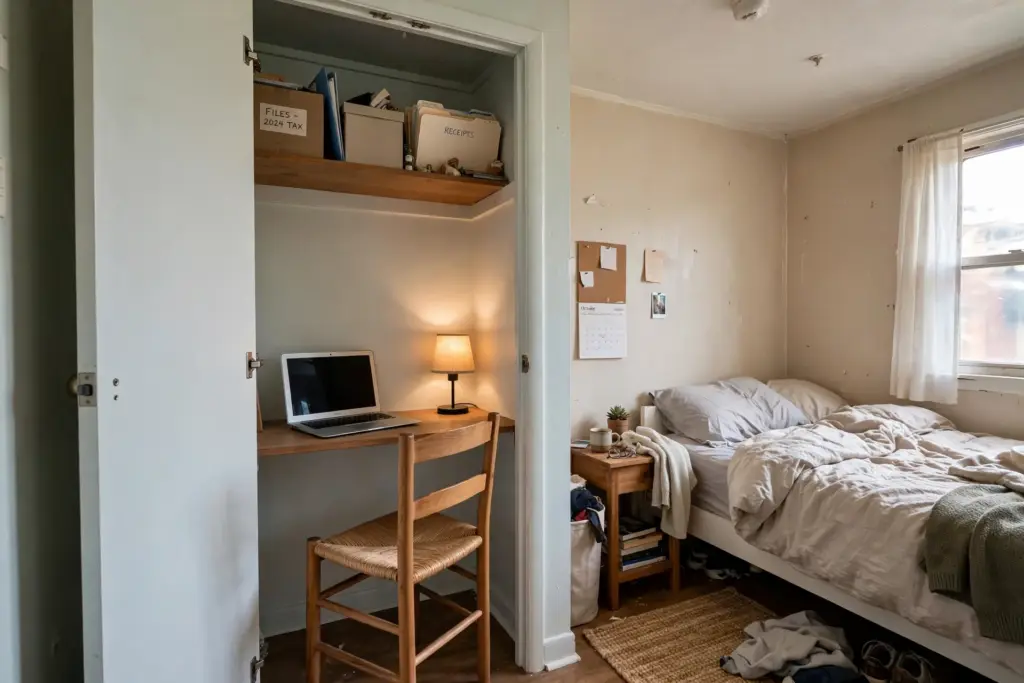
1. Turn a Closet Into a Cloffice That Shuts at 5
The closet office is the strongest close-away option because the door does the hiding. Move the hanging clothes to an under-bed box or portable rail, set a narrow desk across the closet width at desk height, and add a task light, because closets have neither light nor ventilation by default. At the end of the day the chair slides in, the door closes, and the bedroom is a bedroom again. Keep the doorway clear so the door still opens and closes freely.
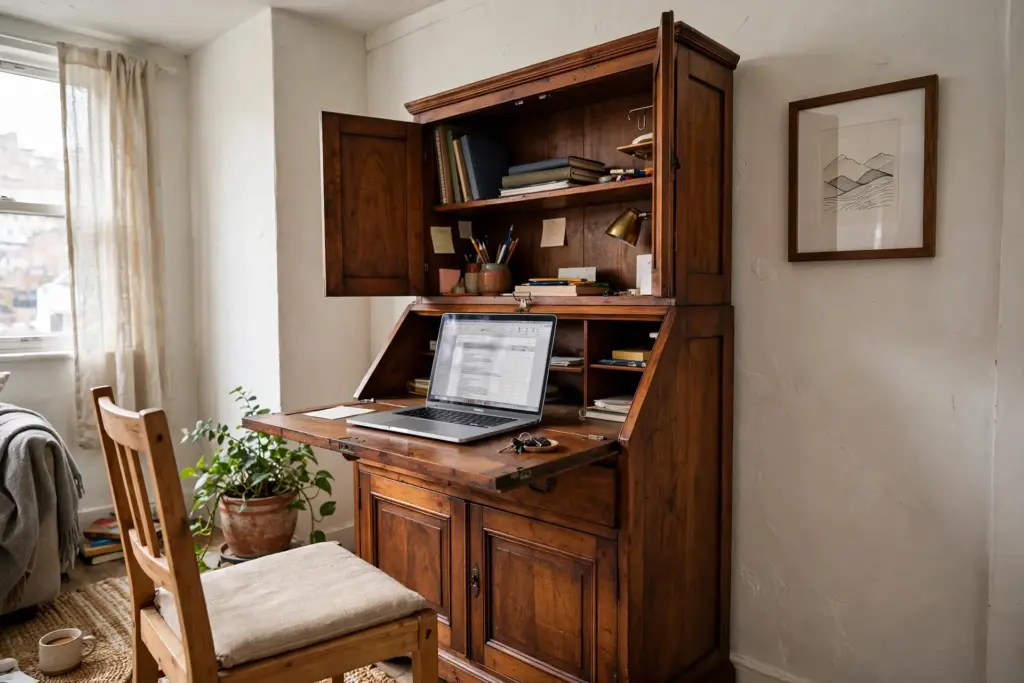
2. Use a Secretary Desk That Folds Up Into a Cabinet
A secretary desk is a freestanding cabinet whose drop-down front becomes the work surface. Open it and there is room for a laptop, notebooks and small shelves; close it and the room sees only a modest cabinet. It needs no fixings and suits a living-room corner where a permanent desk would dominate. Check the drop-down surface is level and rated for a laptop plus forearms, and choose a chair that tucks fully underneath.
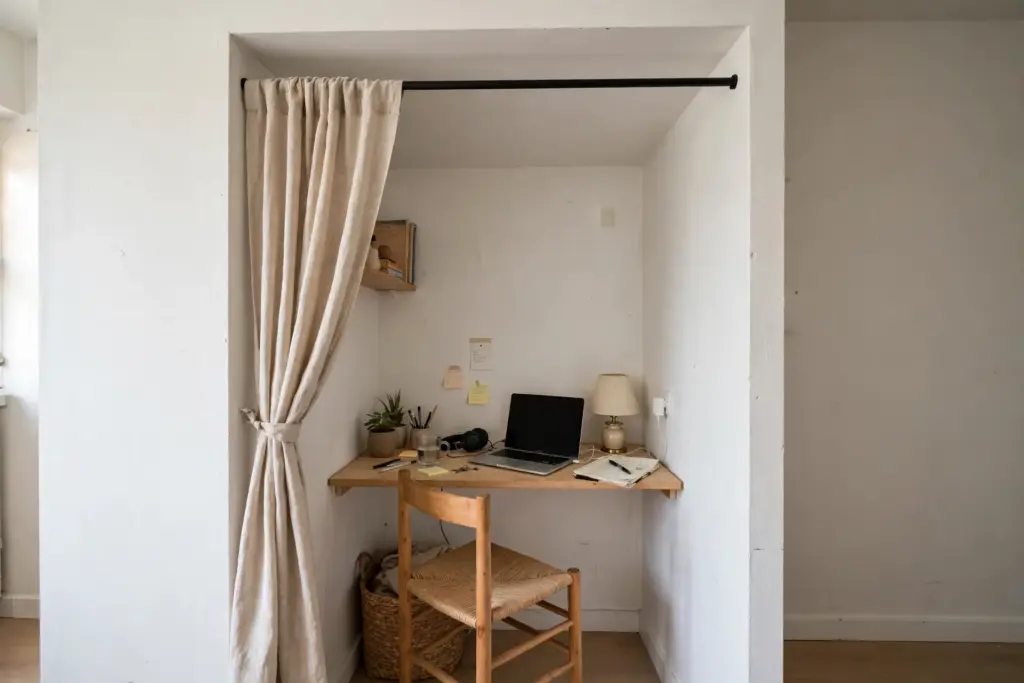
3. Hide an Alcove Office Behind a Curtain
Many rentals have an alcove too small for a dresser and too awkward for art. Fit a slim desk inside it, then hang a linen curtain across the opening on a straight tension rod — no drilling, with the rod level between two firm, parallel surfaces. Open for work, closed for evenings, the curtain is the boundary. It is a softer, cheaper cousin of the setups in these room divider ideas for studio apartments. Keep fabrics light so the rod never sags.
Ideas That Fold and Roll Away
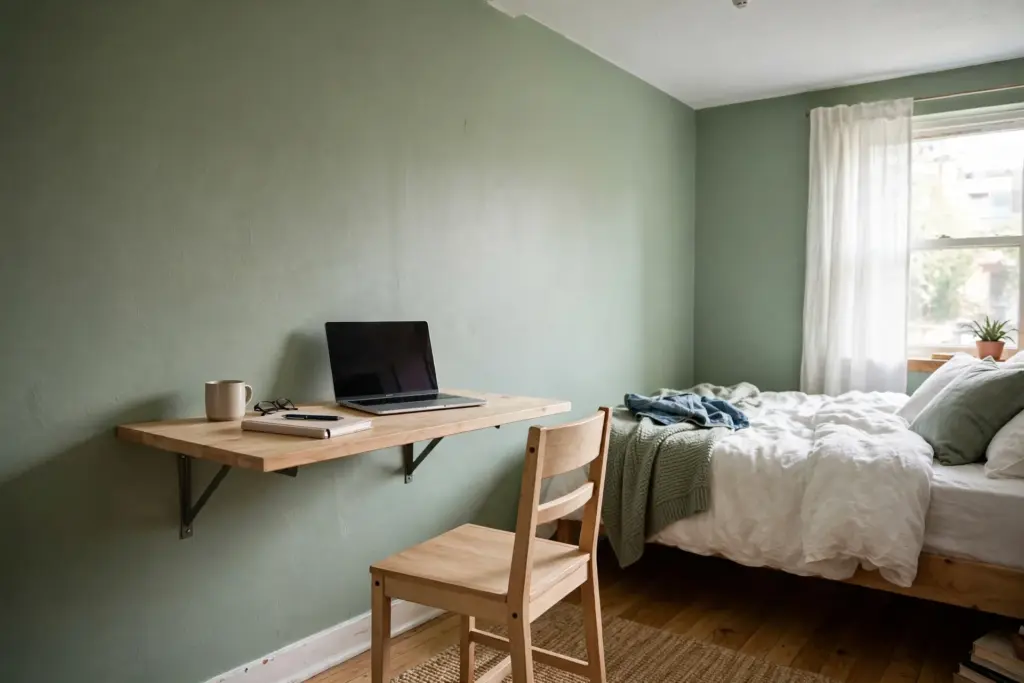
4. Mount a Fold-Down Desk — Permission First
A fold-down desk gives a full surface that folds flat against the wall, but it is the one idea here that is not damage-free. Brackets must be screwed into studs, the surface is only as strong as those fixings, and the manufacturer’s weight limit is a hard ceiling. Get written permission, locate studs properly, and keep the load light — laptop work only. Without permission, choose idea 5 instead.
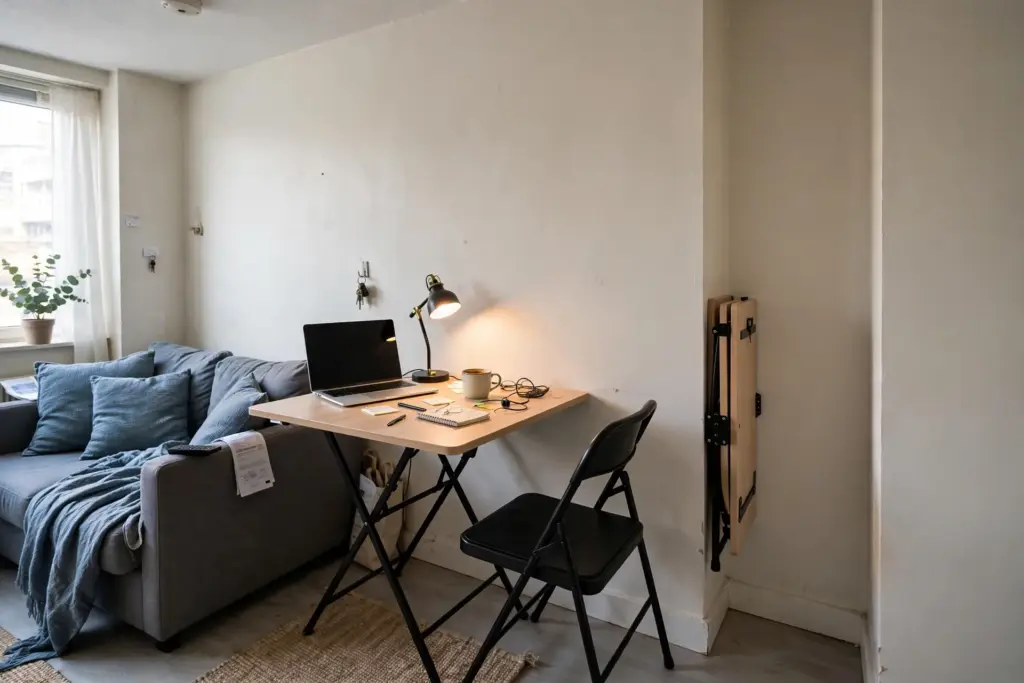
5. Choose a Folding Desk and Chair That Store Flat
A folding desk does almost the same job with zero fixings. Set it up on workdays, fold it flat behind a door, beside a wardrobe or under a bed on weekends. Pair it with a folding chair with a padded seat, because the chair is where comfort is won or lost over a full day. It is also the most guest-friendly option: the whole office vanishes in minutes when someone stays over.
6. Let a Rolling Cart Be the Filing Cabinet
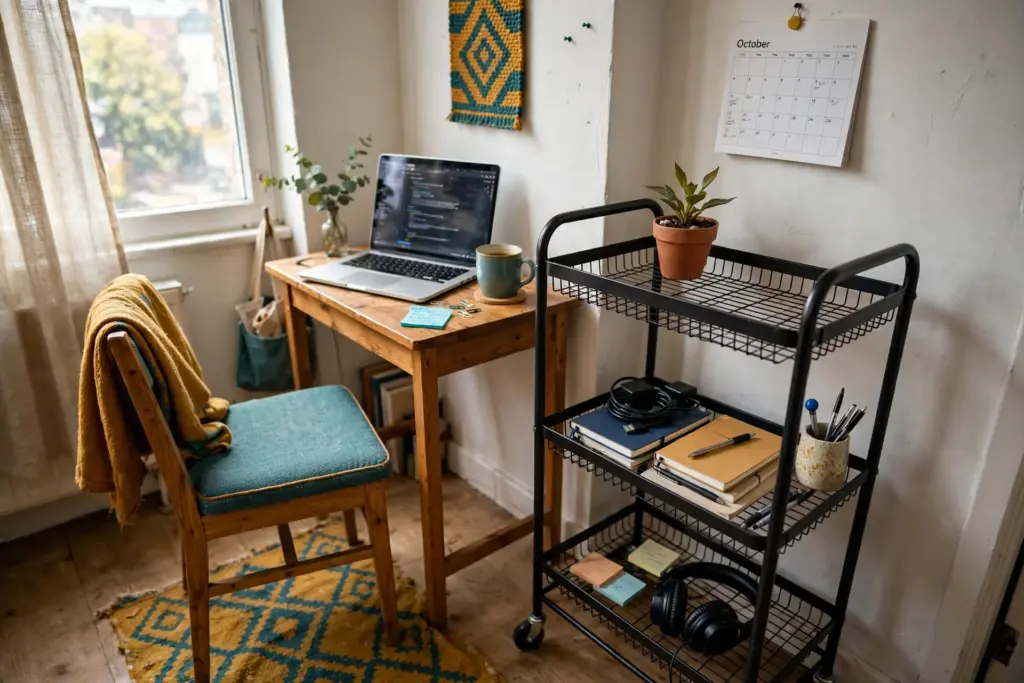
Replace the filing cabinet with a three-tier rolling cart: chargers and headphones on one tier, notebooks and files on another, the laptop parked on top at night. By day it sits beside the desk; after hours it rolls into a corner or closet, taking the clutter with it. No furniture needs to change — only where the work supplies sleep.
Ideas That Double Up and Blend In
7. Slip a Console Desk Behind the Sofa
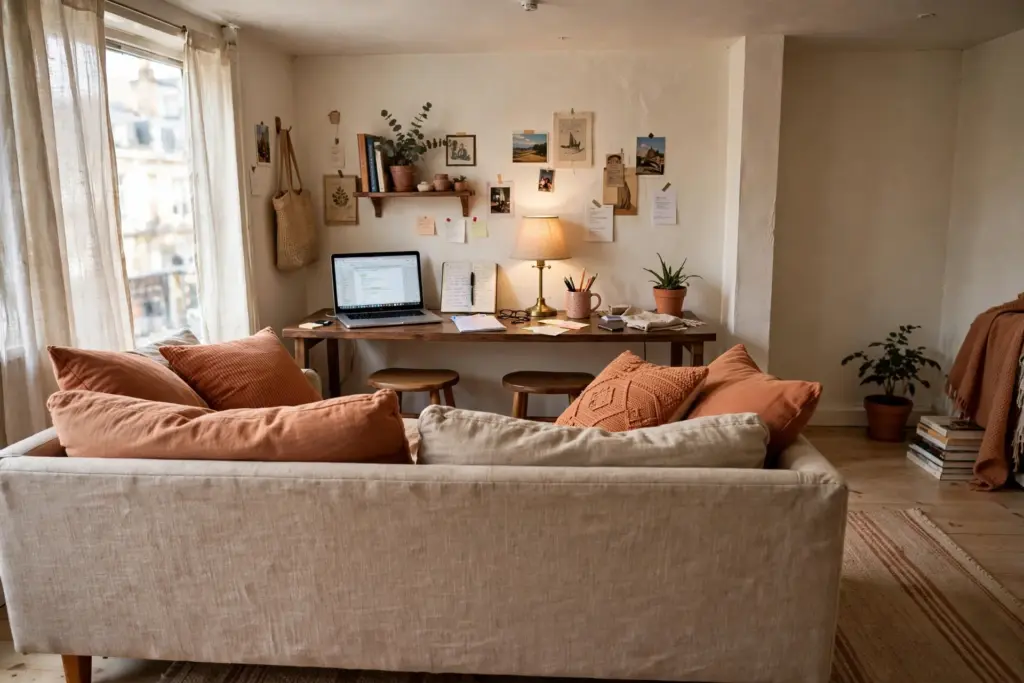
The strip behind a sofa is dead space about the width of a console table. A narrow desk there creates a real work zone facing the room, with stools tucked underneath when not in use. Pull the sofa a few inches forward, keep the depth slim, and run the power strip along the back of the desk so cords never cross the walkway. From the front, visitors see only a living room.
8. Make One Desk Serve as a Nightstand
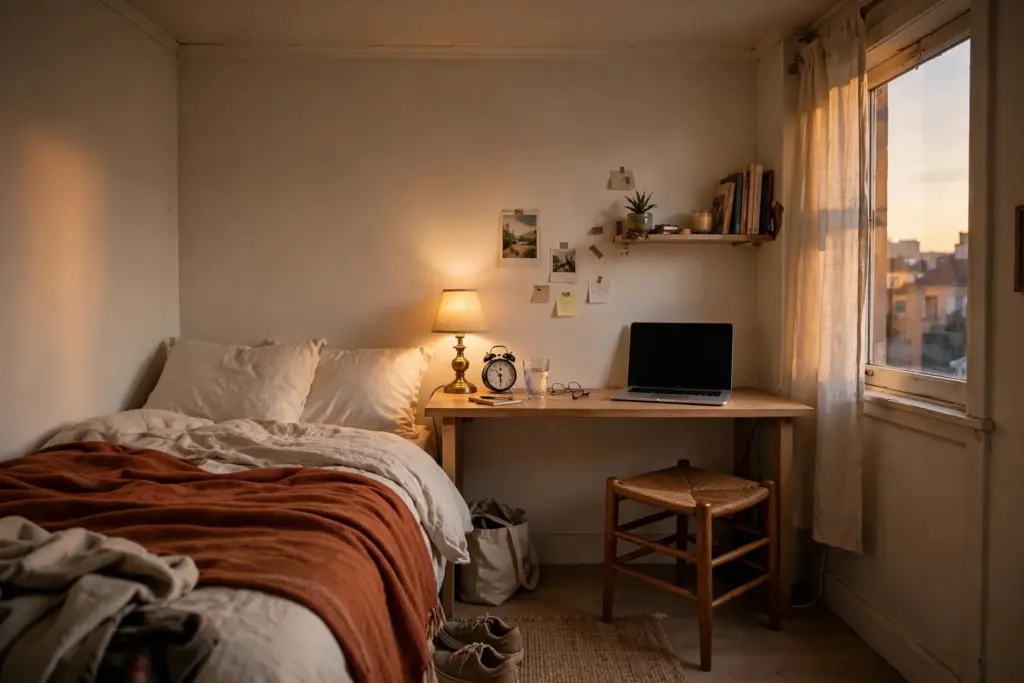
In a small bedroom, a slim desk beside the bed can hold a lamp, clock and water glass at one end and a laptop at the other. By day it is an office; by night the laptop closes and the lamp end takes over. Keep the chair light enough to slide fully under the desk, and use a small tray so nightstand items do not drift into the work half.
9. Work at the Dining Table — With a Lift-Away Tray
The dining table is the right height and already exists, but working there fails without a system. Put everything — laptop, notebook, charger, pens — on one large tray. Work time, the tray comes out; meal time, the whole office lifts away in one move and the table is genuinely clear. Add a cushion to a dining chair for long sessions.
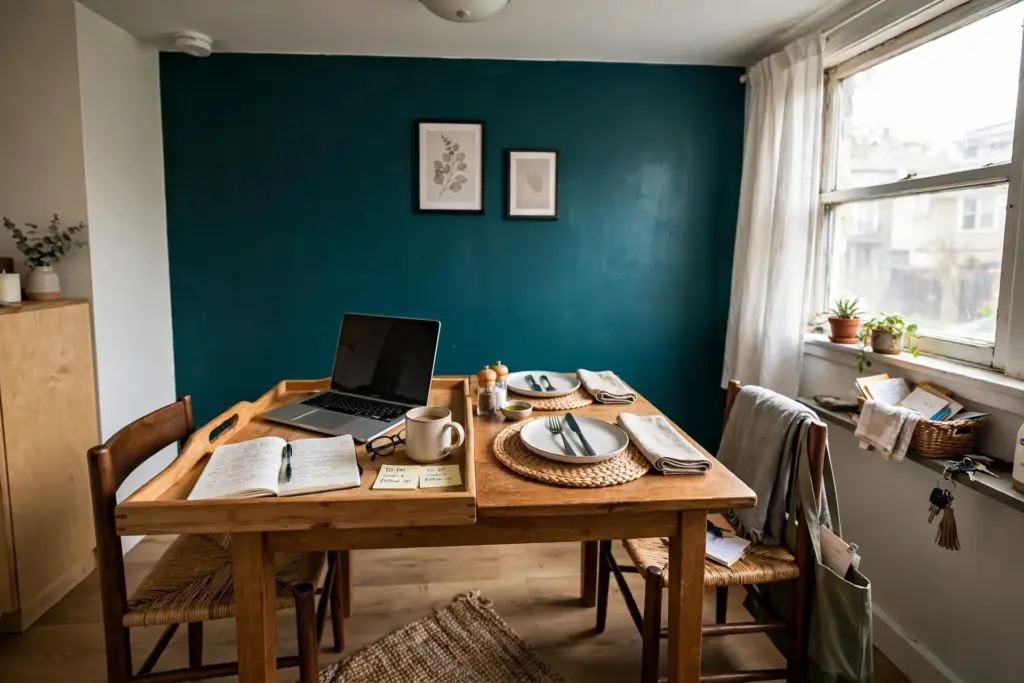
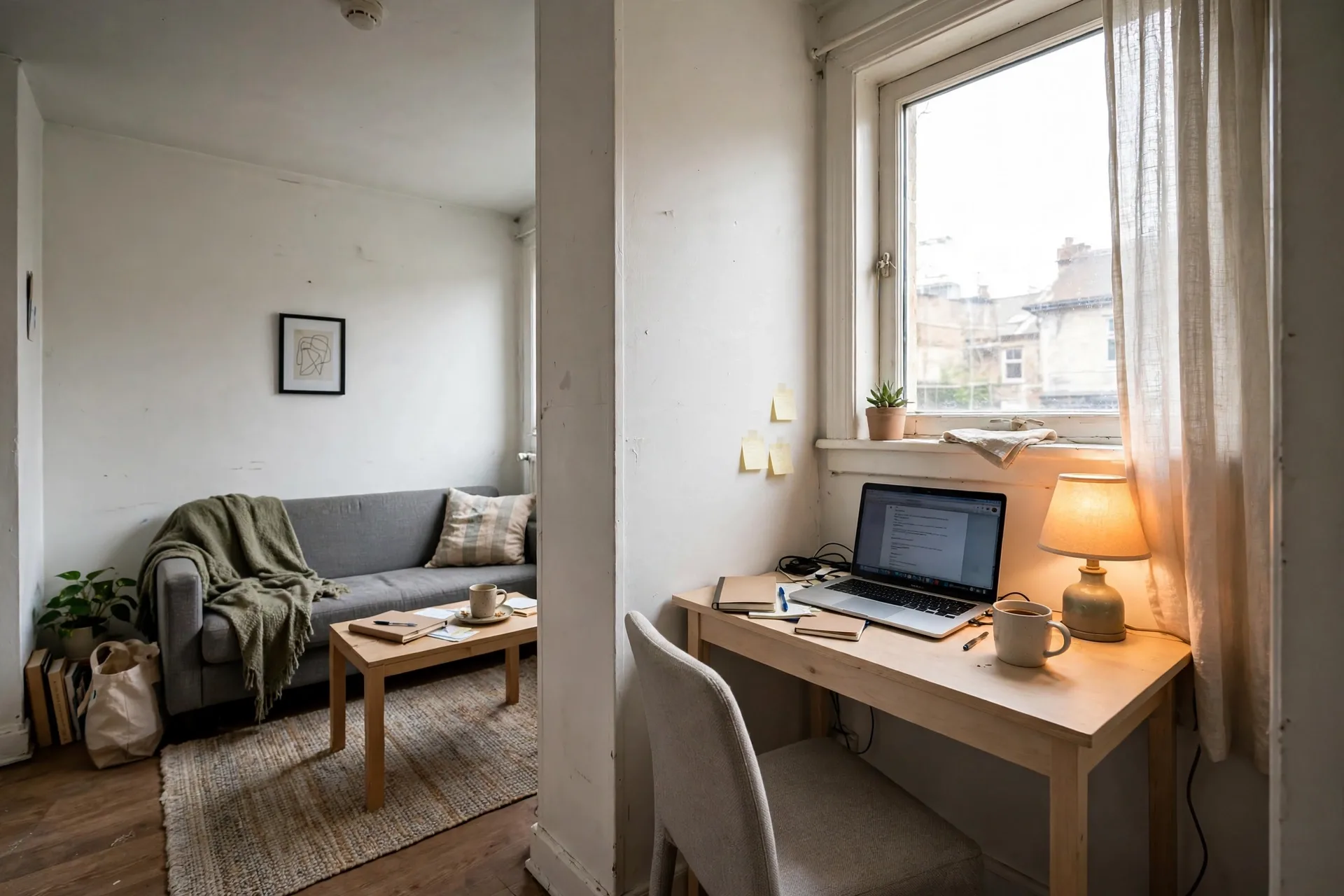
10. Take the Corner Beside a Window
Of all the permanent small apartment home office ideas, a bright corner is the best address. Sitting beside — not facing — a window gives daylight without screen glare, and a corner desk uses the patch of floor no other furniture wants. Keep it shallow, the chair compact, and the styling close to the room’s colors. The tricks in this guide to how to make a small apartment look bigger help too: light finishes keep a corner office from shrinking the room.
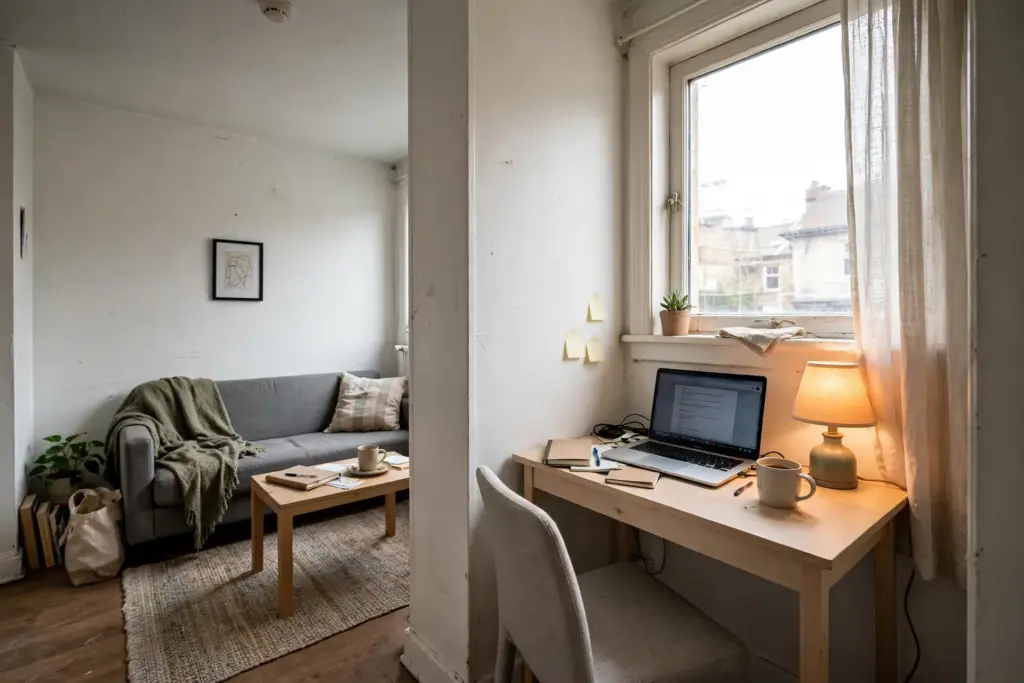
11. Build a One-Wall Office With a Freestanding Tower
One clear wall can hold an entire office if storage goes up instead of out: a slim desk, a laptop on a stand with an external keyboard, and a narrow freestanding tower beside it for files and a printer. Tall, narrow furniture must be secured against tipping — follow the maker’s instructions and the anti-tip guidance at Anchor It!, and get permission if securing it needs a wall fixing. A small rug under the chair marks the zone.
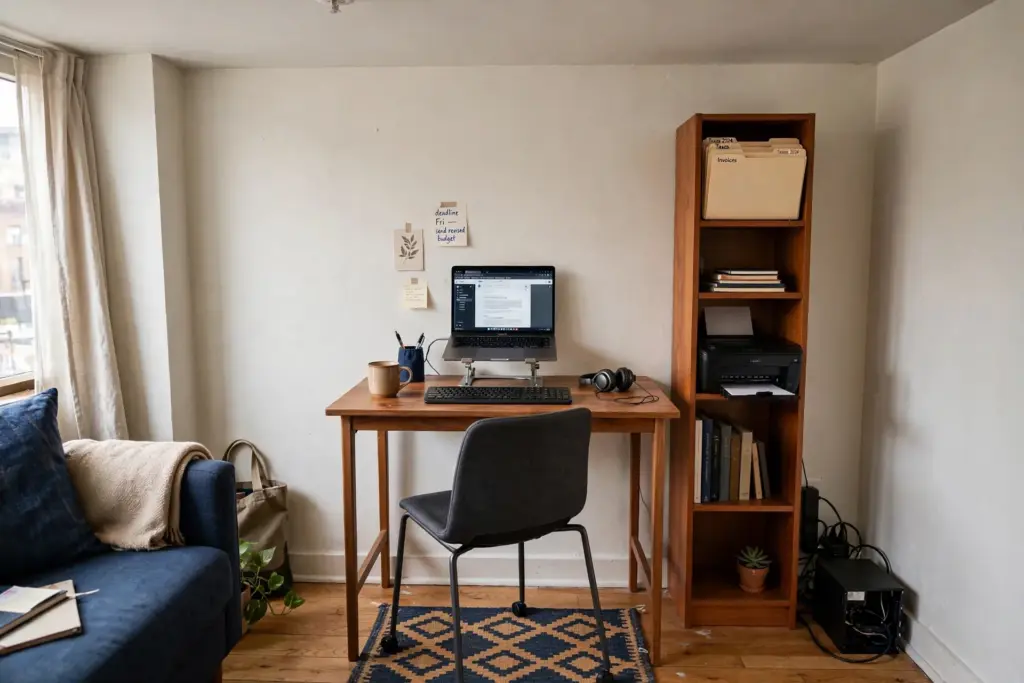
12. Claim the Hallway Nook Nobody Uses
Wide hallways and entry alcoves often fit a desk of 30 to 36 inches, even when no room can spare one. Measure first: the chair must not block doors or the route to the bathroom, and the desk must never narrow an exit path. A battery lamp avoids cords across the walkway, and a rolling cart (idea 6) parked beside it at night keeps papers out of sight.
13. Draw the Boundary With a Divider, Rug or Lamp
In a studio, the office needs a boundary more than walls. A bookcase, a folding screen or even a change of rug tells the brain where work ends — and tells a partner or roommate the same thing. Position it so the desk is hidden from the bed or sofa sightline; not seeing work after hours is half of not feeling taken over by it.
14. Raise the Screen and Fix the Chair Before Anything Else
Ergonomics is where small setups usually cheat, and it is the wrong place to save space. A laptop stand or sturdy stack of books that brings the screen closer to eye level, paired with an external keyboard, beats hunching over a low screen. If only one real chair fits, make it a compact task chair with back support, and add a cushion and footrest box if feet do not reach the floor. Small is fine; slumped all day is not.
15. Finish With Cable Control and a Five-Minute Reset
What makes an office feel like a takeover is usually not the desk — it is the cords, chargers and paper spreading from it. A cable box on the floor, one labeled charger per device, and clips at the back edge of the desk contain the sprawl. Then build in the reset: laptop closed, notebook in the cart or cabinet, chair tucked in. Five minutes, every evening, and the best small apartment home office ideas stay ideas for work hours only — never a permanent second tenant.
FAQ: Small Apartment Home Office Questions
How much space does a small apartment home office actually need?
A laptop setup needs a surface about 20 inches deep and 32 to 40 inches wide. With a compact chair tucked in, the zone fits in about 3 by 4 feet, and close-away options need no floor space once closed.
Is a cloffice renter-friendly?
Usually, yes, because a basic cloffice is furniture inside a closet, not a renovation. Keep fixings out of it unless permission is given, make sure the door still opens and closes freely, and add light and airflow — closets have neither by default, so long sessions need the door open.
Do fold-down desks and floating shelves need landlord permission?
Yes. Anything screwed into the wall needs written permission first, fixings into studs, and respect for the manufacturer’s weight limit. Freestanding, folding, tension and clamp-on alternatives in this list achieve similar results with no holes at all.
How can a home office avoid taking over a small living room?
Choose a setup with an off state — it closes, folds, rolls or lifts away — and reset it daily. A boundary, contained cables and one home for every item stop the spread that feels like a takeover.
Keep Reading
Keep Reading: 7 Studio Apartment Layout Ideas for Sleeping, Working, and Living · 12 Room Divider Ideas for Studio Apartments · How to Make a Small Apartment Look Bigger: 16 Tricks That Cost Less Than Remodeling