

12 Renter-Friendly Shower Head Ideas for Apartments
The cheapest bathroom upgrade in a rental takes ten minutes, one wrench, and no plumber. A renter friendly shower head swap replaces the tired, low-pressure head the landlord left behind with one that fits the way you shower — stronger spray, a handheld wand, a filter for hard water, or a wide rain head that makes a small tub feel like a spa. Everything below unscrews as easily as it screws on, so the original goes back before move-out and the deposit stays safe.
Before You Swap: The 10-Minute Renter Checklist
Most leases allow a shower head change because it is a reversible fixture swap, not an alteration to the plumbing — but “most” is not a promise, so read the lease clause on fixtures first. A quick written note to the landlord describing the swap covers the rare lease that asks for approval. Before buying anything, check the shower arm: nearly every apartment in the US uses a standard 1/2-inch threaded arm, so almost any replacement head fits without an adapter. Photograph the original head in place, then unscrew it by hand — counter-clockwise — and put it in a labeled bag with its washer. That bag is the whole move-out plan. Buy a small roll of plumber’s tape (also called Teflon tape) at the same time; a few wraps around the arm threads stop the slow drip that gives a new head a bad name.
12 Renter-Friendly Shower Head Ideas for Apartments
Every idea below is a straight swap onto the existing shower arm — no drilling, no new plumbing, and nothing the landlord needs to approve beyond the fixture clause. A renter friendly shower head upgrade works in a tub-shower combo and in a walk-in stall, and each one solves a different everyday annoyance, from weak pressure to hard water to a head that sits too low.
1. A Handheld Head on a Hose
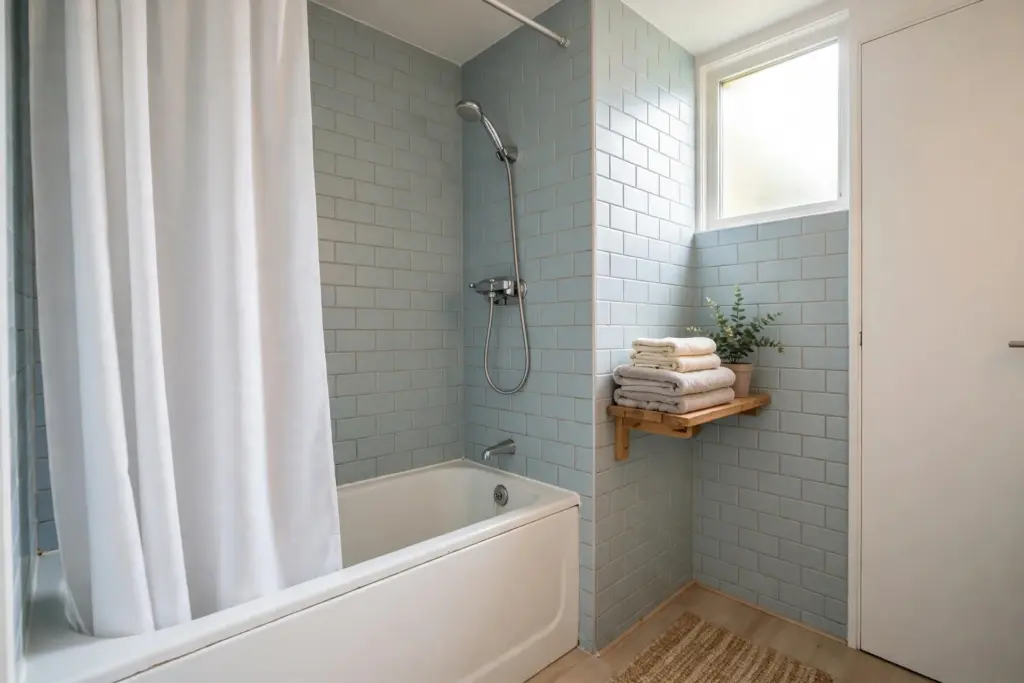
The single most useful swap for a small apartment bathroom is a handheld head on a flexible hose. It docks on the arm like a normal head, but it lifts off for rinsing shampoo at the roots, washing a child or a pet, and hosing down the tub walls after cleaning — jobs a fixed head cannot do at all. Look for a hose at least 60 inches long so the head reaches the far end of the tub.
2. A High-Pressure Head for Weak Apartment Flow
Old apartment buildings often deliver weak flow to the top floors, and a head designed for low pressure can make the same water feel twice as strong. These heads use smaller, angled nozzles to speed the stream up, and many include a removable flow restrictor for buildings where the pressure is already fine. If the shower feels like a drizzle even with the valve fully open, this is the first swap to try.
3. A Wide Rain Head for a Spa Feeling
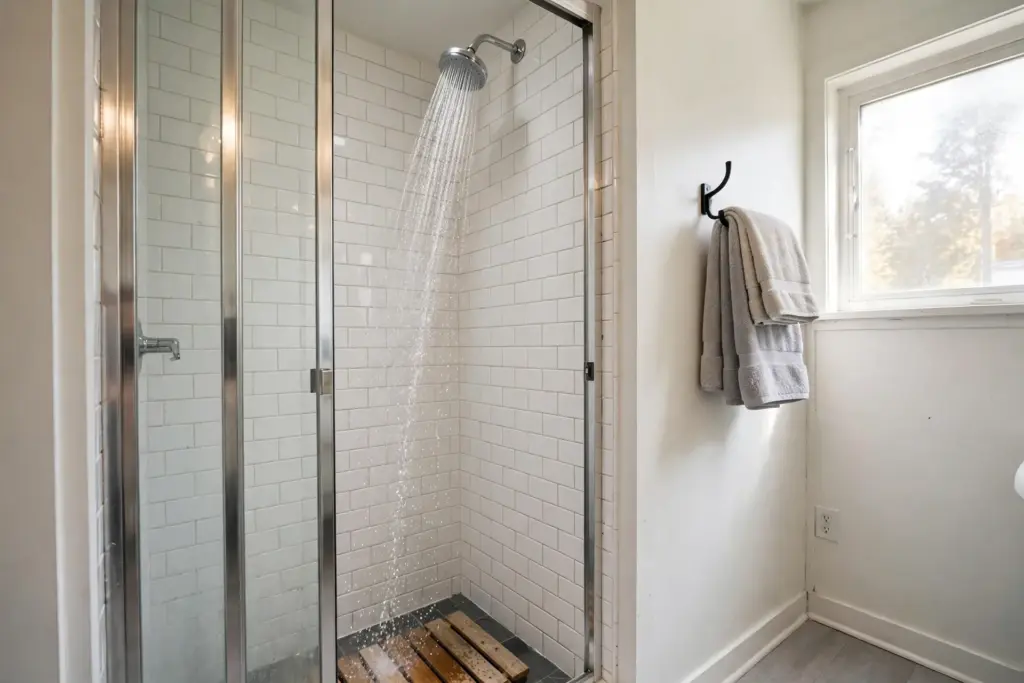
A rain head spreads water across a wide, flat face so the spray falls straight down instead of jetting sideways. In a small tub-shower it turns an ordinary morning into something calmer, and the wide face also rinses shampoo faster because it covers more hair at once. Choose a face between 8 and 10 inches for a standard apartment shower; anything larger needs more flow than most rentals deliver and ends up feeling weak.

4. A Dual Head: Fixed Plus Handheld
A dual setup pairs a fixed head with a handheld wand on one diverter, so the shower works both ways without choosing. Use the fixed head for a normal shower, flip the diverter to the wand for rinsing, or run both together on a cold morning. The diverter screws onto the existing arm first, then both heads attach to it — still no tools beyond a wrench and tape. For the decorating principles behind the whole project, see these renter-friendly apartment decorating ideas.

5. A Filtered Head for Hard Water
Hard water leaves chalky spots on glass, dries skin out, and can leave hair feeling coated no matter how much conditioner goes on. A filtered head holds a replaceable cartridge — usually a mineral or vitamin C filter — that softens the water before it reaches the spray. The cartridge twists out every few months and a fresh one twists in, with no plumbing involved. It will not fix truly extreme mineral levels, but in a typical hard-water apartment the difference is noticeable within a week.
6. A Water-Saving Head That Still Feels Strong
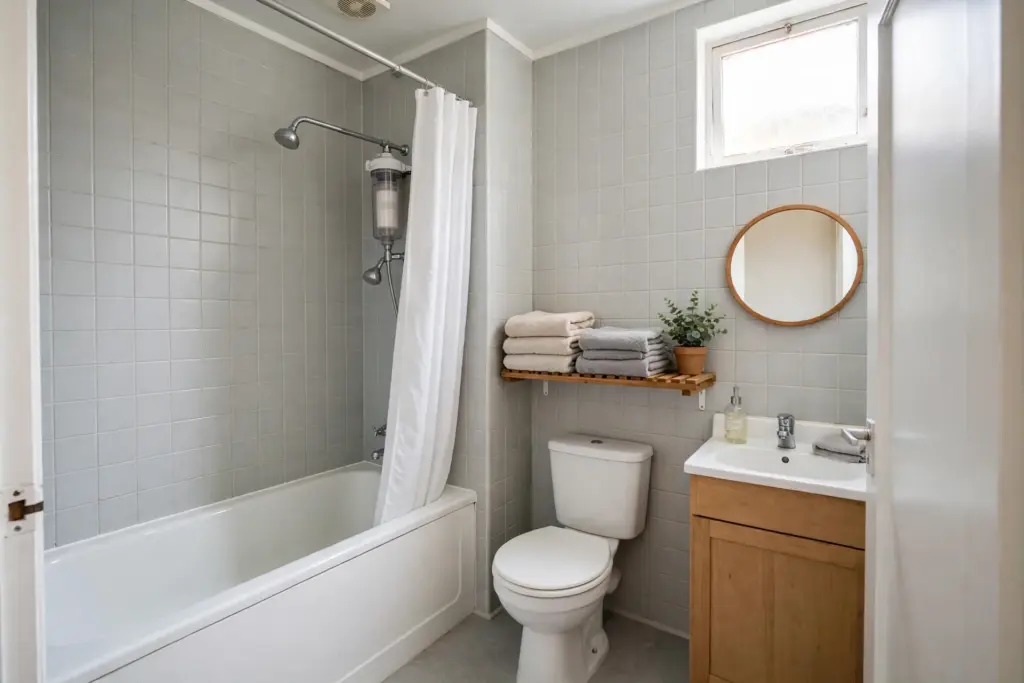
Standard heads use 2.5 gallons per minute, while WaterSense-labeled heads use no more than 2.0 gallons per minute and must still pass spray-force tests — the US Environmental Protection Agency estimates the average family saves about 2,700 gallons a year by switching. Where water is metered, the saving shows up on the bill. A well-designed low-flow head feels just as strong because it mixes air into the stream, so the swap costs nothing in comfort.
7. An Adjustable Slide-Bar Holder That Clamps to the Arm
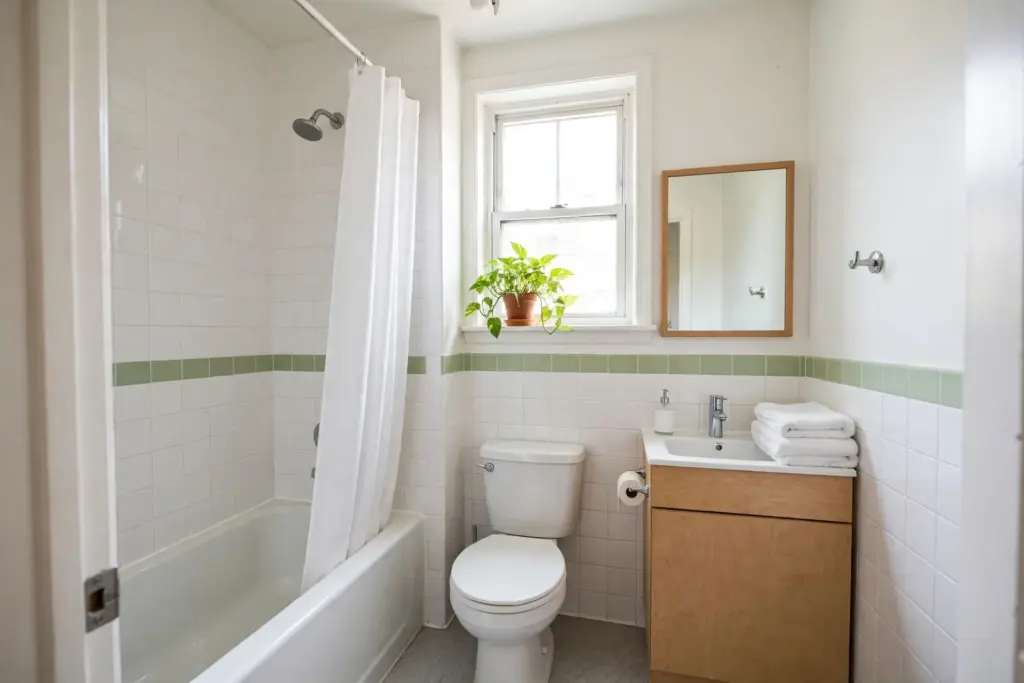
Fixed heads sit at one height, which is a problem when the household ranges from a small child to a tall adult. A slide-bar holder that clamps onto the existing shower arm — not screwed into tile — lets the handheld wand park at any height along the bar. Nothing gets drilled, nothing sticks to the tile, and the bar comes down with the head at move-out.
8. A Finish Swap for Instant Style
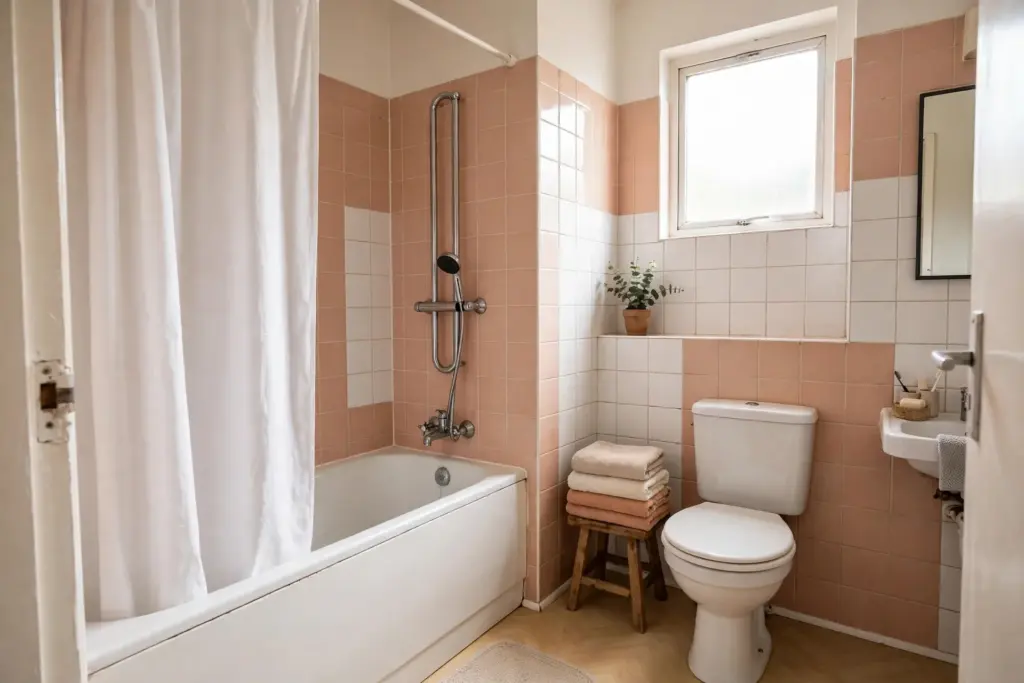
Sometimes the problem is not the spray at all — it is the dull, pitted chrome head that dates the whole bathroom. Swapping to matte black, brushed nickel, or brushed brass changes the room’s focal point for the price of one fixture, and the finish can echo the faucet, the towel hooks, or the mirror frame. Keep the finish consistent across the small visible pieces and the bathroom looks intentionally designed rather than patched together.
9. An S-Shaped Arm Extender to Fix the Height
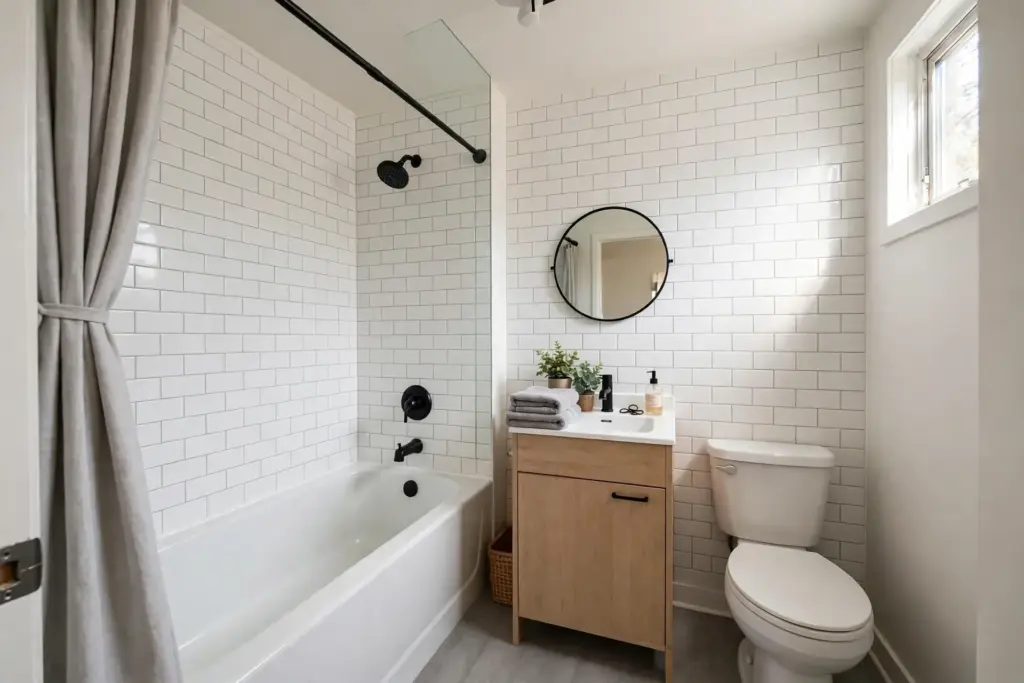
In many rentals the shower arm sits low, so a tall person ducks under the spray and a rain head would hang at forehead height. An S-shaped arm extender screws between the wall arm and the head, raising the head by several inches and pushing it out over the middle of the tub. It uses the same 1/2-inch threads on both ends, needs only plumber’s tape, and removes cleanly. For a short household the same extender can angle the head lower instead.
10. A Handheld Head With a Pause Button
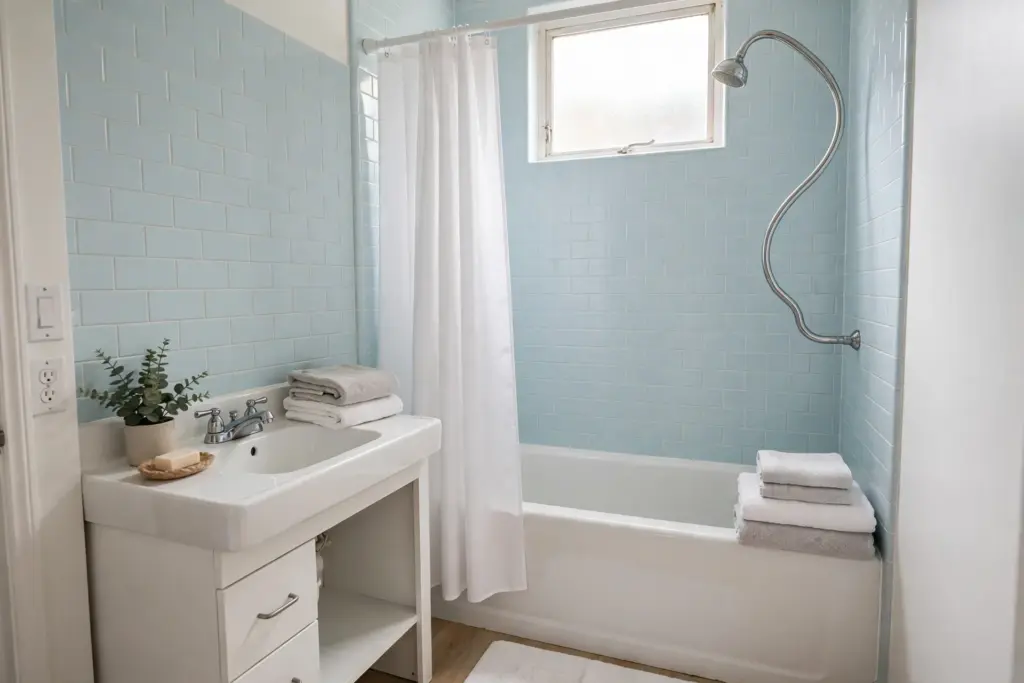
A pause button on the handle stops the flow while lathering, shaving, or soaping a child, then restarts it at the same temperature — no re-adjusting the hot and cold taps every time. It saves water without a low-flow head, and it is the kindest option for households where someone needs extra time in the shower. The button sits on the handle itself, so it works with any standard arm and hose.
11. A Multi-Mode Head With Massage and Mist Settings
One head with a rotating dial can switch between a full rain spray, a focused massage jet, and a fine mist. The massage setting helps after a long day on your feet, the mist setting is gentle enough for rinsing a child’s hair without tears, and the full spray handles the everyday wash. Because the modes live in the head itself, the swap is still a single unscrew-and-screw-on job.
12. A Head That Matches the Bathroom You Already Have
The best-looking swap is the one that belongs in the room it lands in. A chrome head suits a white-and-gray bathroom, a brass finish warms up cream tile, and a slim modern head looks wrong above a vintage clawfoot-style tub — pick the shape and finish that echo what is already there. Photograph the bathroom before ordering and skip anything oversized for a small stall. For storage ideas that complete the same small bathroom, see these small bathroom storage ideas for renters.
How to Swap a Shower Head in 10 Minutes
A renter friendly shower head swap is a ten-minute job with two supplies: plumber’s tape and a cloth. Turn the shower off, unscrew the old head counter-clockwise by hand, and if it sticks, wrap a cloth around the connecting nut and use pliers gently while holding the shower arm steady with the other hand — never let the arm twist, because a loosened arm can leak inside the wall. Clean the arm threads with an old toothbrush, pick off any old tape, then wrap fresh plumber’s tape clockwise around the threads three to five times. Screw the new head on clockwise by hand until snug, give it a quarter-turn with pliers through the cloth, and turn the water on slowly to check for drips. Family Handyman’s three-step guide to changing a shower head shows the same process with photos, and the EPA’s WaterSense showerhead page explains how the 2.0-gallon-per-minute limit works and why labeled heads still pass spray tests.
What to Do With the Original Head
Keep the original head, its washer, and any small parts together in a labeled zip bag, stored with the lease paperwork or in the linen closet — not in a box that gets buried. A week before moving out, swap the original back on with fresh tape, wipe the arm clean, and check for drips. The bathroom should look exactly as it did on move-in day, and the upgraded head packs into the moving box for the next apartment.
Frequently Asked Questions (FAQ)
Can renters change a shower head without landlord permission?
Most leases allow it because swapping a shower head is a reversible fixture change, not a plumbing alteration — but the lease is the final word, so check the fixtures clause and send the landlord a short written note first. Keep the original head safe and restore it before moving out.
Will any shower head fit an apartment shower arm?
Almost always yes: most US apartments use a standard 1/2-inch threaded shower arm, and most replacement heads are made for that size. Check the head’s box for “fits standard 1/2-inch arms” before ordering, and keep the receipt in case an adapter is needed.
How much does a renter-friendly shower head cost?
A solid replacement head costs roughly $20 to $50, with filtered and dual-head models running higher. Add a few dollars for plumber’s tape if it is not included in the box. The swap needs no plumber and no extra parts in most apartments.
Does a low-flow shower head feel weak?
Not a well-designed one. WaterSense-labeled heads must pass spray-force and coverage tests, and many mix air into the stream so the spray feels full at 2.0 gallons per minute or less. A high-pressure or air-infusion model is the safest pick for a building with already-weak flow.
Can a shower head swap damage the plumbing?
It should not, as long as the shower arm is held steady while the old head comes off and the new one goes on. Letting the arm twist can loosen the fitting inside the wall, so grip the arm with one hand and turn the head with the other — and call a plumber instead of forcing a seized connection.