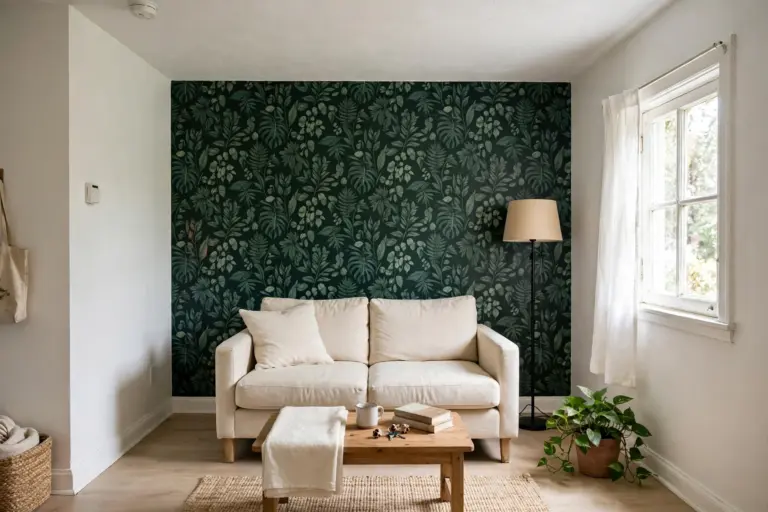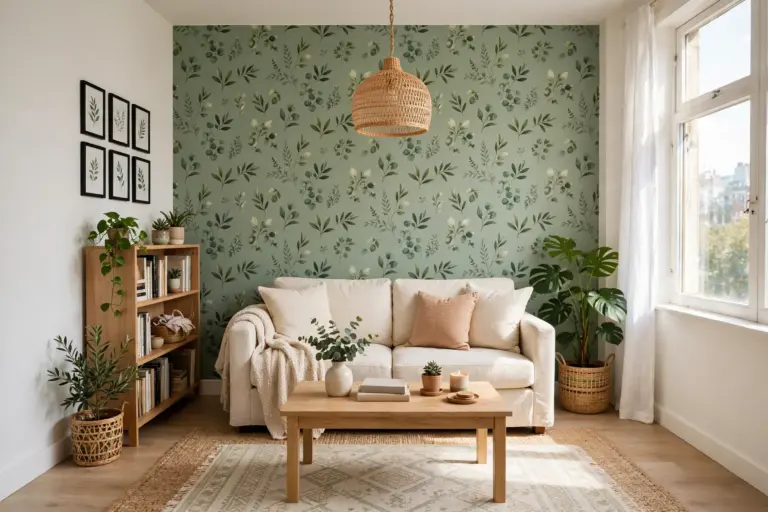
13 Renter-Friendly Wall Panel Ideas You Can Remove
A blank rental wall can make even a furnished apartment feel unfinished, but paint and nails are usually off the table. That is where renter friendly wall panels earn their keep: lightweight panels that stick on with removable strips or peel-and-stick backing, change the whole look of a room, and come back down when the lease ends. No drilling, no permanent glue, no awkward move-out conversation.
This guide covers 13 removable panel ideas for every room and budget — every one light enough for removable mounting.
Before You Stick Anything Up: Pick Panels Your Lease Will Survive
The panel is only half the decision. The other half is how it attaches, because the wrong adhesive turns a removable idea into a paint repair. Start by reading the lease: many agreements ban nails and screws but say nothing about removable adhesive strips. Foam, PVC, thin felt and fabric panels usually weigh only a few ounces each, which is the range removable strips are designed for. Heavy MDF or solid wood panels do not belong on adhesive alone.
Test first, always. Stick one removable strip in a hidden spot, leave it a day, then pull it off slowly using the stretch-release tab. If paint lifts, that wall needs a different approach, such as a leaning panel or a freestanding screen. Clean the wall with a mild detergent before mounting and let it dry fully — dust and grease are the most common reason panels fall down. This renter panel installation guide covers removable strips, mounting putty and tension systems.
Wood-Look Wall Panels That Warm Up a Rental
Wood-look panels are the fastest way to make a plain rental feel finished, adding warmth and texture without paint. Four styles cover nearly every taste.
1. Peel-and-Stick Wood Slat Panels
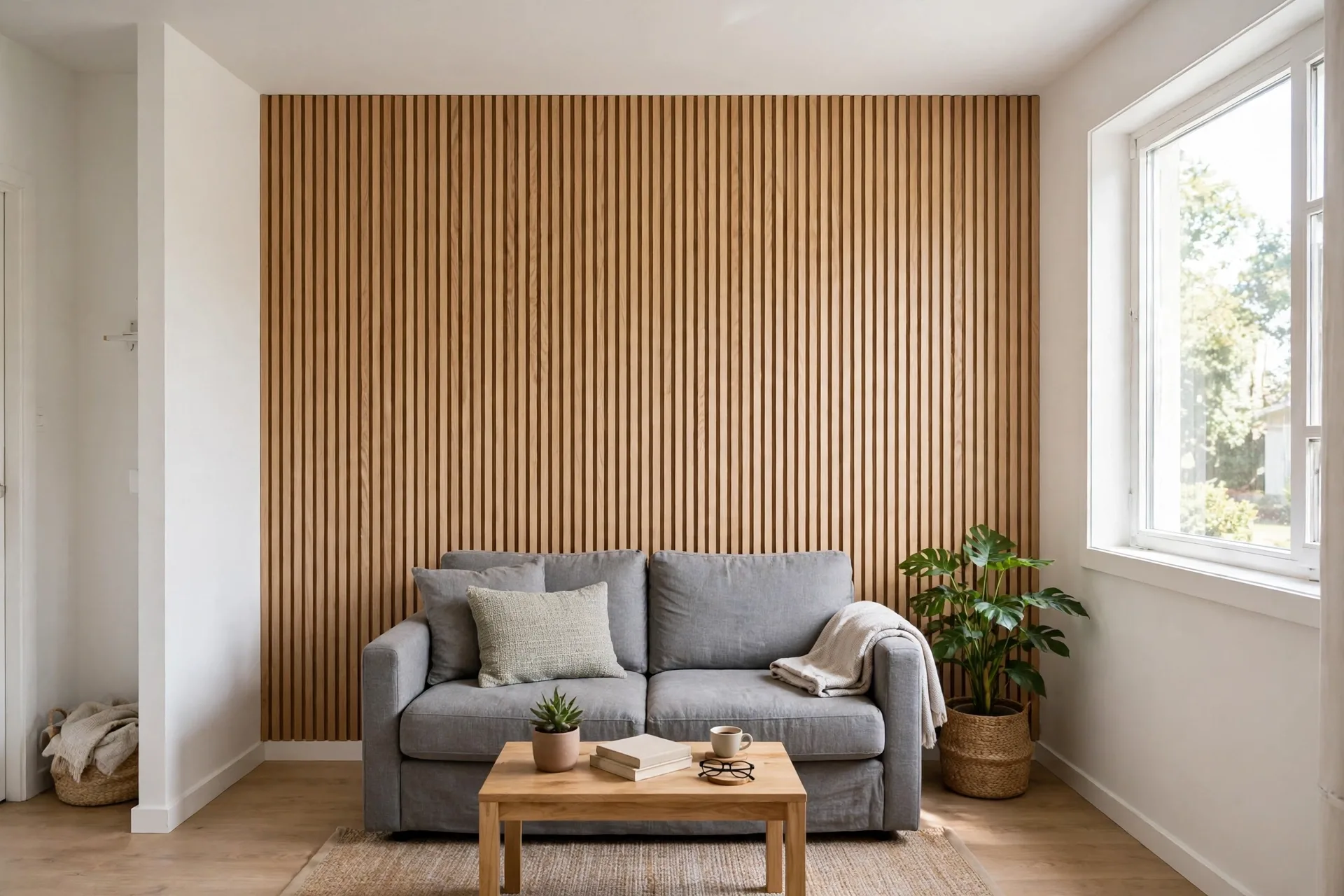
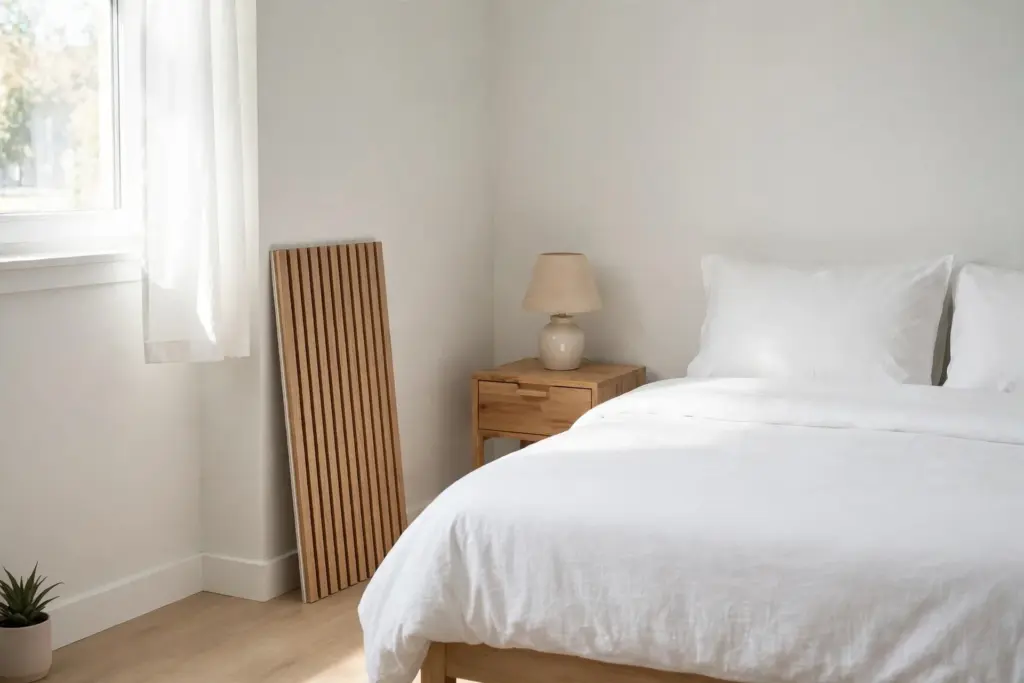
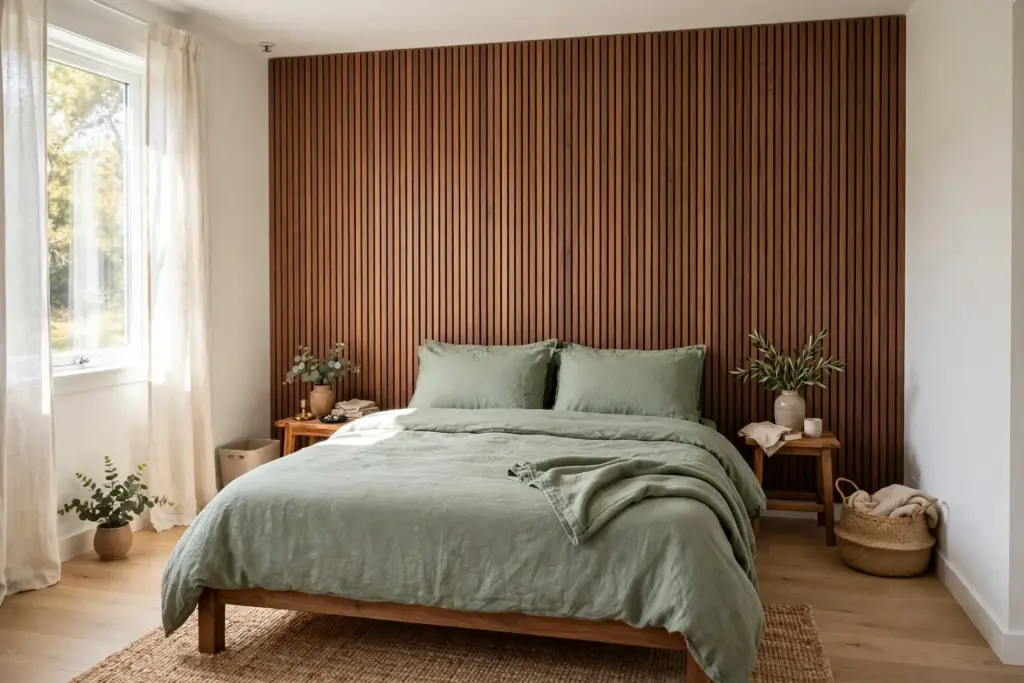
Vertical wood slats are the panel style renters ask about most, and peel-and-stick versions make them lease-safe. Look for thin foam or PVC slats, or wood veneer bonded to felt, rather than solid timber battens. A full slat wall behind a sofa or bed becomes the room’s focal point and makes a low ceiling feel taller. Mount each panel with several removable strips spaced across the back.
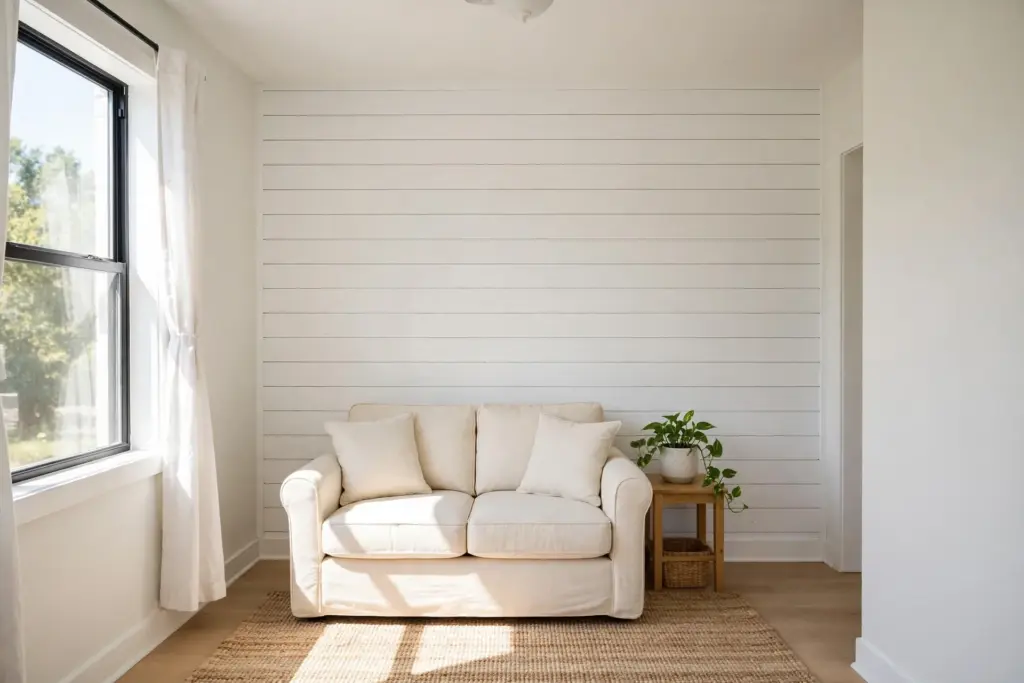
2. Faux Shiplap Panels
Shiplap gives a room a calm coastal or farmhouse feel, and peel-and-stick panels deliver the look in an afternoon. The panels are usually thin PVC or foam boards with the horizontal grooves already molded in, so there is no measuring and spacing individual boards. White is the safest choice in a small room because it reflects light. Keep shiplap to one wall: covering every wall in a small apartment can make the space feel boxed in. Pair it with these renter-friendly wall decor ideas for a finished look.
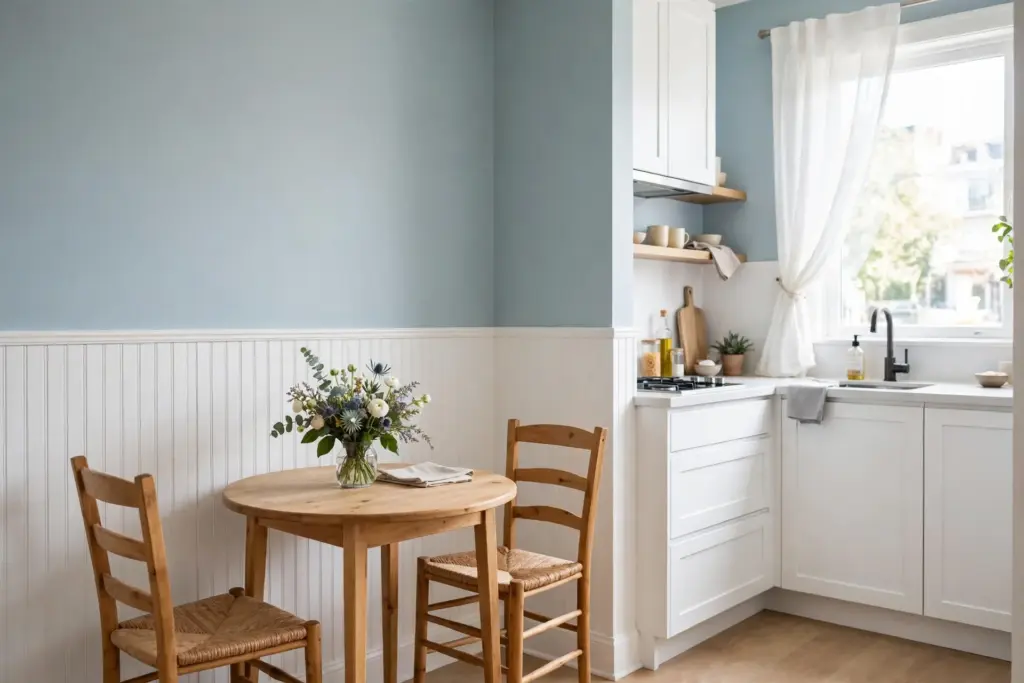
3. Faux Beadboard Sheets
Beadboard is the classic choice for kitchens and dining nooks, where its narrow grooves add cottage charm without overwhelming a small space. Lightweight faux beadboard sheets come in paintable PVC or foam, and they work best as a half-height treatment with a chair rail on top. Wipe kitchen walls with a degreasing cleaner before mounting, and keep panels away from direct stove heat.
4. Board-and-Batten on a Removable Base
Board-and-batten looks permanent, but renters can fake it by building the whole design on a thin removable base board instead of gluing strips straight to the wall. Mount a lightweight plywood or foam board to the wall with removable strips, then attach the thin battens to that base. When moving day comes, the base comes down as one piece and the wall underneath is untouched. The base also hides uneven paint and small wall flaws.
Soft Panels That Quiet the Room and Add Texture
Soft panels made from felt, fabric and cork add texture, soften echo in bare rooms, and feel warmer to the touch. They are also the lightest panels here, which makes them the easiest to mount and remove.
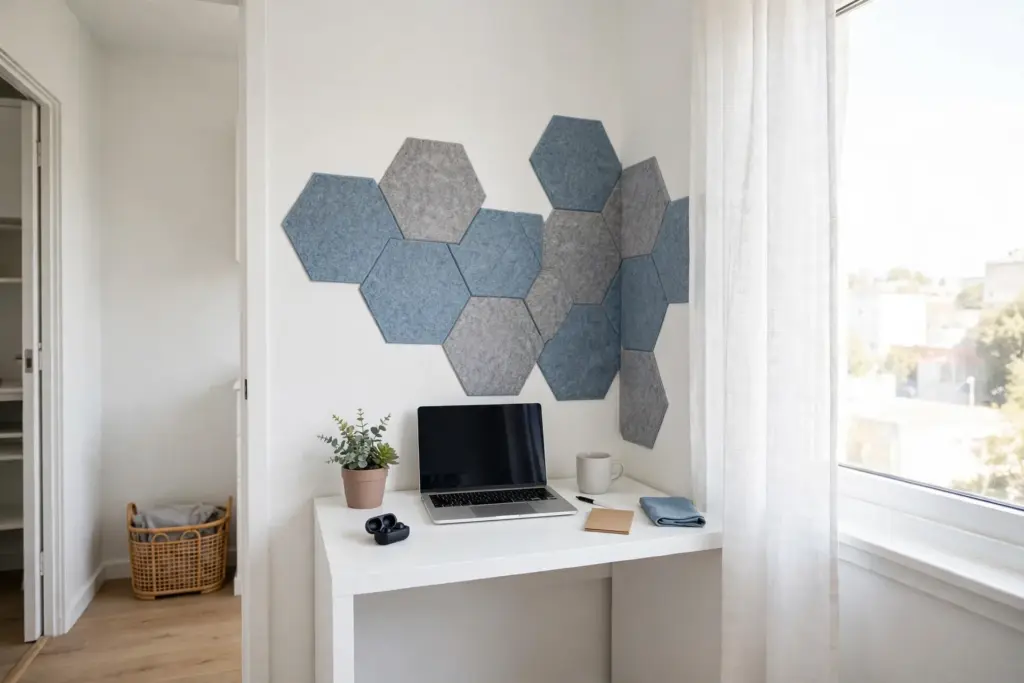
5. PET Felt Acoustic Panels
Felt panels made from recycled PET are a renter’s best friend in an echoey apartment with hard floors and bare walls. They come in hexagons, squares and arches, and each tile weighs almost nothing, so a few removable strips hold it easily. Place them behind a desk or sofa to soften reflections. They absorb mid and high-frequency sound inside the room; they will not block a neighbor’s bass, which is a building-structure problem, not a panel problem. The US National Institute for Occupational Safety and Health explains absorbing sound versus blocking it in its noise guidance. For a deeper dive on quieting a rental, see how to soundproof an apartment as a renter.
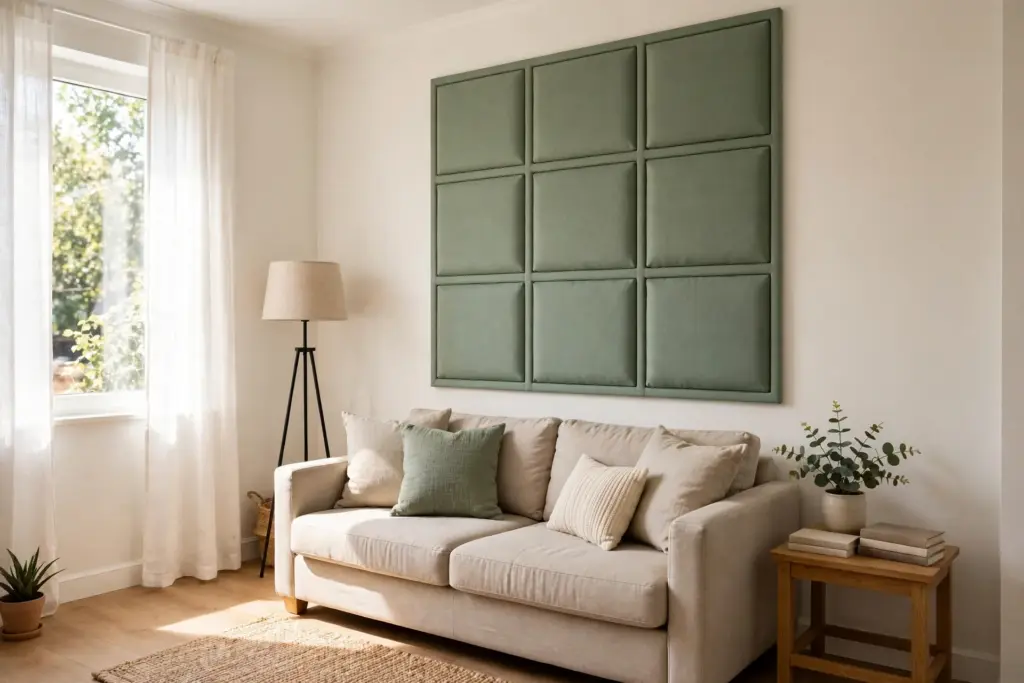
6. Fabric-Wrapped Panels
Fabric-wrapped panels look like upholstered art: a soft core wrapped in linen, velvet or boucle and hung in a grid. They bring the most color and softness of any panel here, and they are a good pick for a living room wall that feels cold and bare. Choose panels with a thin foam or cork core and mount them with removable strips rated for their weight — at least two strips per panel. Linen and cotton blends suit relaxed rooms; a velvet panel in a deep tone works as a jewel-box accent behind a sofa. This fabric panel guide for renters covers layouts, materials and mounting options in more detail.
7. Cork Panels
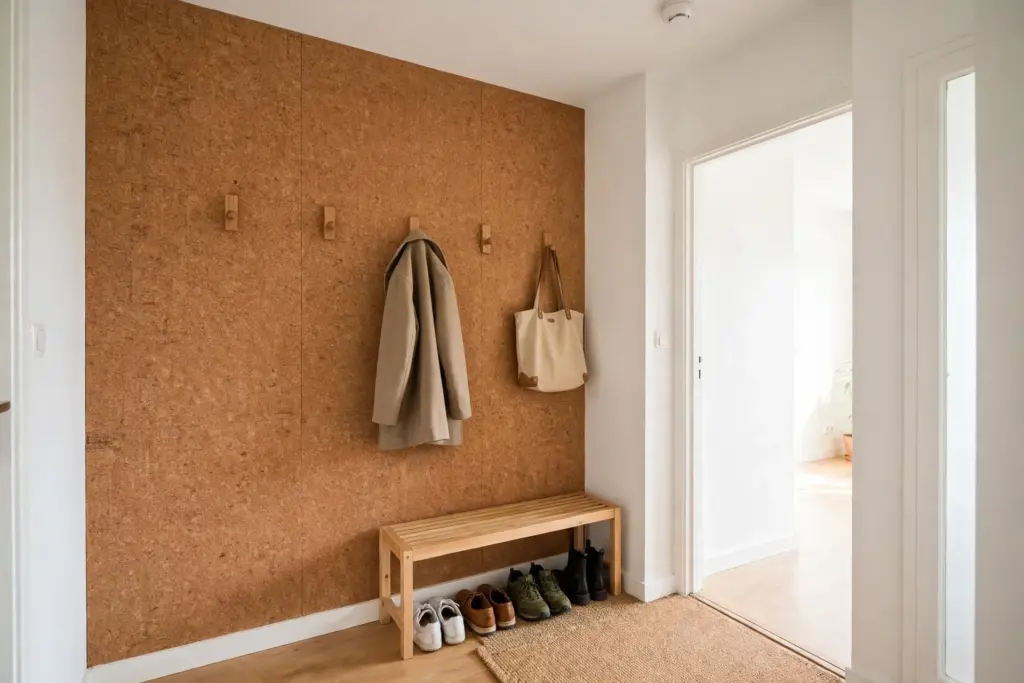
Cork panels do double duty: warm natural texture plus a giant pinboard. Thin cork tiles mount with removable strips, and they are ideal for an entryway or home office wall where keys, notes and photos need a home. Use push pins rather than nails, and keep heavy items off the cork. Seal cork tiles in a kitchen or bathroom with a clear matte sealer so steam and splashes do not stain them.
8. Upholstered Panels Behind the Bed
A row of upholstered panels behind the bed works like a headboard and a wall treatment in one — perfect for small bedrooms where a real headboard would eat floor space. Two or three padded panels mount to the wall with removable strips and sit flush, so the bed can push right up against them. Choose a washable fabric and keep the panels at pillow height so they read as a headboard.
Tile, Cane and Metal-Look Panels for Kitchens and Baths
Kitchens and bathrooms need panels that handle steam, splashes and wiping. The three ideas below use water-friendly materials that peel off when the lease ends.
9. Peel-and-Stick 3D Wall Tiles
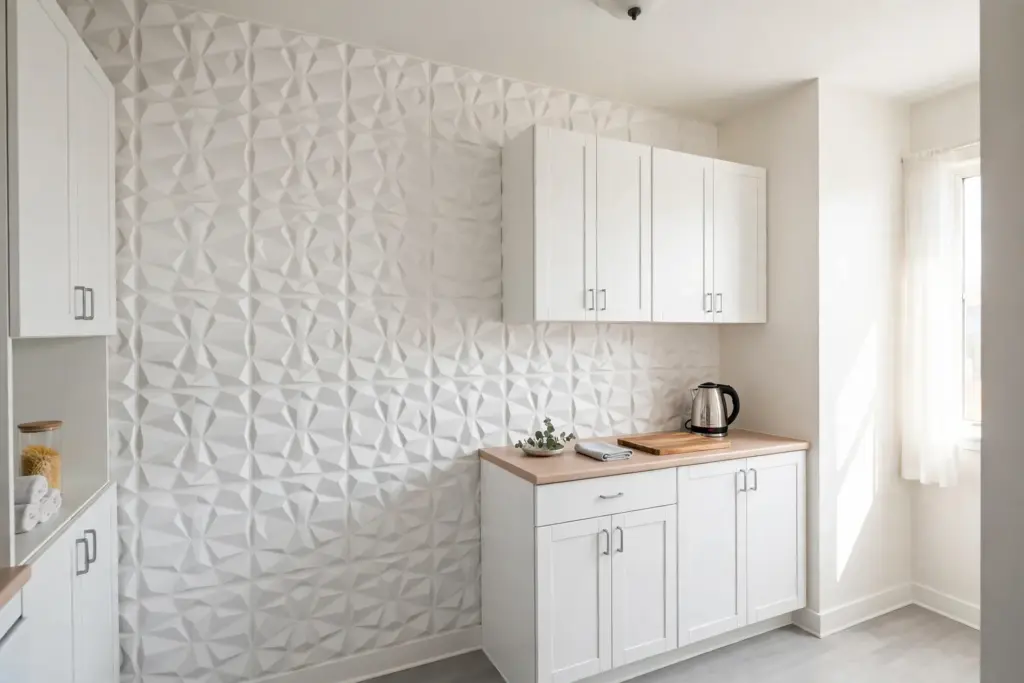
Three-dimensional peel-and-stick tiles add sculptural texture flat paint cannot match, and they are one of the easiest panels for a first-timer: peel, press, align the next tile to the last. White geometric tiles suit a small kitchen because they bounce light around. Keep them off the wall directly behind a gas hob and out of the shower spray zone, and wipe them with a damp cloth rather than soaking them. They also work as a backsplash alternative; see the peel-and-stick wallpaper guide for renters for more removable finishes.
10. Woven Cane and Rattan Panels
Cane webbing panels bring a relaxed, natural texture to boho and coastal rentals, and they weigh almost nothing. Stretch cane webbing over a thin wooden frame and hang it with removable hooks, so the wall never touches adhesive. Cane dislikes constant damp, so keep it out of bathrooms and away from kitchen steam.
11. Mirror and Metal-Look Panels
Mirrored and metal-look panels do a trick no other panel can: they make a small room look bigger by reflecting light. Peel-and-stick mirror tiles are acrylic, not glass, so they are light and shatter-safe, mounting with their own adhesive backing plus a removable strip for extra security. Use them on one wall only, ideally opposite a window, since fingerprints show fast.
Panels That Work Harder: Storage and Flexibility
The last two ideas do more than decorate: they add storage or avoid the wall entirely.
12. Pegboard Panels on Removable Mounts
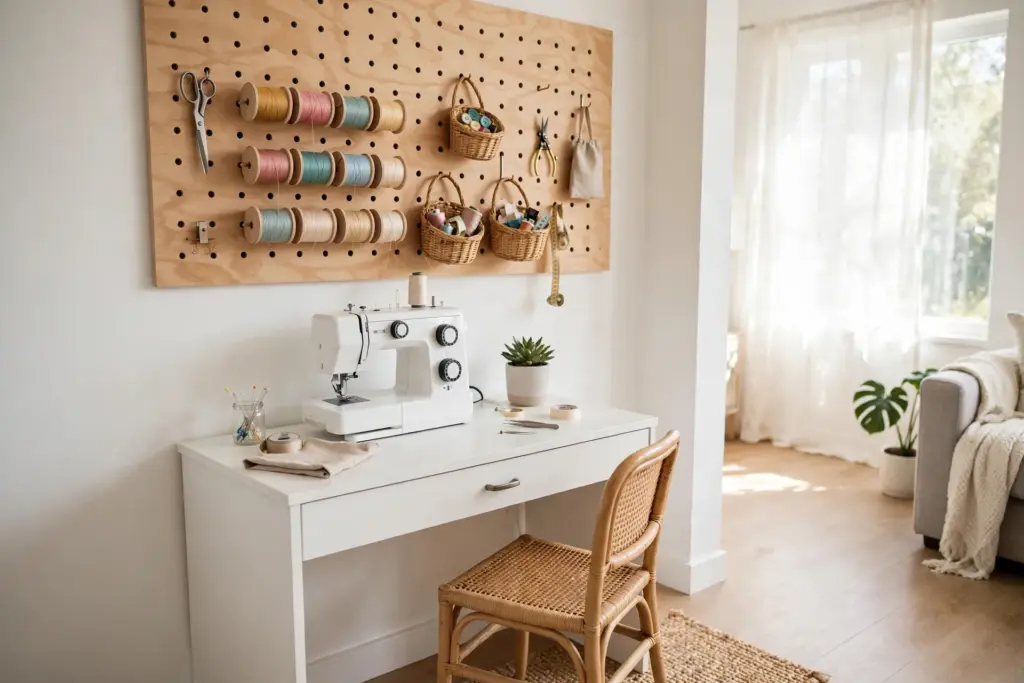
A pegboard panel turns a blank wall into flexible storage for a craft corner, home office or kitchen, and hooks and baskets can be rearranged whenever the room changes. Thin wooden pegboard mounts with removable strips, or a French cleat hung from removable hooks for larger boards. Keep the load light: thread, tools and small baskets are fine; heavy pots and books belong on real shelving. It pairs well with the craft storage ideas in renter-friendly accent wall ideas.
13. Freestanding and Leaning Panel Screens
When the lease bans adhesives entirely, or the walls are old plaster that sheds paint, freestanding panels are the answer. A hinged screen of wood slats or fabric panels leans against the wall or stands on its own feet, needs zero wall contact, and moves to the next apartment whole. This is the only idea in this guide with literally no removal risk, which makes it the safest first step for cautious renters.
How to Take Renter Friendly Wall Panels Down Without Damage
Removal deserves as much care as installation, because most deposit damage happens on move-out day. For peel-and-stick panels, warm the edge with a hairdryer on low heat for 20 to 30 seconds, then peel slowly at a low angle. For panels on removable strips, pull the stretch-release tab slowly straight down along the wall, never outwards, and support the panel so it does not drop. If a strip snaps, slide dental floss or fishing line behind the panel to cut through the adhesive pad.
After removal, roll leftover adhesive off with a fingertip rather than scraping it, then wipe the wall with a damp cloth. Photograph every wall before installing panels and again after removal, so there is a clear record if the deposit is ever questioned. For more reversible upgrades, see renter-friendly upgrades you can reverse before moving out and the pillar guide to renter-friendly apartment decorating ideas.
FAQ: Frequently Asked Questions
Are renter friendly wall panels really removable?
Yes, when the panel is lightweight and the mounting method is removable. Foam, PVC, felt and fabric panels on stretch-release strips or peel-and-stick backing come down cleanly from sound painted drywall. Heavy solid wood, construction adhesive and screws do not belong in a rental.
Will peel-and-stick panels damage painted walls?
They can if the paint is old, flaking or matte, which bonds weakly to the wall. Test one strip in a hidden spot first, remove panels with low heat, and peel slowly at a low angle. Fresh paint needs a few weeks to cure first.
How much weight can removable strips hold?
It depends on the strip size and brand, so check the rating on the package and keep the panel well under it. Use several strips per panel, spread across the back, pressed firmly for 30 seconds. When in doubt, choose a lighter panel.
Can wall panels go in a rental bathroom or kitchen?
Yes, with the right material. PVC and foam handle steam and splashes well, while fabric, cane and untreated cork do not. Keep panels away from direct water, the shower zone and stove heat, and ventilate the room so moisture does not build up behind them.