Boho Peel and Stick Wallpaper Ideas for Renters
Boho style is warm, relaxed, and layered — and it suits small rentals beautifully, because it relies on pattern, texture, and plants rather than expensive furniture. The fastest way to get the look without paint or damage is boho peel and stick wallpaper: one patterned wall can carry a whole room, and it peels off when the lease ends. These 12 ideas work room by room, so you can start with a single wall and stop whenever the apartment feels finished.
Boho does not mean cluttered. The rooms that pull it off best pick one pattern per wall, repeat two or three warm colors, and leave plenty of plain wall and breathing space around the pattern. Think terracotta, ochre, sage, and cream, plus rattan, jute, wood, and plants. If a pattern feels loud on a full wall, use it on a smaller surface first — a nook, a closet door, or a band above tile — and let the rest of the room stay calm.
Before You Peel: Renter Rules That Keep the Deposit Safe
Removable wallpaper only earns its name on the right surface, and that is the basic promise of boho peel and stick wallpaper: pattern without permanent change. Apply it to smooth, clean walls painted in satin or semi-gloss, never to textured walls, fresh paint, or flat matte paint that may lift on removal. Always order a sample first and stick it in a hidden spot for a few days: check the color in daylight and evening light, and check that it releases cleanly. Measure the wall twice, note the pattern repeat, and order a little extra so the pattern matches across panels instead of breaking mid-motif.
Read the lease before a full wall, and keep the sample, the order receipt, and a photo of the bare wall — that paper trail settles any move-out question fast. For the full step-by-step on choosing, hanging, and removing panels, see peel-and-stick wallpaper for renters. And if the wallpaper is going up in a room that also needs a color plan, no-paint color schemes for small apartments shows how to repeat the same warm tones through textiles and art without touching a paint can.
Bedroom Walls That Do the Decorating
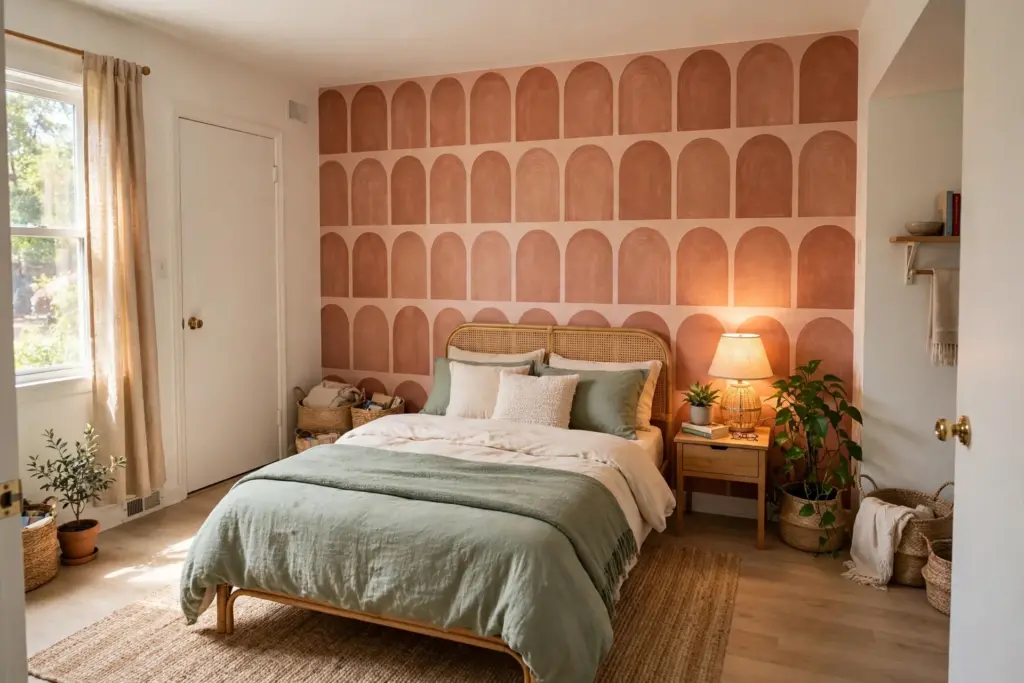
1. A Terracotta Arch Headboard Wall
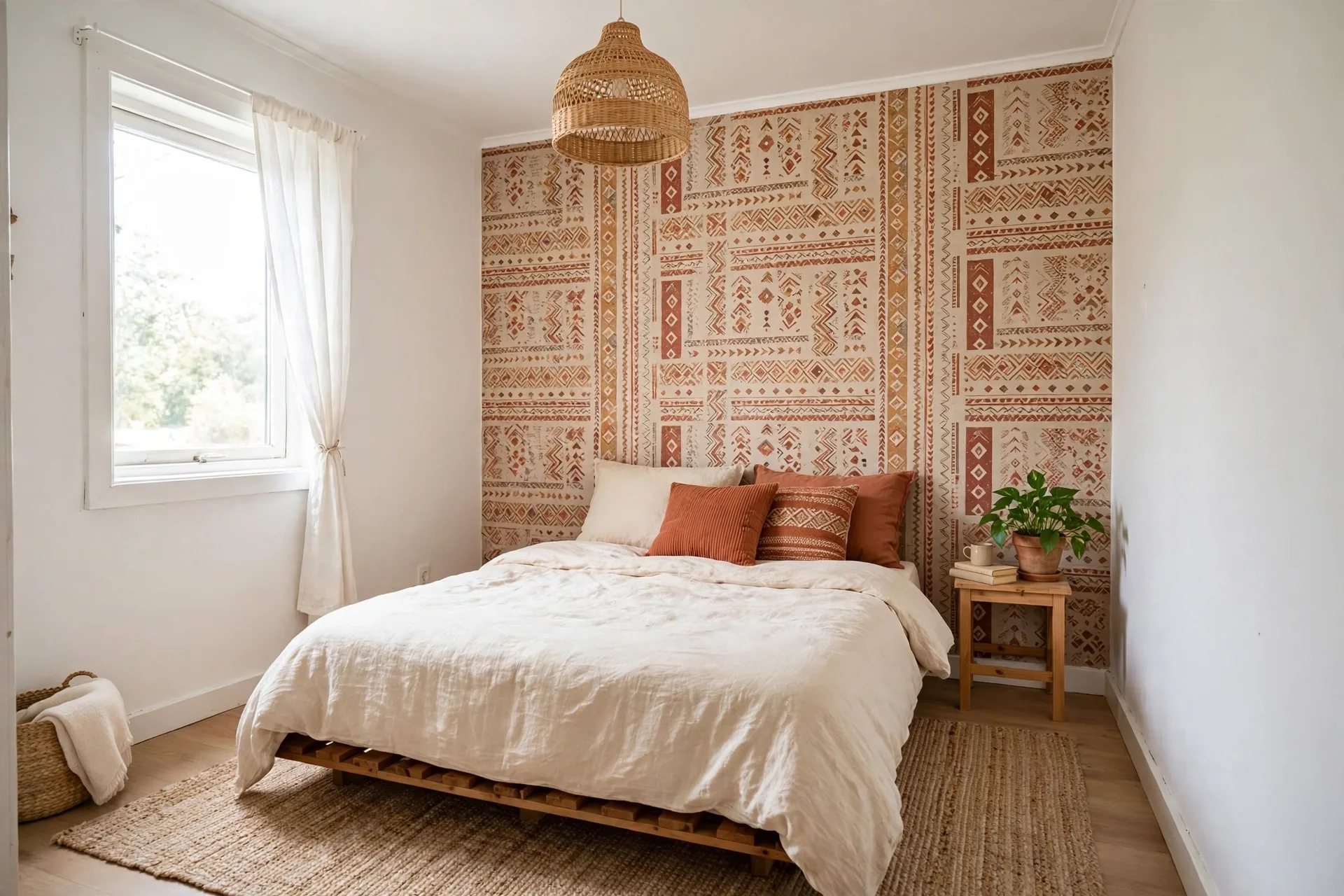
An arch pattern behind the bed reads as a headboard even where there is none, which is exactly why it suits rentals: no drilling, no heavy furniture, one wall doing the work. Keep the bedding plain — cream or sage linen — and let the arches supply the color. A rattan headboard frame, if you already own one, sits happily in front of the pattern, but the wall alone is enough for a finished look.
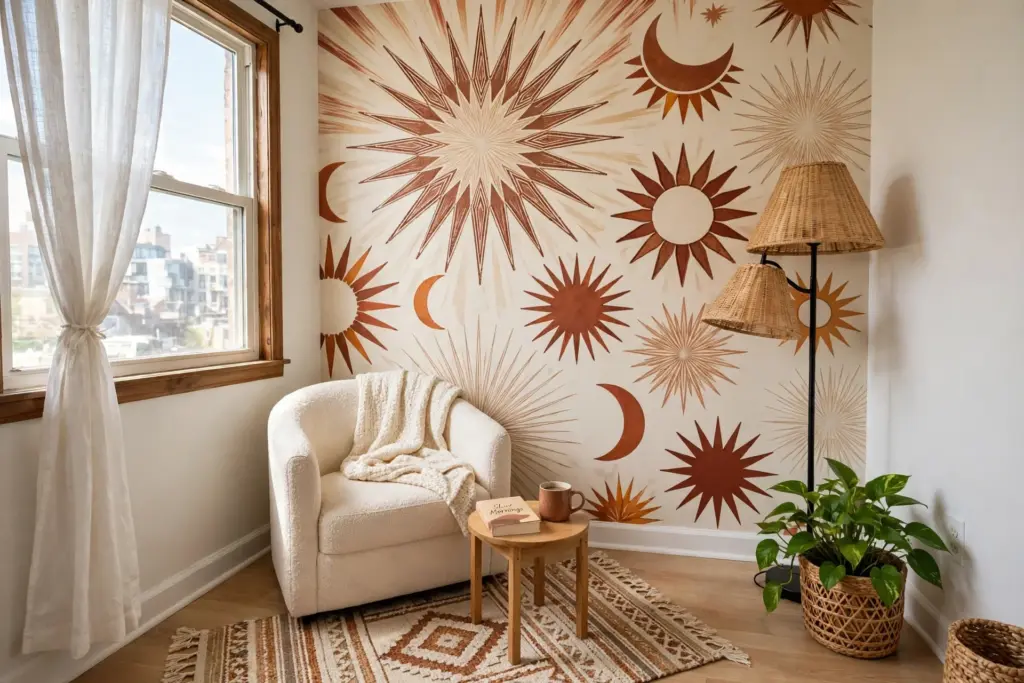
2. A Sun-and-Moon Reading Nook
A single chair, a small side table, and one bold wall turn a dead corner into the best seat in the apartment. Sun, moon, and starburst motifs are classic boho, and at nook scale they feel playful rather than overwhelming. Keep the chair and rug in cream or natural tones so the pattern stays the star, and add one trailing plant to soften the corner where the wallpaper meets the plain wall.
3. Patterned Closet Doors Instead of a Full Wall
Closet doors are the most underused surface in a rental bedroom, and papering them costs a fraction of a full wall. Choose a smaller-scale boho motif so the pattern reads clearly at door width, and keep the surrounding walls plain. Doors get handled daily, so smooth the edges firmly and check the corners after the first week.
Living Room Walls With a Boho Backbone
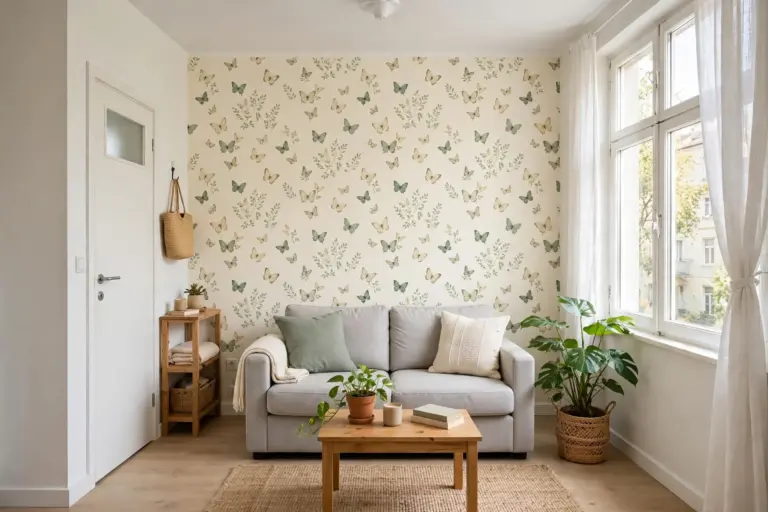
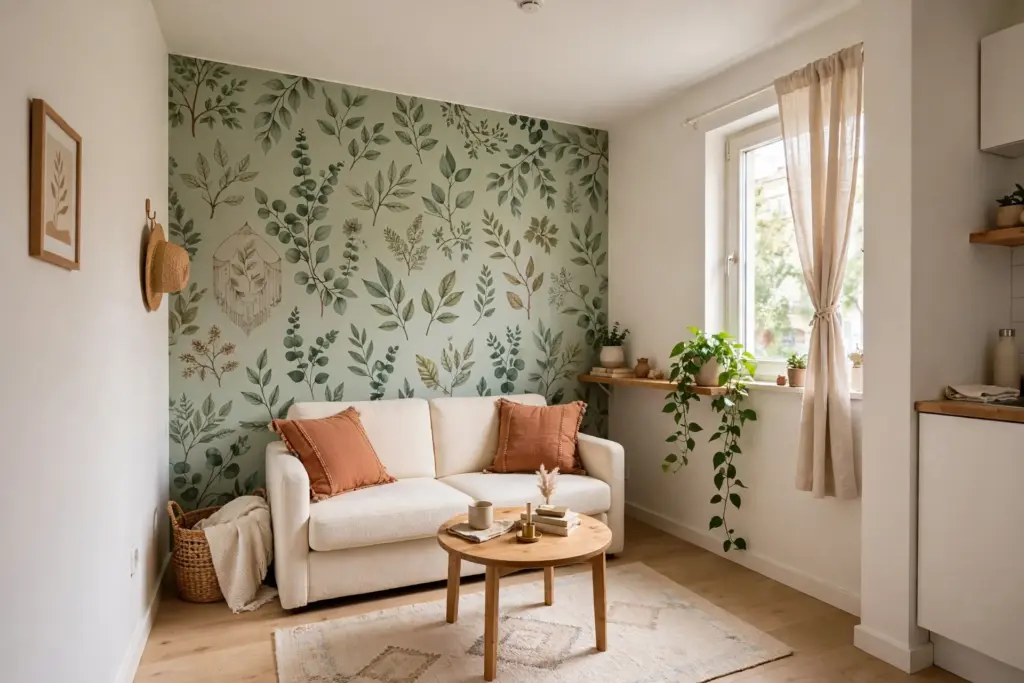
4. A Botanical Feature Wall Behind the Sofa
Leafy, hand-drawn botanicals are the gentlest way into boho pattern: they read as greenery, so they pair with real plants instead of competing with them. Put the feature wall behind the sofa, keep the sofa itself in cream or oatmeal, and pull one color from the paper — terracotta is the easy choice — into two cushions. The result feels collected and calm, not themed, and it photographs beautifully from the doorway.
5. A Warm Neutral Wall for the TV Corner
Not every boho wall needs a loud print. A warm, plaster-toned or subtle mudcloth-style pattern in cream, sand, and soft rust gives the TV corner texture without fighting the screen. This is the right pick when the room already holds a lot — books, plants, prints — because it adds warmth while letting everything else stay visible. Keep the console low and wooden.
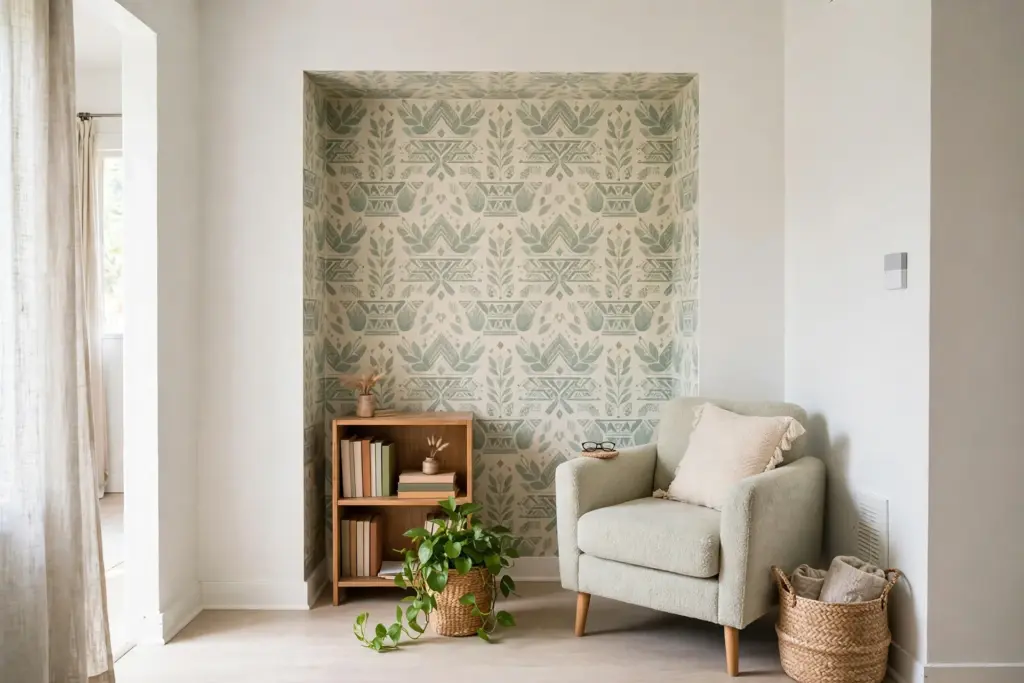
6. A Wallpapered Alcove or Niche
Odd alcoves and shallow niches are where small apartments hide their character, and a single roll is often enough to line one. Paper the back and sides of the niche, then style it simply: a small bookshelf, one plant, one chair. The contrast between the patterned niche and the plain wall around it creates depth, and because the area is small, even a bold geometric print stays easy to live with. Collections of boho-chic removable designs, such as the boho-chic peel-and-stick wallpaper collection from OnDecor, show how well small-scale geometrics suit exactly these tight spots.
Small Spaces, Entryways, and Bathrooms
7. A Bold Geometric Entryway Wall
The entry is the smallest wall with the biggest payoff: guests see it first, and one bold geometric print makes the whole apartment feel intentional. Because the area is narrow, choose a pattern with a clear repeat and a light background so the space does not close in. Lean the mirror against the wall instead of hanging it, add a narrow console and a basket, and the entry is done — no drilling required.
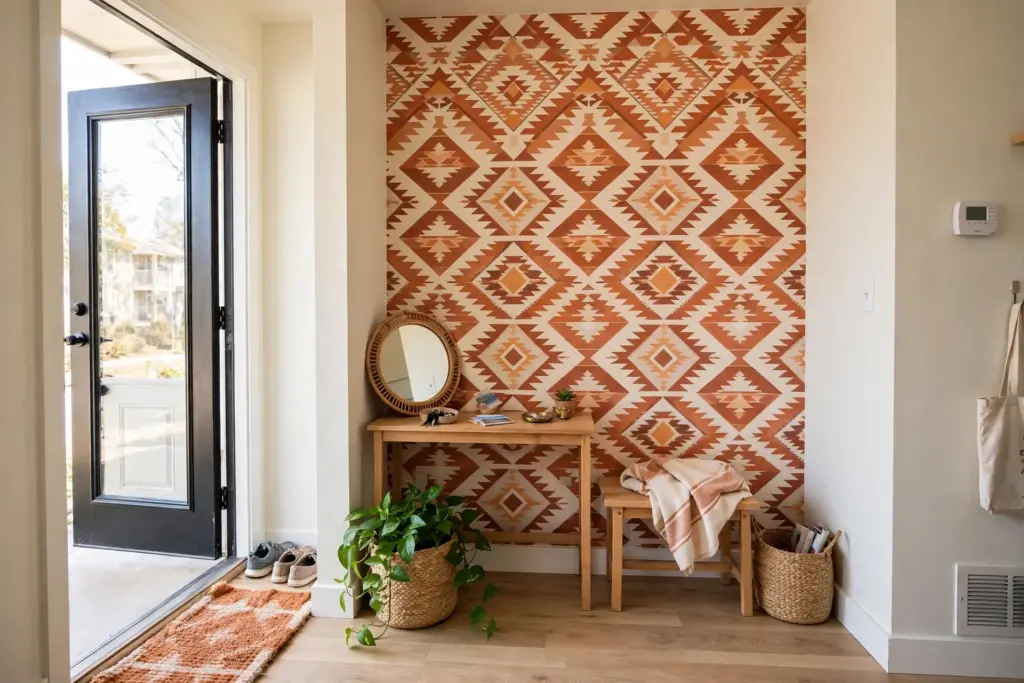
8. A Hallway Strip That Leads the Eye
Long, plain hallways feel like wasted space, but papering the full length can feel like a tunnel. The middle path works best: paper one short stretch — the wall facing the front door, or the section between two doorways — and leave the rest plain. The patterned stretch pulls the eye forward while the plain walls keep the hallway open. Repeat its main color in a runner rug.
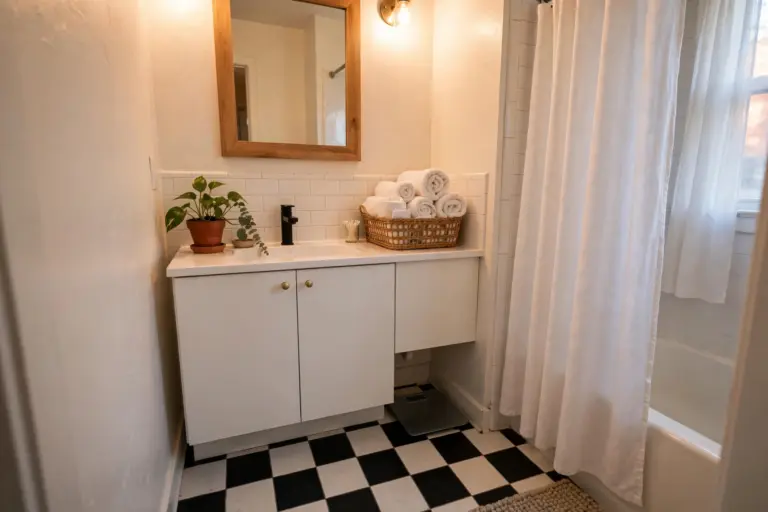
9. A Boho Band Above Bathroom Tile
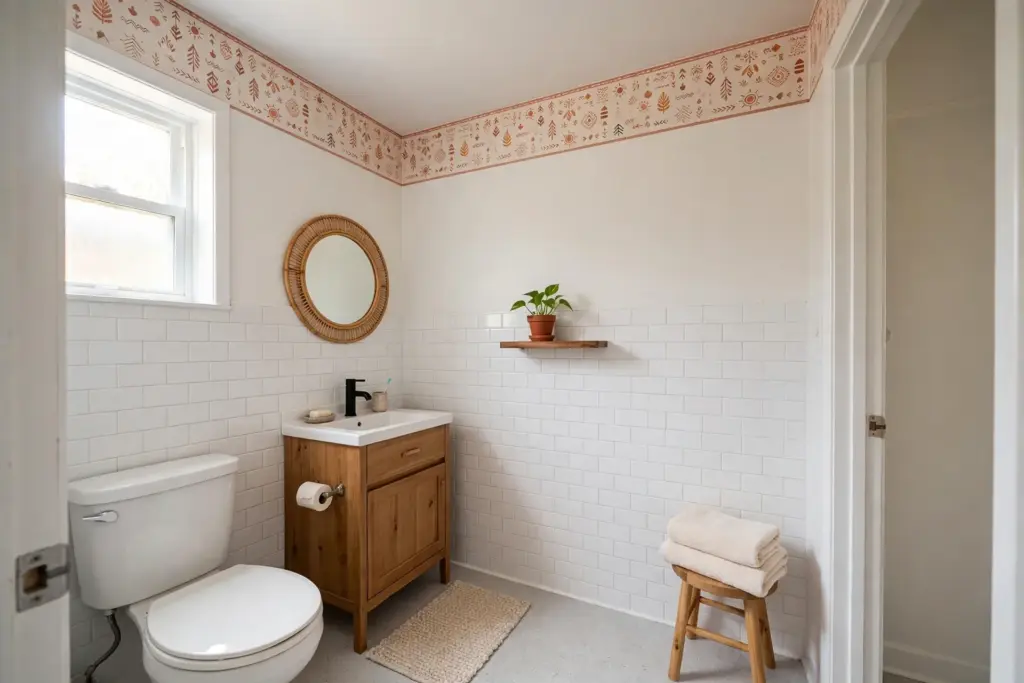
Bathrooms need restraint: steam, splashes, and cleaning sprays all work against adhesive. The safe move is a band of paper on the upper wall, above the tile line and away from the shower, never inside a wet zone or directly behind a faucet. A narrow boho border print gives the room its personality while the tile does the hard work below. Ventilate well, wipe splashes promptly, and check the edges monthly so a small lift never becomes a peel.
Dining Nooks, Pattern Mixing, and Layering
10. A Dining Nook Wall in Warm Ochre
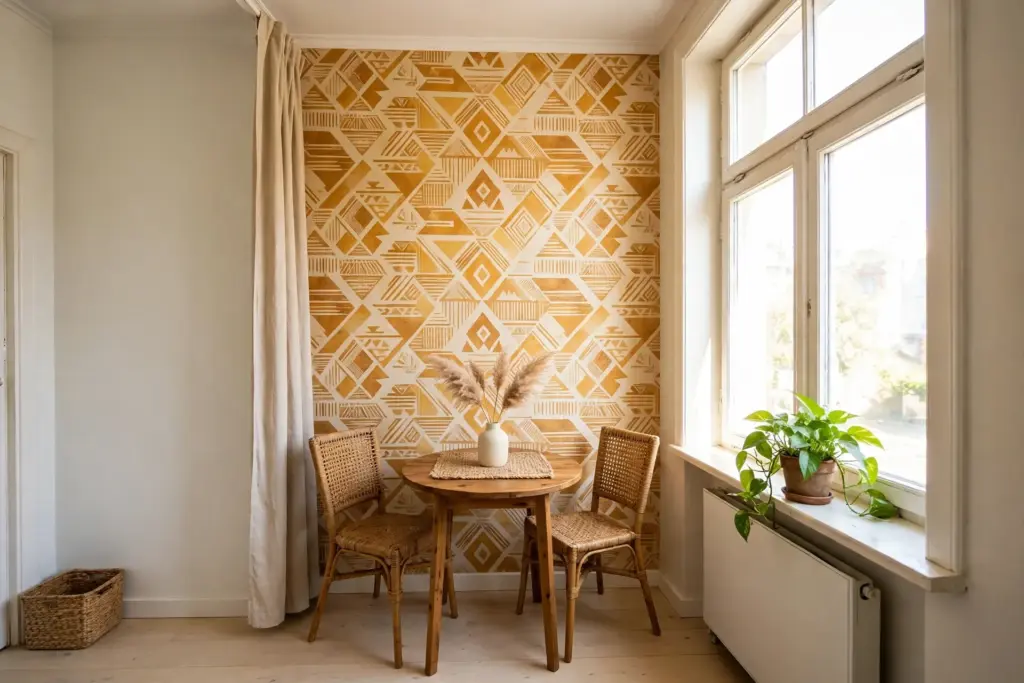
A dining nook is usually one wall, two chairs, and a small table — which makes it the perfect scale for a confident pattern. Warm ochre geometrics flatter wood furniture and morning light, and they make weeknight dinners feel a little more deliberate. Keep the table setting simple — a woven placemat, one vase of dried stems — so the wall carries the decoration and the table stays usable for work, meals, and everything in between.
11. Two Patterns, One Shared Color
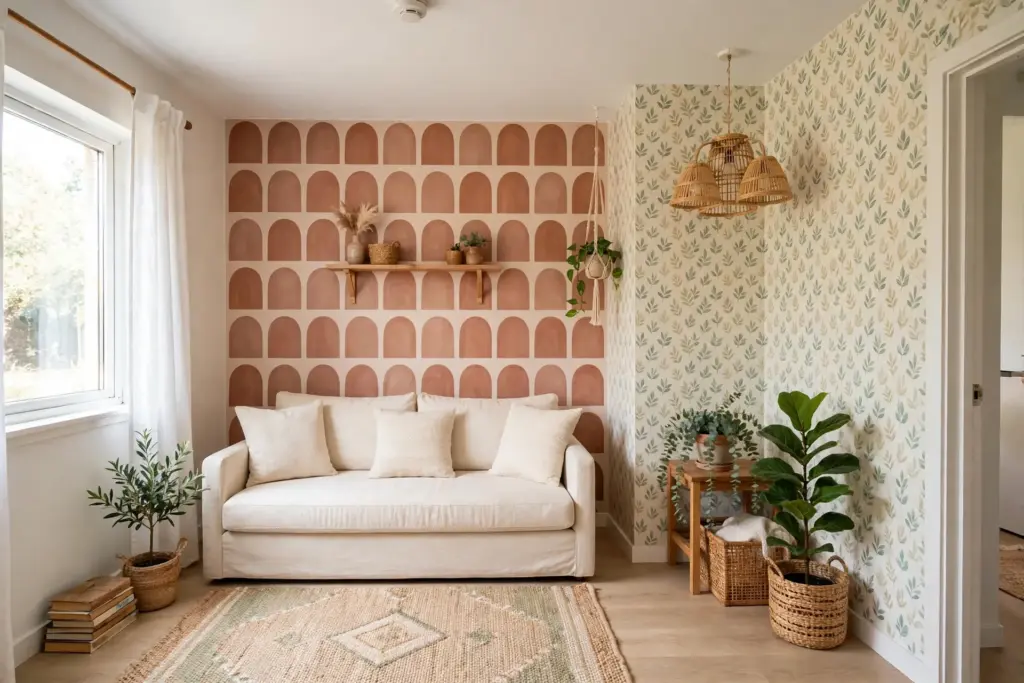
Mixing two boho prints sounds risky, but one rule makes it safe: share exactly one color between them. Pair a large-scale arch print on the main wall with a small-scale leaf print on a side wall or nook, both carrying the same terracotta or sage. Keep the furniture and rug neutral so the two patterns have room to breathe, and step back to check the pairing from the doorway — if either print shouts louder than the other, swap the smaller one for a quieter version.
12. Layer Textiles and Art Over the Paper
The most convincing boho rooms do not stop at the wall. Layer a macrame hanging, a woven wall basket, or a leaning framed print over the paper — leaning, so nothing needs a nail — and echo the paper’s colors in a throw and cushions. The layering is what stops the room looking like a showroom sample: pattern on the wall, texture in front of it, plants beside it. For the broader decorating plan around the room, see renter-friendly apartment decorating ideas, which covers the no-drill styling that pairs best with a patterned wall.
Removal Day: Getting It Off Clean
Removal is where renter-friendly wallpaper either earns its deposit or loses it, so slow down and work panel by panel. Start at a top corner, pull gently downward at a low angle close to the wall, and keep the strip wide and steady rather than yanking in short bursts. If a section resists, warm it briefly with a hair dryer on low and try again — heat softens adhesive, force tears paint. Wipe residue with a damp cloth and photograph the bare wall for your move-out file.
The common removal mistakes are all avoidable: skipping the sample test, papering over matte paint or textured walls, and leaving paper up through a steamy summer in a bathroom without ventilation. Manufacturers warn against exactly those surfaces — see the renter-friendly peel-and-stick wallpaper hacks from Tempaper for surface and removal guidance — and the same rules explain most deposit deductions. Done right, boho peel and stick wallpaper comes down as easily as it went up, leaving a plain wall and a full deposit behind.
Frequently Asked Questions (FAQ)
Will boho peel-and-stick wallpaper damage rental walls?
On smooth, clean walls painted in satin or semi-gloss, quality removable paper normally releases cleanly. The risk rises on textured walls, fresh paint, and flat matte paint, which can lift with the adhesive. Always test a sample in a hidden spot first and follow the manufacturer’s surface guidance.
Which boho pattern works best in a small apartment?
For boho peel and stick wallpaper, a mid-scale print with a light background works best: botanicals, arches, and small geometrics all read well at small-room scale. Large, dark, high-contrast prints can close a tiny room in, so reserve those for a nook, an alcove, or a single entry wall rather than a full living room.
Can removable boho wallpaper go in a bathroom or kitchen?
Only in dry zones. In a bathroom, keep paper on the upper wall above tile and away from the shower; in a kitchen, use it on a dining-nook wall rather than a backsplash behind the sink or stove, where steam, grease, and heat work against adhesive. Ventilation and prompt wipe-downs matter in both rooms.
How much wallpaper should a renter order for one feature wall?
Measure the wall’s height and width, divide by the roll coverage, and add about 10 percent for pattern matching and trimming mistakes. Order all rolls at once so the print batch matches, and keep one spare strip for repairs — a torn corner is easy to patch when the batch matches.