Under-Sink Storage Ideas for Renters (Kitchen + Bathroom)
The cabinet under the sink is the most awkward storage space in a small rental: pipes run right through the middle, the back is dark and hard to reach, and everything tends to end up in one tangled pile. The good news is that this space can hold a surprising amount once it is organized around the plumbing instead of against it. These small apartment under sink storage ideas cover both the kitchen and the bathroom, and every one of them is renter-friendly: no drilling, no permanent changes, and nothing that risks your deposit when you move out.
Most organizers fail here for a simple reason: they are sized for a standard cabinet, but rental cabinets vary, and the pipe layout eats into the usable width and height. A plan that respects the pipes, keeps daily items at the front, and puts backstock where it can still be reached will stay tidy far longer than a cabinet stuffed with matching containers. For a broader plan for the whole home, see the small apartment storage ideas guide that this article builds on.
Measure Around the Pipes First
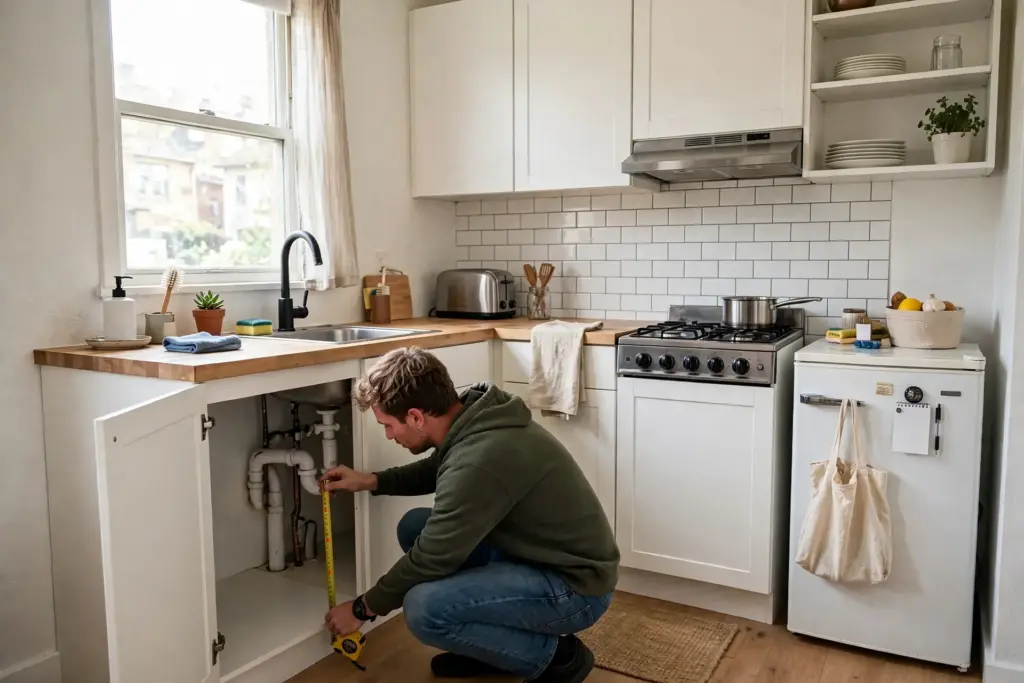
Open the cabinet and measure three things: the width on each side of the pipes, the height from the cabinet floor to the lowest pipe or drain trap, and the depth from the door to the back wall. Write the numbers down before shopping. A bin that is half an inch too tall will not slide under the trap, and a caddy that is too wide will wedge against the supply lines. Also note where the shut-off valves sit, and measure the door opening itself, since tall bottles have to pass through it.
Declutter Before You Organize
Organizers cannot fix an overstuffed cabinet. Pull everything out, wipe the cabinet floor, and sort items into daily use, backstock, and things that do not belong under a sink at all. Half-empty bottles, dried-out sponges, and duplicates are the usual culprits. Keep only what you actually use. Be honest about backstock too: one spare bottle of dish soap is sensible, but four is a warehouse.
Kitchen Under-Sink Ideas
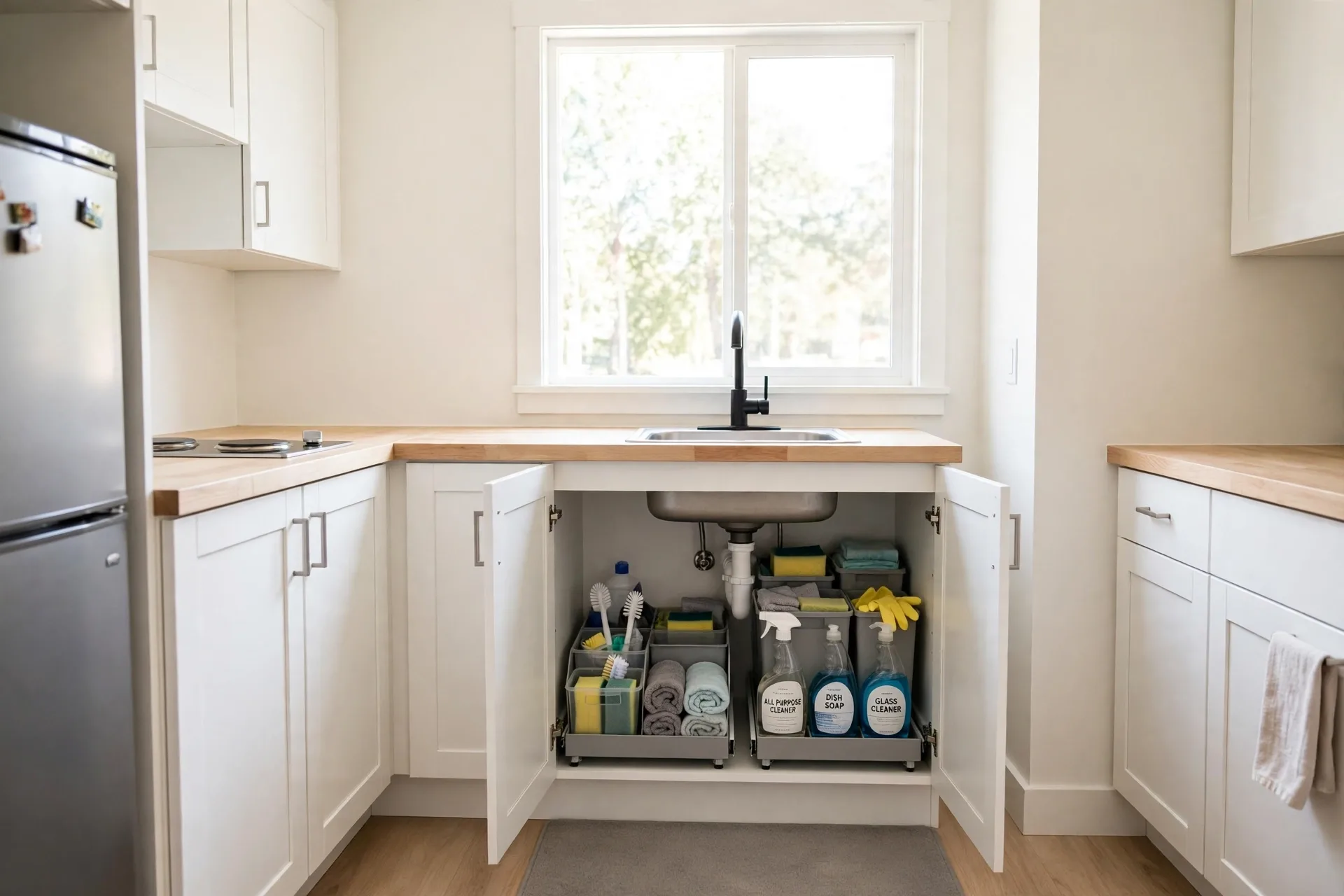
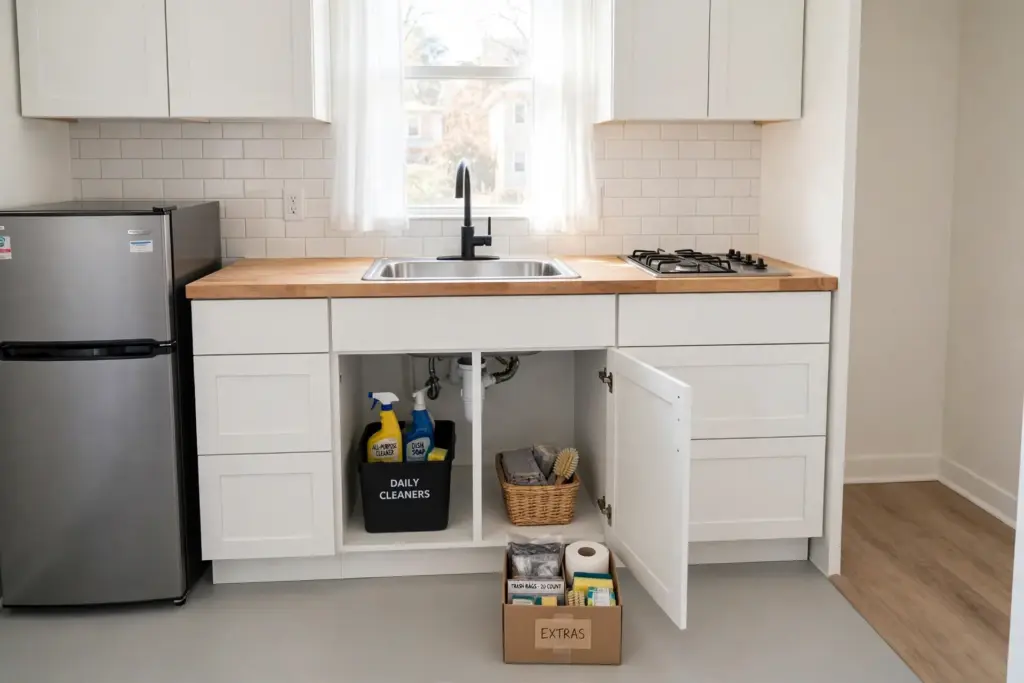
The kitchen cabinet holds the messiest mix in the home: dish soap, sponges, trash bags, and cleaning sprays, all competing with the drain lines. These small apartment under sink storage ideas for the kitchen sort that mix into zones, so the thing you reach for every day is always at the front. More kitchen-wide fixes live in the small apartment kitchen storage ideas guide.
1. Hang Spray Bottles From a Tension Rod
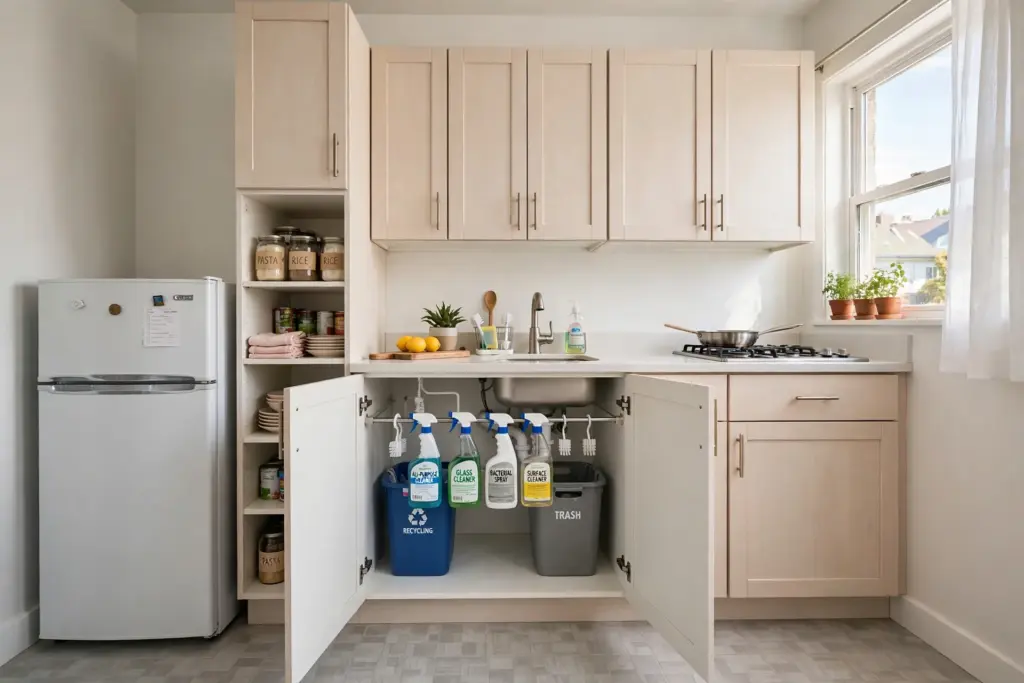
A spring-loaded tension rod wedged across the upper part of the cabinet turns dead air into storage. Hang spray bottles by their triggers from the rod, and the space below stays free for bins. Keep the heaviest bottles near the ends where the rod grips best, and never hang anything from the pipes themselves: extra weight or pulling can loosen connections over time. The rod should press against the cabinet walls only, and it comes out cleanly when you move.
2. Use Stackable Bins for the Side Zones
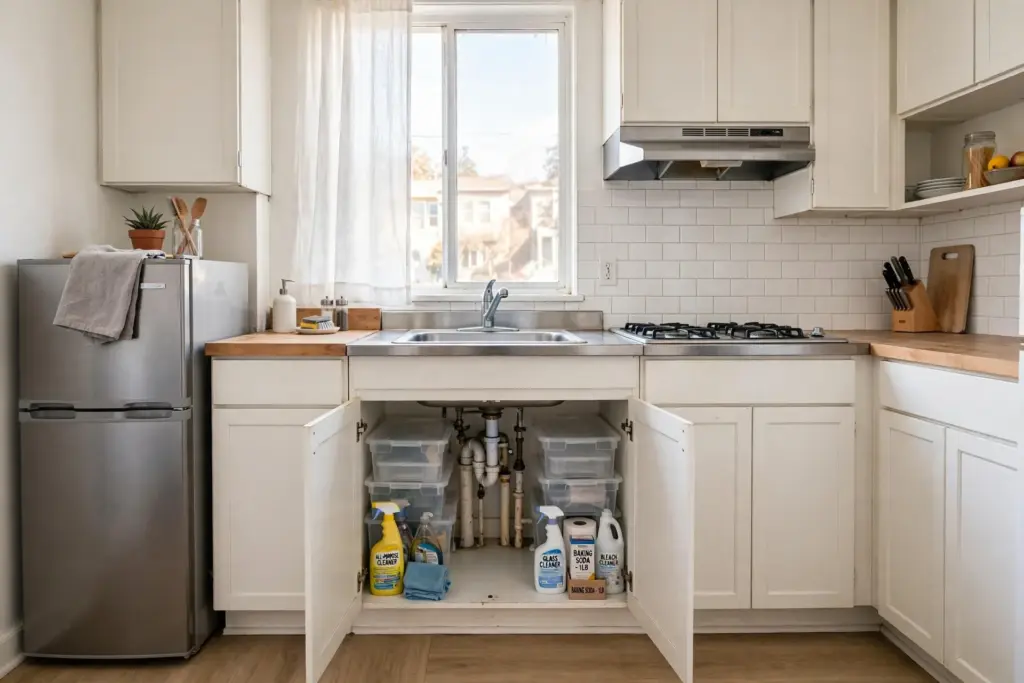
The areas to the left and right of the pipes are usually the most usable space in the cabinet, because they are free of plumbing. Short, stackable bins fit neatly into these side zones: one stack for dish supplies, another for cleaning cloths or trash bags. Keep each stack low enough to clear the lowest pipe, and label the front bin of each stack. Labels stop the slow drift where every bin becomes a mixed bin, and they make it easy for anyone else in the household to put things back correctly.
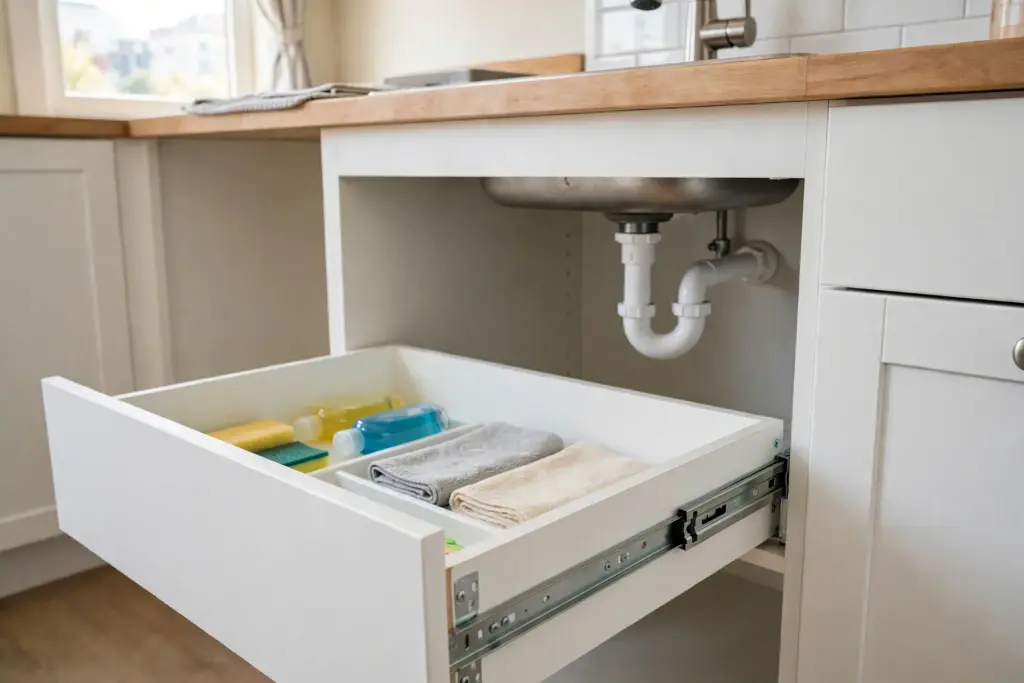
3. Add a Slide-Out Caddy for the Deep Middle
The back of the cabinet is where bottles go to be forgotten. A slide-out caddy on a low track fixes that: pull it toward you, and the back row comes to the front. This is the best home for dish soap, sponges, and the cleaners you reach for several times a week. Before ordering, compare its height against your under-trap measurement and check that it clears the drain pipes when it slides. A caddy that jams halfway is worse than no caddy at all.
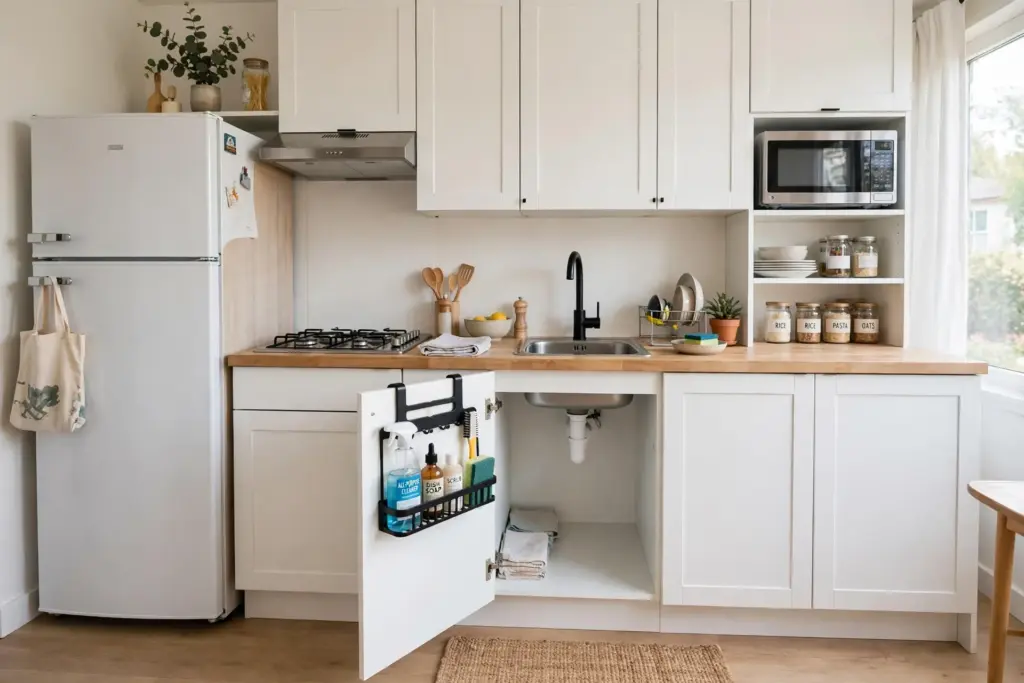
4. Put an Adhesive Rack on the Cabinet Door
The inside of the cabinet door is free real estate. An adhesive or over-the-door rack holds small, flat items that otherwise get lost: sponges, scrub brushes, a small bottle of dish soap, or trash bags. Because it mounts with adhesive or hooks, it leaves no holes and comes off cleanly at move-out. Check two things first: the door must still close fully with the rack loaded, and the weight should stay light. Door racks suit small items, not full bottles of cleaner.
5. Split Daily Items From Backstock
Even with good organizers, a cabinet fails when daily items and spares share the same bin. Give daily cleaners their own open bin at the front, and keep backstock in a separate labeled box behind or beside it. When a bottle runs out, the replacement is one step away, and the daily bin never overflows with spares.
Bathroom Under-Sink Ideas
Bathroom cabinets are smaller and damper than kitchen ones, and they hold a different mix: toiletries, hair tools, and cleaning supplies. The same pipe-first logic applies, with one extra rule: keep moisture-sensitive items off the cabinet floor. These small apartment under sink storage ideas for the bathroom favor small bins, a turntable, and a liner that protects the cabinet itself. More bathroom fixes are in the small bathroom storage ideas for renters guide.
6. Sort Toiletries Into Small Labeled Bins
Bathroom items are small and numerous, which is why they scatter. Small labeled bins, one per category, solve it: hair ties and clips in one, cotton pads and swabs in another, first-aid basics in a third. The bins should be short enough to slide under the trap and narrow enough to sit beside the pipes without wedging. Labels matter even more here than in the kitchen, because many bathroom items look alike in small bottles.
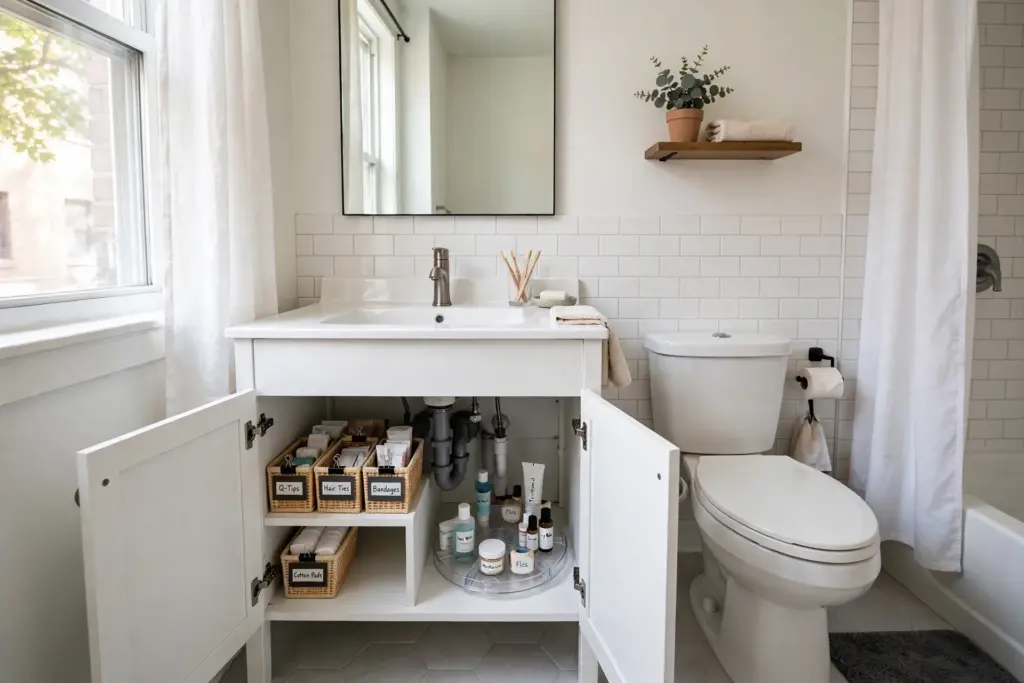
7. Spin a Turntable for Tall Bottles
A small turntable is ideal for the tall, narrow bottles that topple in bins: serums, lotions, and styling products. Spin it, and the bottle at the back comes around to the front without moving anything else. Choose one with a low rim so bottles stay put, and measure its diameter against the space beside the pipes. One well-chosen turntable, placed where the door opens widest, covers most bathroom bottles.
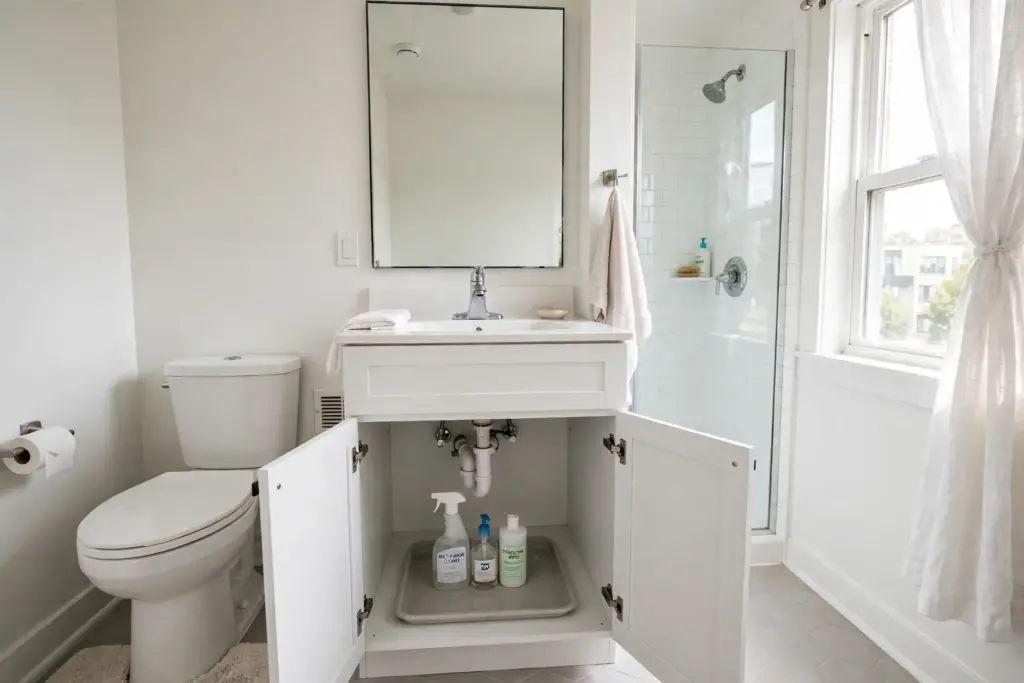
8. Line the Cabinet With a Leak Tray
A shallow tray or waterproof liner under everything is cheap insurance. If a bottle leaks or a pipe drips, the tray catches it before it soaks into the cabinet floor, which protects both the cabinet and your deposit. Check the tray every month or so, especially in older rentals where supply lines may weep slowly. A tray that is doing its job will show a damp spot long before the cabinet wood does, and that early warning is worth far more than the tray itself.
9. Use the Door for Styling Tools
Hair dryers, straighteners, and brushes are bulky and rarely fit neatly in a bin. A heat-safe pouch or rack on the inside of the vanity door keeps them upright, separated, and easy to grab. As in the kitchen, adhesive or hook-over mounting avoids holes, and the door should still close fully when the pouch is loaded. Let hot tools cool before putting them away, and keep cords loosely coiled rather than wrapped tightly around the tool, which strains the cord over time.
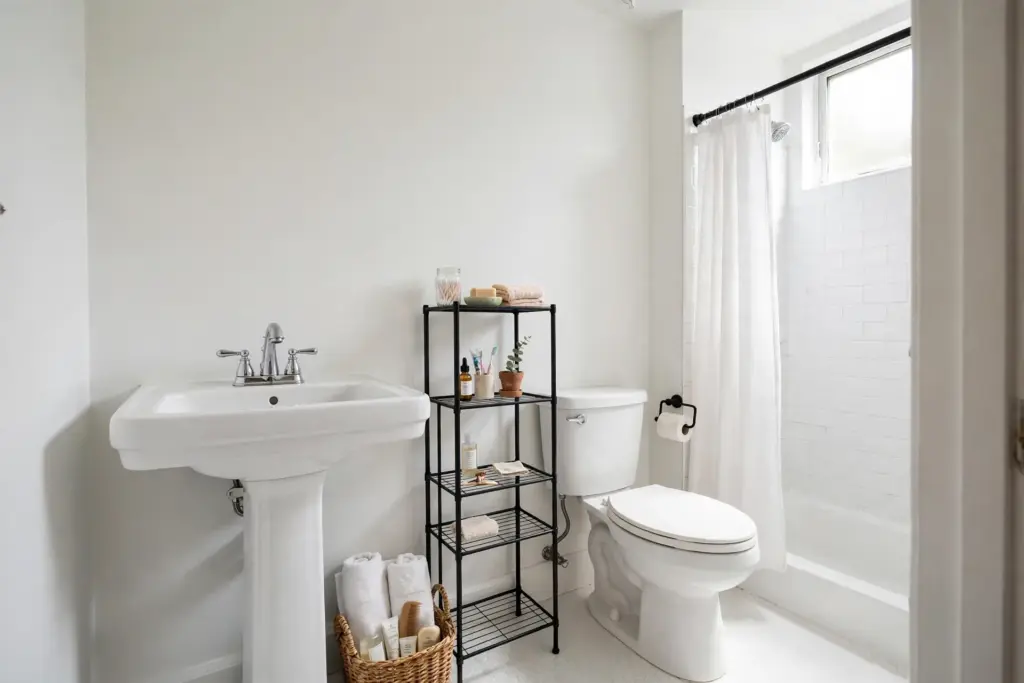
10. No Cabinet? Use a Slim Shelf Beside a Pedestal Sink
Many older rentals have a pedestal sink with no cabinet at all, which means there is nothing to organize under it. The renter-friendly answer is to build storage beside the sink instead: a slim freestanding shelf or a small basket that holds rolled towels and daily toiletries within arm’s reach. It needs no drilling, it moves with you, and it keeps essentials off the floor.
Two Finishing Touches That Make It Last
11. Label Every Bin
Labels are the difference between an organized cabinet and one that stays organized. A label tells everyone in the household where things belong, which removes the guesswork that slowly refills cabinets with random items.
12. Keep the Shut-Off Valves Reachable
Whatever organizers you choose, leave a clear path to the shut-off valves and the drain trap. Do not stack bins in front of the valves, and do not run a tension rod across them. In an emergency, fast access matters more than squeezing in one more bin,
What Not to Store Under Sinks
Some things simply do not belong under a sink, no matter how much space seems available. Keep paper goods elsewhere if the cabinet has any history of dampness, because they absorb moisture and hide leaks. Avoid storing anything valuable in the lowest spot, where a leak reaches first. Strong chemicals should stay upright, tightly closed, and out of reach of children and pets, and they should never be decanted into unmarked bottles.
For more inspiration on organizing awkward cabinets in apartments, see the ideas at Real Home Habits’ under-sink storage ideas for apartments and The Small Apartment’s under-sink organization guide, both of which cover the same pipe-first approach for small spaces.
Frequently Asked Questions (FAQ)
Can renters organize under the sink without drilling?
Yes. Tension rods, adhesive racks, freestanding bins, slide-out caddies, and turntables all work without a single hole,
What is the best first step for small apartment under sink storage ideas?
Measure first. Record the width on each side of the pipes, the height under the drain trap, and the size of the door opening, then buy organizers that fit those numbers.
How do I keep a bathroom vanity cabinet from getting damp?
Line the cabinet floor with a waterproof tray, keep items off the bare floor, and check the tray monthly for damp spots. Report any persistent leak to your landlord rather than hiding it behind organizers.
What should I do if my sink has no cabinet?
Use a slim freestanding shelf or basket beside a pedestal sink, or a small rolling cart that fits the gap. These options need no drilling and move with you.