Small Space Sewing Room Ideas for Apartments
A sewing machine, a pile of fabric and a box of notions can take over a small apartment fast — unless the setup is planned around the way renters actually live. These small space sewing room ideas work in a corner, a closet or one wall of a bedroom, and every one of them comes down clean when the lease ends. What matters is giving each piece of sewing equipment for renters its own spot: a place to sew, a place to cut, a place to press and a place to store fabric.
What Makes a Sewing Room Work in a Small Rental?
A sewing room in a rental is really a sewing corner with good habits. The machine needs a stable surface at a comfortable height, good light from a window or a lamp, and enough clear table space on the left for fabric to feed through. Cutting needs the biggest flat surface in the setup, so it often borrows the dining table or a folding table. Pressing needs a heat-safe spot near the machine, and storage needs to live on the wall or in one cabinet — never in piles on the floor.
That is the test every one of these small space sewing room ideas has to pass: it must use furniture that can move, hang with removable fixings, or fold away. Anything screwed in, glued down or built in is a deposit risk. For the bigger picture of dividing one room into zones that each do a job, the studio apartment layout ideas guide shows how to carve out a work zone without losing the living space around it.
12 Small Space Sewing Room Ideas for Apartments
Start with one idea, not all twelve. These sewing tips for renters work whether you have a spare closet, an empty wall, or one corner of the living room — pick the setup that matches the space you actually have, and add storage only when the first setup starts to feel cramped.
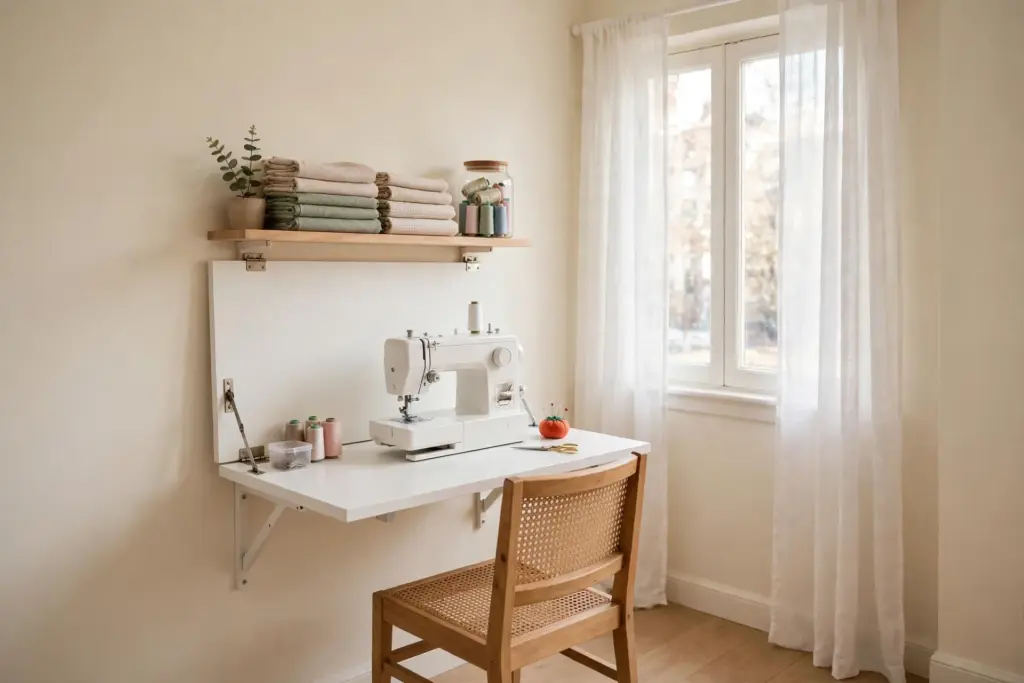
1. A Fold-Down Desk That Disappears After Sewing
A wall-mounted fold-down desk is the best fix for a sewing corner that has to vanish. It folds flat against the wall when the machine is put away, and the chair slides underneath. Mount it with removable heavy-duty strips, or small screws if the landlord has approved them. Look for a desk at least 24 inches deep so the machine sits stable with room for fabric on the left.
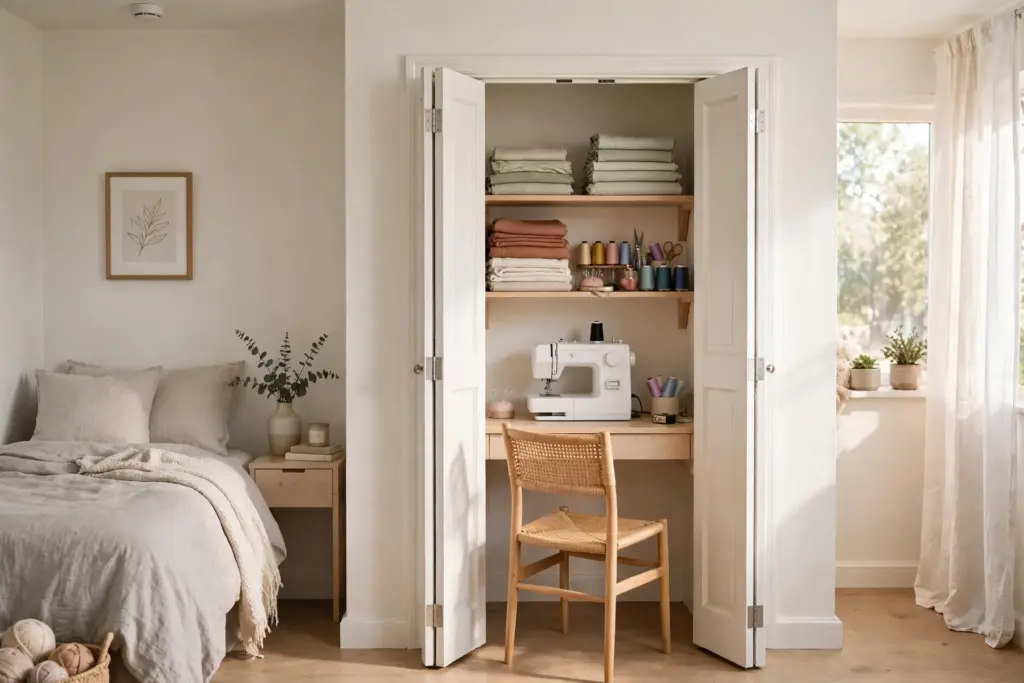
2. Turn a Closet Into a Sewing Nook
An unused coat closet makes a ready-made sewing room with doors that close. Remove the hanging rod, add two shelves and a narrow desk inside, and the machine lives out of sight when the doors shut. A battery-powered LED strip under the top shelf fixes the dark-closet problem without any wiring. Keep the original rod and hardware in a labelled bag so everything can be restored at move-out.
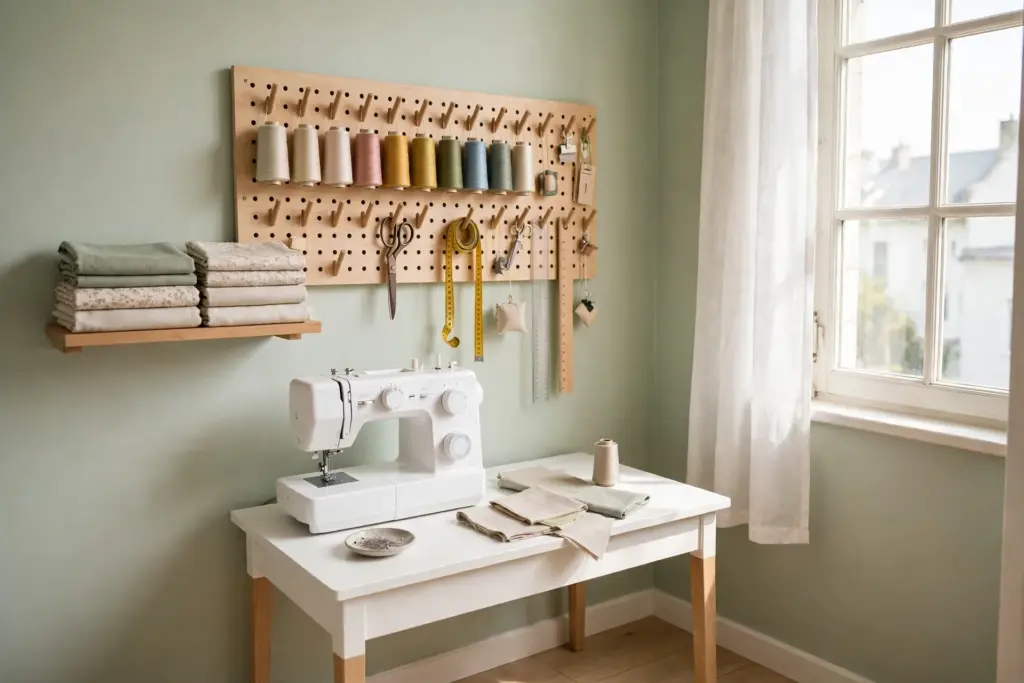
3. A Pegboard Wall Above the Machine
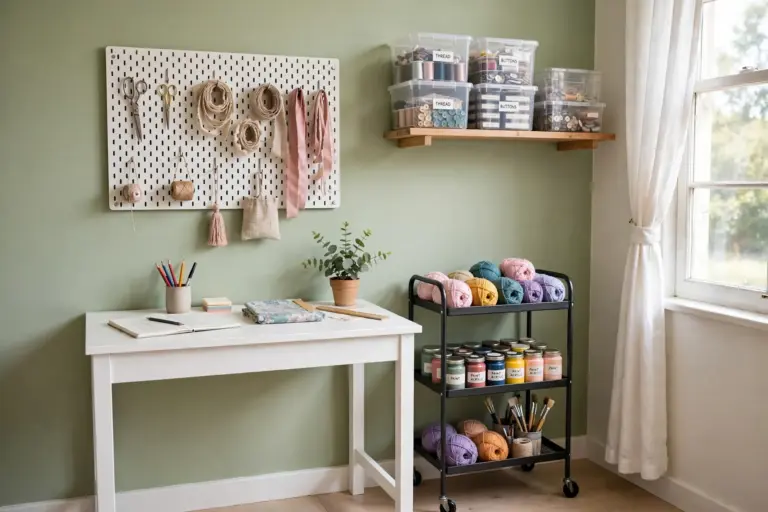
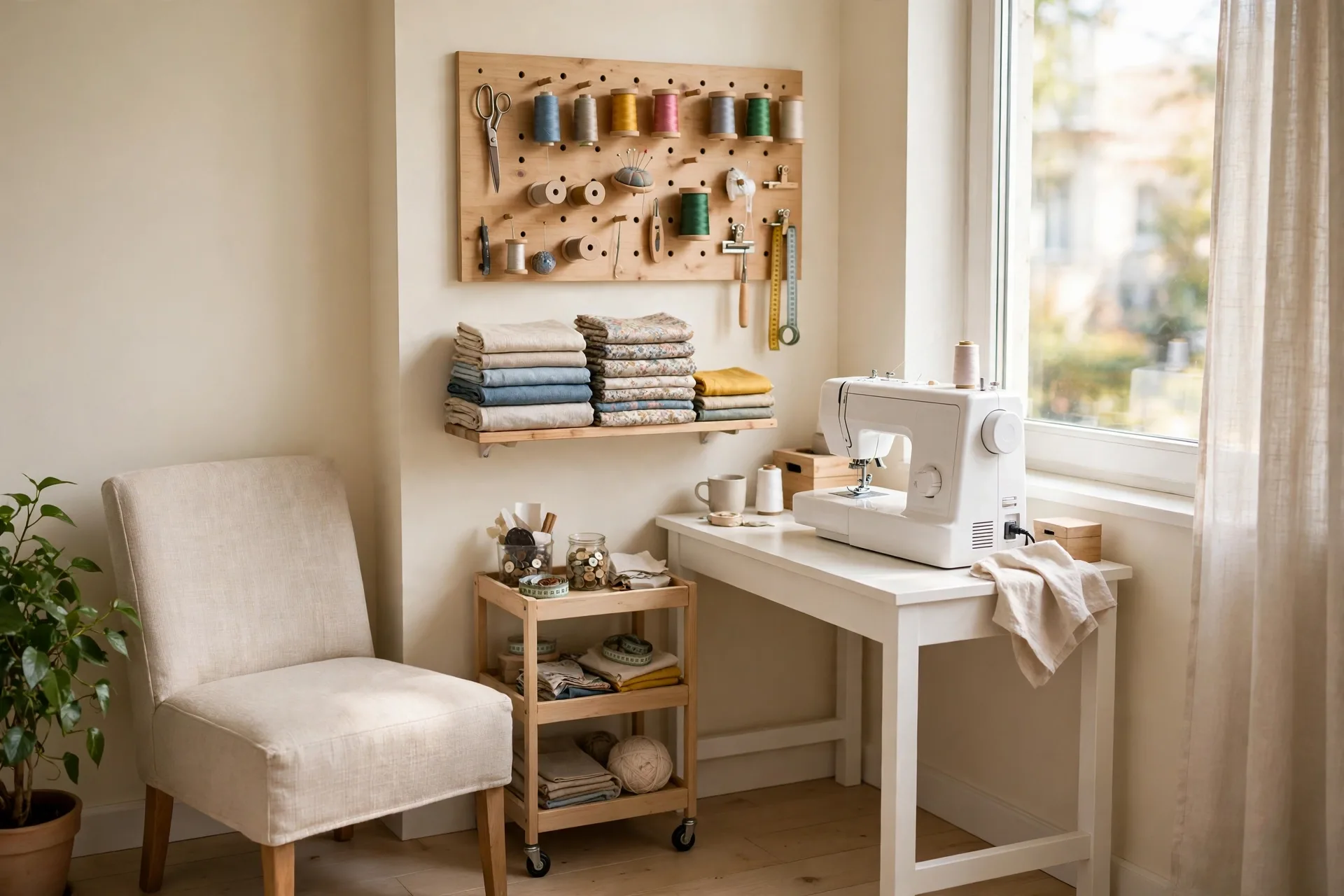
When floor space is gone, the wall above the desk is free real estate. A pegboard hung with removable adhesive hooks holds scissors, rulers, rotary cutters, measuring tape and thread, all within arm’s reach and off the work surface. Pegboards are light, cheap and easy to rearrange as the tool collection changes. For more small-space wall storage thinking, see the tips on organising a sewing room in a small space from a sewing specialist.
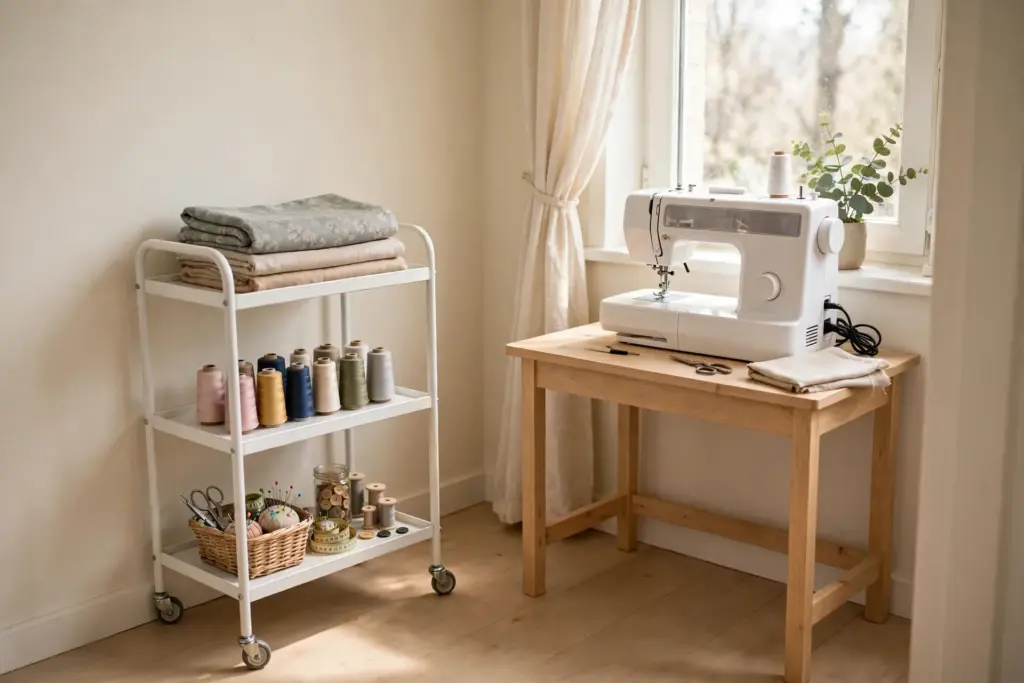
4. A Rolling Cart as a Mobile Sewing Station
A three-tier rolling cart is a sewing room on wheels: fabric on top, thread and notions in the middle, and the current project in a basket at the bottom. Roll it to the table while sewing, then park it in a closet or beside a dresser when the room needs to be a living room again. The IKEA RÅSKOG trolley is the classic version, sized to slip into gaps as narrow as a foot wide. One cart per sewer is enough — two carts in a small room just become clutter.
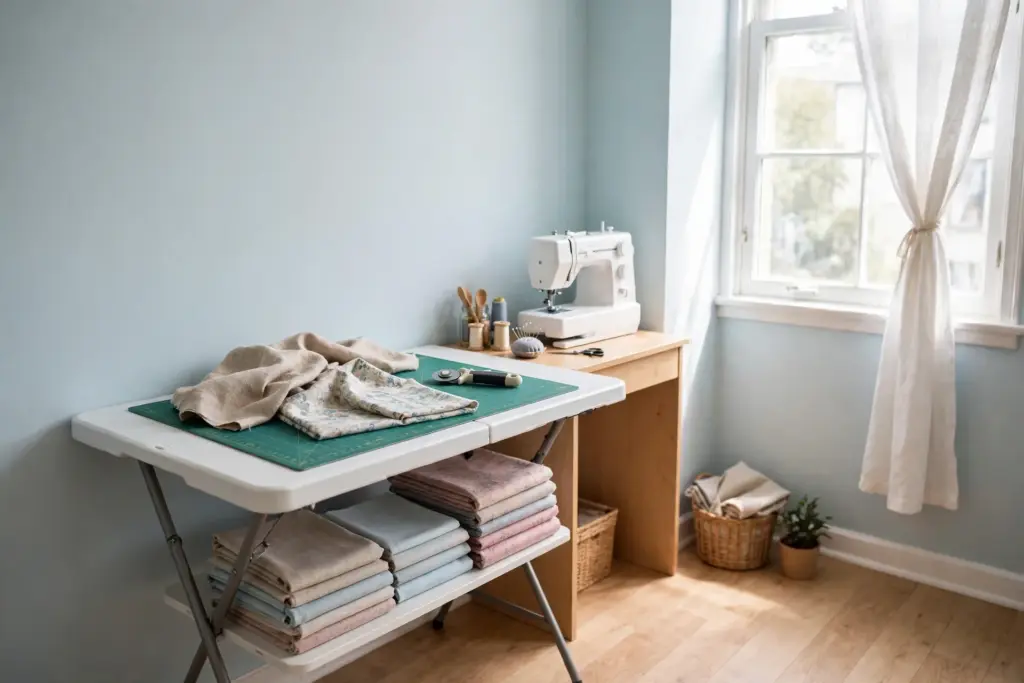
5. A Folding Cutting Table That Only Comes Out for Big Projects
Cutting takes more flat space than sewing, so it deserves its own surface — just not a permanent one. A folding table stored flat behind a door or under the bed gives a full cutting layout for quilts and garments, then folds away when the project is done. Pair it with a self-healing cutting mat that rolls up for storage. If the dining table has to double as the cutting surface, cover it with a thick mat to protect the finish, and clear it before meals so sewing never takes over the room where everyone eats.
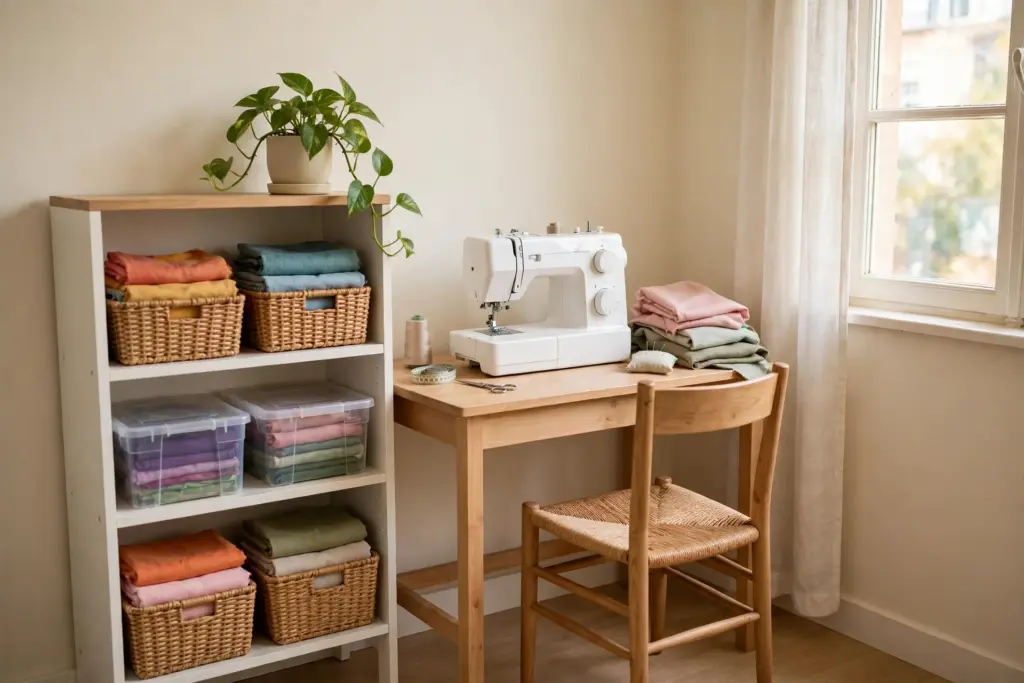
6. One Shelf for Fabric, Sorted by Project
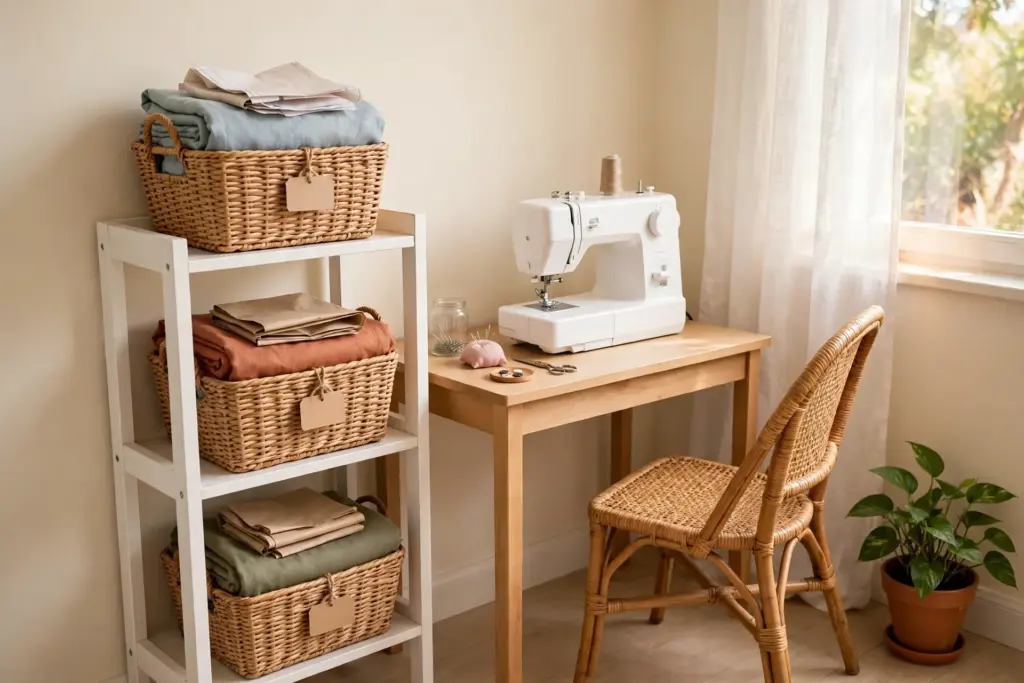
Fabric multiplies quietly, so give it one shelf and one rule: if it does not fit on the shelf, something has to go. Fold every piece the same size, stack it by project or by colour, and store it in labelled baskets or clear bins so the stash stays visible and tidy. The same one-home-per-category thinking works for the rest of the craft supplies — see the small space craft storage ideas guide for bins, baskets and carts that keep supplies in check.
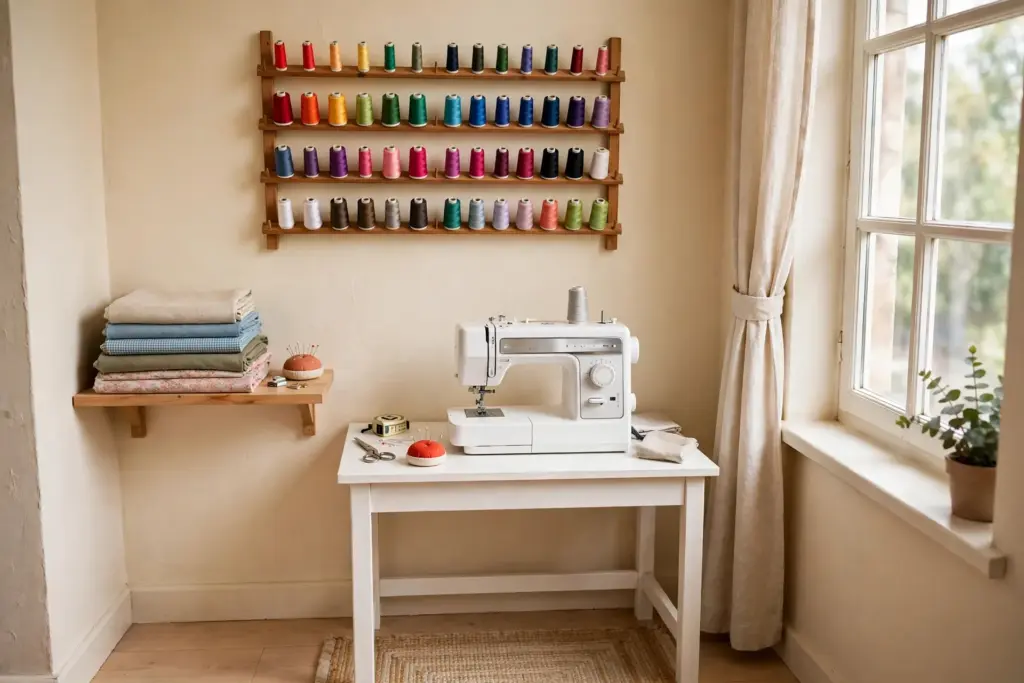
7. A Thread Rack That Doubles as Wall Art
Thread is small, colourful and easy to lose, which makes a wall-mounted thread rack both storage and decoration. Rows of spools sorted by colour look like a rainbow on the wall, and every colour is visible at a glance instead of tangled in a drawer. A narrow rack takes up almost no depth, so it fits on the sliver of wall beside a door or above the desk, and it can hang from removable adhesive strips with no holes at all. Keep the everyday neutrals at eye level, and the special-occasion colours higher up.
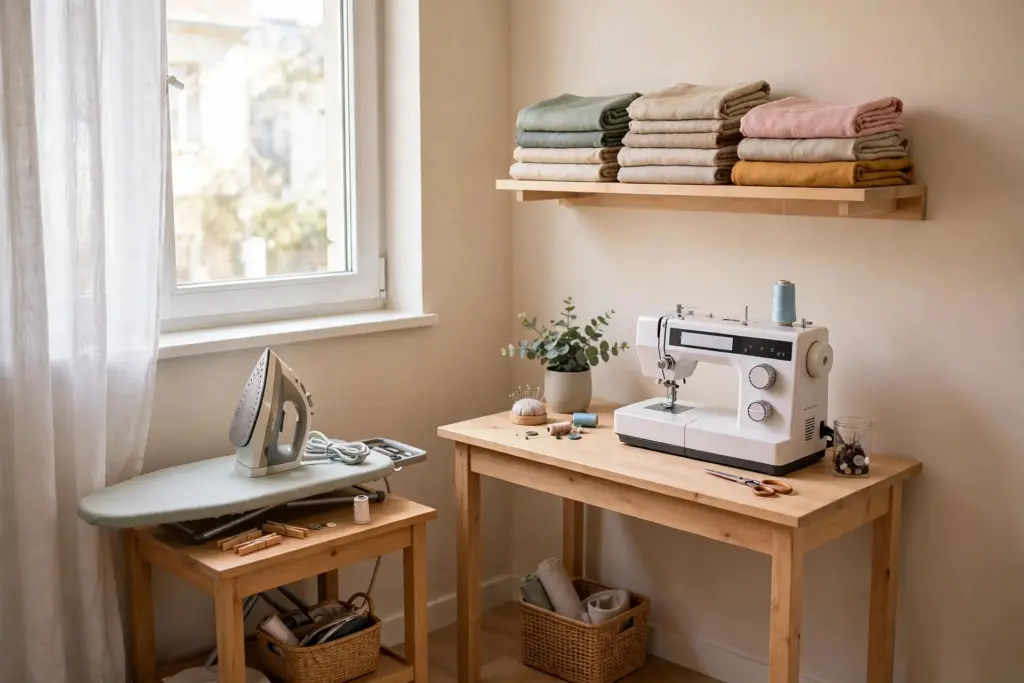
8. A Tabletop Pressing Station Next to the Machine
Pressing seams as they are sewn makes the difference between homemade-looking and handmade-looking results, but a full ironing board eats a whole corner. A tabletop ironing board on a side table, or a heat-resistant pressing mat on the desk, gives the same result in a fraction of the space. Keep the iron and a small spray bottle within reach of the machine, and store the board upright behind a door when it is not in use. Never press directly on a wood desk — a silicone mat or a folded towel underneath protects the surface and the deposit.
9. One Basket Per Project, Nothing Else Out
The fastest way to keep a small sewing room tidy is to allow only one active project on the surface. Everything for that project — fabric, pattern, thread, zipper and buttons — lives in a single basket or project bag, and every other project stays packed away on the shelf. When the project is finished, the basket is emptied and refilled with the next one, so works in progress never spread across the desk, the chair and the floor. Label each basket with the project name, and set a simple rule: a project untouched for three months goes back into storage.
10. Share the Desk With Your Laptop
Most renters cannot spare a desk just for sewing, so let the sewing machine share with the laptop. A desk about four feet wide holds a machine on one side and a closed laptop on the other, and a monitor arm or a laptop stand frees even more room. The trick is a five-minute changeover: the machine slides to the back of the desk on a tray, the laptop comes forward, and a small desk tidy holds the shared supplies both jobs use. A chair with no arms slides fully under the desk, which matters where every inch of floor is walked through daily. For desk setups that serve two jobs without taking over the room, the small apartment home office ideas guide has layouts that work for sewing corners too.
11. Light It Like a Workbench, Not a Bedroom
Good light is the cheapest upgrade a small sewing room can get. Put the machine near the brightest window, and add a daylight-temperature desk lamp that clamps to the desk edge instead of taking up surface space. A small LED strip under the shelf above the machine lights the needle area without glare. Avoid relying on a single ceiling light, which throws shadows exactly where the needle is.
12. The 20-Minute Reset Rule
The best storage fails without a reset habit, so build one into the end of every sewing session. Twenty minutes is enough: put fabric back on its shelf, return tools to the pegboard or cart, throw scraps in the bin, and wind the next bobbin so the next session starts ready. A short reset keeps the sewing corner from colonising the living room, and the machine stays ready to use instead of buried under an abandoned project.
How to Set Up Your Sewing Corner in a Weekend
The best small space sewing room ideas start with measuring, not shopping. Measure the corner, the closet or the wall, then measure the machine and the chair, and sketch the layout on paper before buying a single bin. Place the machine table first, near light and a power outlet, then add the cutting surface, the pressing spot and the storage in that order — the jobs that happen most often get the best positions. A university extension guide, Designing a Sewing Center, recommends a U or L shape so each step is within easy reach — a layout that works in a corner as well as a full room. Set everything up on Saturday, sew a small test project on Sunday, and move anything that gets in the way.
Frequently Asked Questions (FAQ)
Can I set up a sewing room in a small apartment without drilling?
Yes — most of the small space sewing room ideas in this guide need no drilling at all. Fold-down desks, rolling carts, freestanding shelves and thread racks can all be fixed with removable adhesive strips or freestanding furniture, and a closet nook needs no wall fixings whatsoever. Always check the lease first, and ask the landlord in writing before drilling any holes.
How much space do I need for a sewing corner?
A workable sewing corner needs about three to four feet of wall and a desk at least 24 inches deep, plus room to pull out a chair. Cutting can borrow a folding table or the dining table, so it needs no permanent floor space. A closet about two feet deep can hold a complete setup.
Where should I store fabric in a small apartment?
Give fabric one shelf or one set of bins, fold every piece the same size, and sort it by project or colour so it can be found at a glance. Clear bins show the contents without opening them. If the stash outgrows its shelf, it is time to use up, donate or pass on fabric rather than buying more storage.
Do I need a separate cutting table?
Not permanently. Cutting needs the biggest flat surface in the setup, but a folding table that comes out only for large projects works well, and a dining table protected with a cutting mat and a towel underneath does the same job. What matters is a flat, stable surface at a comfortable height, not a table that is always set up.