12 Renter-Friendly Hacks for Small Apartments That Actually Work
Small apartments come with small annoyances: nowhere to hang a coat, a dark corner that swallows the light, a kitchen with no counter space, and a lease that forbids drilling a single hole. These renter friendly hacks fix exactly those problems — twelve small, cheap, fully removable tricks that make a tiny rental work harder without risking a dollar of the deposit. Every hack below follows the same three rules: no drilling, no permanent changes, and nothing a reasonable landlord could object to. Most cost less than a takeout dinner, take under an hour, and come down cleanly on moving day.
Start with the annoyance that bothers you most, then work through the rest room by room. The hacks are grouped by problem — walls, light, storage, kitchen and bathroom — so you can skip straight to the fix you need.
1. Hang Anything Without a Single Hole
Damage-free adhesive strips and hooks are the single most useful tool in a rental, because they turn every blank wall into usable space without a nail hole. Clean the wall with rubbing alcohol, let it dry completely, press the strip on firmly for thirty seconds, and wait an hour before hanging anything. That waiting hour is the step most people skip, and it is the reason strips fail. Match the strip to the weight, and always check the weight rating printed on the package. At move-out, pull the tab straight down slowly and the strip releases cleanly. The Command brand describes its strips as damage-free hanging when the tab is pulled as directed, and its damage-free hanging range covers hooks and strips for most wall types.
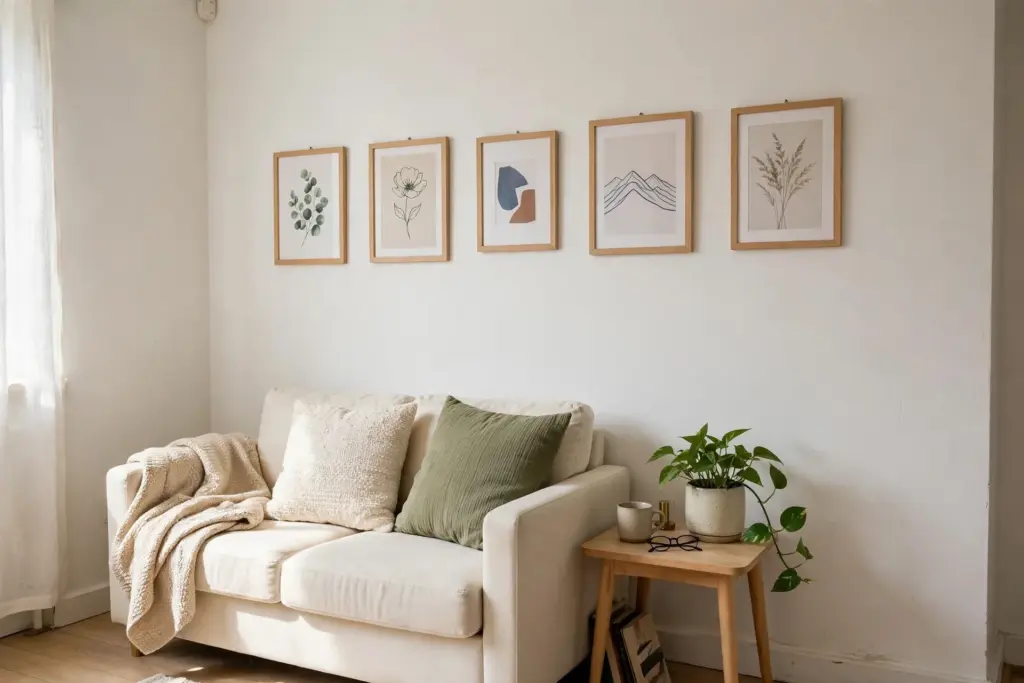
2. Stretch a Tension Rod Under the Sink
The cabinet under the kitchen sink is usually the messiest spot in a small apartment: pipes in the middle, bottles tipped over, and half the space wasted. A spring-loaded tension rod costs a few dollars and turns that dead space into a hanging rail. Wedge the rod across the cabinet, a few inches below the top, and hang spray bottles from it by their triggers so the floor of the cabinet stays clear for boxes, sponges, and trash bags. Keep the rod short of the drain pipe so nothing presses against the plumbing, and leave a gap behind the bottles for the P-trap. Nothing is screwed in or glued, and the rod comes out in seconds when you move.
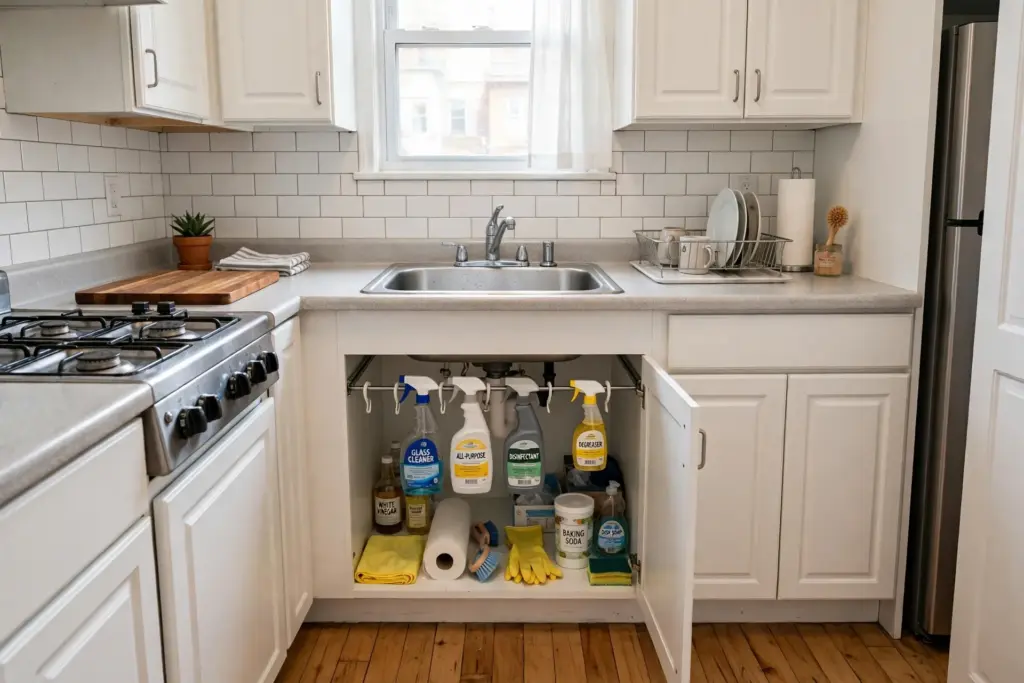
3. Steal Storage From the Back of Every Door
Every door in a small apartment is a wall of unused storage hiding in plain sight. An over-door organizer hooks over the top of the door — no screws, no adhesive — and instantly adds a dozen pockets. Use one on the bedroom door for shoes, scarves, belts, and accessories, and another on a closet or pantry door for snacks, cleaning supplies, or craft materials. Clear pockets are best because you can see everything at a glance, which means things actually get used instead of forgotten. When you move out, lift the organizer off and the door is exactly as it was.
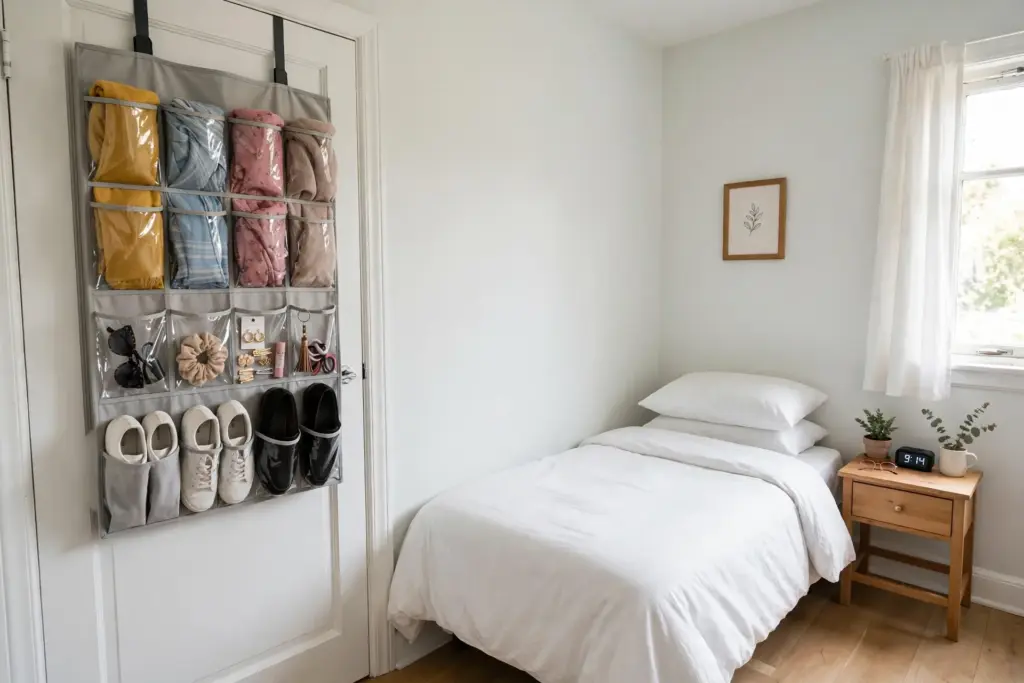
4. Hang Curtains High and Wide
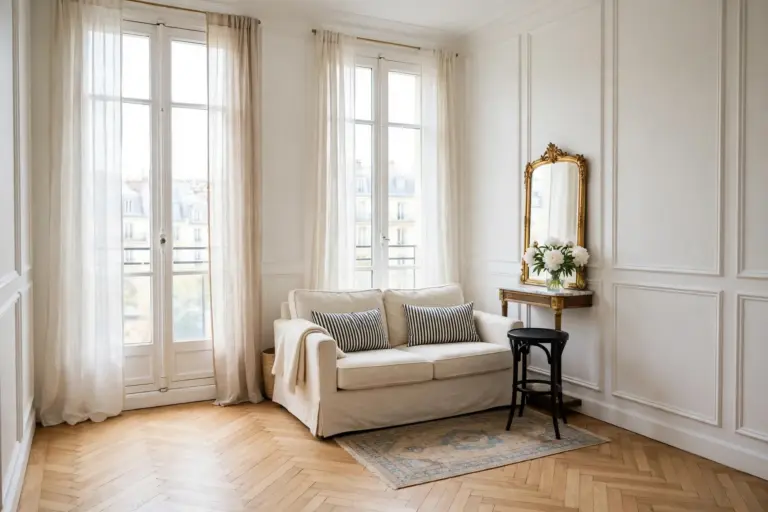
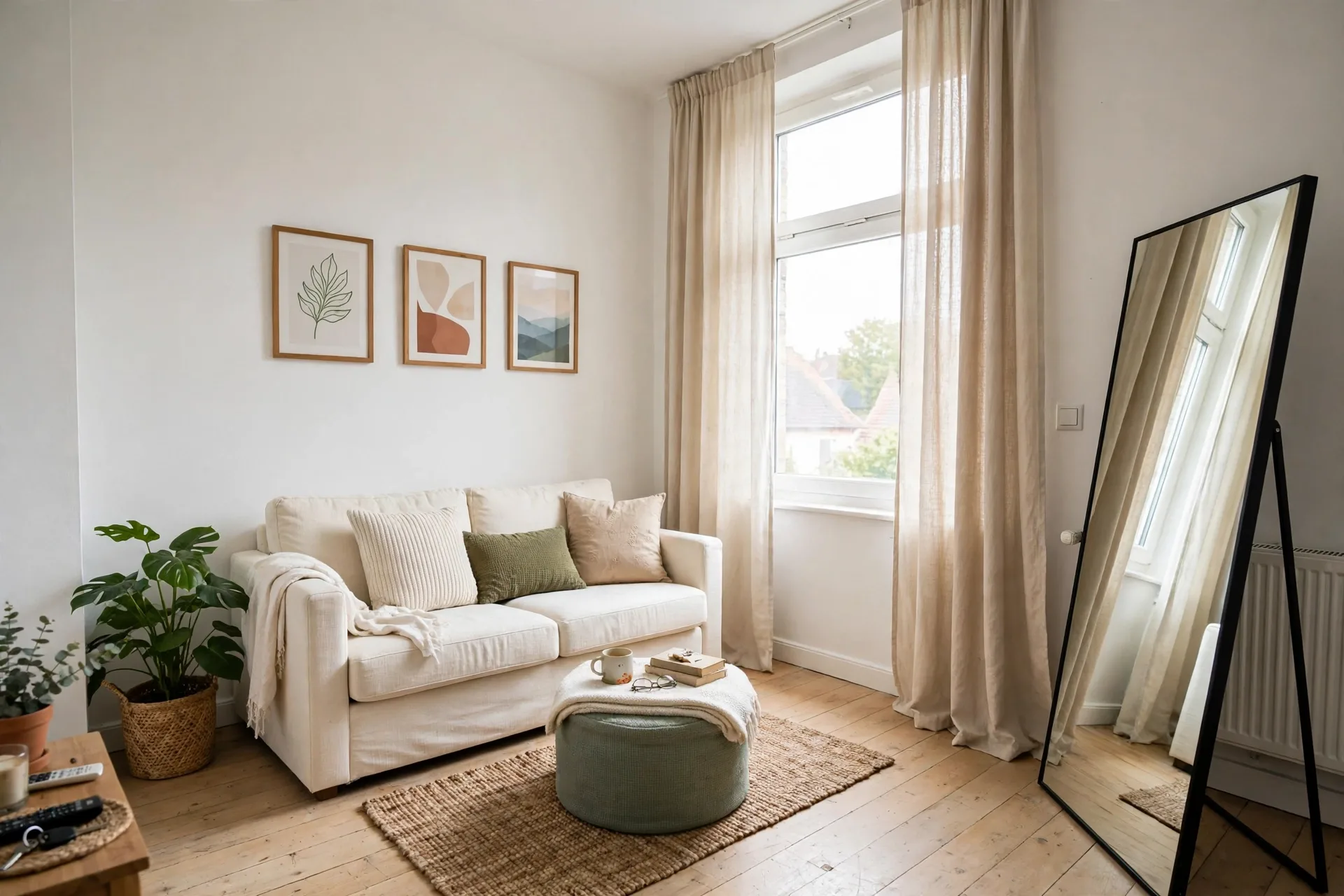
Short curtains on a rod that barely covers the window make a small room feel smaller, because the eye stops at the window frame. Hang the rod four to six inches above the frame and extend it six to twelve inches past each side, then choose curtains long enough to just brush the floor. The window instantly looks taller and wider, and the wall looks finished instead of bare. Pair this trick with a layout that keeps the window wall clear of tall furniture, as in these studio apartment layout ideas, and the whole room opens up.
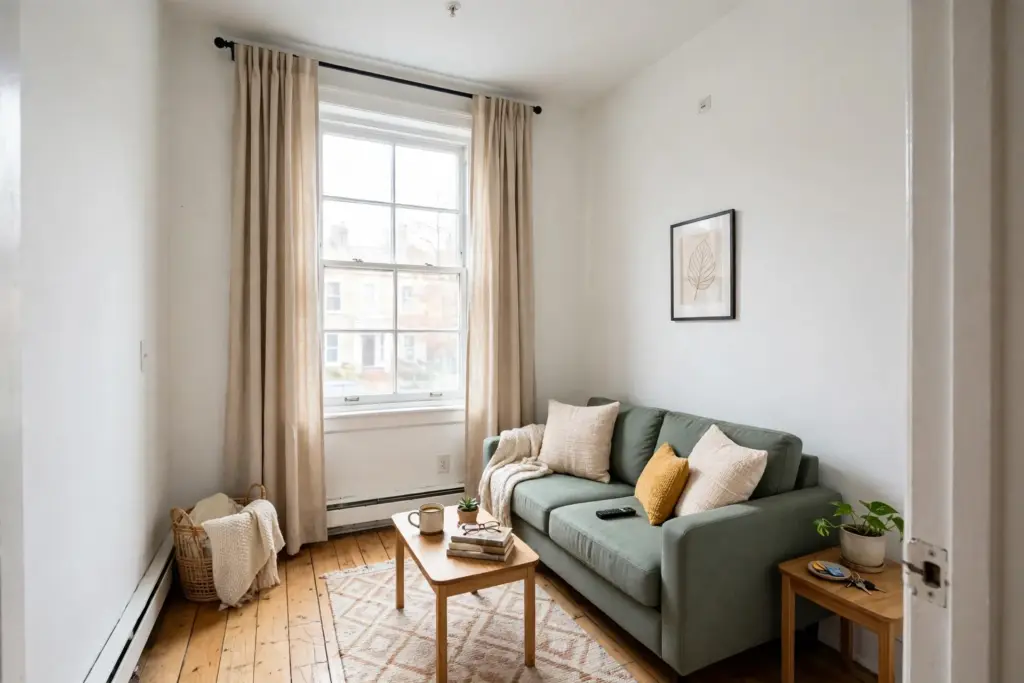
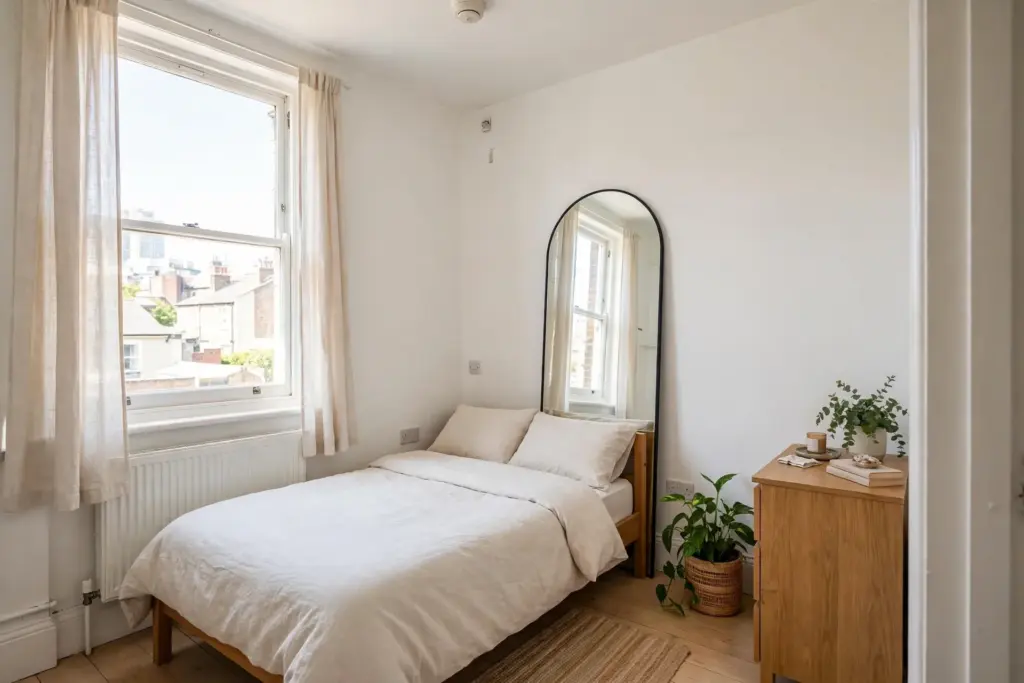
5. Lean a Big Mirror to Double the Light
A large mirror is the fastest way to brighten a dark rental, and leaning one against the wall needs no hardware at all. Place a tall mirror opposite a window or beside it, and it bounces daylight deep into the room while making the wall look twice as far away. Make sure the mirror sits flat against the wall and cannot be knocked over — a pair of adhesive wall bumpers behind the top edge keeps it stable. This trick pairs well with other space-stretching ideas in this guide on how to make a small apartment look bigger. Choose a thin, simple frame so the mirror itself disappears and the reflected room takes over.
6. Make One Piece of Furniture Do Two Jobs
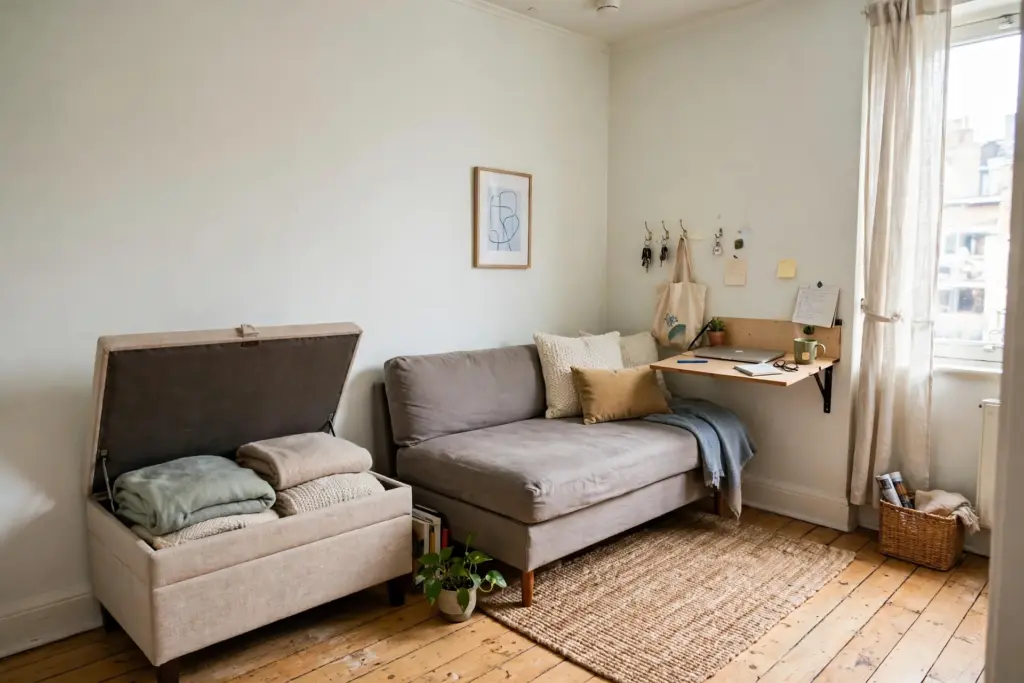
In a small rental, every piece of furniture has to earn its floor space twice. The best renter friendly hacks for storage all follow this rule: a storage ottoman hides blankets and board games while serving as a coffee table and an extra seat, a daybed works as a sofa by day and a guest bed by night, and a fold-down wall desk gives you a workspace that disappears after work. When you shop, measure the spot first and favor pieces with hidden storage over decorative ones — a hollow ottoman beats a solid side table, and a bench with a lift-up seat beats an open shelf.
7. Roll Flat Storage Under the Bed
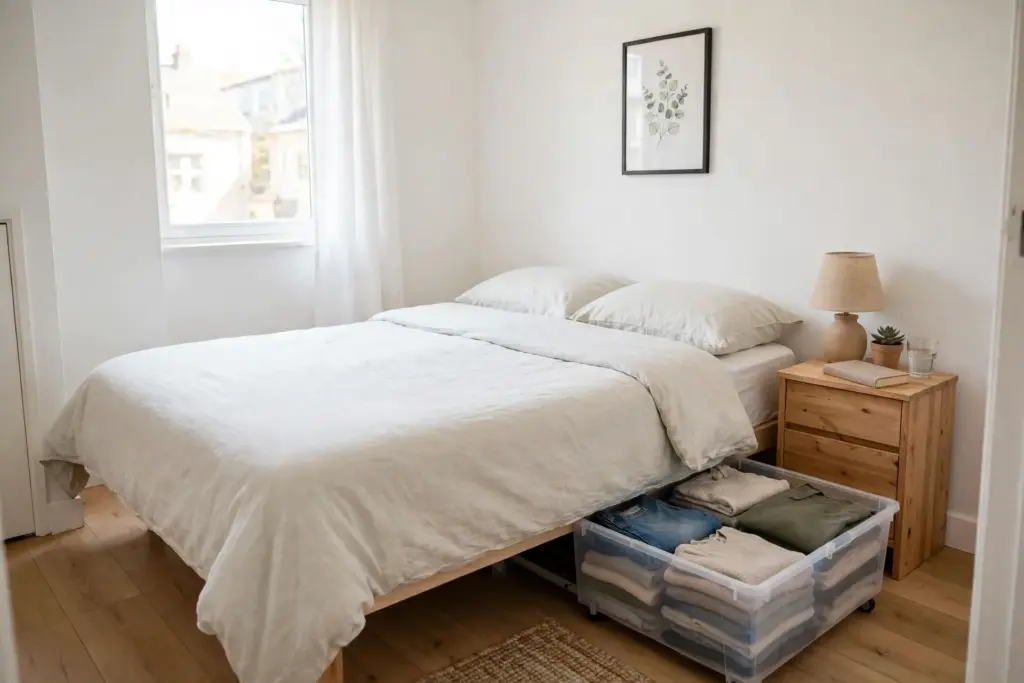
The space under the bed is the largest unused storage zone in most small apartments, and flat rolling bins are made for it. Choose low, clear bins on wheels that slide all the way under the frame, and sort by season: winter sweaters and heavy blankets in one bin, off-season shoes in another. Clear bins matter, because you will only use what you can find without dragging everything out. Measure the clearance under your bed before buying — most frames leave six to eight inches, and a bin that is even half an inch too tall will not slide. Vacuum-seal bulky items like spare bedding first so more fits in each bin.
8. Light Dark Corners Without Touching a Wire
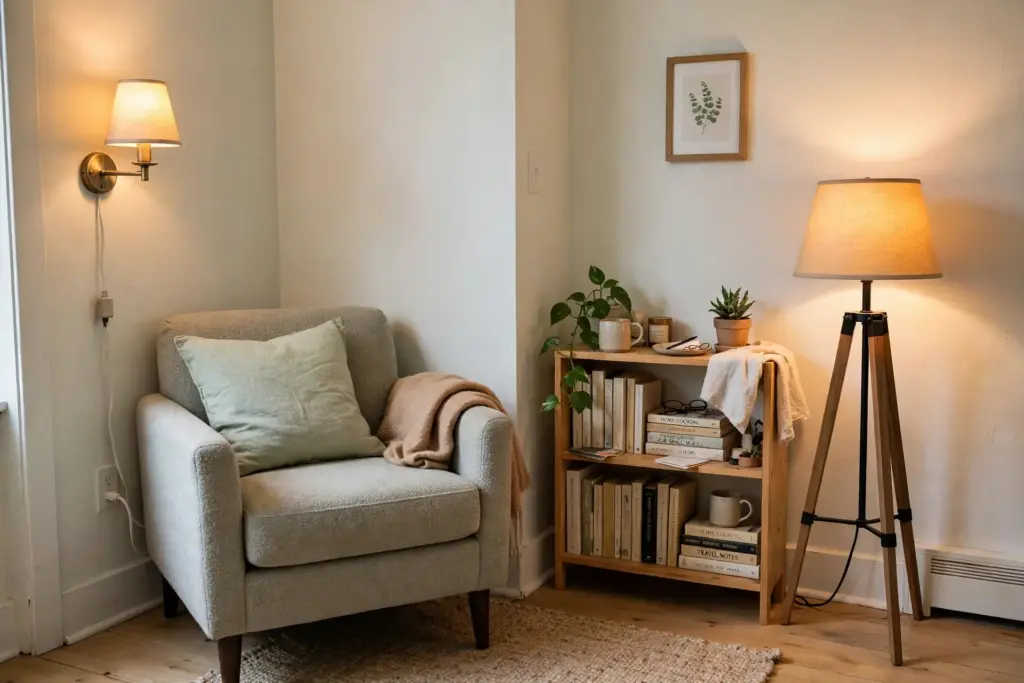
Most rentals have one ceiling light per room and a corner that stays gloomy all day, but fixing it needs no electrician. A plug-in wall sconce mounts with adhesive strips or a single small hook, and the cord runs down to an outlet, hidden behind furniture or a stick-on cord cover that peels off at move-out. Add a warm-toned floor lamp beside the reading chair, and the corner becomes the coziest seat in the apartment instead of a dead zone. Stick to warm white bulbs around 2700K so the light feels like evening sun, and never run cords under rugs, where they become a trip hazard.
9. Refresh the Kitchen With Peel-and-Stick
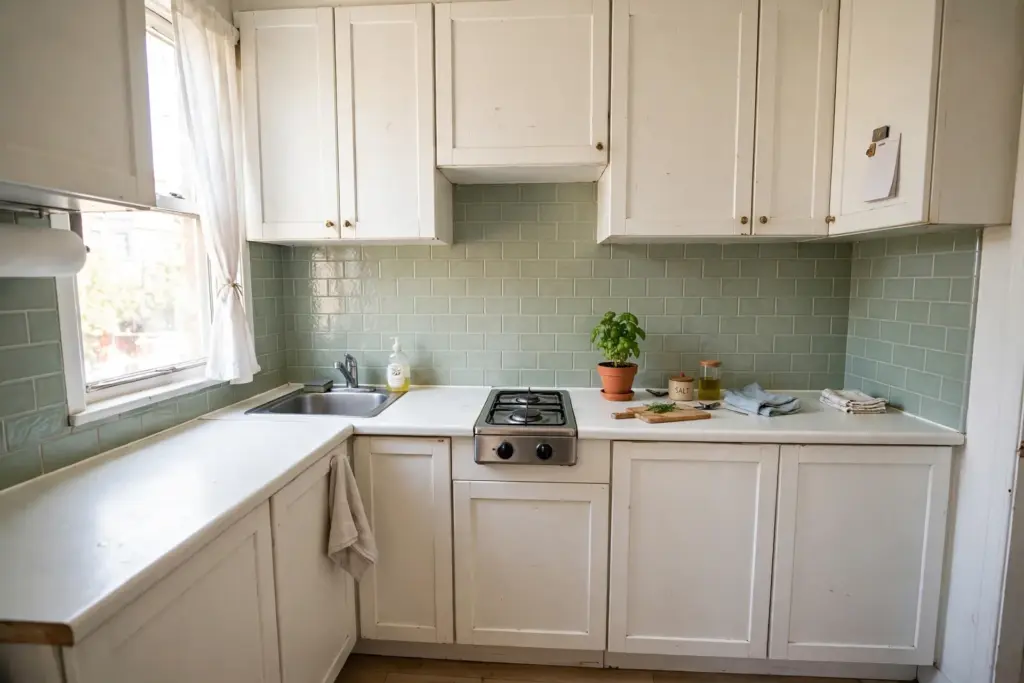
A tired rental kitchen usually needs color, not a renovation, and peel-and-stick tiles and wallpaper deliver it in an afternoon. A peel-and-stick backsplash in a pale subway or sage tile pattern transforms the whole wall above the counter, and it peels off at move-out with gentle heat from a hair dryer. Clean and dry the surface first, work in small sections, and smooth out air bubbles with a credit card as you go. Avoid placing peel-and-stick products directly behind a gas hob or inside a shower, where heat and constant water loosen the adhesive. For more reversible kitchen ideas, see these renter friendly upgrades that come off before moving out.
10. Tame the Shower With a Tension-Pole Caddy
Small rental bathrooms rarely have enough shelf space, and suction-cup caddies fall off the tile at the worst moment. A tension-pole caddy solves the problem without a single screw: the spring-loaded pole wedges between the floor and the ceiling of the shower or tub, and adjustable baskets slide up and down to hold shampoo, conditioner, and soap at the height each person needs. Measure the ceiling height before ordering, and twist the pole until it is snug — it should not wobble when you tug a basket. When you move, loosen the pole, collapse it, and pack it in a box.
11. Swap the Shower Head and Keep the Original
A weak rental shower head makes every morning worse, and replacing it is one of the easiest reversible upgrades in the whole apartment. Unscrew the old head by hand or with an adjustable wrench wrapped in a cloth to protect the finish, wrap the threads with plumber’s tape, and screw on a new handheld or rainfall head. The whole job takes ten minutes. The critical step is keeping the original head, its washer, and any parts in a labeled bag, and reinstalling it before the final walkthrough so the bathroom is returned exactly as it was. If the shower arm itself is loose or the threads are damaged, stop and tell the landlord — that is a maintenance issue, not a renter project.
12. Block Drafts, Noise and Scuffs at the Door
The gap under the front door lets in cold air, hallway noise, and dust, and a draft stopper fixes all three for the price of lunch. A fabric draft snake or a twin draft guard that slides under the door seals the gap without attaching anything to the door or the floor, and it moves with you to the next apartment. While you are at the door, add felt pads to the bottom of every chair and table leg — they stop the screech on hard floors that neighbors hear, and they prevent the scuff marks landlords notice at move-out. These small renter friendly hacks cost almost nothing, yet guests notice them first, because a quiet, draft-free apartment feels better cared for.
Frequently Asked Questions (FAQ)
Are renter friendly hacks really deposit-safe?
Yes, when they are fully removable and leave no mark — adhesive strips pulled correctly, tension rods, over-door organizers, and peel-and-stick products removed with gentle heat. The rule is simple: if it needs a drill, a screw, or permanent glue, it is not deposit-safe. Always check the alterations clause in your lease first, and ask the landlord in writing before trying anything you are unsure about.
What is the first hack to try in a new apartment?
Start with adhesive hooks and a tension rod, because they solve the two most common first-week problems: nowhere to hang anything and nowhere to store cleaning supplies. Both cost a few dollars, take minutes to install, and immediately make the apartment feel organized. Add the over-door organizer next if the closet is small.
Can I hang heavy items without drilling?
Up to a point. Large adhesive strips are rated for frames and mirrors of a few pounds each, and using two or more strips spreads the load. Anything heavy, valuable, or hung above a bed should stand on the floor instead — lean a large mirror or art against the wall, or use a floor-standing shelf. When in doubt, choose the floor-standing option.
Where can I check my rights as a renter?
Start with the lease itself, especially the sections on alterations, repairs, and the security deposit, since deposit rules vary by state. For general tenant protections, the U.S. Department of Housing and Urban Development publishes federal fair housing resources that explain renter rights. For a dispute about a specific charge, a local tenant advice service can review the lease wording.