14 Cat-Friendly Small Apartment Ideas: Litter Box Hiding, Perches and Scratch Zones
A cat does not need a bigger apartment. A cat needs territory: a place to climb, scratch, hide, and a litter box that does not dominate the room. These cat friendly small apartment ideas all pass one test — does the idea give your cat a place of its own while taking almost no new floor space and leaving the walls untouched? Fail that test and it is not in this list.
One honest note first: not every rental allows cats, so check your lease and any pet deposit rules before any setup. Everything below is renter-first — tension, clamp, suction-with-caution, and freestanding options first; anything fixed to a wall is permission-first, never damage-free. For the wider picture, see our renter-friendly apartment decorating ideas pillar, covering the no-drill basics this article builds on.
Litter First: Hide It Without Sealing It In
Solve the litter box first: a visible box in a studio sets the tone for the whole room. The goal is hidden but breathing — out of sight, easy to enter, easy to clean, never sealed inside an airless cupboard. A hidden box that traps odour gets refused by the cat.
1. Use a furniture-style enclosure cabinet
A low cabinet with a side entrance turns the box into furniture: the cat walks in through the side, the box sits inside, and the top holds a plant or books. Choose one with ventilation gaps and a panel that opens fully for scooping — if cleaning it is a chore, it will not get done daily. Keep it away from food bowls and sleeping areas, and never where the cat can be cornered. If your cat refuses the enclosure, offer an open box beside it instead — some cats dislike enclosed boxes, and a used open box beats an unused hidden one.
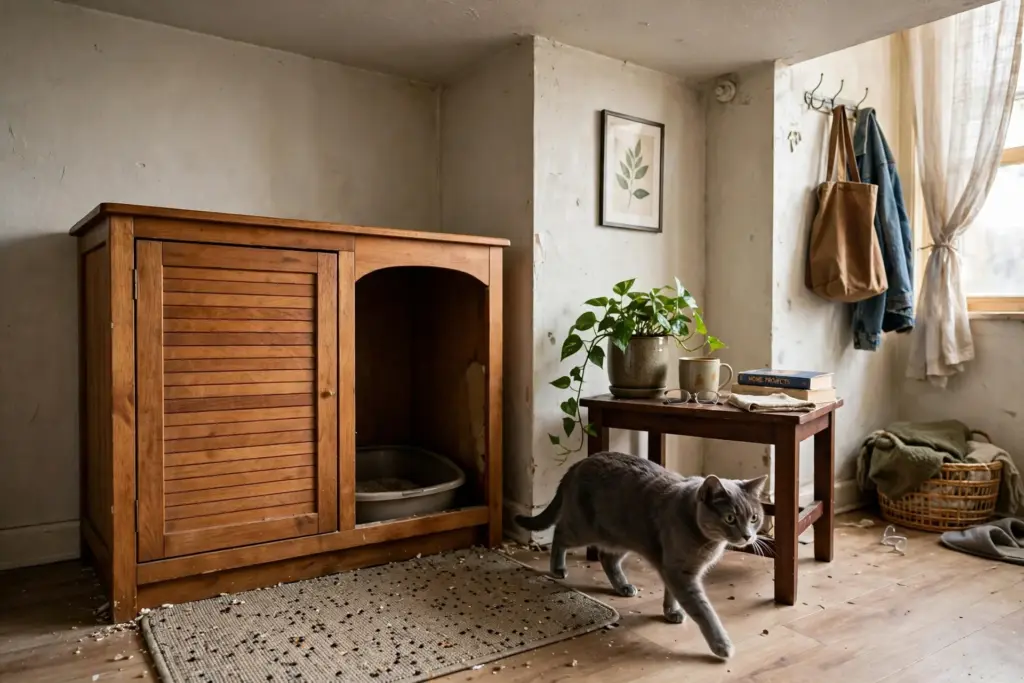
A cabinet enclosure hides the box, ventilated and easy to scoop.
2. Screen off a corner with a folding divider
No spare cabinet? A folding screen or a tall open shelf turned sideways creates a litter corner in minutes, with zero wall fixing. The screen blocks the sofa’s view, the cat gets privacy, and the whole setup folds flat when you move. Leave an entry gap at one end and a litter-catching mat outside — tracked litter is what guests actually notice.
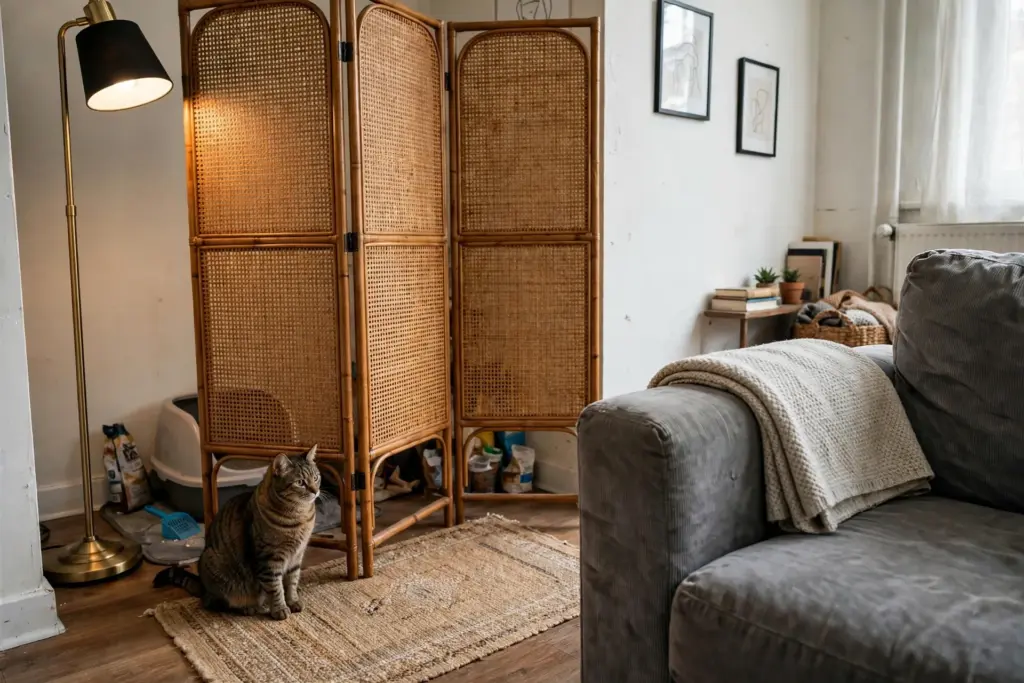
A folding divider screens the litter corner, zero wall fixing.
3. Follow the box-count guideline — honestly
A common vet guideline is one litter box per cat, plus one extra. In a tiny flat, be honest about it: one well-kept box per cat may be the realistic compromise when floor space runs out. What matters more than the count is upkeep: scooped daily, quiet and consistent, never moved on a whim. A second box, if added later, belongs in a different zone, not beside the first.
Go Vertical Without Touching the Walls
Cats judge a room in three dimensions. A flat with no floor space left can still gain a second storey of cat territory, and none of it needs a drill. The trick is options that stand on their own or grip without holes — plus a safe route up and down, not a single leap of faith. Placing that territory well is half of a good layout, which is why this pairs so naturally with our small apartment living room layout ideas.
4. Add a floor-to-ceiling tension-pole tree
A tension-pole tree wedges between floor and ceiling with pressure, not screws, giving the cat several levels in a floor lamp’s footprint. Put it beside a window and the top platform becomes the best seat in the flat. Check the ceiling is solid and flat where the pole presses, tighten per the maker’s instructions, re-check monthly — tension fittings loosen.
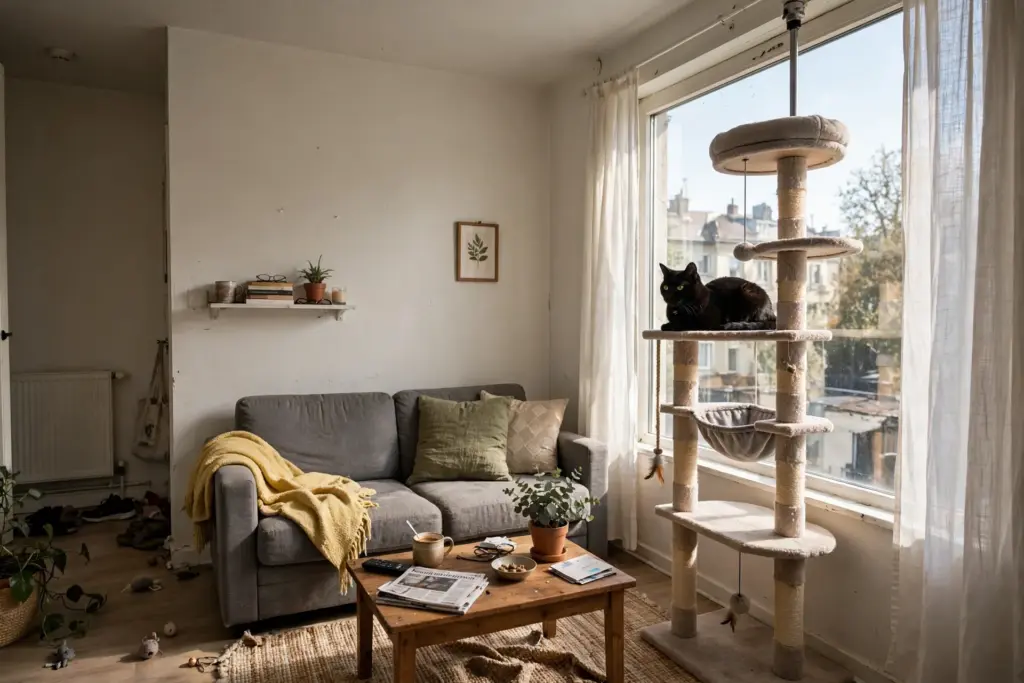
A tension-pole tree adds levels in a floor lamp’s footprint.
5. Try a clamp-on or suction window perch — with caution
Window perches are the highest-value perch in a small flat: sun, birds, zero floor space. Clamp-on perches grip the sill, suction perches stick to the glass, and both can fail — so follow the maker’s stated weight limit, test before trusting it, and put something soft underneath. Check the window screen is secure and latched before the cat uses the perch — a loose screen can give way under a leaning cat. For hot afternoon sun, add a cushion and shade.
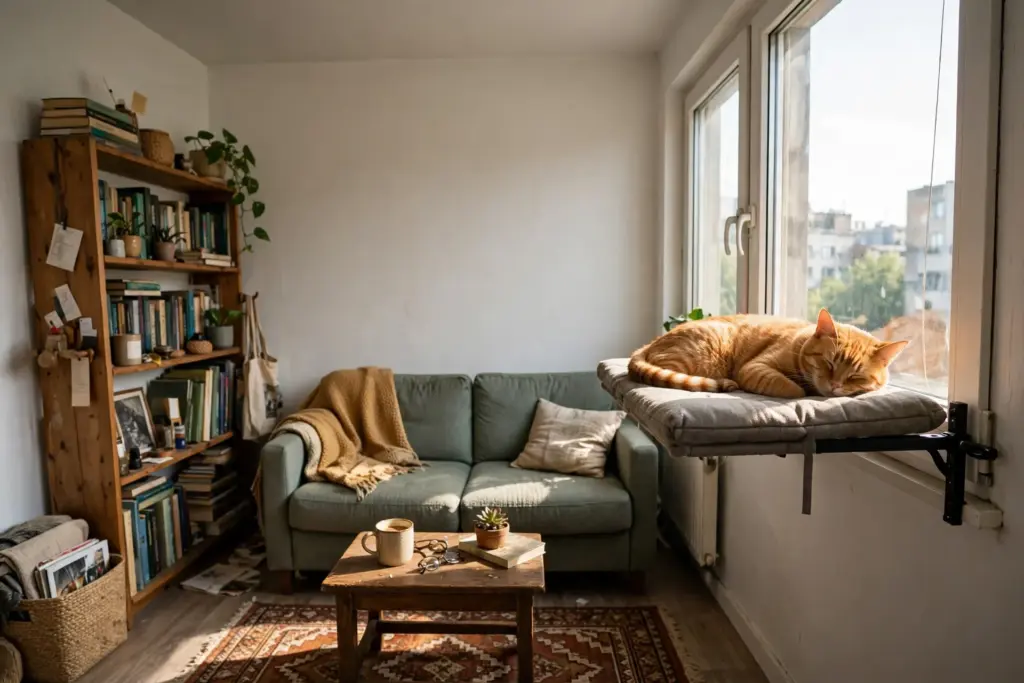
A window perch: sun and a view, zero floor space — test the fixing first.
6. Brace a tall, narrow tree into a corner
A tall tree in a corner is steadier than the same tree in open floor, because two walls limit sideways movement — but they do not stop the tree tipping forward, so the base still matters. Pick a wide, heavy base, push it tight into the corner, and keep the top platform clear of anything the cat could knock over. Anti-tip wall straps exist, but they are a wall fixing — ask your landlord first, never call them damage-free. If your landlord refuses a wall strap, choose a shorter, wider tree or a tension-pole tree instead of a tall narrow one.
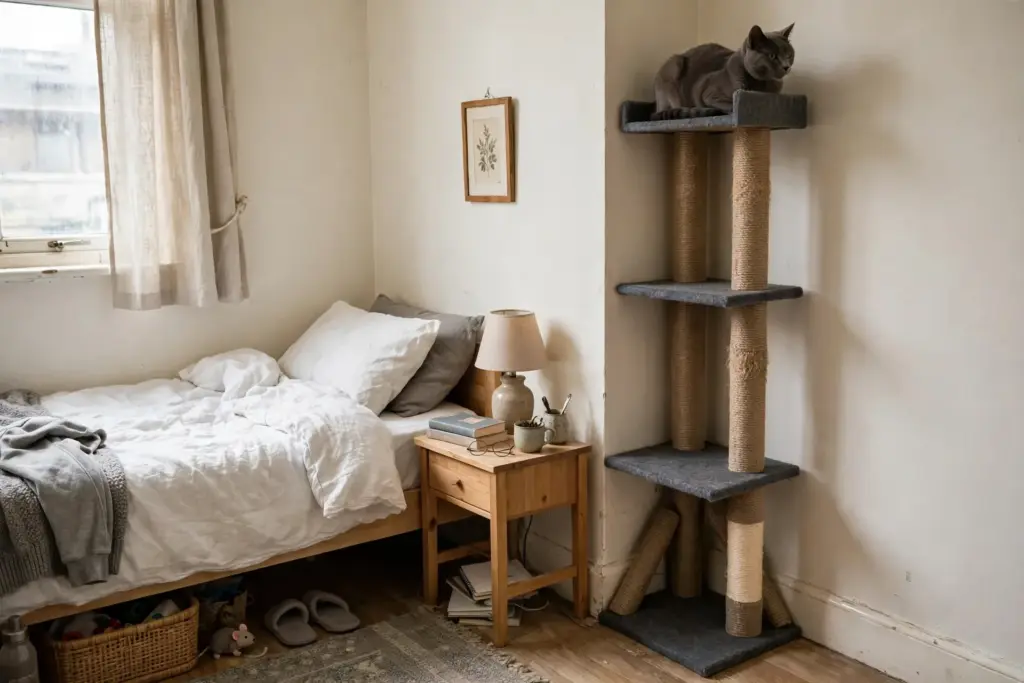
Corner placement steadies a tall tree, no wall fixing.
7. Claim the top of a bookcase or wardrobe
The most overlooked perch in a rental is furniture you already own. A folded blanket on a sturdy bookcase or wardrobe becomes a lookout post, given a safe route up — and anchor tall furniture where the manufacturer requires it, since a cat landing on top can topple an unanchored bookcase (ask your landlord first if the anchor needs a fixing) — a nearby chair, a lower shelf, the tension-pole tree — and a surface clear of breakables. Keep perches away from hot appliances and tidy cords behind covers.
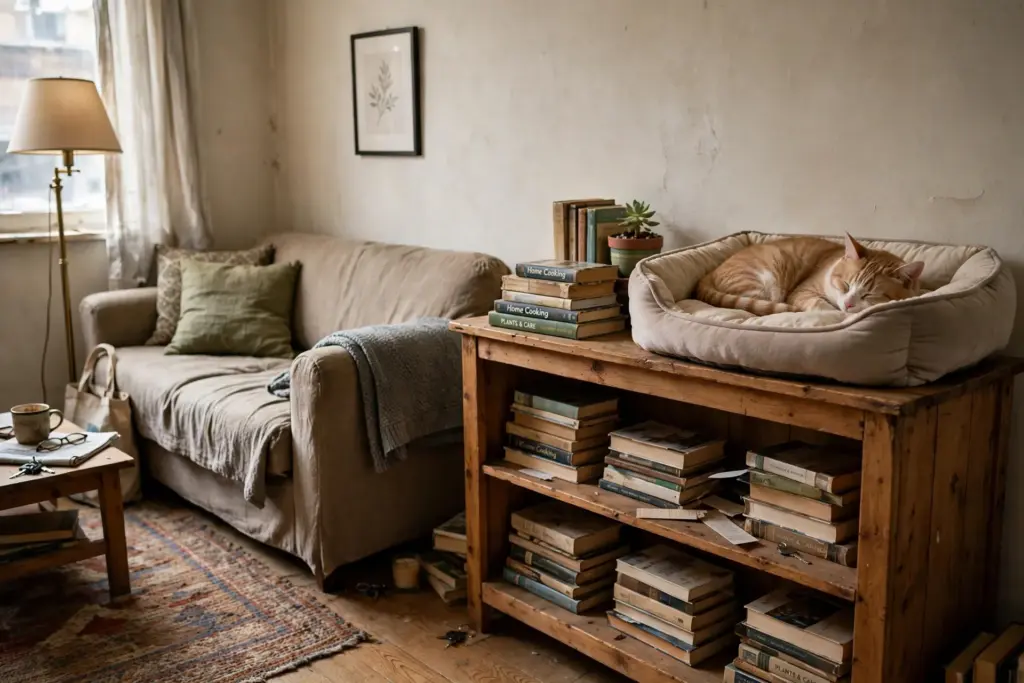
A blanket on a bookcase turns owned furniture into a lookout post.
Scratch Zones That Save the Sofa (and the Deposit)
Scratching is normal cat behaviour, not misbehaviour — and in a rental it is also a deposit issue, since one shredded sofa arm is the most expensive scratch in the flat. The fix is not stopping the scratching; it is putting a better surface exactly where the cat already scratches. These cat friendly small apartment ideas work because they move with the cat’s habits instead of fighting them.
8. Put a tall post right beside the sofa arm
Watch where the cat scratches, then place a tall, stable sisal post within paw’s reach of that spot. The post must not wobble — a wobbling post gets abandoned and the sofa chosen again. A heavy base matters more than height, and a post the cat can stretch full-length against beats a short one.
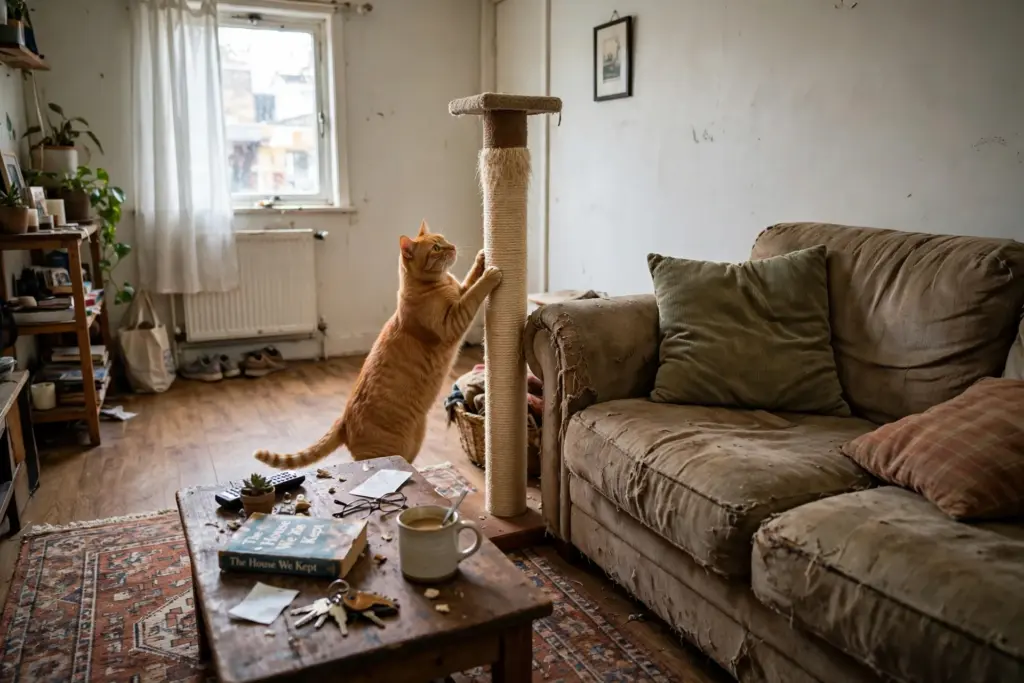
A stable post beside the sofa arm redirects scratching.
9. Offer both horizontal and vertical scratchers
Some cats scratch up, some scratch flat, most like a choice. A flat cardboard scratcher beside the bed covers horizontal rakers, while the vertical post covers stretchers. Cardboard scratchers are cheap, replaceable, and light enough to slide under a bed when guests come. Swap in a fresh pad before the old one shreds into confetti across the rug.
Hideouts Inside Furniture You Already Own
A cat that can retreat on its own terms is a calmer flatmate, and hideouts need no new furniture — just dead space you already have. The rule: two exits where possible, so the cat never feels trapped, and a spot away from the busiest walkway. A single-exit box in a through-route is a hiding place the cat will not use twice.
10. Tuck a covered cube under a side table
A fabric cube with two openings slides under a side table or console and becomes a den that takes no floor space of its own. The cat gets darkness and quiet, you keep the table, and the cube lifts out for washing. Place it in the calmest corner, away from the front door, with a familiar blanket inside.
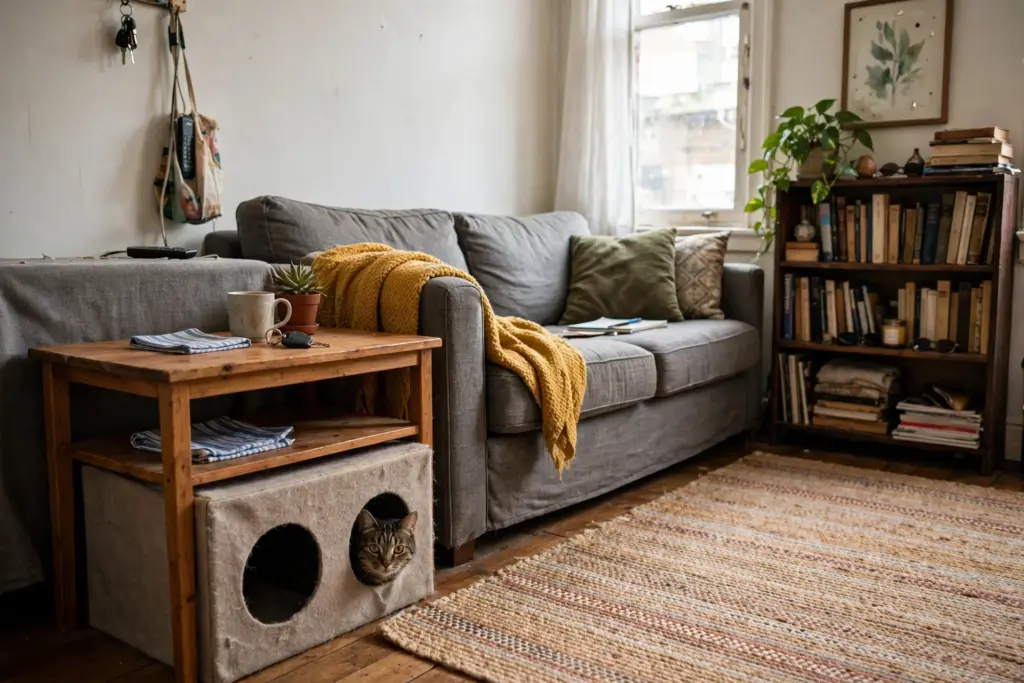
A two-exit cube under a side table: a den, no floor space.
11. Use the under-bed space and the bottom bookcase shelf
Under the bed is the largest unused hideout in most small flats: a low bed or folded blanket there is a dark retreat nobody trips over. The same logic works on a bookcase’s bottom shelf — clear one shelf, add a cushion, and the cat gains a den inside furniture already in the room. Keep both spots dry, dusted, and free of cleaning products.
Play and Rotation in a Small Footprint
Play is how a small flat stays big enough for a cat, and it needs almost no gear — just a plan. Short daily sessions burn off 3 a.m. zoomie energy, and rotation keeps a handful of toys feeling new without a toy box taking over the room. For the storage side, our toy storage ideas for small apartments use the same one-box logic for a different kind of toy collection.
12. Play with wand toys and puzzle feeders
A wand toy turns a hallway-length room into a hunting ground, and a puzzle feeder makes dinner last longer than thirty seconds. Both store in a drawer, cost almost no space, and beat a floor full of ignored toys. End sessions with a small treat or meal so the hunt ends as a cat expects. Rachael Ray’s Nutrish guide to entertaining cats in small apartments makes the same point: short, focused play beats a room full of ignored toys.
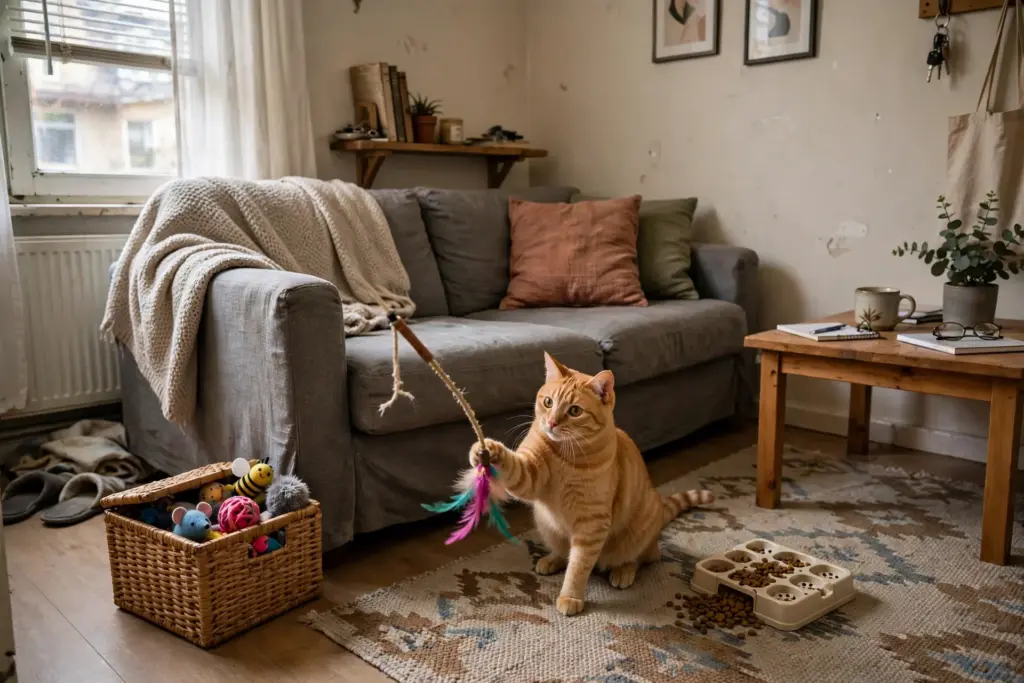
A wand toy and puzzle feeder: play and feeding enrichment in one corner.
13. Keep a small rotation box, not a toy mountain
Put most toys in one small box on a closet shelf and keep three or four out. Swap them weekly and old toys feel new again. A basket by the sofa holds the current set, and the box is the boundary: if a new toy arrives, an old one leaves.
14. Add a collapsible tunnel that stores flat
A fabric tunnel gives a cat a chase route through a room with no spare floor, then folds flat behind a door when play ends. It is the only tunnel worth owning in a small flat — a rigid one becomes permanent clutter within a week. One last caution: some common houseplants are toxic to cats, so check any plant before bringing it home.
Done this way, a small apartment feels less like a compromise and more like territory designed at cat height: a hidden litter corner, high perches, honest scratch zones, quiet hideouts, no new holes in the walls. These cat friendly small apartment ideas ask for almost no floor space and no landlord negotiations — which is why they survive a real lease. Start with the litter box, add one vertical perch, and let the cat pick the next idea — and Modkat’s guide to whether an apartment is big enough for a cat covers the same vertical-space and perch principles from the cat’s point of view. For veterinary-backed background, see the ASPCA’s toxic and non-toxic plant list, Cats Protection’s indoor cat guide, and Cats Protection’s urinary problems guide.
Frequently Asked Questions (FAQ)
Can I keep a cat in a small rental apartment?
Yes, provided your lease allows cats and you cover the basics: a litter setup, vertical territory, scratching options, and a quiet retreat. Small flats suit indoor cats because everything the cat needs is close together — the challenge is layout, not square footage.
How do I hide a litter box without upsetting my cat?
Keep the box ventilated, easy to enter, and easy to clean, away from food and sleeping areas. An enclosure or screened corner works when the cat walks in freely and you scoop daily — a sealed, hard-to-clean spot will be refused.
Are suction window perches safe?
They can be, within their limits: follow the maker’s stated weight limit, test the perch before trusting it, and place something soft underneath. Replace worn suction cups rather than trusting them, and never mount a perch above a hard, high drop.
Do I really need one litter box per cat, plus one extra?
It is a common vet guideline, not a hard rule. In a tiny flat, one well-kept box per cat is often the realistic compromise — what matters most is daily scooping, a quiet consistent spot, and a second zone if problems appear.
Keep Reading
Three related guides, same renter-first approach: the decorating pillar for the whole flat, the living room layout guide for placing cat zones inside a floor plan, and the toy storage guide for keeping play gear under control.