12 Room Divider Ideas for Studio Apartments — From $0 to Statement Piece
A studio gives you one room and asks it to be three, which is exactly why the right room divider ideas for studio apartments matter more than any single piece of furniture. The goal is not to build walls — renters cannot, and small rooms rarely forgive them — but to create clear sleeping, living, and working zones that disappear again at move-out. The 12 ideas below form a budget ladder: rearrangements that cost nothing, flexible low-cost pieces, furniture that divides and stores at once, and one statement piece. Every option is freestanding or removable, and the few ideas that need fixings are flagged as permission-only.
Dividers work best as the second step, not the first. Settle the overall arrangement with these studio apartment layout ideas first — bed in the quiet corner, one clear walkway — then use a divider to sharpen the zones the layout already suggests.
Before You Divide: Renter Rules and Safety Checks
Four checks come before any purchase. First, the lease: nothing in this list needs screws, but anything fixed to a wall or ceiling — a curtain track, sliding panels, a half wall — is a landlord-permission project, not a renter default, however often it appears in roundups such as The Spruce’s studio divider roundup. Second, circulation: keep one obvious path from the door to the kitchen and bathroom, and never let a divider crowd a doorway.
Third, safety systems stay clear. Do not block a window that serves as a fire escape route, and keep screens, curtains, and shelving away from radiators, heaters, and vents. Fourth, stability: a tall divider mid-room has no wall to lean on, so favor low, wide, heavy-based pieces, load the lowest shelves heaviest, and keep tall pieces out of climbing reach of children and pets. The U.S. Consumer Product Safety Commission’s guidance on furniture tip-overs makes the point plainly: bookcases and dressers should be stable on their own, with heavier items stored low. If a tall unit can only be made safe by anchoring it, that anchoring needs written landlord permission first — adhesive straps are not a substitute.
$0 Dividers: Rearrange What You Already Own
1. Zone the Floor With Two Rugs
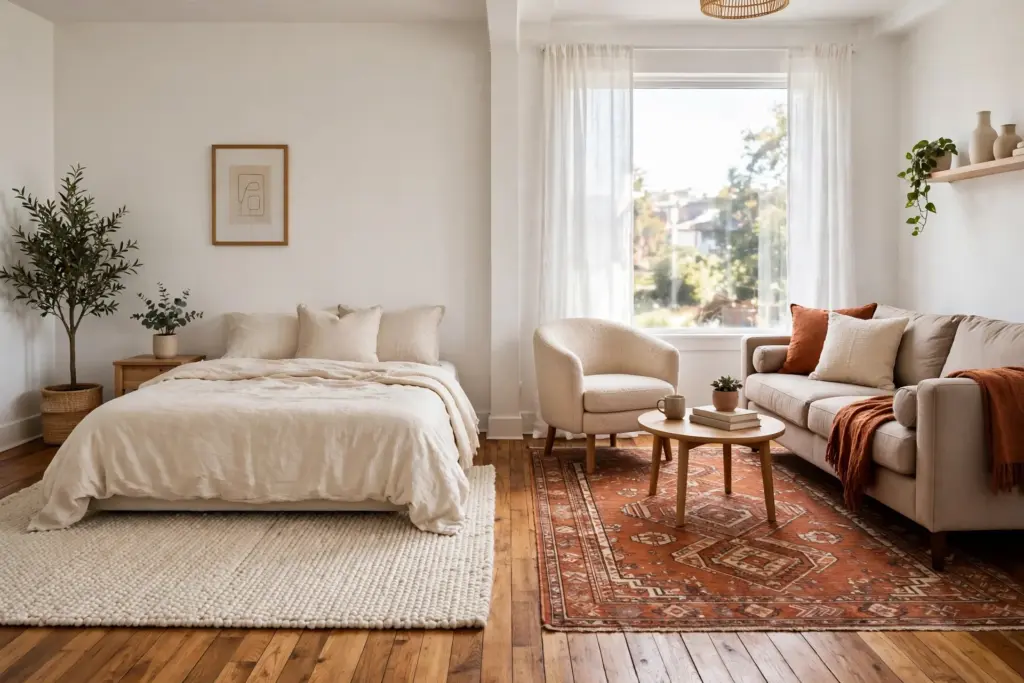
A rug under the bed and a different one under the sofa is the fastest divide there is. The contrast does the work — change color, pattern, or pile height between the two so the boundary reads instantly, and leave a strip of bare floor between them as a visual hallway. It adds no privacy, but it tells you and every guest where one zone ends and the next begins, and it costs nothing if both rugs are already in the room.
2. Turn the Sofa Around and Back It With a Console
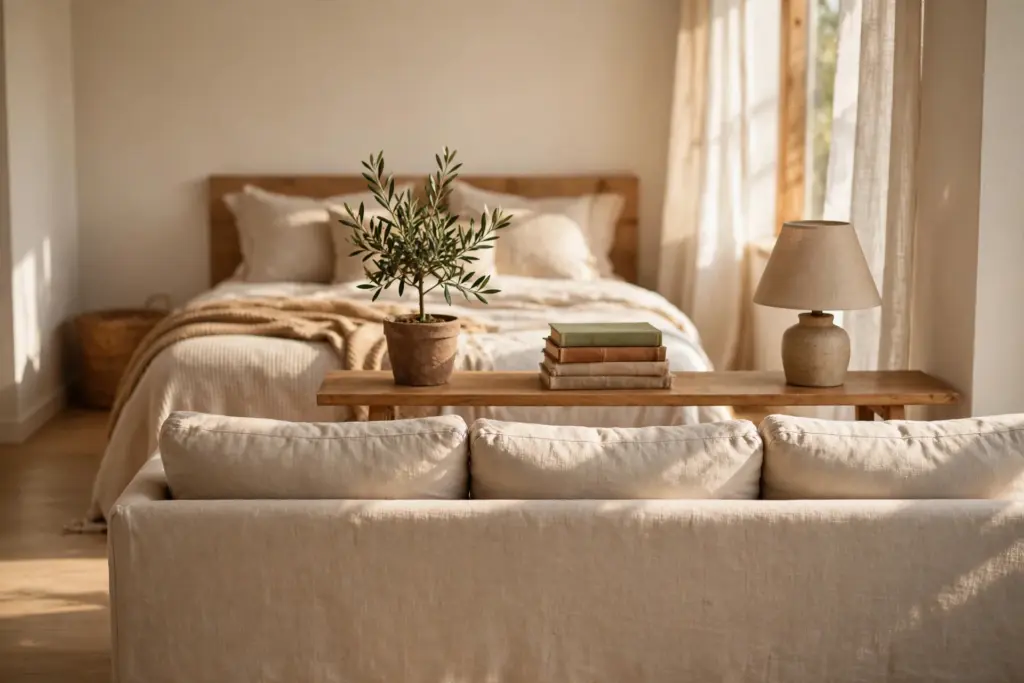
Float the sofa so its back faces the bed, and the living zone gets a wall-height boundary for free. A narrow console, bookshelf, or even a folded drop-leaf table behind the sofa sharpens the line, holds a lamp and books, and gives the sleeping side a surface that is not the bed. Keep the combined depth in mind in very small studios: if the console squeezes the walkway, the sofa alone still divides well.
3. Let Lighting Finish the Divide
Light can close a zone that furniture only sketches. A warm lamp over the reading chair, a focused task light at the desk, and a dimmer source near the bed give each area its own evening identity, so the room reads as three places after dark with no physical barrier at all. Every lamp plugs in, so none of it touches the lease — and switching the desk light off becomes a genuine end-of-work signal.
Low-Cost, Flexible Dividers You Can Move in Minutes
4. Stand Up a Folding Screen
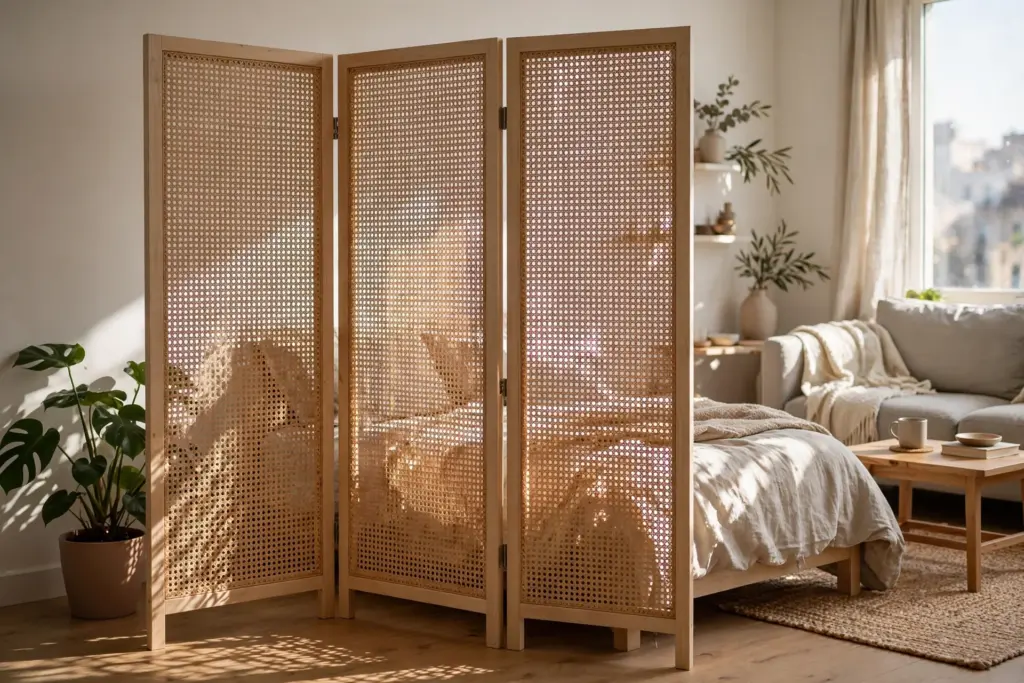
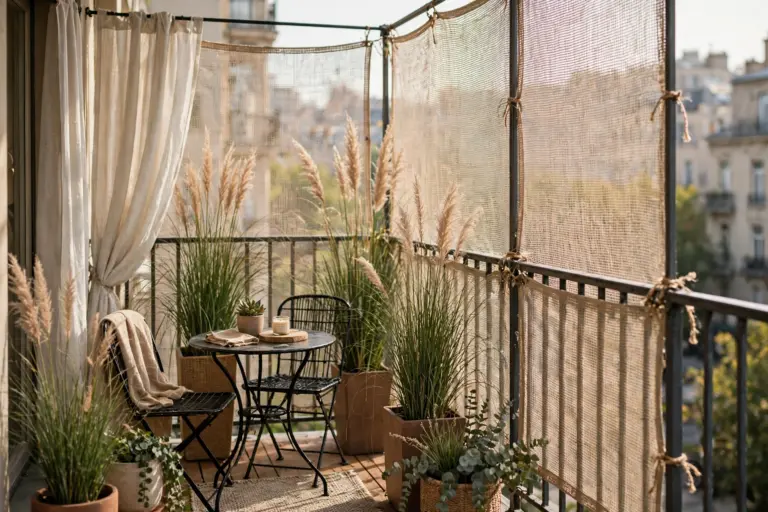
The folding screen is the oldest renter divider for a reason: it stands on its own, folds flat for moving day, and can migrate from bedside to desk corner in a minute. Woven cane, fabric, and slatted styles filter light instead of blocking it, which keeps a small studio bright. Set it in a shallow zigzag so it stands securely, and keep it clear of heaters — most screen materials are not heat-proof.
5. Hang a Curtain on a Renter-Safe Mount
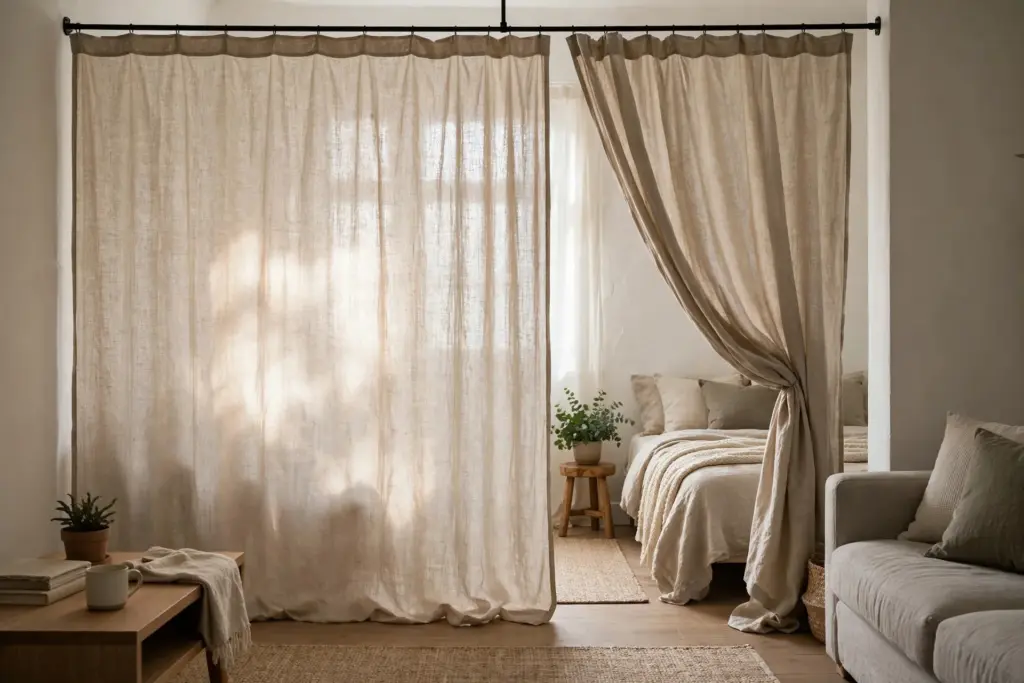
A curtain is the only divider that behaves like a door: drawn, the bed disappears; open, the room is whole again. The mount decides whether it is renter-safe. A tension rod between two walls, a freestanding frame, or rings on an existing fixture leave no trace. A ceiling track or screwed-in rod — the version most photos show — needs landlord permission first. Choose linen or lined cotton over a thin sheer if privacy is the point, and expect a curtain to soften sound slightly, never to soundproof.
6. Grow a Plant Screen
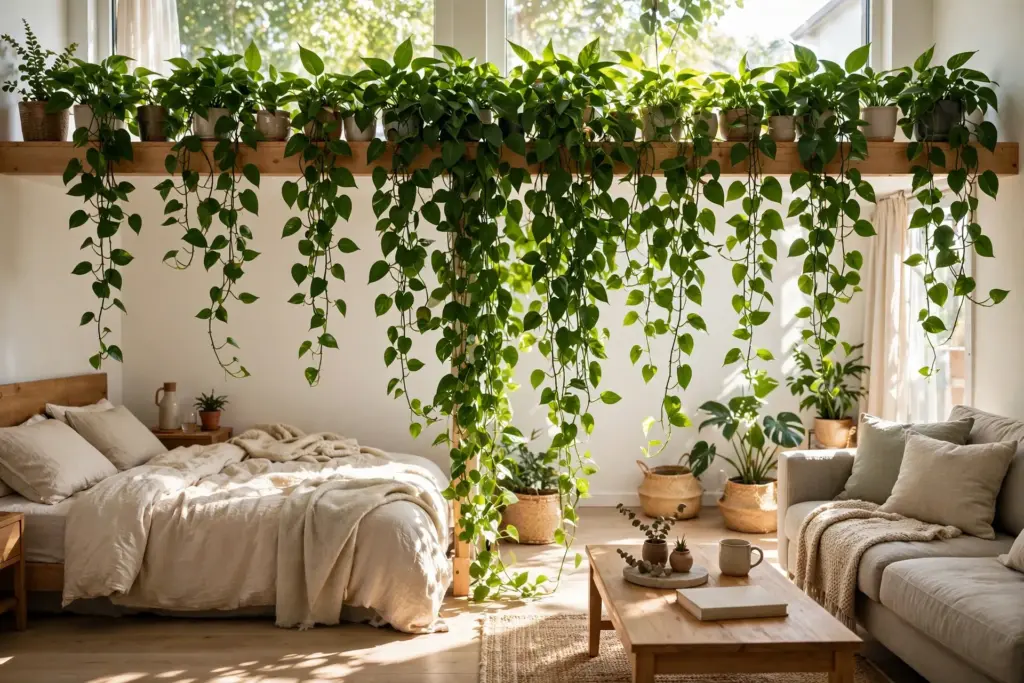
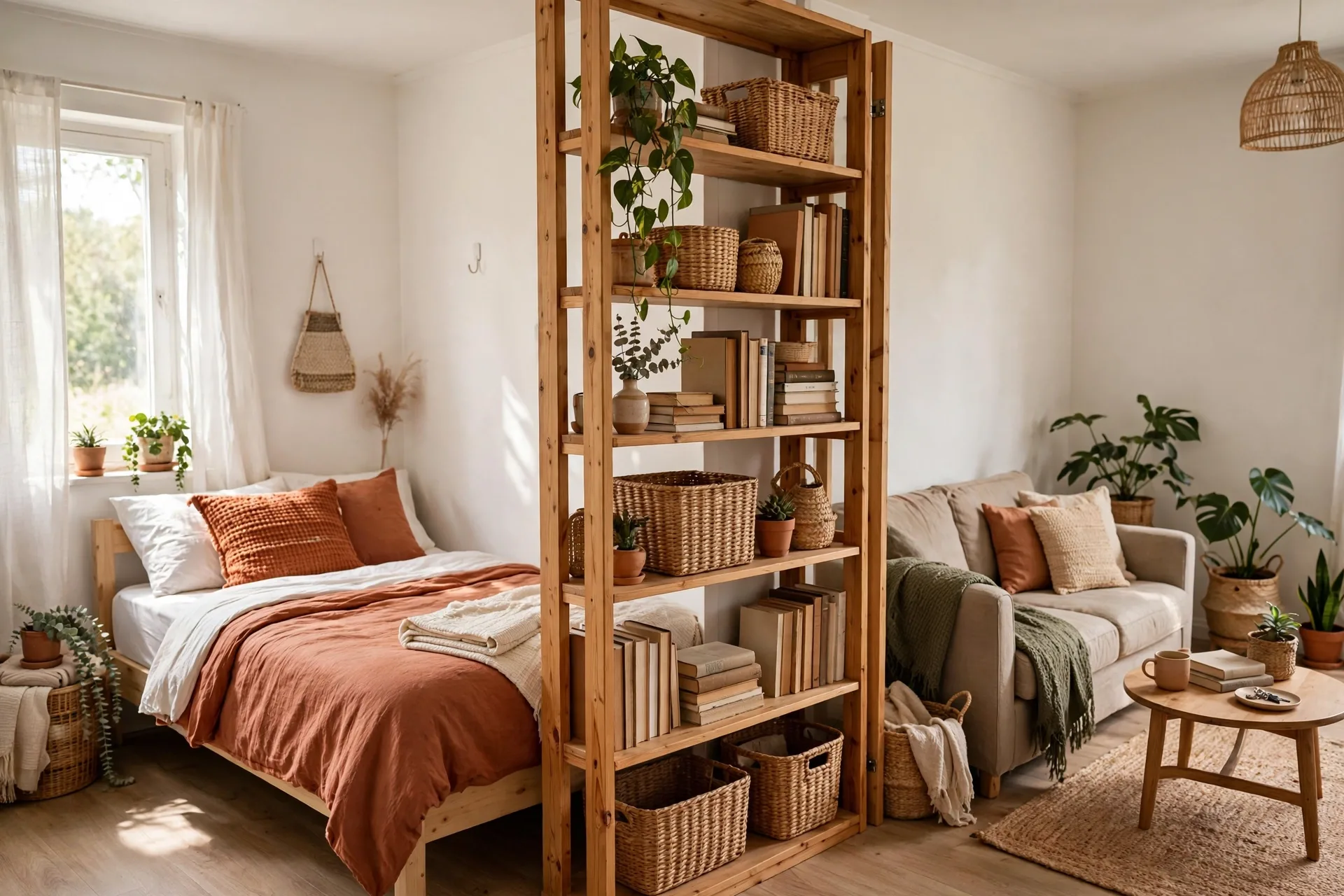
A high shelf or the top of a bookcase lined with trailing plants — pothos is the forgiving classic — makes a screen that filters views without sealing them off. It suits the edge of a sleeping zone, where total blackout is unnecessary, and it keeps air and light circulating better than any solid panel. Use a freestanding shelf rather than wall brackets, keep pots stable and out of the walkway, and be honest about light: a plant screen only works where the plants themselves will thrive.
7. Roll In a Clothing Rack

Studios are famously short on closets, so a garment rack often solves two problems at once: overflow wardrobe and a visual wall between the bed and the rest of the room. Group clothes by color so the rack reads as intentional rather than overflow, and use the lower rail for shoes. Pick a rack with a wide, weighted base and lockable casters if possible — a top-heavy rack on small wheels is the one version of this idea to avoid.
Furniture That Divides and Stores at the Same Time
8. Place an Open-Back Bookcase or Cube Unit Sideways
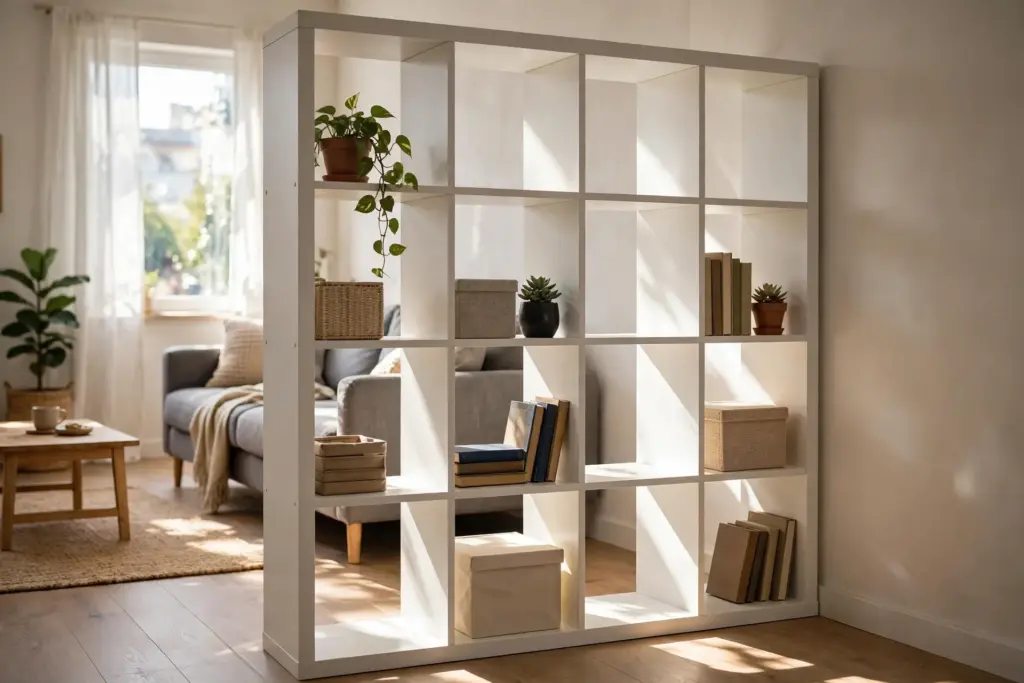
The strongest of all room divider ideas for studio apartments is the open-back bookcase set perpendicular to the wall. No back panel means light and air pass through; the cubes hold books, baskets, and the clutter that makes a studio feel chaotic. Style it from both sides, mix open cubes with closed boxes, and load the heaviest items at the bottom for stability. It is also where this article meets the broader set of small apartment storage ideas — in a studio, the best divider is usually storage wearing a second hat.
9. Set a Low Dresser or Media Unit at the Foot of the Bed
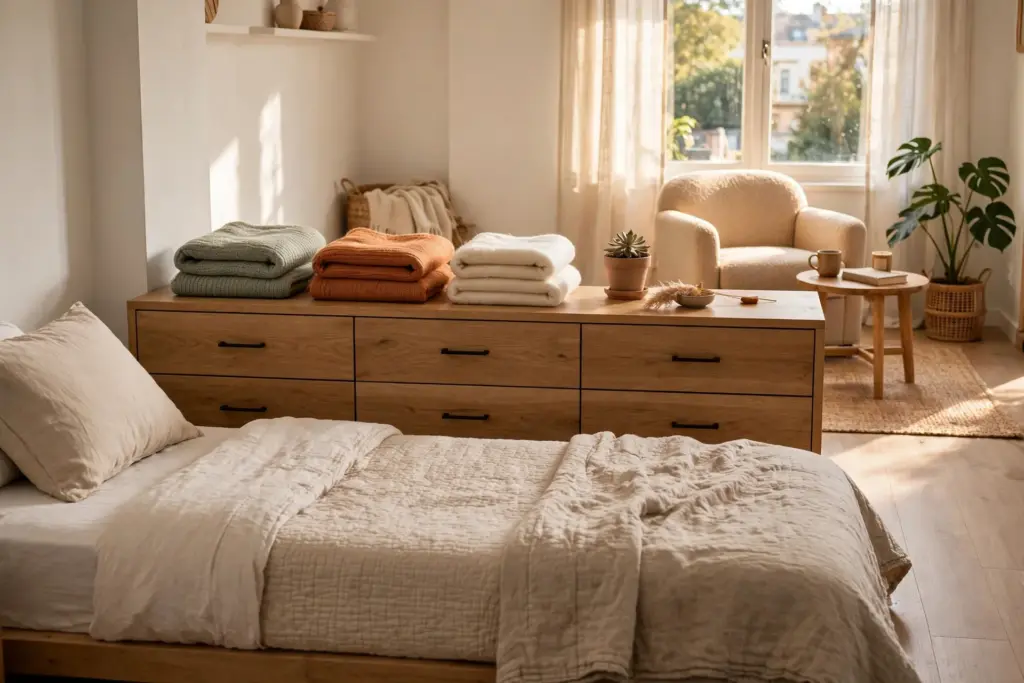
A low, wide dresser or media unit at the foot or side of the bed creates a boundary that never darkens the room, because it stays below sightline height. Drawers face the bed for clothes; the top becomes a shared surface for a plant or a lamp. Low and wide is also the safest geometry for a freestanding piece — the opposite of the tall, narrow units that tip.
10. Work at a Desk That Faces Away
A compact desk placed back-to-back with the sofa, or at the foot of the bed facing into the living zone, quietly claims a work corner. It is the weakest visual divider here, but in a studio under 300 square feet, weak and airy often beats strong and bulky — pair it with the rug and lighting tricks above and the zone still reads clearly.
The Statement Tier: One Piece Worth Saving For
11. Choose a Slatted Screen That Plays With Light
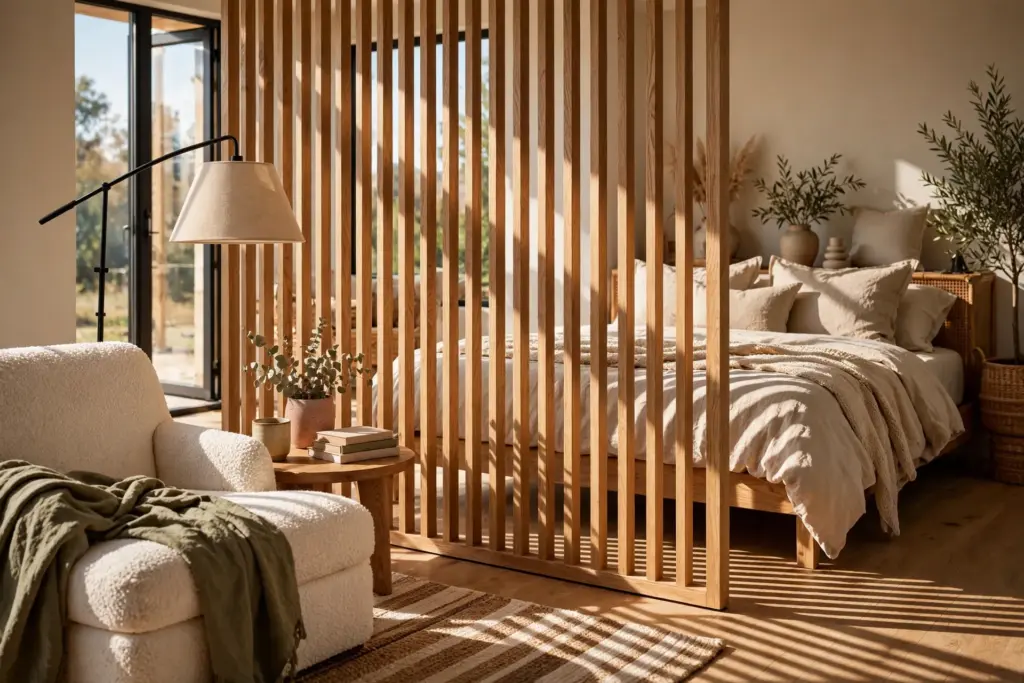
A freestanding slatted screen is the folding screen’s architectural sibling. The gaps throw striped light across the floor, the bed is genuinely screened, and the room keeps its brightness — a combination no solid panel manages. Buy it as a finished freestanding piece with a proper base rail, not as a wall panel that expects fixings, and it leaves with you like everything else in this list.
12. Anchor the Layout With a Tall Storage Divider
The one big spend that earns its footprint is a tall, wide storage unit — a wardrobe-style piece or substantial shelving wall — set perpendicular to the wall to give the sleeping zone a real edge. It holds the most, screens the most, and defines the studio more than any other single change. It also carries the strictest conditions: choose wide and deep over tall and narrow, load the bottom heavily, keep it out of children’s climbing routes, and if it cannot stand safely alone, anchoring requires written landlord permission. Within those limits, this divider makes guests ask which wall came with the apartment.
How to Choose Among These Room Divider Ideas for Studio Apartments
Match the divider to the problem. Visual mess but no privacy need: rugs, sofa placement, and lighting are enough, at $0. Guests and video calls: a folding screen or curtain gives a real backdrop. No closet: the clothing rack or cube unit solves storage and separation together. One forever piece: save for the slatted screen or tall storage divider, and let everything else stay cheap and changeable. The right choice keeps the walkway clear, the window reachable, and the deposit untouched.
Frequently Asked Questions (FAQ)
What is the best room divider for a small studio apartment?
For most renters, an open-back bookcase or cube unit placed perpendicular to the wall, because it divides, stores, and still lets light through. In very small studios, start with the $0 options — rug zoning and sofa placement — before adding furniture.
How can a renter divide a studio without drilling or damaging walls?
Use only freestanding or tension-based pieces: folding screens, bookcases, clothing racks, tension-rod curtains, and furniture placement. Anything fixed to a wall or ceiling, including curtain tracks and sliding panels, needs landlord permission first, however renter-friendly it looks in photos.
Do curtain dividers block sound in a studio?
No. A curtain softens and slightly dampens sound and blocks sightlines, which helps a space feel more private, but it does not soundproof. Heavier, lined fabrics dampen a little more than sheers; none of them will hide a television from the sleeping side of the room.
How do you keep a tall divider from tipping over?
Choose low, wide, heavy-based pieces, load the lowest shelves and drawers heaviest, and keep tall units away from climbing children and pets. Safety guidance from the CPSC stresses that furniture should be stable on its own and anchored where anchoring is possible — in a rental, anchoring needs the landlord’s written permission.
Will a room divider make a small studio feel smaller?
A solid, dark, full-height divider can. Open-backed, slatted, woven, and plant dividers filter light instead of blocking it, so zones feel defined without shrinking the room. Keeping one clear walkway and leaving a gap at the end of the divider also preserves the sense of space.