Small Space Nursery Ideas for Apartments
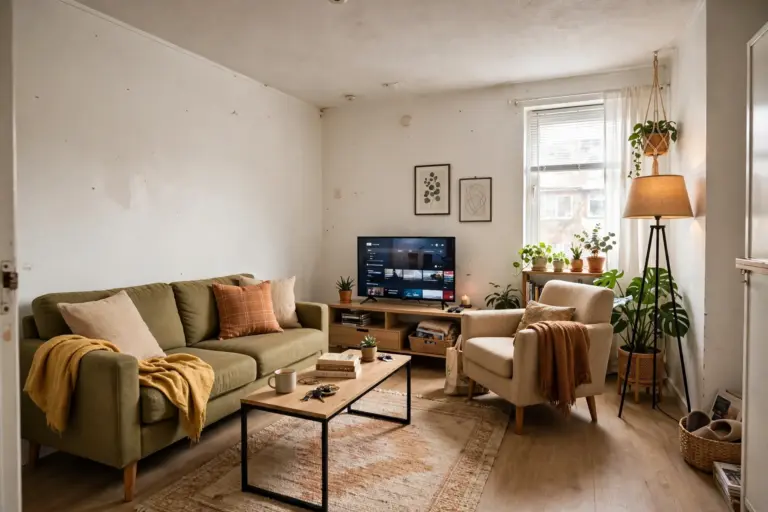
A baby does not need a big room — a corner, a closet, or one wall of a bedroom can do the job beautifully. These small space nursery ideas are built for renters: every setup below uses furniture that fits a small apartment, comes off the wall cleanly, and keeps the deposit safe.
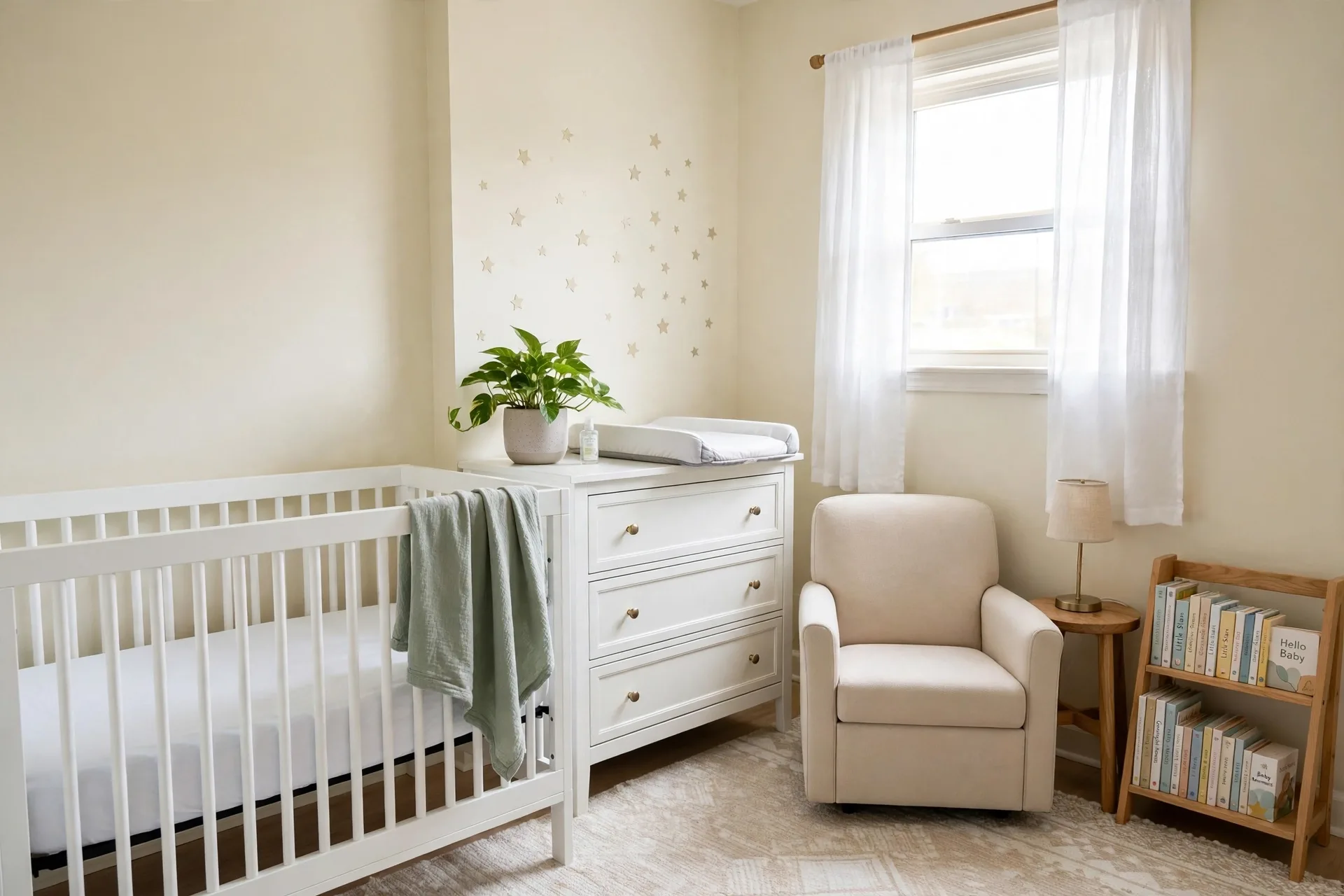
The trick is not buying less — it is buying pieces that do two jobs and putting each one exactly where it earns its floor space. A mini crib against one wall, a dresser that doubles as the changing table, and a compact chair in the corner cover sleep, change, and feed in about 30 square feet. The 12 ideas below walk through that setup step by step. For the wider small-room picture, the studio apartment layout ideas guide shows how to zone one open room for sleeping, working, and living without permanent changes.
Before You Start: 3 Ground Rules for a Small Nursery
Three rules decide whether a small nursery works or turns into a crowded storage room. First, measure before buying anything — rental rooms are rarely standard, so measure the wall, the door swing, and the gap between the crib and the dresser before ordering furniture. Second, every piece must earn its floor space by doing at least two jobs: a dresser is also the changing table, an ottoman is also storage, a shelf is also the book library. Third, keep the crib area bare and safe: a firm mattress with a fitted sheet only, no pillows, blankets, or bumpers inside the crib, and nothing hanging above it that could fall. The U.S. Consumer Product Safety Commission’s crib safety guidance covers the full checklist — see the CPSC safe sleep guidance before setting up the sleep zone.
Choose the Right Sleep Setup
1. Start With a Mini Crib Instead of a Full-Size Crib
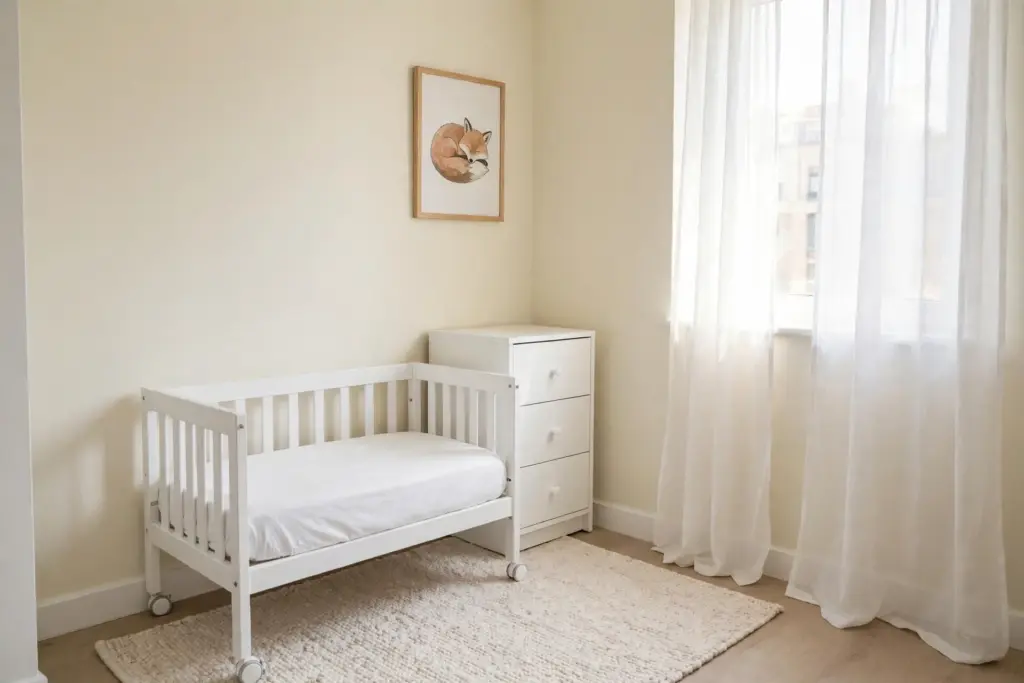
A standard crib measures about 28 by 52 inches, while a mini crib is about 24 by 38 inches — roughly a quarter smaller, which is the difference between a crib that fits and a crib that blocks the door. A mini crib still meets the same safety standards as a full-size crib, and most babies use one comfortably for the first year or so before moving to a toddler bed. Look for one with wheels so it can roll to the parents’ bedside at night and back to its corner in the morning, and check that replacement mini-crib sheets are easy to find before buying.
2. Use a Bassinet First, Then Transition
A bassinet buys time. For the first four to six months, a bassinet beside the parents’ bed takes up about half the floor space of a crib and keeps night feeds short. Choose a freestanding bassinet with a firm, flat mattress and no soft bedding inside, following the same safe-sleep rules as a crib. When the baby outgrows it, the bassinet folds away, and the mini crib takes its place in the same corner.
3. Keep the Crib on a Solid Wall, Away From the Window
Put the crib against a solid interior wall, never under a window or beside a radiator. Window placement brings two problems in a rental: corded blinds or curtains within reach, and drafts and temperature swings against the crib. Leave at least a few inches of clearance on the long side so sheets can be changed without dragging the crib out, and keep a small night-light on the wall nearby instead of a floor lamp that eats floor space and tips easily.
Make Every Piece Do Two Jobs
4. Turn the Dresser Into the Changing Table
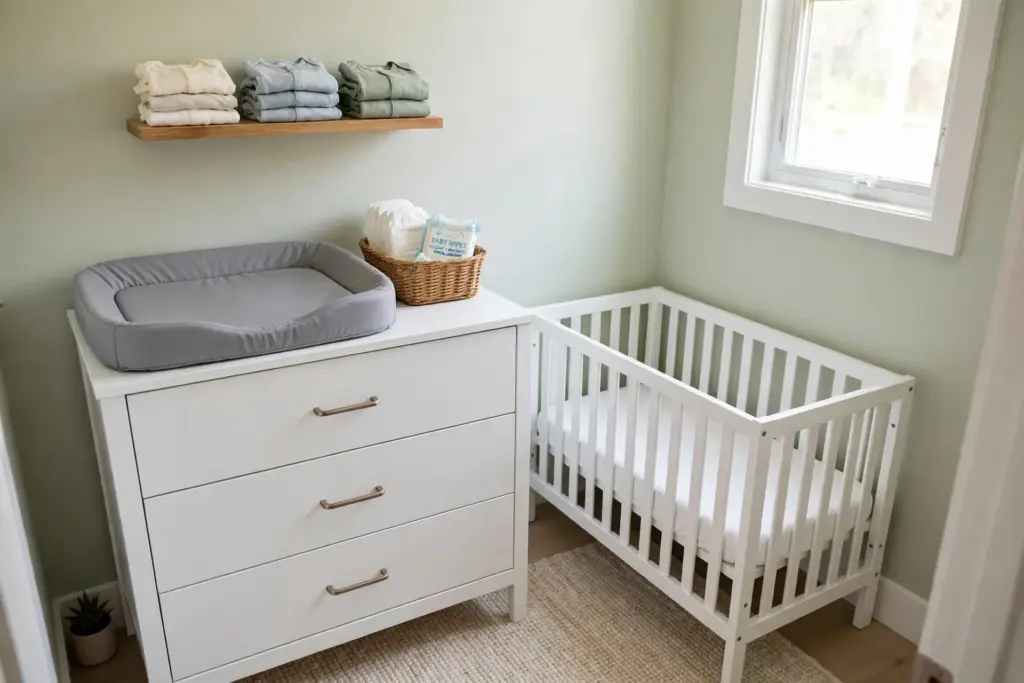
Skip the dedicated changing table — it is one more bulky piece that becomes useless within a year. A sturdy dresser topped with a contoured changing pad and a safety strap does both jobs: diapers and clothes in the drawers, changing on top. The dresser should be about waist height and deep enough that the pad sits flat with room for wipes at the side. Anchor the dresser to the wall with a removable furniture strap if the lease allows it, or choose a low, wide dresser that is stable on its own. When the changing days end, remove the pad and the dresser stays useful for years.
5. Add a Compact Glider in the Feeding Corner
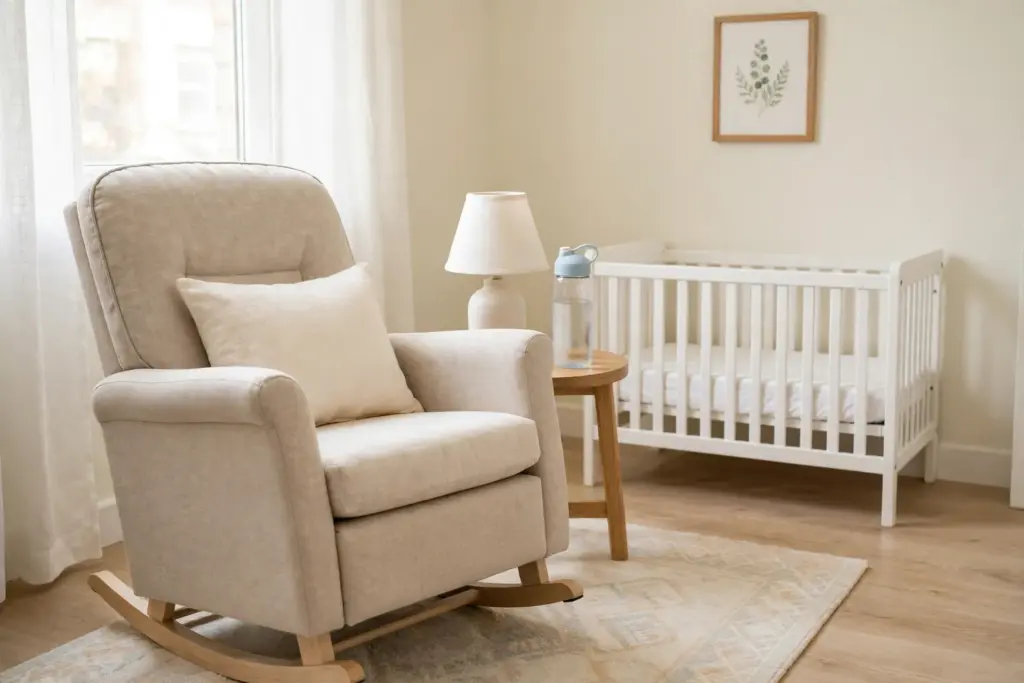
A full-size rocking chair swallows a small nursery. A compact glider, about 30 to 33 inches wide, fits into a corner with a small round side table and a lamp, and that is all the feeding zone needs. Place it opposite the crib so the chair does not block the path to the changing dresser.
6. Pick an Ottoman That Hides Storage
A storage ottoman is the hardest-working small piece in a nursery: a footrest during feeds, a seat for a visiting grandparent, and a hiding place for blankets, spare sheets, and the next size of clothes. Choose one with a lid that opens quietly with one hand, since the other hand is usually holding a baby. Soft sides matter — once the baby is crawling, a padded ottoman is far kinder than a wooden toy chest.
Steal Space From the Walls and Closet
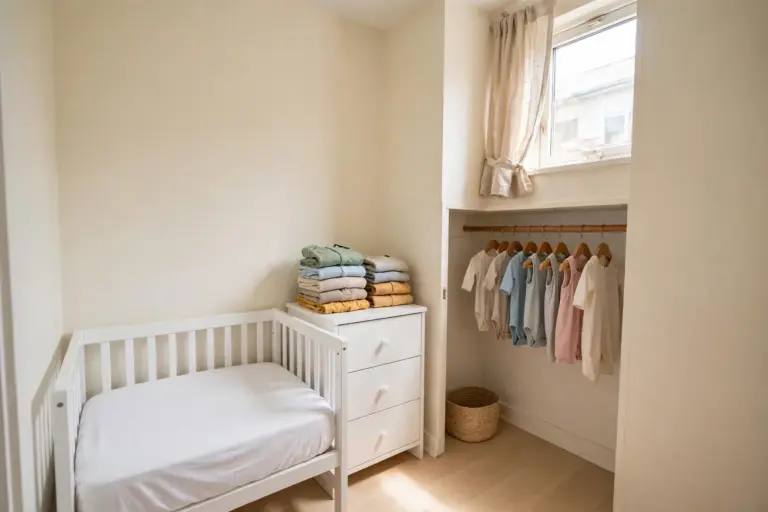
7. Turn the Closet Into a Nursery Nook
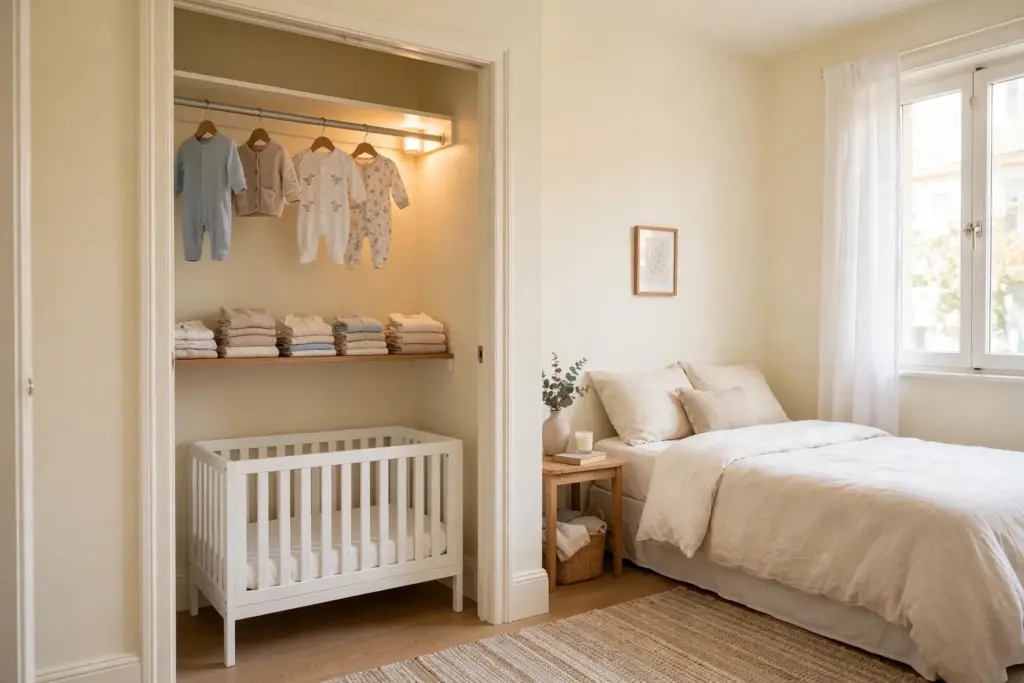
A spare closet is the most underused nursery space in a rental. Remove the doors if the lease allows, or slide them open and leave them, then fit a mini crib or a changing dresser inside the opening with a small shelf above. A closet nook works best when the crib faces out into the room so air circulates freely — never fully enclose a sleeping baby behind closed doors. Keep the closet rod for hanging the smallest clothes, and add a battery-powered light inside since closet lighting is usually poor.
8. Go Vertical With Renter-Safe Shelving
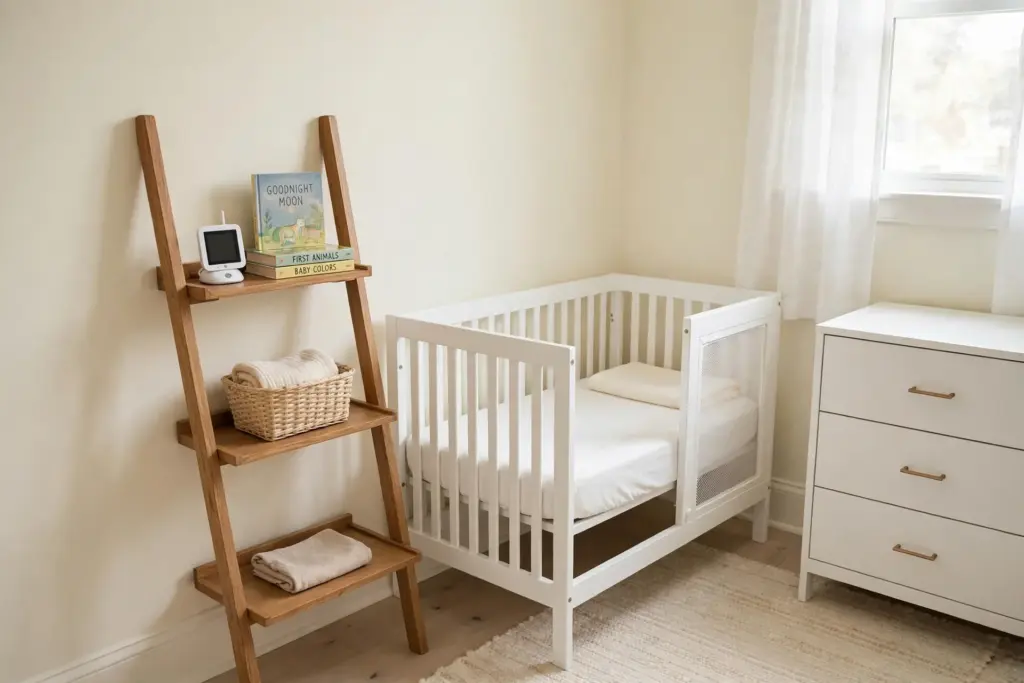
Floating shelves hold books, the monitor, and a few keepsakes without taking a single inch of floor — but shelves need anchors, and most leases ban drilling. In a rental, the safer vertical options are a narrow freestanding bookcase or a leaning ladder shelf that rests against the wall. Whatever the mount, keep shelves above adult shoulder height and never above the crib, so nothing can fall into the sleep zone.
9. Use the Space Under the Crib
The floor under the crib is free real estate. Flat, lidded bins slide under most cribs and hold bulk diapers, spare sheets, and outgrown clothes in the sizes the baby is about to grow into. Label each bin by size or contents so a 2 a.m. search takes seconds. Avoid storing anything under the crib that the baby could pull out once mobile.
Make It Feel Like a Nursery, Not a Storage Room
10. Define the Corner With a Rug
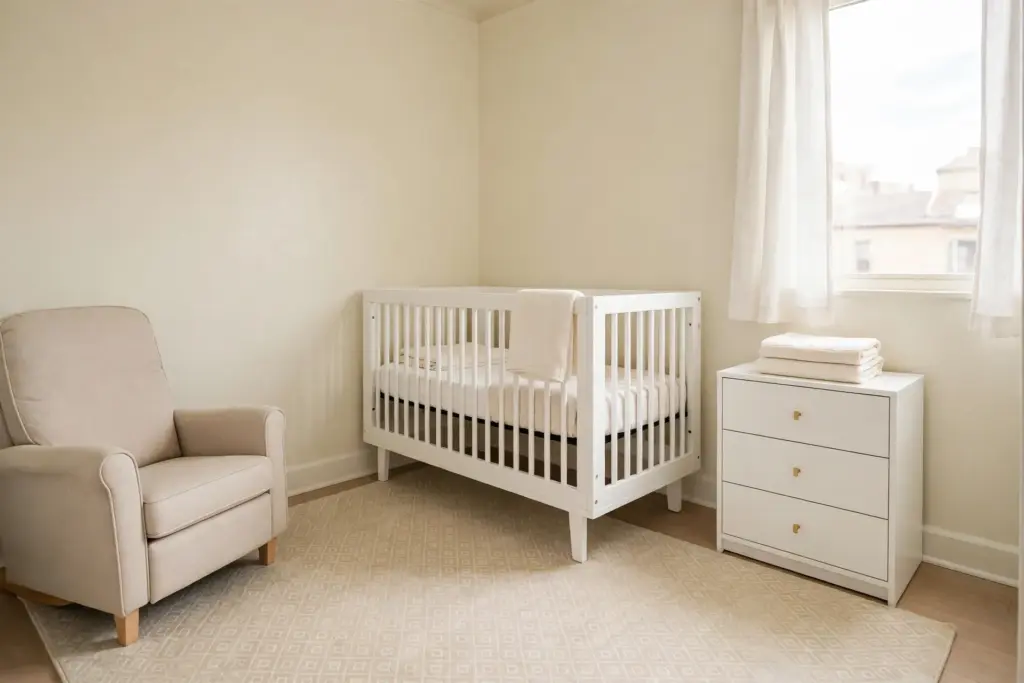
A rug is the fastest way to say “this corner is the nursery” in a shared bedroom. Size it generously — large enough to run under the crib’s front legs and out past the glider — because a too-small rug makes the corner look like an afterthought. Choose a low-pile, washable rug in a light color, since a nursery rug will meet spit-up, diaper leaks, and spilled milk. A non-slip pad underneath keeps it from sliding on hard floors.
11. Add a Peel-and-Stick Accent Wall
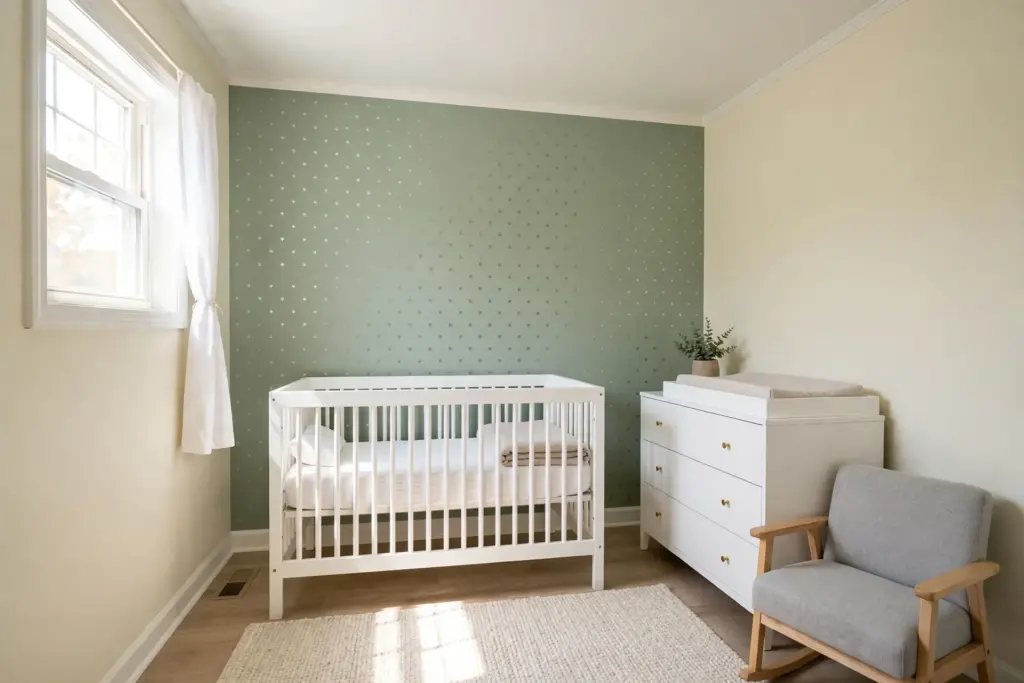
One peel-and-stick accent wall gives a nursery its personality for the price of a roll of wallpaper and an afternoon — and it peels off cleanly at move-out if the wall was properly prepped. Choose a soft pattern, such as small stars, gentle arches, or a pale woodland print, and apply it to the crib wall only; one wall is a statement, four walls are a cave. Test a small piece behind the dresser first to confirm it sticks to the apartment’s paint and removes without lifting it.
12. Rotate Toys and Clothes With a Small Bin System
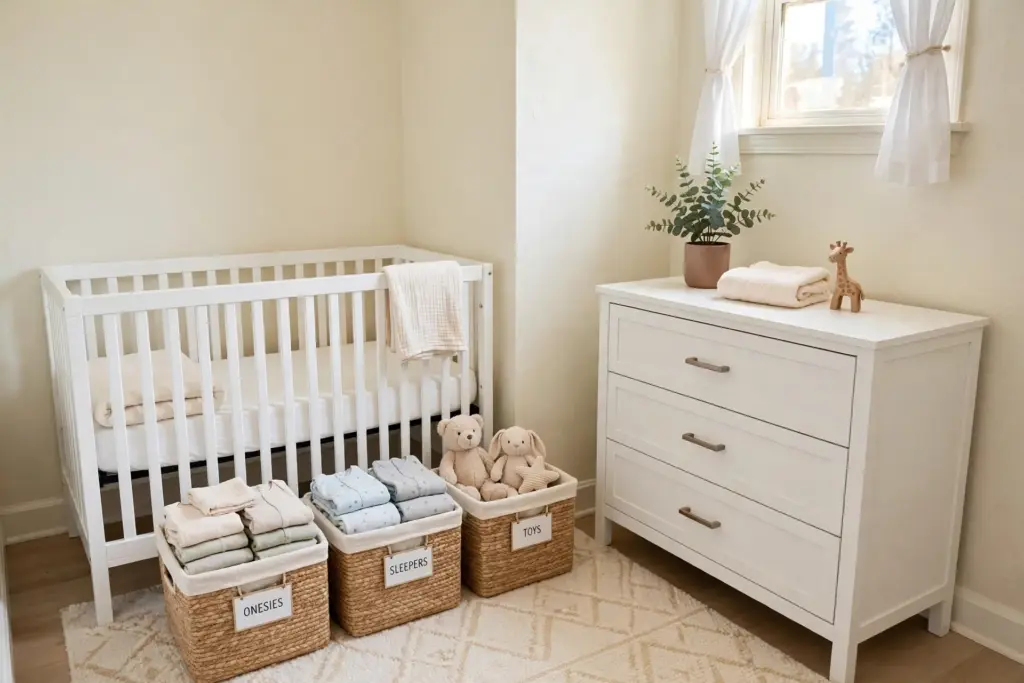
A small nursery stays tidy only if things leave as fast as they arrive. Keep three small bins near the dresser: one for clothes the baby has outgrown, one for toys in current rotation, and one for the next size up. When a bin fills, it leaves the room — outgrown clothes go to storage or donation, and only a handful of toys stay out at a time. The toy storage ideas for small apartments guide has the full bin system, including the floor-clearing routine that keeps a nursery livable once the baby starts crawling. And when family visits, the same tidy corner doubles as a guest-ready room — see how to host overnight guests in a small apartment for sleep setups that share a room without a guest bedroom.
Safety Checklist for a Small Nursery
Small rooms tempt shortcuts, so run this check before the baby arrives. Keep the crib bare — firm mattress, fitted sheet, nothing else — following the American Academy of Pediatrics’ safe-sleep guidance, which recommends a bare sleep surface with no soft bedding, pillows, or toys in the crib; see the AAP safe sleep guide for parents. Anchor or choose low, wide furniture so nothing can tip onto a crawling baby, cover outlets, and keep cords from blinds, monitors, and chargers at least three feet from the crib.
Frequently Asked Questions (FAQ)
How small can a nursery be?
A nursery can work in as little as 30 to 50 square feet — a corner of a bedroom or a large closet — as long as it fits a safe sleep space, a changing surface, and a place to sit for feeds. A mini crib, a dresser with a changing pad, and a compact chair cover all three in that footprint. What matters is not the square footage but the layout: clear paths, nothing above the crib, and every piece doing two jobs.
Can I put a nursery in my bedroom in a rental apartment?
Yes. A nursery corner inside the parents’ bedroom is one of the most common small space nursery ideas for renters, and it usually works better than a separate tiny room because night feeds stay short. Define the corner with a rug, keep the crib on a solid wall away from the window, and use a curtain or a freestanding divider if a visual boundary helps the baby settle. Check the lease for occupancy or room-use clauses first, since a few buildings restrict how bedrooms are used.
What furniture does a small nursery actually need?
Three pieces: a safe sleep space (mini crib or bassinet), a dresser that doubles as a changing table, and a compact chair for feeds. Everything else — shelves, bins, a rug, an ottoman — is support. Start with those three, live with the setup for a few weeks, and only then add what the daily routine proves is missing.
How do I decorate a nursery without damaging rental walls?
Use peel-and-stick wallpaper or decals, removable adhesive hooks, leaning shelves, and freestanding furniture. Test every adhesive product on a hidden patch first, since some apartment paint lifts easily. Avoid nails, screws, and heavy-duty mounting tape, and photograph the walls at move-in so there is a record of what was already there.
When should I move my baby from a bassinet to a crib?
Move the baby when they can push up on hands and knees or reach the bassinet’s weight or height limit — usually around four to six months, but always follow the manufacturer’s limits for the specific bassinet. The crib should be set up and safety-checked before that day arrives, so the transition is a change of bed, not a furniture emergency.
Keep Reading
- Toy Storage Ideas for Small Apartments — the bin system that keeps a nursery floor clear once the baby starts crawling.
- Studio Apartment Layout Ideas — how to zone one open room for sleeping, working, and living.
- How to Host Overnight Guests in a Small Apartment — sleep setups that share a room when there is no guest bedroom.