Small Space Living With a Family: Ideas That Make It Work
A small apartment is still a family home — it just asks for smarter decisions. Small space living with a family works when every corner has a job, furniture earns its floor space twice over, and the household follows a few simple routines. No renovation, no drilling, no bigger rent check: every idea below is renter-friendly, removable, and sized for apartments where the living room is also the playroom.
Fourteen ideas follow: zoning one room into three, sleep setups, toy storage, and the nightly reset.
The Three Rules That Make Small Space Living With a Family Work
Before buying a single bin, agree on three rules. First, every item needs a home: if it has no assigned spot, it will live on the floor. Second, furniture must do at least two jobs — a bed that stores, a table that works, a shelf that divides. Third, less beats more: fewer, better-chosen things make a small home feel bigger. These rules keep small space living with a family from sliding back into clutter a week after a tidy-up. Start with these studio apartment layout ideas if the floor plan needs rethinking.
Give Every Corner a Job: Zones That Share One Room
Open-plan apartments feel chaotic when every activity happens everywhere. Zones fix that without a wall: a rug, a shelf, or a change in lighting tells everyone where things belong.
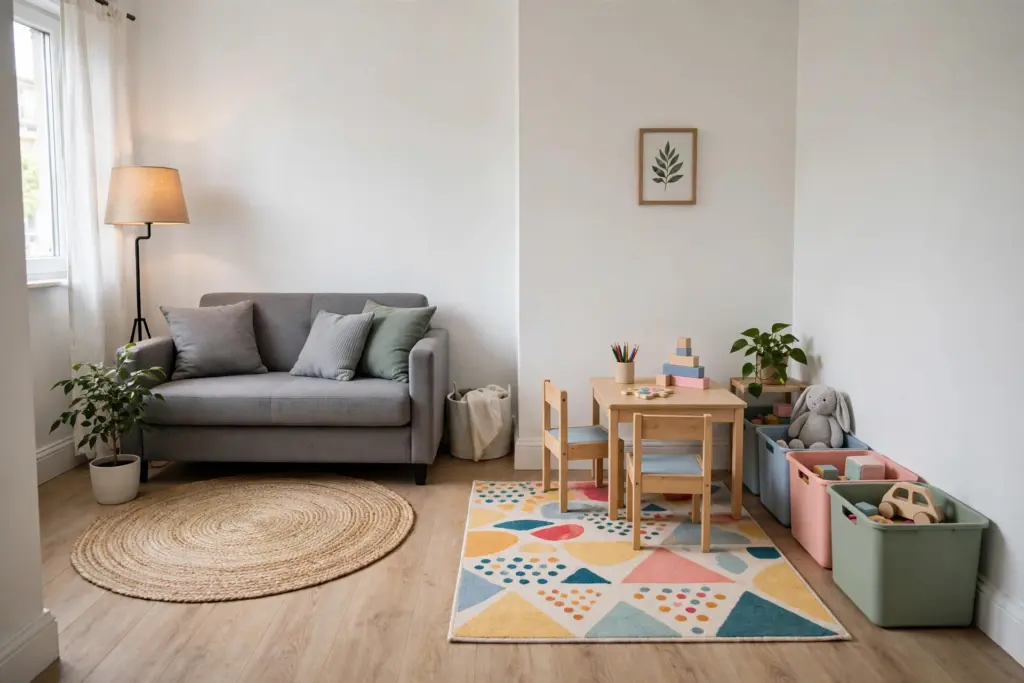
1. Zone the Living Room With Rugs
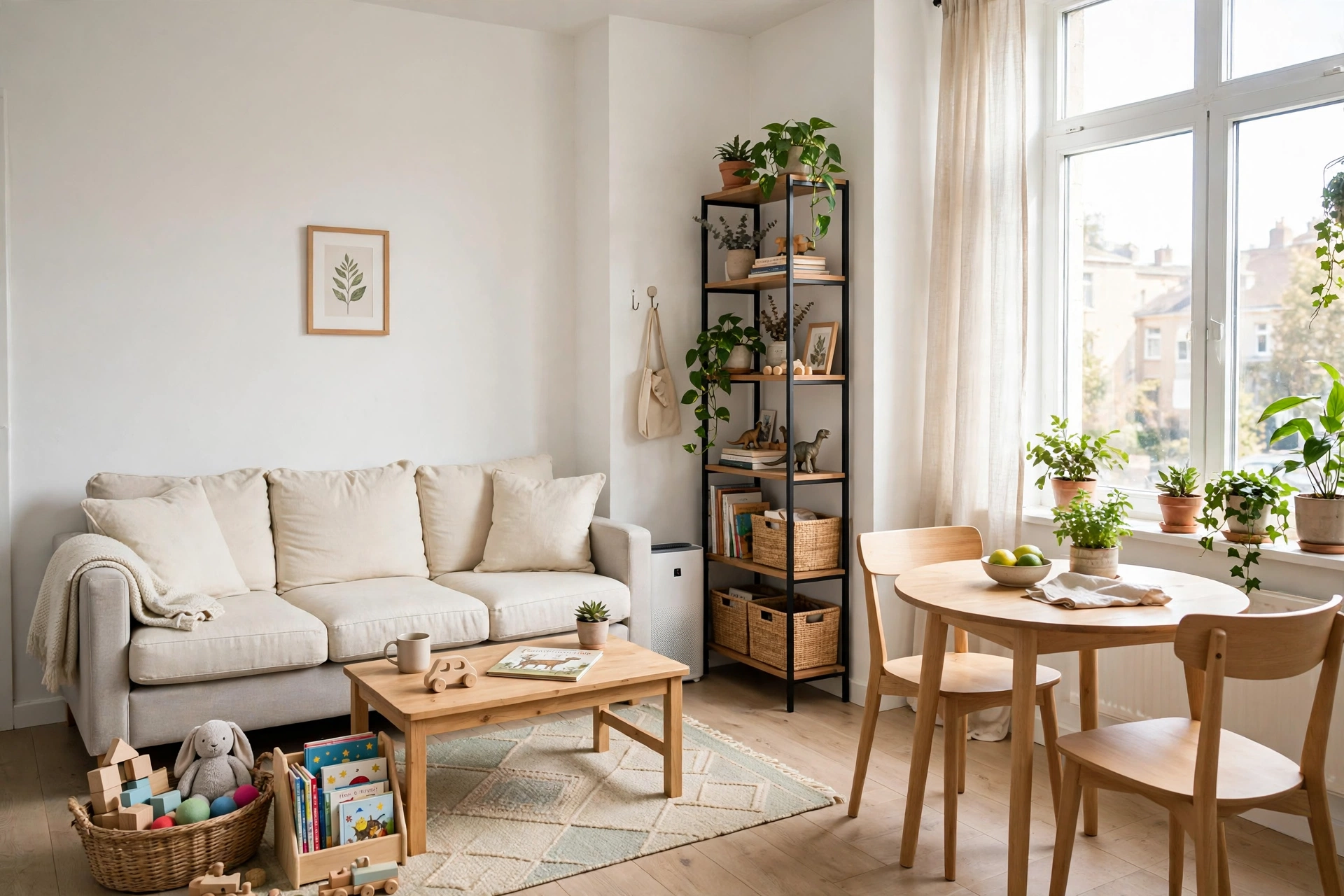
A rug is the cheapest room divider a renter can buy. Place one rug under the sofa for the grown-up seating zone and a second, smaller rug in the corner for play. The rug edge becomes the rule: toys stay on the play rug, shoes stay off it. Choose low-pile, washable rugs: they survive spills and soften footsteps below.
2. Carve Out a Play Corner That Cleans Up Fast
Kids do not need a playroom — they need a corner that is theirs. Pick the corner nearest the seating area, and keep everything at child height: a low shelf, a couple of bins, and a small table. The test is speed: the whole corner should tidy in two minutes. For the full system behind this, see these toy storage ideas for small apartments.
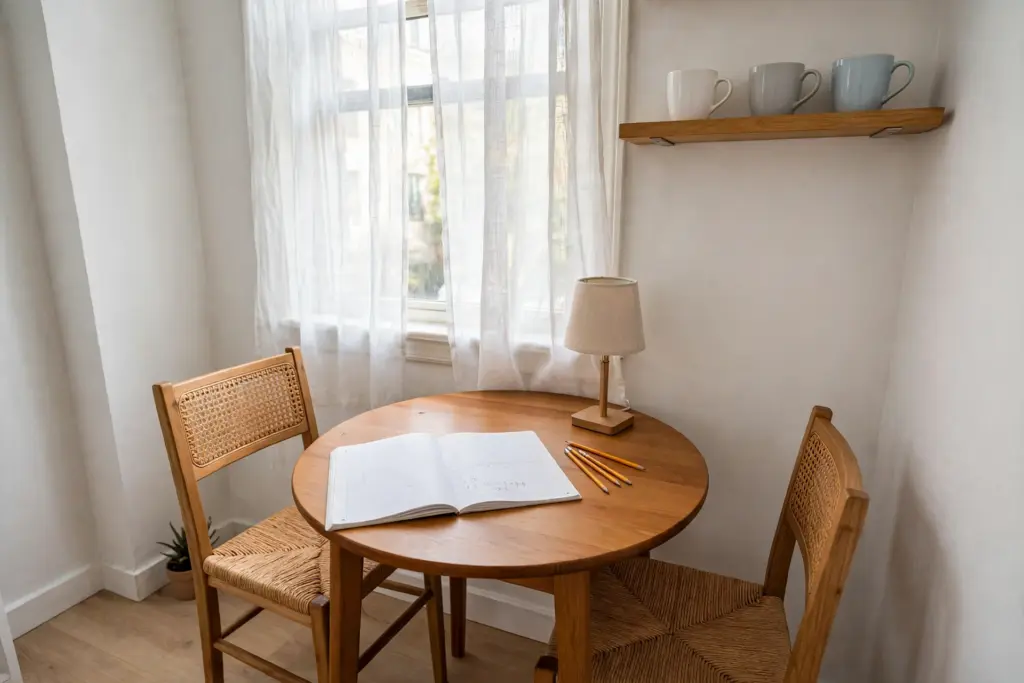
3. Let the Dining Table Do Homework Duty
In a family apartment the dining table is a homework desk from 4 to 6 p.m. and a dinner table after that. Keep a caddy with pencils and notebooks on a nearby shelf, so clearing for dinner takes one move. A round table suits small nooks: no sharp corners for small children, and room for an extra chair when a friend stays for dinner.
Sleep Setups That Give Everyone a Real Bed
Sleep is where small-space family living feels hardest — and where the smartest solutions live: a real bed for every person, without giving up the living room.
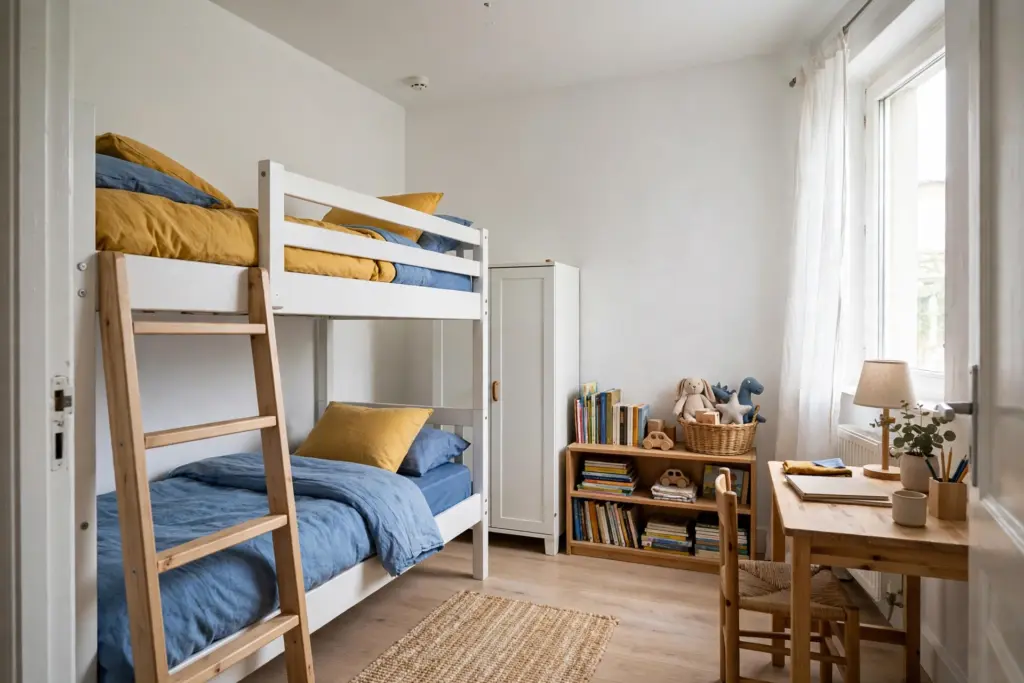
4. Bunk Beds for Shared Kids’ Rooms
Two kids sharing one small bedroom is the classic arrangement, and bunk beds are the reason it works: they free the floor below the top bunk for a desk or a play mat. Choose a sturdy wooden bunk with a guard rail up top and an easy ladder. Keep the top bunk for the older child, and add a small shelf or clip-on light at each level so each child has a little personal space.
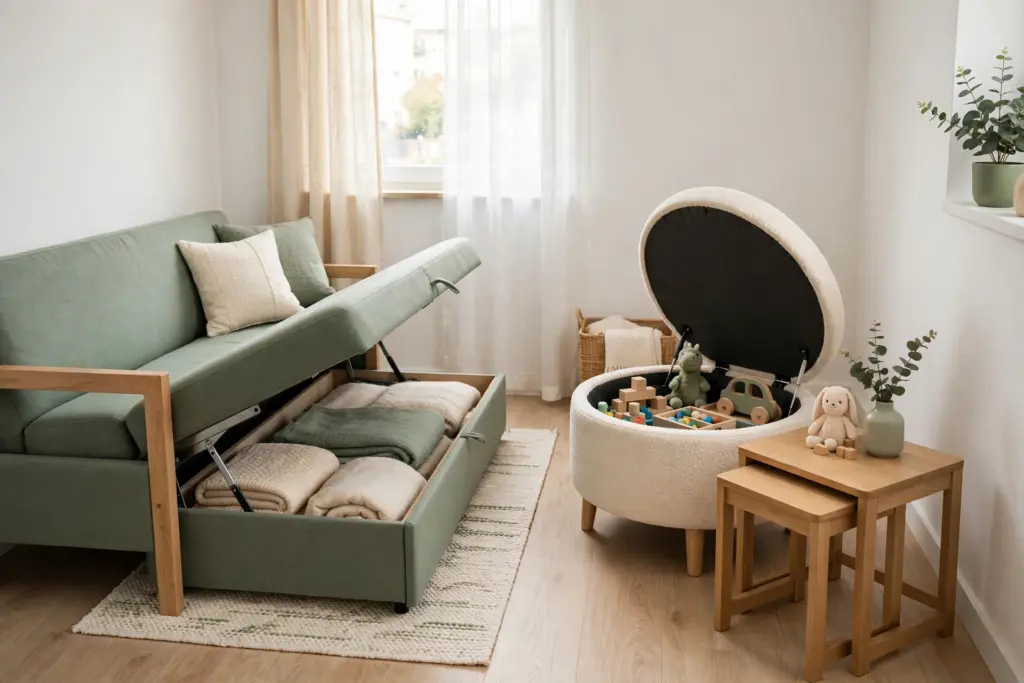
5. A Sofa Bed That Earns Its Floor Space
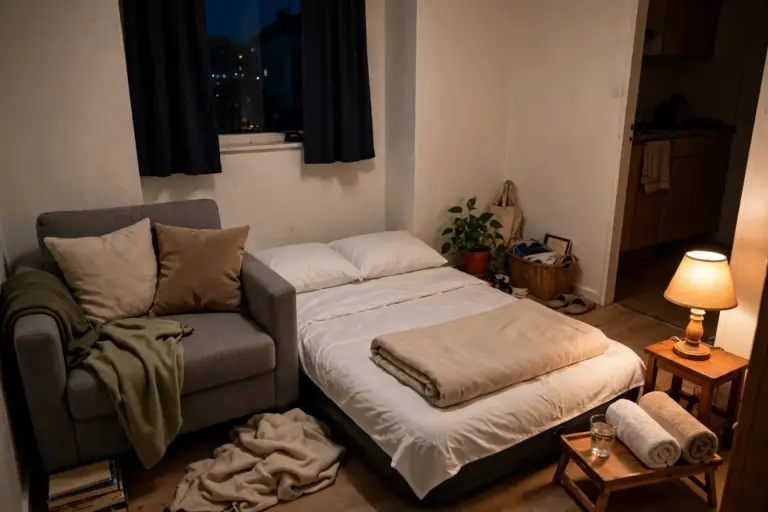
When the parents take the living room, the sofa has to work as a bed every night and a sofa every day. A proper sofa bed with a real mattress — not a thin fold-out — is worth the investment, and storage in the base holds bedding by day so the room never looks like a bedroom. Pick a model that converts in under a minute — a slow one will be skipped on tired nights. These real families in small apartments show how far a well-chosen sofa bed and a clear zone plan can go.
6. A Curtain or Screen for a Little Privacy
Privacy in a small apartment is about a visual break, not walls. A ceiling-mounted curtain track (check the lease first) or a freestanding folding screen gives the sleeping area a boundary that costs almost no floor space. A screen doubles as a divider by day and folds flat for guests. Choose a fabric that lets light through, so the nook never feels like a closet.
Storage That Keeps Up With Kids
Kids’ belongings grow faster than kids do. Storage has to be one children can use, because a system only adults can reach is a system only adults will tidy.
7. Labeled Bins at Kid Height
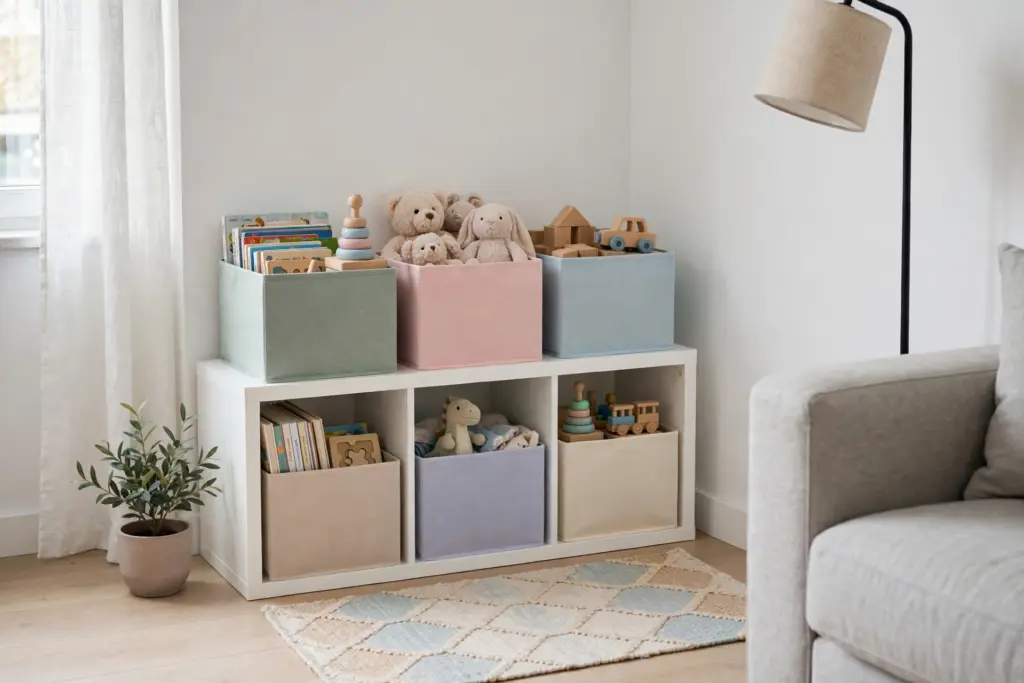
Low cube shelves with fabric bins are the workhorse of family apartments: one bin for blocks, one for dolls, one for art supplies. Label each bin with a picture as well as a word, so pre-readers can put things away by themselves. Keep bins on the lowest two rows; the top row is for adult-help items. The rule is simple: if a child cannot reach it or see the label, it will end up on the floor.
8. Go Vertical With Tall, Narrow Storage
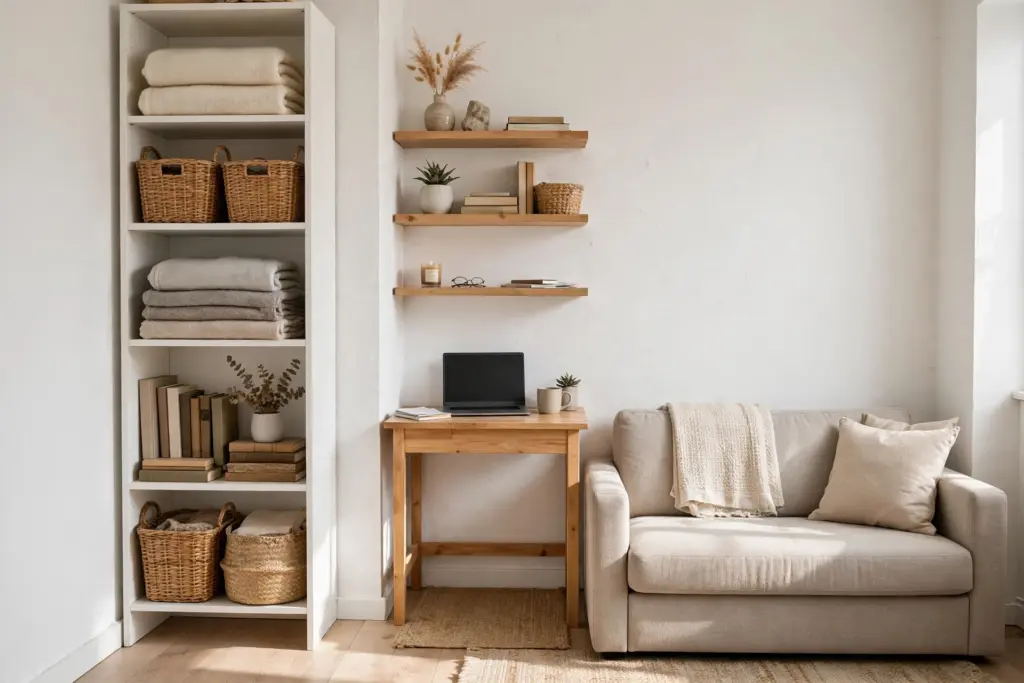
When floor space is gone, the only direction left is up. A tall, narrow shelving unit uses a strip of wall no wider than a door and holds blankets, baskets, and books. Everyday things go at shoulder height and below; rarely used things go at the top. Heavy items always go low, for stability and so nobody lifts a heavy basket off a high shelf. Anchor tall units (see the safety notes below), and keep the top shelf free of toys that invite climbing.
9. One In, One Out — The Rule That Stops the Creep
Every new toy, book, or pair of shoes that enters a small apartment needs an old one to leave. Make it a visible family rule: when a birthday brings three new toys, the child picks three to donate. Keep a donation bag by the door so outgrown things leave the same week. Small-space living stays calm only when the total volume stays roughly flat.
Shared Spaces That Do Double Duty
The entryway, the balcony, and the kitchen wall can each carry one more job with almost no extra furniture.
10. A Drop Zone by the Door
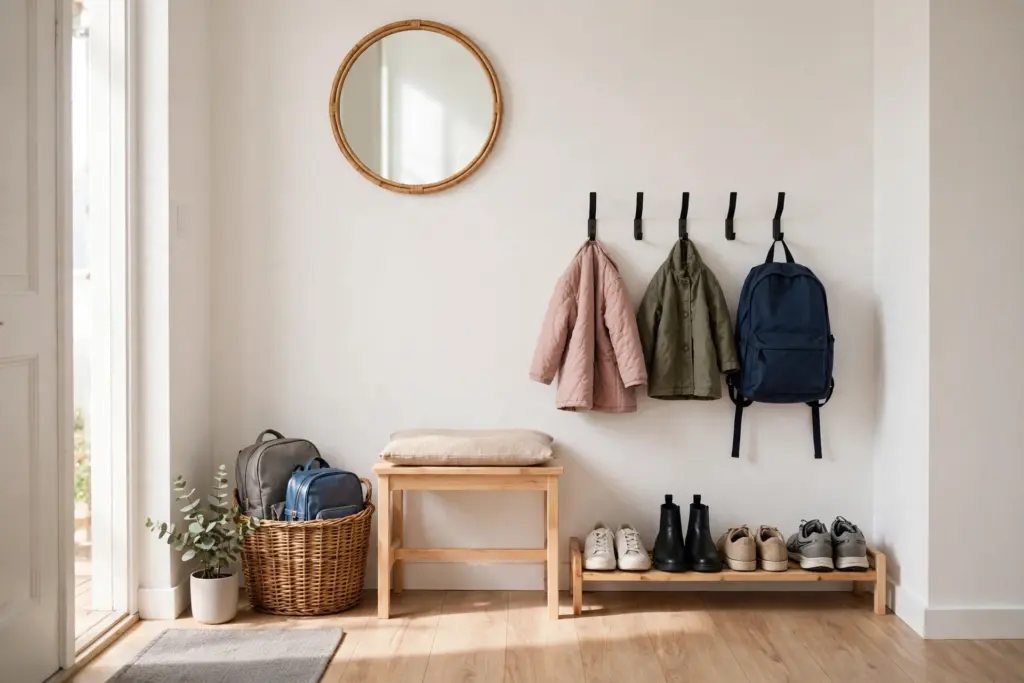
The first three feet inside the front door decide whether the whole apartment feels tidy. Give every family member one hook at their own height, one basket for their bag, and one slot on a low shoe rack. Kids’ hooks go low; adults’ hooks go above. A small bench lets little ones sit to put shoes on, and a basket under it catches school bags. For the full setup, see this room-by-room small apartment organization plan.
11. Treat the Balcony as an Extra Room
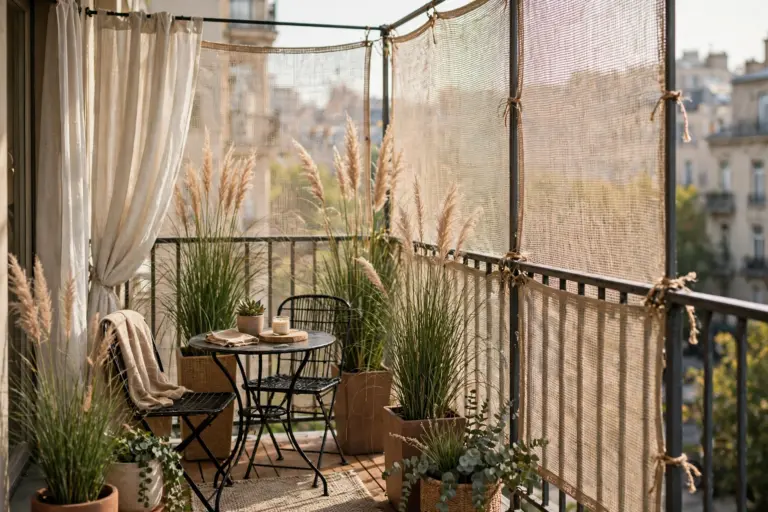
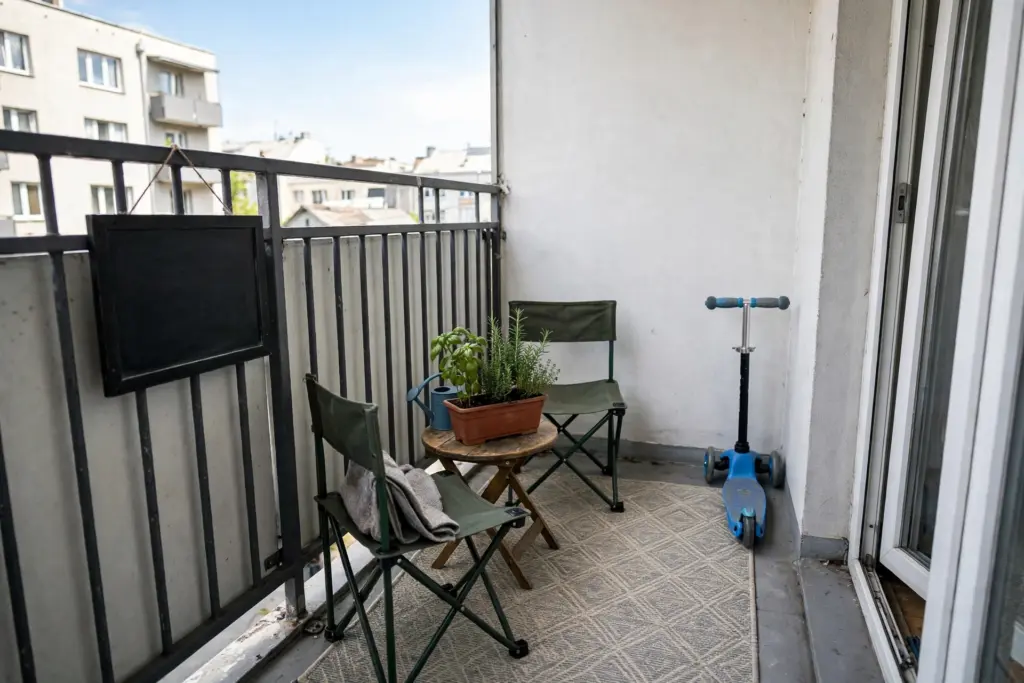
A balcony is the cheapest extra room a renter has. Two folding chairs, a small table, an outdoor rug, and a planter turn it into a breakfast spot, a homework corner on warm days, and parking for a scooter that would otherwise block the hallway. Check the building rules first: most leases allow freestanding furniture and planters but ban drilling into railings. Keep it light and movable so it all comes inside in bad weather.
12. A Family Command Center on One Kitchen Wall
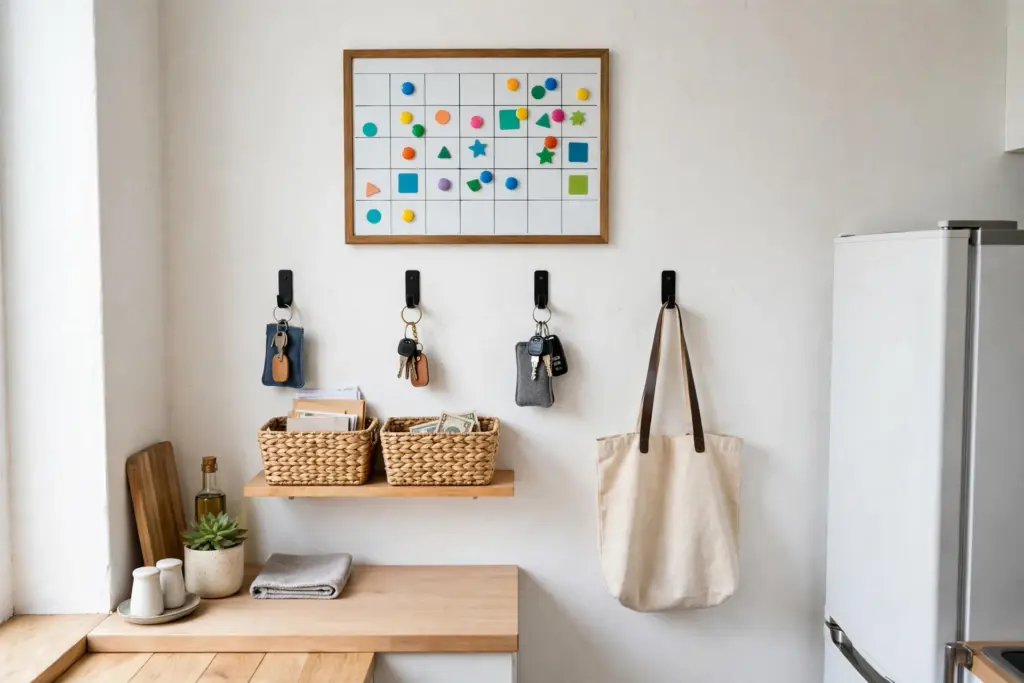
Small homes run on shared information: practices, dinners, bills due. Put it all on one wall — a small whiteboard calendar, four hooks for keys and bags, and two baskets for mail — and the family stops asking the same questions. Mount the board and hooks with removable strips so the wall stays lease-safe, and keep the calendar low enough for kids to move their own magnets. Put it near the door the family actually uses.
Routines That Keep a Small Home Calm
Furniture and bins only hold the line if routines back them up. Two short routines do most of the work.
13. The Ten-Minute Nightly Reset
Every evening, set a timer for ten minutes and everyone tidies their own zone: toys back in bins, dishes in the sink, bags by the door. Kids treat it as a game when it is timed, and the payoff is a calm living room to wake up to. A small apartment forgives nothing overnight — five stray items make it look chaotic. One family of six in a small apartment credits the same nightly reset and strict toy limits for keeping their home livable.
14. A Weekly Family Edit
Once a week, pick one small area — one drawer, one shelf, one bin — and edit it together for five minutes. Outgrown clothes go in the donation bag, broken toys go in the trash, and anything unused for a month gets a decision. A weekly edit of one small spot beats a monthly purge of the whole apartment. Checking the volume weekly, not yearly, is what keeps it workable.
Before You Rearrange: Check the Lease and Anchor the Tall Stuff
Two checks first. First, read the lease: most agreements allow freestanding furniture, removable hooks, and tension rods, but ban screws in walls or anything attached to railings. When in doubt, ask the landlord in writing — a short email about removable strips or a curtain track is cheap insurance for the deposit. Second, anchor tall furniture. Children climb, and a tall shelf or dresser can tip forward: the U.S. Consumer Product Safety Commission’s Anchor It! campaign recommends securing dressers, bookcases, and TVs with anti-tip kits, and since September 1, 2023, new clothing storage units sold in the U.S. must meet a federal stability standard — but older furniture still needs anchoring. If the lease bans drilling, ask about anchoring into a stud, or choose low, wide storage that is stable without wall fixing. The ideas in this guide to hosting overnight guests in a small apartment use the same space-saving thinking.
FAQ: Frequently Asked Questions
Can a family really live comfortably in a one-bedroom apartment?
Yes, with the right layout: give the kids the bedroom, use a quality sofa bed or Murphy bed for the parents in the living room, and zone the shared space so play, eating, and relaxing each have a spot. It works best when belongings stay few and every item has a home.
How do you give kids privacy in a small apartment?
Privacy comes from visual breaks rather than walls: a folding screen, a curtain around a sleeping nook, or a bookshelf placed as a divider. A shelf, a clip-on light, and a curtain around a bunk bed give each child a corner that feels like theirs.
What is the best storage for toys in a small living room?
Low cube shelves with labeled fabric bins at child height, plus one lidded ottoman or basket for fast cleanups. Keep everyday toys in the bins, rotate the rest from a closet, and follow one-in, one-out.
Do I need landlord permission to rearrange furniture or add shelves?
Rearranging freestanding furniture needs no permission. Anything fixed to a wall — shelves, curtain tracks, anti-tip anchors — should be checked against the lease first, with permission asked in writing when it is unclear. Removable strips and freestanding furniture are the safest options when permission is refused.