Kitchen Drawer Organization Ideas for Small Kitchens
A kitchen drawer is either the hardest-working storage in a small kitchen or a junk trap — rarely anything in between. Kitchen drawer organization ideas work best on one rule: assign every drawer a job before buying a single organizer. The twelve ideas below cover every drawer a small rental kitchen has, from the cutlery tray to the awkward space around the sink pipes, and none need drilling, screws, or a new kitchen.
Twelve ideas follow — a three-step method first, then the everyday drawers, the deep drawers, the small stuff, and the tricky ones.
Before You Buy a Single Organizer: Empty, Edit, Assign
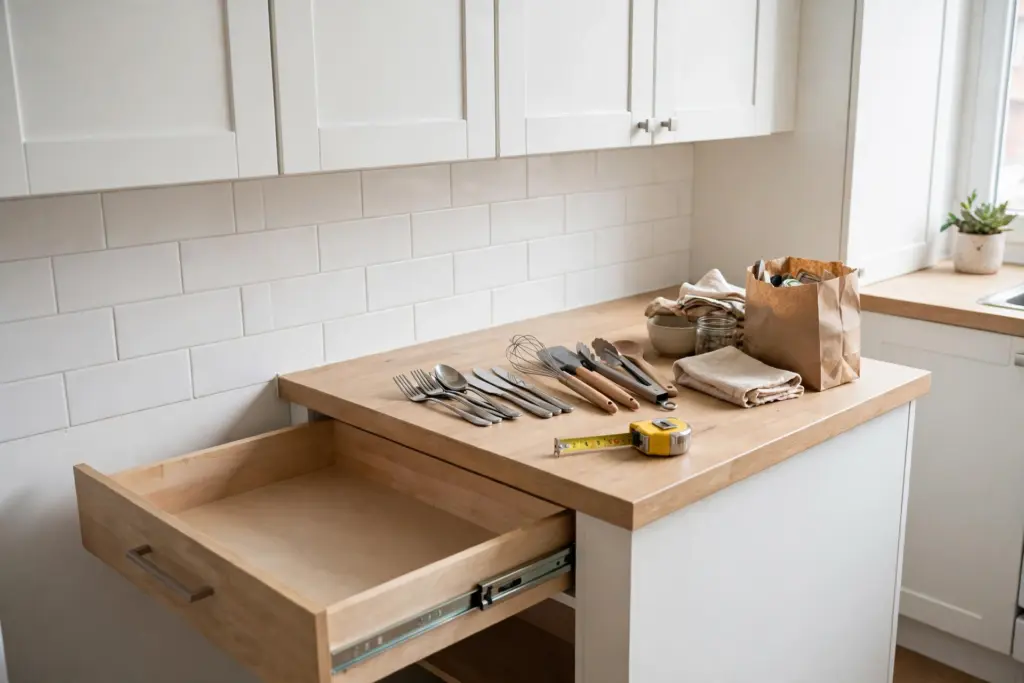
Most drawer projects fail the same way: the organizer is bought first and the layout figured out second. Reverse the order. Pull everything out of every drawer in one session, group the contents by task — eating, stirring, cutting, cleaning — and remove duplicates, broken tools, and anything unused for a year. Then measure each drawer — width, depth, height — because a tray that fits the drawer but not the items inside is useless. Only then buy organizers, and only for the layout you just planned. This empty-edit-assign order is the method this kitchen drawer organization guide recommends, and it keeps the system working years later. For the rest of the kitchen around the drawers, see these small apartment kitchen storage ideas.
The Everyday Drawers: Cutlery, Utensils and Prep
The top drawers get opened dozens of times a day, so they deserve the best organizers. Keep them near where the contents are used: cutlery on the route to the table, cooking tools beside the stove.
1. A Fitted Cutlery Tray
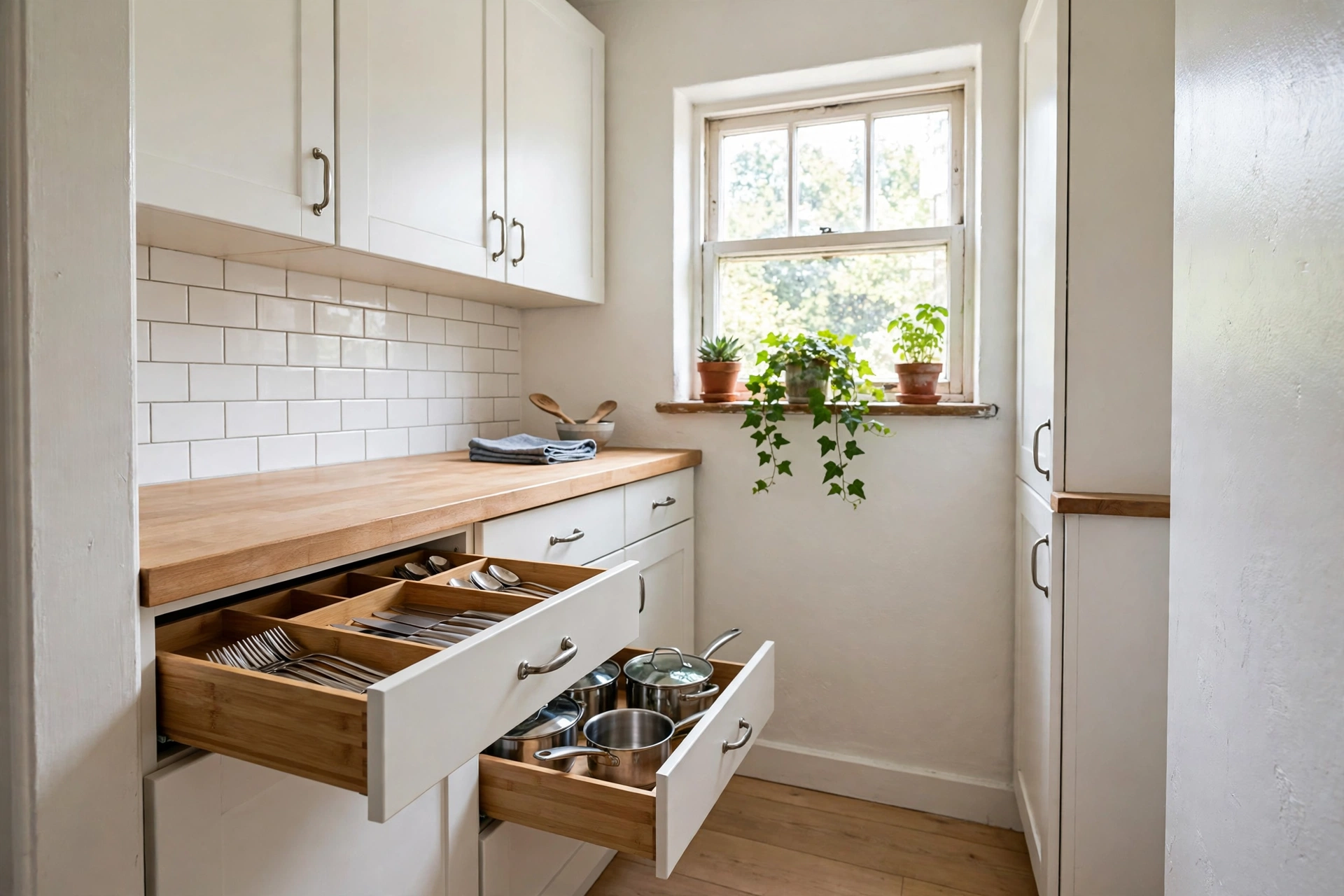
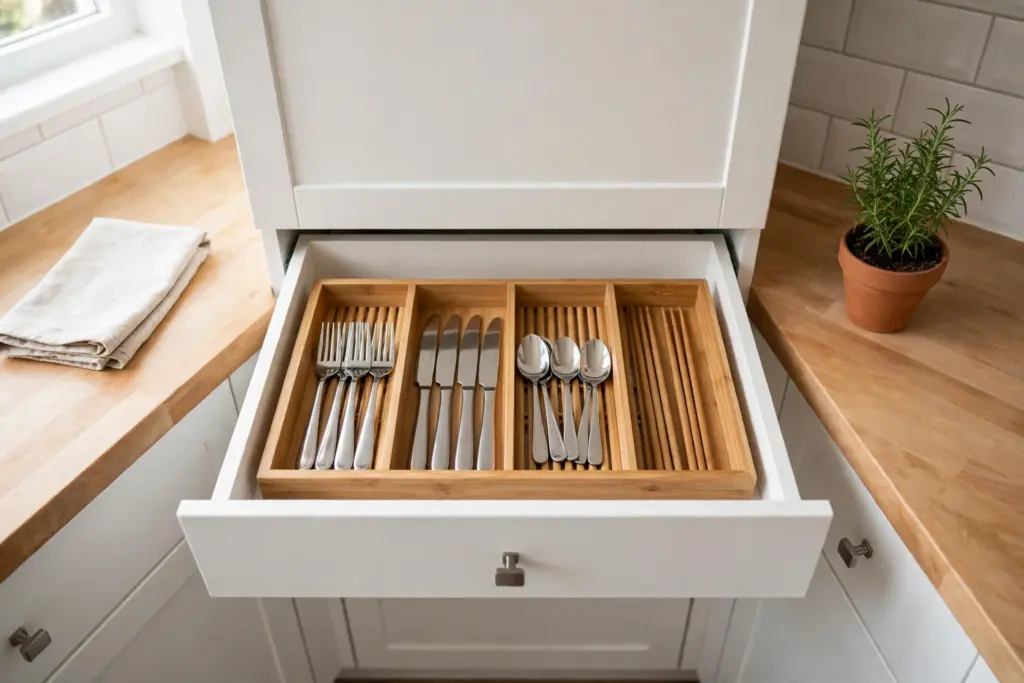
The cutlery drawer is where most kitchens fall apart, because loose forks and spoons slide forward every time the drawer closes. A fitted bamboo or plastic tray with five slots — forks, knives, spoons, serving utensils, small tools — fixes it in one move. Measure first and pick a tray that fills the drawer edge to edge; a tray that rattles around is barely better than no tray. Keep only eight to twelve of each everyday piece in the tray; a crowded tray never stays tidy.
2. Expandable Dividers for Cooking Utensils
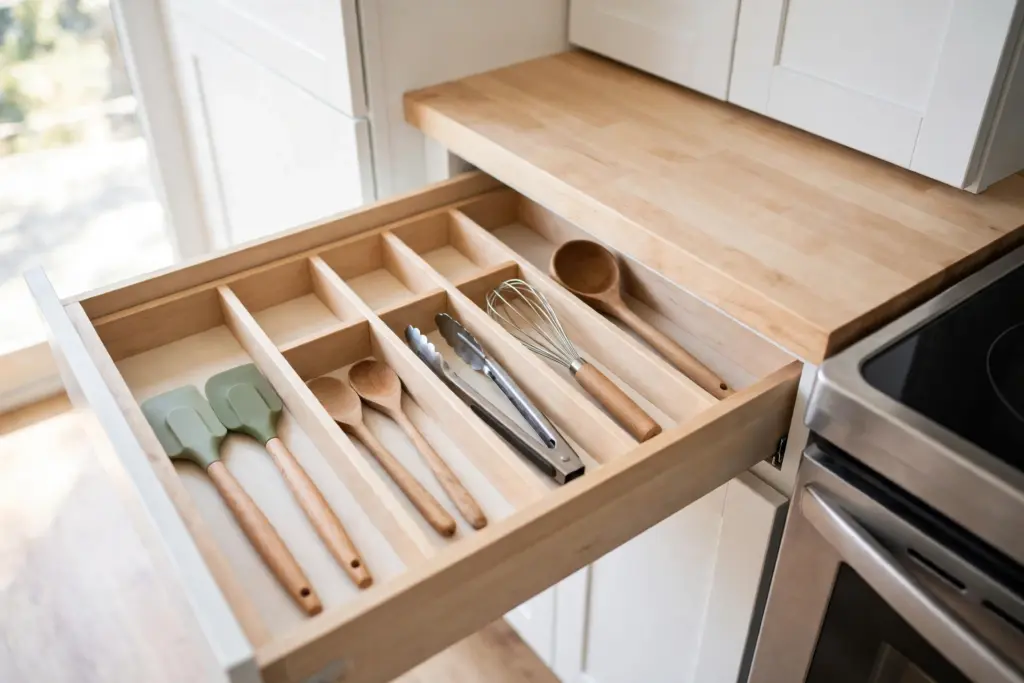
Spatulas, tongs, ladles, and whisks are too long and too oddly shaped for a fixed tray. Expandable dividers — spring-loaded or pegged sections that stretch to the drawer width — split one shallow drawer into long lanes, one per tool family. Put everyday tools in the front lanes and rarely used ones at the back, and keep the drawer beside the stove. If a divider slides when the drawer opens, a strip of non-slip liner underneath holds it still.
3. An In-Drawer Knife Block
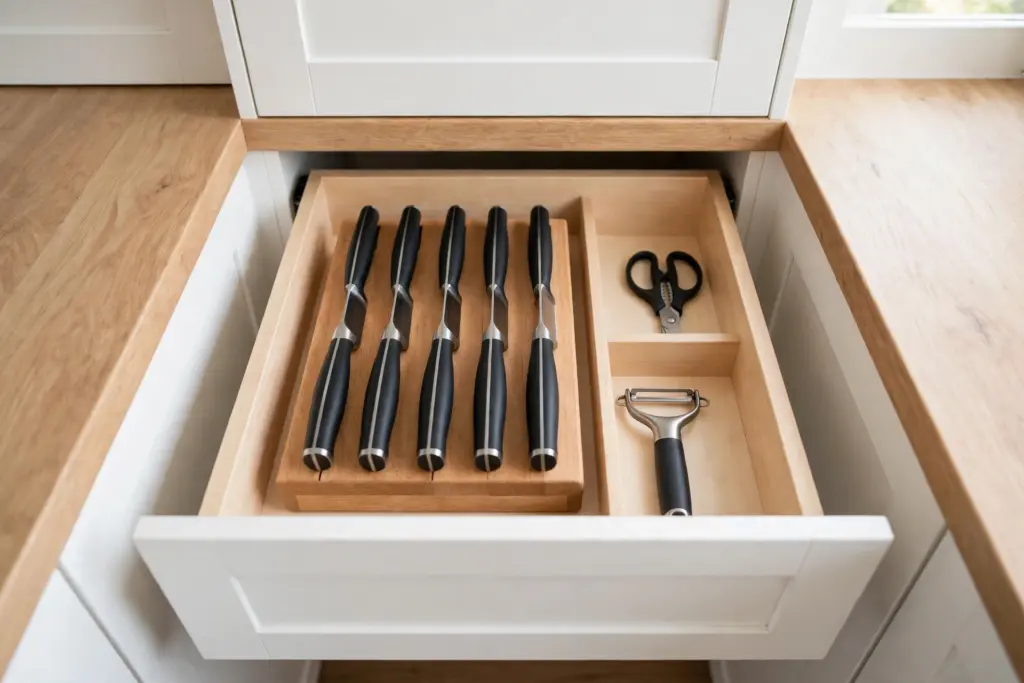
A knife block on the counter eats the one clear surface a small kitchen has, and loose knives in a drawer are a cut waiting to happen. An in-drawer knife block holds five or six blades flat in slots, handles up, so the right knife is visible at a glance and nothing sharp is loose. Size the block to the drawer and keep blades clean and dry before slotting them in. A section beside the block fits a peeler and kitchen scissors.
Deep Drawers: Pots, Pans and Lids
Deep drawers are where kitchen drawer organization ideas pay off most, because the storage comes out to the cook instead of hiding behind a door. They only work when the contents cannot slide into a pile.
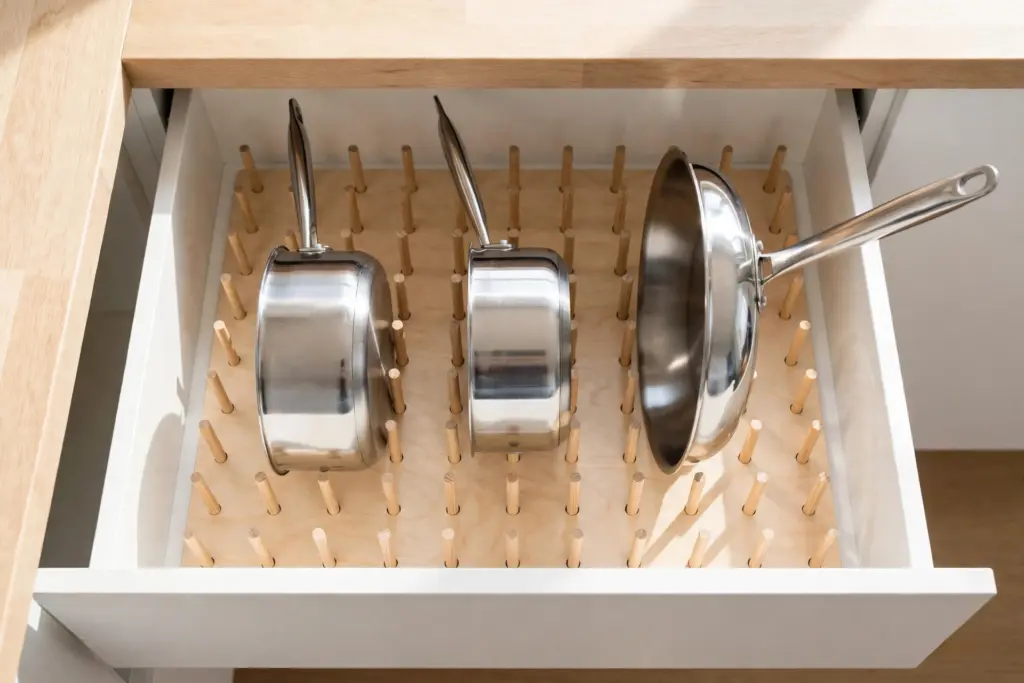
4. A Pegboard Base for Pots and Pans
Stacked pots scratch each other and bury the one at the bottom. A pegboard base — a flat board with short pegs that drops into a deep drawer — holds each pan upright in its own slot, separated by pegs, so any pan lifts out without moving the others. Arrange pegs around the pans you own, not the set in the photo, and leave one empty slot for the pan in use. Check the slides’ weight rating before loading cast iron; heavy pans belong low and spread out, not piled in one corner.
5. Vertical Dividers for Lids and Baking Sheets
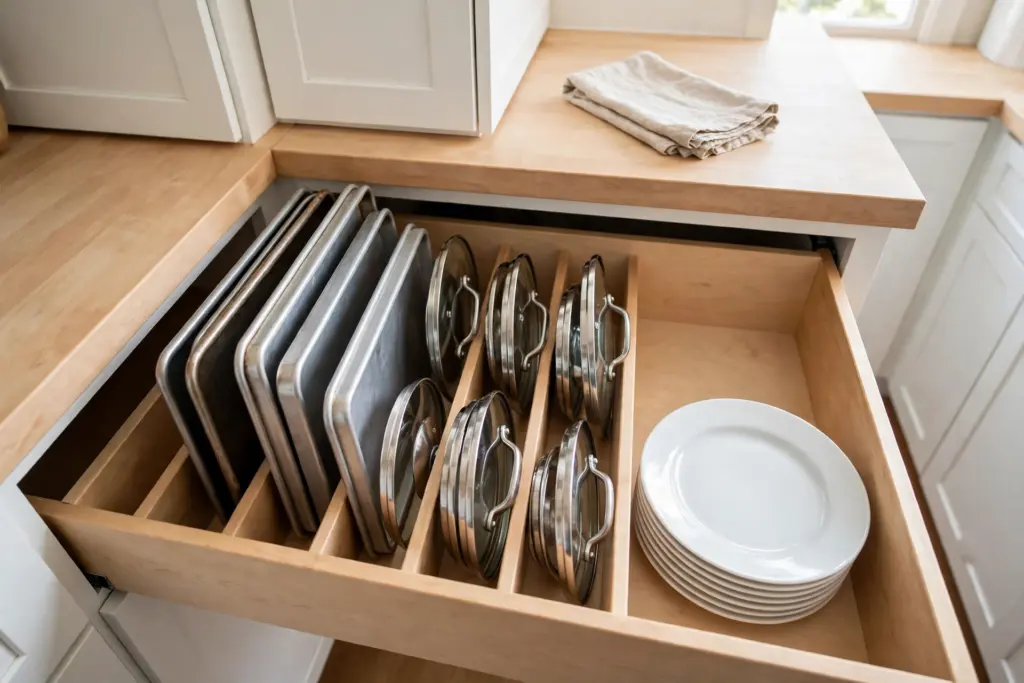
Lids and baking sheets are flat, awkward, and impossible to stack neatly — so stand them up. Vertical dividers split a deep drawer into narrow slots, and lids and sheets file upright like books, each one visible and reachable without lifting a stack. Put the most-used lids nearest the front and baking sheets at the back. The same divider setup works for cutting boards and cooling racks, which are the other flat things that never stack well.
6. File Plates on Their Side
Plates do not have to live in a cupboard. In a deep drawer, a simple vertical plate rack or a pair of dividers lets plates stand on edge in a row, so grabbing one does not mean lifting the whole stack. Keep everyday plates nearest the table and serving dishes at the back. A thin felt liner between plates stops chipping.
The Small Stuff: Spices, Wraps and Snacks
Small items are what make a drawer look messy even when it is technically organized. Give each small category its own shallow drawer and the mess disappears.
7. A Spice Drawer With Jars Lying Flat
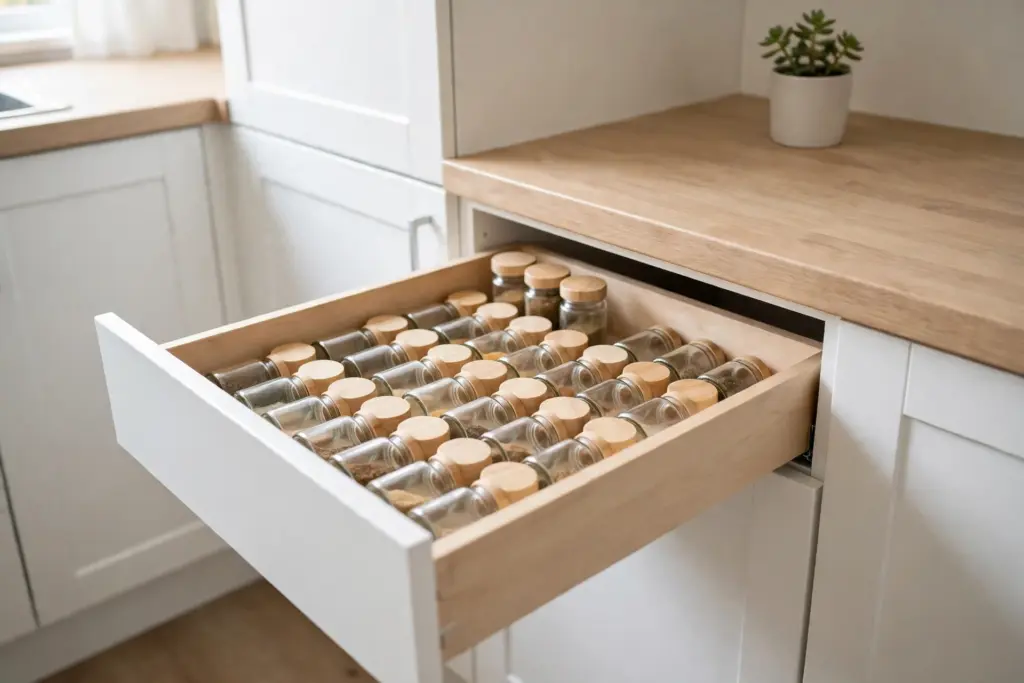
A spice drawer works when every jar is visible at a glance. Lay small glass jars flat in rows, lids facing the front, so the labels read without lifting anything — or stand them in a stepped insert if the drawer is deep enough. Keep jars small and uniform; mismatched sizes are why spice drawers slide into chaos. Put the drawer near the stove but not above it — heat and steam fade spices faster. The spice layouts in these spice storage ideas for small kitchens use the same flat-jar principle.
8. One Drawer for Wraps, Bags and Foil
Cling film, foil, parchment, and zip bags multiply into a tangle in a cupboard, but they behave in a drawer. Give them one shallow drawer with a simple divider or two: rolls standing in a row at the back, bags and ties in front. A dispenser insert with a cutter edge stops the half-torn roll problem for good. Keep the drawer near the prep area, because wraps are reached for during cooking, not after it.
9. A Snack Drawer at Kid Height
If kids live in the apartment, one low drawer for snacks saves a hundred requests a day. Fill it with small bins — fruit, crackers, drinks — at a height children can reach and close themselves. One drawer, fixed bins, and a weekly check that nothing expired or migrated in. Adults get the same benefit: a snack drawer stops the pantry raid that empties a shelf in one evening.
The Tricky Drawers: Junk, Cleaning and Under-Sink
Every kitchen has three drawers that resist organizing: the junk drawer, the cleaning drawer, and the space around the sink pipes. Each one has a fix — and each fix is different.
10. The Junk Drawer, With Four Zones
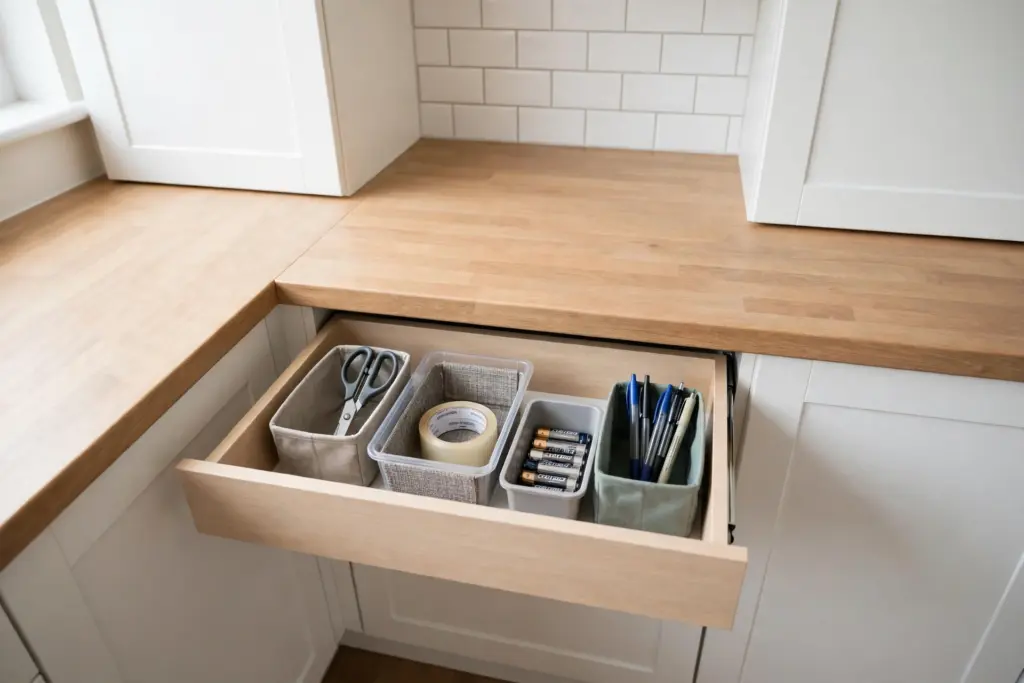
The junk drawer is not the problem; an unlimited junk drawer is. Limit it to exactly one drawer and split it into four zones with small bins: tape and pens, batteries, tools, and a catch-all that must stay empty by the end of the week. Anything that does not fit its zone leaves the drawer. The four-zone rule turns a junk drawer from a black hole into a drawer that gets opened on purpose. For the rest of the kitchen, these kitchen counter organization ideas clear the surface the junk drawer used to spill onto.
11. A Cleaning-Supplies Drawer by the Sink
Cleaning supplies belong in the drawer nearest the sink, not under it where the pipes are. A shallow drawer with a wipeable liner holds cloths, a spray bottle lying flat, and dishwasher tabs in a small bin, all within arm’s reach of the sink. Keep the bottle upright only if the drawer is deep enough; a bottle leaking on its side soaks everything else. Put a small bin for sponges at the front — the sponge is reached for most and smells first if it stays damp.
12. An Under-Sink Drawer That Clears the Pipes
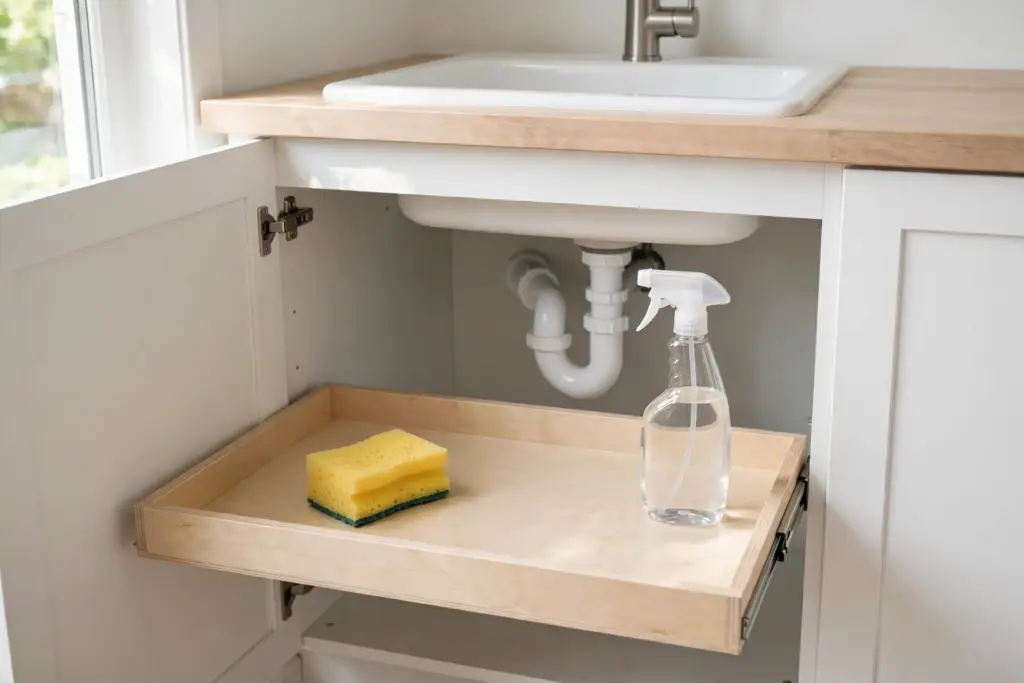
The space under the sink looks wasted, but the P-trap takes most of it. The fix is a shallow pull-out tray that stops well short of the pipes: measure from the cabinet front to the trap, then buy or build a tray a few inches shorter, so a clear empty gap sits between the back of the tray and the plumbing. The tray slides freely without touching the pipes, holding sponges, a spray bottle, and dishwasher tabs. Never force a full-depth drawer under a sink — the first time it hits the trap, something will lose. This drawer-type guide covers under-sink drawers and the plumbing clearances they need, and the full under-sink setup is in these under-sink storage ideas for renters.
How to Keep Kitchen Drawers Organized
A drawer system holds only if it is checked. Once a month, open every drawer and pull out anything that migrated in, broke, or expired. Re-measure before buying any new organizer, because a new gadget that does not fit the drawer is a new piece of clutter. Keep the rule that started the project: organizers come last, layout comes first. Kitchen drawer organization ideas only work long-term when the layout matches how the kitchen is actually used, so when a habit changes — a new coffee routine, a child who starts cooking — move the drawer contents first and the organizers second. The storage pillar that ties this together is the small apartment storage ideas guide, and the cabinet work that pairs with it is in these corner kitchen cabinet organization ideas.
FAQ: Frequently Asked Questions
What is the best way to organize kitchen drawers?
Empty every drawer in one session, group contents by task, remove duplicates and anything unused, then measure before buying organizers. Assign each group to the drawer nearest where it is used, and choose organizers that fit the layout — not the other way around.
How do I keep deep drawers from becoming a pile?
Divide them so nothing can slide: a pegboard base for pots, vertical dividers for lids and baking sheets, and a plate rack for dishes. Keep heavy items low and spread out, and leave one empty slot so the drawer is never packed solid.
What should go in the top drawer of a small kitchen?
Cutlery and everyday prep tools: forks, knives, and spoons in a fitted tray, plus a peeler and scissors. Put the drawer on the route to the table for cutlery and beside the stove for cooking tools, so nothing travels far while cooking or setting the table.
Can I organize kitchen drawers in a rental without drilling?
Yes. Trays, dividers, pegboard bases, and bins all drop in with no screws or glue, and a pull-out tray under the sink slides on the cabinet floor. Check the lease before screwing anything to the cabinet, and choose drop-in organizers when permission is unclear.