Kitchen Organization: Spice Storage Ideas for Small Kitchens
Every small kitchen has the same weak spot: a cabinet or drawer where spice jars pile up, tip over, and hide the one you need. Good kitchen organization spices start with a simple idea — every jar visible, reachable, and away from heat — and this guide turns that idea into 12 storage setups that fit a rental kitchen without drilling holes.
Spices are the hardest thing to store in a small kitchen. The jars are small, oddly shaped, and always multiplying, while the space they get is usually one shallow shelf or half a drawer. The 12 ideas below work with the space a rental already has: drawers, cabinet doors, the side of the fridge, and the narrow gaps between appliances. Pick one idea for the spices you reach for daily, and the rest of the system falls into place. For the wider storage picture, the small-apartment storage ideas guide covers every room the same way.
Before You Start: 3 Ground Rules for Spice Storage
Three rules decide whether any spice setup works. First, keep spices away from heat, light, and steam: the shelf above the stove looks convenient, but repeated heat fades flavor fastest, so a cool, dark cabinet or drawer is the best spot. Second, measure before buying anything — rental drawers and cabinets are rarely standard, so measure the space and your tallest jar before ordering an insert or rack. Third, label everything you decant: once a spice leaves its original jar, the label is the only thing standing between paprika and cayenne at dinner time.
Freshness is why the rules matter. McCormick notes that dried seasonings, herbs, and spices in jars generally last about 1–2 years, and that keeping them in their original airtight containers in a cool, dark place is the best way to hold on to flavor. For the full guidance, see McCormick’s guide to how long spices last.
Use a Drawer
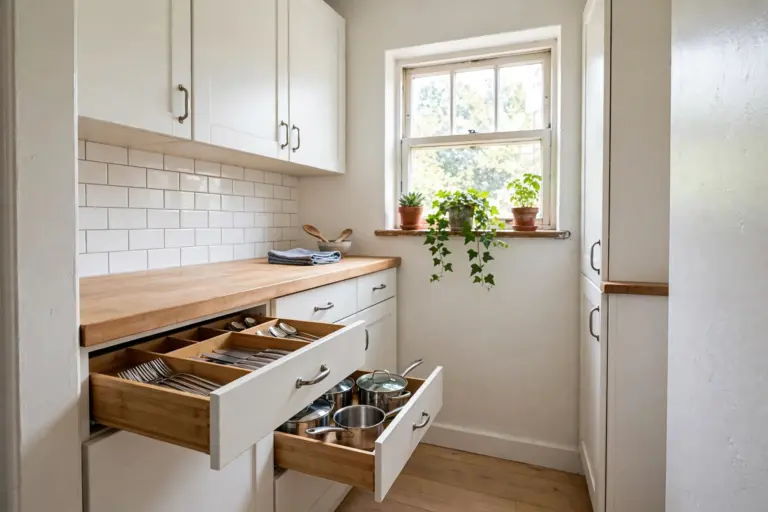
A drawer is the best spice home in a small kitchen: dark, cool, and everything at one level. These two ideas turn an ordinary drawer into a spice station.
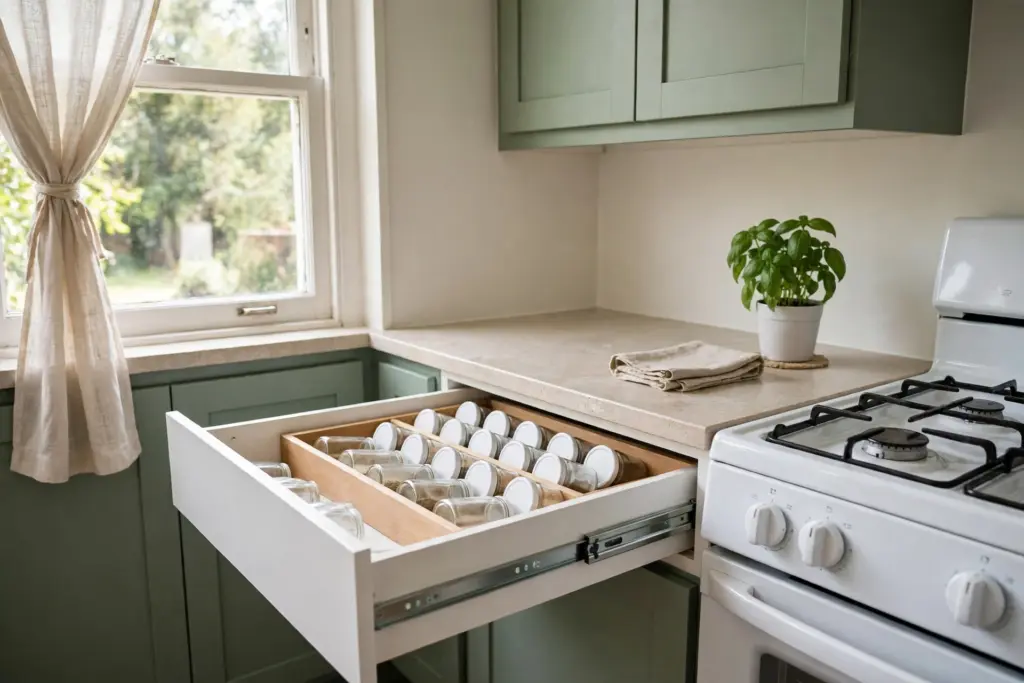
1. Drop in a Tiered Drawer Insert
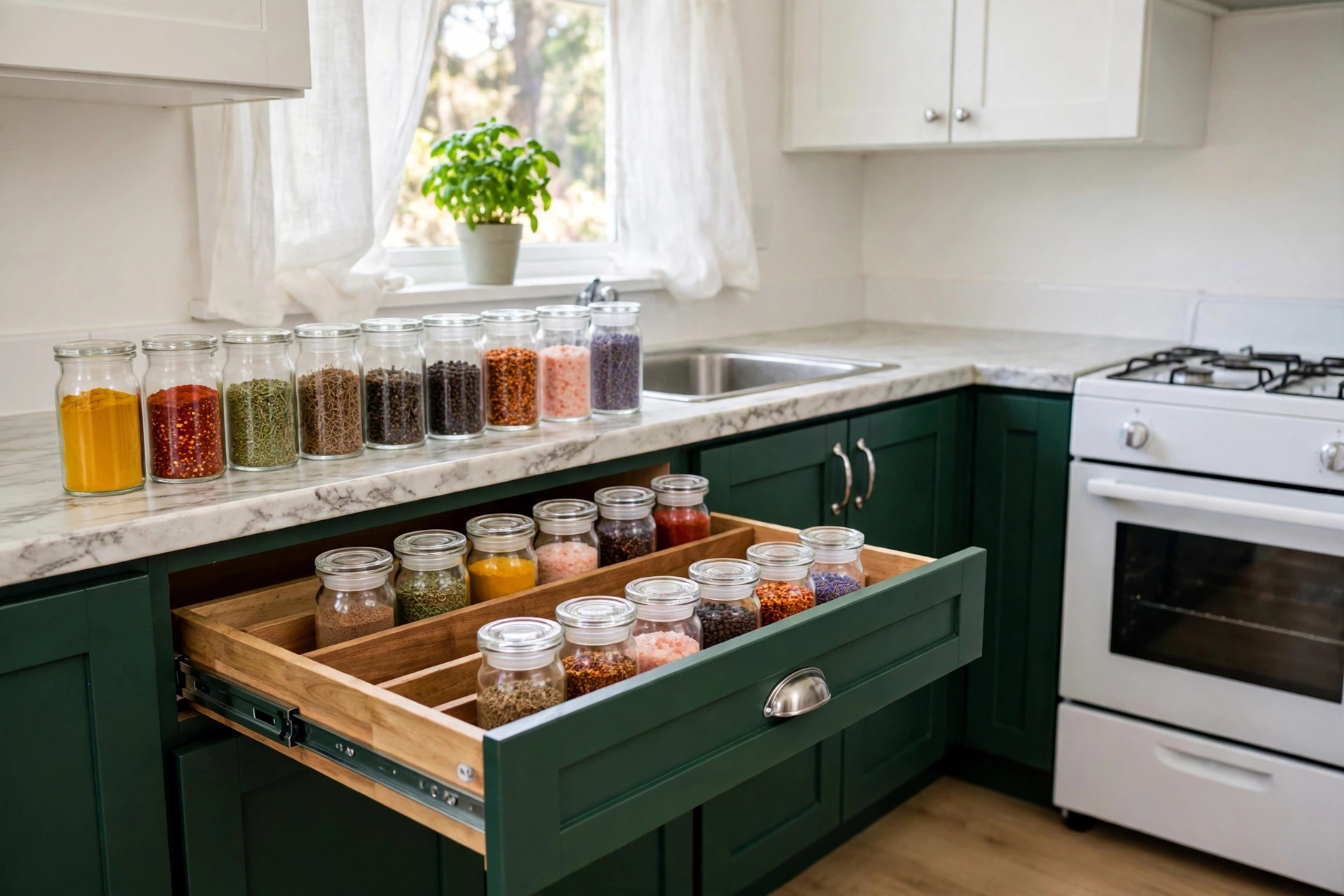
A tiered insert holds jars at a gentle angle, like stadium seating, so every label is visible from above without lifting a jar. Look for an expandable insert with a non-slip base so the row does not slide. Lay jars with labels facing up, most-used spices at the front. It takes five minutes to install, needs no tools, and comes out clean at move-out.
2. Lay Jars Flat With Lids Labelled on Top
If your drawer is too shallow for an insert, lay the jars on their sides in neat rows and label the lids, not the sides. A strip of painter’s tape and a marker works, or print small round labels. Group rows by how you cook — everyday spices in front, baking spices behind — and keep a non-slip liner under the jars so they do not roll. This costs almost nothing and works in the narrowest rental drawer, as long as the jars are roughly the same size.
Work Inside Your Cabinets
Cabinets hold the most spices, but they hide them worst: the back row disappears and the jar you want is always behind three others. These three ideas fix the inside of the cabinet.
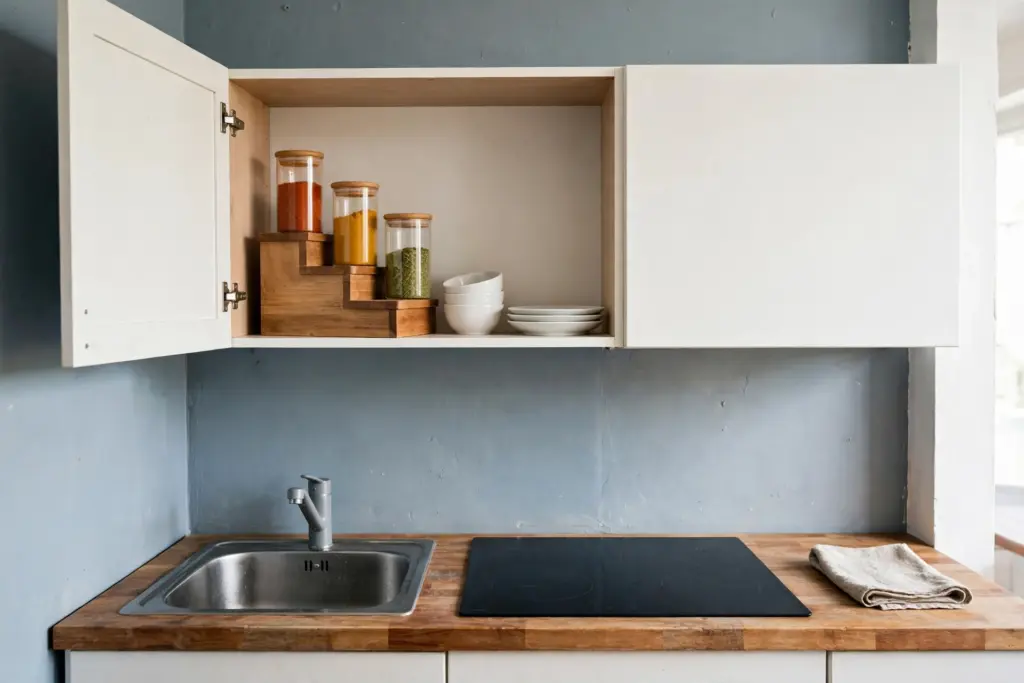
3. Add a Tiered Shelf Riser
A two- or three-tier riser lifts the back row so every jar is visible, like steps in a lecture hall. Choose one with a non-slip surface and measure the shelf height first — the riser plus your tallest jar must clear the shelf above. Put the tallest jars at the back and the shortest at the front. Risers are cheap, need no installation, and move with you to the next apartment.
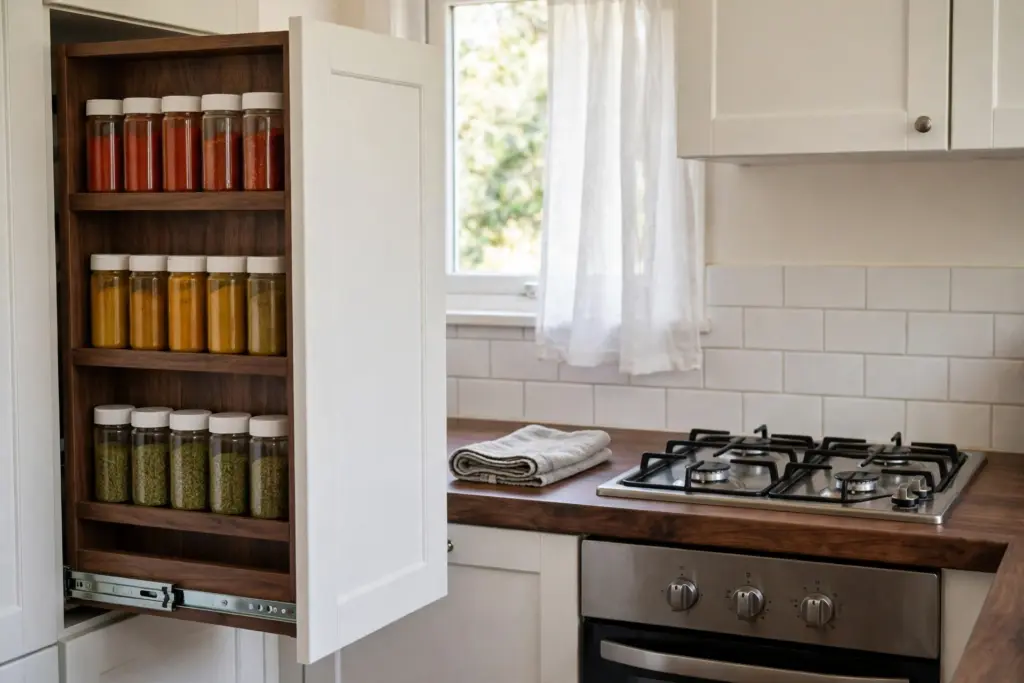
4. Slide in a Pull-Out Cabinet Rack
A pull-out rack turns a deep cabinet into a drawer: pull the handle and the whole row of jars glides out where you can see it. Size it to your cabinet’s interior so it does not hit the door frame. Many versions mount with screws, so renters should choose a freestanding basket-style pull-out that sits on the shelf, or a tension-mounted version that wedges in place.
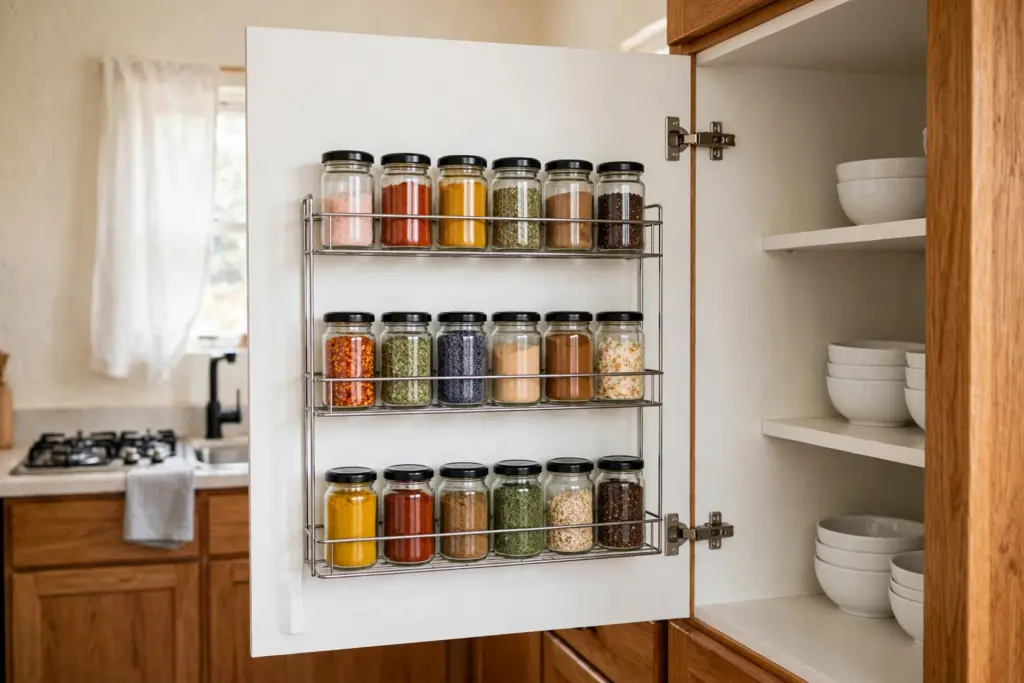
5. Hang a Rack on the Inside of the Cabinet Door
The inside of a cabinet door is free real estate in almost every rental kitchen. A slim door-mounted rack holds 8 to 12 small jars and uses space that would otherwise hold nothing. Pick a rack shallow enough that the door still closes — measure the gap between the door and the shelf edge first — and choose one that mounts with removable adhesive strips or over-the-door hooks.
Go Magnetic and Vertical
When cabinets and drawers are full, the walls and the fridge are the next frontier. Magnetic storage keeps spices visible and frees every shelf.
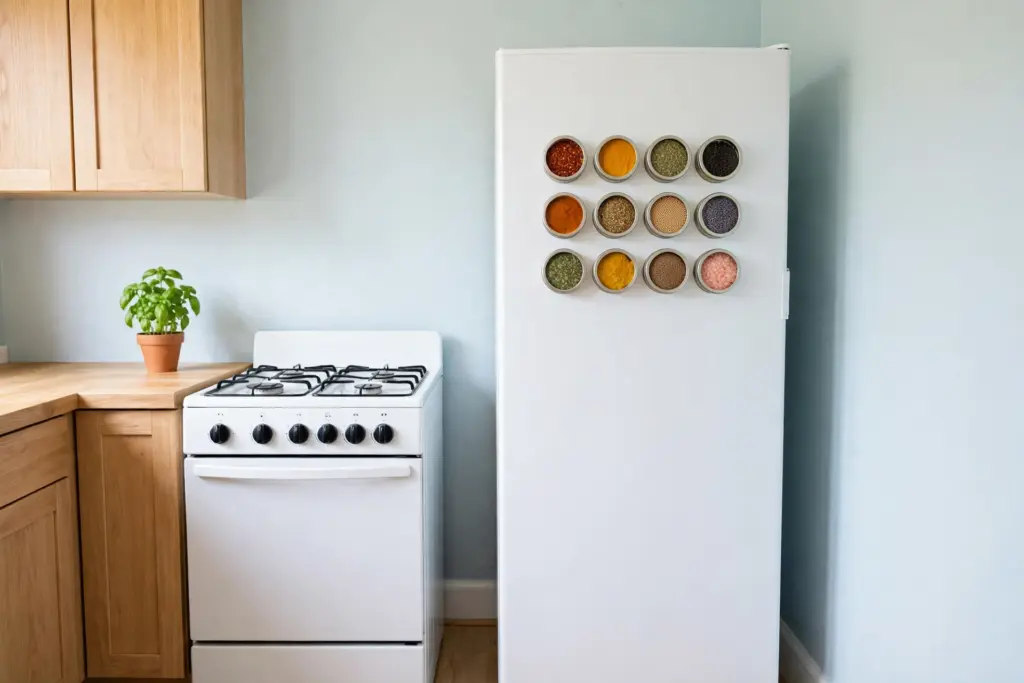
6. Stick Magnetic Tins to the Side of the Fridge
Small magnetic tins turn the side of the fridge into a spice wall. Decant your most-used spices into airtight magnetic tins, label the lids, and line them up in a neat grid at eye level. Keep the tins on the side of the fridge that faces away from the stove, since heat from the burners can reach the fridge’s side panel. This uses zero cabinet space, and the tins travel to the next rental in a single box.
7. Hang Jars Under the Upper Cabinets
The underside of an upper cabinet is wasted space in most kitchens. A magnetic strip mounted under the cabinet holds small jars by their metal lids, hanging upside down where they are easy to see and grab. Choose a strip that mounts with removable adhesive or a clamp-on bracket, and use jars with flat metal lids that grip firmly — test one jar’s hold before hanging a full row.
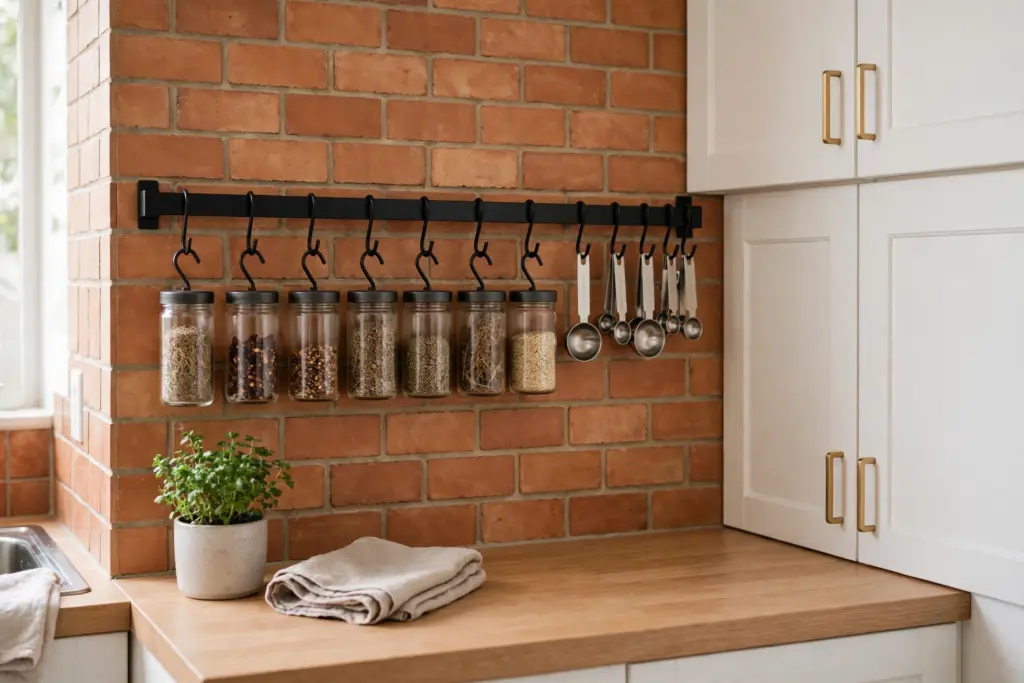
8. Mount a Slim Rail With Hooks on the Wall
A slim wall rail with S-hooks holds hanging spice jars, measuring spoons, and small baskets in one vertical strip. In a rental, mount it with heavy-duty removable adhesive strips rated for the weight, or use a tension-mounted rail wedged between the counter and the upper cabinet. Hang jars by their lids or in small wire baskets, and keep the rail a few feet from the stove.
Use the Gaps and the Counter
Small kitchens have gaps everywhere — between the fridge and the wall, beside the stove, at the end of a counter run. These ideas claim those gaps.
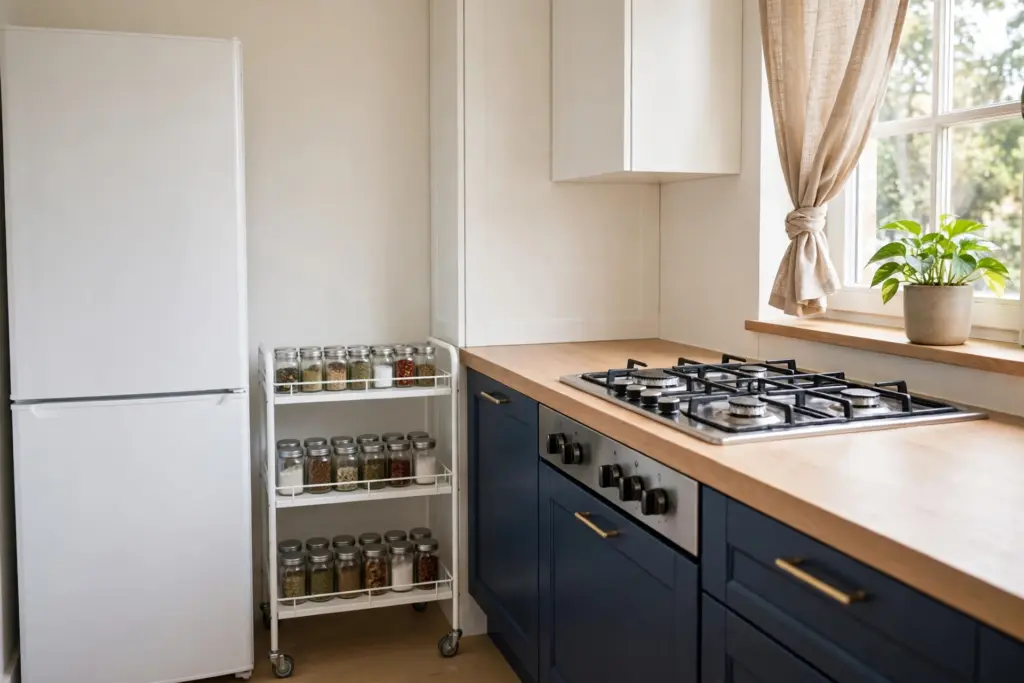
9. Roll a Slim Cart Into the Gap
A slim rolling cart, made to fit a narrow gap, holds a full spice collection on three or four shelves and wheels out when you cook. Measure the gap first — most carts are only a few inches wide — and choose one with locking wheels. Keep the most-used spices on top, refills and bulk jars below, and roll it back into its gap when dinner is done.
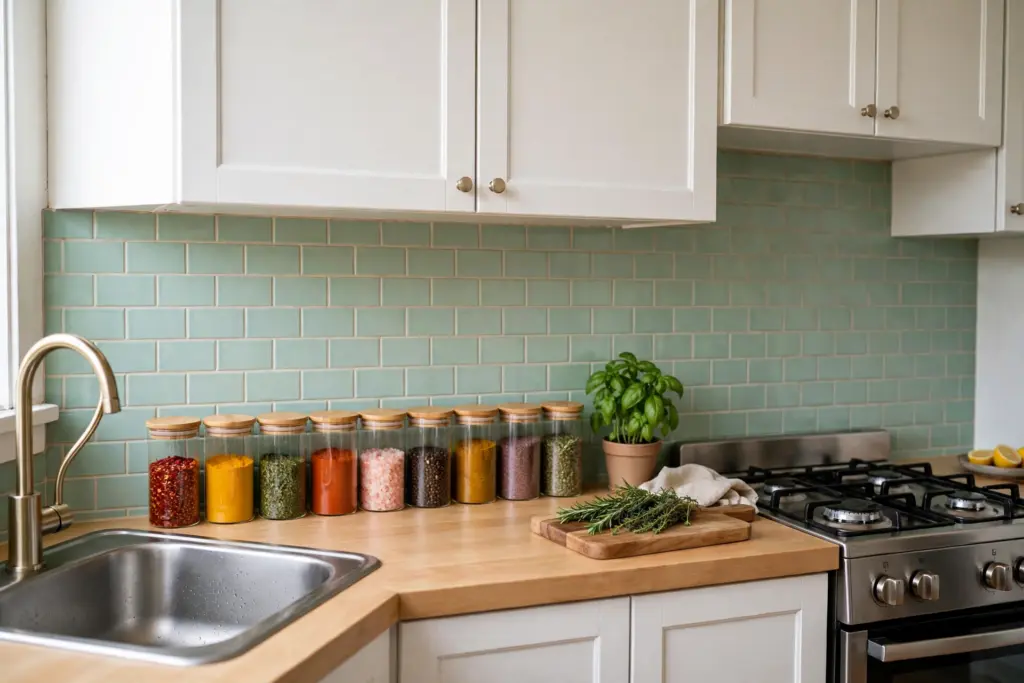
10. Decant Into Uniform Square Jars and Label Everything
Mismatched supermarket jars waste space: round bottles leave gaps, tall bottles block short ones, and three brands of the same spice hide from each other. Decanting into uniform square glass jars with airtight lids packs the shelf tight, because square jars sit flush with no wasted corners. Label every lid and front, and only decant the spices you actually use.
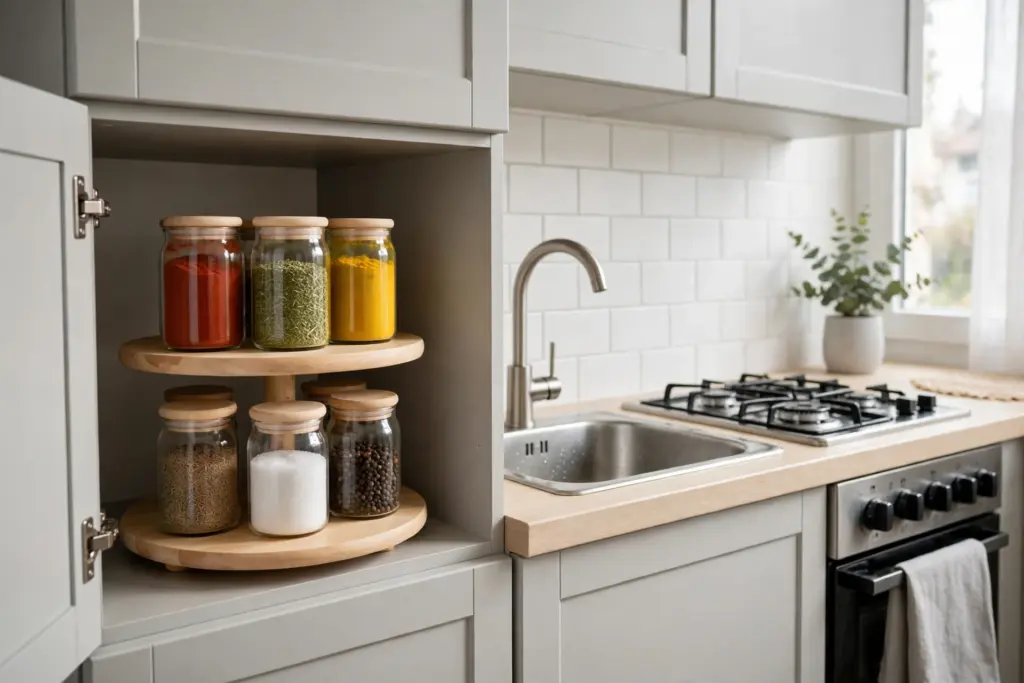
11. Spin a Turntable in a Deep Cabinet
A turntable, or lazy Susan, is the fix for deep cabinets where jars vanish at the back. One spin brings the back row to the front, and a two-tier turntable doubles the usable height. Choose one with a raised rim so jars do not slide off mid-spin, and measure the cabinet’s interior so it turns freely. Group it by cuisine — one for everyday cooking, one for baking — so a single spin lands on the right flavors. The Kitchn’s roundup covers turntables alongside drawers and magnetic setups; see The Kitchn’s 22 ways to organize spices for more variations.
Keep It Fresh and Findable
The last idea is not a product at all — it is the routine that keeps the other eleven working.
12. Build a Cook-Zone Station and a Freshness Routine
Put the spices you use most within arm’s reach of where you actually cook, and move the rest to an overflow box in a cool, dark spot. A small tray on the counter, or one drawer tier, holds the daily eight or ten — salt, pepper, garlic powder, paprika, cumin, chili flakes, oregano. Twice a year, sniff the daily set: if a ground spice smells like dust instead of itself, it has lost its punch. This is where good kitchen organization spices pay off twice: the jars are easy to find, and the flavor stays worth finding. For pantry overflow, the small-apartment pantry ideas guide shows how to give bulk refills a proper spot.
Start with the idea that matches your worst pain point: the tiered insert if you lose jars in a drawer, the riser or turntable if the cabinet hides everything, the magnetic tins if you have no storage left at all.
Frequently Asked Questions (FAQ)
Where is the best place to store spices in a small kitchen?
A cool, dark drawer or cabinet away from the stove is the best place. Drawers protect spices from light and heat, and a tiered insert or labelled lids keep every jar visible.
Use freestanding and removable options: tiered drawer inserts, shelf risers, turntables, magnetic tins on the fridge, and door racks mounted with removable adhesive strips or over-the-door hooks. None of these needs a drill, and all of them come out clean at move-out.
How do I organize spices without drilling holes in a rental?
Use freestanding and removable options: tiered drawer inserts, shelf risers, turntables, magnetic tins on the fridge, and door racks mounted with removable adhesive strips or over-the-door hooks. None of these needs a drill, and all of them come out clean at move-out.
Should spices be stored in glass jars or their original containers?
Either works if the container is airtight. McCormick recommends keeping spices in their original airtight containers, since the packaging is designed to seal in flavor. If you decant into glass jars, choose airtight lids, label every jar, and keep them in a dark drawer or cabinet.
How long do ground spices last?
McCormick notes that dried seasonings, herbs, and spices in jars generally last about 1–2 years when stored in a cool, dark place. Ground spices fade faster than whole ones, so buy small amounts of the ones you use rarely and check the smell: if it smells like dust, it has lost its flavor.
What is the cheapest way to organize spices in a rental?
Label the lids of the jars you already own and lay them flat in a drawer, grouped by how you cook. That costs almost nothing. The next cheapest step is a non-slip liner and a single tiered riser, which makes every jar visible.
Keep Reading
- Small Apartment Pantry Ideas — a proper home for bulk refills and overflow jars.
- Small Apartment Kitchen Storage Ideas — the full small-kitchen system.
- Kitchen Counter Organization — clear the counter so your spice station has room.