Renter-Friendly Upgrades You Can Reverse Before Moving Out
Most rentals have beige walls, builder-grade fixtures, and a lease that says no alterations — but the space can still feel like home. These renter friendly upgrades change how a small apartment looks and feels, and all come off cleanly before move-out day.
The rule behind all 12 ideas below is simple: nothing gets nailed, screwed, glued, or painted over permanently. Each upgrade is removable, most take under an hour, and all reverse cleanly. Start with the lease, ask the landlord where the rules are unclear, and photograph every surface first. For the wider decorating picture, see the renter-friendly apartment decorating ideas guide.
Before You Start: Three Rules That Protect Your Deposit
Every upgrade here only works as a deposit-safe idea if three rules are followed. First, read the lease on alterations, painting, and fixtures — some ban even removable adhesive, others only permanent changes. Second, keep every original in one labeled box: the old knobs, the original light fixture, the builder-grade shower head. Third, photograph each wall, floor, and fixture before starting and after reversing, for dated proof of condition. Landlords can generally deduct only for damage beyond normal wear and tear — see Nolo’s guide to security deposit deductions.
Walls That Change Without Paint
Walls are where a rental feels most stuck — and where removable upgrades make the biggest difference.
1. Peel-and-Stick Wallpaper Accent Wall
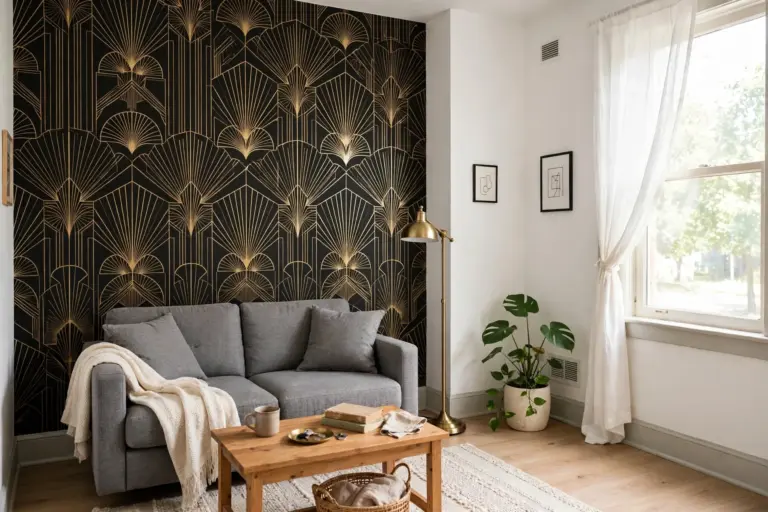
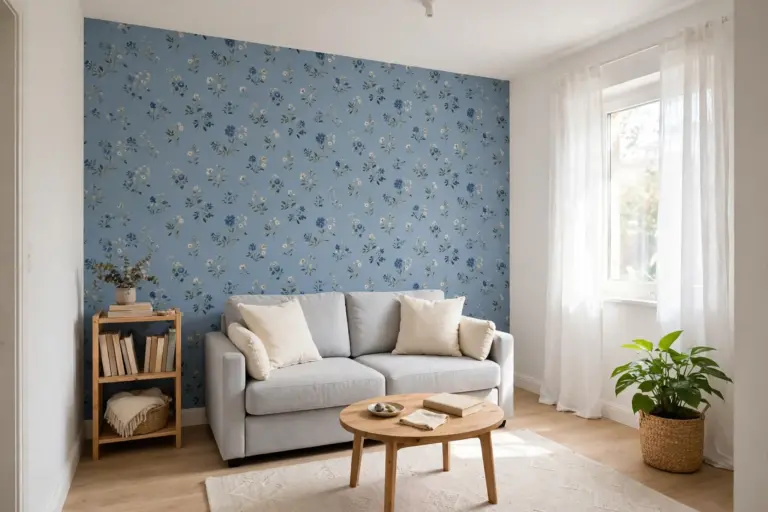
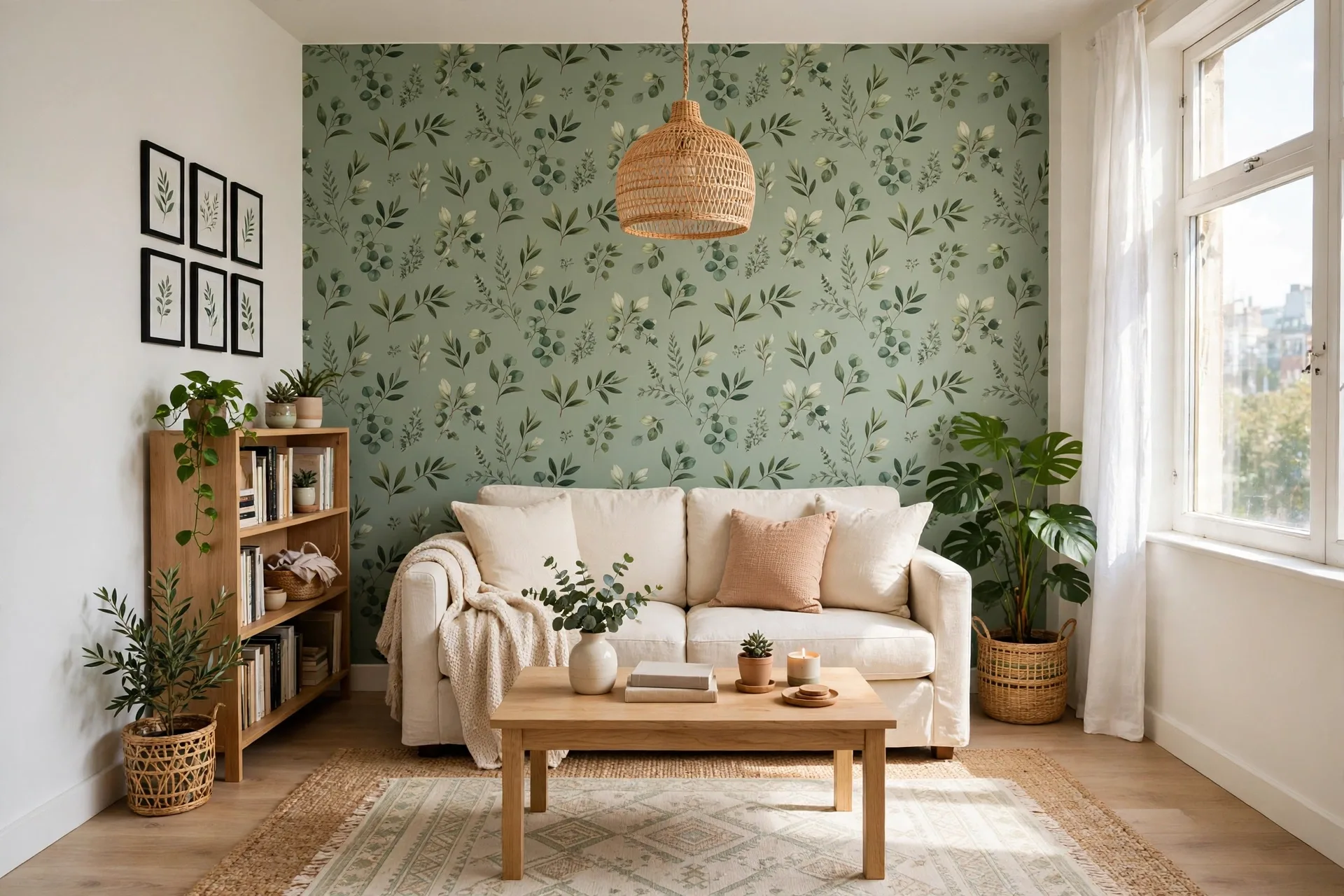
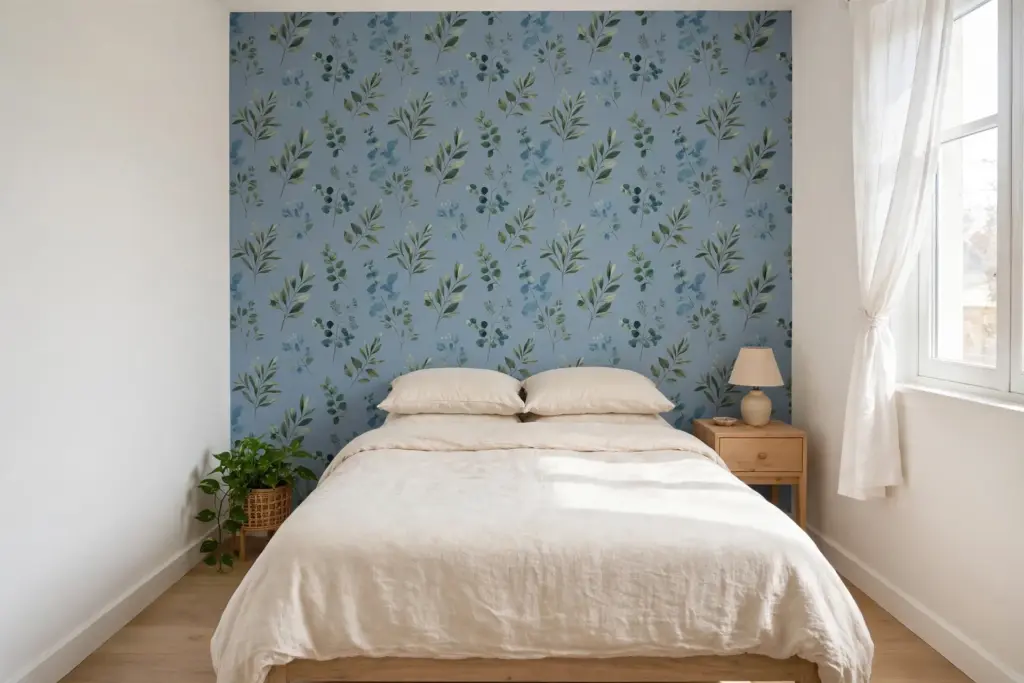
One accent wall of peel-and-stick wallpaper does more for a small living room than a dozen small decorations. Pick the wall the eye lands on first — behind the sofa or the bed — and keep the others plain so the pattern reads as a focal point. It needs smooth, fully cured paint; heavy texture and fresh paint are where adhesion and removal fail. Test a small piece in a hidden spot for a week first. To remove it, warm a corner with a hair dryer on low and pull slowly at a low angle. The peel-and-stick wallpaper for renters guide covers choosing a pattern, and Angi’s removal guide covers the heated removal method.
2. Removable Wall Decals and Fabric Panels
When a full wallpaper wall feels like too much, decals and fabric panels give the same effect in a smaller dose. Large-scale decals — arches, oversized leaves, a simple geometric repeat — work best above a bed or a desk. Fabric wall panels hang from removable hooks and soften echoey studio walls. Both peel off the same way they go on: lift a corner and pull slowly, adding a little heat if the adhesive resists.
3. A No-Nail Gallery Wall
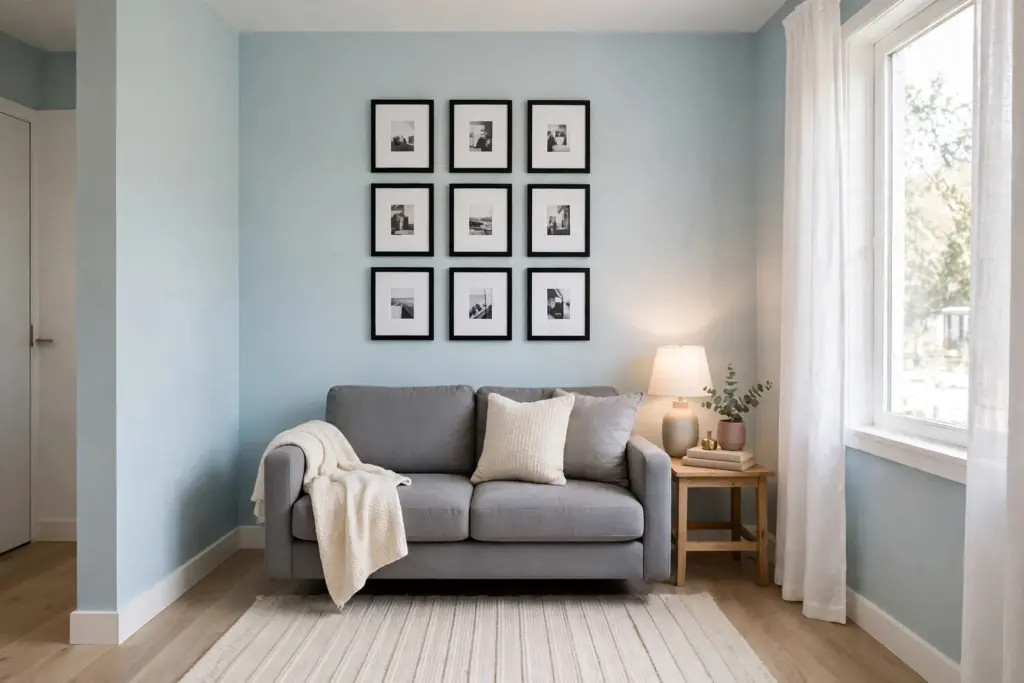
A gallery wall makes a rental feel personal fast — no nails needed. Removable adhesive strips rated for the frame’s weight hold most small and medium frames, and picture ledges on adhesive hooks let frames lean instead of hanging. Plan the layout on the floor first, then mark it with painter’s tape at eye level. Mix frame sizes but keep one element consistent — the same frame color or the same mat — so it reads as a collection, not clutter. At move-out, pull each strip straight down along the wall, never outward, so the paint stays put. More no-paint focal-point ideas are in the renter friendly accent wall ideas guide.
Kitchen Upgrades You Can Peel Off
Rental kitchens are the least loved room in most apartments — and the most rewarding to upgrade, because the fixes are all surface-level and removable.
4. A 3D Peel-and-Stick Backsplash
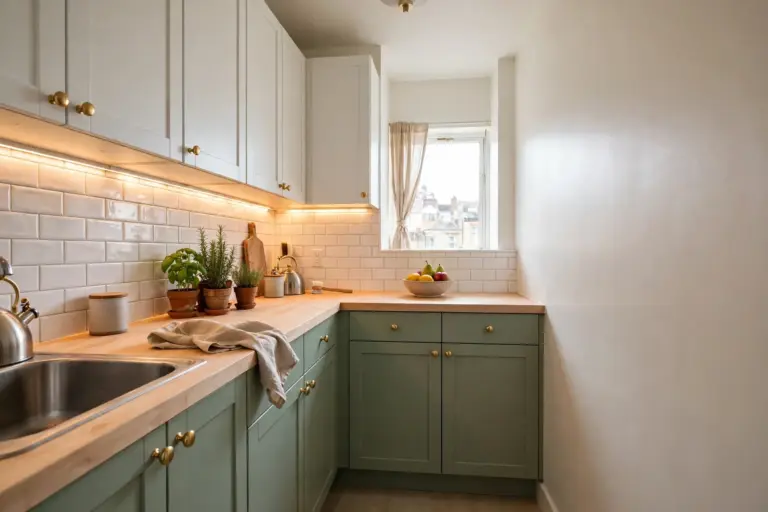
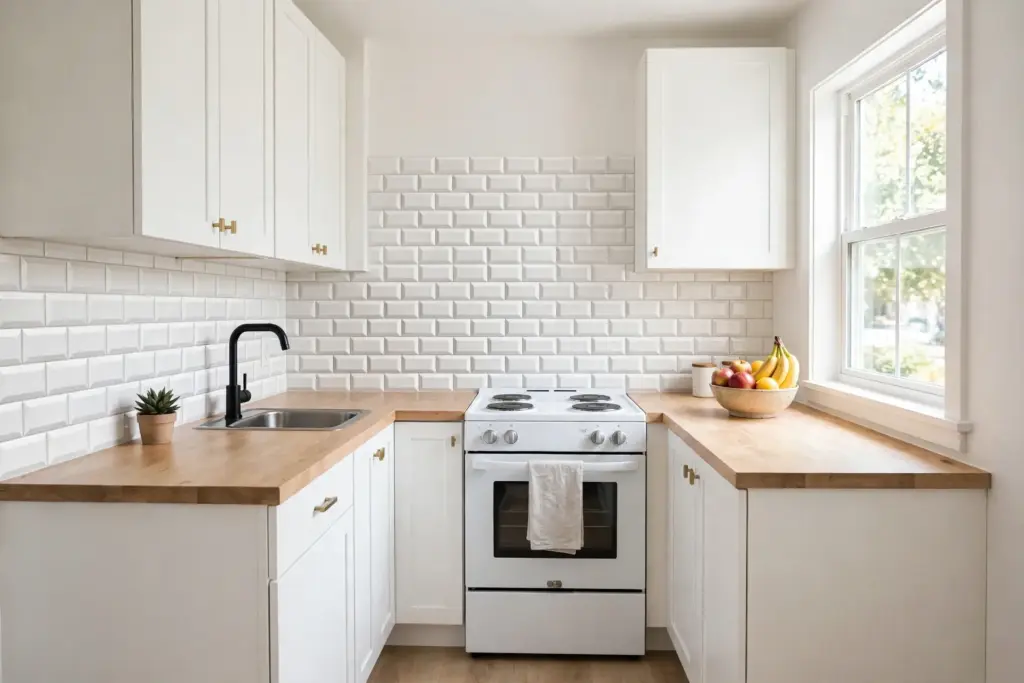
A backsplash is the single upgrade that makes a rental kitchen look renovated, and 3D peel-and-stick versions now have real depth — raised edges and shadow lines that read as real tile from a normal distance. Degrease the wall first, draw a level line, and keep standard vinyl away from a gas burner unless the product is heat-rated. End each run at a cabinet edge or a corner. Removal is the same heat-and-slow-peel method as wallpaper. The 3D peel and stick backsplash ideas guide has the 10 looks that work best in small kitchens.
5. Removable Contact Paper on Cabinets and Counters
Dated cabinets and scratched counters change completely under removable contact paper. A matte wood-look vinyl wrap hides orange oak and chipped laminate on doors, while marble-look contact paper gives counters a stone effect for the cost of a roll. Cut pieces slightly oversized and trim with a sharp blade after smoothing. Stick to flat, smooth surfaces — textured laminate and raw wood grab unevenly and peel early. On counters, keep the paper away from direct heat and standing water, and expect to replace the worn section near the sink sooner than the rest. Peel it off slowly with heat at move-out.
6. Swap the Cabinet Hardware — and Keep the Originals
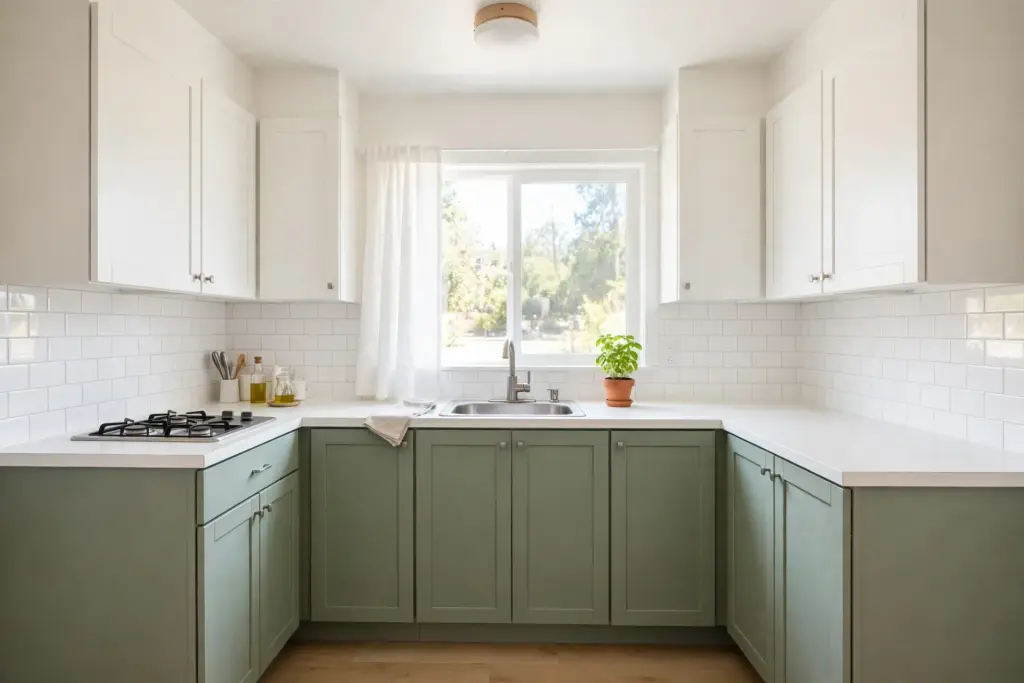
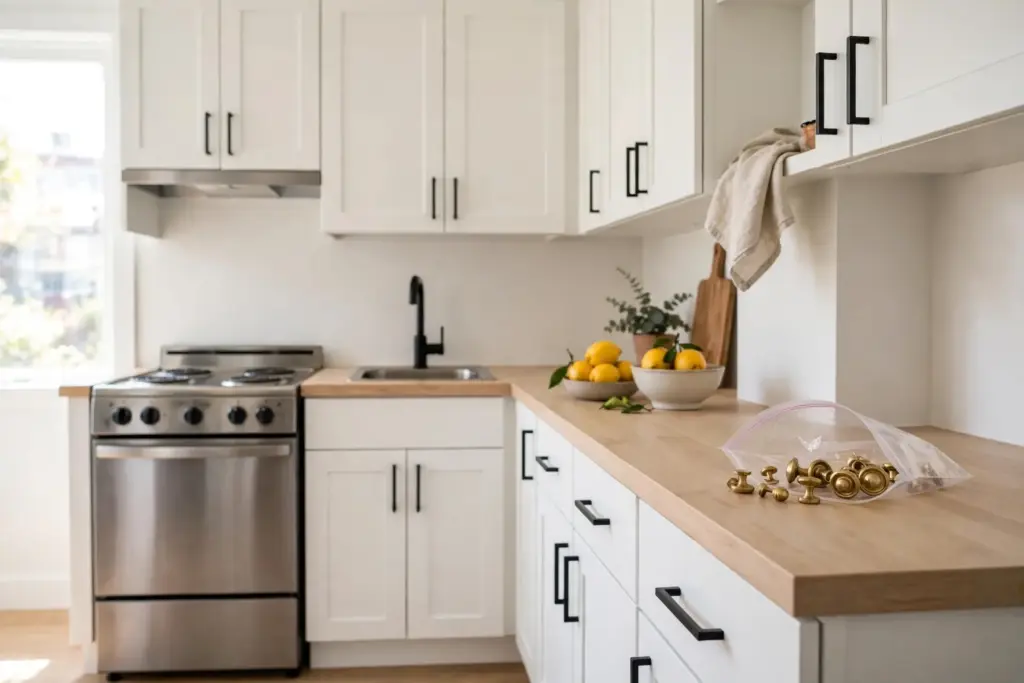
Swapping cabinet knobs and pulls is a ten-minute upgrade: dated brass becomes matte black or brushed brass, and the whole kitchen reads newer. Reuse the existing screw holes exactly: measure the hole spacing before ordering so no new holes are drilled. Bag the originals with their screws and label the bag by room. At move-out, the swap reverses in the same ten minutes — a good first upgrade when a landlord is nervous, since nothing touches a wall or a permanent surface.
Light, Privacy, and Comfort
Lighting and privacy are the upgrades renters feel every day, and both can change without touching a wire.
7. Swap Light Fixtures — and Store the Originals
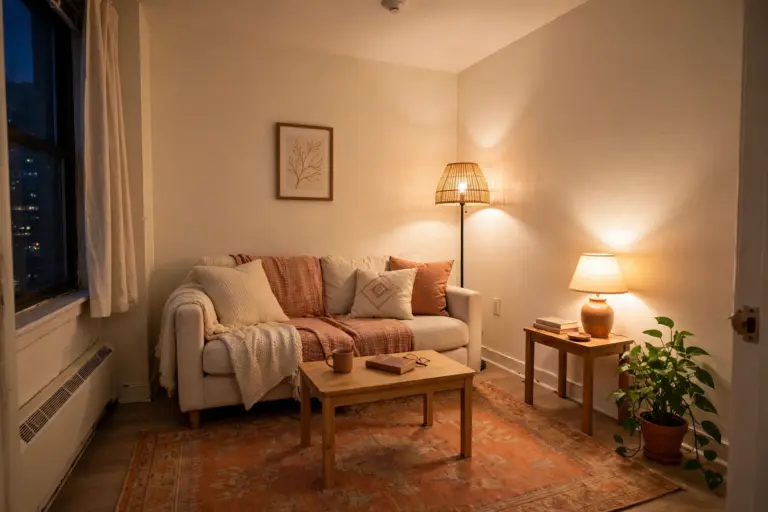
A builder-grade boob light makes a nice room feel unfinished, and swapping it is one of the highest-impact renter friendly upgrades in this guide — with one condition: the original goes into a labeled box the same day and the swap reverses before move-out. Turn off the breaker, not just the wall switch, and photograph the wiring before disconnecting anything. If the lease forbids swaps, or the wiring looks unfamiliar, use plug-in alternatives instead: a floor lamp, a plug-in sconce on a removable hook, or battery puck lights inside dark cabinets. No fixture is worth an electrical risk or a lease violation.
8. Tension-Rod Curtains and Removable Window Film
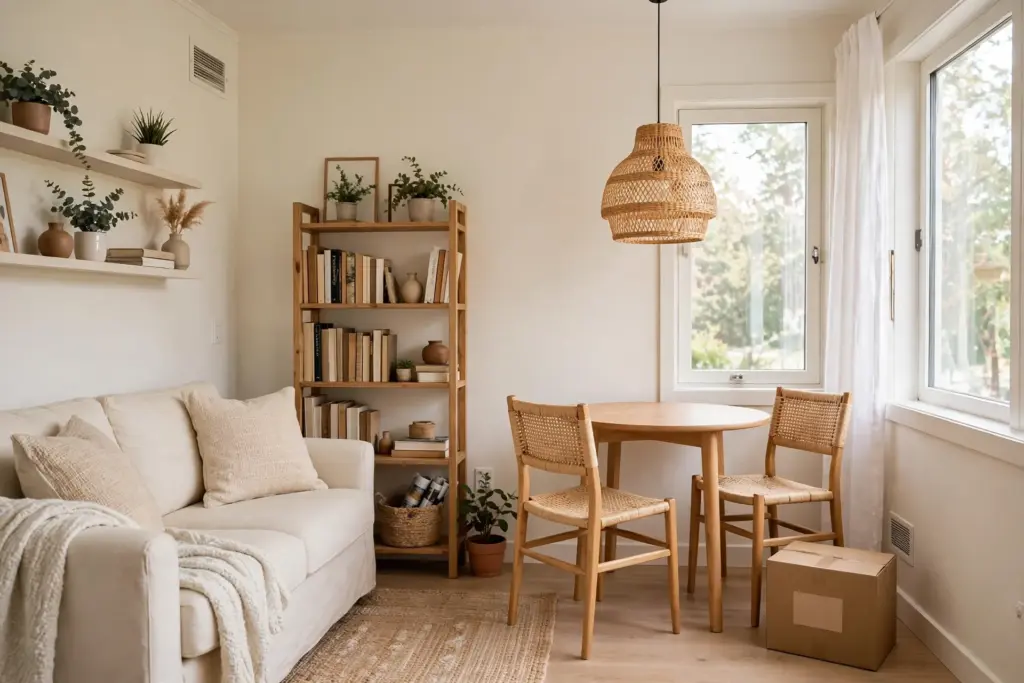
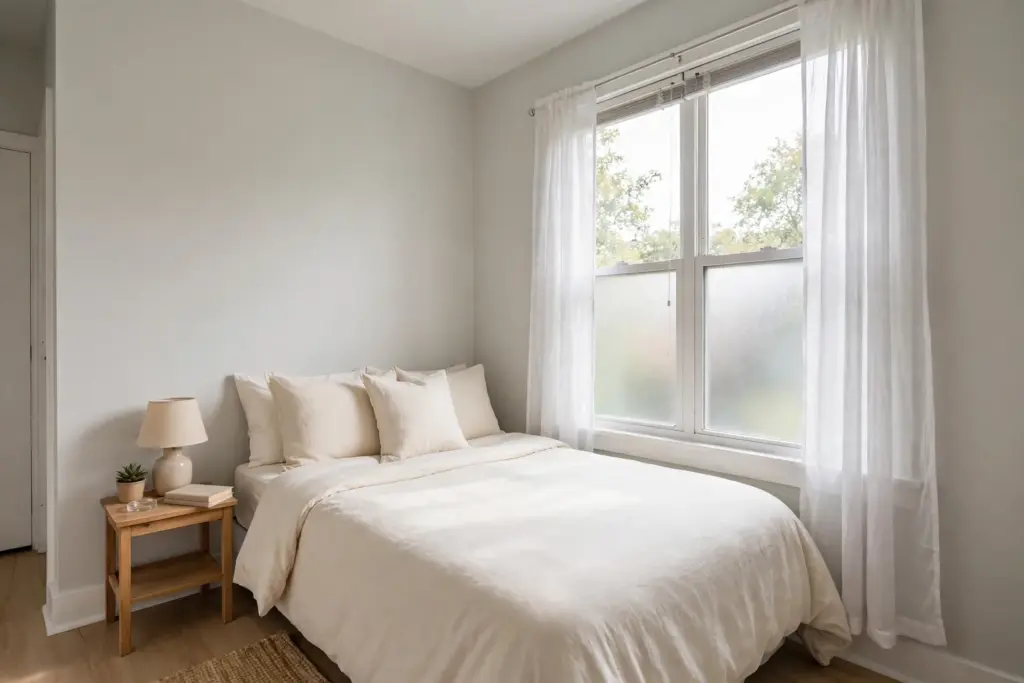
Bare rental windows need privacy and softness — both arrive without a drill. Spring tension rods wedge inside the window frame and hold lightweight curtains, while adhesive hooks work where a rod cannot fit. Removable window film — frosted, stained-glass look, or light-filtering — clings to glass with water, peels off cleanly, and softens harsh afternoon sun. Layer the two: film for daytime privacy, curtains for evenings. Measure the frame before buying rods, and keep the fabric light enough that the rod never bows.
9. Plug-In Smart Home Devices
Smart home upgrades sound permanent, but the renter-friendly versions plug in and move out with the tenant. Smart plugs turn any lamp voice-controlled, smart bulbs screw into existing sockets, a leak sensor sits under the sink, and a retrofit lock fits over the deadbolt. Nothing needs wiring, and everything packs into a box for moving day. Check the lease before adding a retrofit lock, since some buildings have rules about lock hardware. The renter friendly smart home ideas guide covers the seven plug-in devices that work best in small rentals.
Floors, Storage, and Layout
The last three upgrades change how the apartment functions, and all three are furniture-scale: they arrive in a box and leave in a box.
10. Peel-and-Stick Floor Tiles and Layered Rugs
Stained carpet and scuffed vinyl disappear under two removable layers. Peel-and-stick floor tiles lay over a clean, smooth hard floor and lift off with heat at move-out — never lay them over carpet, and check the lease first, since some landlords treat them as a flooring change. The safer layer is rugs: one large rug covering most of the floor, layered with a smaller patterned rug on top, hides almost any floor and adds warmth. A rug pad keeps both layers from sliding. Either way, photograph the original floor before covering it.
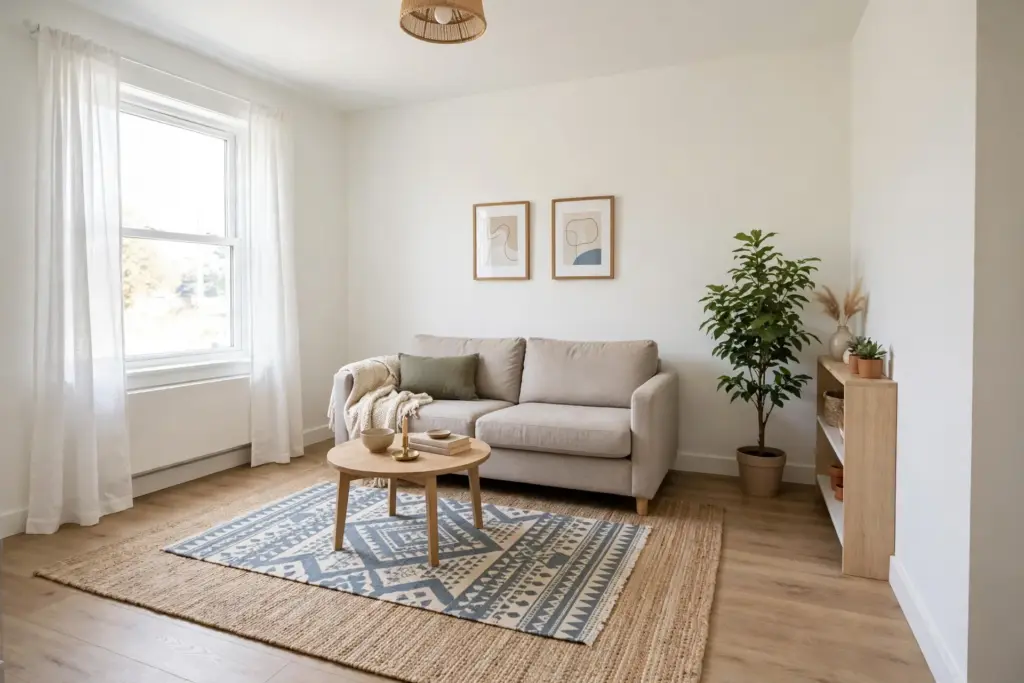
11. Freestanding Shelves and Leaning Storage
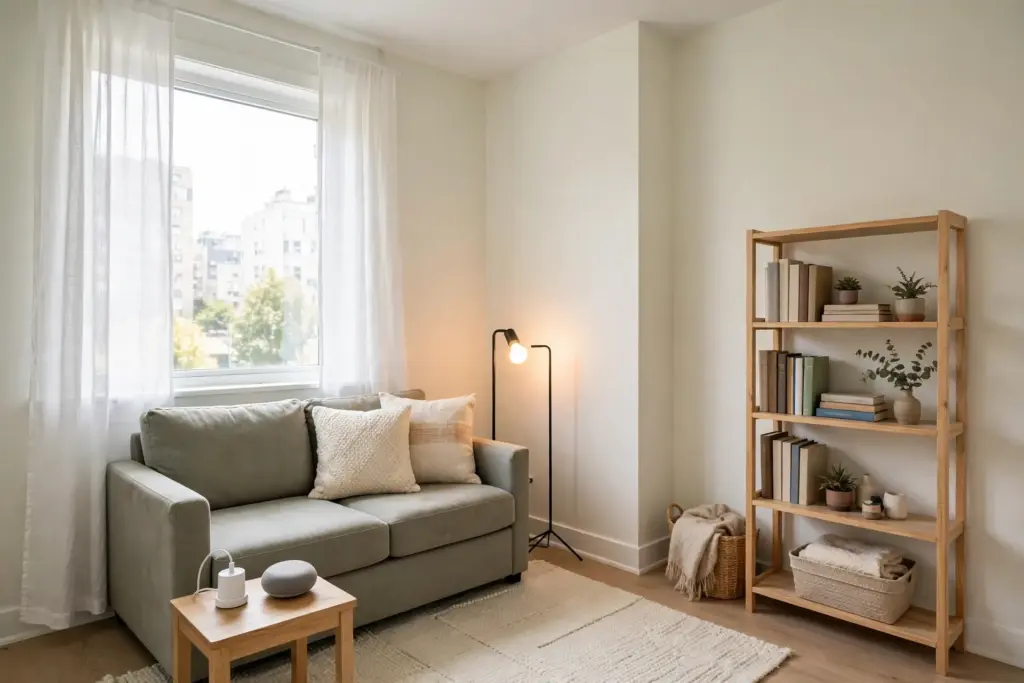
When wall storage needs screws, freestanding storage is the renter’s answer. A leaning ladder shelf, a narrow bookcase, or a freestanding garment rack adds built-in-style storage with zero holes — and it moves to the next apartment. Anchor tall pieces with removable furniture straps if the household includes small children, and keep the heaviest items on the lowest shelves. In the kitchen, a freestanding island cart adds counter space and storage a wall-mounted cabinet never could in a rental. Size pieces for a small room: a shelf deeper than about 12 inches eats floor space the apartment cannot spare.
12. Over-Door Organizers and Freestanding Dividers
The last upgrade uses the doors and open floor already there. Over-door hooks hang from the top of any interior door — coats in the entryway, shoes on a pantry door, towels in the bathroom — with no screws and no marks. In a studio, a freestanding divider, a tall bookshelf, or a curtain on a tension rod splits one room into sleeping and living zones without a single fastener. Both reverse in seconds: lift the organizer off the door and fold the divider flat.
The Move-Out Reversal Checklist
Reversing 12 upgrades is really one method repeated: heat, slow peel, wipe, restore. Work room by room a few days before the final walkthrough. Peel wallpaper, decals, tiles, and contact paper with a hair dryer on low, pulling slowly and adding heat wherever the adhesive resists. Pull adhesive strips straight down. Swap the original fixtures and hardware back in, using the move-in photos as the reference. Take the freestanding pieces, rugs, and plug-in devices with you, wipe every surface with warm soapy water, and photograph everything again.
Frequently Asked Questions (FAQ)
Do renter friendly upgrades need landlord permission?
It depends on the lease. Fully removable cosmetic changes like peel-and-stick wallpaper, adhesive hooks, and freestanding furniture usually need no permission, but anything involving wiring, fixtures, or flooring should be checked first, and written permission is safest when the wording is unclear. When in doubt, ask before installing.
Will peel and stick wallpaper damage the walls?
Not when it is applied and removed correctly. It is designed to lift off cleanly from smooth, fully cured paint; the damage happens on fresh paint, textured walls, or when panels are ripped off quickly. Test a hidden spot for a week first, then remove it slowly with a little heat — see CostaCover’s peel and stick wallpaper questions for the removal method in detail.
What counts as damage versus normal wear and tear?
Normal wear and tear is the gradual deterioration of everyday living — faded paint, minor scuffs, small nail holes — and landlords generally cannot deduct for it. Damage is different: large holes, unapproved paint, broken fixtures, or stains beyond ordinary use. Fully removed reversible upgrades stay on the wear-and-tear side of that line.
Can I take my upgrades to the next apartment?
Most of them, yes. Freestanding shelves, rugs, plug-in devices, tension-rod curtains, and swapped hardware and fixtures all move with the tenant. Peel-and-stick wallpaper, decals, backsplash tiles, and contact paper are generally single-use, since the adhesive weakens once removed — budget for fresh material in the next place.
Keep Reading
- Peel-and-Stick Wallpaper for Renters — choose, install, and remove it without damage.
- Renter Friendly Accent Wall Ideas — 12 no-paint ways to give one wall a focal point.
- Renter Friendly Smart Home Ideas — 7 plug-in devices, no wiring, no drilling.