12 Chinoiserie Peel and Stick Wallpaper Ideas for Renters
Chinoiserie peel and stick wallpaper brings the oldest trick in elegant decorating — hand-painted-looking birds, blossoms, and branches — into a rental, with no paste, no paint, and no risk to the deposit when chosen and removed with care. Below are 12 ideas, from the lightest commitment to the fullest transformation, plus the safety checks, install steps, and move-out restore plan.
Before You Start: The Lease, the Pattern, and the Wall
Start with the lease, not the shopping list. Most leases allow removable decoration but draw the line at anything that alters the wall, so read the decoration clause and ask the landlord in writing before any adhesive goes up — describe the material and its removal, and keep the reply with the rental documents. Then check the wall: peel-and-stick paper grips best on smooth, sound, painted drywall, so patch-test every product on a hidden spot for a few days, and photograph every wall before starting. Chinoiserie adds one more check: order a sample first and hold it against the wall in daylight, so the birds and branches read clearly at the room’s real viewing distance. For the decorating principles behind the whole project, see these renter-friendly apartment decorating ideas.
12 Chinoiserie Peel and Stick Wallpaper Ideas
Work through these in order of commitment, from a single framed panel to a full room. Every idea below uses removable paper — nothing here needs paste, paint, or a hole in the wall — and each one is chosen to suit a small rental, where one strong pattern goes further than four busy walls.
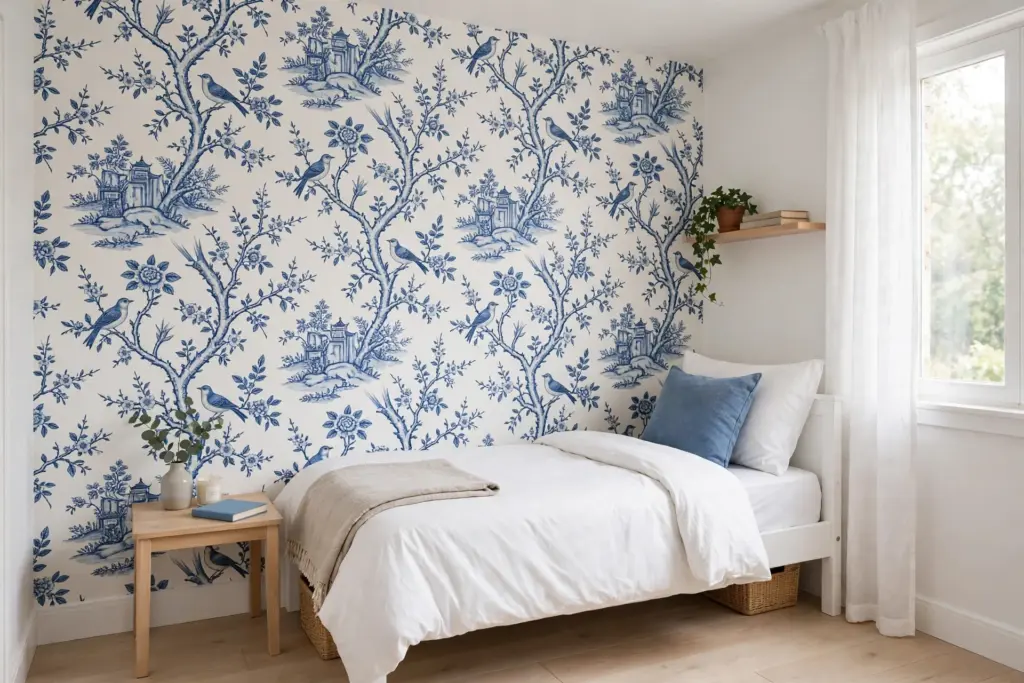
1. Classic Blue-and-White Porcelain Look
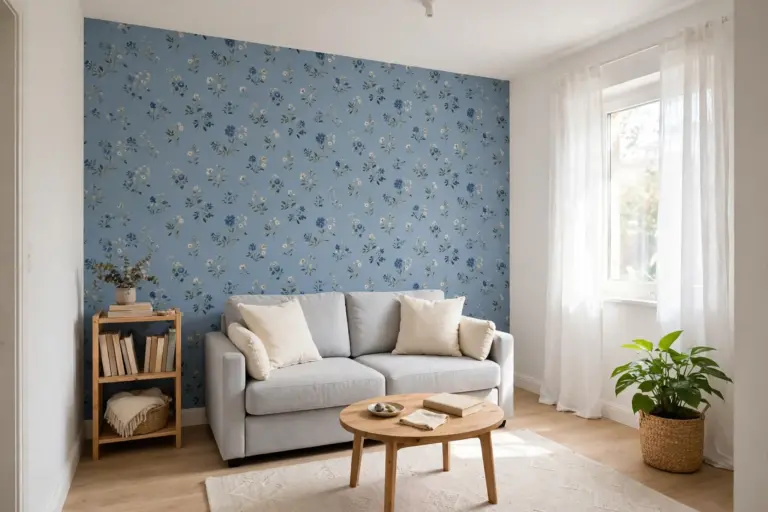
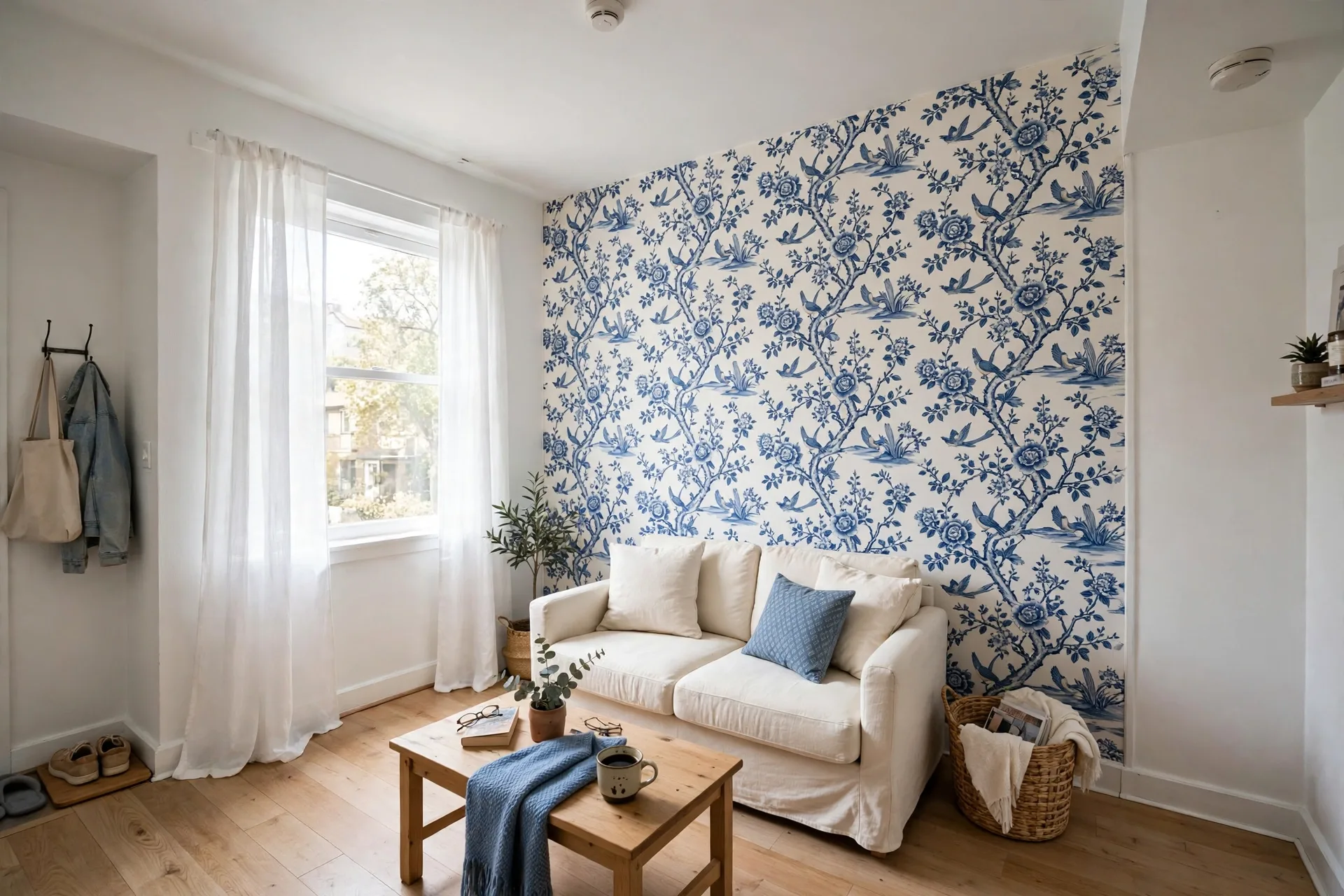
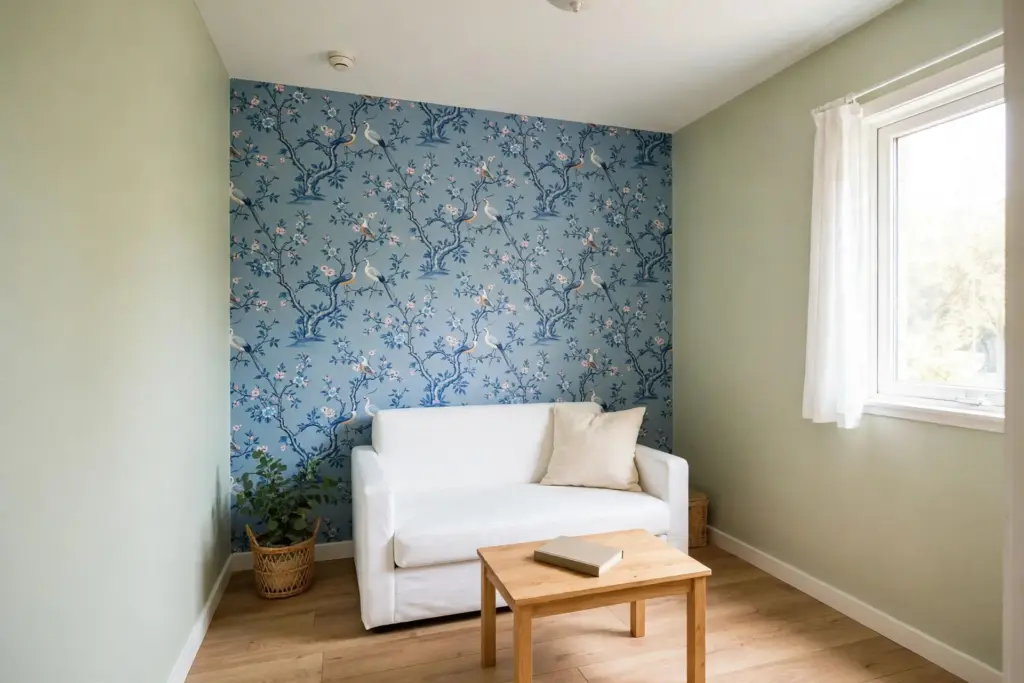
The most famous chinoiserie is blue and white: delicate branches and birds on a white or pale blue ground, the same palette as porcelain. It suits almost any rental because it reads as fresh rather than dark, and it pairs with plain white bedding and light wood. Keep the rest of the room quiet — one blue cushion, one white lamp — and let the wall do the talking.
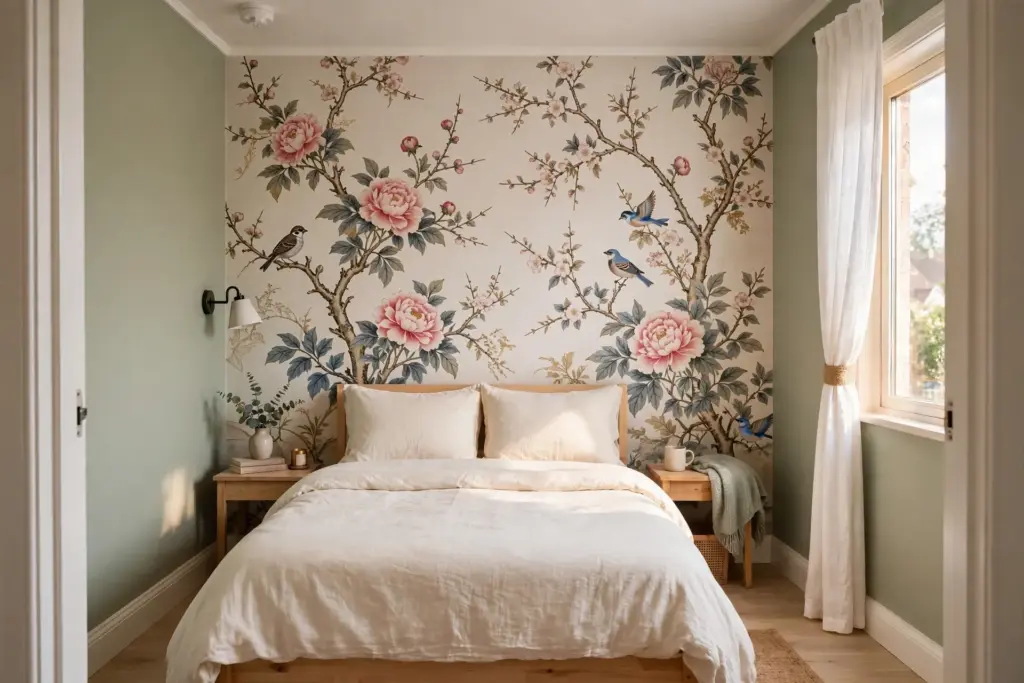
2. One Mural Accent Wall Behind the Bed
A single peel-and-stick mural behind the bed gives the biggest impact for the least material: one wall with blossoming branches and birds that turns the bed into the centrepiece. It costs less than papering a whole room and comes down in one session at move-out. Measure the wall first and order the mural to its height, so the scene is not cut short or wrapped awkwardly around a corner. This cream chinoiserie mural shows how a single panel scene is sized to the wall.
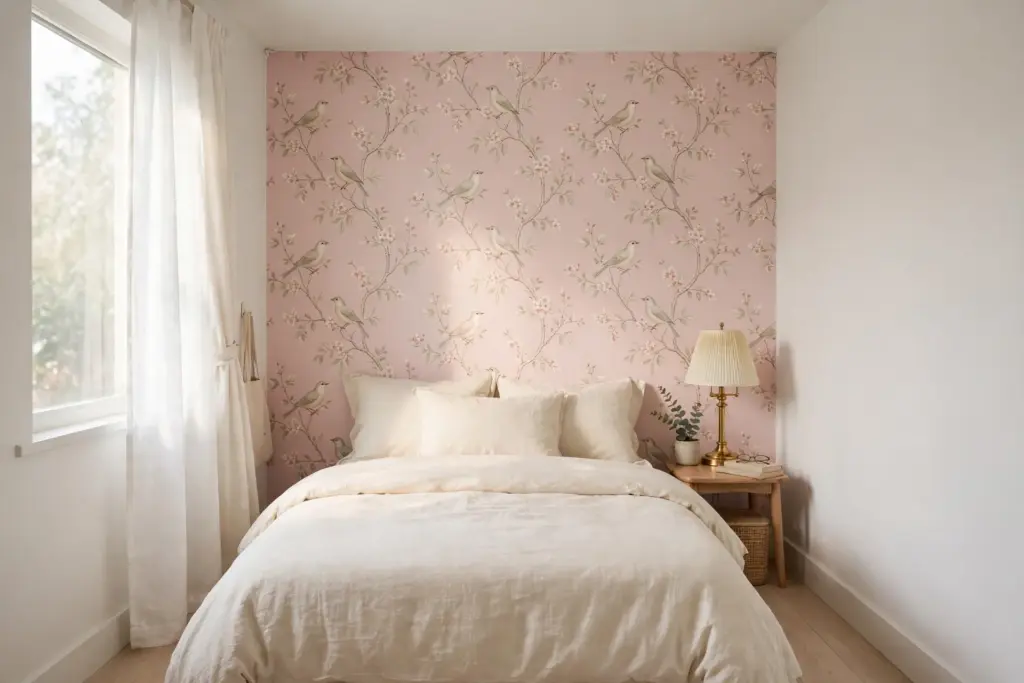
3. Soft Blush Chinoiserie for a Bedroom
Blush chinoiserie — soft pink branches and pale birds on a warm white ground — makes a small bedroom feel gentle without feeling childish. It works best behind the bed or on the wall the bed faces, paired with cream bedding and one brass or light wood accent. Keep the pattern scale modest: oversized blooms can overwhelm a wall under eight feet wide.
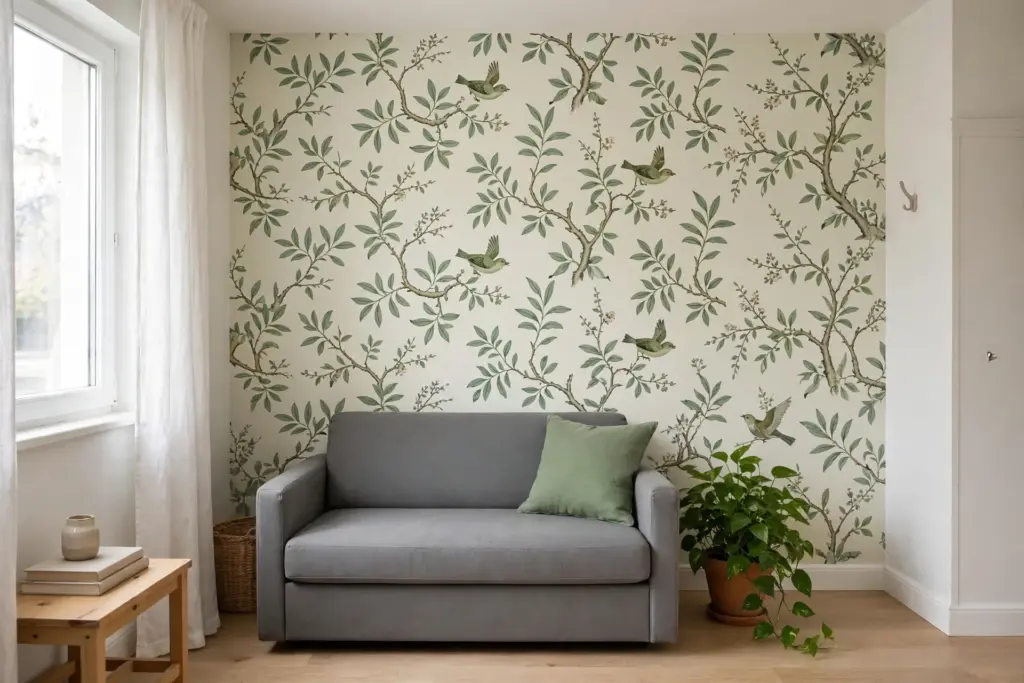
4. Green Botanical Chinoiserie in the Living Room
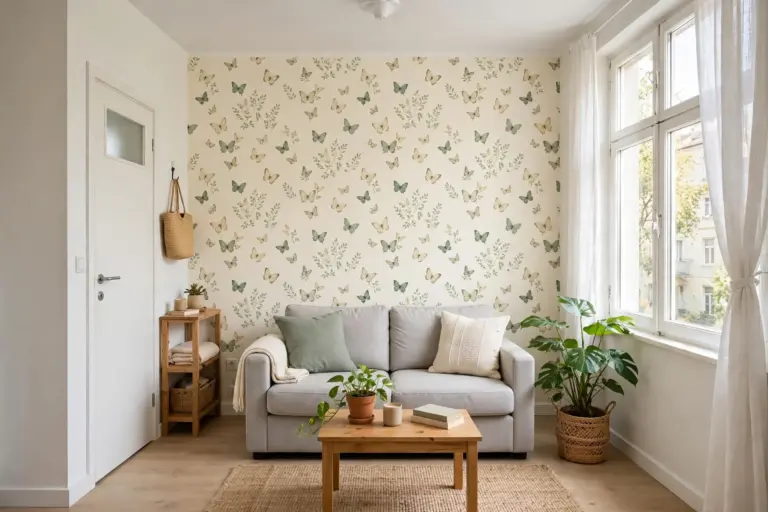
Green chinoiserie — sage and emerald leaves with birds on a pale ground — brings the calm of a garden indoors, and it suits a living room because the room is used in daylight. Use it behind the sofa, keep the sofa plain, and repeat one green from the paper in a cushion or a plant. Choose a pale ground with green branches rather than a deep green background, which can darken a north-facing room.
5. Chinoiserie in the Dining Nook
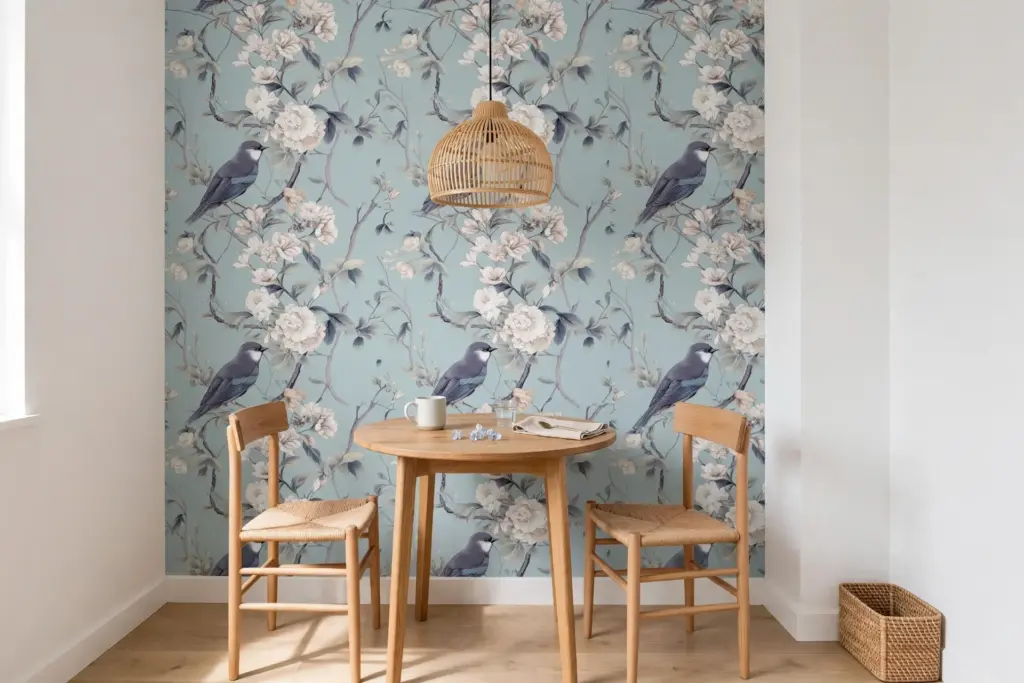
A dining nook is the ideal chinoiserie room: small, used for short happy meals, and seen from the kitchen, so one patterned wall changes the whole apartment’s mood. Paper the wall behind the table, hang one simple pendant above it, and keep the table and chairs plain so the pattern stays the star. A wipeable finish matters here — steam and the odd splash reach further than expected in a small space.
6. A Chinoiserie Powder Room Moment
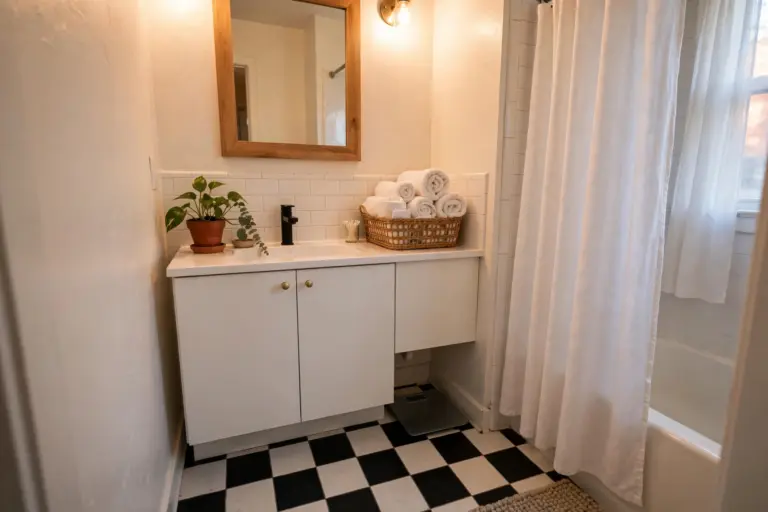
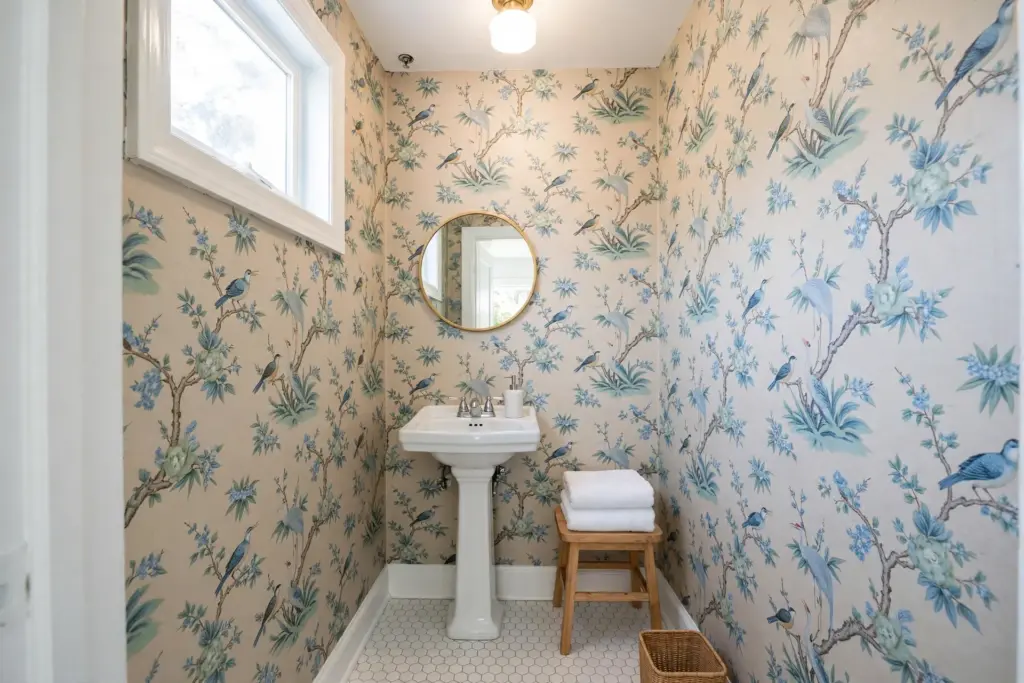
Small bathrooms forgive bold pattern better than any other room: the space is tiny, the visit is short, and a full wrap feels like a jewel box rather than a commitment. Choose a waterproof peel-and-stick made for humid rooms, keep it off the shower wall, and pair it with a plain mirror and white towels. Check the maker’s humidity guidance before buying, since steam loosens weak adhesive fast. For the full guide to choosing and removing the material, see our own peel-and-stick wallpaper guide for renters.
7. Peacock Panels as Framed Art
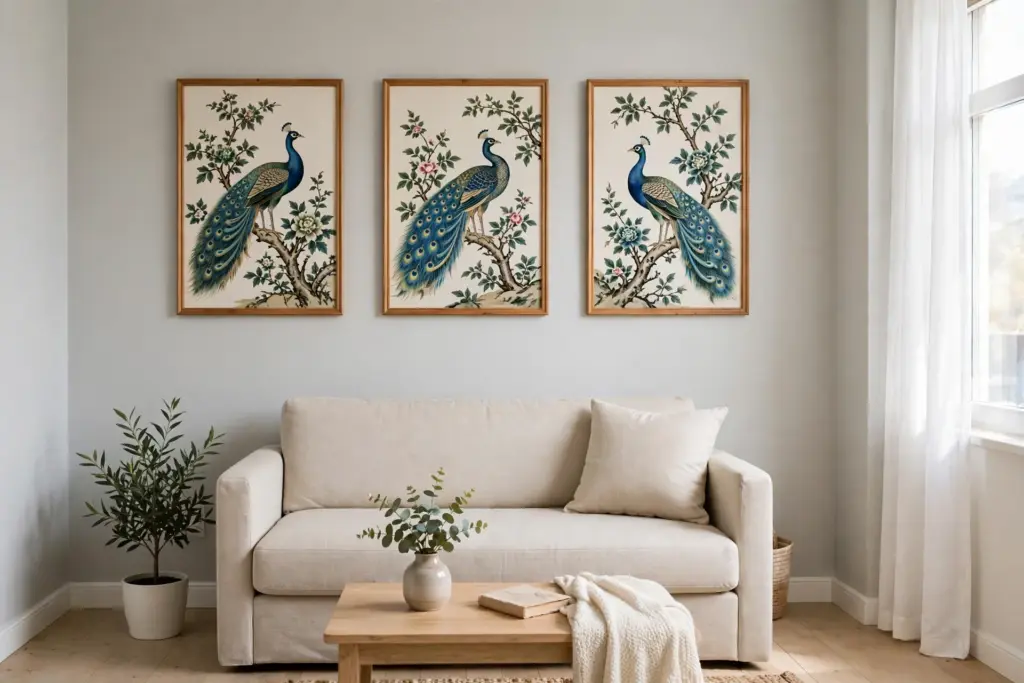
Peacocks are the most dramatic chinoiserie motif, and the lowest-risk way to use them is as framed panels: two or three panels in simple frames or on thin boards, hung with removable hooks. The peacocks get the attention they deserve, the wall stays untouched, and the whole piece moves with you to the next apartment. This is also the best test — live with the panels for a month before committing to a full wall.
8. Chinoiserie on the Entryway Wall
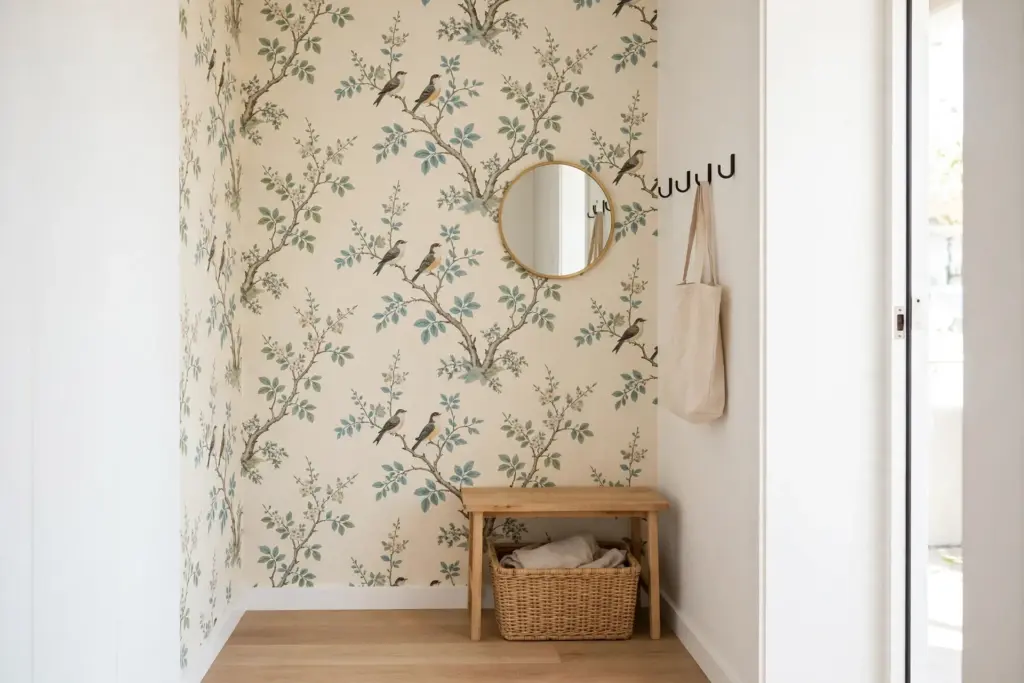
The first wall a guest sees sets the tone for the whole apartment, and an entryway is the cheapest place to make that statement — usually one short wall. A chinoiserie paper there says the home is considered, and it survives the traffic because coats and bags hang on hooks. Keep the pattern light and add one small mirror to bounce the light. For more pattern inspiration in small rooms, see our boho peel-and-stick wallpaper ideas.
9. Mix Chinoiserie With Plain Painted Walls
Chinoiserie works hardest when it has plain walls to play against: one patterned wall and three painted walls in a colour pulled from the paper — a soft white, a pale sage, or the exact cream of the paper’s ground. The contrast makes the pattern look intentional rather than overwhelming, and the painted walls cost nothing extra in a rental. Match the paint to the paper’s ground with a sample card, not from memory.
10. Chinoiserie on Furniture and Alcoves
The lowest-risk idea here touches the wall not at all: stick peel-and-stick paper to the back panel of a bookshelf, the inside of a wardrobe door, or the front of a drawer unit. It adds the birds and branches exactly where the eye lands, uses offcuts from the main project, and needs no landlord permission. An alcove works the same way — paper just the back wall of a niche or a window nook.
11. Small Doses: Shelves, Doors, and Cabinets
When a full wall feels like too much, take the pattern to surfaces the room already has: the back of open kitchen shelves, a pantry door, or the side of a cabinet. A strip behind everyday dishes turns a plain shelf into a display, and a papered door becomes the room’s art. These doses cost almost nothing, install in under an hour, and peel off in minutes.
12. Light vs. Moody: Pick the Right Ground
Chinoiserie comes on two grounds — light and moody — and the room decides which one works. Light grounds (white, cream, pale blue) suit small or north-facing rooms, since they reflect what little light arrives. Moody grounds (deep teal, charcoal, ink blue) suit bright rooms with big windows, where dark paper adds depth instead of gloom. When in doubt, order both samples and live with them for a week before buying. Our art deco peel-and-stick wallpaper ideas use the same light-versus-moody test for bold patterns.
How to Install Without Damage
Every idea above follows the same install order. Clean the wall with a damp cloth and let it dry completely — dust and grease stop adhesive from bonding. Patch-test the adhesive on a hidden spot for a few days, and order a sample first so you can see the true colour in your room’s light. Measure twice, mark a plumb line for the first strip, and work from the top down, smoothing out air bubbles as you go. Chinoiserie needs one extra step: line up the birds and branches across seams before sticking, since a branch cut in half at a seam breaks the scene. Trim around outlets with a sharp blade and keep seams tight. This peel-and-stick chinoiserie mural shows the panel sizing and the surfaces the paper suits best.
What It Costs: Three Budget Tiers
Chinoiserie paper scales to any budget, and the tiers below are planning guides — costs vary with wall size, material choice, and how many walls the project covers. The light tier covers framed panels, a furniture-back project, or one small alcove: the cheapest way to test a pattern before committing. The middle tier adds a single accent wall or a mural behind the bed, the change guests notice most. The full tier covers a whole room in a quality washable paper, plus a spare roll for repairs. Measure before you shop, and buy the spare roll with the first order — dye lots change, and a later roll may not match.
Move-Out Day: The Restore Plan
Restoring the wall is the install in reverse, and the move-in photos make it a single afternoon’s work. Peel each panel off slowly with gentle heat, working from one corner so the adhesive lifts rather than tears, and follow the product maker’s removal steps — never yank a strip off in one pull, since that is how paint comes with it. Wipe any residue with warm soapy water and check the wall against the move-in photos.
Frequently Asked Questions (FAQ)
Is chinoiserie peel and stick wallpaper renter-friendly?
Yes, when the material is chosen with care: peel-and-stick chinoiserie is made to remove cleanly from smooth, sound, painted walls when the maker’s removal steps are followed, usually with gentle heat. Patch-test a hidden spot first, avoid damaged or peeling paint, and get the landlord’s written permission before starting.
Does chinoiserie wallpaper make a small room look smaller?
Not when it is used on one wall: a single chinoiserie accent wall adds depth and interest, while three plain walls keep the room feeling open. Choose a light ground for dark rooms and keep the pattern scale modest on walls under eight feet wide.
Can I use chinoiserie peel and stick wallpaper in a bathroom?
Yes, with the right material: choose a waterproof or water-resistant peel-and-stick made for humid rooms and keep it off the shower wall itself. Steam loosens weak adhesive, so a powder room or a well-ventilated bathroom works better than a steamy shower room.
How do I match the pattern across seams?
Line up the birds and branches before sticking each strip: hold the next strip beside the last one and shift it until the branches continue naturally across the seam. Mark a plumb line for the first strip and work from the top down.
How do I remove it at move-out?
Peel each panel slowly with gentle heat, working from one corner so the adhesive lifts rather than tears, and follow the maker’s removal steps. Wipe any residue with warm soapy water, compare the wall with your move-in photos, and touch up scuffs only if the lease requires it.