Butterfly Peel and Stick Wallpaper Ideas
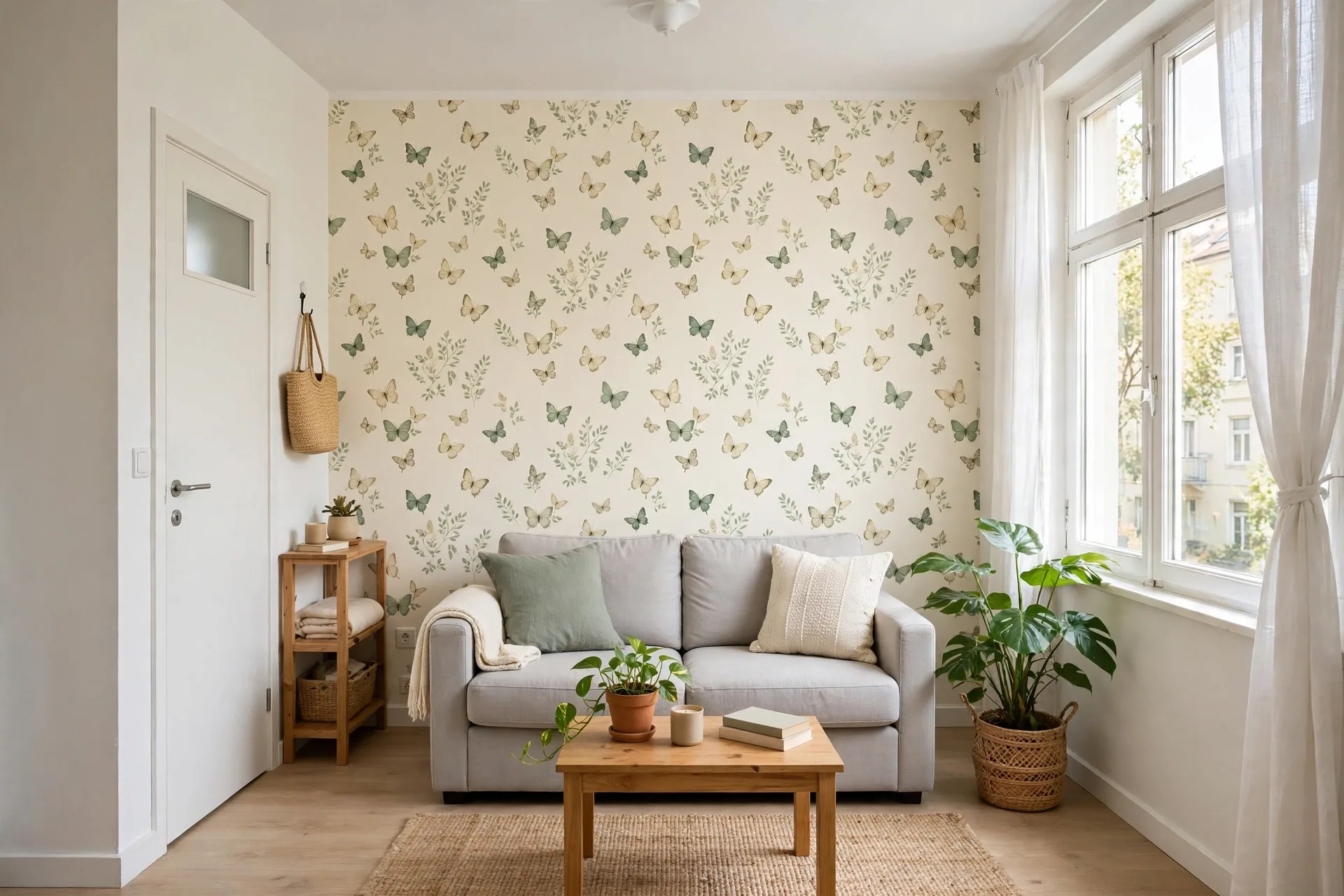
Butterfly peel and stick wallpaper turns a plain rental wall into a garden that never needs watering. It is the rare pattern that works in a grown-up bedroom, a tiny powder room, a home office, or an entryway — and because it peels off without paste, it suits renters who need their deposit back at move-out.
This guide rounds up 12 ideas for every room and every style, from soft watercolor wings in cream and gold to bold monarch prints and dark, moody botanicals. Along the way are renter checks to run before buying, help choosing scale and color, and a step-by-step for hanging and removing the paper without damage. Pair it with our guide to renter-friendly apartment decorating ideas.
Before You Buy: 4 Renter Checks That Protect Your Deposit
Run through these four checks before ordering a single roll — each takes minutes and can save a deposit deduction later.
1. Read the lease and ask in writing. Some leases ban adhesive wall coverings outright; others allow them only with written permission. A short email to your landlord costs nothing, while an unauthorized wall treatment can cost a repaint. Apartment Therapy asked landlords what they think of peel-and-stick wallpaper, and the consistent advice was to get permission first and keep it in writing.
2. Test the paint finish. Peel-and-stick adhesive grips best on smooth, satin or semi-gloss paint. Matte and flat finishes are the risky ones: the adhesive can lift paint on removal. Press a small test piece in a hidden corner, leave it a week, then peel it off slowly — if paint comes with it, choose a different wall or skip the paper. Apartment Therapy’s pro tips warn that matte surfaces are where most removal damage happens.
3. Measure the wall and order by square foot. Peel-and-stick rolls are often narrower and shorter than traditional rolls, so compare price by square foot rather than by roll. Measure height and width, add 2 to 3 inches per strip for trimming, and order one extra roll for pattern matching and repairs.
4. Plan removal day now. Before you hang anything, know how it comes down: warm the paper with a hairdryer, peel slowly at a low angle, and wipe residue with a warm, damp cloth. If removal sounds like a weekend project you would dread, paper one accent wall instead of a whole room.
12 Butterfly Peel and Stick Wallpaper Ideas for Every Room
Start with the room you spend the most time in and paper one wall first. A single accent wall gives the full effect for a fraction of the cost — and it is the easiest to remove later.
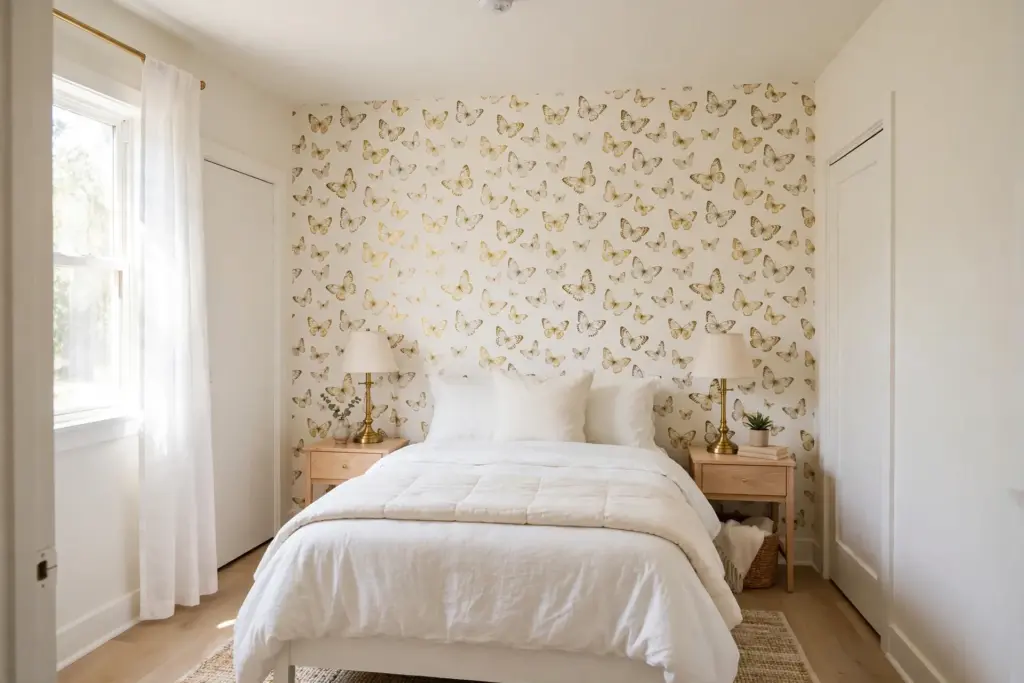
1. Cream and Gold Classic Behind the Bed
A cream ground with gold butterflies is the safest first choice: warm, calm, and easy to live with. Hang it behind the bed so it frames the headboard like art, keep bedding white or ivory, and add brass lamps to pick up the gold in the paper.
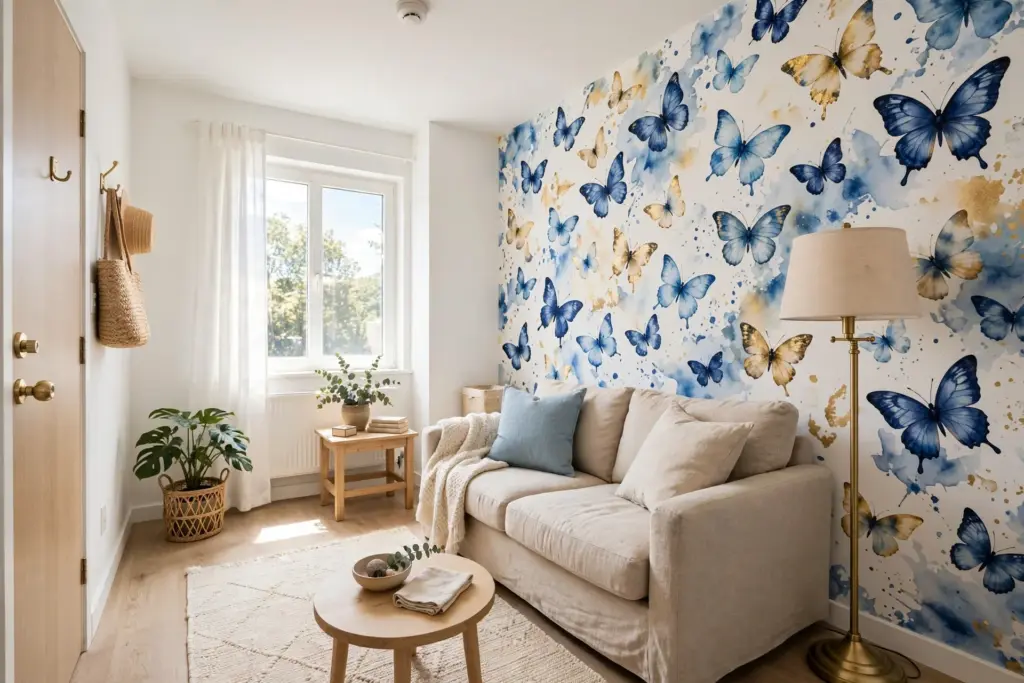
2. Blue-and-Gold Watercolor in the Living Room
Watercolor butterflies in navy, sky blue, and gold bring movement to a living room without shouting. Paper the sofa wall and keep the rest quiet: a linen sofa, a light rug, one brass floor lamp. For a similar hand-painted feel, see our chinoiserie wallpaper ideas.
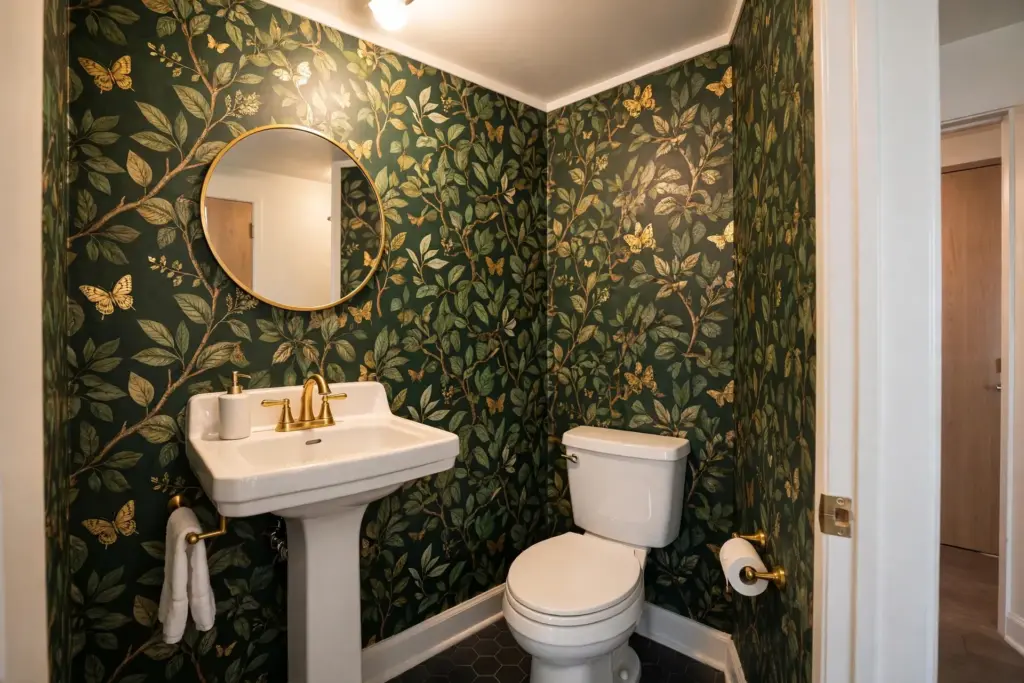
3. Dark and Moody Botanical in the Powder Room
Small rooms take dark paper better than big ones, and a powder room is the perfect test. A deep green or charcoal ground with butterflies and leaves turns a plain half-bath into a jewel box, and white fixtures pop against the dark ground. Two or three rolls usually cover it — the cheapest way to try a bold colorway.
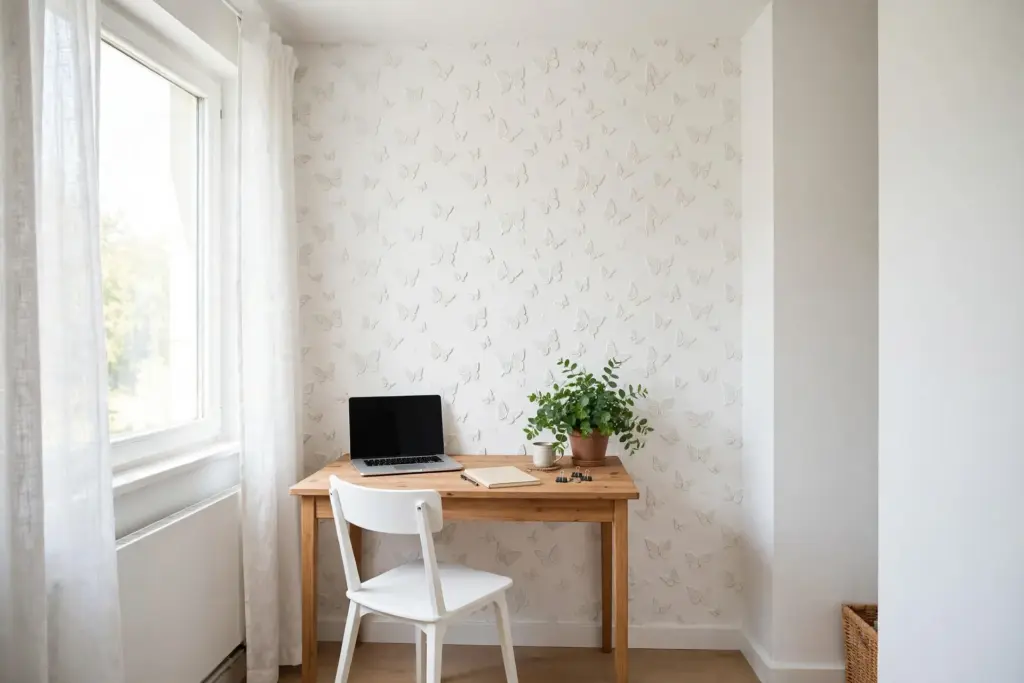
4. White-on-White Texture in the Home Office
Not every butterfly print needs color. A tone-on-tone white pattern adds texture behind a desk without pulling the eye away from work. It reads as a subtle relief pattern in daylight and nearly disappears in the evening — exactly right for a room where focus matters.
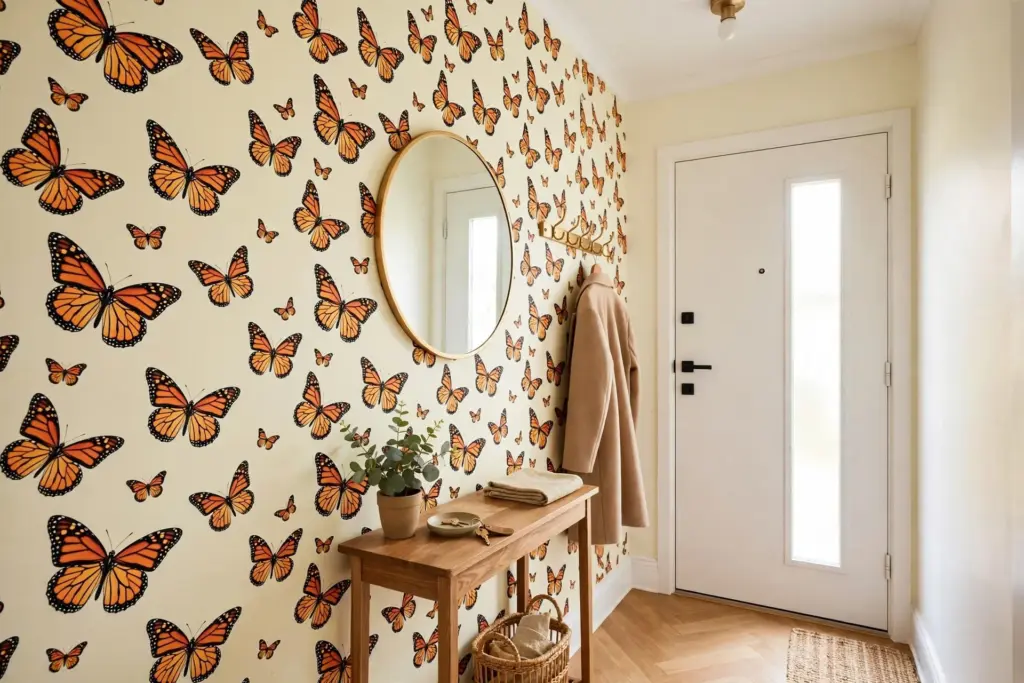
5. Bold Monarch Color in the Entryway
An entryway is a small area, so it is the cheapest place to go bold. Orange and black monarch butterflies on a pale ground make the first thing guests see unforgettable — keep the rest simple, with a narrow console, a mirror, and one hook rail, so the wall does the talking.
6. Vintage Storybook Sepia in a Reading Nook
Sepia butterfly illustrations, like plates from an old natural-history book, give a reading nook a collected, library feel. Paper the wall behind an armchair, add a warm floor lamp, and stack books on a small side table — nostalgic and literary, a grown-up nature print, not a child’s room.
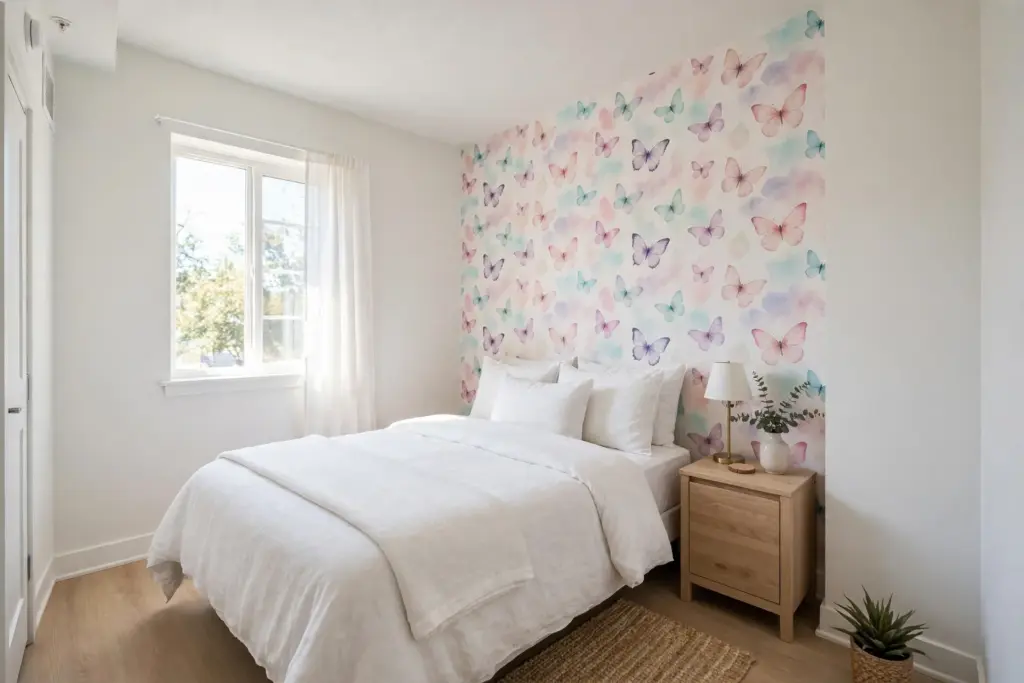
7. Soft Pastel Watercolor in the Bedroom
Pastel butterflies in blush, lavender, and mint make a bedroom feel calm and light, especially where natural light is scarce. Keep everything else soft too: white or pale-grey linen bedding, light wood, no competing patterns. One patterned wall is enough — patterned bedding on top makes the room feel busy.
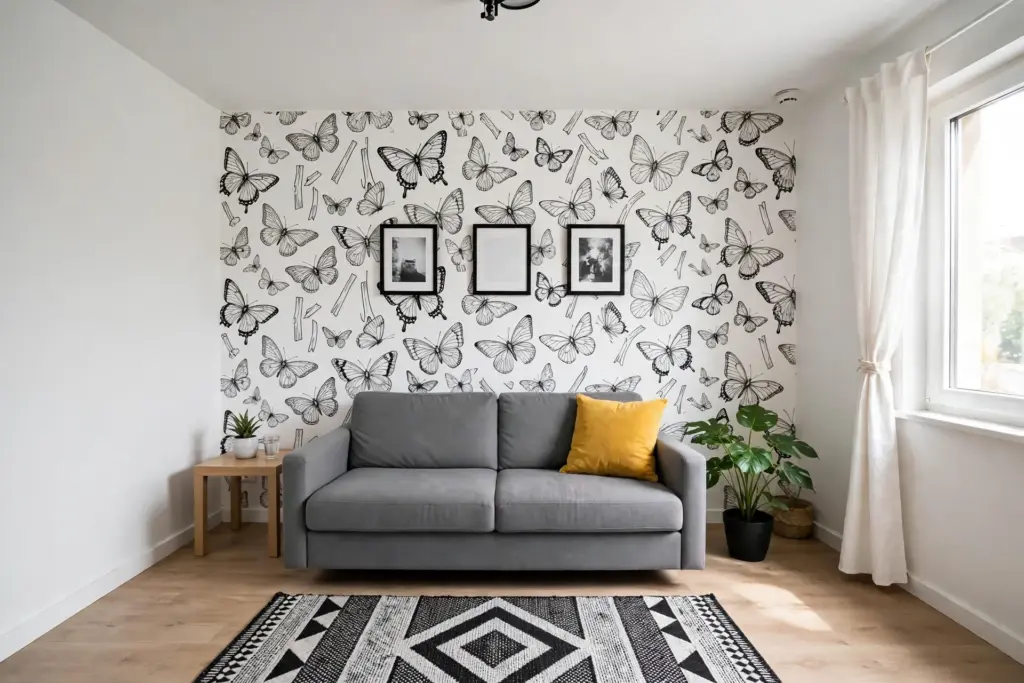
8. Black-and-White Graphic in a Modern Living Room
Line-drawn black butterflies on a white ground suit a modern living room the way a floral never could. The graphic print pairs with black picture frames, a monochrome rug, and one strong accent — a mustard cushion or a green plant — and black and white forgives mixed furniture.
9. Metallic Gold Foil in the Dining Nook
Gold-foil butterflies catch lamplight and candlelight, which makes them ideal for a small dining corner used mostly in the evening. Paper the wall behind the table and keep the setting simple — the foil does the work. Choose printed foil rather than raised foil, so it wipes clean after meals.
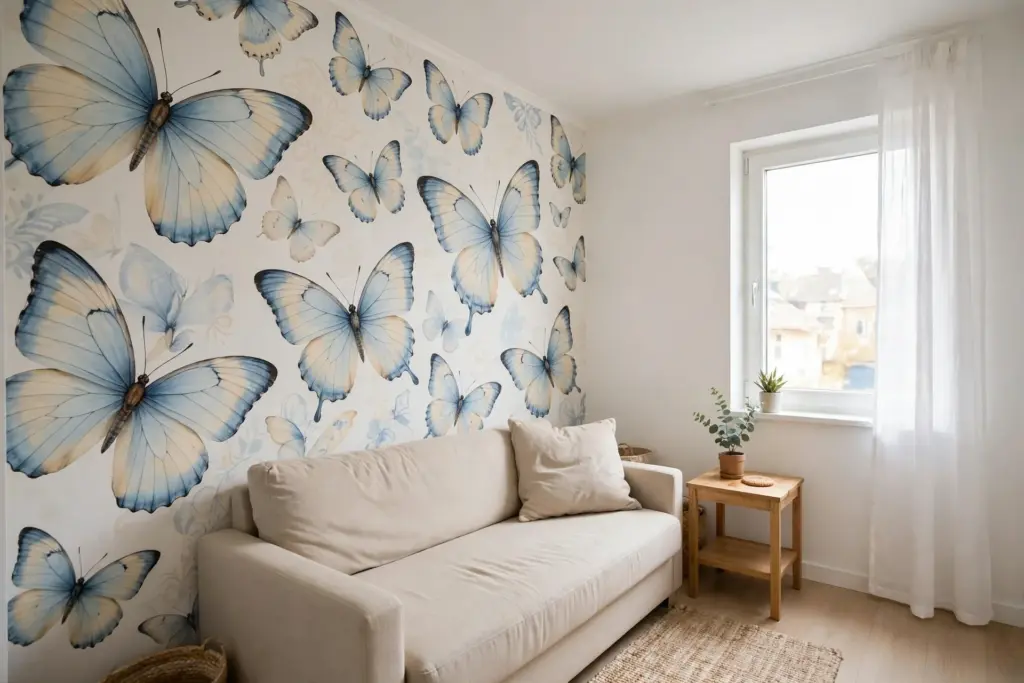
10. Oversized Butterflies as a Statement Wall
One wall of oversized butterflies, each wing the size of a dinner plate, reads as art rather than wallpaper. It works best behind a sofa or a bed, where furniture anchors the bottom of the wall and the print has room to breathe. Keep the other walls plain and furniture low.
11. Butterflies on the Ceiling — the Fifth Wall
The ceiling is the most overlooked surface in a rental, and a pale butterfly print up there changes how a small room feels. It works best in a powder room or a walk-in closet: use a light ground so the ceiling does not feel lower, and keep the walls plain so the surprise stays overhead. Hanging paper above your head is a two-person job.
12. Half-Wall Butterflies Above Painted Wainscoting in a Hallway
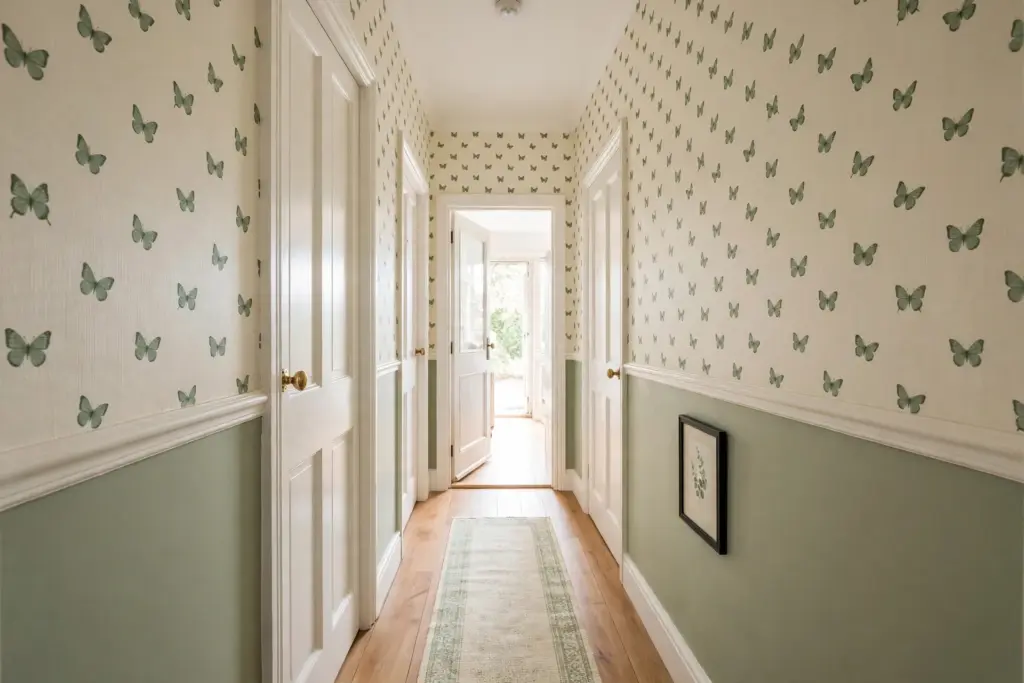
A hallway is long, narrow, and easy to scuff, so split it in two: butterfly paper on the upper half, a painted lower half below a chair rail. The paper brings the pattern, the painted lower half takes the scuffs, and the chair rail hides the seam. Only paint the lower half if your lease allows it — otherwise use a peel-and-stick chair rail strip.
How to Choose the Right Scale and Color
With butterfly peel and stick wallpaper, scale changes everything. A small, dense repeat suits a small room because the pattern reads as texture from across it; a large, spaced-out print needs viewing distance, so save oversized butterflies for the longest wall. Order a sample first and tape it to the wall for a few days — check it in morning light and lamplight before committing.
For color, start with what already lives in the room: pull one color from the sofa, the rug, or the bedding and match the paper’s ground or wings to it. Warm rooms — wood floors, brass, cream — suit gold, terracotta, and sepia butterflies. Cool rooms — grey sofas, chrome, white walls — suit blue, green, and black-and-white prints. If the room has almost no color, the paper is your chance to add it: pick the colorway you love most and repeat it in a cushion or throw.
How to Install and Remove It Without Losing Your Deposit
Good installation starts the day before hanging. Clean the wall with a damp cloth and let it dry fully, and let the paper sit in the room for a day so it matches the room temperature. If the wall was painted recently, wait until the paint has fully cured — manufacturers often recommend at least four weeks — because fresh paint is the most likely to peel off with the paper. Our peel-and-stick wallpaper guide for renters covers prep and tools in detail.
To hang it, draw a vertical plumb line with a level — never trust a corner, since corners are rarely straight. Peel back the top few inches of backing, set the strip to the line, and smooth from the center outward with a smoother or a credit card, peeling the backing down a little at a time. Match the pattern at each seam before pressing down, and trim the excess at the ceiling and baseboard with a sharp knife and a straightedge.
Removal is the reverse, done slowly. Warm a corner with a hairdryer for 20 to 30 seconds, lift it, and peel downward at a low angle, warming as you go. Work in short sections and never yank — a slow peel keeps paint on the wall — then wipe residue with a warm, damp cloth. Decorating a child’s bedroom instead? Our kids peel and stick wallpaper ideas cover the playful prints for that room.
Butterfly Peel and Stick Wallpaper FAQ
Is this wallpaper really renter-friendly?
Yes. Butterfly peel and stick wallpaper is designed to be removed without paste, water, or scrapers, which is why it is a standard renter choice. Check the lease first, test a hidden patch for a week, and keep your landlord’s written permission.
Will it damage the paint when I remove it?
It can, on the wrong surface. Matte and flat finishes grip adhesive more strongly and are the most likely to lift on removal, while satin and semi-gloss finishes usually release cleanly. Fresh paint is also vulnerable, so wait until it has fully cured. A test patch in a hidden corner and a slow, warmed peel are the best protection.
Can I use it in a bathroom?
A powder room or half-bath is ideal — small, low-humidity, and cheap to cover. Avoid walls right next to a shower or tub, where steam and splashes can loosen the adhesive. Check the manufacturer’s moisture limits, and choose a vinyl-coated paper if the room gets steamy.
How do I choose the right butterfly size?
Match the print to the room and the viewing distance. Small, dense repeats suit small rooms and short walls, where the pattern reads as texture. Large, spaced-out butterflies need a long wall and several feet of distance — save them for the wall behind a sofa or a bed, and keep the rest of the room plain.
Can I reuse peel and stick wallpaper after removing it?
Generally no. The adhesive weakens with each removal, and a peeled strip rarely sticks as well the second time — it may bubble or lift at the edges. Keep the leftover roll instead: it covers repairs and the next accent wall.
Keep Reading
- Peel and Stick Wallpaper for Renters — surface prep and tools for your first wall.
- Chinoiserie Peel and Stick Wallpaper Ideas — hand-painted birds and branches with a classic feel.
- Boho Peel and Stick Wallpaper Ideas — relaxed, earthy prints if butterflies feel too neat.