Small Space Gardening Ideas for Apartments
You do not need a yard to grow things. A sunny windowsill, a balcony railing, or even a bare wall can hold a garden that feeds you and makes a small apartment feel alive. These small space gardening ideas are built for renters: everything is removable, nothing needs drilling, and every setup can move with you when your lease ends.
Container gardening was practically invented for these constraints: pick the right plants, the right pots, and the right spot, and a small studio can grow more herbs than one household can use.
Before You Plant: 4 Renter Checks That Save Your Deposit
Run through these four checks before buying a single pot.
1. Read your lease for balcony and plant rules. Some leases ban plants on balcony railings, limit balcony weight, or forbid anything attached to the outside of the building. A quick scan of the lease — or a short email to your landlord — is cheaper than a violation notice.
2. Protect every surface from water. Water damage is the number one way a garden costs a renter money. Every pot needs a saucer, every group of pots needs a tray underneath on wood floors, and nothing should sit directly on a windowsill without a barrier.
3. Mind the weight. Wet soil is heavy — a single large pot can weigh 40 to 60 pounds once watered. Keep large pots near walls or load-bearing edges rather than in the middle of a balcony slab, and favor lightweight fabric pots and plastic planters over stone and concrete.
4. Plan for moving day. Renters move. Choose pots you can carry and setups that come apart in minutes. Rolling plant caddies and lightweight containers mean your garden moves with you instead of being left on the curb.
10 Small Space Gardening Ideas That Actually Work in Apartments
Start with one or two, and add more once you see what thrives in your light.
1. Start With a Windowsill Herb Garden
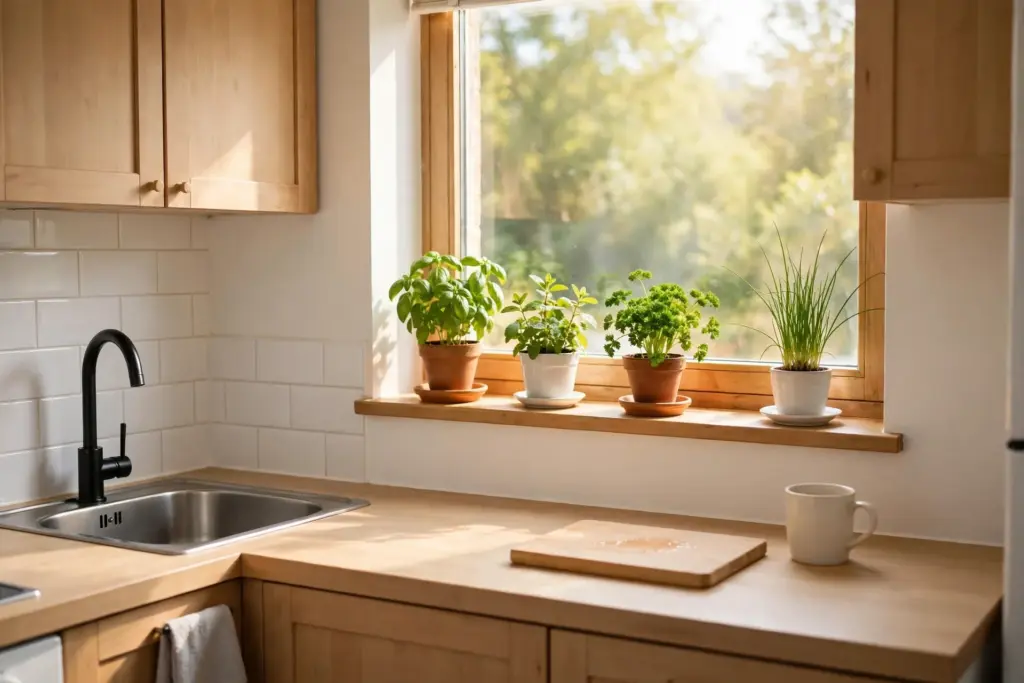
A windowsill herb garden is the single best first step into apartment gardening. Basil, mint, parsley, and chives grow happily in small pots, they are used almost daily in cooking, and they forgive beginner mistakes better than almost any other plant.
Pick the sunniest windowsill you have — south-facing is ideal, but east- or west-facing sills work too. Use pots with drainage holes and saucers, and fill them with light potting mix rather than garden soil, which compacts in small pots and suffocates roots. Water when the top inch of soil feels dry, and snip herbs from the top so plants grow bushier. One warning about mint: it will take over any pot it shares, so give it its own container, always.
2. Grow Up, Not Out, With Vertical Planters
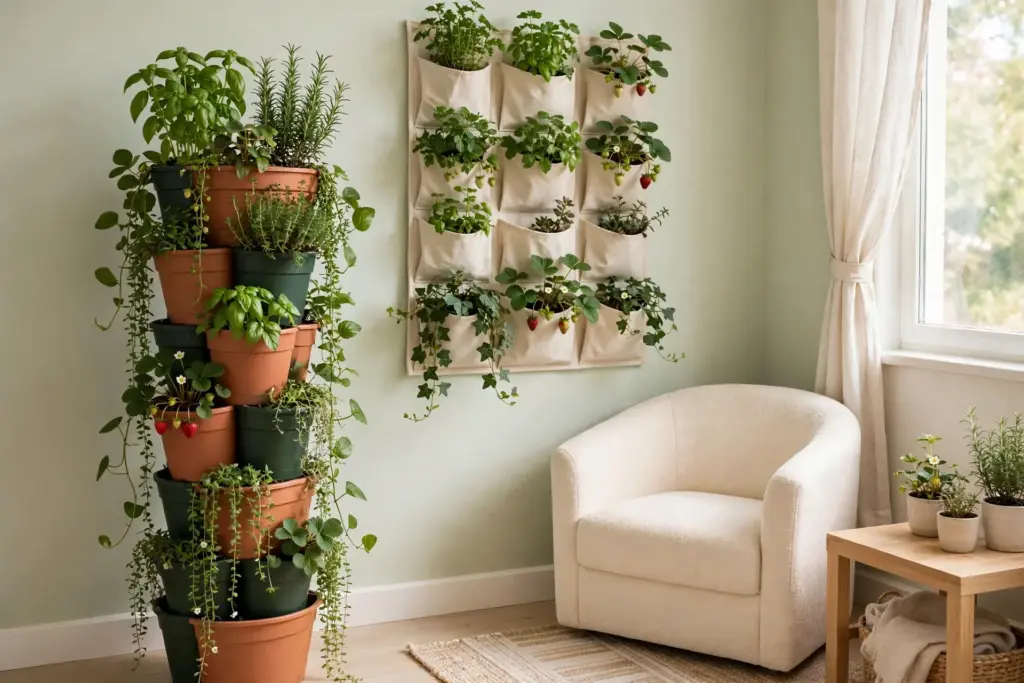
When floor space is scarce, the wall is your garden bed. Vertical planters — pocket planters, stackable towers, and rail systems — turn a blank wall or balcony into growing space without using any floor.
The safest vertical options need no drilling: over-the-door pocket planters hang from a door or railing, freestanding towers stand on the floor, and tension-rod systems wedge between floor and ceiling. Vertical planters dry out faster than pots on the ground because they hold less soil and catch more air, so water them more often.
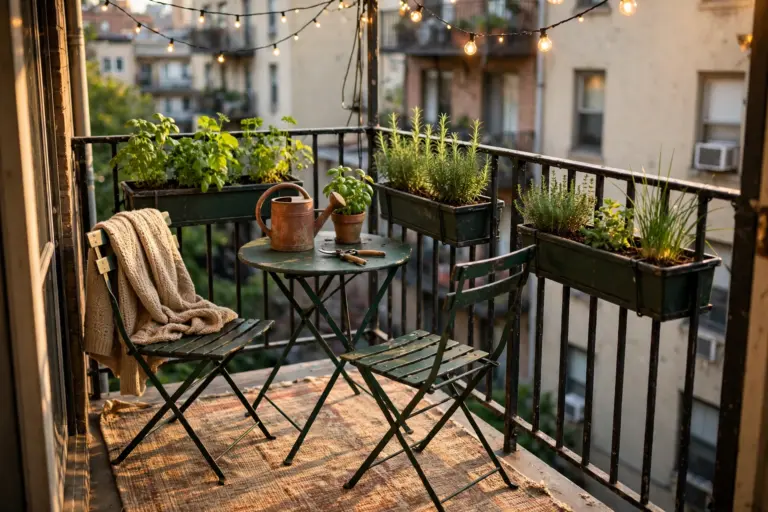
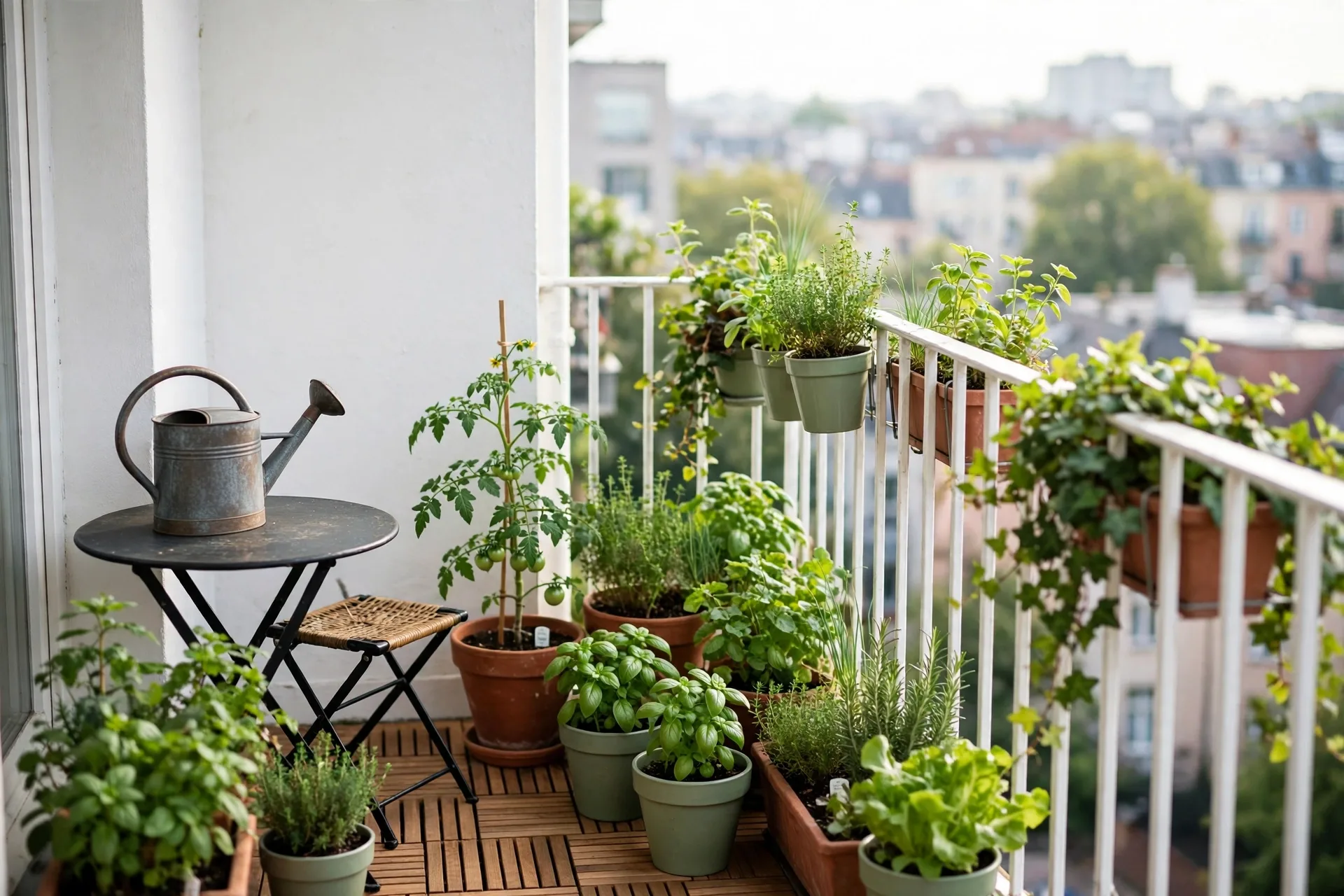
3. Turn a Balcony Railing Into a Garden
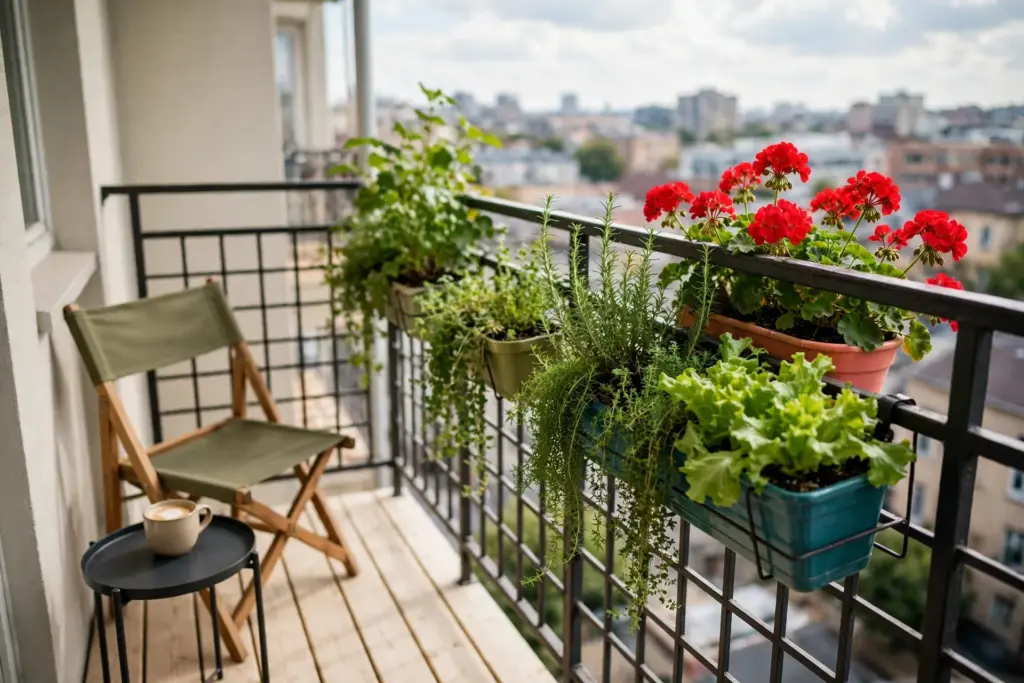
Railing planters — boxes that hook over the rail or clamp to it — turn that dead edge into a row of flowers, herbs, or salad greens, and leave the balcony floor free for a chair and a coffee.
Before buying, measure your railing — brackets vary more than catalog photos suggest. Secure every planter with a cable tie as well as its hook, because wind can lift a light box off a rail. For privacy and greenery in one move, pair railing planters with the ideas in our guide to apartment balcony privacy ideas.
4. Use Hanging Planters for Trailing Plants
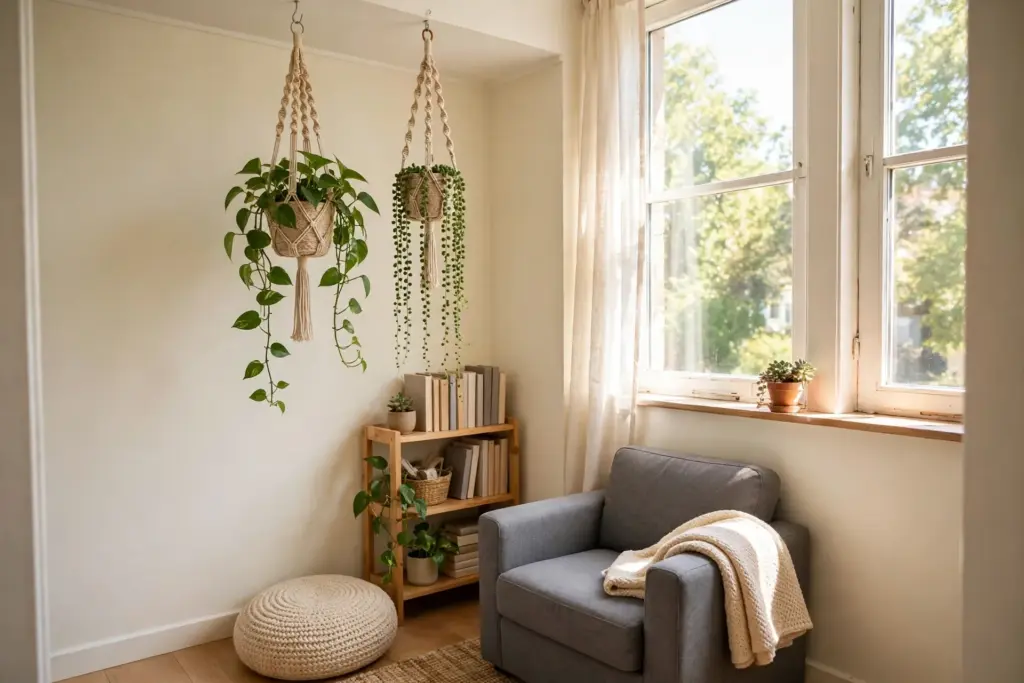
Hanging planters put plants at eye level and keep the floor clear — exactly what a small balcony or crowded living room needs. Trailing plants — pothos, string of pearls, ivy, and trailing rosemary — look their best spilling out of a hanging pot, and they are hard to kill.
Hang from what already exists: a ceiling hook your landlord already installed, a curtain rod, a tension rod across a window, or a freestanding plant stand with a hook arm. If you need a new hook, a removable adhesive hook rated for the pot’s wet weight is the renter-safe choice.
5. Grow Compact Vegetables in One Big Pot
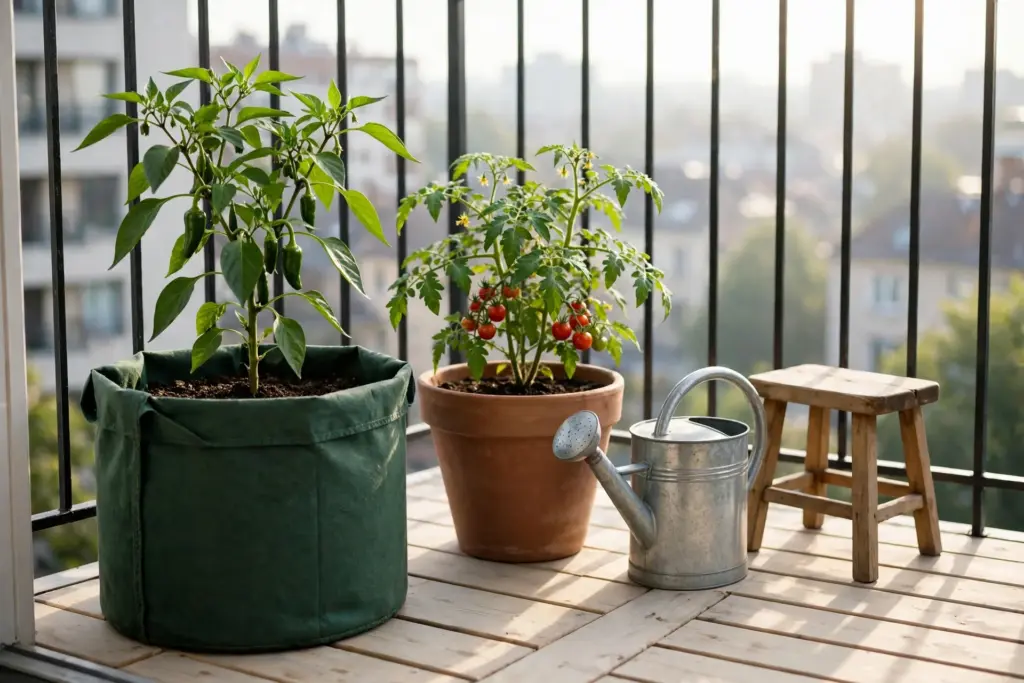
You do not need a raised bed to grow food. Compact and dwarf varieties were bred for containers: patio tomatoes, bush cucumbers, compact peppers, and lettuce all produce a real harvest from one large pot.
One 5-gallon container with a single tomato plant will out-produce three small pots crowded with seedlings. Give vegetables the sunniest spot you have — most need at least six hours of direct sun — and feed them lightly with a balanced liquid fertilizer while they fruit. The Royal Horticultural Society’s vegetable growing guides are a reliable place to check spacing and timing for each variety before you sow. Salad greens are the easiest win: lettuce, arugula, and spinach grow fast and can be harvested leaf by leaf for weeks.
6. Try Self-Watering Pots for Busy Weeks
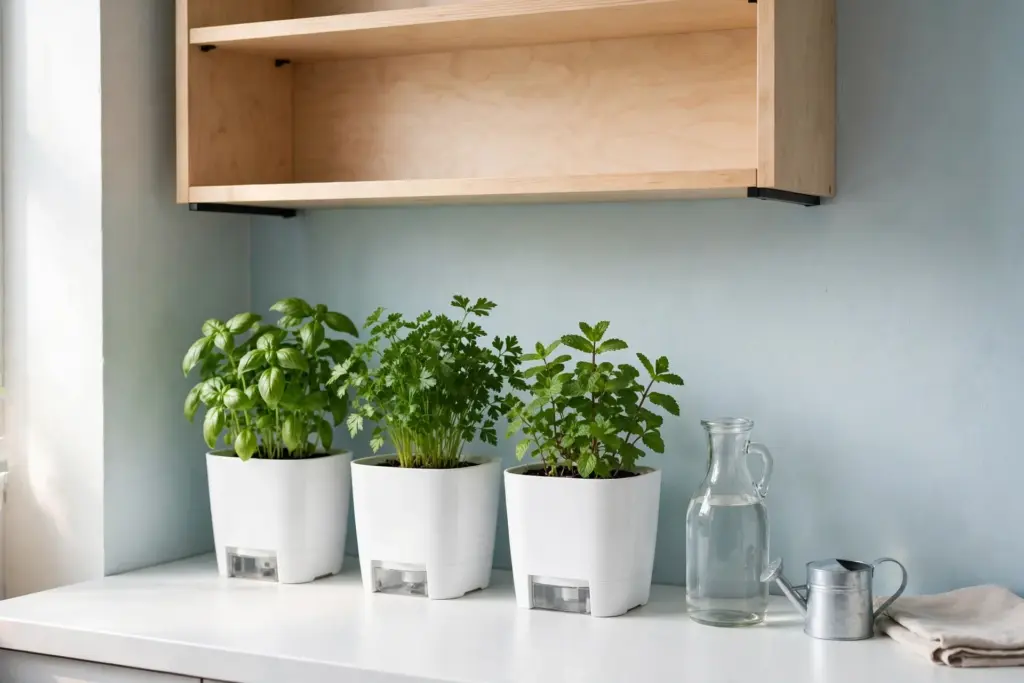
The most common way apartment plants die is inconsistent watering — drowned one week, forgotten the next. Self-watering pots solve this with a reservoir at the base that keeps soil evenly moist for one to two weeks.
They are worth the higher price for thirsty herbs and vegetables, and for anyone who travels. They are not magic, though: the reservoir still needs refilling, and plants that hate wet feet — lavender and rosemary, for example — do better in ordinary pots with sharp drainage.
7. Match Plants to Your Light — Not the Other Way Around
Build your garden around the light you actually have: note which windows get direct sun and for how long, then choose plants for those conditions.
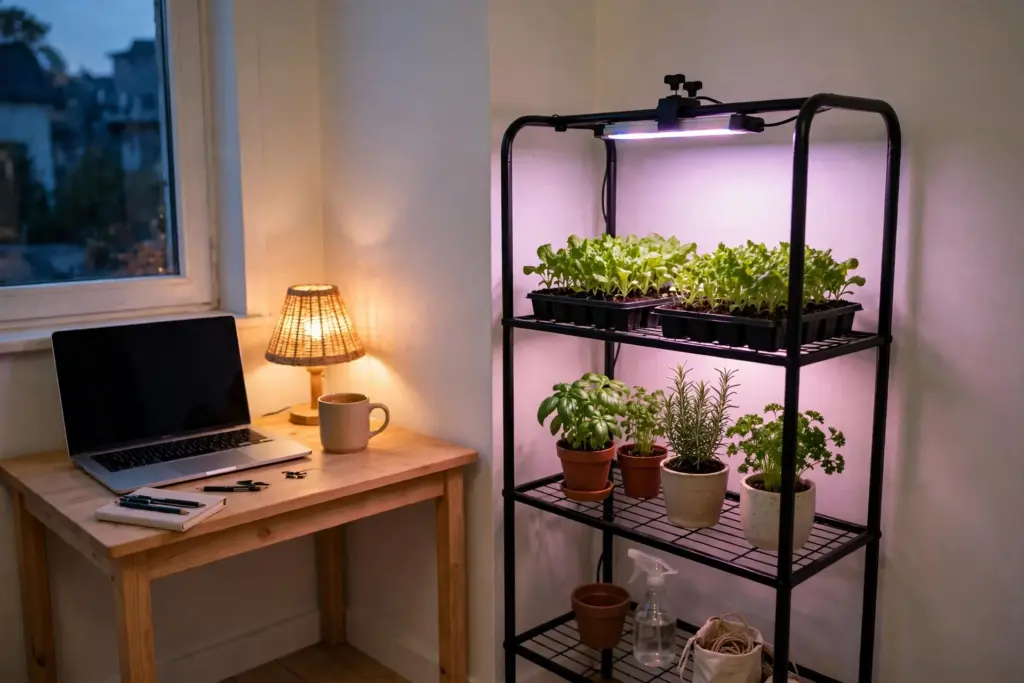
South- and west-facing windows suit tomatoes, peppers, basil, and rosemary; east-facing windows suit parsley, mint, and leafy greens. North-facing windows suit only the toughest low-light plants — start with the shade-tolerant varieties in our guide to low-light indoor plants for small apartments and consider a small grow light for anything edible. A compact LED grow light clamps to a shelf and turns a dark corner into a growing spot on a 12- to 14-hour timer.
8. Use the Right Potting Mix — and Feed Lightly
Container plants live entirely on what is in their pot, so the mix matters. Use a bagged potting mix, not soil dug from outside: it drains well, stays light, and does not bring weed seeds and pests indoors.
Most herbs and vegetables are happy with a general-purpose mix plus perlite for drainage. Feed lightly — a diluted liquid fertilizer every two to four weeks during the growing season is enough. Overfeeding burns roots and makes herbs taste bland, so when in doubt, use half the dose on the label. The University of Georgia Extension’s container gardening publication covers mix recipes and feeding schedules in detail.
9. Water Smart: Saucers, Trays, and a Routine
Containers dry out much faster than garden beds, especially small pots and hanging baskets — in summer, a small pot can need water every day.
Water in the morning so leaves dry before night. Water the soil, not the leaves. And check with your finger, not a calendar: stick a finger an inch into the soil, and water only if it feels dry.
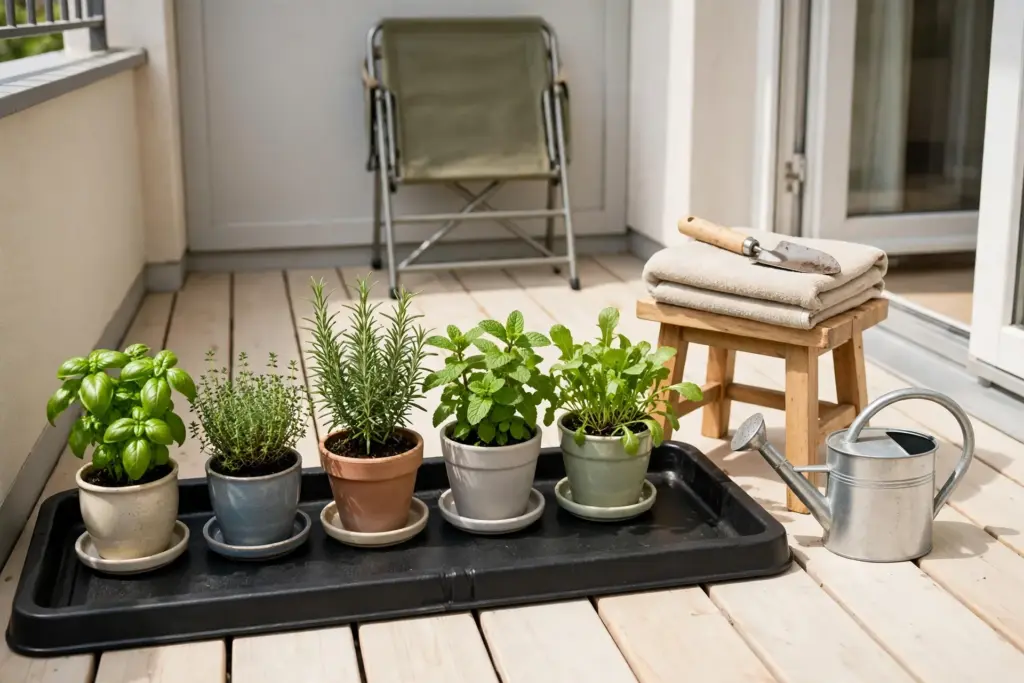
Your renter-proof watering setup is simple: a saucer under every pot, a boot tray under every group, and a narrow-spout watering can. For more on keeping a small balcony tidy and functional, see our small balcony decor ideas for renters.
10. Keep It Movable: Rolling Plant Caddies and Lightweight Pots
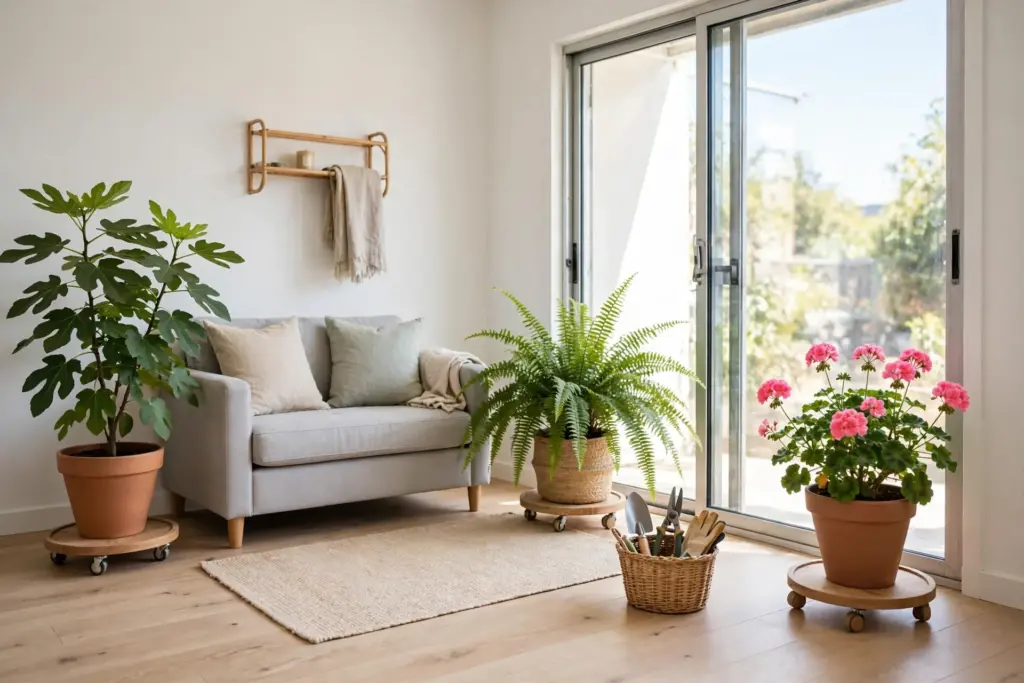
The best apartment garden is one you can rearrange. Rolling plant caddies let you wheel heavy pots into the sun and back under cover before a storm, and they protect floors from scratches and damp rings.
Choose lightweight pots — plastic, resin, or fabric grow bags — over ceramic and stone for anything that moves often. Fabric grow bags are cheap, fold flat for moving day, and are almost impossible to overwater because excess drains straight through. Think of your garden as furniture, not fixtures: if you can move it in under a minute, you can clean behind it and take it with you when you move.
What to Grow First in a Small Apartment
Start with this short list: basil, mint (in its own pot), parsley, and chives on a sunny windowsill; lettuce and arugula in a window box; a pothos or two hanging where you will see them; and one patio tomato in a 5-gallon pot on the balcony. That is a garden that feeds you within weeks.
Once those are thriving, add one new thing at a time — a vertical pocket planter, a railing box, a compact pepper. Good small space gardening ideas grow the same way their plants do: a little at a time, in the right conditions, with steady attention. If you are still shaping the room the garden will live in, our studio apartment layout ideas will help you carve out a sunny corner for it.
Frequently Asked Questions (FAQ)
Can I garden in an apartment with no balcony?
Yes. A sunny windowsill grows herbs and salad greens, a grow light opens up darker rooms, and vertical planters and hanging pots use wall and ceiling space instead of floor space.
What vegetables grow best in small containers?
Compact and dwarf varieties do best: patio tomatoes, bush cucumbers, compact peppers, radishes, and cut-and-come-again lettuce, spinach, and arugula. Give each plant one large pot rather than crowding several plants into small ones.
How do I keep plants from damaging my rental?
Put a saucer under every pot and a waterproof tray under every group of pots, never let water pool on floors or sills, use lightweight pots on balconies, and avoid drilling by using removable hooks, tension rods, and freestanding planters.
How often should I water container plants in an apartment?
Check the soil with your finger: water when the top inch feels dry. In summer, small pots on a sunny balcony may need water daily, while larger indoor pots may go several days. Water in the morning, water the soil rather than the leaves, and empty saucers after watering.
Do I need a grow light for apartment gardening?
Not always. If you have a south- or west-facing window with several hours of direct sun, most herbs and greens will manage without one. If your windows face north or are shaded, a small clamp-on LED grow light on a timer makes edible gardening possible — and it is removable, so it is fully renter-friendly.
Keep Reading
- Small Balcony Decor Ideas for Renters — style the balcony your new garden will live on.
- Low-Light Indoor Plants for Small Apartments — the best plants when your windows barely get sun.
- Apartment Balcony Privacy Ideas — screen your balcony garden from neighbours without drilling.