15 Kitchen Sink Organization Ideas for Small Kitchens
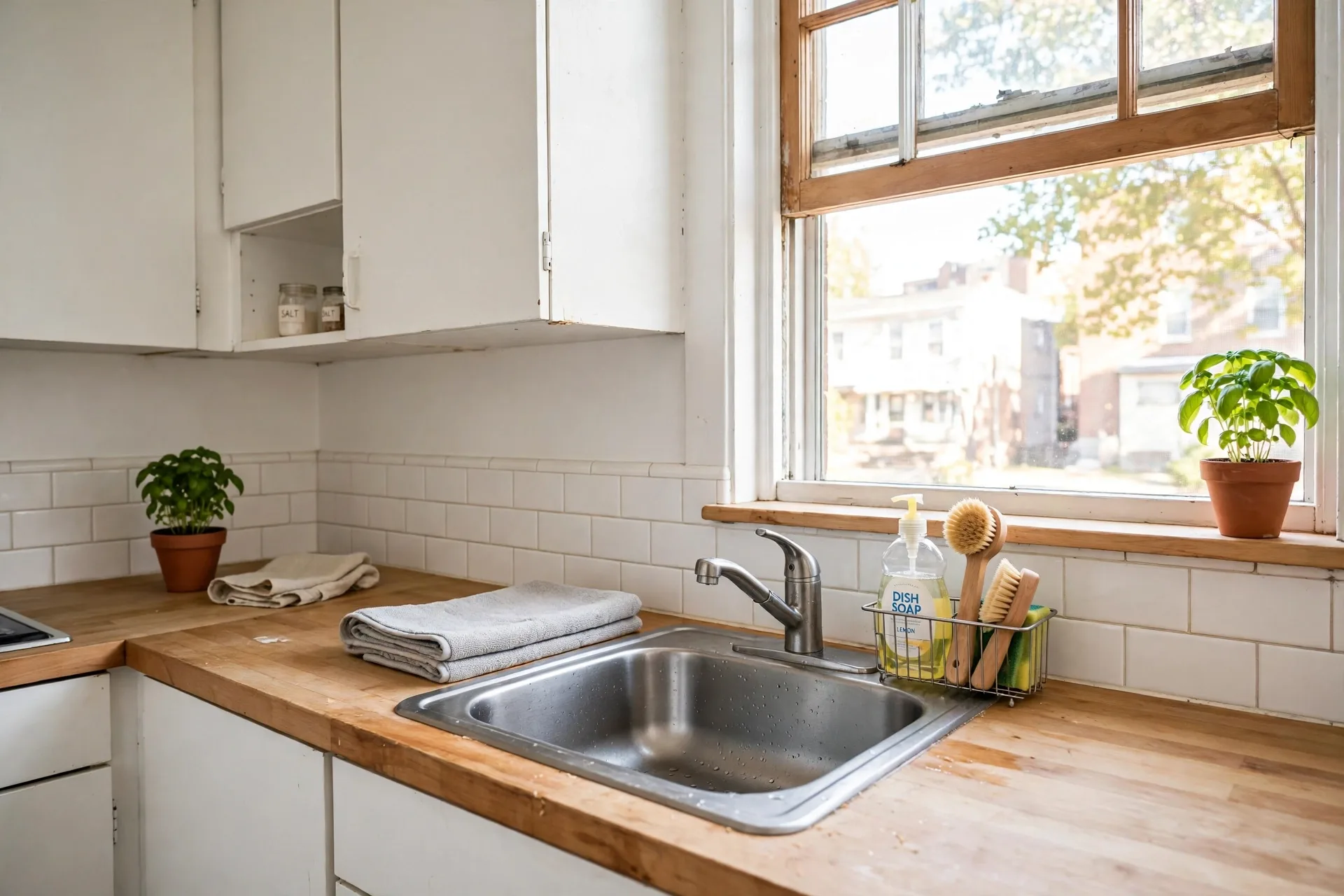
The sink is the hardest-working square foot in a small rental kitchen — and the fastest to look messy. Dishes, soap, sponges, brushes, and drying racks all compete for the same few inches of counter, while the cabinet below is usually a dark jumble of cleaning bottles around the pipes. These kitchen sink organization ideas fix both zones at once: the countertop you see and the cabinet you avoid. Every idea below is removable, drill-free, and lease-safe.
Before You Buy Anything: The 20-Minute Sink Reset
No organizer fixes a sink zone full of things that do not belong there, so start by emptying it completely. Pull everything off the counter, the wall shelf, and the cabinet under the sink, then sort it into three groups: keep at the sink, relocate elsewhere, and discard. The keep pile holds only what gets used at the sink daily — dish soap, hand soap, a sponge or brush, and drying tools. Wipe every surface while it is empty, photograph the pipes for your rental records, and only then shop for organizers. The same declutter-first logic runs through our small apartment storage ideas — storage works only after the sort.
15 Kitchen Sink Organization Ideas for Small Kitchens
Work through these in order: the countertop first, then the wall above the sink, then the cabinet below it. Every idea uses removable products — suction cups, adhesive hooks, tension rods, and freestanding caddies — so nothing here drills a hole or risks the deposit.
1. Corral the Daily Tools in One Caddy
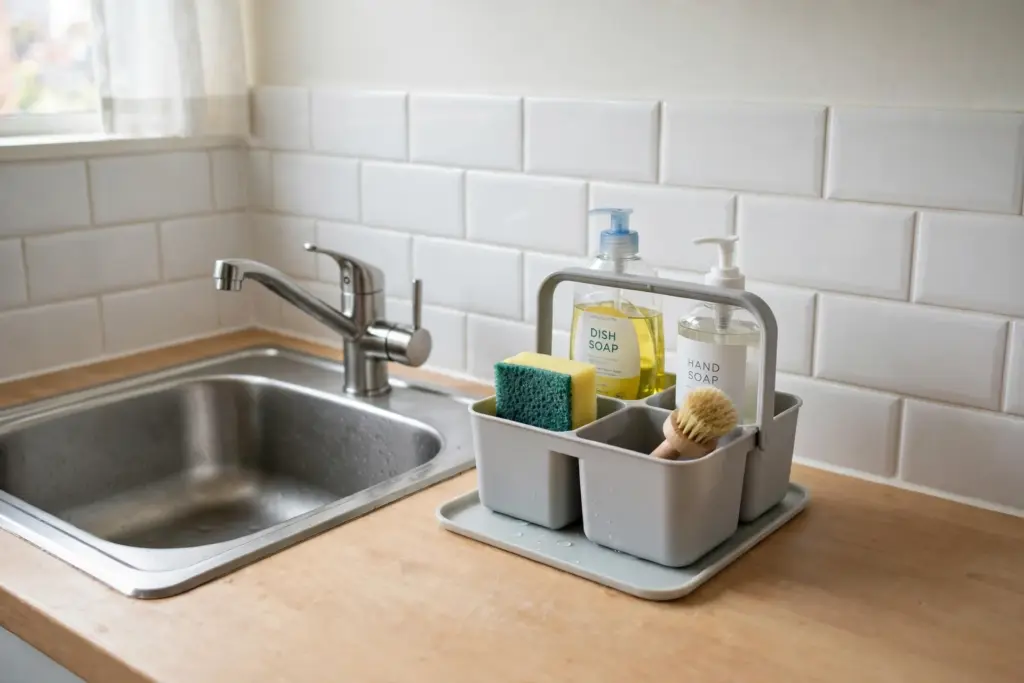
A single handled caddy turns five wandering items into one object that lifts away to wipe the counter. Choose one with separate compartments for dish soap, hand soap, a sponge, and a brush, and set it on a small wipeable tray so drips never reach the counter.
2. Give the Sponge a Draining Home
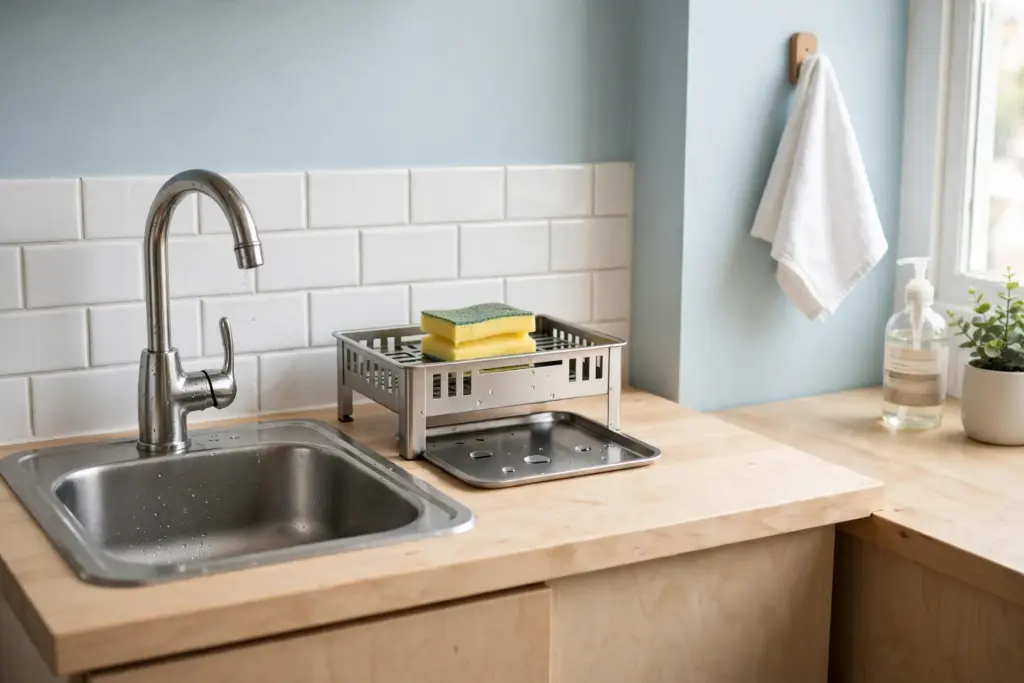
A sponge left flat on the counter sits in its own puddle, smells faster, and looks messy within a day. A raised holder with drainage slots keeps it lifted and exposed to air so it dries between uses, with a small drip tray underneath to catch the water. Choose a holder that suctions or sits on the sink edge, and replace the sponge every one to two weeks.
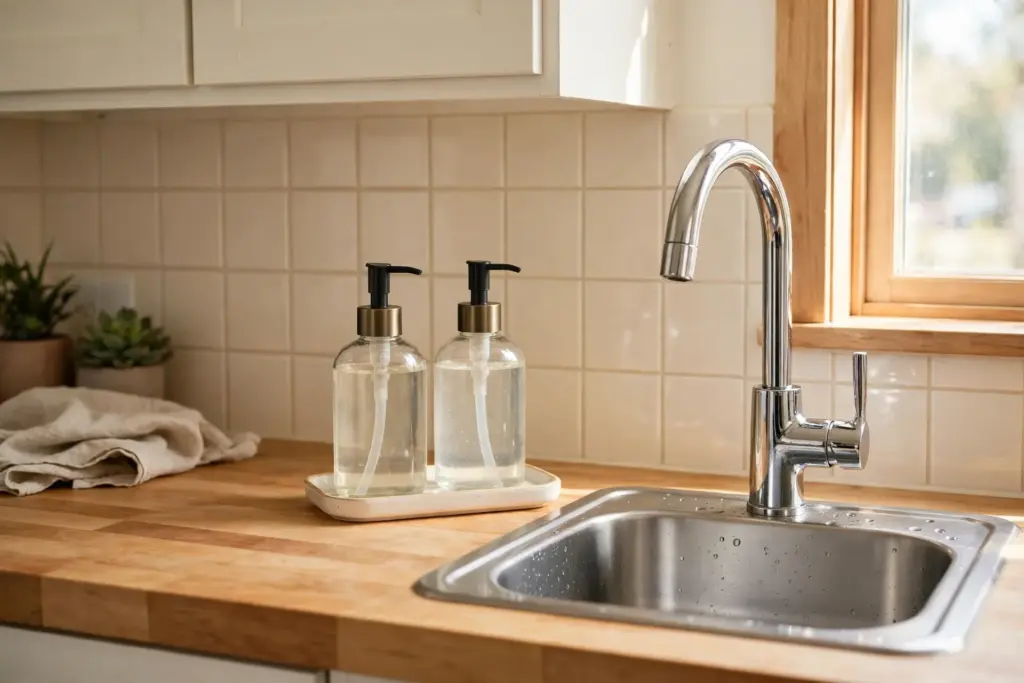
3. Switch to a Refillable Soap Dispenser Station
Three mismatched soap bottles with sticky rings are the visual clutter most renters never notice until it is gone. Decant dish soap and hand soap into two matching refillable dispensers on one small tray, and keep the bulky refill bottles under the sink. Refills cost less than new bottles, and the tray wipes clean in seconds.
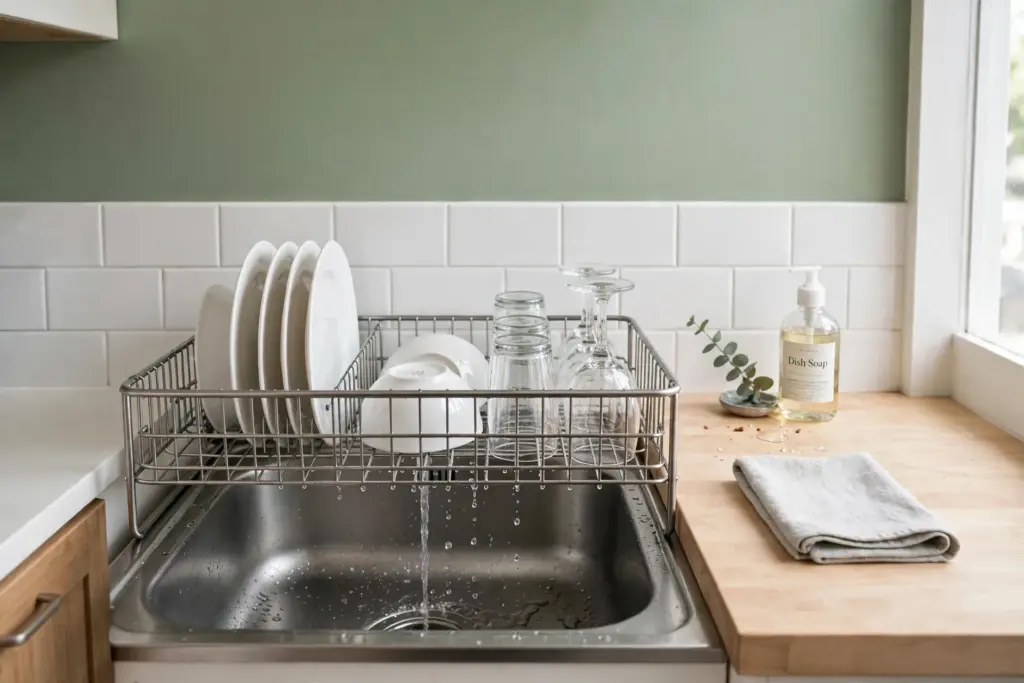
4. Hang an Over-Sink Dish Rack
When counter space is the scarcest resource, move drying up and over the sink itself. An over-sink rack spans the basin on adjustable arms, so plates, bowls, and glasses drain straight back into the sink while the counter stays free for cooking. Measure the basin width before ordering, and choose a roll-up style that folds away when the sink is needed for large pots.
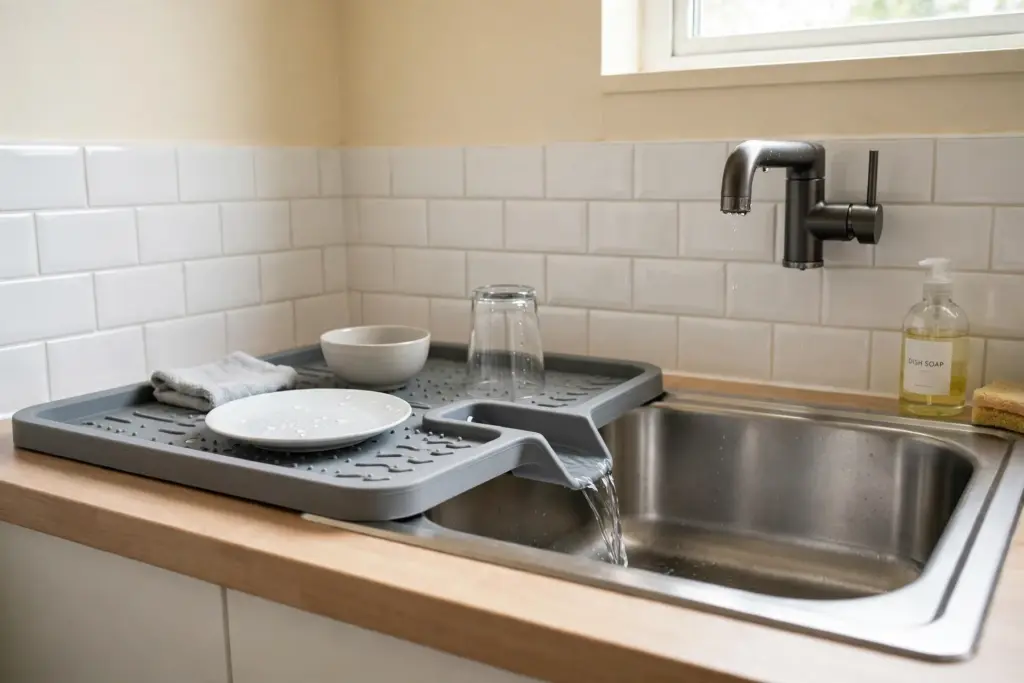
5. Roll Out a Drying Mat That Drains Back
A drying mat that pools water on the counter just moves the mess sideways. Choose a mat with a raised lip and a spout or a sloped edge that channels water back into the sink, and roll it up when it is not in use so the counter returns to full size. This kitchen sink organization guide makes the same point about keeping the zone draining toward the basin, not the counter.
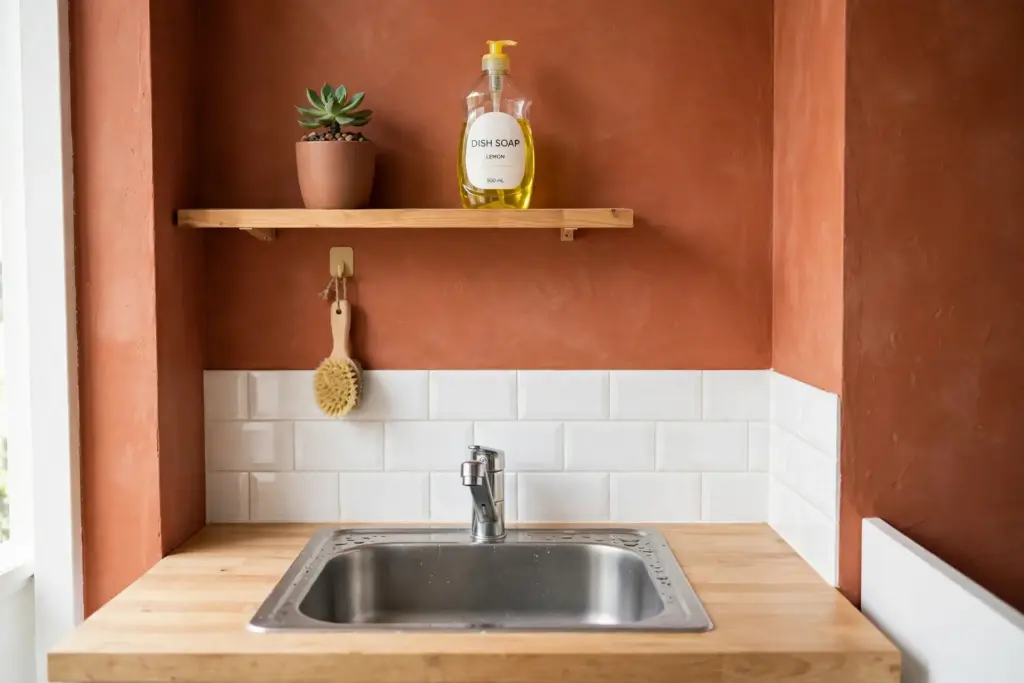
6. Add a Small Shelf or Rail Above the Sink
The wall above the sink is usually dead space, and a single narrow shelf or a short adhesive rail turns it into the home for the things used there: a small plant, the dish soap refill, a scrub brush on a hook. Mount it with removable adhesive strips rated for the weight, within easy reach.
7. Use the Cabinet Door for Brushes and Gloves
The inside of the sink cabinet door holds a surprising amount: adhesive hooks for rubber gloves and a slim rack for brushes and sponges keep wet items off the cabinet floor and visible at a glance. Use removable adhesive hooks, never screws, and keep the door rack shallow so the door still closes flat. For the full under-sink system this idea belongs to, see our small apartment under sink storage ideas.
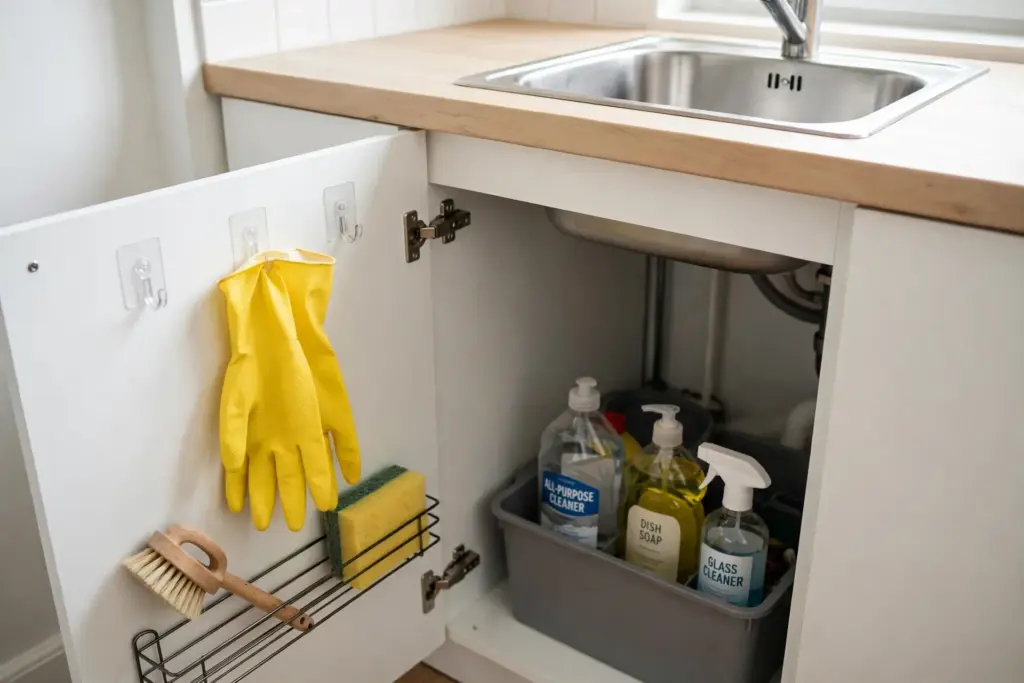
8. Slide a Shallow Caddy Under the Sink — Clearing the Pipes
The cabinet under the sink is prime storage, but the drain trap and supply lines eat the middle of it. A shallow slide-out caddy that stops short of the trap — with a clear empty gap between the back of the tray and the pipes — pulls cleaning supplies out into the light without ever touching the plumbing. Measure first: the trap-to-floor height and the depth from the door to the trap decide how deep the caddy can be. This under-sink organization guide shows the same pipe-aware layouts.
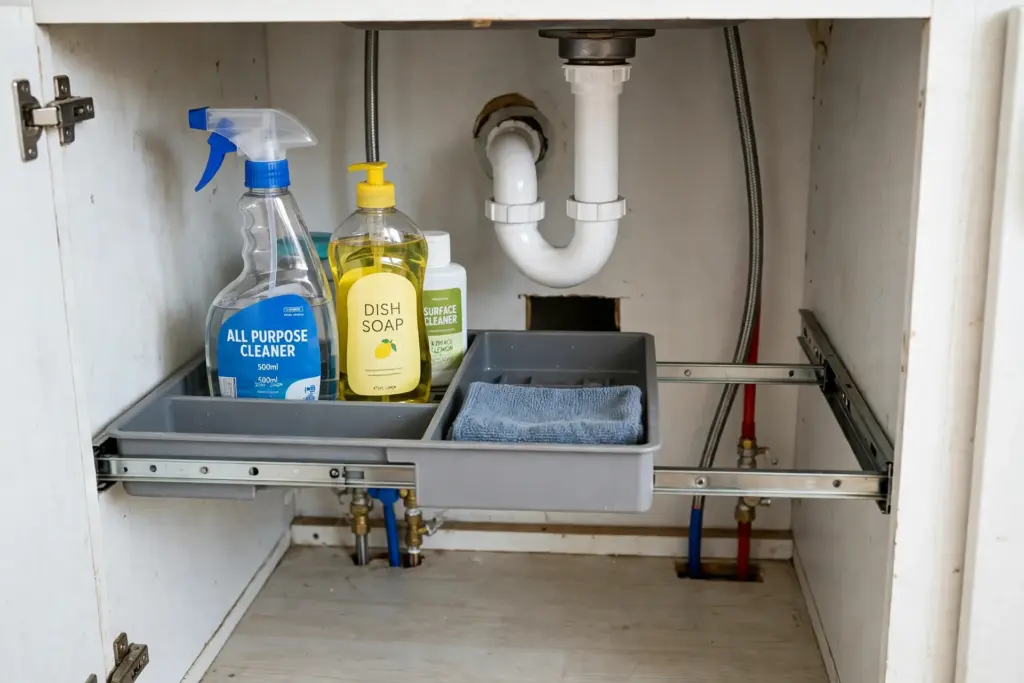
9. Hang Spray Bottles From a Tension Rod
A spring-loaded tension rod across the inside of the sink cabinet costs very little and creates a whole row of storage: hang spray bottles by their triggers from the rod, and the cabinet floor below stays clear for bins and refills. Fit the rod just below the front edge of the cabinet so bottles hang without swinging into the door, and check the rod’s grip monthly — humidity loosens cheap rods over time.
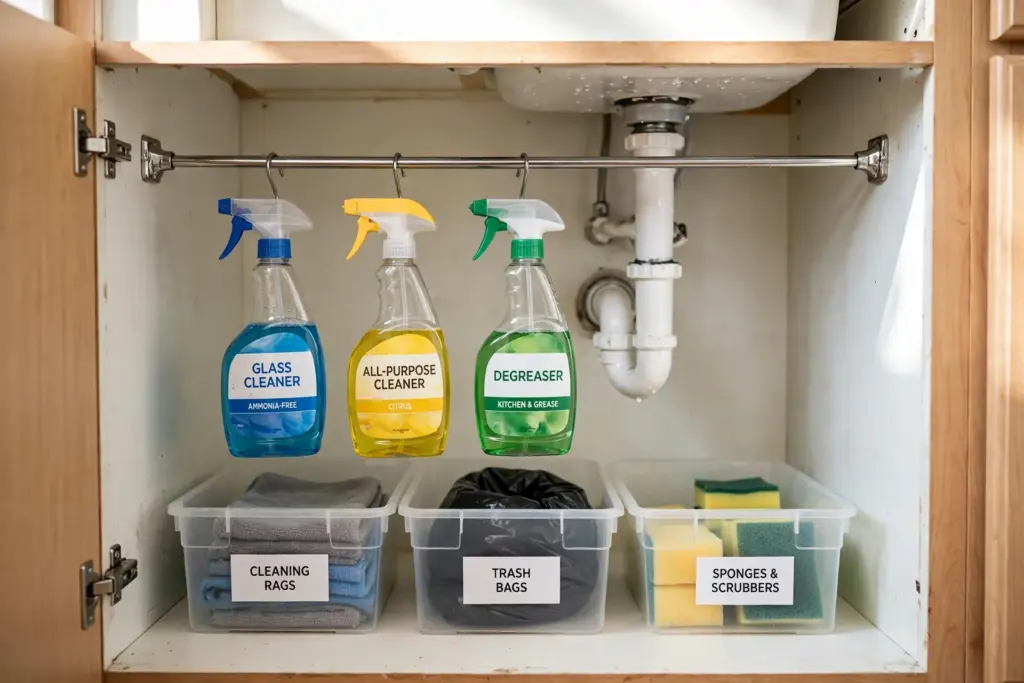
10. Sort Cleaning Supplies Into Clear Labelled Bins
Once the caddy and the rod are in place, the remaining bottles and boxes still need a system: one clear bin per category — daily cleaners, dish supplies, backups, trash bags — each labelled so anyone in the household puts things back in the right place. Clear bins matter because the cabinet is dark; an opaque box hides its contents and becomes a junk drawer within a month. Our kitchen counter organization ideas use the same one-bin-per-category rule for the rest of the kitchen.
11. Keep a Small Scrap Bin at the Sink
Food scraps are what turn a sink into a clogged, smelly chore. A small countertop scrap bin with a lid, emptied into the trash after every meal, keeps peels and coffee grounds out of the drain and out of sight. Choose a lidded bin, and never store food waste under the sink — the damp near plumbing makes it a contamination risk.
12. Store Cutting Boards and Lids Upright
Cutting boards and pot lids stacked flat become a heavy pile that nobody wants to dig through, so they end up leaning against the backsplash instead. Stand them upright in a narrow vertical file holder or a tension-rod divider beside the sink, where they can be pulled out one-handed. A file holder that simply sits on the counter or inside a deep drawer keeps the set visible and dry.
13. Fold the Dish Towel System
Dish towels migrate across a small kitchen because they have no fixed home. Give them one: a single adhesive hook or a towel bar on the cabinet door beside the sink, with one towel in use and one clean spare folded on the shelf above. Retire stained towels to cleaning rags under the sink.
14. Use a Sink Strainer and a Stopper Caddy
A mesh sink strainer catches the food that causes clogs, and it only works if emptying it is effortless — keep a tiny lidded caddy or a suction cup beside the faucet to hold the strainer between uses. Empty it into the scrap bin after every wash and replace it when the mesh tears. This two-minute habit protects the drain more than any chemical cleaner. Our kitchen drawer organization ideas cover the utensils that live one drawer over.
15. Set a Two-Minute Nightly Reset
Organization systems fail without a closing routine, and the sink zone needs only two minutes a night: dishes into the rack or dishwasher, sponge into its holder, caddy wiped, scrap bin emptied, counter dried. Do it right after dinner, so the morning starts clean.
What to Keep at the Sink (and What to Move Away)
Keep at the sink only what is used there daily: dish soap, hand soap, one sponge, one brush, the drying rack or mat, and the scrap bin. Move away everything else — spare sponges, refill bottles, oven cleaner, and extra towels. A good test is the one-week rule: if an item has not been touched in a week, it does not earn counter space. These kitchen sink organization ideas work because the freed inches are the point — a sink zone with breathing room is faster to use and far easier to keep clean.
Renter Rules: What Needs Permission and What Does Not
Almost everything here needs no landlord permission: freestanding caddies, trays, racks, tension rods, adhesive hooks, and bins leave no mark and come down in minutes. The exceptions are anything that drills, screws, or uses heavy-duty adhesive on a painted wall — a screwed-in shelf or a rail anchored into tile crosses the line, so check the lease and ask in writing first. When in doubt, choose the removable version.
Frequently Asked Questions (FAQ)
How do I organize a small kitchen sink with no counter space?
Move the work up and over the sink: an over-sink dish rack and a roll-up drying mat use the basin itself, a narrow shelf above the sink holds soap and brushes, and a caddy keeps daily tools in one liftable group. Keep only daily items at the sink and move refills and spares under it.
What should I store under the kitchen sink in a rental?
Store cleaning supplies in clear labelled bins, spray bottles hung from a tension rod, and trash bags in one bin — all in a shallow slide-out caddy that stops short of the drain trap. Never store food under the sink, keep heavy bottles low, and leave a clear gap around the pipes.
How do I keep the area around my kitchen sink from getting messy?
Give every item a fixed home — a caddy for tools, a draining holder for the sponge, a tray under the soap — and run a two-minute nightly reset: dishes away, sponge in its holder, caddy wiped, scrap bin emptied, counter dried. A system only stays tidy when it is returned to its starting state daily.
Are tension rods and adhesive hooks safe for rental kitchens?
Yes, when they are used as intended: tension rods grip between cabinet walls without holes, and removable adhesive hooks come off cleanly from smooth, sound surfaces. Check the weight rating before loading a hook, avoid them on damaged or peeling paint, and remove them slowly with gentle heat at move-out.
How often should I replace my kitchen sponge?
Replace a kitchen sponge every one to two weeks, sooner if it smells or tears. A raised holder with drainage slows bacterial growth by letting the sponge dry between uses, but no holder makes a worn sponge safe — keep a spare pack in a labelled bin under the sink.