18 Renter-Friendly Wall Decor Ideas Without Nails
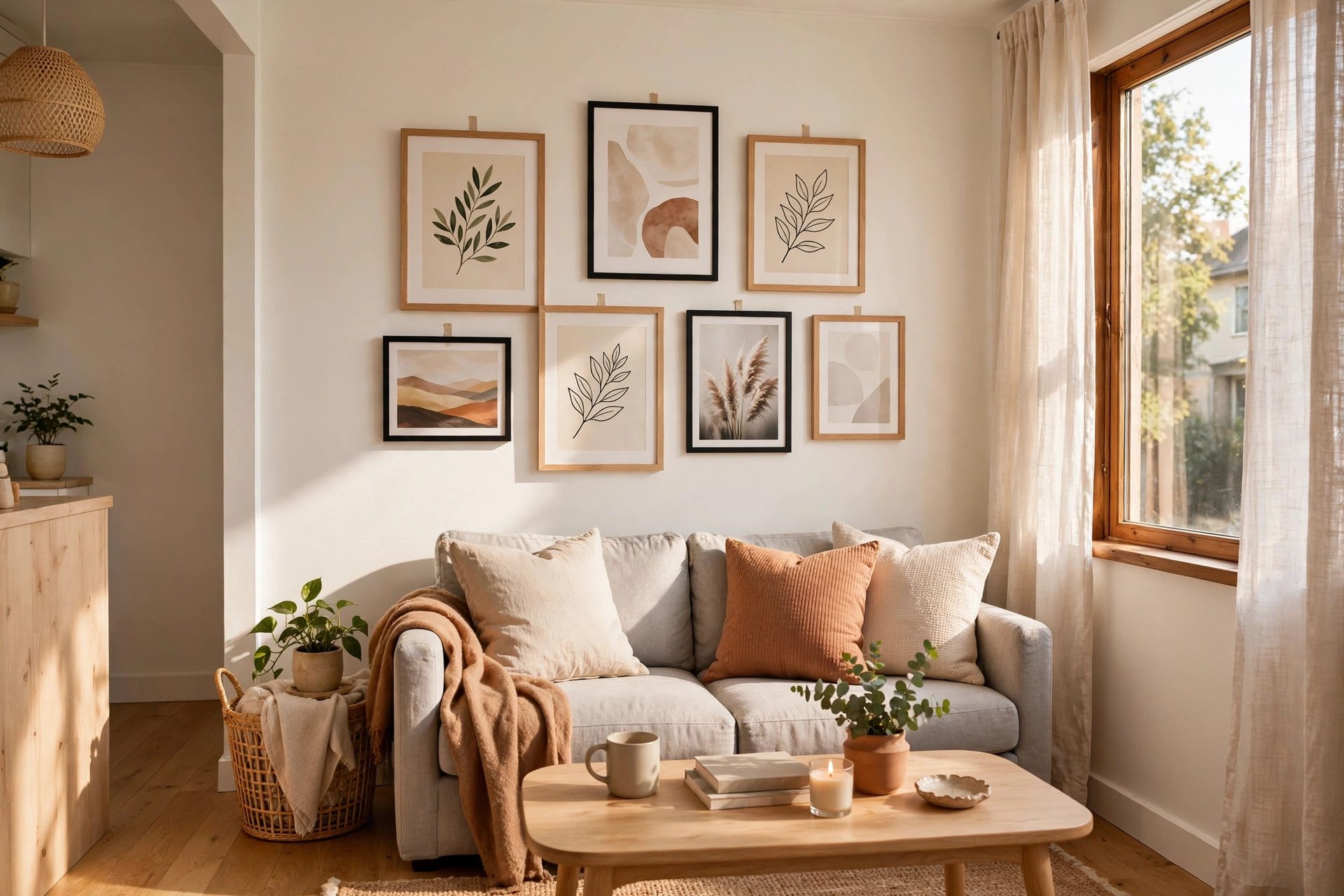
Blank rental walls are not a personality trait — they are just a lease condition. Almost every look a homeowner gets from a drill, a renter can get another way. These renter friendly wall decor ideas are organized by method: hang it with removable adhesive, stick it with peel-and-stick products, lean it, or hang it from something that already exists. All 18 need zero nails and zero patching at move-out.
This is the wall-specific companion to our broader roundup of renter-friendly apartment decorating ideas. Here, everything stays on the wall — or just in front of it.
Before You Hang Anything: Weight, Surface, and Lease Checks
Three checks prevent almost every wall-related deposit deduction. Match each piece to the method’s limit on the packaging — strips and hooks are only damage-free when not overloaded. Check your surface: adhesives hold best on smooth, clean, fully cured paint, and struggle on texture, brick, and fresh paint, so test one strip in a hidden spot first. And re-read your lease: most ban holes, not decor. Damage-free hanging guidance, such as Frame It Easy’s renter decor guide, agrees: plan first, then match method to weight.
Hang It: Removable Adhesive Ideas (1–5)
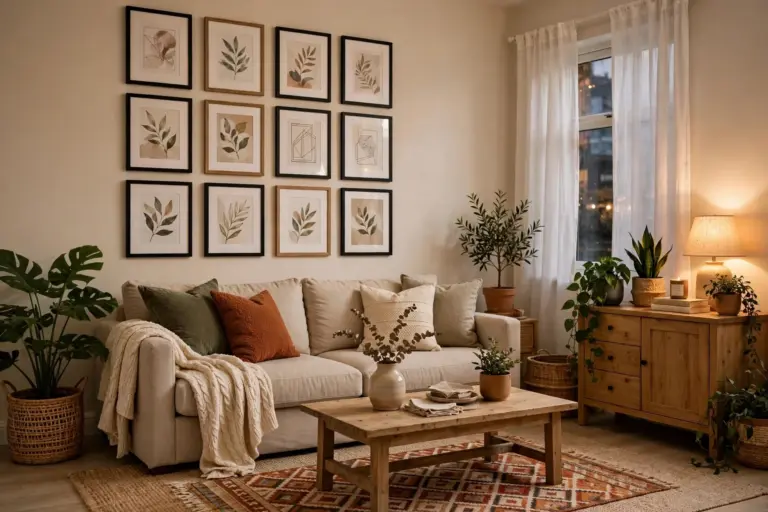
1. Build a Gallery Wall on Picture-Hanging Strips
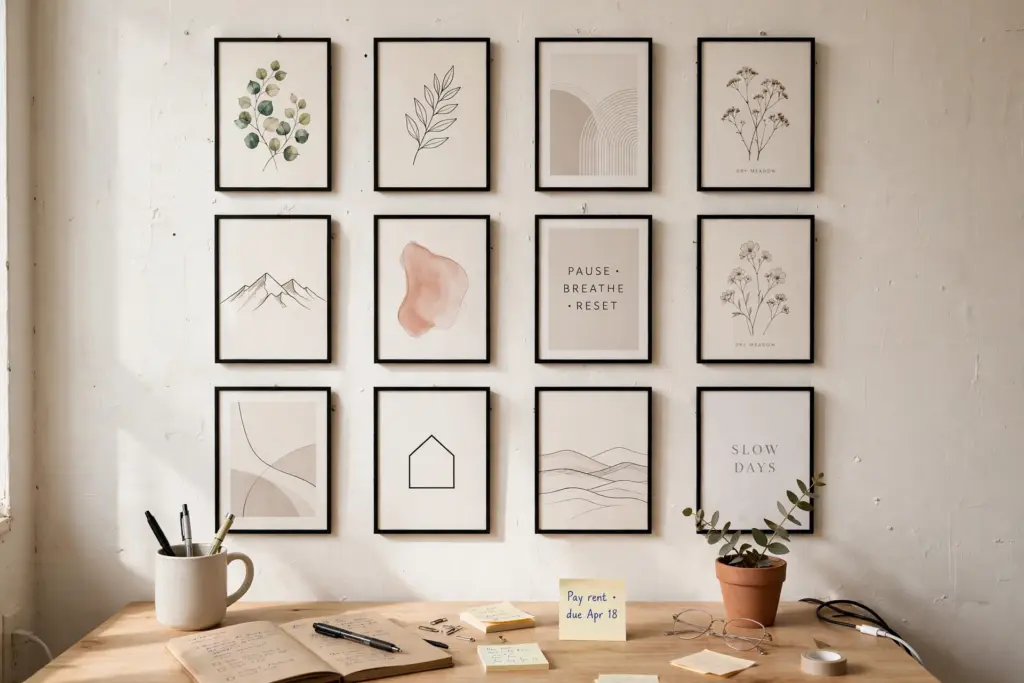
Interlocking picture-hanging strips are the workhorse of nail-free decorating. Press the pairs together, apply one side to the frame and one to the wall, and the frame still lifts off for cleaning. Lay the arrangement on the floor first, then transfer it starting from the center. Keep frames lightweight — thin wood, aluminum, or acrylic — and the strips stay within their rating.
2. Go Lightweight on Purpose: Acrylic and Poster Frames
Half of damage-free hanging is choosing art that barely needs holding. Acrylic frames, poster frames with plastic glazing, canvas panels, and prints in magnetic hangers weigh a fraction of a traditional piece, which opens up every adhesive option. A useful rule: if a piece feels heavy in one hand, it belongs in the lean-it section below, not on a strip.
3. Use Removable Hooks for Wreaths, Hats, and Lightweight Decor
Adhesive hooks handle what strips cannot: a seasonal wreath, a small hanging planter, a garland, or hats and scarves displayed as decor. Choose hooks rated above the object’s weight, clean the spot first if the instructions call for it, and give the adhesive its full curing wait before hanging anything. Skipping that wait is the most common reason hooks fail early.
4. Add a Picture Ledge Without the Screws
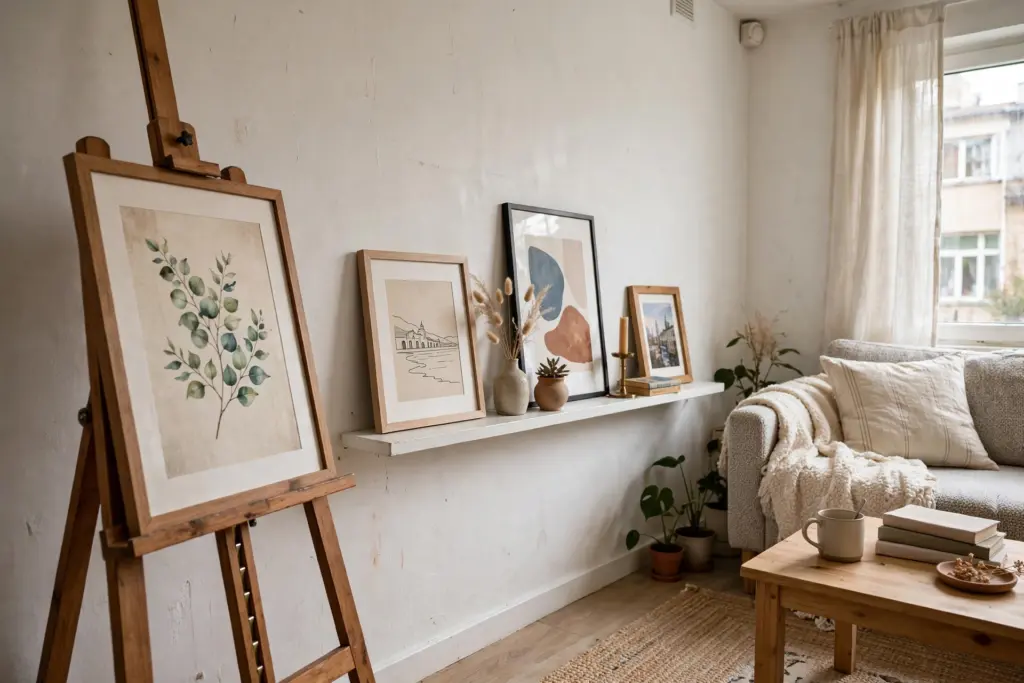
A picture ledge is a gallery you can rearrange weekly. Two no-drill routes work: a short ledge mounted with heavy-duty removable strips rated for the loaded weight, or a freestanding ledge unit leaning against the wall. Lean frames at a slight angle, add a small plant for depth, and rotate art seasonally.
5. Try Magnetic Poster Hangers and Clip Rails
Magnetic wooden hangers grip the top and bottom edges of a print and hang from a single removable hook — a clean, frameless look for maps, calendars, and large prints. Clip rails and string-and-clip displays do the same for photos and postcards. Both weigh almost nothing, come down in seconds, and let you swap the art without touching the wall hardware.
Stick It: Peel-and-Stick and Tape Ideas (6–9)
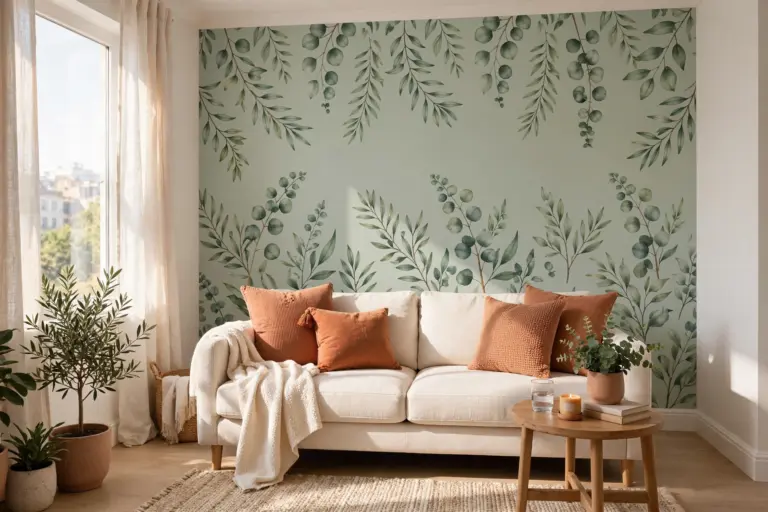
6. Create One Peel-and-Stick Wallpaper Accent Wall
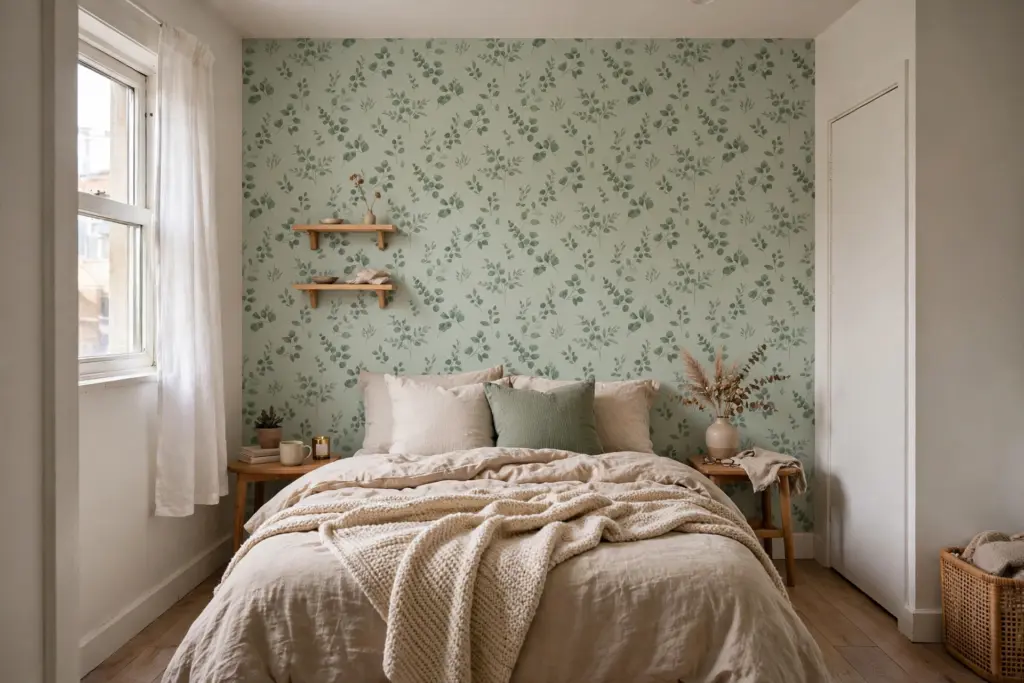
Peel-and-stick wallpaper delivers the biggest change on this list, so it deserves the most caution. Choose a product sold specifically as removable, confirm your paint is smooth and sound, and leave a test piece in a hidden area for several days first. Work one wall, smoothing each panel slowly downward. Renter guides to nail-free decor, including ColorMelon’s renters’ guide to nail-free wall decor, agree the test spot is not optional.
7. Use Removable Wall Decals for Pattern Without Commitment
Decals are wallpaper’s low-risk cousin. Arches, botanical sprigs, dots, and faux molding designs can define a reading corner, desk zone, or headboard wall in under an hour. They peel off individually, so a mistake costs one sticker, not a panel. Space them with painter’s tape guides when building a repeating pattern, and keep a few spares for replacements.
8. Frame Photos and Posters With Washi Tape
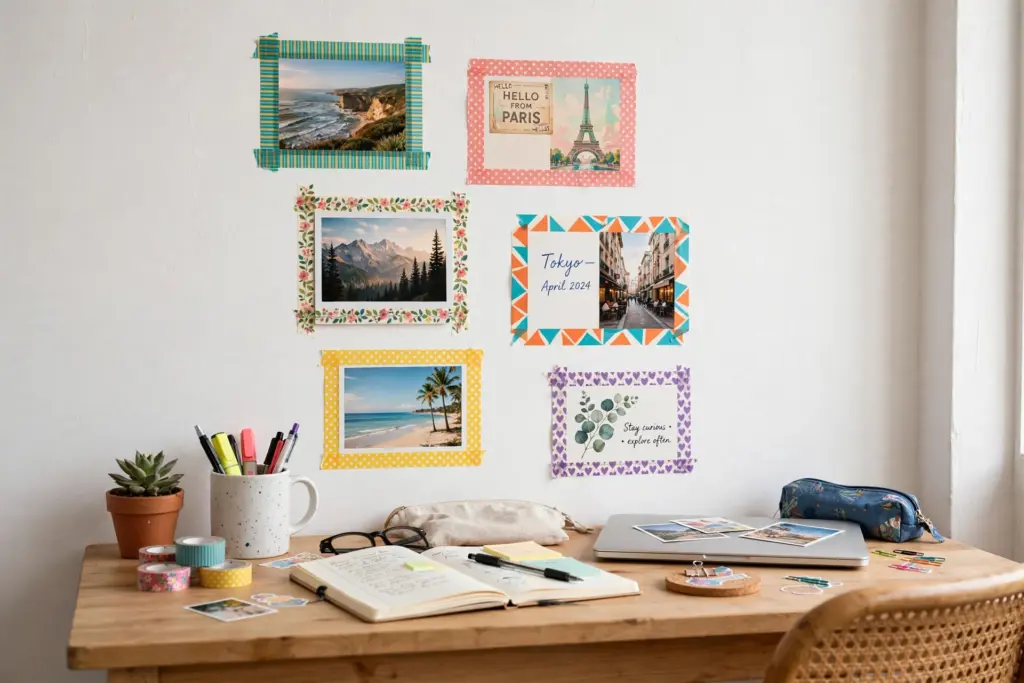
Washi tape frames cost almost nothing and suit anything flat: photos, postcards, ticket stubs, kids’ drawings, a rotating print of the month. Build the tape border on the wall, press the piece inside it, and the tape is both frame and fastener. A whole washi gallery can come down in one move-out walkthrough. Keep it for light paper goods — tape is not a frame hanger.
9. Panel a Section With Removable Contact Paper
Removable contact paper and adhesive panels can fake wood planking, linen texture, or a color-blocked rectangle behind a desk or bed. Cut panels to a defined section rather than a full wall, align edges carefully, and smooth bubbles out with a card as you go. The covered area stays small and bounded, so removal is manageable and the edge reads as intentional design.
Lean and Display It: No Wall Contact at All (10–14)
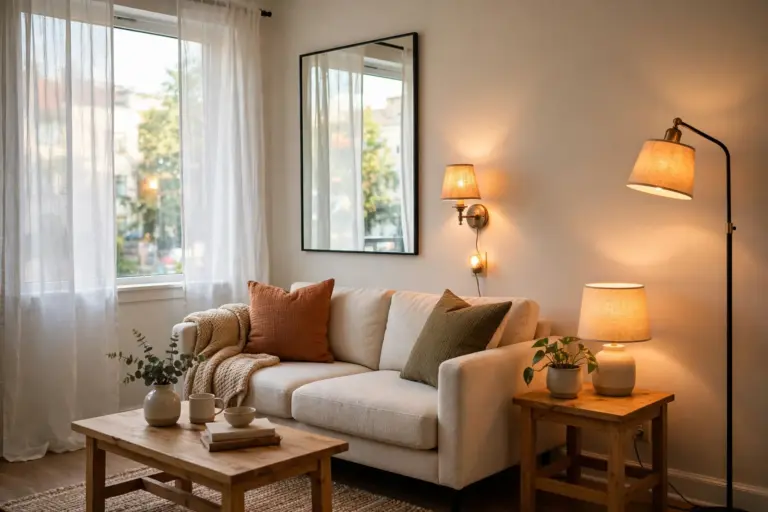
10. Lean an Oversized Mirror Against the Wall
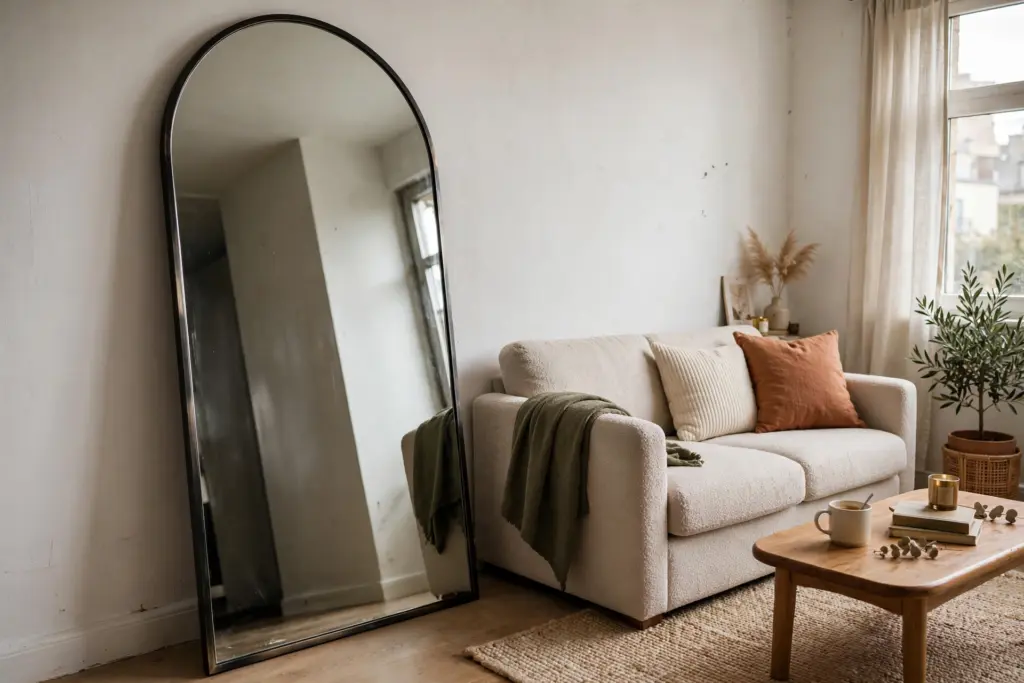
An oversized mirror leaning at a slight angle decorates a blank wall, bounces light into the room, and makes a small space feel larger — all at once. Rest it away from door swings and busy paths, add a non-slip pad under the base, and, for tall mirrors in homes with kids or pets, secure the top discreetly to heavy furniture rather than the wall.
11. Lean Large Art on the Floor
One large framed piece resting on the floor against the wall reads as a deliberate gallery choice, especially layered in front of a smaller frame. It suits renters perfectly because the heaviest art is precisely what adhesives should not hold. Ground it with a plant or a stack of books beside it, and choose a low-traffic wall so the piece is decor, not an obstacle.
12. Layer Art on Bookshelves and Dressers
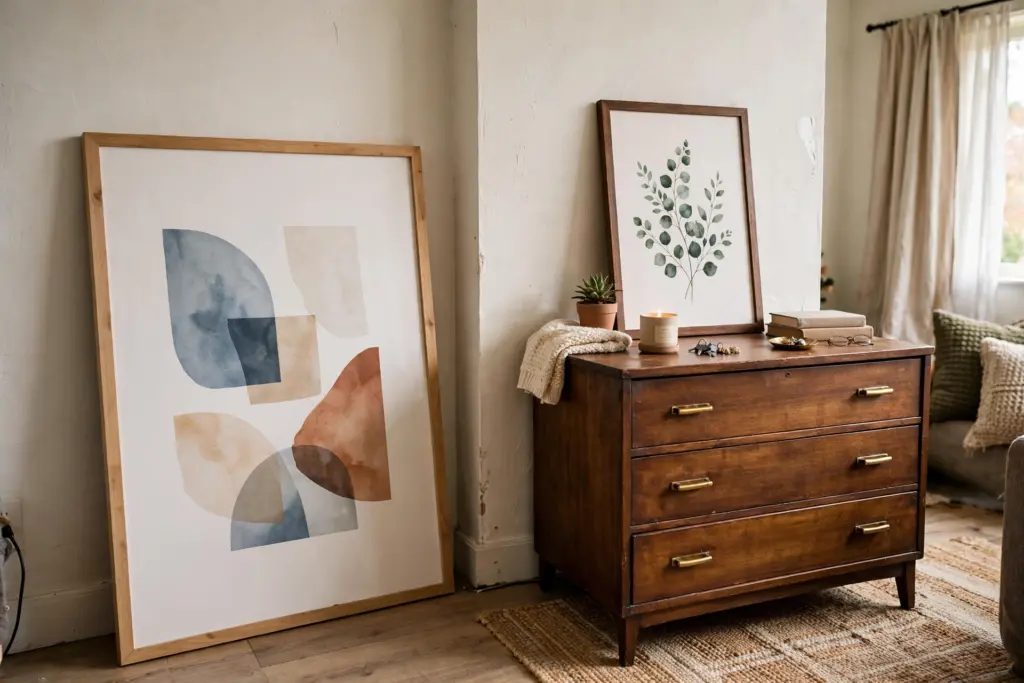
Dresser, sideboard, and bookshelf tops are display surfaces you already own. Lean a medium frame on top, overlap a smaller frame in front, and add one non-frame object — a vase, a candle, a plant. In an open studio it also marks the sleeping zone, pairing well with our studio apartment layout ideas.
13. Display a Statement Piece on an Easel
A wooden or metal easel turns one favorite piece into a focal point that moves anywhere — beside a reading chair, in an entry corner, next to the sofa. Swapping the piece takes seconds, and the easel folds away when not needed. Choose a lip deep enough for your frame’s thickness, and let the easel be the only decor in that corner; it is already making the statement.
14. Style a Ladder Shelf as a Vertical Gallery
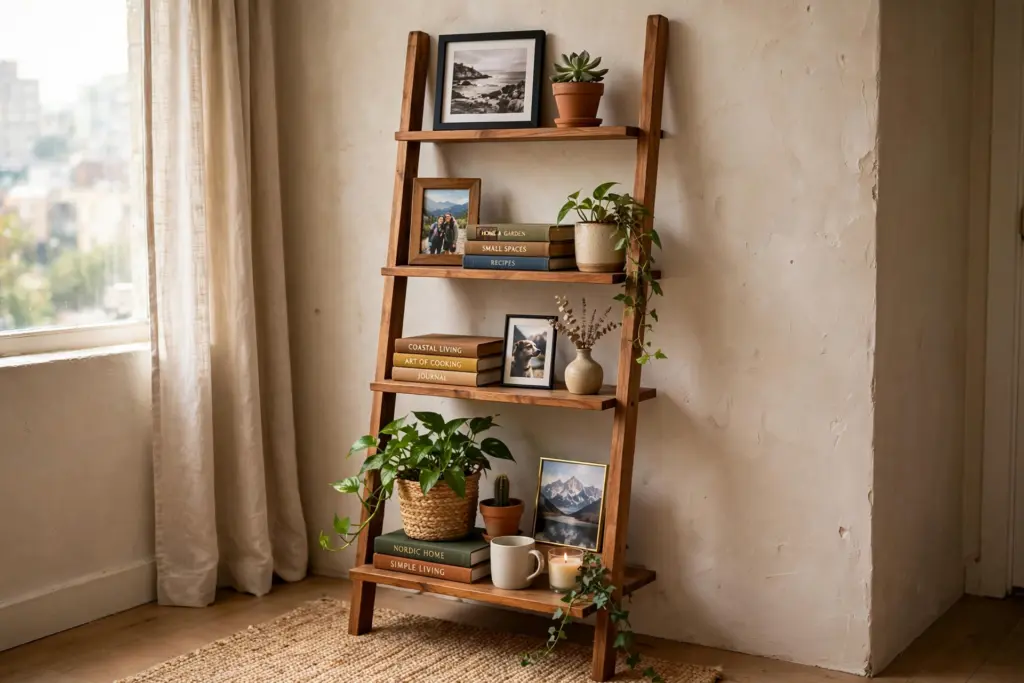
A leaning ladder shelf borrows vertical wall space while standing entirely on the floor. Style each rung like a mini ledge: one framed photo, one plant, a short stack of books, breathing room. It fills a tall blank wall that strips alone would struggle with, adds storage as a bonus, and leaves with you at the end of the lease.
Hang It From What Already Exists (15–18)
15. Hang a Tapestry or Fabric Panel From a Tension Rod
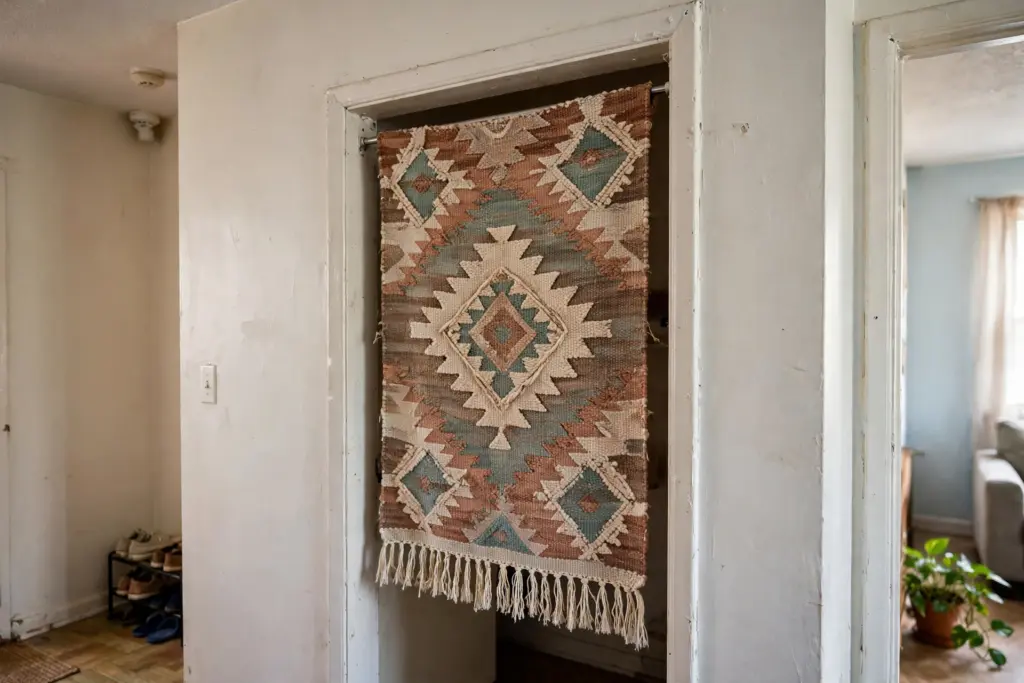
A tension rod fitted inside a doorway, alcove, or between two walls can carry a tapestry, patterned fabric, or lightweight curtain panel as instant large-scale art. Fabric also softens echo and covers a lot of wall for little money. Measure the span, choose a rod rated for the fabric’s weight, and use clip rings if there is no rod pocket.
16. Use Over-the-Door Hooks for Wreaths and Panels
The top of a door is a free mounting point. Over-the-door hooks hold a wreath on the room side, a fabric panel, or a hanging organizer dressed up with dried flowers. Add felt pads where the bracket meets the door, and confirm the door still closes and latches smoothly — never force it, because a door dragged against its frame is how paint chips happen.
17. Hang Lightweight Plants From Removable Ceiling Hooks
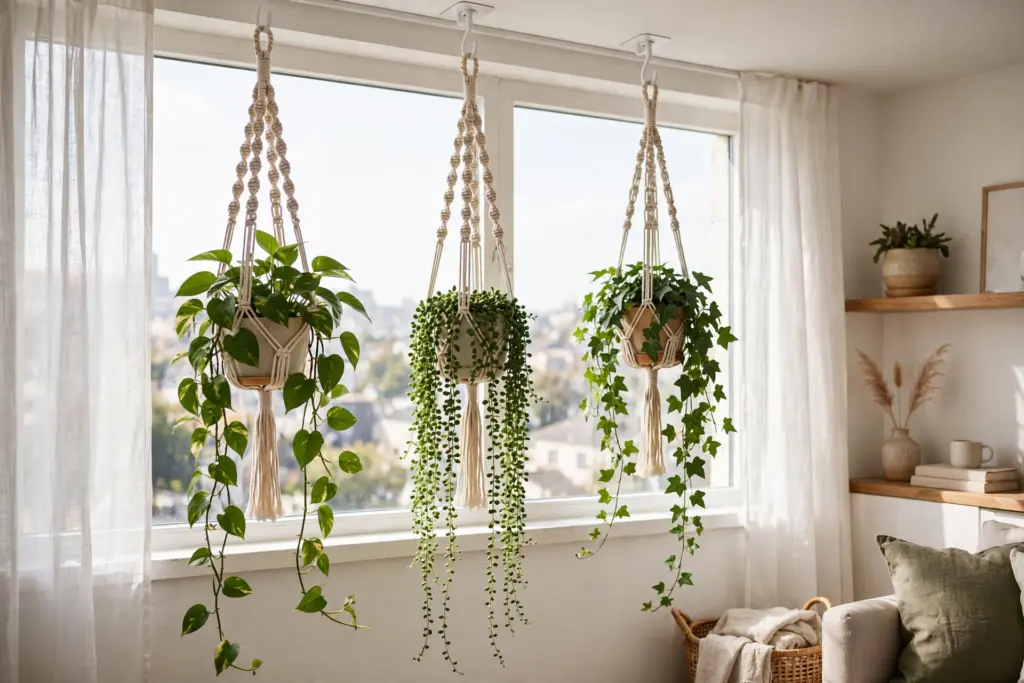
Trailing plants decorate the wall plane without frames. Adhesive ceiling hooks rated for the load can carry a small pot in a macrame hanger near a window — keep it lightweight, choose a plastic planter over ceramic, and never hang it above a bed or desk chair. Or drape the hanger from a removable wall hook instead.
18. Hang Macrame, Wall Hangings, and Garland From Removable Hooks
Textile hangings — macrame, woven pieces, yarn art, tapestries on dowels — deliver texture flat art cannot, and most weigh very little. One or two removable hooks hold a dowel-ended hanging; a row of small hooks can carry a garland or a string of photos across a wall. Textiles also forgive imperfect walls, softening scuffs and uneven paint that frames would highlight.
Removal Day: The Checklist That Protects Your Deposit
Removal technique matters as much as the hanging method. For strips, hold the frame steady and pull the tab slowly straight down along the wall — never out toward you — so the adhesive stretches and releases. Peel wallpaper and decals back slowly at a low angle, and stop if paint lifts; gentle heat from a hair dryer on low can soften stubborn adhesive. Photograph every wall afterward as move-out evidence that these renter friendly wall decor ideas left no trace.
Frequently Asked Questions (FAQ)
What is the safest way to hang pictures in a rental?
Match the method to the weight: strips for lightweight frames, rated adhesive hooks for wreaths and textiles, leaning for anything large or heavy. Respect the packaging’s rating and curing time, and remove strips by pulling the tab straight down along the wall.
Will removable strips damage paint when they come off?
They are designed to release cleanly from sound, fully cured paint when removed with the slow straight-down stretch. Risk rises on fresh paint, heavy texture, poorly bonded paint, and in high humidity — test one strip in a hidden spot first.
Is peel-and-stick wallpaper really safe for renters?
It can be, with conditions: a product sold as removable, smooth paint in good condition, and a hidden test section left for several days first. Remove it slowly at a low angle. If the test piece lifts paint, use decals or a tapestry instead.
How can I decorate a wall without touching it at all?
Lean an oversized mirror or large art on the floor, layer frames on dressers and bookshelves, use an easel for a statement piece, or style a ladder shelf against the wall. None of these contact the wall surface, so removal risk is zero.
What should I do if an adhesive leaves residue at move-out?
Start gently: roll residue off with a fingertip, then try warm soapy water on a soft cloth. Avoid scraping painted walls with metal tools, and photograph the wall before and after cleaning as a record of the condition you left it in.