Nightstand Alternatives for Small Bedrooms
If a standard nightstand will not fit beside your bed, you do not have to give up on having a place for your phone, a glass of water, and a book. These nightstand alternatives for small bedrooms are organized by the one measurement that matters most: how much space you actually have beside the bed. Measure first, then pick from the group that matches your gap, and you will end up with something that works instead of something you keep bumping into.
A nightstand does two jobs: it holds a few things within arm’s reach, and it holds a light. Separate those two jobs and the options open up fast: a shelf can hold the things while a clip-on light handles the glow. Every idea below is renter-friendly, meaning it needs no holes at all or uses fixings you can remove and patch before moving out. Where an idea needs screws, check your lease first.
Measure the Gap First
Before you buy anything, measure the space between the side of your bed frame and the wall or the next piece of furniture. Measure at mattress height, not at floor level, because baseboards and bed legs can make the floor measurement misleading. Then use these bands to shop:
- Under 10 inches: forget furniture entirely. Your options live on the wall or on the bed itself: a floating shelf, a bedside caddy, or a clamp-on shelf.
- 10 to 16 inches: a genuinely narrow piece fits here: a C-table, a stool, a slim rolling cart, or a wall-mounted drawer.
- Over 16 inches: a small table may fit after all, but measure the walkway too. You still need enough room to get in and out of bed without squeezing past it.
Then check the height rule: whatever surface you choose should sit within about 2 inches of the top of your mattress. Much lower forces an awkward reach in the dark, and much higher turns into a ledge you knock things off. Keep the same rule for wall-mounted options: hold the shelf or drawer up at mattress height before you mark any holes.
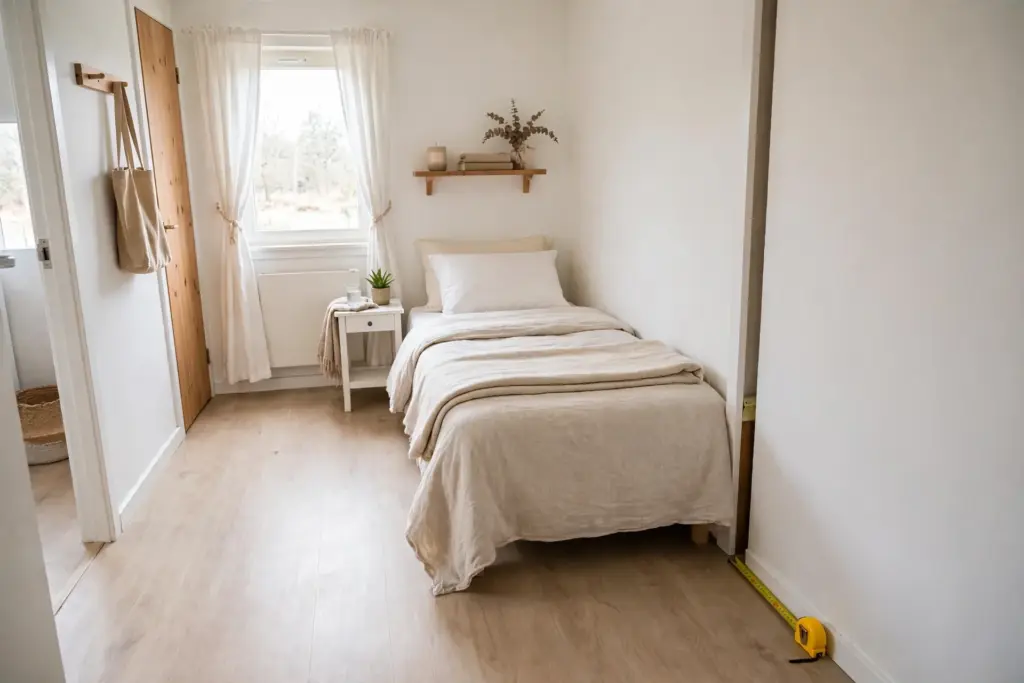
Under 10 Inches: Wall-Only and Bed-Mounted Options
When the gap is under 10 inches, floor space is not an option, and that is fine. The wall beside the bed and the bed itself are both usable, and both keep the floor clear for walking.
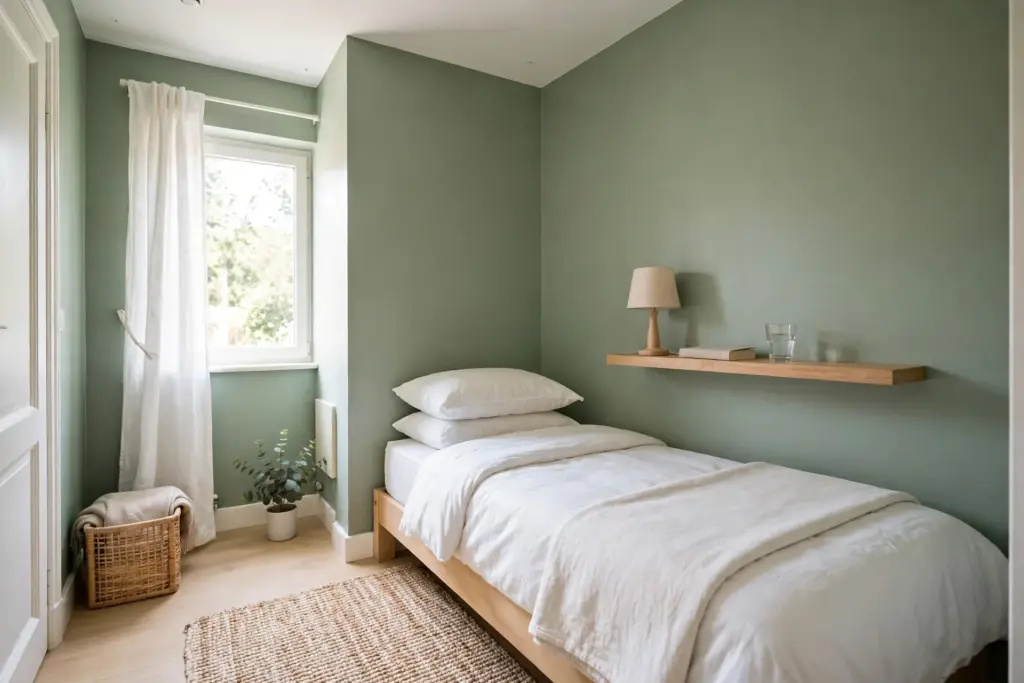
1. A Floating Shelf at Mattress Height
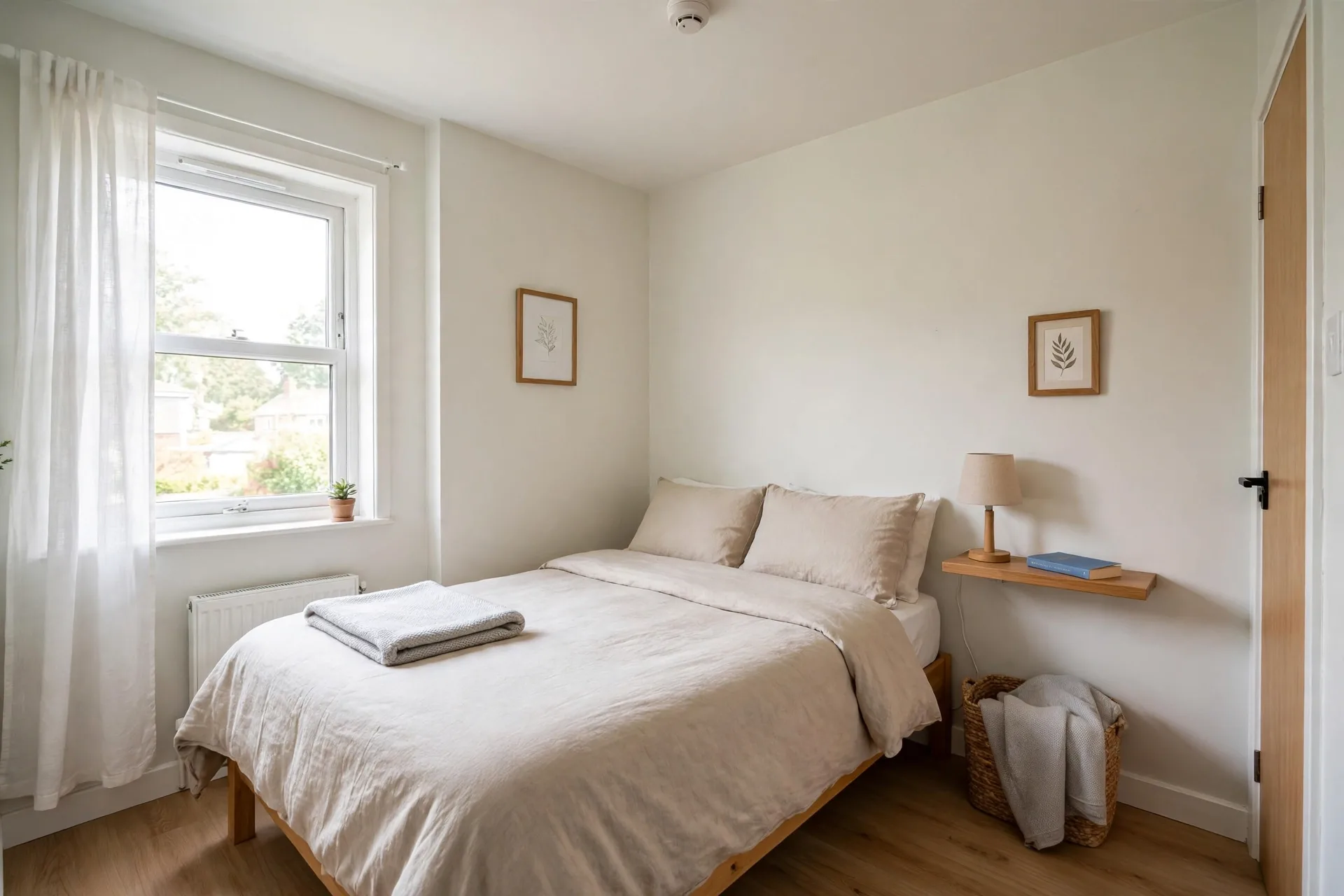
A single floating shelf mounted at mattress height is the closest thing to a real nightstand without taking any floor space. It holds a phone, a book, and a glass of water. Choose a shelf deep enough for your lamp base plus a phone, usually around 8 to 10 inches deep, and mount it so the top sits level with the mattress. Because it is screwed to the wall, check your lease first, use wall anchors rated for the load, and keep the weight light.
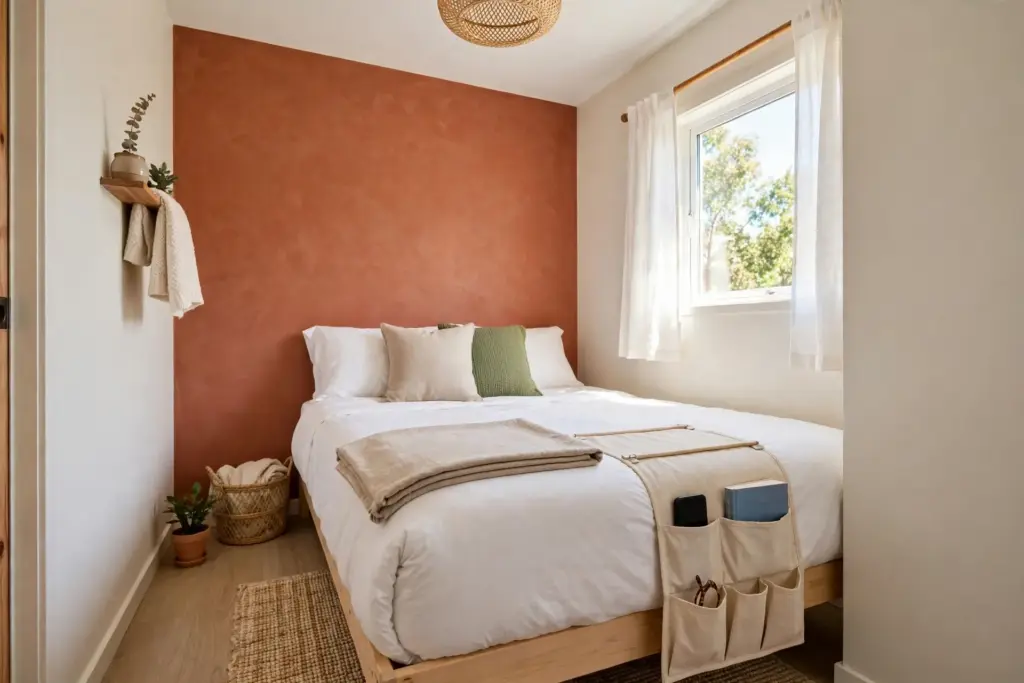
2. A Bedside Caddy Under the Mattress
A bedside caddy is a fabric organizer with pockets that slides under the mattress and hangs down the side of the bed. It needs zero wall holes and zero floor space, making it one of the most lease-safe options here. It suits flat things: a phone, a paperback, reading glasses, and a charger. It will not hold a glass of water safely, so keep drinks on a dresser or windowsill instead.
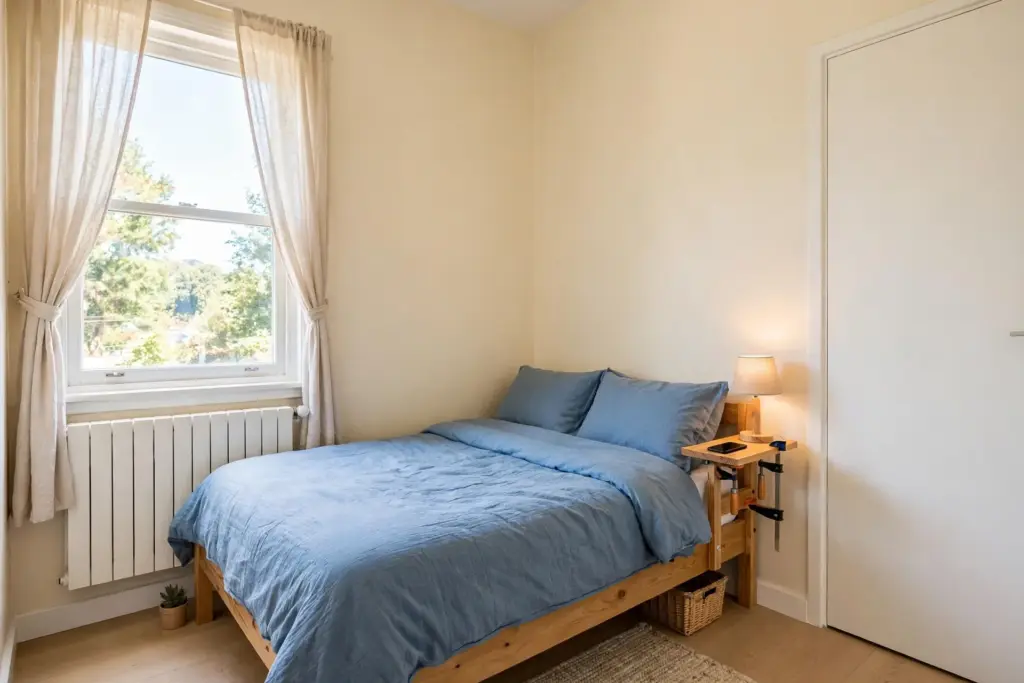
3. A Clamp-On Bedside Shelf
A clamp-on shelf grips the bed frame or headboard and gives you a small platform right at mattress height. It installs in minutes, leaves no marks on the wall, and moves with you. Check the weight limit before you load it, and tighten the clamp properly so it cannot slip in the night.
10 to 16 Inches: Narrow Pieces That Earn Their Footprint
With 10 to 16 inches to play with, a small piece of furniture fits, as long as it is genuinely narrow. Measure the piece, not just the gap, and leave a little breathing room on each side so you are not scraping the wall every time you move it.
4. A C-Table That Slides Over the Bed
A C-table has a base that slides under the bed and a top that hovers over the mattress edge, so it uses space you already have. Its footprint is mostly hidden, which is why it works well in a 10 to 16 inch gap. Check that the base fits under your bed frame and the top sits close to mattress height before you buy.
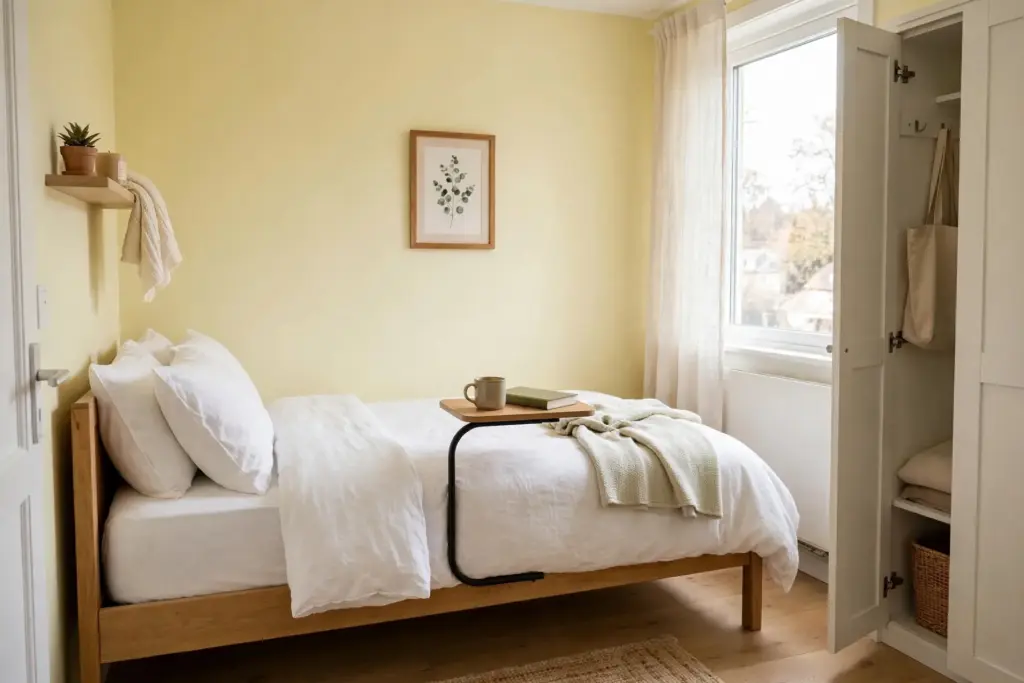
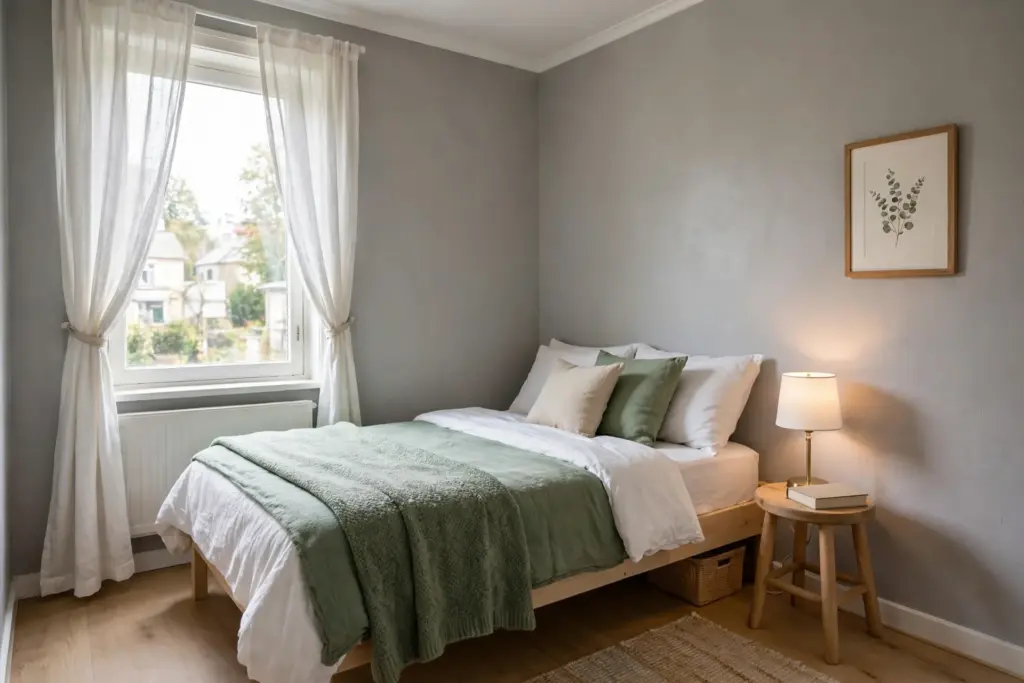
5. A Stool or Small Chair
A plain wooden stool is one of the simplest swaps: narrow, cheap, easy to move, and it doubles as extra seating when guests visit. Pick one close to mattress height, with a flat top wide enough for a lamp base and a book. The trade-off is storage: a stool holds what sits on top and nothing else, so keep a small basket underneath for chargers if you want more.
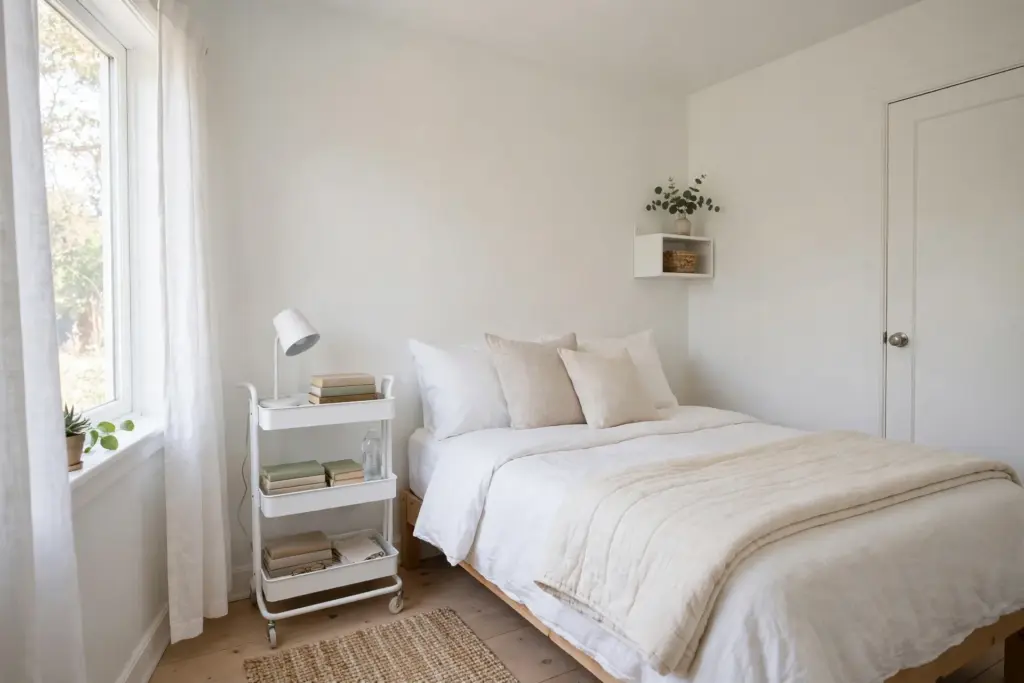
6. A Slim Rolling Cart
A slim rolling cart, usually around 10 to 12 inches wide, rolls into the gap and brings two or three tiers of storage with it. The top tier holds a lamp and a book, and the lower tiers hide chargers and notebooks out of sight. Lock the casters once it is in place so it does not drift, and roll it out when you change the sheets.
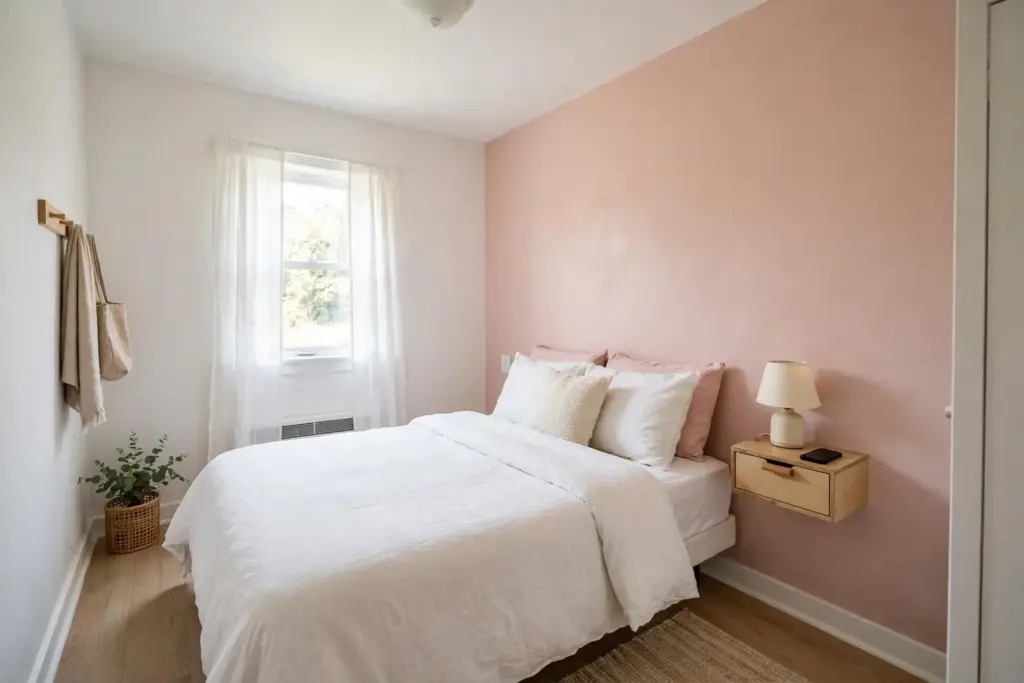
7. A Wall-Mounted Drawer
A wall-mounted drawer gives you what a shelf cannot: a closed spot for things you would rather not see, like chargers and earplugs. It floats above the floor, so the room still feels open, and the top works as a normal nightstand surface. Like a floating shelf, it needs wall fixings, so check your lease and use anchors rated for the weight.
Over 16 Inches: A Real Table May Fit After All
Once the gap passes 16 inches, a small table becomes realistic again. The trick is to keep it narrow and to protect the walkway, because a table that blocks your path out of bed is worse than no table at all.
8. A Stack of Books With a Tray
A stack of sturdy books topped with a small tray is the zero-cost option, and it works well for a phone, glasses, and a glass of water. Stack books you already own to mattress height, put a tray on top so the surface is flat, and keep the stack against the wall so it cannot topple.
9. A Headboard Ledge or Storage Headboard
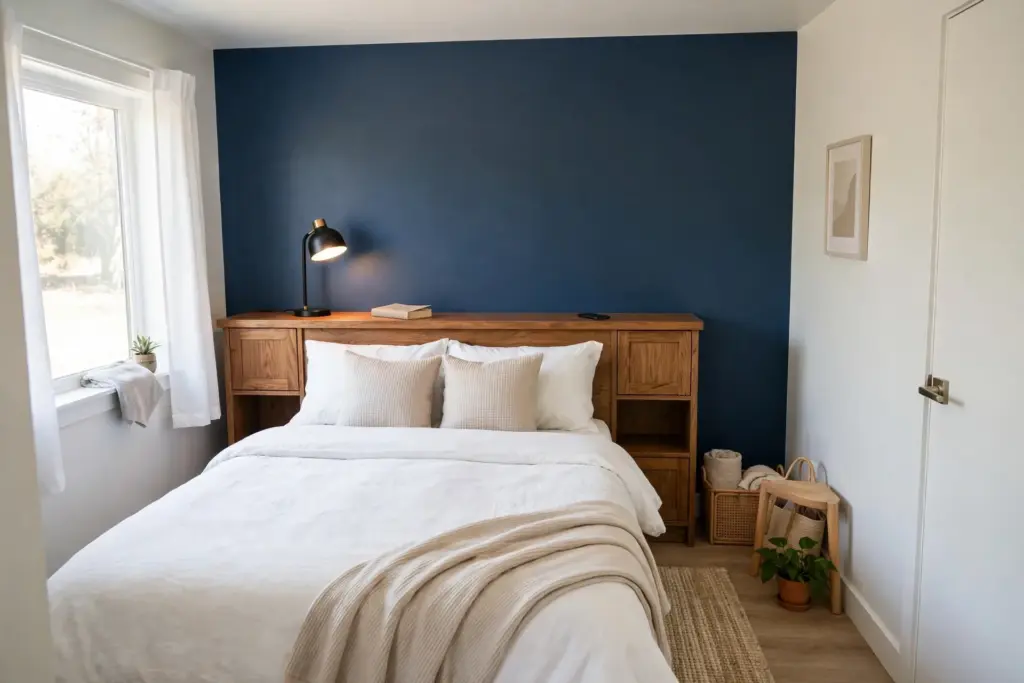
If your bed has a wide headboard ledge, or you swap in a storage headboard, the headboard itself becomes the nightstand. A ledge a few inches deep holds a phone, a book, and a small lamp, and a storage headboard adds cubbies on each side. This uses no extra floor space at all. Measure your headboard depth first, and add a clip-on lamp if the ledge is too narrow for a full lamp base.
10. A Small Dresser or Narrow Chest
A narrow chest of drawers beside the bed does double duty: the top is your nightstand surface, and the drawers replace a chunk of closet storage. This only works if the walkway stays comfortable, so measure the chest depth plus your path to the door first. Keep the top clear except for a lamp and one or two nightly items. For more ideas, see our guide to small bedroom storage ideas.
11. The Corner of a Nearby Dresser
Sometimes the best nightstand is furniture you already own. If a dresser stands near the bed, claim its nearest corner as your nightstand zone: a small tray for your phone and glasses, and a clip-on light on the dresser edge. It costs nothing and keeps the gap beside the bed clear — just keep it to nightly items only.
Split the Light Job From the Surface Job
The fastest way to make any of these ideas work is to stop asking one object to do everything. A clip-on lamp on the headboard or a small lamp on the windowsill handles the light, leaving your shelf, caddy, or stool free for the things you reach for. Battery-powered and adhesive-mounted lights are especially renter-friendly, since they leave no holes. If you are rethinking the room around the bed, our tricks for making a small apartment look bigger can help.
What to Skip
Two shortcuts usually disappoint. First, using the floor as your nightstand: a phone and a glass on the floor get kicked and knocked over, and they collect dust fast. Second, squeezing in an oversized table that blocks the walkway: if you have to sidestep it every morning, it is too big. A smaller option you can live with beats a full-size nightstand you keep bumping into. For a broader plan, start with our pillar guide to small apartment storage ideas.
The right choice comes back to your measurement. Under 10 inches, go wall or bed-mounted. From 10 to 16 inches, pick a narrow piece that earns its footprint. Over 16 inches, a small table works if the walkway stays clear. Keep the surface close to mattress height, keep the light separate if space is tight, and pick the option your lease allows. That is how nightstand alternatives for small bedrooms stop being a compromise.
For more inspiration on the range of options, see these roundups of what can be used as a nightstand and nightstand alternatives for small bedrooms.
Frequently Asked Questions (FAQ)
What can I use instead of a nightstand in a tiny bedroom?
A floating shelf, a bedside caddy, or a clamp-on shelf works when there is almost no floor space, while a C-table, stool, or slim rolling cart fits a 10 to 16 inch gap. The best pick depends on your gap measurement, not on what looks best in a store.
How high should a nightstand alternative be?
Aim for a surface within about 2 inches of the top of your mattress. Much lower means an awkward reach in the dark, and much higher turns the surface into a ledge you knock things off.
What is the best no-drill nightstand alternative for renters?
A bedside caddy or a clamp-on shelf needs no wall holes at all, and a stool, rolling cart, or C-table needs no fixings either. If your lease bans screws, start with one of these before considering adhesive-mounted options.
Can I use a floating shelf as a nightstand?
Yes, as long as it is mounted at mattress height and deep enough for your lamp base plus a phone, usually around 8 to 10 inches deep. Check your lease first, use wall anchors rated for the load, and keep the weight light.