Storage Ideas for Apartments With No Closet
No built-in closet does not mean no storage. It means the closet has to be built from furniture and zones instead of walls and doors. These apartment with no closet storage ideas replace one big hidden closet with smaller, visible systems that renters can install, move, and take along when the lease ends. The goal is not to hide everything. It is to give every category of belongings one clear home, so the flat stays calm even though the storage is out in the open.
Start by sorting before buying anything. Clothes you wear weekly, clothes for other seasons, shoes, bags, bedding, and cleaning supplies all need different homes. A single giant wardrobe will not solve all of them, and it will eat the one wall you had. Zones will.
Build Zones, Not One Big Closet
A built-in closet does four jobs at once: hanging, folding, shoes, and hiding. When there is no closet, split those jobs across the flat. Hanging goes on a rack or wardrobe, folding goes in drawers or bins, shoes live by the door, and anything unattractive goes in a closed box. Put each zone where the thing is actually used: coats by the door, daily clothes in the bedroom, bedding near the bed.
Two rules keep open storage looking intentional instead of messy. First, repeat a small number of containers: same hangers, same bin style, same color family. Second, leave a little empty space on every shelf. A shelf packed edge to edge looks like overflow; a shelf with breathing room looks like a choice. The ideas below follow both rules.
1. Start With a Freestanding Wardrobe
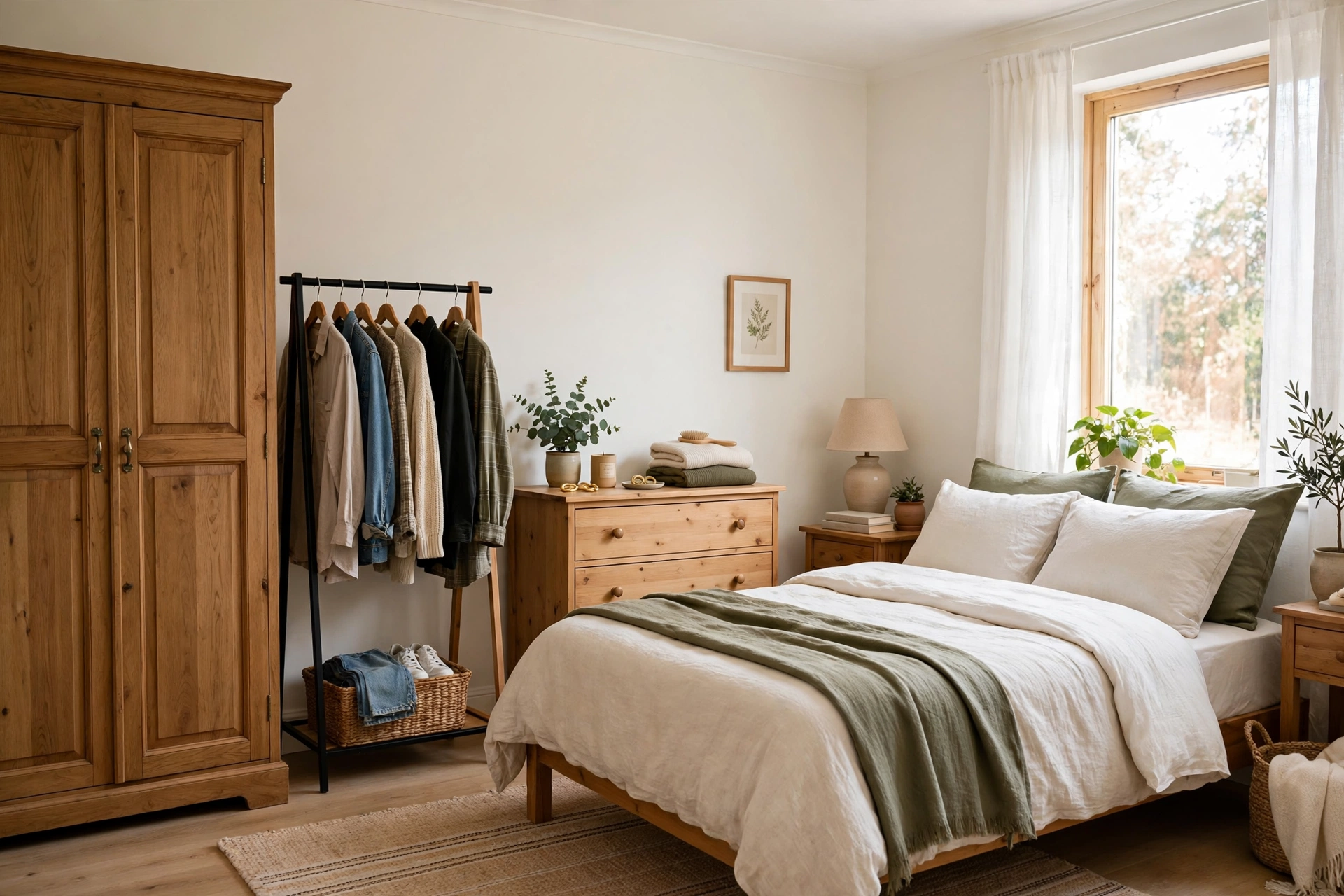
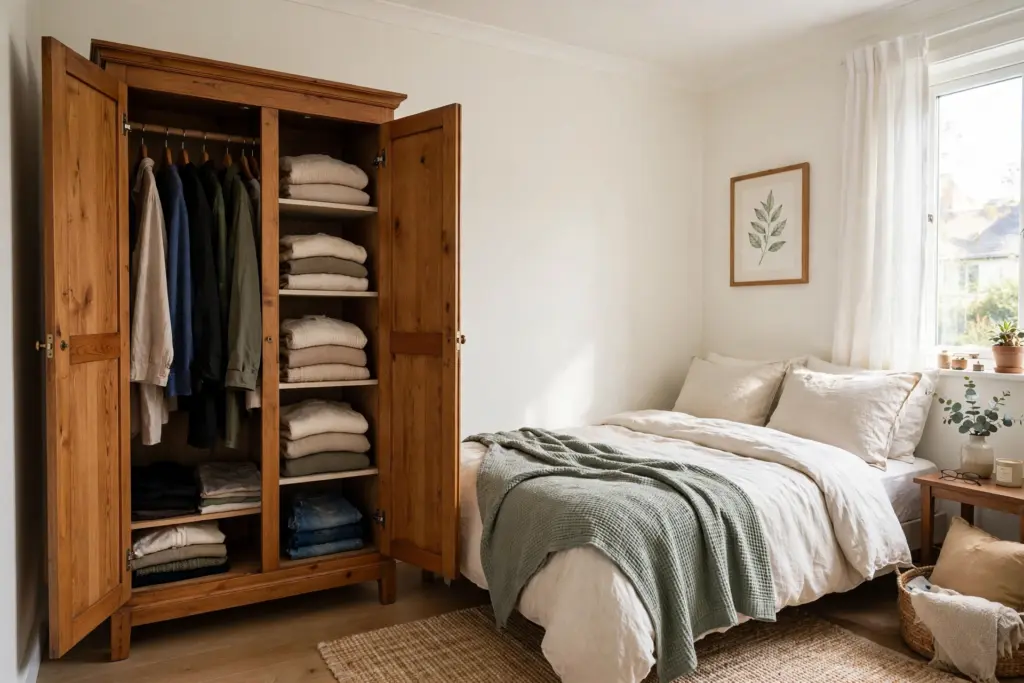
A freestanding wardrobe or armoire is the closest thing to a real closet, and it is the first piece to buy if the budget allows one large item. Choose one with both a hanging rail and shelves, so shirts hang on one side and knits fold on the other. Measure the wall, the ceiling height, and the doorways it must pass through on delivery day, since a wardrobe that cannot get into the flat helps no one.
Keep the doors closed and the wardrobe becomes a wall of furniture, not a display. Inside, add small dividers or shelf baskets so folded stacks do not topple every time one sweater is pulled out.
2. Use an Open Clothing Rack for Daily Clothes
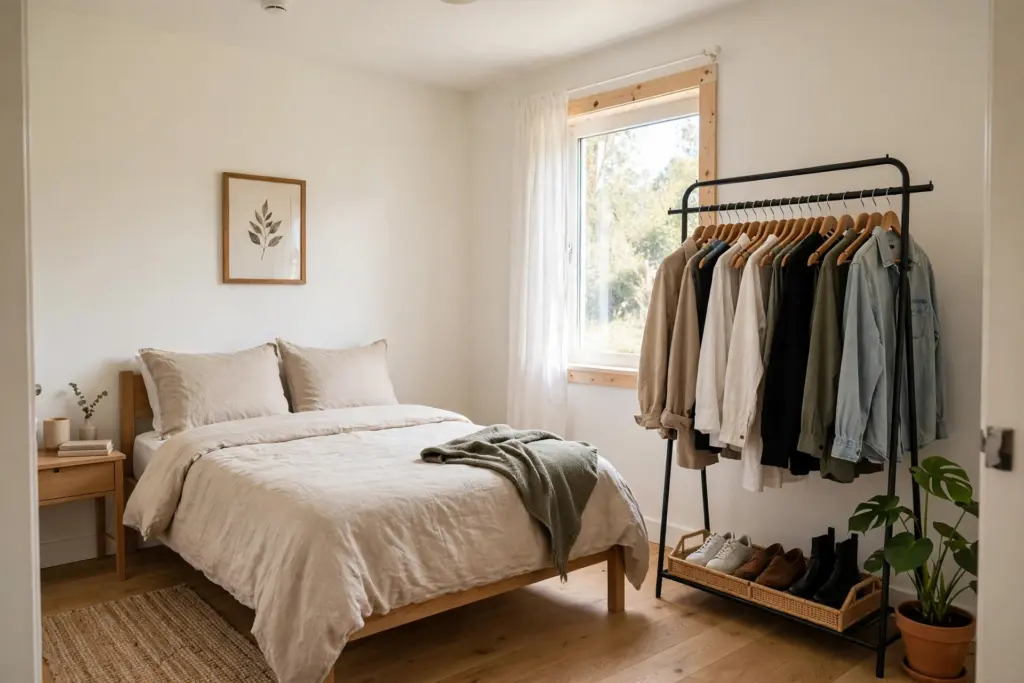
An open clothing rack suits the clothes you reach for every day. It takes almost no floor space, it costs far less than a wardrobe, and it makes choosing an outfit faster because everything is visible. The trick to keeping it tidy is editing: a rack holds a week’s worth of outfits gracefully and a month’s worth badly.
Use matching hangers, face everything the same way, and keep a small tray or basket below for shoes. If the rack starts to sag or crowd, that is the signal to rotate some pieces out, not to buy a second rack.
3. Build a Closet System Against a Wall
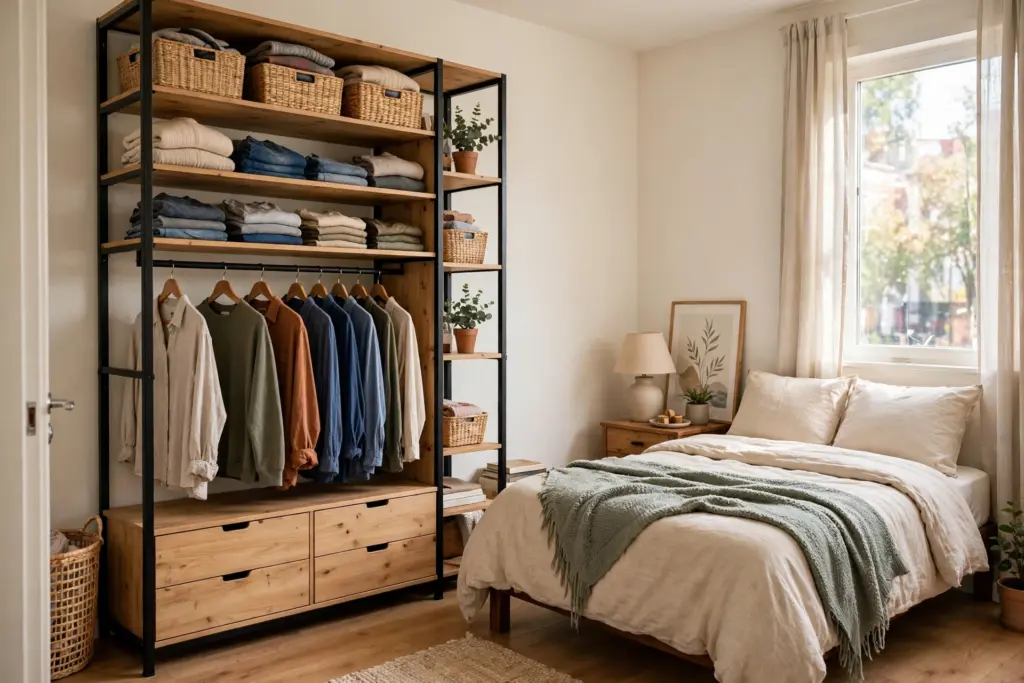
Closet systems made for the inside of a closet can be mounted, or freestanding versions can simply stand, along an empty bedroom wall. The result is a full hanging rail, shelves, and drawers without any construction. Freestanding versions are the renter-safe choice: they lean or stand on their own frame and leave with you at move-out.
Anchor a tall freestanding unit to the wall only if the maker requires it and the lease allows it, using removable or properly repaired fixings. Keep the heaviest items low, the hanging rail at a comfortable height, and the top shelf for light, rarely used boxes.
4. Let a Dresser Do the Folding
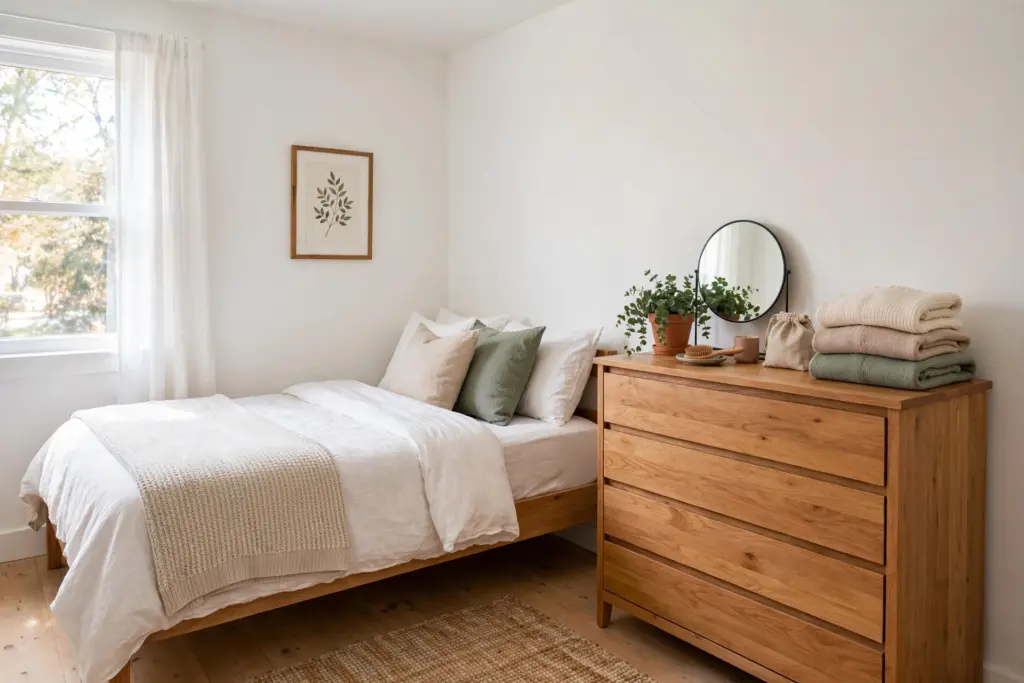
Not everything needs to hang. Knits, T-shirts, jeans, and loungewear fold better than they hang, and they last longer folded, since hangers can stretch knits out of shape. A dresser with deep drawers takes over the folding job completely, freeing the rack or wardrobe for the pieces that truly need hanging.
Give each drawer one category and keep a simple rule: one drawer in, one drawer out. Fold clothes the same way every time so stacks stay even, and keep the top of the dresser mostly clear, with just a mirror, a plant, or a small tray for daily items.
5. Roll Storage Under the Bed
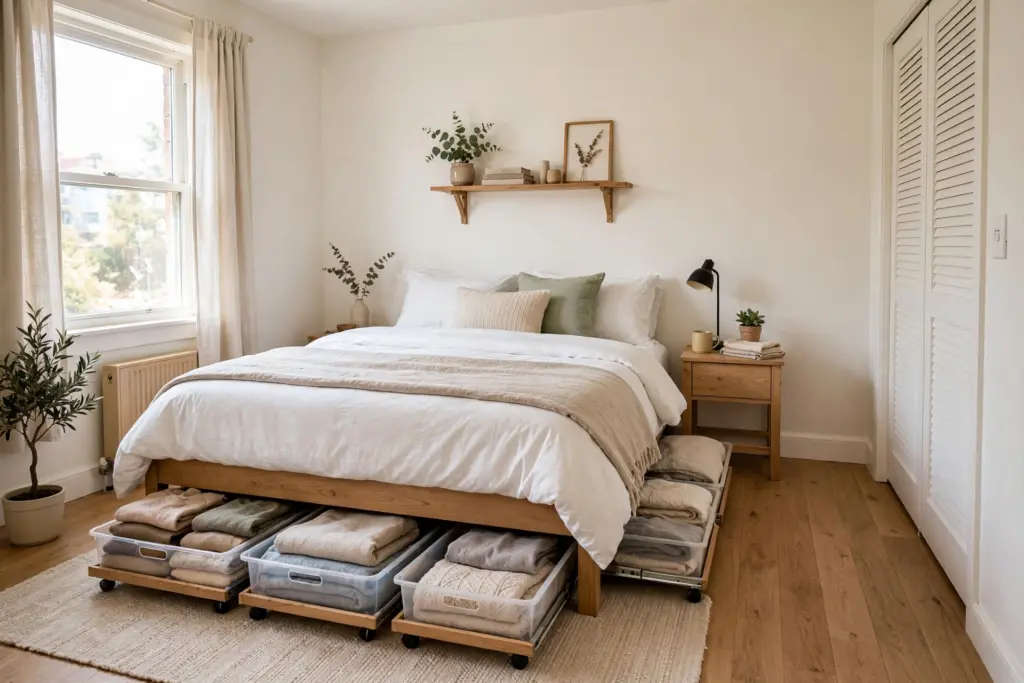
The space under the bed is the largest hidden storage area in most bedrooms, and it is free. Flat rolling bins or zippered under-bed bags hold out-of-season clothes, extra bedding, and shoes that are not in daily rotation. Wheels matter: bins without wheels get dragged, and dragging scuffs floors and strains backs.
Measure the clearance before buying, since bed frames vary, and label each bin. When the bins are labelled, the thing you need comes out in one pull instead of a hunt through four identical boxes.
6. Claim the Backs of Doors
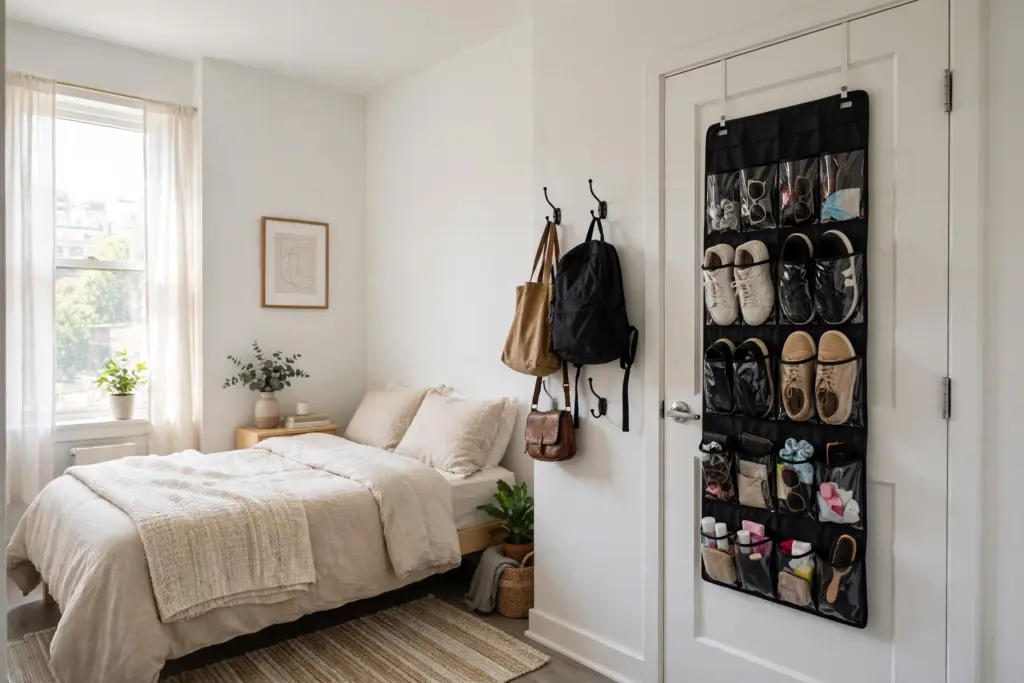
Every door in the flat is a free wall. An over-door organizer with pockets holds shoes, accessories, scarves, or cleaning supplies, and a row of over-door hooks holds bags, robes, and tomorrow’s outfit. Nothing is drilled, nothing is damaged, and the storage disappears when the door is open against the wall.
Check that the door still closes and latches with the organizer on it, and keep the weight modest. A door that will not latch, or hooks that gouge the paint, cost more at move-out than the organizer ever saved.
7. Create an Entryway Closet Zone
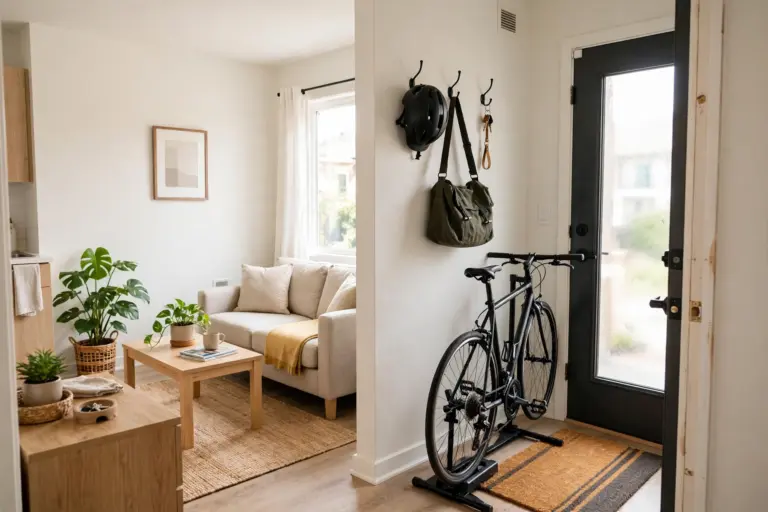
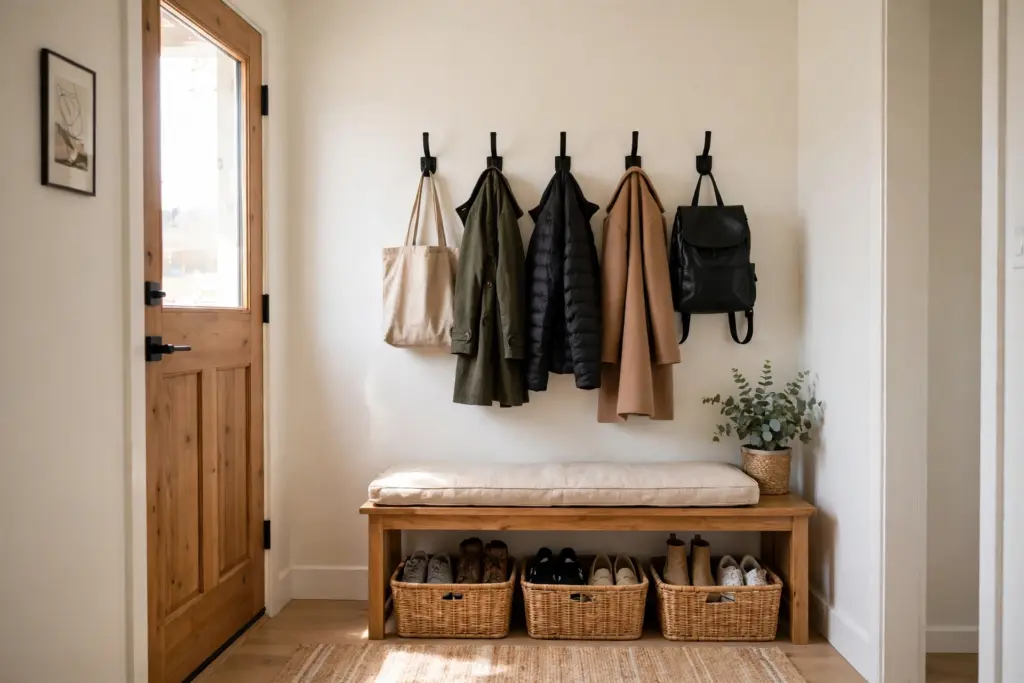
Without a coat closet, coats and shoes need a zone by the front door or they will spread through the flat. A storage bench with baskets below and hooks above does the whole job in about four feet of wall: sit down, shoes off into a basket, coat on a hook, bag on the bench. For more entryway layouts, see these small entryway storage ideas.
Give every person in the household one hook and one basket. Shared hooks become piles; assigned hooks stay tidy because the owner of the mess is obvious.
8. Use Cube Shelving With Matching Bins
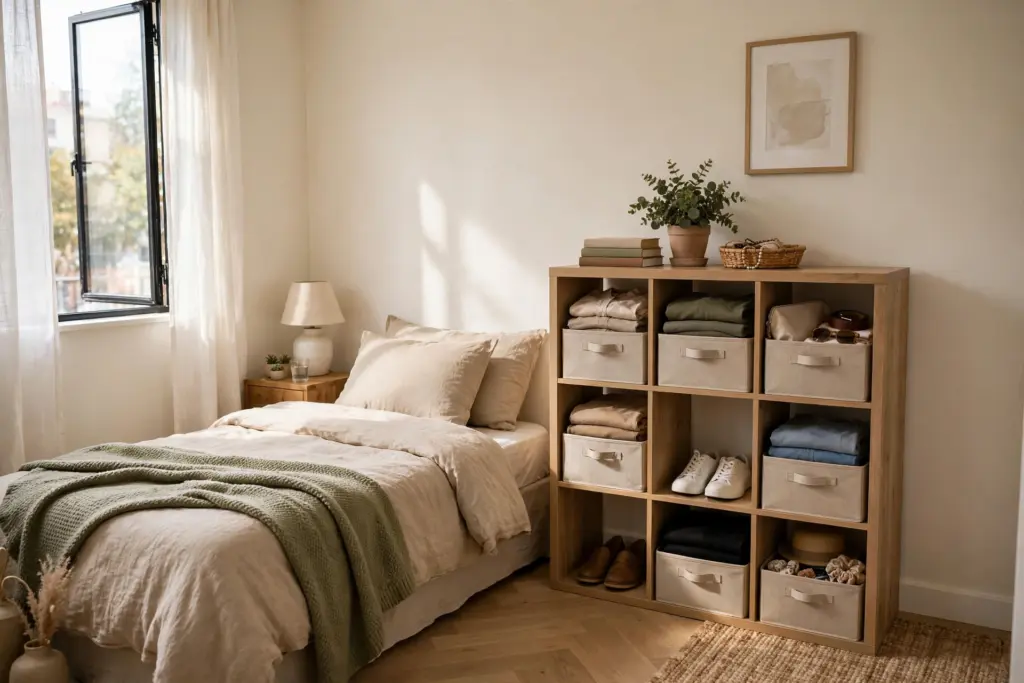
Cube shelving is the most flexible no-closet furniture of all. One unit can hold folded clothes, shoes, bags, and accessories, and it can stand in a bedroom, a living room, or a hallway. Matching fabric bins hide the categories that look messy, while open cubes show the pieces that look good folded.
Keep the bins consistent in color and size, and do not fill every cube. One or two open cubes with a plant or books keep the unit looking like furniture instead of a warehouse shelf.
9. Hide a Clothing Zone Behind a Divider
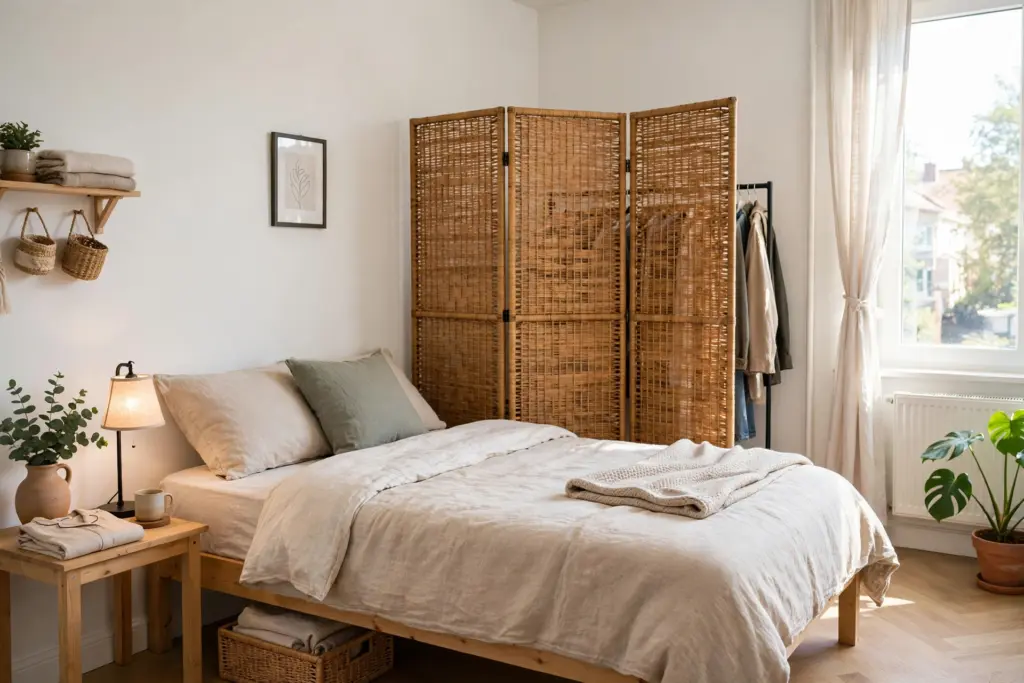
If open storage still feels too exposed, a folding screen or room divider hides it without building anything. Put the rack behind the divider, and the bedroom reads as a bedroom again, with the closet zone tucked behind a piece that looks like decor. This works especially well in studios, where the sleeping area and the living area share one room.
Choose a divider that is stable and tall enough to actually hide the rack, and leave enough space behind it to reach the clothes without moving the whole screen every morning. For studio layouts, these room divider ideas for studio apartments show how screens can zone a room without walls.
10. Rotate by Season to Halve the Load
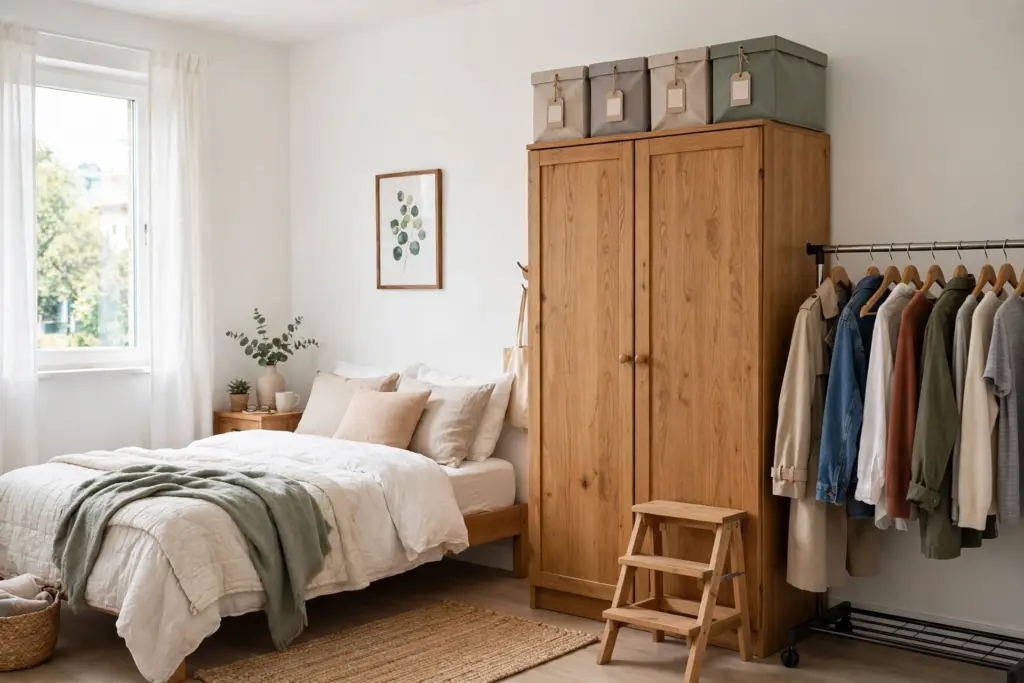
No system survives holding every season at once in a small flat. Twice a year, rotate: current-season clothes stay on the rack and in the drawers, and everything else goes into labelled boxes on top of the wardrobe, under the bed, or in a storage ottoman. The visible storage instantly halves, and getting dressed gets easier.
Label boxes by season and category, not by vague words like “stuff.” When the season changes, swap the boxes in one session instead of letting the swap drag across a month of half-moved piles.
What to Skip When There Is No Closet
Three common moves backfire. First, building a fixed closet into a rental wall without written landlord approval, since removal and repair at move-out usually cost more than the closet was worth. Second, buying one enormous unit that blocks light, doors, or radiators; two smaller pieces in two zones almost always work better. Third, filling every open shelf completely, which turns storage into visual clutter no matter how tidy the folding is.
For the broader storage system these zones fit into, start with these small apartment storage ideas, and for the bedroom side of the plan, these small bedroom storage ideas cover the rest of the room. Outside guides are useful too: Family Handyman’s no-closet solutions and Domino’s no-closet ideas both show how open storage and freestanding furniture can replace a built-in closet.
Start With Two Zones, Then Add One
The best of these apartment with no closet storage ideas is the one that matches the messiest corner of your flat first. Most renters should start with two zones: a wardrobe or rack for hanging, and a dresser or bins for folding. Add the entryway zone next, then the door organizers, then the seasonal rotation. Each zone is cheap, removable, and useful on its own, and together they do everything a built-in closet did, without a single wall being opened.
For the closet skills that make any of these zones work harder, this small apartment closet organization guide walks through the order to sort, fold, and place everything.
Frequently Asked Questions (FAQ)
How do I store clothes in an apartment with no closet at all?
Split the closet’s jobs across zones: a freestanding wardrobe or rack for hanging, a dresser or bins for folding, an entryway bench and hooks for coats and shoes, and under-bed bins for out-of-season pieces. No single piece needs to do everything.
What is the cheapest way to replace a closet?
An open clothing rack plus under-bed bins is the cheapest working system. Add over-door organizers for shoes and accessories, and only buy a wardrobe later if the rack is not enough for the clothes that must hang.
How do I keep open storage from looking messy?
Use matching hangers and one style of bin, group similar items together, and leave some empty space on every shelf. Edit the visible clothes to what you actually wear, and rotate the rest into labelled boxes.
Can I build a closet in a rental apartment?
Only with the landlord’s written approval, and a freestanding system is usually the smarter choice. It gives the same hanging and shelf space, needs no construction, and moves with you, while a built-in closet must be removed and repaired at move-out.
Where should shoes go when there is no closet?
By the door, in a bench basket, a slim shoe cabinet, or an over-door organizer. Shoes by the door stay out of the bedroom, and one assigned spot per person keeps pairs from spreading across the flat.