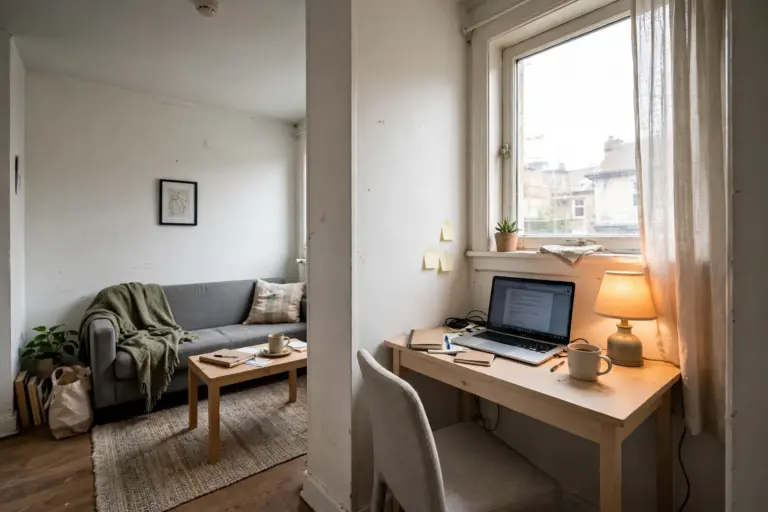

How to Soundproof an Apartment as a Renter: 13 No-Damage Ways to Reduce Noise
Learning how to soundproof an apartment renter friendly is less about buying one miracle product and more about finding where sound actually gets in. In most rentals, noise slips through gaps around doors and windows, thin shared walls, and hard floors long before it comes through the wall itself. The good news is that the highest-impact fixes are also the most renter-friendly: they peel off, lift up, or come down at move-out, and they leave no repair bill behind.
This guide keeps its promise honest. Nothing here will make an apartment silent, and no renter-friendly fix can fully stop deep bass or footsteps from above. What these 13 ideas can do is noticeably reduce noise in the apartment — voices, hallway traffic, street sound, and echo inside your own rooms — so your apartment feels calmer and easier to sleep and work in.
First, Find Where the Noise Is Getting In
Before spending anything, spend ten quiet minutes diagnosing the problem, because different noise needs different fixes. Stand in the room that bothers you most and listen. Voices, music, and traffic through a wall or window are airborne noise. Thumps, footsteps, and vibrations you feel as much as hear are impact noise. Airborne noise responds to sealing gaps and adding soft, dense layers. Impact noise responds to cushioning between hard surfaces — rugs with pads, felt feet, and distance between speakers and shared walls.
Next, check the gaps. Close the door and look for daylight around the frame, feel for a draft, and slide paper under the door: if it moves freely, sound moves freely too. Check windows, outlets, and baseboards on shared walls the same way. Write down the worst two or three spots and start there. That short check is the most useful step in how to soundproof an apartment renter friendly, because it stops you buying panels for what is really a gap problem.
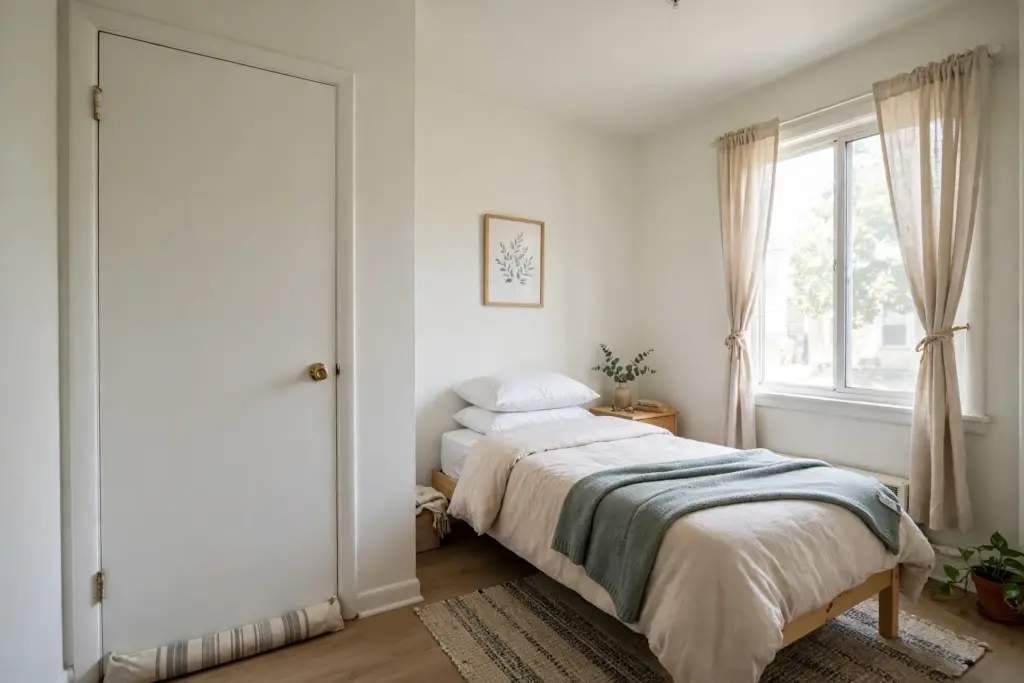
Start with the gaps: a draft stopper under the bedroom door is one of the cheapest noise fixes in a rental.
1. Seal Door Gaps With a Sweep and Weatherstripping
The gap under an apartment door is often the largest single sound leak in a room, and it is also the cheapest to fix. A slide-on or adhesive door sweep closes the bottom gap without screws, and a fabric draft stopper does the same job for interior doors. For the sides and top of the frame, self-adhesive foam weatherstripping presses into place and peels off at move-out. Measure the gap first: weatherstripping that is too thick will stop the door from latching, and one that is too thin will not seal at all.
Work in this order: sweep or stopper first, then frame strips, then test for light and drafts again. A sweep that drags hard will wear out fast, so keep the door easy to use. For a hollow interior door facing a noisy hallway, a heavy curtain on a tension rod adds another soft layer with no screws. For general guidance on finding and sealing air leaks around doors, ENERGY STAR’s guide to identifying air-leak problems is a useful starting point.
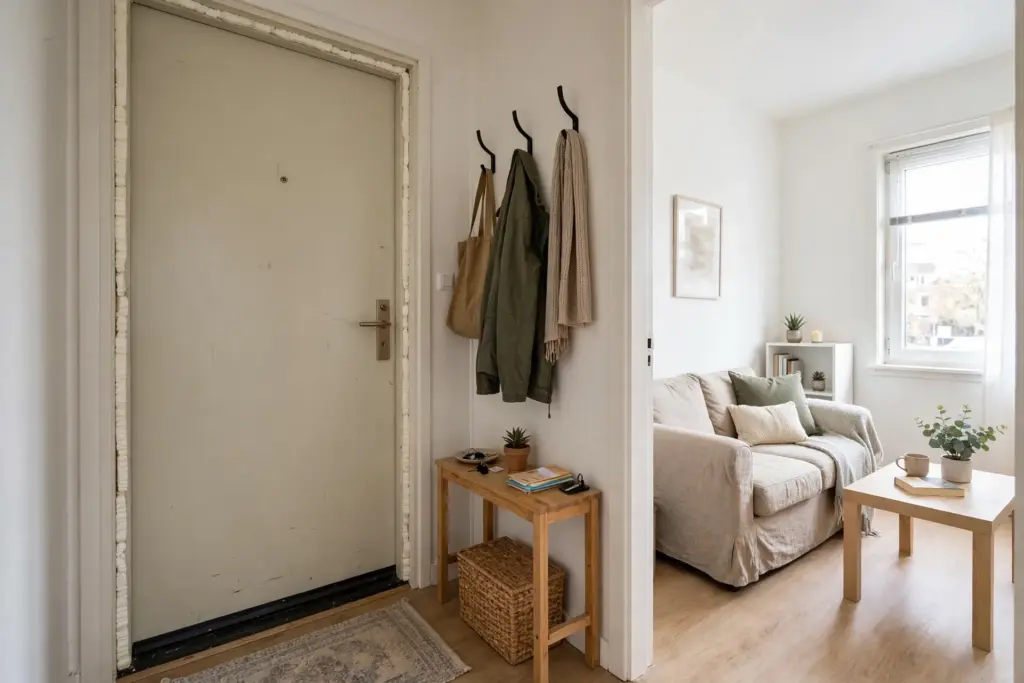
Foam weatherstripping around the frame plus a sweep at the bottom closes the two biggest door leaks.
2. Hang Heavy Curtains and Consider Window Inserts
Windows are the second-biggest leak, especially older single-pane windows facing a street. Heavy, floor-to-ceiling curtains in a dense weave help in two ways: they add mass in front of the glass, and they absorb some of the sound that gets through. Light, sheer curtains do almost nothing for noise, so look for lined or thermal curtains and hang them wide and high so they cover the whole window plus a few inches of wall on each side. A tension rod works when drilling is off the table, as long as the curtains are not so heavy that the rod slips.
For a bigger step up, removable acrylic window inserts fit inside the existing frame and pop out at move-out, working best with a small air gap behind them; they also cut drafts. They cost more than curtains, so they make the most sense for a bedroom window facing a busy road, not every window. If your lease limits frame attachments, get a quick written okay first to avoid a deposit argument later.
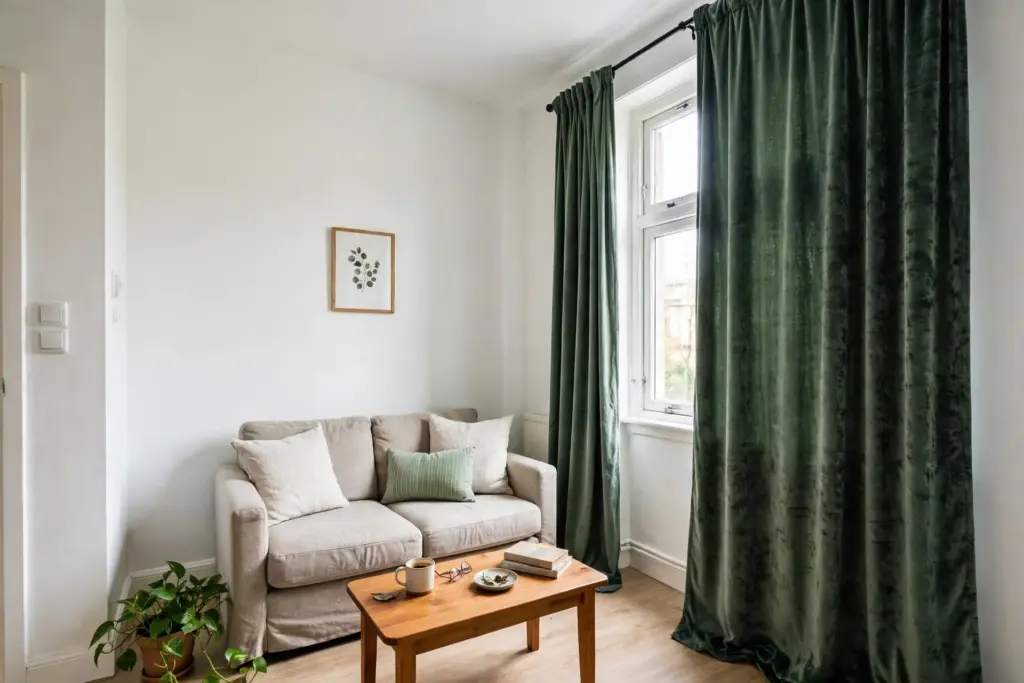
Dense, floor-to-ceiling curtains cover the whole window and a little wall on each side — that extra coverage matters.
3. Add Mass to the Shared Wall With Furniture and Fabric
Sound struggles more with heavy, uneven surfaces than with flat, empty walls. That is why the oldest renter trick still works: push a tall bookshelf, filled with books, flush against the noisy shared wall. Books vary in size and density, which breaks up sound better than a flat panel, and the shelf itself adds useful storage. Fill any gap behind the shelf so sound cannot slip around it, and anchor the shelf safely if your building or lease requires it — a falling bookshelf is a safety problem, not a sound solution.
If a bookshelf does not fit, hang dense fabric instead: a heavy tapestry, a moving blanket behind a decorative cover, or a mass-loaded vinyl panel on removable hooks all add mass with no holes. If you want acoustic walls without construction, fabric-wrapped acoustic panels hung with adhesive strips look like decor rather than foam tiles. Panels mainly tame echo inside your room rather than blocking a neighbor’s television, so pair them with a mass layer. A detailed walkthrough of renter-friendly options is available in Block Renovation’s apartment soundproofing guide.
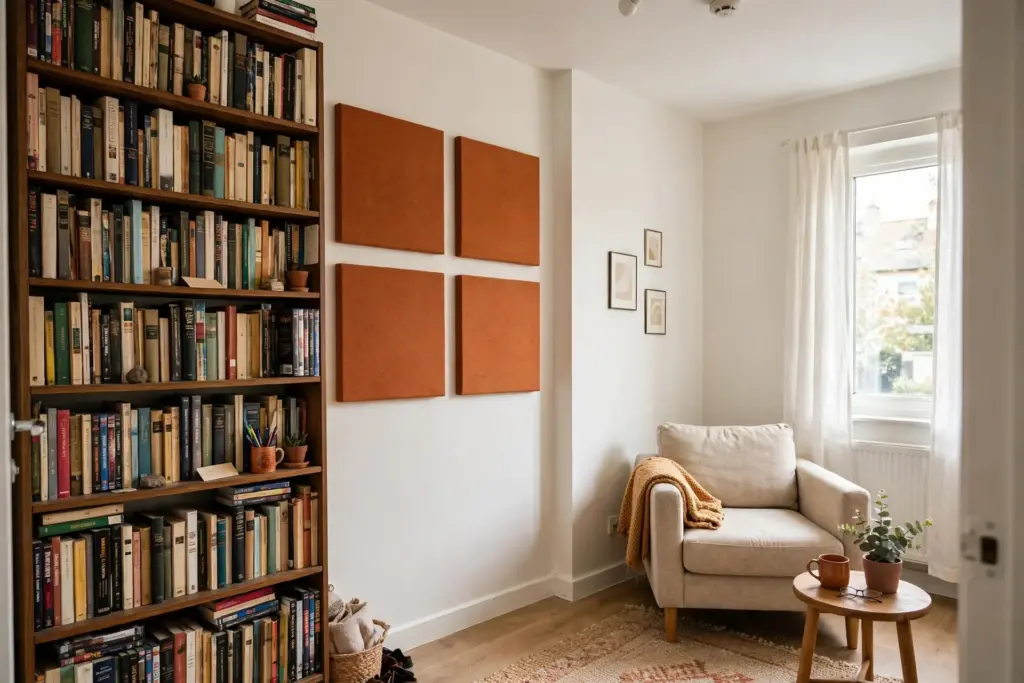
A full bookshelf plus fabric panels: mass against the wall, soft absorption beside it.
4. Soften Echo Inside the Room With Rugs and Soft Layers
Some of the noise that bothers renters is not coming from outside at all — it is their own room echoing. Bare floors, empty walls, and minimal furniture turn every voice and television into a sharper, louder version of itself. A thick rug over a dense felt or rubber pad is the single best echo fix, and it also cushions impact noise for the neighbor below. Choose the largest rug the room can take without blocking door swings, and put the pad underneath rather than relying on the rug alone.
Layer the rest of the room the same way: upholstered seating, cushions and throws, and soft window treatments rather than bare blinds. This is also where a small apartment home office setup benefits twice over — a rug, curtains, and a fabric pinboard behind a desk make video calls sound clearer and the room feel quieter. None of this blocks a neighbor’s bass, but it stops your own space from amplifying every sound in it — a difference you can hear as soon as the rug is down.
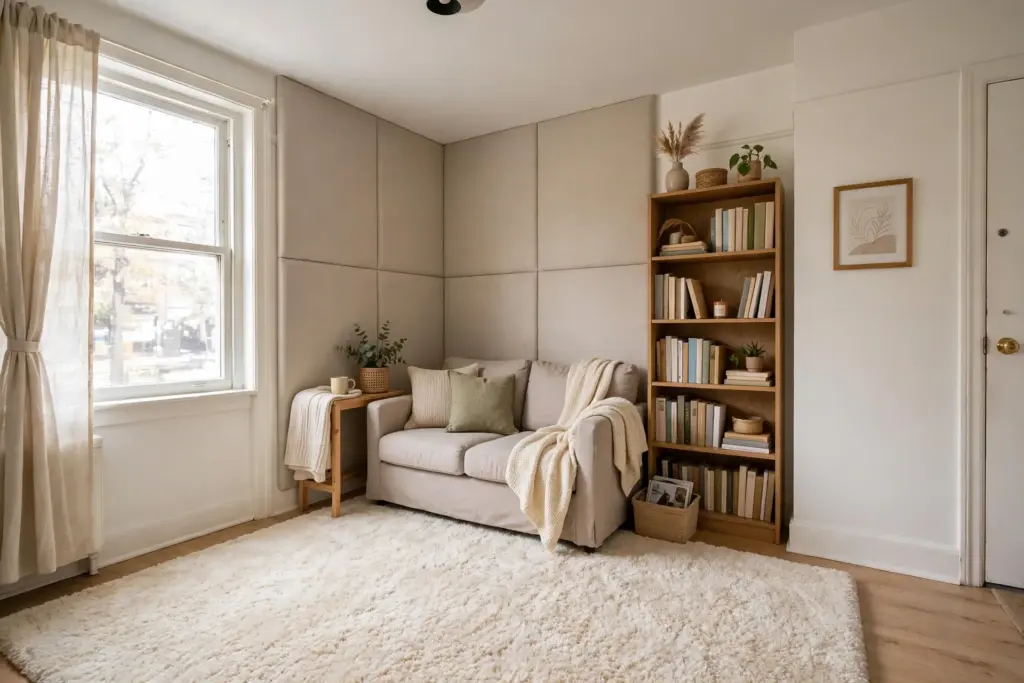
Thick rugs, soft seating, and fabric panels together calm a room’s echo fast.
5. Handle Floors, Ceilings, and the Neighbor Question
Impact noise needs a different playbook. If footsteps from above are the problem, there is little a downstairs renter can attach to the ceiling without permission, so focus on what you control: masking and timing. A white noise machine or a fan near the bed makes intermittent thumps less startling at night, because the brain notices changes in sound more than steady background sound. Keep the volume low enough to talk over comfortably — masking should blur noise, not replace it with a louder one.
For noise you send downward, be the neighbor you want: felt pads under chair and table legs, a rug pad under every rug, and isolation pads under speakers all reduce vibration through the floor. Keep speakers off shared walls and out of corners where bass builds up. And when noise is persistent, a polite conversation usually beats a complaint to management as a first step: many neighbors have no idea their routine carries through, and a rug on their side of the floor — offered kindly, not demanded — can fix more than any panel on yours. The same good-neighbor thinking helps when hosting overnight guests in a small apartment, where a few quiet hours agreed in advance keep everyone comfortable.
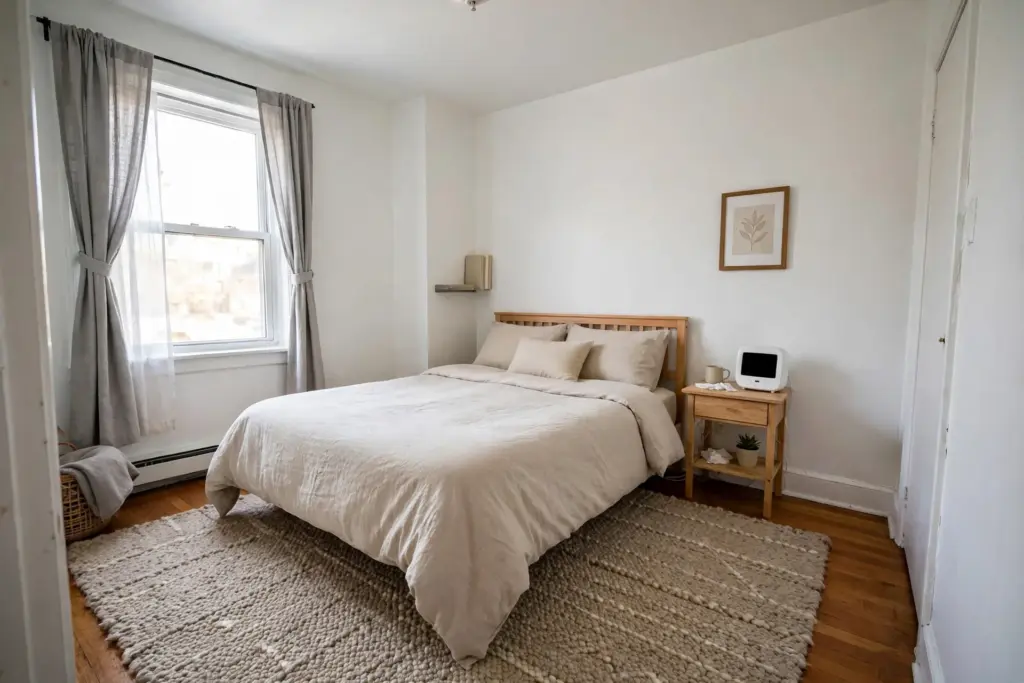
A thick rug, felt-footed furniture, and low background sound make impact noise far less intrusive at night.
What Will Not Work, and What to Expect
A few popular ideas waste money or create risk, so skip them. Egg cartons and thin foam tiles do not block sound; at best they slightly change echo, and foam tiles can be a fire concern near heat sources. Gluing anything directly to a wall, caulking a rental’s trim, or removing baseboards trades a small noise gain for a deposit deduction. Never cover vents, smoke detectors, or a fire escape route with panels or blankets, and never seal a door that needs to stay usable as an exit.
Judge each step by what you can hear afterwards, not by product promises. A door sweep plus curtains plus a rug typically turns sharp, intrusive noise into duller background noise — enough to sleep and concentrate more easily, not enough to make a loud party next door disappear. If noise is severe, constant, or a safety issue, document it with dates and times and raise it with your landlord in writing; structural fixes belong to the building, not to adhesive strips.
A One-Weekend Plan That Keeps Your Deposit Safe
Do the work in the order that pays off fastest. On Saturday, seal: door sweeps, weatherstripping, and outlet covers on shared walls, using removable products only. On Sunday, soften: move the bookshelf to the noisy wall, lay the rug with its pad, and hang the heavy curtains. Live with that setup for a week before buying anything else — most renters find the first two steps already cover the worst of it, and anything bought after that can target the one noise that remains.
At move-out, reverse the order: peel strips slowly, wash residue with warm soapy water, take down panels and hooks, and photograph the walls and doors. A quieter apartment that still looks untouched on inspection day is the whole point, and it is achievable without drilling a single hole. For a calmer room to come home to, a good next step is learning studio apartment layout ideas that zone sleep, work, and living without building a single wall.
Frequently Asked Questions (FAQ)
Can renters really soundproof an apartment without drilling?
Yes, for noise reduction — not for silence. Removable weatherstripping, door sweeps, heavy curtains, rugs with pads, bookshelves, and adhesive-hung fabric panels all work without drilling, and they come down cleanly at move-out when installed as directed.
Do acoustic foam panels block my neighbor’s noise?
Mostly no. Foam and fabric panels absorb echo inside your room, which makes your space sound calmer, but they add little mass to block sound coming through the wall. Pair panels with sealing and mass — a bookshelf or dense fabric layer — for a real reduction.
What is the cheapest first fix for a noisy apartment?
Seal the door. A door sweep or draft stopper plus foam weatherstripping around the frame is usually the lowest-cost, highest-return move, because gaps let in far more sound than most renters expect.
Will heavy curtains really help with street noise?
They help with mid- and higher-frequency sounds like voices and traffic hiss, especially when they are dense, lined, and cover the full window plus surrounding wall. For a large improvement on a busy street, add a removable window insert behind them.
How to soundproof an apartment renter friendly for better sleep?
Seal the bedroom door, hang heavy curtains, add a thick rug with a pad, and use low white noise or a fan to mask what remains. Keep the masking volume low and the room’s vents and smoke detector uncovered.