
14 Renter-Friendly Ways to Cover Ugly Apartment Floors (No Damage)
Renter friendly ways to cover ugly floors start with one rule: cover, never alter. The floor underneath belongs to the landlord, and the deposit depends on it coming back exactly as it was. The good news is that a floor can look completely different without glue, nails, paint, or anything that bonds to it — a well-sized rug, a washable cover, or a floor that locks to itself and lifts away cleanly at move-out.
Every idea below passes the same test: does it come back up cleanly, leaving the floor underneath exactly as documented on day one? Rugs and layering come first, washable covers next, then the interlocking and loose-lay options for a full-room change, then zone cover for the worst patches only. The permission-only options sit fenced off at the end, where they belong, and the move-out proof comes before any of it. Floors are the biggest decor surface a renter can change without changing anything, which is why the renter-friendly apartment decorating ideas guide treats them as the starting point for a room, not an afterthought.
Start With a Big Area Rug, Sized Right
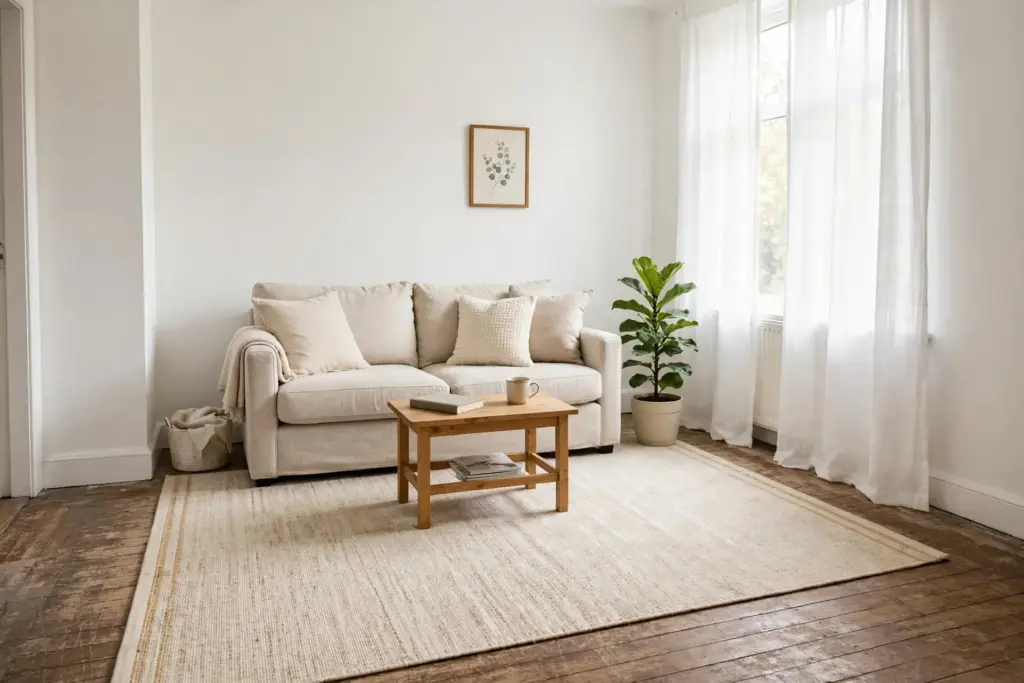
An area rug is the simplest floor cover, and also the easiest to get wrong. A small rug floating in the middle of a room draws the eye straight to the ugly floor around it. A rug sized to the room’s real problem area — big enough that the front legs of the sofa sit on it, or that it runs beside the bed where feet land — reads as a design choice, not a cover-up.
1. Choose the rug by the room, not by the rug shop’s display. In a living room, the rug should anchor the seating group, with at least the front legs of the sofa and chairs on it. In a bedroom, it should run beside the bed and under the foot, where it is seen and felt every morning. Leave a consistent border of original floor showing around the edges, so the rug looks placed, not stranded.
2. Put a non-slip pad under every rug, on every floor type. The pad does two jobs: it stops the rug creeping and bunching into a trip hazard, and it protects the original floor from the rug’s backing rubbing against it. Never use adhesive tape or glue directly on the landlord’s floor to hold a rug down — the residue at move-out can cost more than the rug saved.
3. Layer a smaller patterned rug over a larger neutral base rug when one rug cannot hide wall-to-wall ugliness. The base rug does the covering, the top rug does the decorating, and setting the top rug slightly diagonally adds interest without extra cost. Keep the total height low at door swings, and keep the edges flat: a curled or folded rug edge is a trip hazard, not a style choice.

Runners and Mats for the Paths You Actually Walk
Not every ugly floor needs a whole-room cover. Often the damage is concentrated where feet actually go: the hallway, the kitchen work zone, the stretch in front of the bathroom vanity. Covering those paths honestly, with runners and mats, can transform a flat for far less than a full-room solution.
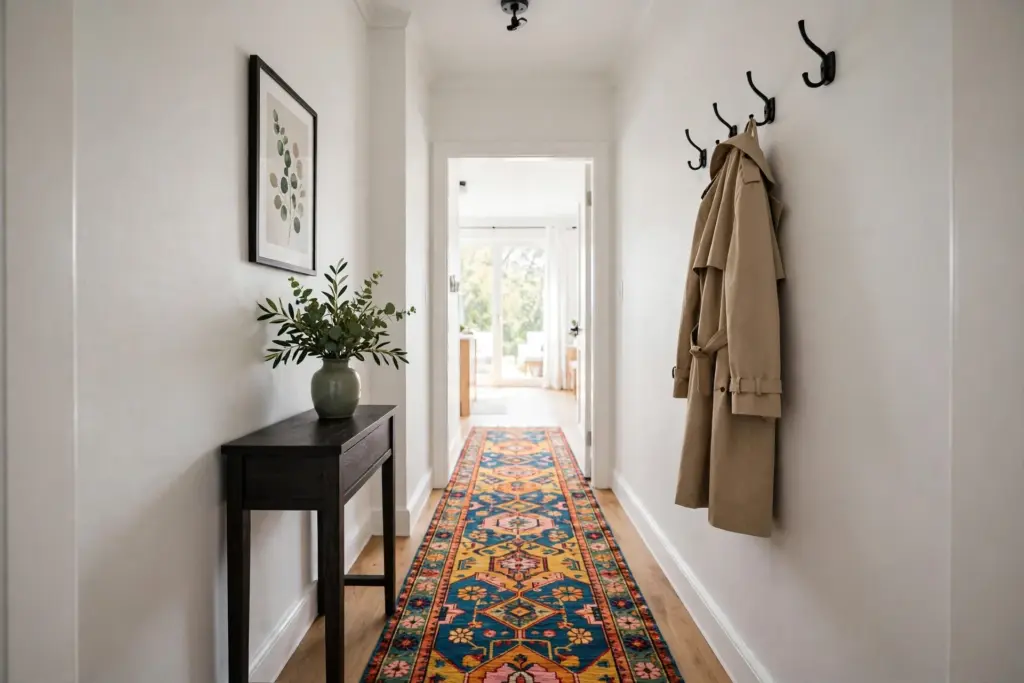
4. A hallway runner should run most of the hallway’s length, leaving a small, even margin of floor visible on each side, so it looks like a deliberate frame rather than a strip laid down in panic. Choose a low-pile runner that doors can swing over, with a non-slip pad underneath, and a colour that echoes something else in the flat — a cushion, a picture frame, a cabinet handle — so it reads as chosen, not hidden.
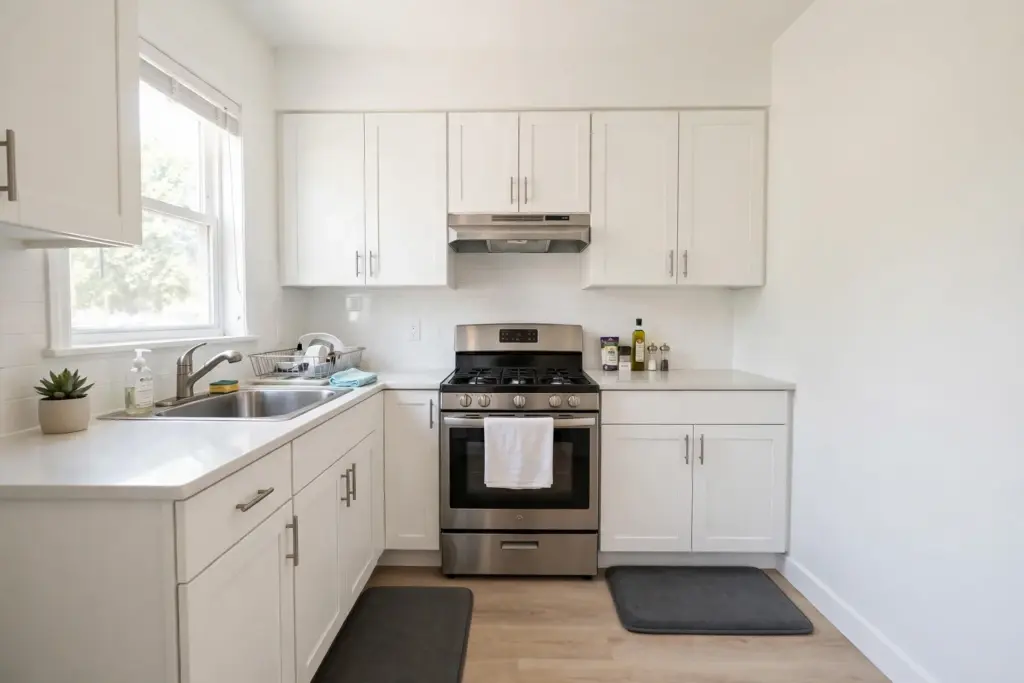
5. In the kitchen, cushioned anti-fatigue mats in front of the sink and stove cover the zones that take the most daily wear, and they give feet a break during long cooking sessions. In an entryway, a layered mat setup — a scraper mat outside the door and a decorative mat inside — handles dirt and hides the threshold area where floor damage tends to cluster. Washable mats belong here, not thick pile rugs that trap spills.
Washable Covers for Spill Zones
Kitchens, entries, and dining areas rule out ordinary rugs, because spills are not a question of if but when. Washable covers solve that: a cover that lifts out, goes in the wash, and goes straight back, with nothing bonded to the floor beneath it.
6. A canvas floor cloth is a painted or printed canvas sheet that lies flat like a rug but wipes clean and can be rolled up at move-out. It suits a dining area or a kitchen work zone, where it protects the look of the room without trapping moisture against the floor for months. Lift it periodically and check underneath, especially in a room where spills happen, so a small leak does not sit unnoticed.
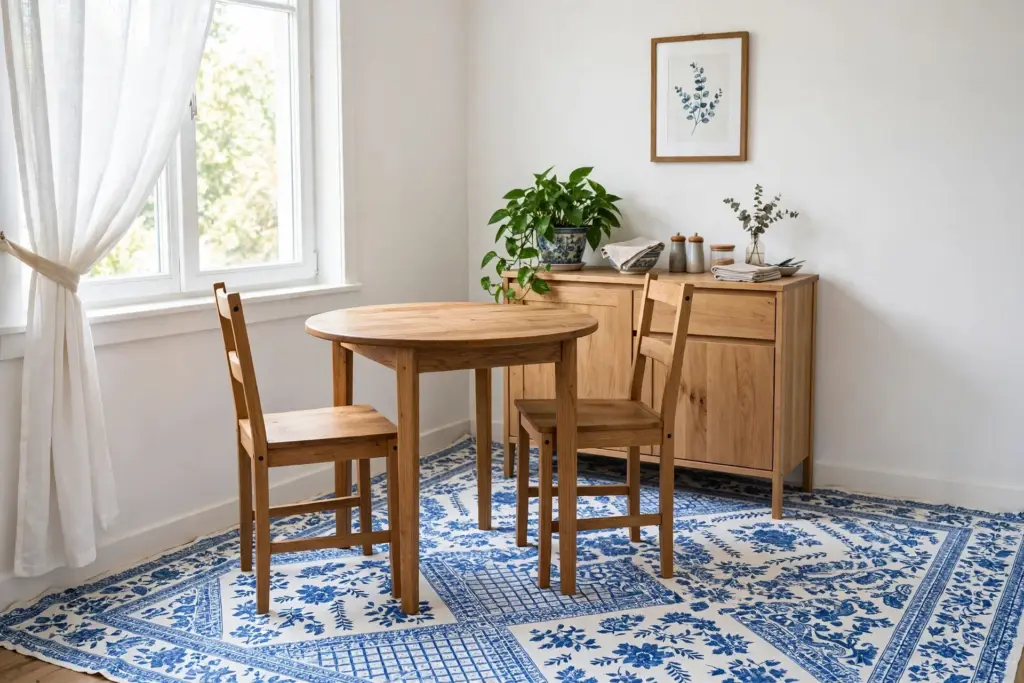
7. Washable low-pile rugs and mats are the everyday version of the same idea: they look like ordinary rugs, they survive the washing machine, and they go back down in minutes. They suit homes with pets, children, or a cook who spills, and they are the honest choice where a thick wool rug would become a stained liability within a month. Check the washing instructions before buying, since a rug that cannot actually be washed at home is not a washable rug.
Interlocking and Loose-Lay for a Full-Room Cover
When a whole room’s floor is the problem, rugs alone can feel like a patch. Two genuinely reversible options cover a full room: pieces that lock to each other, not to the floor, and sheet or plank flooring held down by its own weight and the furniture on top of it.
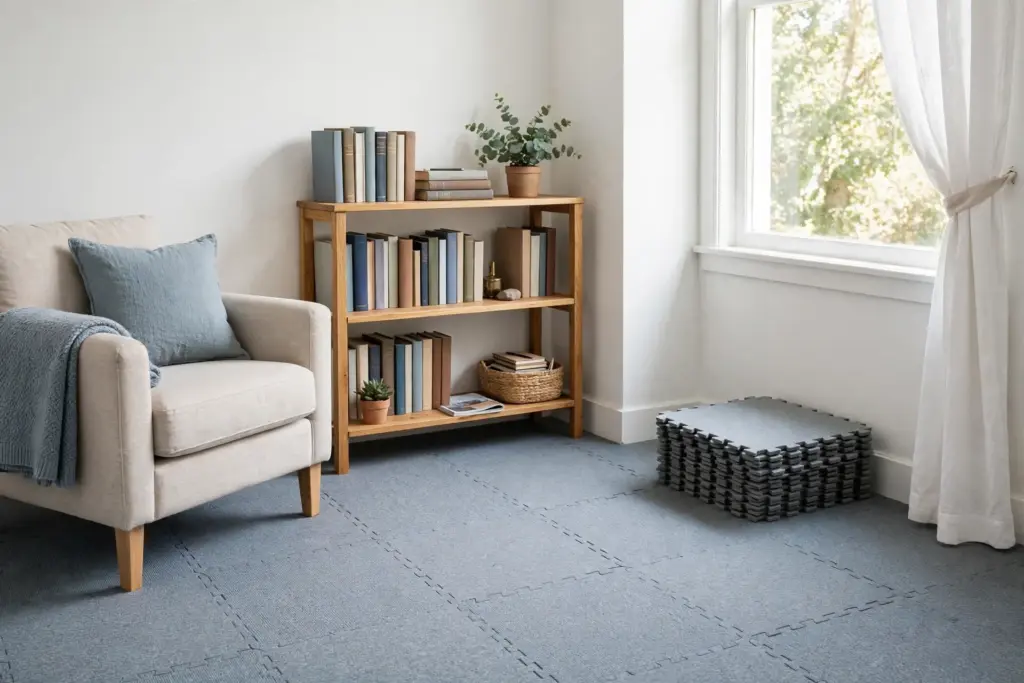
8. Interlocking carpet tiles lock to each other with tabs or a gripped backing, and they lift one tile at a time. That matters in a rental: a stained or worn tile can be swapped for a spare without replacing the room, and at move-out the whole floor lifts away. Keep the edges flush and finish the room’s edges honestly, with no nailed or glued trim presented as renter work, and keep a few spare tiles for replacements.
9. Loose-lay vinyl planks and sheet vinyl sit on top of the existing floor without adhesive or fasteners, held by their own weight and the furniture above them. They suit a small kitchen or studio where a dated tile or linoleum dominates the room, and they can be cut with a utility knife and straight edge to fit corners, using a cardboard template for awkward shapes. They need a smooth, clean surface underneath, and they are not a fix for a damaged or uneven subfloor, which is a landlord repair, not a cover-up.
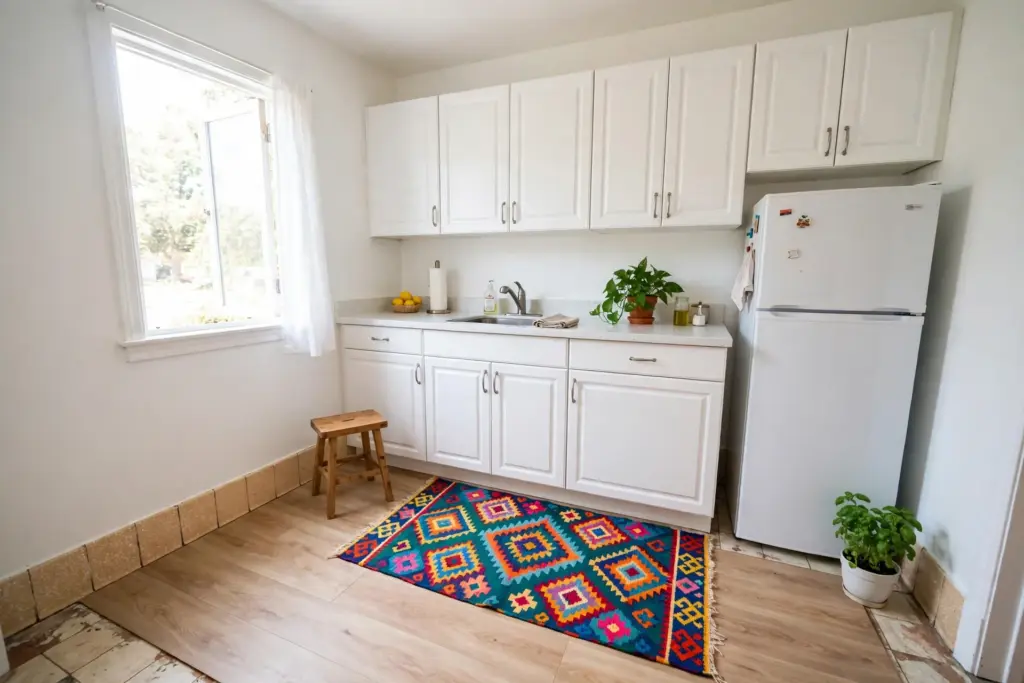
10. Foam and vinyl interlocking mats are the cheapest full-room option, and they suit a home gym corner, a play area, or a workroom where function matters more than looks. They lock to each other, lift cleanly, and protect the floor beneath from dropped weights or spills. Watch two pitfalls: rubber backing can transfer colour to some floors over time, and heavy furniture can dent the mats, so check underneath periodically and keep the heaviest pieces on furniture cups where needed.
Cover the Zone, Not the Whole Room
Sometimes the honest answer is not a new floor at all. It is covering the traffic path and the worst patch, and letting the rest of the floor be what it is. Zone cover is cheaper, faster, and easier to remove, and it often looks better than a half-hearted full-room attempt.
11. Furniture placement is the zero-cost cover. A large sofa, a bed, a bookshelf, or a dining table placed over the worst wear hides it completely, with no installation and no trace left behind. Pieces with wide bases or skirted designs hide more floor than pieces on tall thin legs, and a large rug under a sectional or bed anchors the arrangement while adding comfort. Rearrange before buying anything: the best cover may already be in the room.
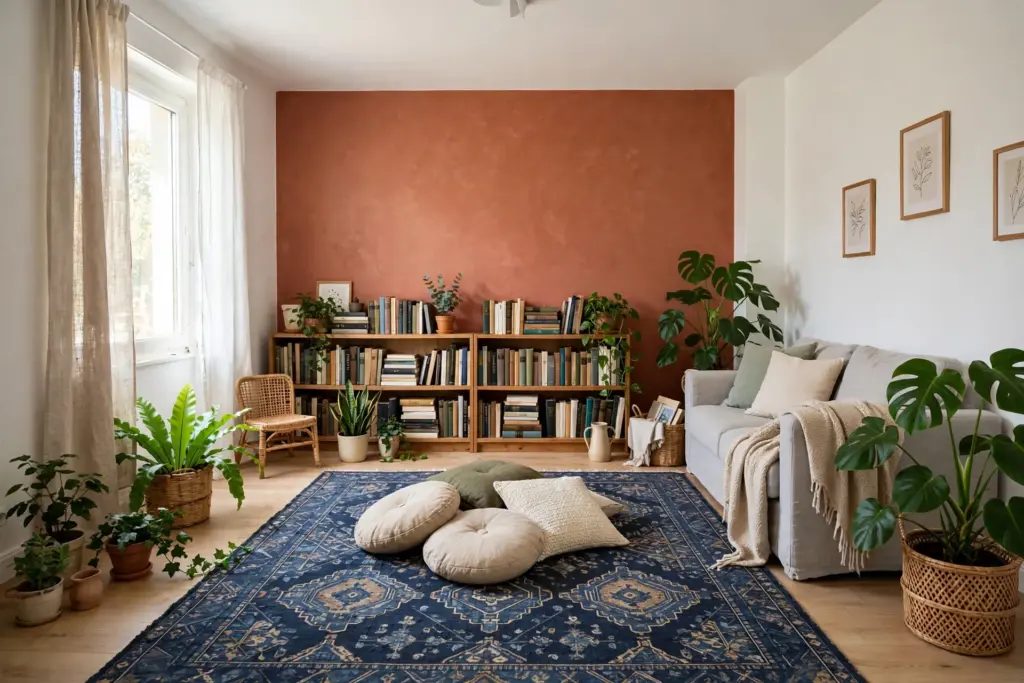
12. A mat at the sink and stove line, a runner where feet actually go, and a rug where people sit cover the three zones a visitor’s eye lands on, and the rest of the floor fades into background. This is the right approach for a tight budget or a short tenancy: spend on the zones that are seen and walked on, and leave the floor under the bed and behind doors alone. A rug used this way is also a visual device, and the guide to making a small apartment look bigger shows how the same rug can open a room up at the same time.
The Permission-Only Zone, and Your Move-Out Proof
Two options that other guides present as ordinary renter moves belong in a fenced-off section, because they carry real deposit risk. Peel-and-stick floor tiles use adhesive on a surface that takes foot traffic, spills, and moisture every day, and that adhesive can leave residue or lift the finish underneath at removal. They are a permission-only option: landlord agreement first, a hidden-patch test first, and no promise that they come up cleanly.
13. Floor paint is not a renter recommendation at all. Painting a floor is an alteration to the landlord’s property, not a cover, and it cannot be undone by lifting a rug. If a guide suggests it for a rental, treat that as a sign to check everything else it says. The same caution applies to any product that glues, nails, or staples into the original floor: if it bonds to the landlord’s floor, it is not a cover.
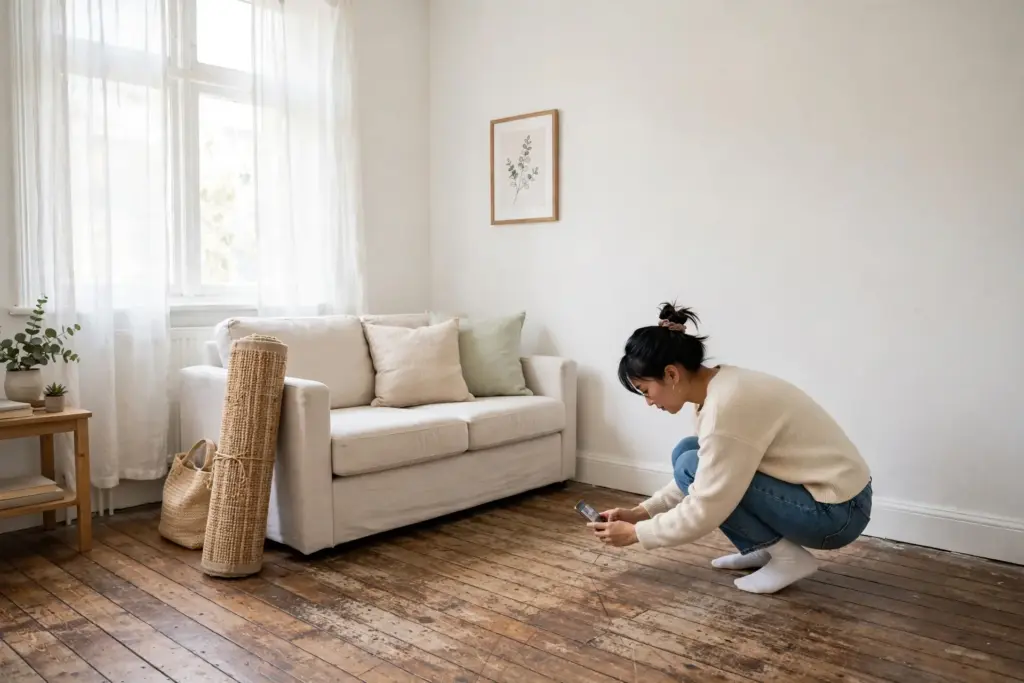
14. Before covering anything, photograph every floor in daylight, including existing scratches, stains, and worn patches, and keep those photos with the move-in inventory. Clean the floor thoroughly first, because dust and grit trapped under a rug or vinyl tile will grind against the original surface every time someone walks across it. Test any product in one hidden patch before committing to a room, lift covers periodically in wet rooms to check for trapped moisture, and keep egress paths — the routes to the front door and any fire exit — clear and flat, with no loose cover on stairs and no raised edge across a doorway. That fence is what keeps these renter friendly ways to cover ugly floors deposit-safe.
Other guides on hiding rental floors make the same core points: the HomeLane guide to how to hide ugly flooring stresses removable options and furniture placement, and the Engineer Your Space guide to covering up an ugly floor temporarily shows loose-lay vinyl planks laid with no adhesive or fasteners in a small rental kitchen.
Frequently Asked Questions (FAQ)
What is the safest way to cover ugly rental floors without losing a deposit?
The safest of the renter friendly ways to cover ugly floors uses covers that do not bond to the original floor: a large rug with a non-slip pad, washable covers, interlocking tiles that lock to each other, or loose-lay vinyl held by its own weight. Photograph the floor before covering it, and get landlord permission in writing before anything adhesive.
Can renters use peel-and-stick floor tiles?
Only with caution and permission. Peel-and-stick floor tiles use adhesive on a high-traffic, moisture-exposed surface, and removal can leave residue or lift the finish underneath. Test in a hidden patch first, and never treat them as damage-free by default.
How do you stop rugs from becoming a trip hazard?
Use a non-slip pad under every rug, keep edges flat and profiles low at door swings, and never layer rugs so thickly that a door catches or a foot catches an edge. Keep egress paths clear and flat, and never put a loose cover on stairs.
Do floor covers protect the floor underneath?
Not automatically. A cover can trap grit or moisture against the original floor, especially in a kitchen or bathroom, so clean before covering, lift covers periodically to check underneath, and choose breathable options in wet rooms. A cover hides a floor; it does not repair it.