15 Book Storage Ideas for Small Apartments With No Room for a Bookshelf
Book storage ideas for small apartments start with an uncomfortable truth: books are heavy, they multiply, and a small flat has no room for a bookcase it did not already have space for. The answer is not to buy a bigger bookcase. It is to store books in the furniture and gaps you already own, keep only the books you are actually reading within easy reach, and rotate the rest out of sight. Done that way, a serious reading habit fits in a studio without turning the living room into a library.
Every idea below passes one test: does it store real books in furniture and gaps a renter already has, with no new bulky furniture and no wall damage? Wall shelves appear only at the end, as a permission-first option, because fixing into a landlord’s wall is never the default renter move. Start with hidden storage, then furniture, then vertical space, then dead space — and finish with the rotation system that keeps it working. For the wider picture, the small apartment storage ideas guide covers the same no-drill, deposit-safe approach room by room.
Hide the Books You Are Not Reading Right Now
The fastest way to clear a book pile is to stop displaying books you are not currently reading. Most collections split naturally: a handful of current reads, a shelf of books you return to often, and a much larger group you keep but rarely open. The third group does not need to be on show. It needs a dry, accessible home out of the way, and the first three ideas give it one.
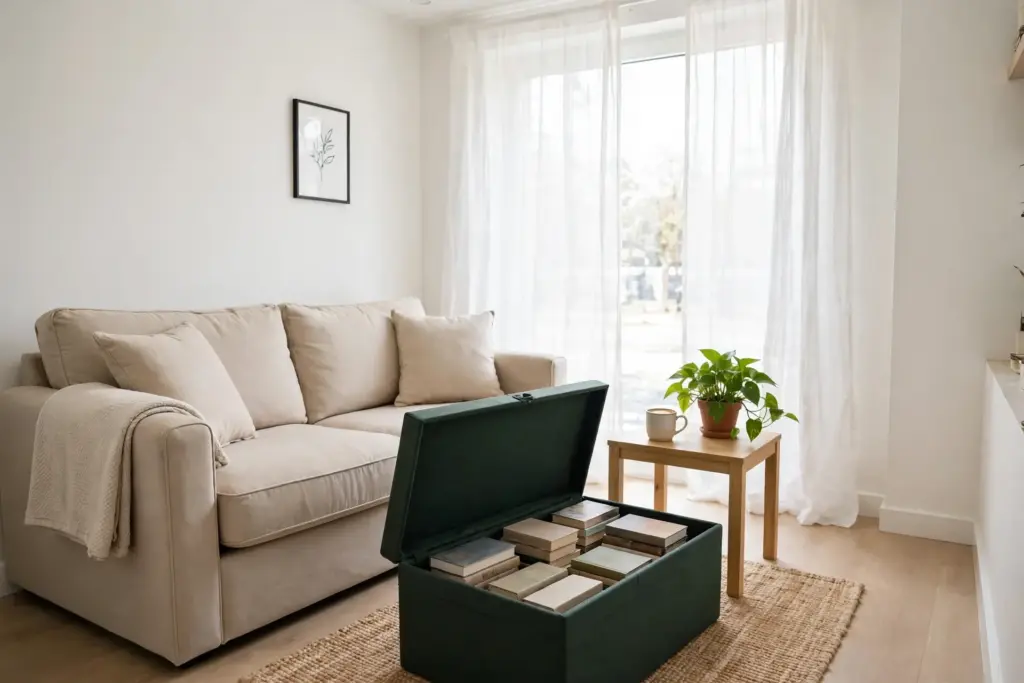
1. A storage ottoman is the best hiding place in a small living room, because it is seating, a footrest, and a book box at once. Keep current and recent reads inside, spine-up or stacked flat, and leave the lid closed between reading sessions. Choose one that opens easily with one hand and sits flat when closed, so it still works as a footrest. Avoid overfilling it: a lid that will not close is a sign the rotation system, not the ottoman, needs attention.
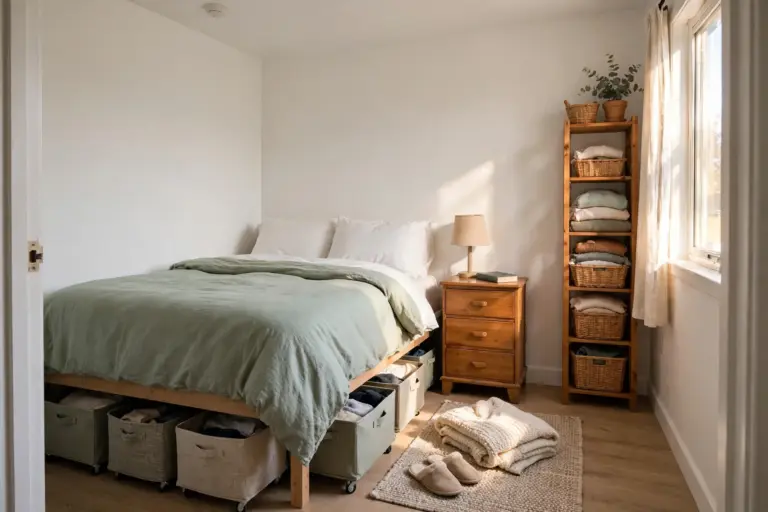
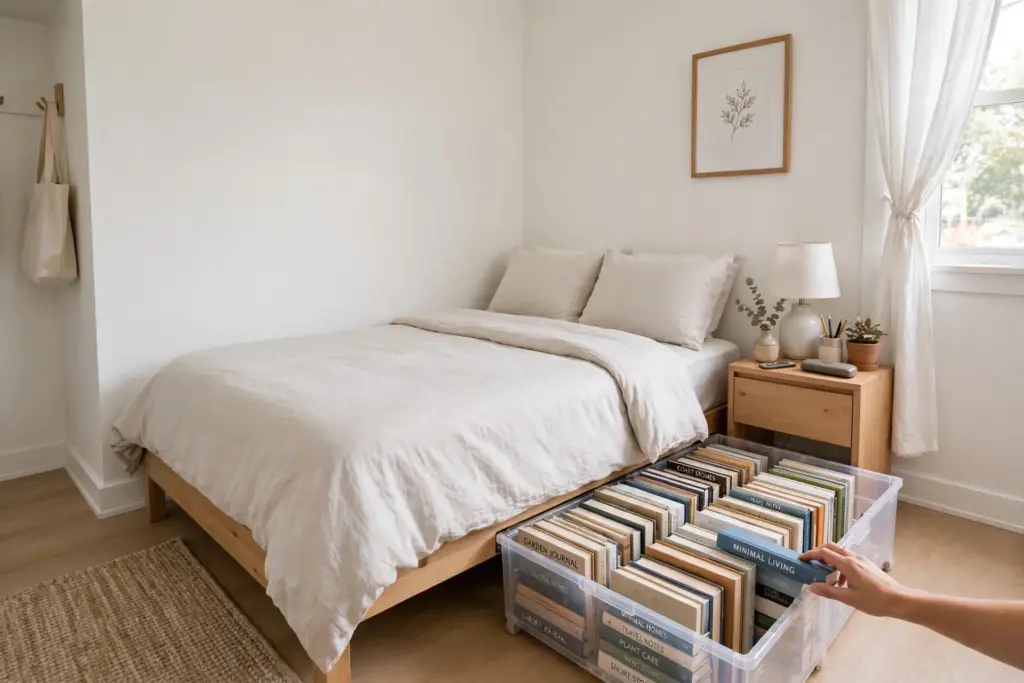
2. Under-bed boxes work for the books you keep but rarely open, provided the boxes are shallow, lidded, and easy to slide out. Label each box by subject or author so a book can be found without emptying the lot, and leave a small gap for air rather than sealing books in plastic in a humid room. Heavy volumes go in the lowest, smallest boxes, not piled high on top of a wardrobe where they are hard to reach and harder to lift safely.
3. The tops of wardrobes and tall cabinets hold the same rarely-opened group, but only with two rules: books go in lidded boxes, never in loose stacks near an edge, and nothing heavy goes up high. A box on a wardrobe top should be light enough to lift down with both hands while standing on a stable step, not a chair. If reaching it feels unsafe, that box belongs under the bed instead.
Let Furniture You Already Own Hold the Books
Before buying any storage, look at the furniture already in the room with fresh eyes. A bench, a coffee table, and a headboard can each hold a surprising number of books without taking an extra square foot of floor, and nothing about the layout has to change.
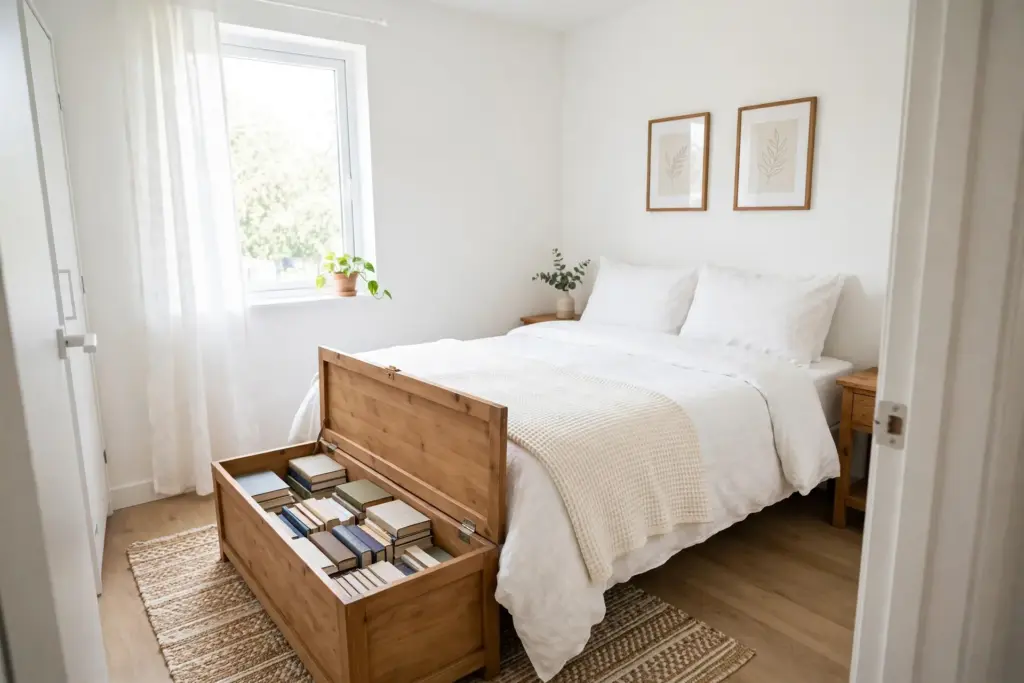
4. A storage bench at the foot of the bed is the bedroom version of the ottoman. It holds the books you read in bed, plus the ones waiting next, and it doubles as a place to sit while dressing. Keep the books you reach for at night on top of the pile inside, and the overflow underneath, so the morning routine does not start with digging. The small bedroom storage ideas guide uses the same headboard and under-bed logic for the rest of the bedroom.
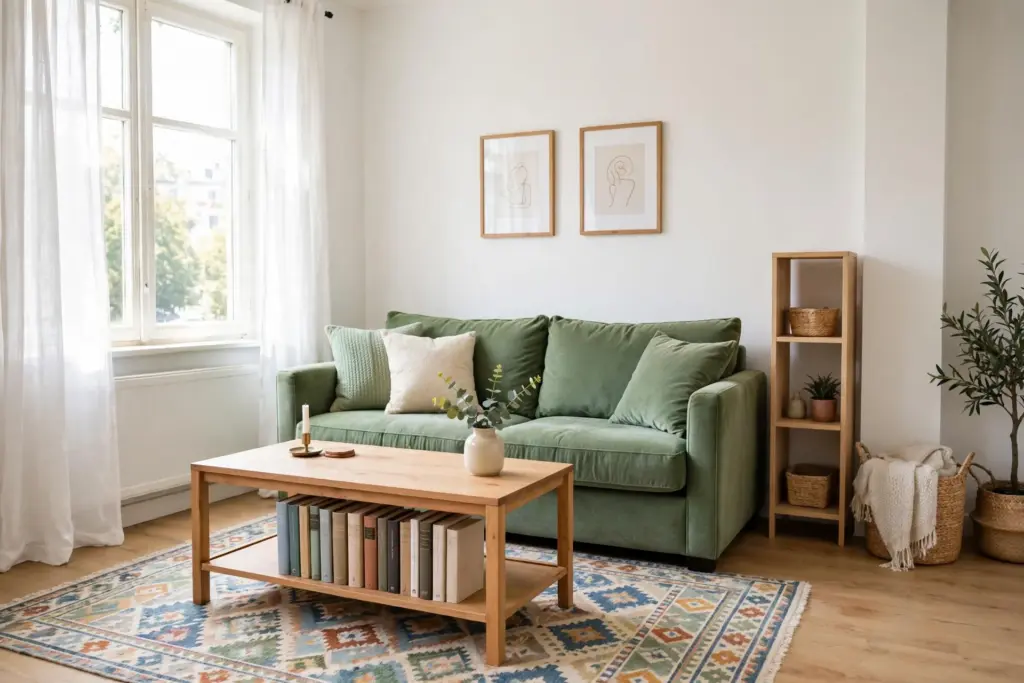
5. A coffee table with a lower shelf or cubbies turns the centre of the living room into book storage that is also decoration. Keep a short row of books you are proud of, or currently reading, on the lower shelf, spine-out, with space around them. A shelf crammed edge to edge looks like storage; a shelf with breathing room looks like a styled table, and it is far easier to pull a book from.
6. A bookcase headboard, or a narrow shelf unit used as a headboard, puts bedtime reading exactly where it is used. It works best in a small bedroom because it uses wall length the bed already occupies. Keep only a few books there — the current read and the next one — and keep heavier volumes low, where they cannot fall on a sleeper if knocked.
Go Vertical Without Buying a Bookcase
Vertical space is the small apartment’s best friend, but it does not have to mean a bookcase. Slim freestanding units use wall height without the depth or bulk of a traditional case, and they can move with you. Where one sits matters too, and the small apartment living room layout ideas guide shows how to place one without blocking flow.
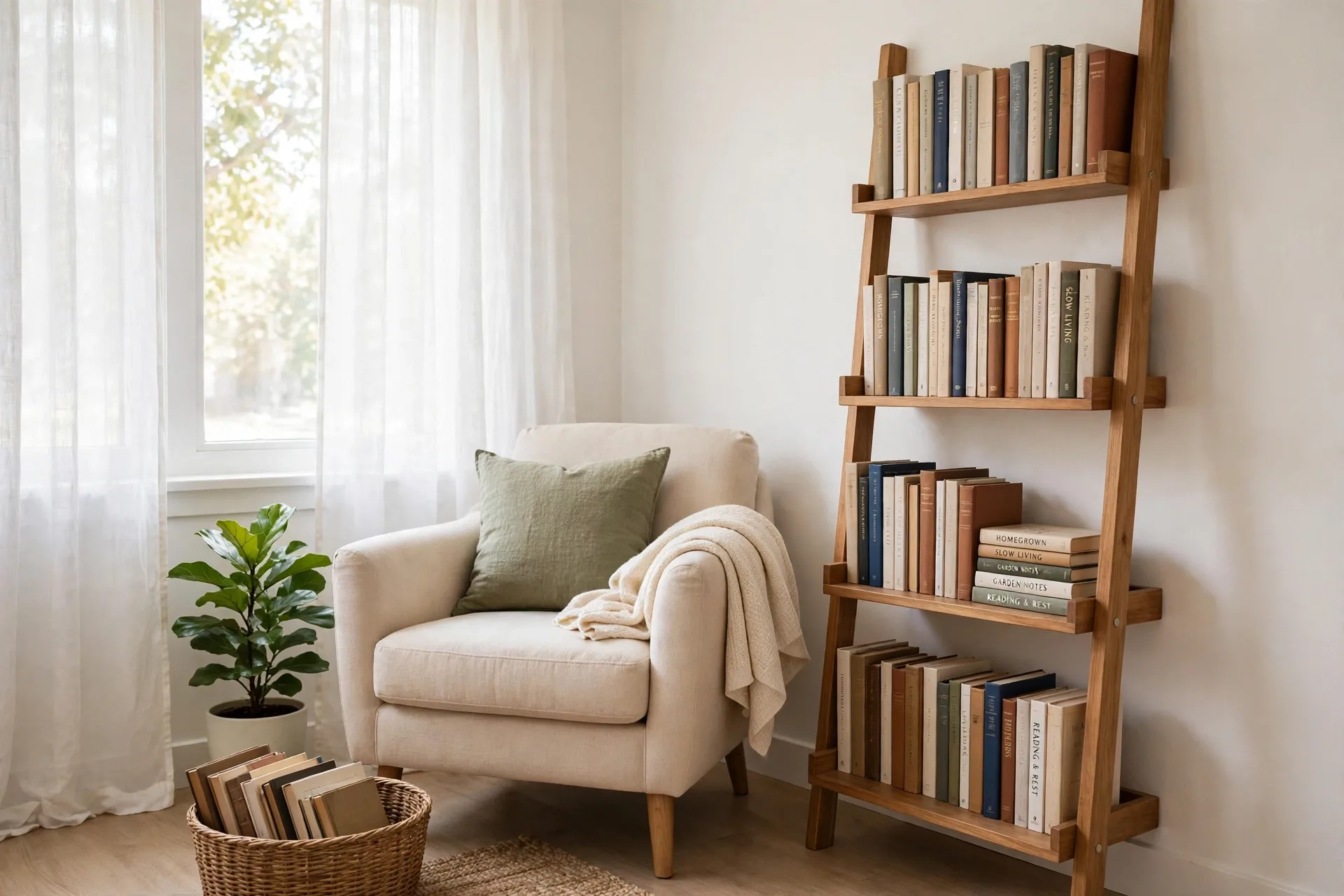
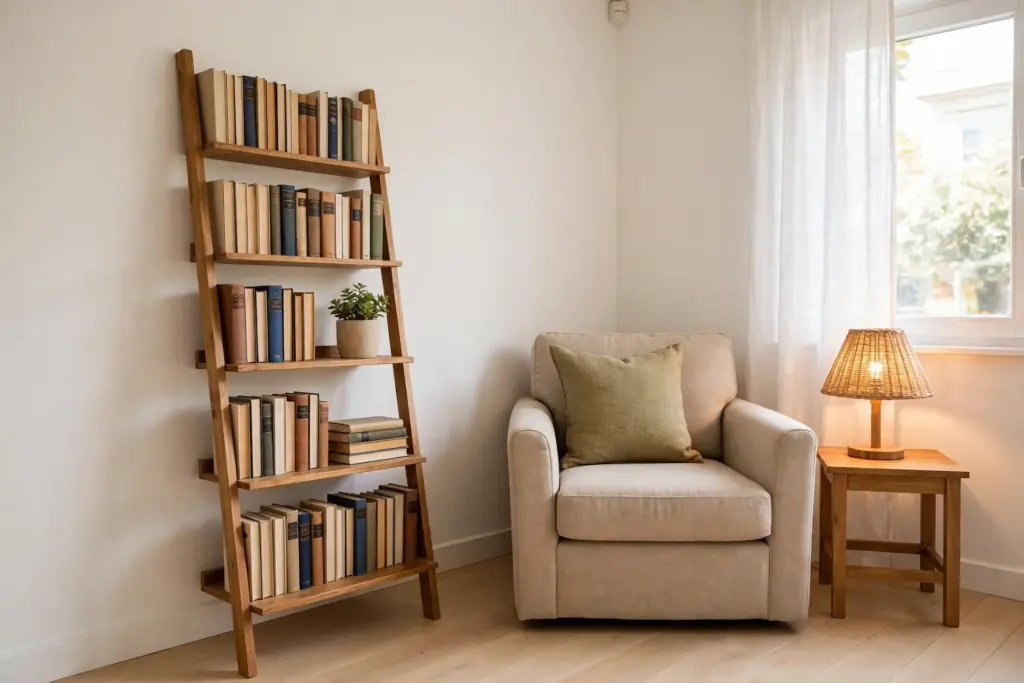
7. A slim leaning ladder shelf is the freestanding answer to the wall-shelf problem. It leans against the wall, needs no fixing, and its shallow shelves suit paperbacks and small hardbacks better than oversized art books, which belong lower down or elsewhere. Place it in a corner where it will not be knocked, keep the heaviest books on the lowest rungs, and never climb it to reach the top shelf.
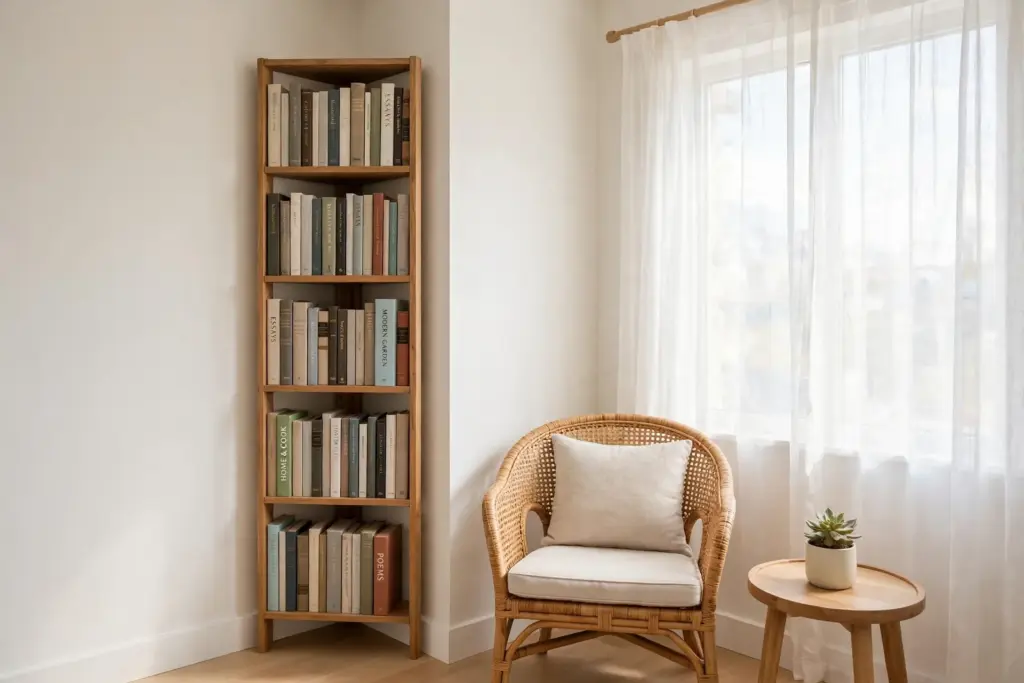
8. A tall, narrow freestanding unit, braced into a corner, holds more than a ladder shelf while still taking very little floor. The corner matters: two walls steady the unit, and books on both sides are less likely to be knocked from behind. If the unit is tall, anchor it only with the landlord’s permission, since an anti-tip strap is a wall fixing, and without permission, keep heavy books low and the top shelves light.
9. A rolling trolley or cart is vertical storage that moves. It holds the current pile — the book being read, the one next, a notebook, and reading glasses — and it can be wheeled to the chair, the bed, or the kitchen table, then parked in a gap when reading time ends. It is not a library, and that is the point: it keeps the active pile contained instead of spreading across every flat surface in the flat.
Use the Dead Space You Walk Past Every Day
Small flats are full of gaps too narrow for furniture but perfect for books: the space beside a sofa, the edge of a desk, the sill of a deep window. These spots use space that was already wasted.
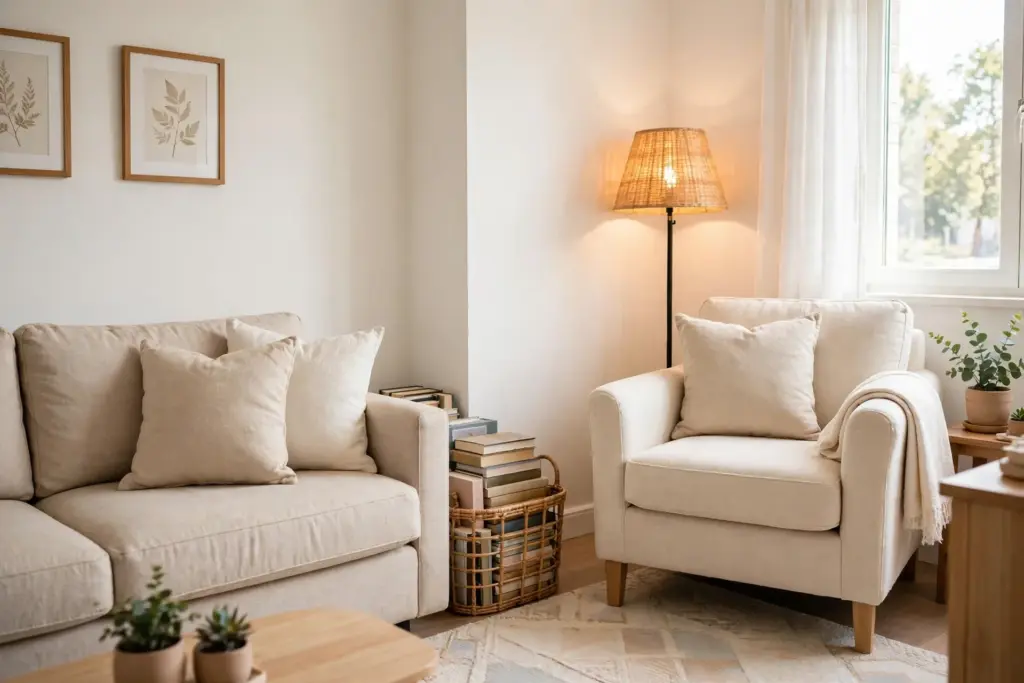
10. The gap beside or behind a sofa fits a slim basket or a narrow crate for the current-read pile, so books stop living on the sofa arm. A basket works better than a stack here, because it contains the pile and can be carried to the chair or bed in one trip. Keep it to one basket: a second basket is usually a sign the rotation system needs a pass, not more storage.
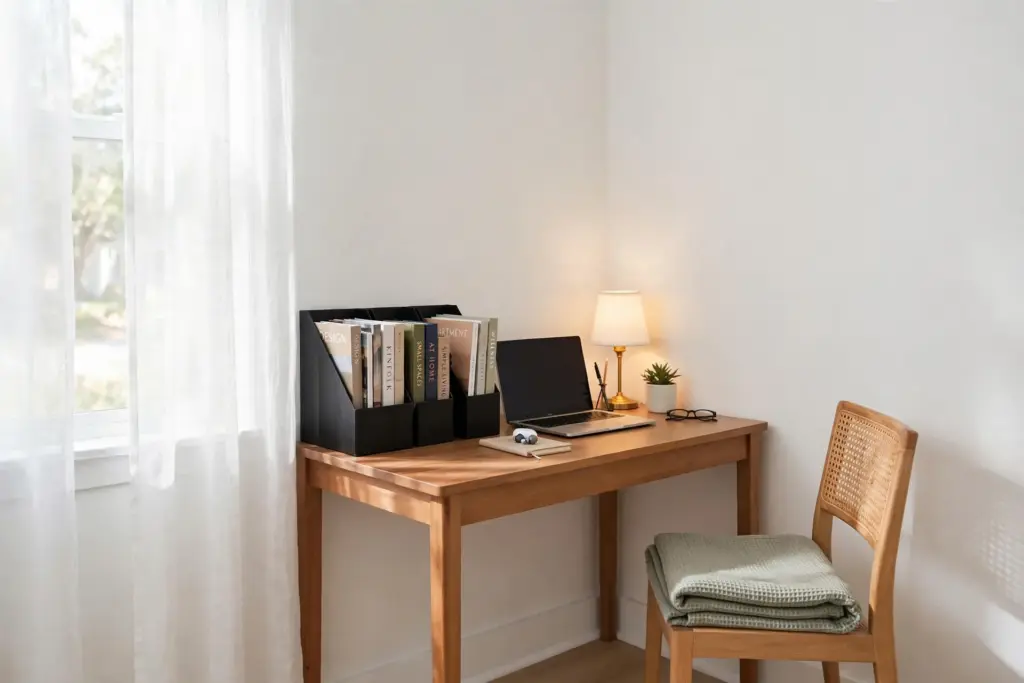
11. Magazine files on an existing shelf, desk edge, or windowsill keep paperbacks and magazines upright and labelled, without a new piece of furniture. They work best for slim volumes and periodicals, grouped by subject, with one file per group. A file that is overstuffed will not stand upright; when it starts to lean, split it or rotate some titles into a box.
12. A deep window sill can hold a short row of paperbacks, but with a caution: direct sun fades spines and dries bindings over time, so this spot suits books that will be read soon and moved on, not a treasured collection. Never store books against a damp exterior wall, or in a bathroom’s steam zone, where moisture does far more damage than sunlight.
Wall Shelves, Only With Permission First
Wall and floating shelves are the idea most small-space guides lead with, and for renters they should come last. A shelf fixed into a stud holds real weight, but it leaves fixings in a landlord’s wall, and one fixed only into plasterboard can fail under books. That is why this section is permission-first, never damage-free.
13. If you do use wall shelves, get the landlord’s agreement in writing first, and confirm who repairs the fixings at move-out. Choose short shelves, fix them properly into studs where possible, and keep the load modest: paperbacks and small hardbacks, not a full row of large hardbacks. Picture ledges suit display copies and slim volumes with their covers facing out, but they are display, not bulk storage, and overloading them is exactly how books end up on the floor.
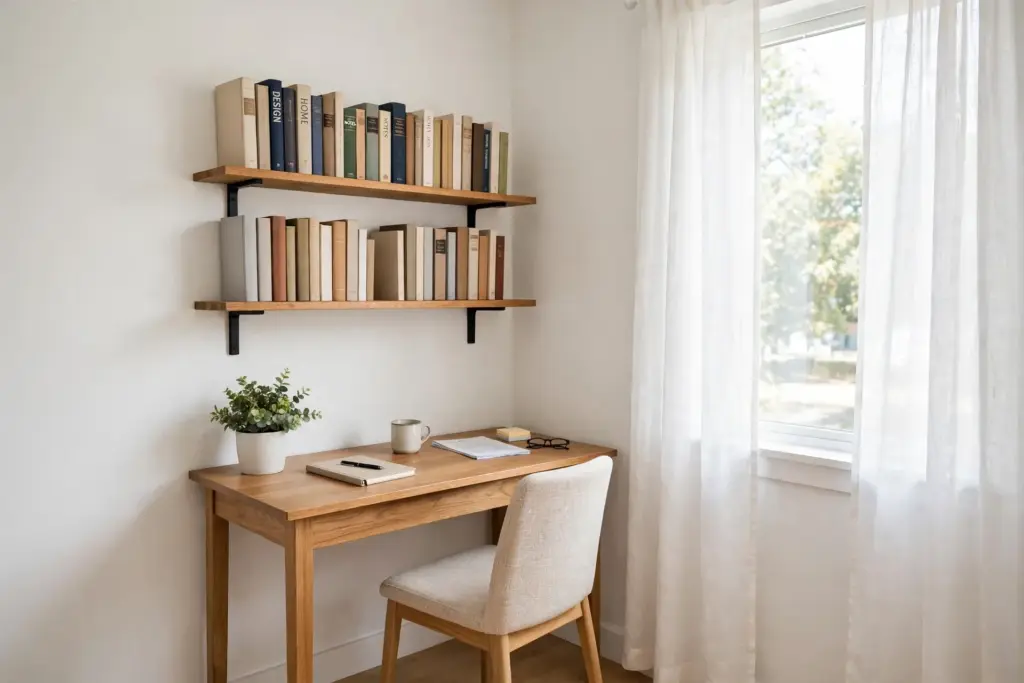
14. The renter-safe version of a wall display is a leaning shelf or a freestanding unit that looks built-in without touching the wall. Style it like a shelf wall — books grouped by subject, a little breathing room on each shelf, one or two objects breaking up the rows — and it gives the same visual payoff with nothing to repair at move-out. If a landlord refuses wall fixings, this is the full answer, not a compromise.
Keep It Working With a Rotation System
These book storage ideas for small apartments work only if books move through them. Without a system, every shelf creeps toward overcrowding, the current reads get buried, and the flat ends up with piles again. The rotation system is the fifteenth idea, and it is the one that protects the other fourteen.
15. Sort by how often a book is opened, not by colour or size alone. Daily reads stay at arm’s reach, beside the chair or bed. Books you dip into often sit at eye level. Books you love but rarely open go up high, light, or into a labelled box. Leave roughly a third of each open shelf empty, so books can be pulled out without a cascade, and swap the boxed books seasonally: when a new book arrives, an older one rotates into a box, and a boxed favourite comes back out. The seasonal decor storage ideas guide uses the same rotation logic for a different kind of collection, and the same rule applies: a small flat holds more when some things rotate out.
A short cull belongs in the same routine: duplicates, damaged copies, and books you will not open again can go to a charity shop, a little free library, or a friend. A small flat can hold a serious library, but only if some books rotate out. Other guides make the same core points: the RentCafe guide to book storage for tiny apartments and the StoreSpace guide to creative ways to store books in small spaces both stress hidden storage, baskets, and furniture you already own.
Frequently Asked Questions (FAQ)
How many books can a small apartment hold without a bookcase?
A small flat can hold a serious collection without a bookcase, provided most of it rotates through boxes and dual-purpose furniture. Keep only current reads on open surfaces, and box the rest by subject.
Are floating shelves safe for renters?
Floating shelves are only a renter option with the landlord’s permission, because they need wall fixings and books are heavy. Short shelves fixed into studs hold paperbacks well, but a freestanding ladder shelf gives most of the same storage with nothing to repair.
Where should heavy books be stored in a small apartment?
Keep heavy volumes low: on the lowest shelf of a freestanding unit, in a small under-bed box, or on a lower coffee-table shelf. Never pile them high on a wardrobe top or a ladder shelf’s top rung.
How do you stop book storage from looking cluttered?
Leave breathing room on open shelves, group books by subject, and keep the active pile to one basket or trolley. When a shelf is full, rotate titles into a labelled box instead of adding another surface.