15 Low-Light Indoor Plant Ideas for Small Apartments That Stay Alive
If your apartment gets more shade than sun, you do not have to give up on plants. These plants are chosen for exactly that problem. As indoor plants for small apartments low light, they suit north-facing windows, windows blocked by another building, and rooms where direct sun never arrives. The list below covers 15 plants that tolerate low light and stay small enough for a rental.
Low light is not no light. It is the soft, indirect daylight a few feet from a north-facing window, or the light in a room that never gets direct sun. A plant that tolerates low light will grow slowly there and stay healthy; a plant that needs bright light will stretch, drop leaves, and give up in the same spot. For the wider decorating picture, the renter-friendly apartment decorating ideas guide shows how plants fit a room without drilling or permanent changes.
First, Figure Out What “Low Light” Means in Your Apartment
Stand where the plant will live at midday and hold your hand about a foot from the wall. A soft, clear shadow means medium indirect light, where almost everything on this list will do well. A faint shadow means low light: stick to the toughest plants in the first few sections. No shadow at all, even at midday, means the spot is too dark for any plant without a small grow light.
Sheer curtains spread harsh sun without blocking it, and a light-colored pot or a mirror opposite the window bounces a little more daylight around the room. Avoid the opposite mistake: pushing a low-light plant against a south-facing window in summer can scorch shade-grown leaves. In a small room, the best spot is usually a few feet back from the window, not pressed against the glass.
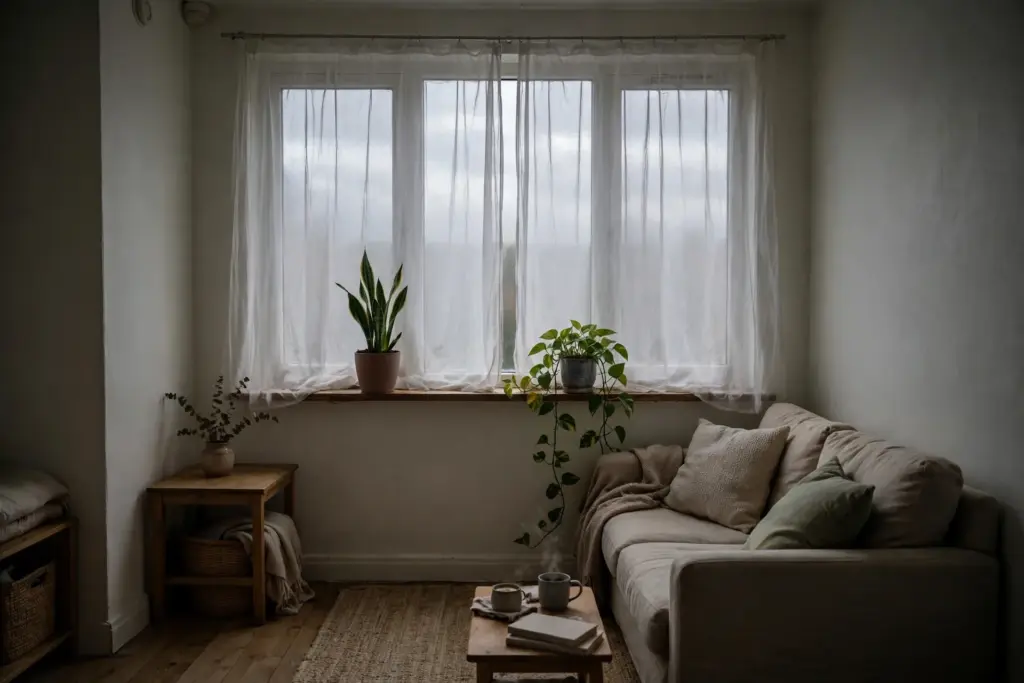
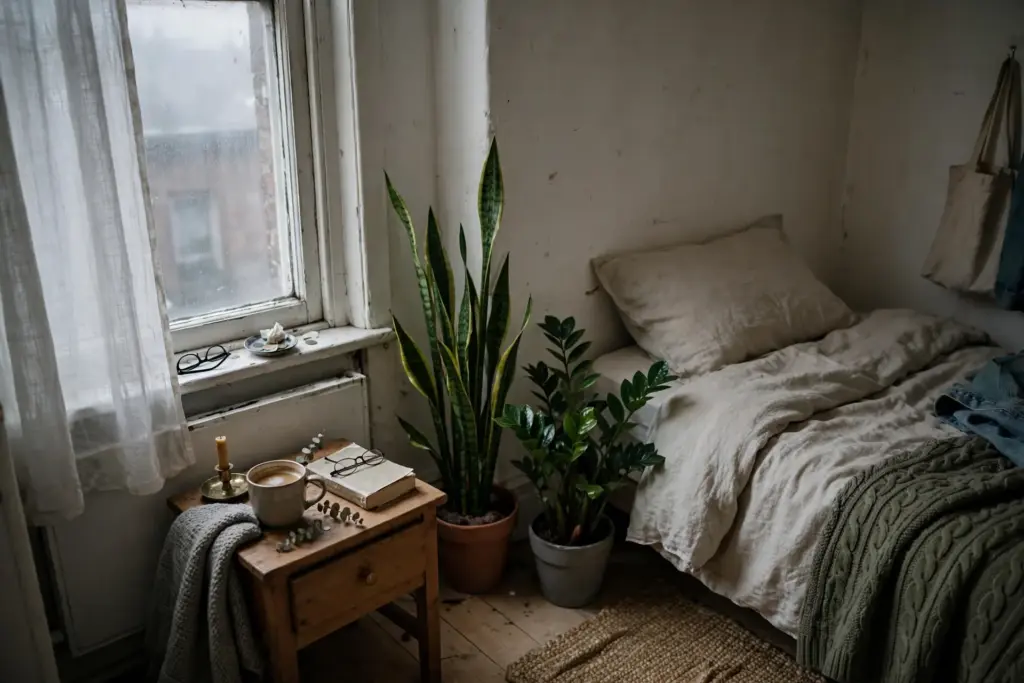
The Toughest Pair: Snake Plant and ZZ Plant
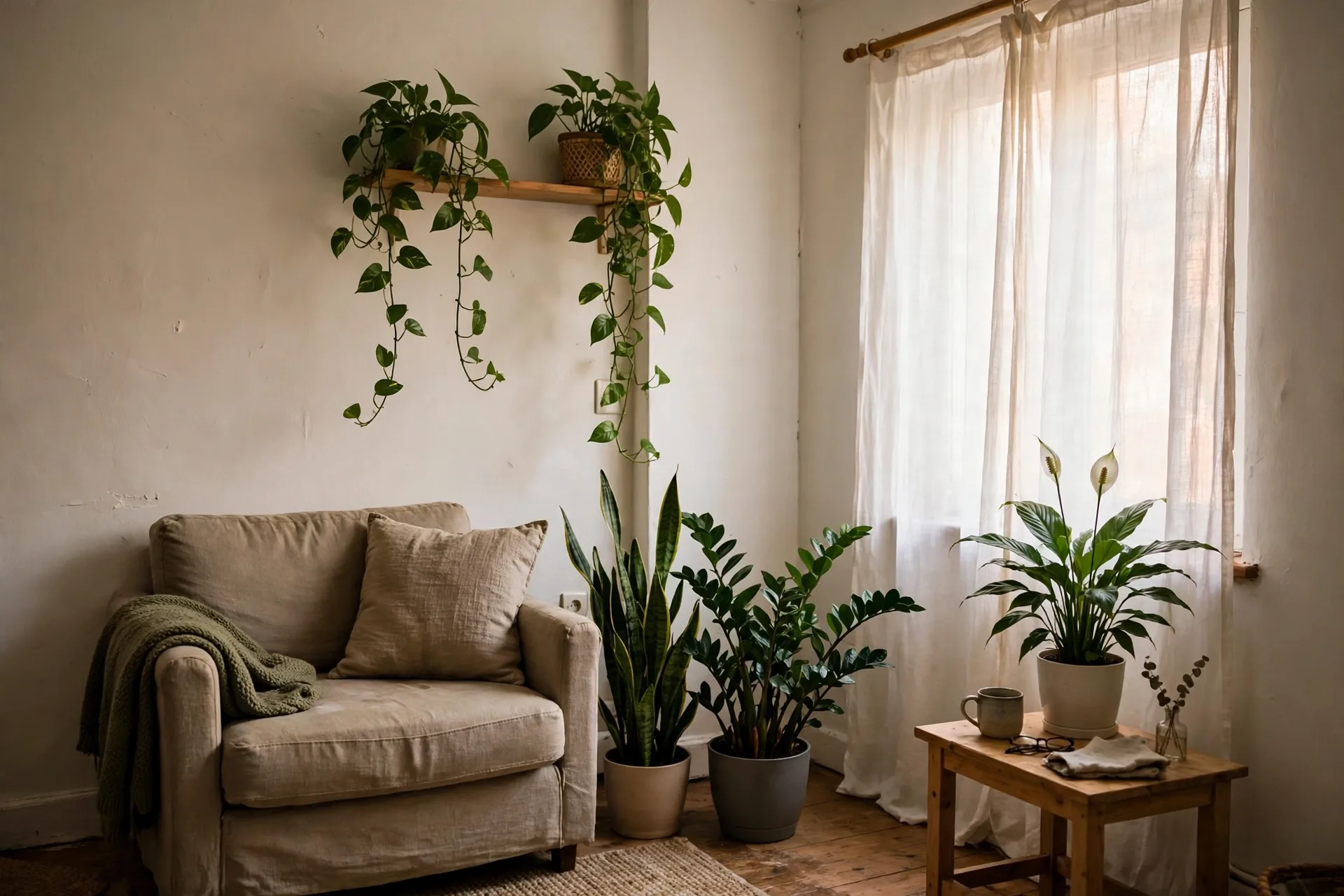
1. Snake plant (Dracaena trifasciata). Tall, upright leaves that take up almost no floor space, which is why this is the classic small-apartment plant. It tolerates low light, irregular watering, and dry indoor air. Water only when the soil is dry well below the surface, and use a pot with a drainage hole, because wet roots in a dark corner are the one thing that will kill it.
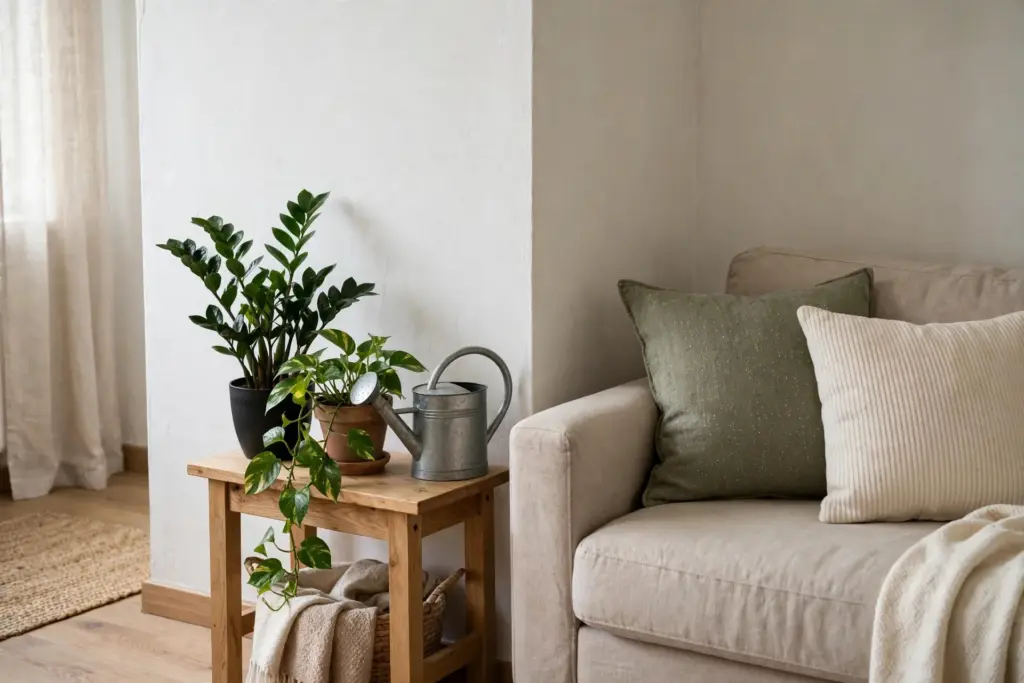
2. ZZ plant (Zamioculcas zamiifolia). Glossy, upright stems that store water in thick underground rhizomes, so it forgives a forgotten watering schedule. It grows slowly in low light, which is a benefit in a small room: it will not outgrow its corner in a season. Keep it in a compact pot and resist the urge to water on a calendar schedule; check the soil instead.
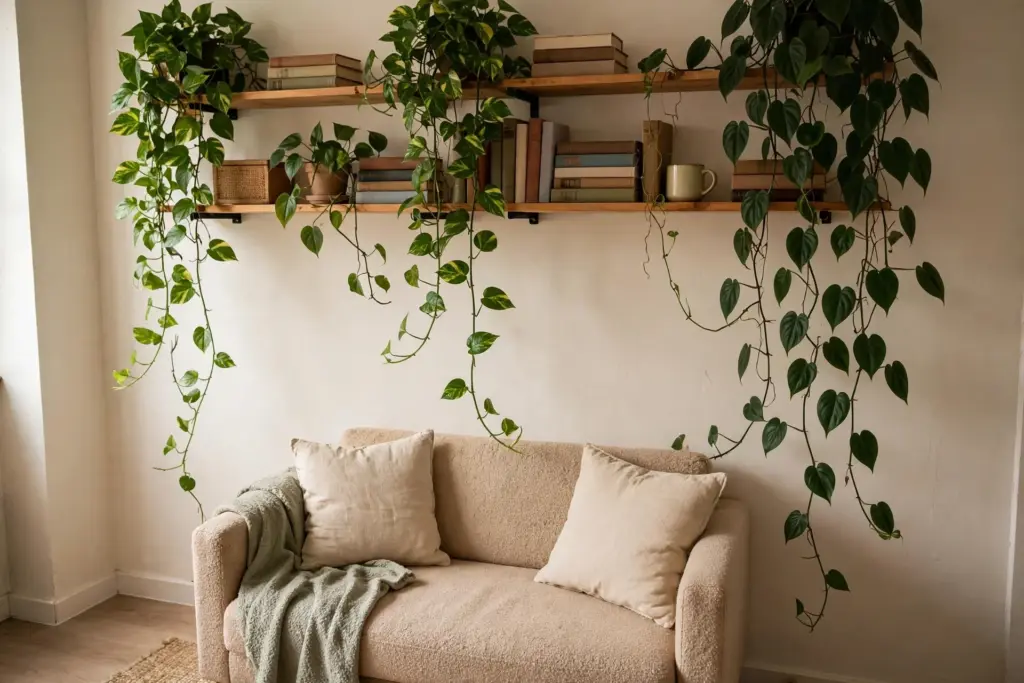
Trailing Plants That Save Floor Space: Pothos and Heartleaf Philodendron
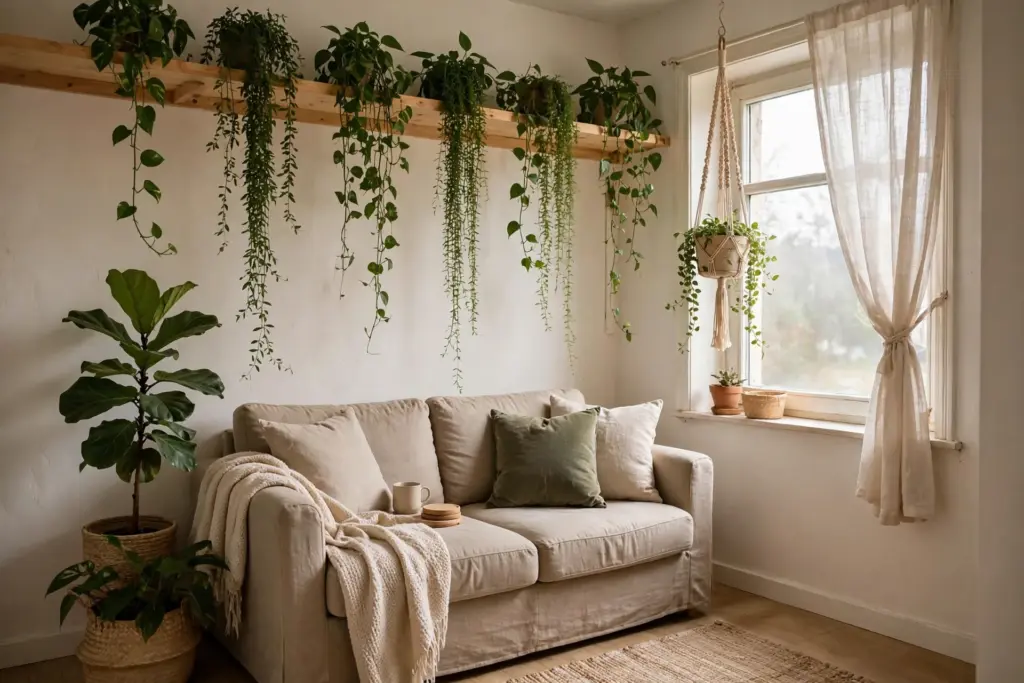
3. Golden pothos (Epipremnum aureum). The trailing plant most renters start with, because it grows in low light, in a hanging pot, on a high shelf, or in a jar of water. Let the vines trail from a shelf rather than giving them floor space, and trim the ends when they get long; trimming also keeps the plant bushy instead of leggy.
4. Heartleaf philodendron (Philodendron hederaceum). A similar trailing habit, with plain green heart-shaped leaves that look good against a white wall. It tolerates low light well, though leaves stay smaller and growth slows in dimmer spots. Check the weight limit of any hook before hanging a watered pot from it.
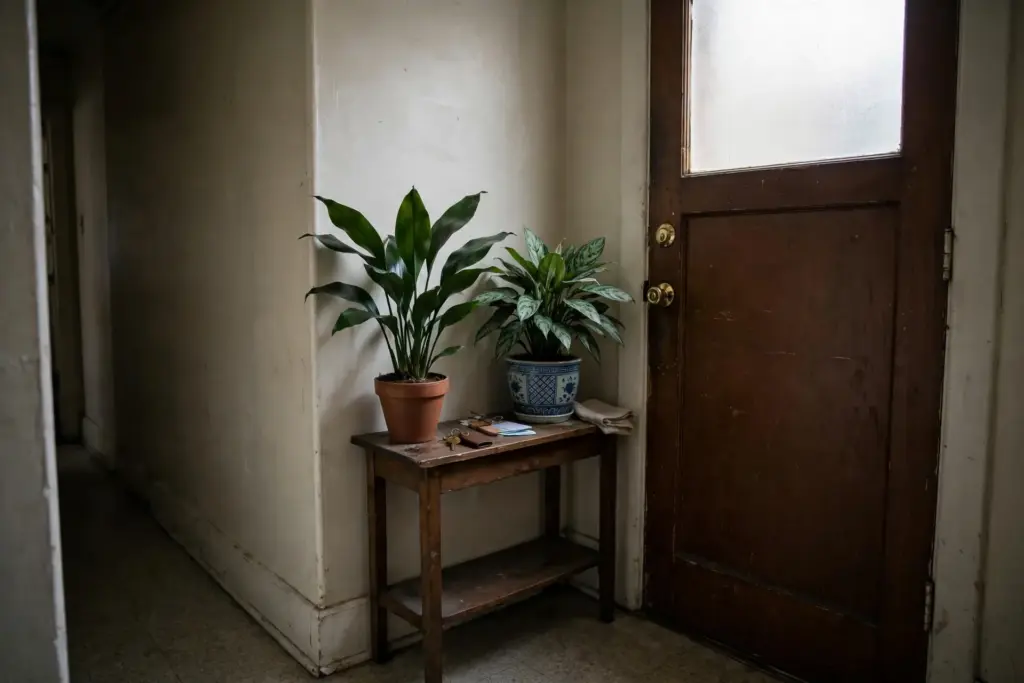
The Dim-Corner Specialists: Cast Iron Plant and Chinese Evergreen
5. Cast iron plant (Aspidistra elatior). The name is fair warning and fair praise: this is one of the few houseplants that genuinely tolerates a dim hallway or a corner far from the window. It grows slowly, keeps a tidy upright shape, and does not demand humidity or frequent feeding. Wipe dusty leaves occasionally so what little light there is can reach them.
6. Chinese evergreen (Aglaonema). The patterned one on this list, with silver, green, and sometimes pink markings that brighten a dark corner without flowers. It prefers low to medium indirect light and soil that is lightly moist, not soggy. Choose a compact variety for a small room, because larger types can spread wider than a nightstand allows.
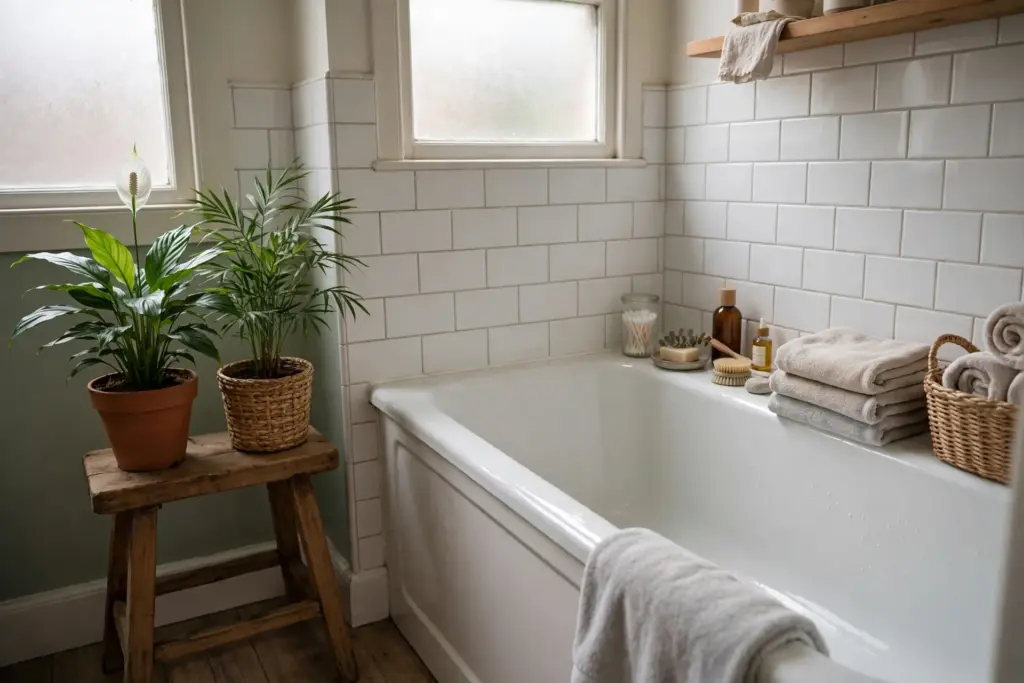
Bathroom-Friendly Picks: Peace Lily and Parlor Palm
7. Peace lily (Spathiphyllum). One of the few low-light plants that flowers indoors, with white spathes against dark green leaves — though reliable flowering usually needs brighter indirect light than a dim corner gives. It likes more consistent moisture than snake plant or ZZ plant, and it droops visibly when thirsty, which is a useful watering signal. Bathrooms suit it, because shower steam raises humidity. See the renter-friendly bathroom makeover guide for more small-bathroom ideas.
8. Parlor palm (Chamaedorea elegans). A small, feathery palm that stays compact indoors and tolerates low to medium light. It suits a bathroom shelf or a bedroom corner, and it is one of the safer choices in a home with pets, which the pet section below covers in full. Avoid placing it where a radiator blasts dry heat directly onto its fronds.
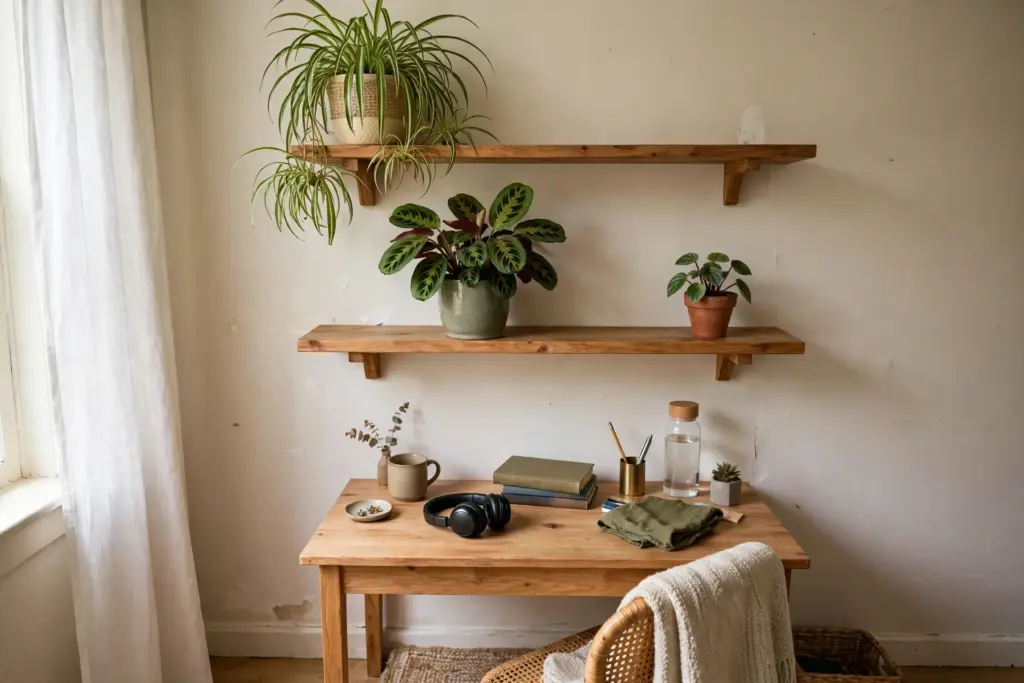
Shelf Plants With Personality: Spider Plant, Prayer Plant and Peperomia
9. Spider plant (Chlorophytum comosum). Striped, arching leaves and small plantlets that dangle from the mother plant, making it a good shelf or hanging plant. It tolerates low light, though its variegation fades a little in dimmer spots, and it is widely listed as non-toxic to pets.
10. Prayer plant (Maranta leuconeura). Patterned leaves that fold upward in the evening, a genuine conversation piece on a shelf. It prefers low to medium light and slightly higher humidity than a dry living room provides, so a bathroom shelf or pebble tray helps. Keep it out of direct sun, which can bleach its patterns.
11. Peperomia. A compact, thick-leaved plant that stays small, which is exactly what a crowded shelf needs. Most peperomia types tolerate low to medium light and prefer to dry out a little between waterings. Because it stays small, it is easy to move to a brighter spot for a week if growth stalls, then move back.
Four More That Earn Their Space
12. Dracaena (Dracaena fragrans types). Upright, cane-like stems with strappy leaves for a floor corner. It tolerates low light, but leaf tips brown easily in very dry air, so keep watering even and keep it away from heating vents.
13. Lucky bamboo (Dracaena sanderiana). Not a true bamboo, but a dracaena that grows in water, which makes it a good low-light choice for a desk or bathroom. Change the water regularly and keep the roots covered, and move it out of direct sun, which can yellow the leaves.
14. Arrowhead vine (Syngonium podophyllum). Arrow-shaped leaves that start compact and trail as the plant matures, so it can begin on a shelf and later hang. It tolerates low light, but its colors stay plainest in dim spots; brighter indirect light brings out its variegation.
15. Bird’s nest fern (Asplenium nidus). Wide, wavy fronds forming a rosette, with no trailing mess. It tolerates lower light than most ferns, but it wants humidity, so it suits a bathroom better than a dry living room. Keep its central rosette dry when watering.
Placement: Use Floor, Shelf and Hanging Together
To make a small apartment feel planted without feeling crowded, use three heights at once: one upright plant on the floor, like a snake plant, in the darkest usable corner; two or three small plants on shelves, like peperomia, at eye level; and one trailing plant, like pothos, from a high shelf. That spreads plants across whatever light the room has, instead of crowding every pot onto one windowsill.
Weight and water damage matter more than style here. A watered pot is heavy, so hanging pots belong on a ceiling hook rated for the weight or a sturdy shelf, never on a weak adhesive hook. Every pot needs a saucer, and a small tray under a group of pots protects a rental windowsill and makes the group easy to move for cleaning.
Watering: The Mistake That Kills More Low-Light Plants Than Darkness
In low light, plants grow slowly and use water slowly, so the most common killer is not darkness but overwatering. Soil that stays wet in a dim corner rots roots. The rule that prevents most of it is simple: push a finger about an inch into the soil. If it feels damp, wait. If it feels dry, water thoroughly, then empty the saucer so the pot is not sitting in water. That finger test is a starting point, not a universal rule: how fast soil dries depends on the species, the potting mix, the pot size, and how much light the spot gets. Drought-tolerant plants like snake plant and ZZ plant prefer to dry out well between waterings, while plants like peace lily and dracaena prefer more consistent moisture — so check each plant’s needs rather than watering the whole shelf on one rule.
Season matters too. In winter, when daylight is shortest, most of these plants need even less water than in summer. Yellowing leaves, soft stems, and a musty smell from the soil are warning signs of too much water, not too little. A small grow light, run for a few hours a day as a supplement over the darkest corner, can also help in winter where some daylight already reaches, and it needs no wiring or installation.
Pets, Leases and Renter Rules to Check First
Pet safety changes this list. Snake plant, ZZ plant, pothos, philodendron, peace lily, dracaena, lucky bamboo, arrowhead vine, and Chinese evergreen are all reported as toxic to cats or dogs if chewed. The safer group includes parlor palm, spider plant, prayer plant, peperomia, bird’s nest fern, and cast iron plant. If your pet chews leaves, choose from the safer group and check the exact species on the ASPCA toxic and non-toxic plants list before buying, because toxicity varies by species.
Lease rules are simpler. Most leases say nothing about houseplants, but some restrict hanging items from ceilings or drilling into walls. Use freestanding shelves and adhesive hooks only within their stated weight limit — but a weight limit is not lease permission: check your lease first, since some leases restrict hooks or hanging items even when they hold. Plants in pots travel with you when you move, which is one more reason to keep them in containers.
The low-light plant guides at Apartment Garden Guide and HomeTweakz group the same core plants by light tolerance. If a plant on this list keeps failing, the cause is almost always water or a spot darker than low light.
Frequently Asked Questions (FAQ)
What are the best indoor plants for small apartments low light?
Snake plant, ZZ plant, pothos, cast iron plant, and Chinese evergreen are the most reliable starting points: they tolerate genuinely low light and stay compact.
Can low-light plants survive in a room with no windows?
No plant on this list will thrive in a truly windowless room without help. A windowless corner needs a proper artificial-light schedule — university extension guidance for foliage houseplants is around 12–14 hours a day with the light positioned close above the plant (roughly 12–24 inches). A few hours of supplemental light only helps where some daylight already reaches; without any light source, even the toughest plants will weaken.
How often should low-light plants be watered?
Check the soil, not the calendar. As a rough guide, most plants need water only when the top inch of soil is dry, which can mean every two to three weeks in winter for snake plant and ZZ plant — but how fast soil dries depends on the species, potting mix, pot size, and light. Drought-tolerant plants like snake plant and ZZ plant prefer to dry out well between waterings, while peace lily and dracaena prefer more consistent moisture. Always use a pot with drainage and empty the saucer.
Which low-light plants are safe for cats and dogs?
Parlor palm, spider plant, prayer plant, peperomia, bird’s nest fern, and cast iron plant are the safer choices. Snake plant, ZZ plant, pothos, philodendron, and peace lily are toxic if chewed, so keep them out of reach in a pet home and check the ASPCA list for the exact species.