16 Toy Storage Ideas for Small Apartments That Clear the Floor Fast
Toys do not need a playroom to stay under control. They need a system that fits the room they actually live in — usually a living-room corner, not a spare bedroom. These toy storage ideas for small apartments are judged by one test: can the whole play session reset in about five minutes, by the child as much as the parent? Every idea below is renter-safe — no drilling, no built-ins, nothing that risks the deposit — and every one works in a room that also has to function as an adult living space.
The system matters more than any single bin. A family that buys ten pretty baskets without a rotation plan will have ten full baskets and the same floor problem a month later. The small apartment storage ideas guide is the parent system for this article, and the small apartment organization ideas guide covers the room-by-room routines that keep it running.
1. Rotate Toys: Fewer Out Beats More Storage
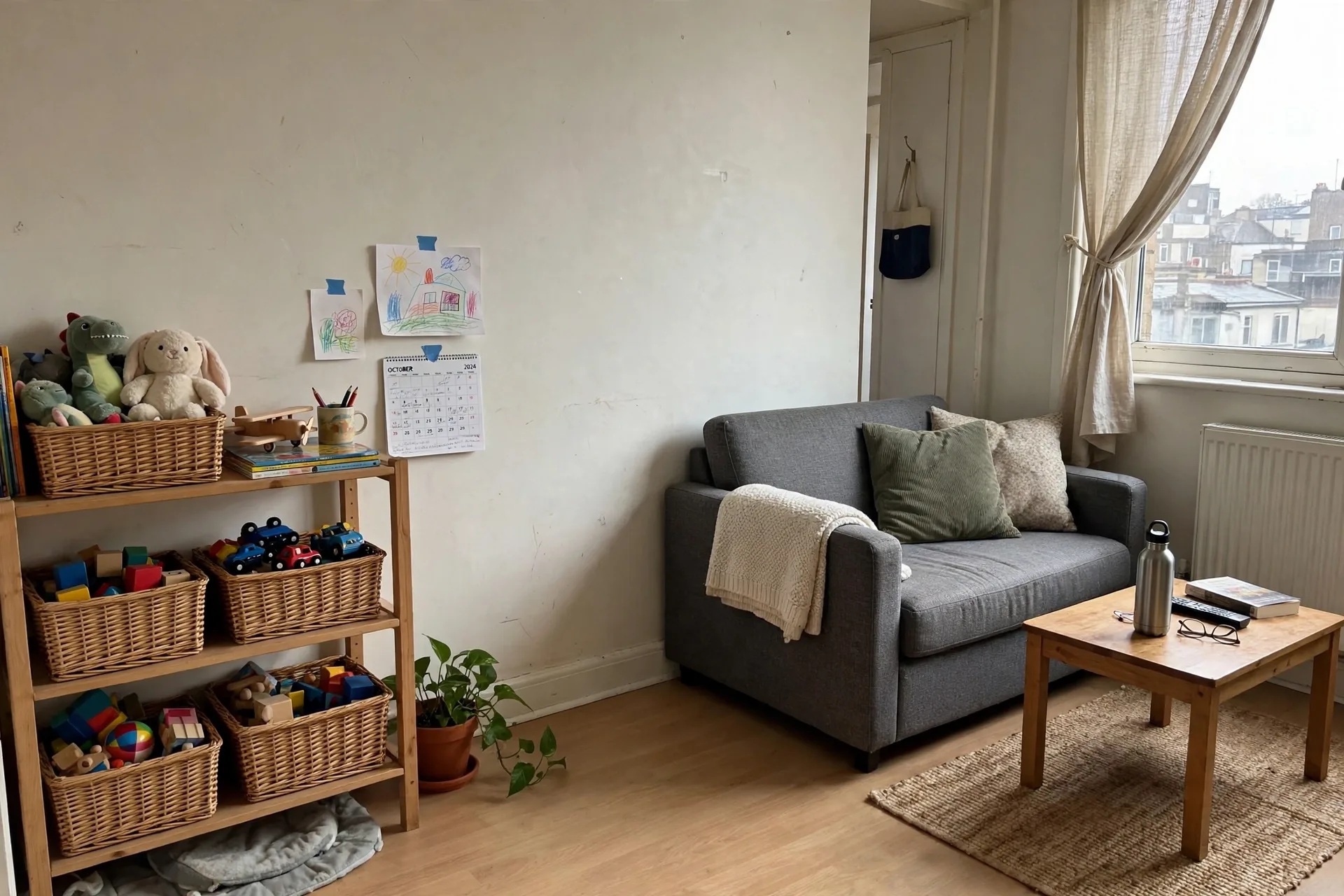
Rotation is the single highest-leverage system for a small floor. Keep only part of the collection out at a time, store the rest, and swap one bin for another every week or two. Children play longer with toys that reappear after a break, and the floor only ever has to hold one rotation’s worth of toys. The swap itself takes minutes: one bin out of the closet, one bin back in. A workable starting split is roughly one-third of the collection out and two-thirds stored, adjusted by age: toddlers do well with even fewer choices, while older children can handle a full bin per interest. Let the child choose which bin comes out next; the choice is part of why the ‘new’ toys get played with. 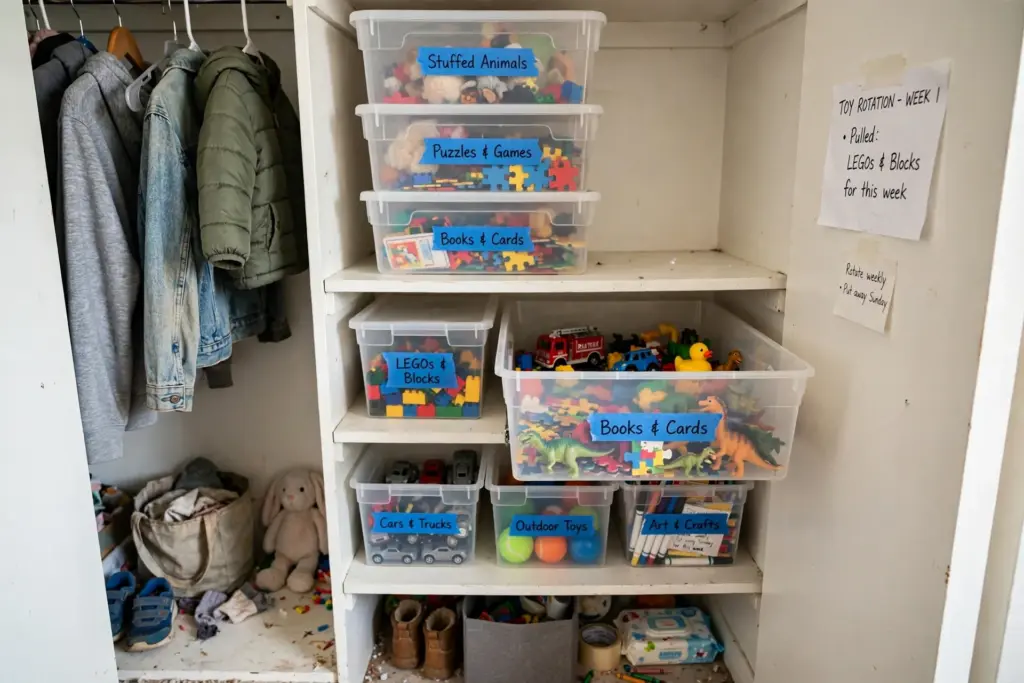
2. Keep One Bin in Play at a Time
The daily version of rotation is simpler still: one bin in play, everything else put away. A child who can see every toy at once plays with none of them for long, and a parent who has to tidy ten categories after every session will stop tidying at all. One bin on the rug, played with properly, then back on the shelf, keeps both the play and the cleanup manageable. The rule needs one fixed ending: the bin goes back on its shelf before bath time, every day, no exceptions for ‘just one more game.’ If a toy does not fit inside the bin, it waits for the next rotation — that single boundary is what keeps one bin from quietly becoming three. 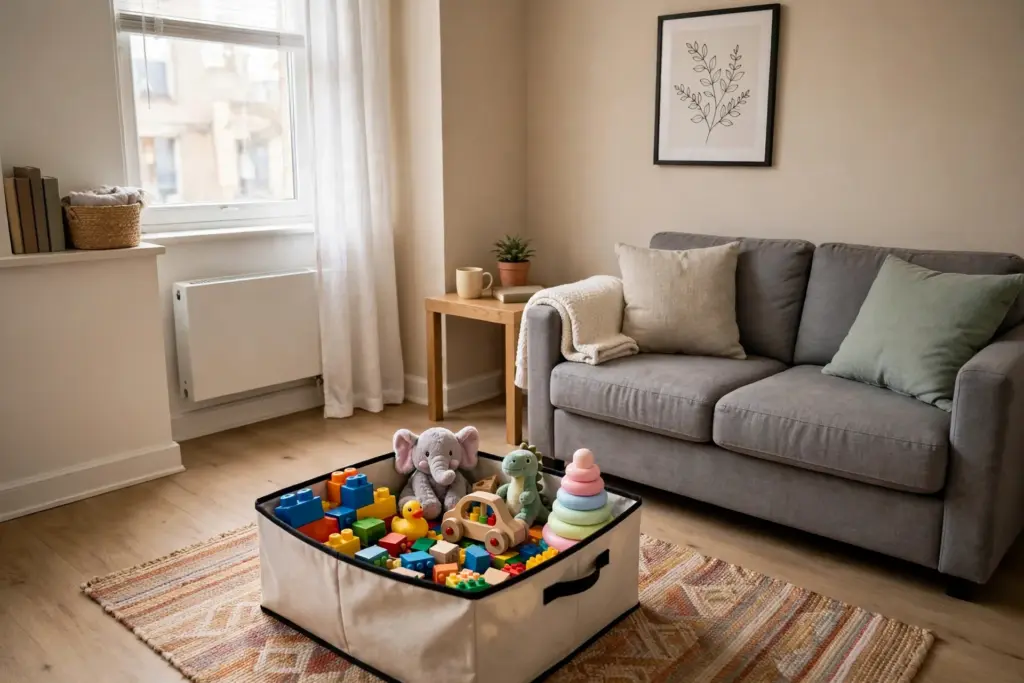
3. Build a Closet Rotation Station
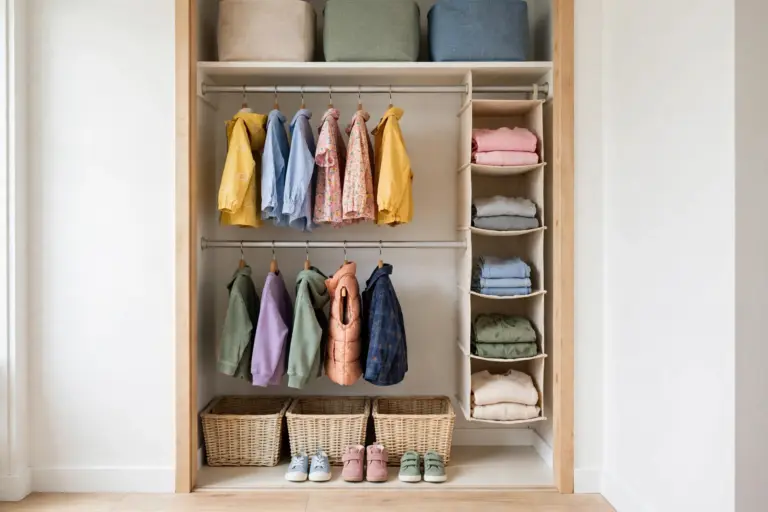
The closet is the natural home for the rotation stock. Clear bins on closet shelves, labelled by category, hold the toys that are not in play, and the swap happens at the closet door instead of across the living room. Use clear bins or labels on opaque ones — a rotation system fails the moment nobody can find the bin they want without opening five others.
The location matters less than the rule: rotation stock has one home, it is labelled, and only one bin leaves it at a time. The small linen closet organization ideas guide uses the same labelled-basket logic for a different closet, and the same discipline applies here. Put the stock bins adults reach for on the higher shelves and keep the one outgoing bin at waist height near the door, so the swap never means climbing or emptying a shelf. If the closet is shared, give rotation stock one labelled shelf edge so it never drifts.
4. Slide Rolling Bins Under the Bed
Under-bed space is the largest unused storage area in most small bedrooms, and low rolling bins turn it into toy storage a child can actually use. A bin on wheels slides out for play and back under the bed for the reset, with no lifting and no closet space spent. Choose bins low enough to clear the bed frame with room to spare, and keep one category per bin so the child is not hunting through a mixed box. Measure the clearance before buying: most bed frames leave 15–25 cm, and a bin that fits with a centimetre to spare will jam the first time a sock slides under it. This suits bulky, out-of-season toys rather than daily favourites, which a child will not crawl under the bed for twice a day. 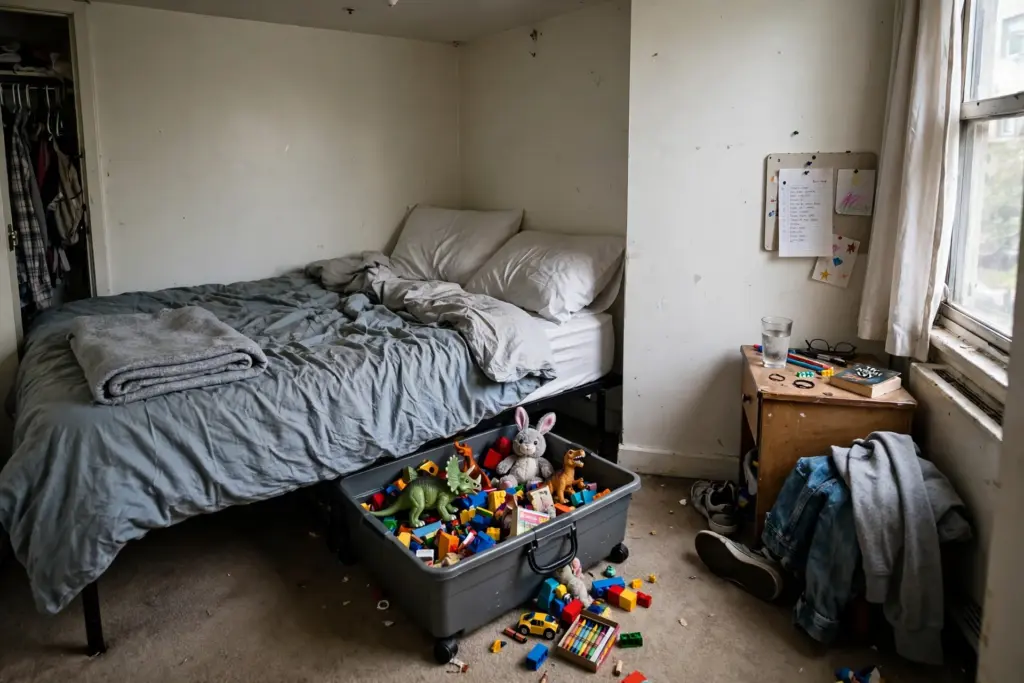
5. Hide Toys Inside a Storage Ottoman
A storage ottoman is the most honest dual-purpose furniture in a small apartment: a footrest, extra seating, and a toy box in one piece, with the toys invisible the moment the lid closes. Check the lid before you buy. A heavy lid that slams is a finger risk for small children, so look for slow-close hinges or a removable lid, and treat that as a safety check, not a nice-to-have. The same caution applies to any lidded toy chest in this guide. 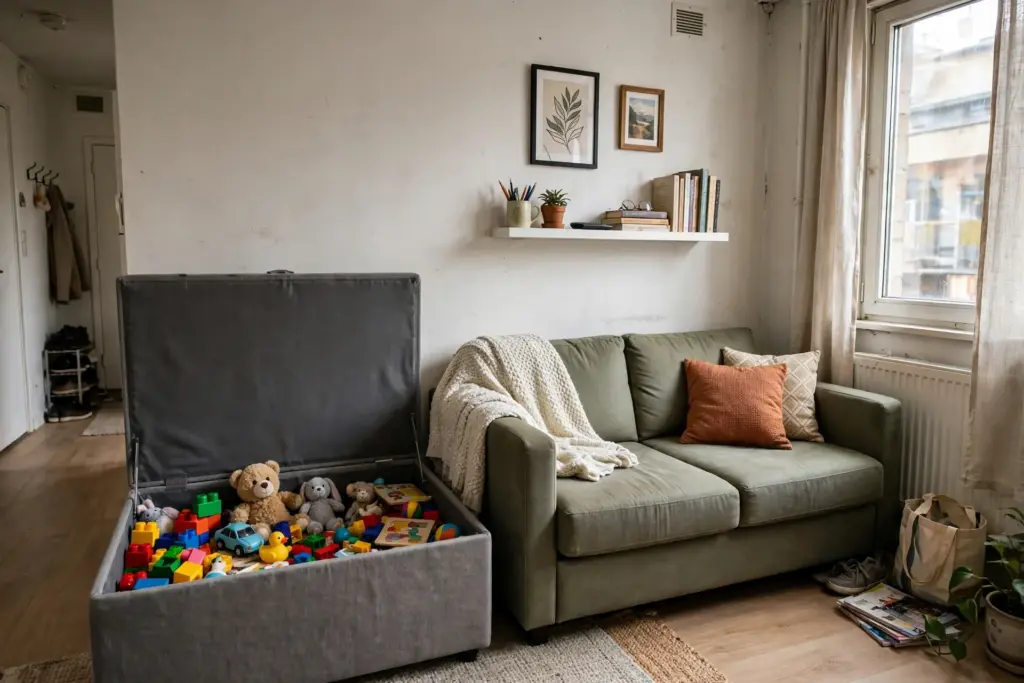
6. Use a Lidded Bench by the Door
A bench with storage underneath earns its floor space twice: seating for putting on shoes, and baskets below for the toys that migrate toward the door. Entryway benches catch the toys that would otherwise live on the hallway floor, and a basket per child — or per category — keeps the bench from becoming one mixed pile. 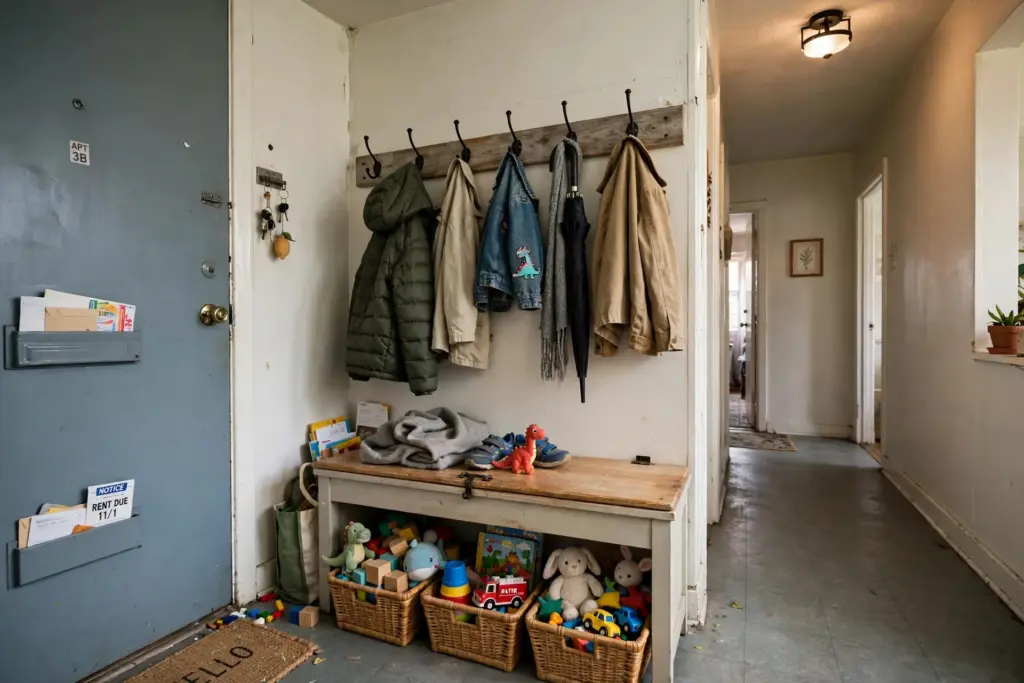
7. Choose a Coffee Table With Compartments
A coffee table with a lift-top or drawers hides the current rotation’s toys inside the furniture the room already has, and the reset is literally closing a lid. This works best for the small, flat toys that otherwise scatter — puzzles, card games, drawing supplies — rather than for large plush toys, which belong in a bin or ottoman. 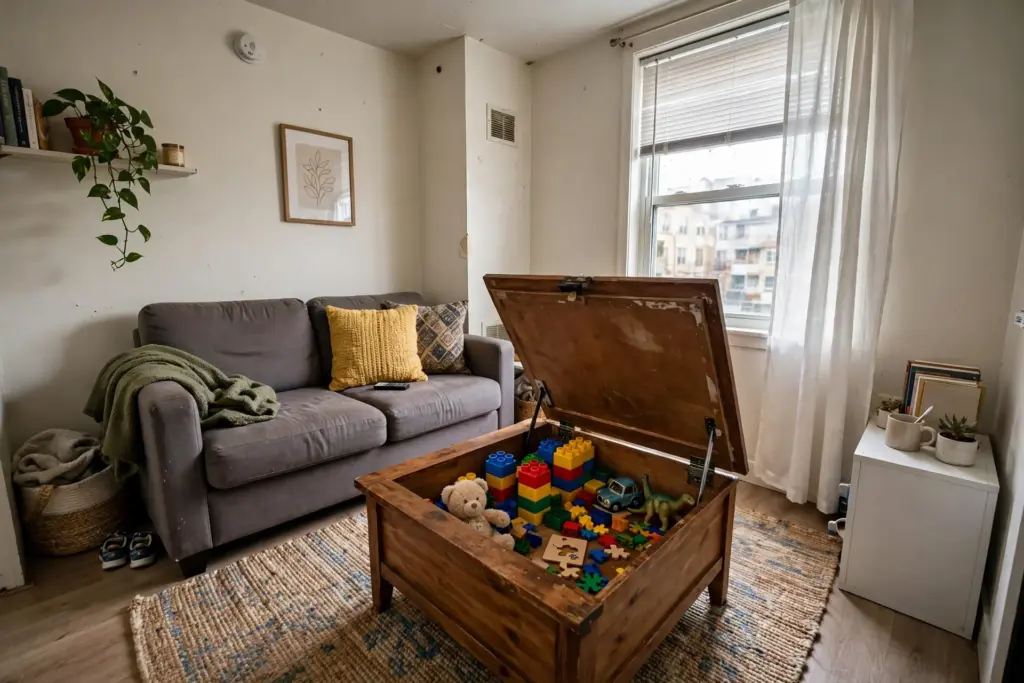
8. Go Low and Wide Instead of Tall
Tall shelving is a tip-over risk around climbing children, and anchoring it to the wall means wall fixings — permission-first, and never something to call damage-free. The honest renter alternative is low and wide: a low bookshelf or cube unit that a child can reach without climbing, that cannot tip far even if pulled, and that holds the same bins at a safer height. Low storage is not a compromise here; it is the version children can actually use alone, which is the point of the whole system. 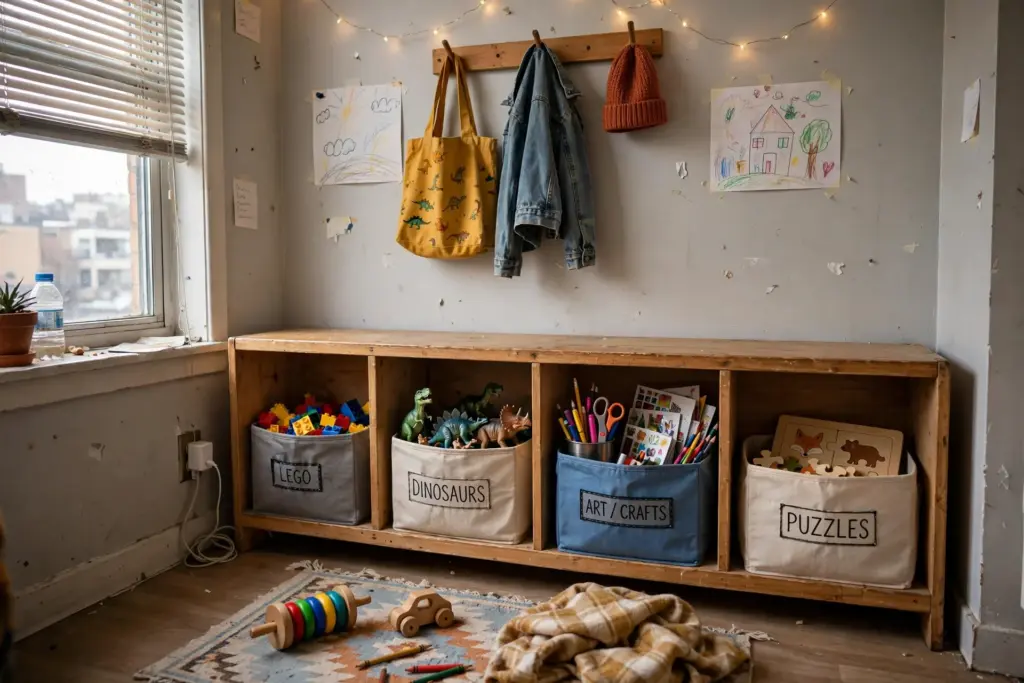
9. Hang an Over-Door Organizer for Small Toys
Clear over-door pockets turn a door into storage for the smallest toys — action figures, cars, craft supplies, dolls — with zero wall fixings and zero floor space. Because the pockets are clear, a child can see every toy without emptying a bin, and because they hang on the door, they use space that was otherwise entirely wasted. 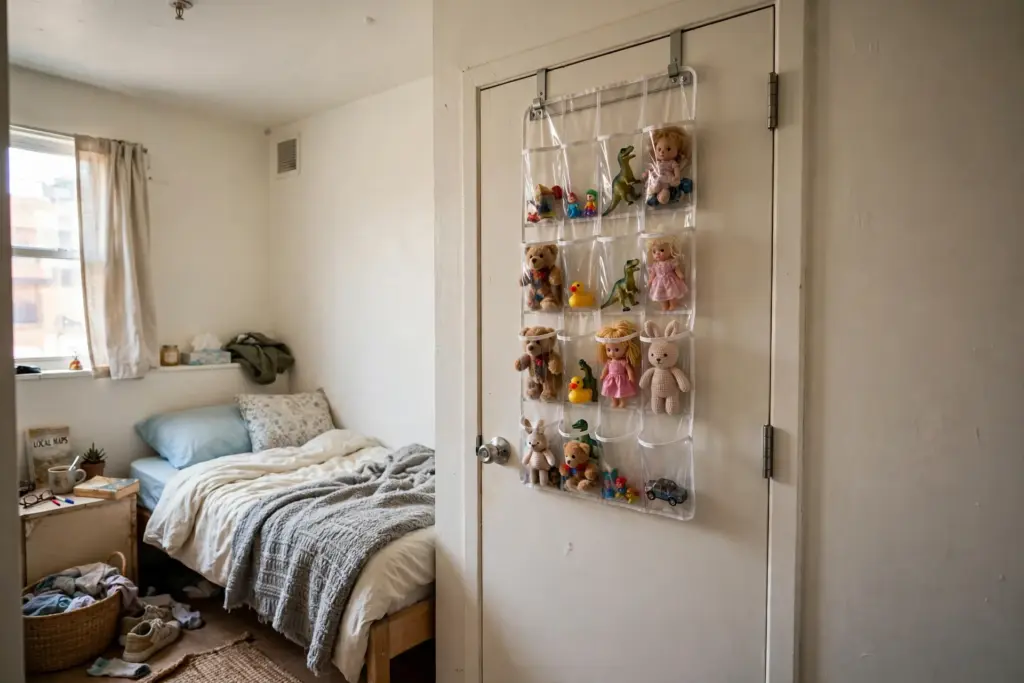
10. Label Every Bin With a Picture, Not Just a Word
A label a child cannot read is not a label for that child. Picture labels — a photo, a drawing, or a simple icon of the toy type — let pre-readers run cleanup alone, which is the difference between a system that works on school nights and one that only works when a parent supervises it. Pair the picture with the word so the label grows with the child’s reading. 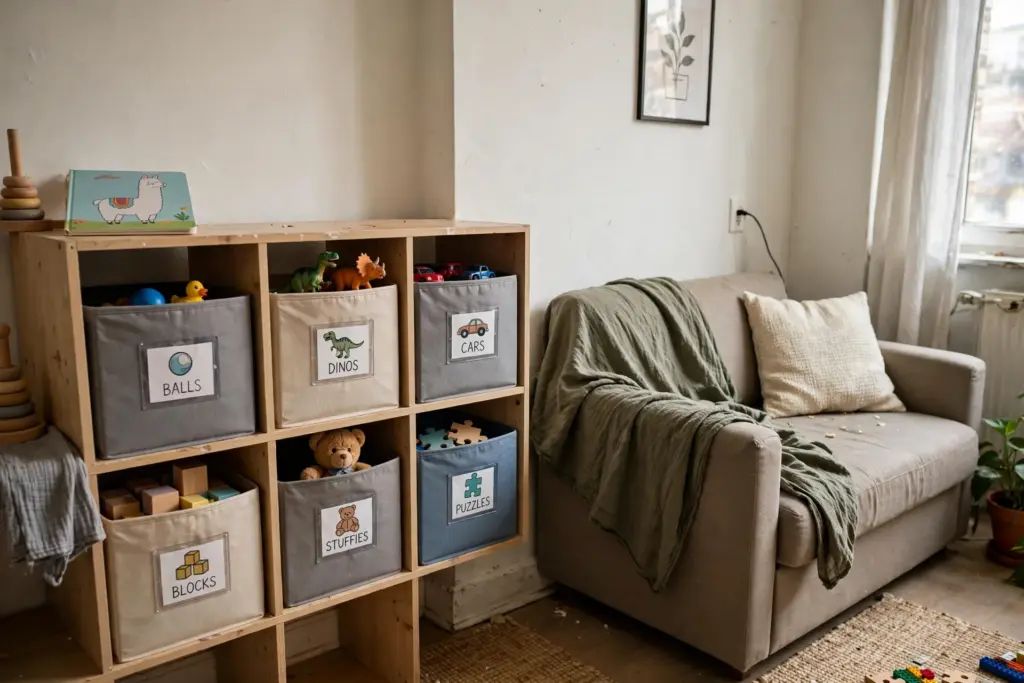
11. Sort by Category, Not by Child or by Size
One container per toy type — blocks, cars, dolls, art supplies, puzzles — beats one container per child or one per size, because cleanup has one obvious answer for every toy. A child holding a car does not have to decide whose bin it goes in or whether it counts as big or small; cars go in the cars bin, every time. Keep the number of categories small, ideally under eight, or the system becomes a sorting project instead of a cleanup routine.
12. Hang Dress-Up Where It Can Be Seen
Dress-up costumes get worn far more often when they are visible and easy to grab than when they are folded into a bin. A few hooks on the back of a closet door, a low wall rail, or a small tension rod in a closet keeps costumes hanging, visible, and reachable, with no drilling and no floor space used.
13. Store Bath Toys in Mesh That Drains
Bath toys need to drain and dry, so a solid bin is the wrong container for them. A mesh bag or mesh-bottomed bin hung from a suction hook on the tub wall lets water drain instead of pooling, which is the difference between bath toys that stay usable and a bin that starts smelling within weeks. When a bath toy starts holding water inside that cannot drain, it is time for it to leave the rotation.
14. Give Outdoor Toys Their Own Bin by the Door
Balls, sidewalk chalk, and bubbles do not need to compete for indoor space at all. A single labelled bin by the entry door — or a small deck box where exterior storage exists — keeps outdoor toys grabbable on the way out and contained on the way back in, instead of scattered through the living room.
15. Park a Rolling Bin Under the Sofa
Where under-bed space is already spoken for, the gap under a sofa or an armchair takes the same rolling-bin trick at a smaller scale. A low, flat bin slides under the sofa between play sessions and out again in seconds, which makes it ideal for the one or two categories that are played with daily — the blocks, the cars, the current favourite. Choose a bin with handles a child can grip, so the bin can be pulled out without an adult’s help. Keep this bin lidless and shallow — a lidded box under a sofa becomes a forgotten box — and reserve it strictly for the current rotation’s daily-play categories. When the rotation changes, this bin changes with it.
16. Run the Five-Minute Reset — and Keep an Outgrown Box
The reset is the routine that makes the other fifteen ideas work. Set a timer for five minutes, everyone puts away what they played with, bins go back to their named spots, and the floor is checked against one question: is anything still out that does not belong to the current rotation? Skipped for a week, the reset becomes a weekend project nobody wants.
Keep one outgrown box beside the rotation stock. Toys that are broken, ignored for a whole rotation, or outgrown go straight in, and the box leaves the apartment on a regular schedule — donated, passed on, or recycled where appropriate. A system with no exit fills up, however good its bins are. 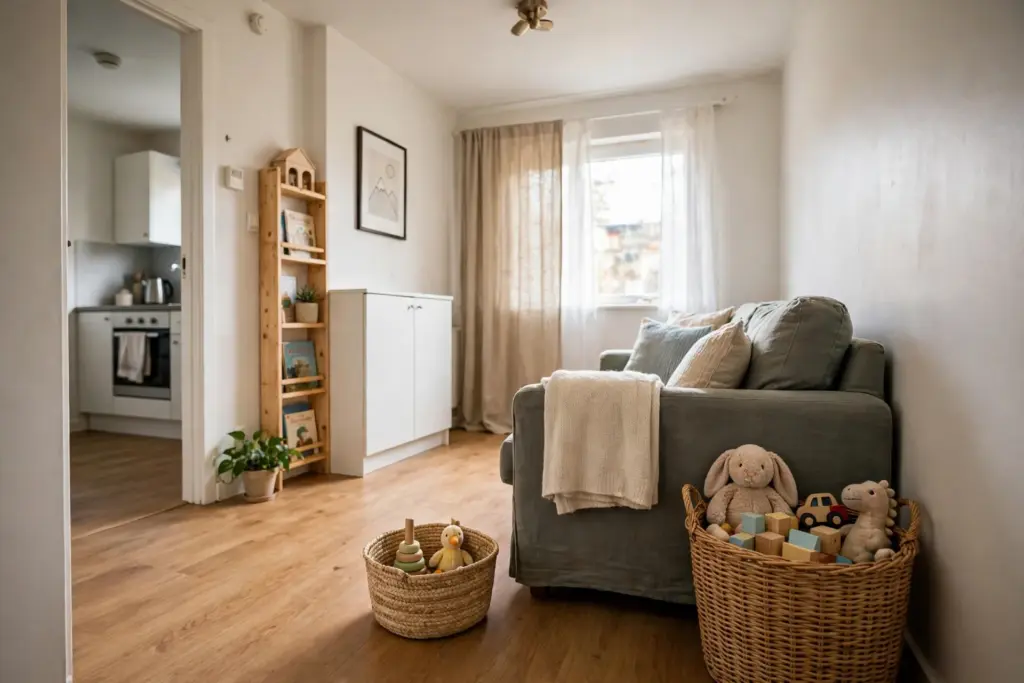
Safety Notes Worth Keeping
Three cautions run through every idea above. First, small parts and loose small toys should stay away from children under three — keep those categories on a higher shelf or in the rotation stock until the child is older. Second, tall furniture around climbing children is a tip-over risk, so low-and-wide storage is the default and wall anchoring is permission-first only. Third, lids on toy chests should be slow-close or removable, so small fingers are not caught by a falling lid. None of these needs a product claim or a special purchase — they are checks to apply to whatever storage is already in the room.
For more small-space toy storage inspiration, the IKEA toy storage idea gallery shows vertical and dual-purpose furniture in real small rooms, and The Unclutter Angel’s small-space toy organizer guide covers the vertical, closet, and multi-purpose furniture approaches in detail. Both are written for owners as well as renters, so filter any wall-fixed suggestions through the permission-first rule used throughout this article. Applied in that order — rotate, hide, label, reset — these toy storage ideas for small apartments clear the floor fast and keep it clear.
Frequently Asked Questions (FAQ)
How many toys should be out at once in a small apartment?
As few as play stays fun: one bin in play and the rest in rotation stock is the rule that works for most families. When the floor can be reset in about five minutes, the amount out is right; when it cannot, too many are out.
What is the best toy storage for a rental with no drilling?
Furniture that hides toys — ottomans, lidded benches, lift-top coffee tables — plus over-door organizers and rolling under-bed bins. All of them store toys without a single wall fixing, and all of them leave with you on moving day.
How do I get a child to clean up toys alone?
Picture labels and one category per bin. A child who can see where each toy belongs, and reach the bin without climbing, can run cleanup alone — and a five-minute daily reset keeps the habit small enough to stick.
Are tall bookshelves safe for toy storage?
Low and wide is safer around climbing children. Tall shelving is a tip-over risk, and anchoring it means wall fixings that need landlord permission first, so it is never presented as a damage-free option in a rental.