16 Shoe Storage Ideas for Small Apartments
Shoes multiply by the front door faster than any other clutter: work shoes, gym shoes, boots, sandals, and the pair kicked off last night all land in the same square foot. These shoe storage ideas for small apartments clear that pile without drilling, building in, or risking your deposit. The 16 ideas are organised by where the storage hides — the entryway, the closet, and the forgotten gaps under and behind furniture — and each one is freestanding, hanging, or fully removable.
For the bigger system behind this guide, start with our small apartment storage ideas pillar, then come back here for the shoe-specific fixes.
Start With a Sort and Three Measurements
Storage bought before sorting usually ends up the wrong size. First, pull every pair out and split them into three groups: daily pairs (the three to five worn every week), seasonal pairs (boots, sandals, occasion shoes), and pairs that are worn out or never worn — those leave before anything is bought. Daily pairs get the prime spot by the door; seasonal pairs can live under the bed or on a high closet shelf. That daily-versus-seasonal split is the order these shoe storage ideas for small apartments are built around.
Then measure before ordering anything. Most adult shoes are about 11 to 12 inches long, so a rack or shelf under 12 inches deep needs pairs set at an angle or toe-to-heel. Check the door swing where a rack will stand, and the gap between a door and its frame if an over-door organizer is planned — some tight rental doors will not close over standard hooks. Keep the entry route clear, too: storage should never narrow an exit path or sit against a heater.
Entryway Ideas: Almost No Floor Space
1. Stand a Slim Freestanding Rack by the Door
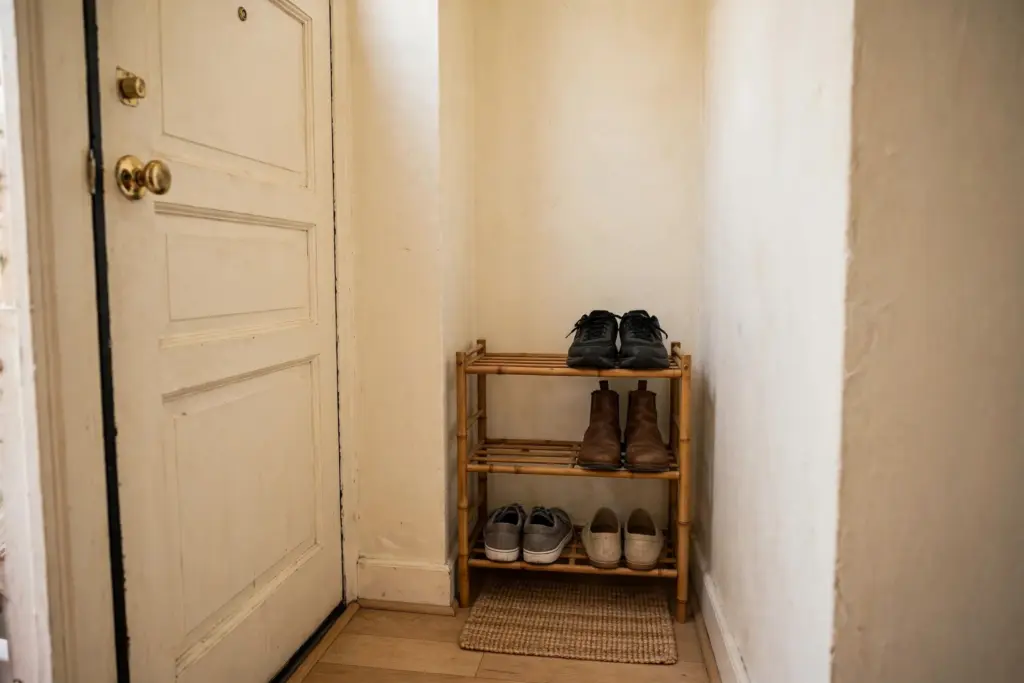
The simplest fix is a narrow, compact two- or three-tier rack, around 10 to 12 inches deep, sized for daily pairs only. Bamboo and metal versions assemble without tools and lift out in one piece on moving day. The discipline matters more than the rack: cap it at the pairs that fit, and overflow goes to the closet instead of the floor. For most renters this is the best shoe rack: slim, freestanding, and gone in one lift on moving day.
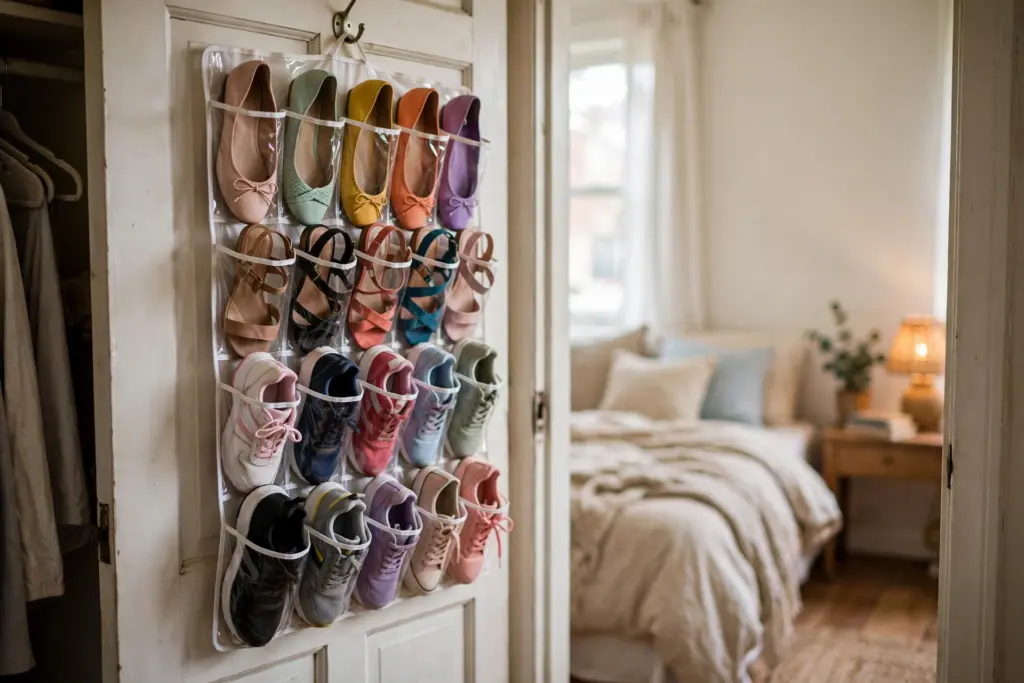
2. Hang an Over-the-Door Pocket Organizer
A clear-pocket organizer turns the back of a closet or bedroom door into storage for 12 or more light pairs — flats, sandals, and slip-ons suit it best. Clear pockets keep every pair visible, which stops the buy-a-duplicate problem. Protect the door with felt pads behind the hooks, confirm it still closes cleanly with the hooks fitted, and keep heavy boots off it: a loaded door strains hinges over time. Our small entryway storage ideas guide pairs this with hooks and baskets for a full no-mudroom setup.
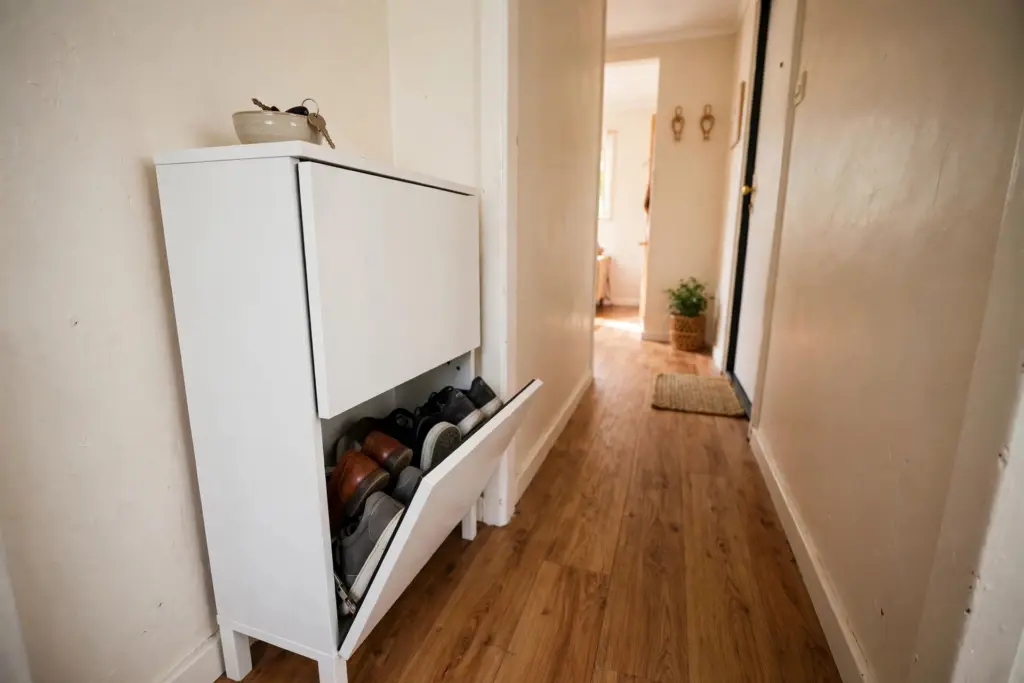
3. Use a Slim Tilt-Out Cabinet — the Lease-Safe Way
A tilt-out cabinet hides shoes behind a clean front in as little as 7 to 12 inches of depth, and the top doubles as a landing strip for keys. One honest caution matters here: many slim cabinets are designed to be fixed to the wall for tip-over safety — IKEA states its TRONES cabinets must be fixed to the wall, and tilt-out models carry the same warning. In a rental that means one of three routes: get the landlord’s written permission and patch the two small holes at move-out, choose a low, wide model that stands stably on its own feet, or skip the cabinet and use Idea 1 or 4 instead. Never assume a tilt-out cabinet is damage-free just because it is slim.
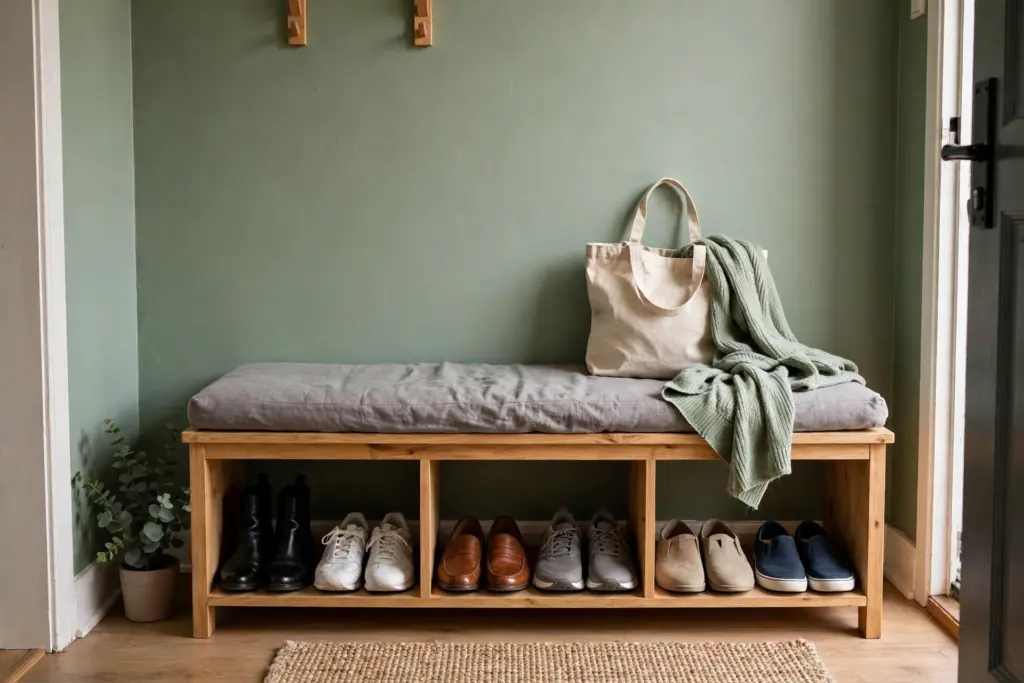
4. Sit On It: a Shoe Bench With Open Cubbies
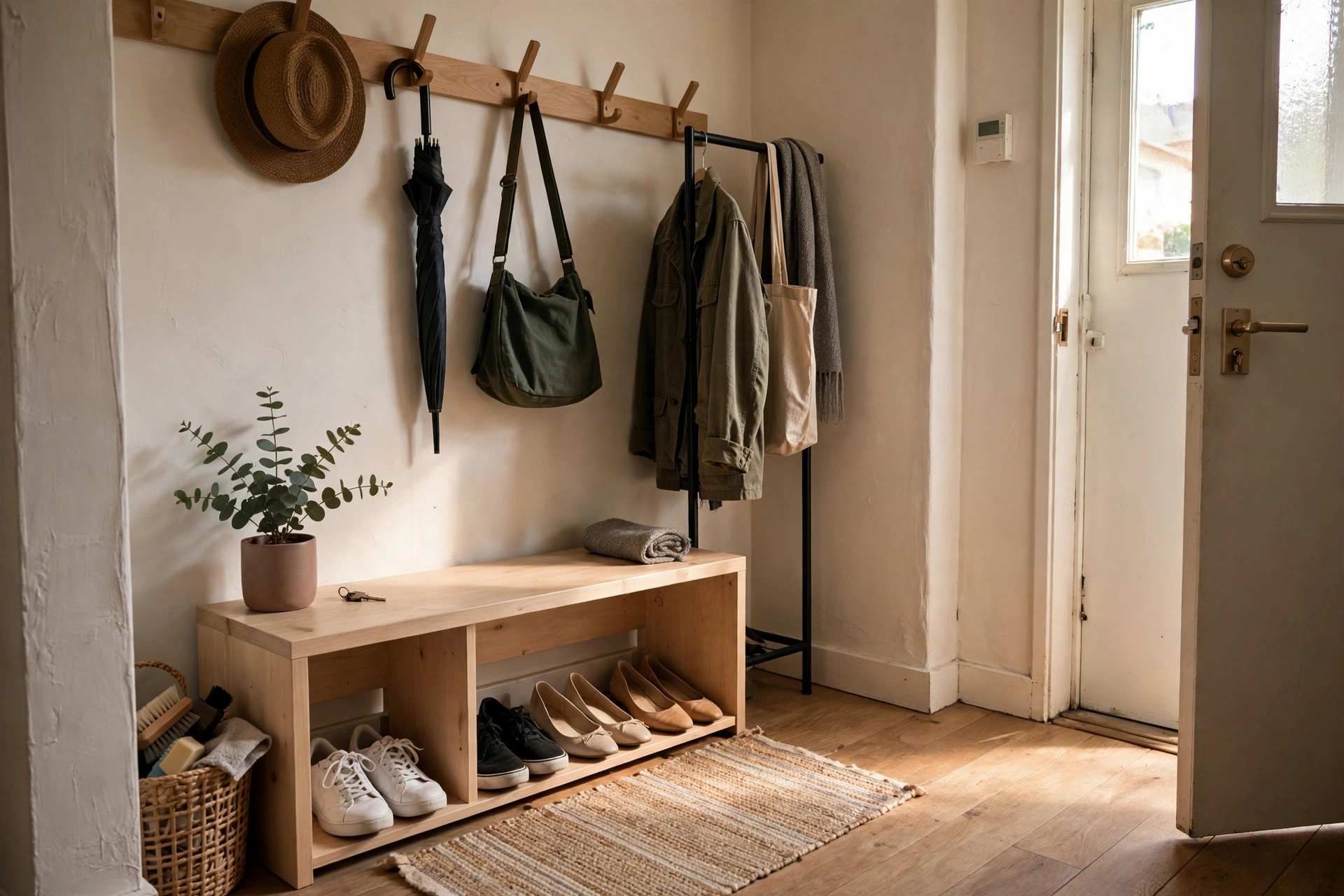
A low bench with cubbies or a shelf underneath earns its footprint twice: seating while shoes go on, and storage for four to six pairs below. Open cubbies ventilate better than closed boxes, which matters for shoes worn daily. Choose a bench no deeper than about 14 inches, and put a washable mat underneath so grit lands on the mat, not the flooring your deposit depends on. Pair the bench with two or three removable wall hooks above it and the same corner handles coats and shoes together.
Closet Ideas: Out of Sight, Easy to Reach
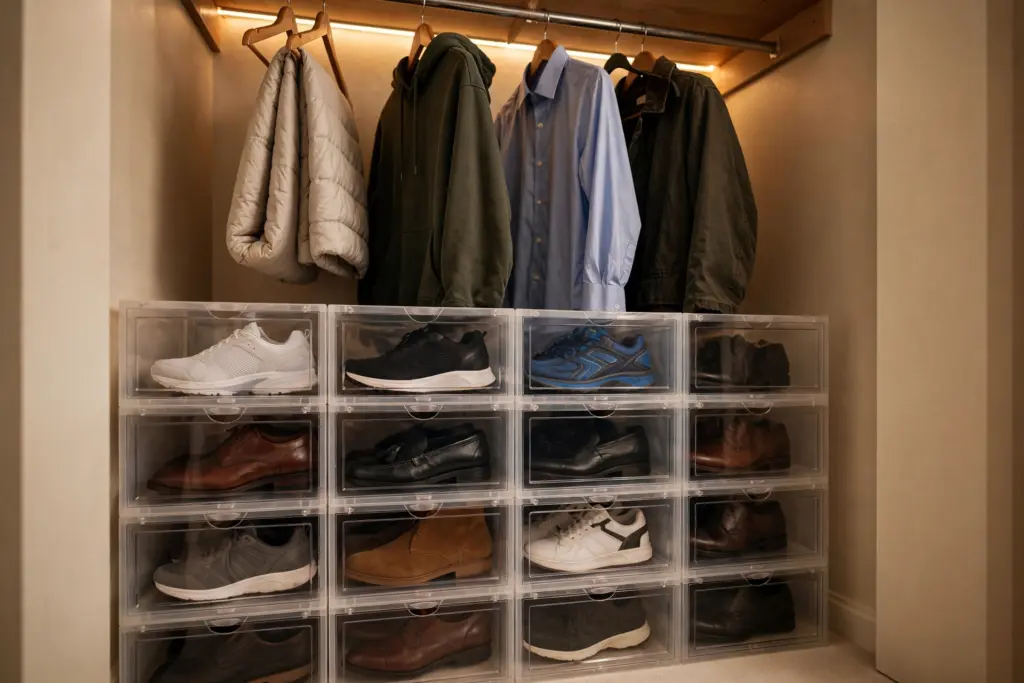
5. Stack Clear Drop-Front Boxes Into a Shoe Wall
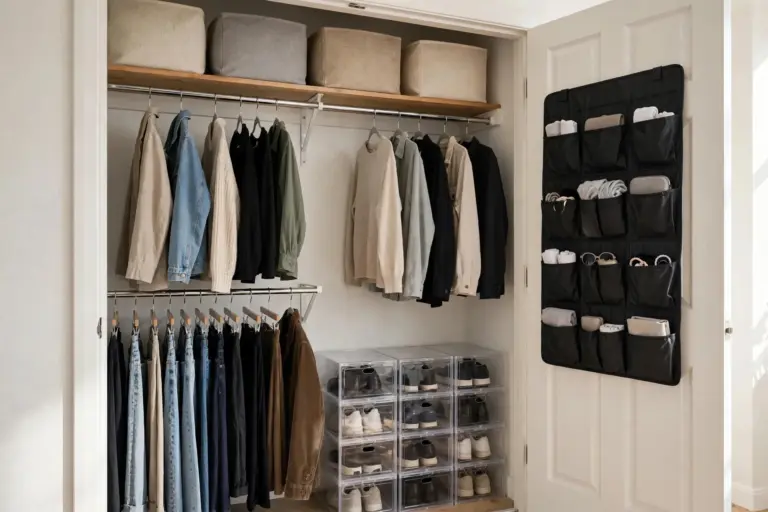
Drop-front boxes stack on a closet floor or shelf and open from the front, so the bottom pair is as easy to reach as the top one — no unstacking. The clear front keeps pairs visible and dust off. Buy the size against your largest pair first; a box that fits sneakers may not fit high-tops or chunky boots. This is the backbone of the closet system in our small apartment closet organization plan.
6. Hang a Shelf Organizer From the Closet Rod
A fabric hanging organizer hooks over the closet rod and adds four to six shelves in the dead space beside short hanging clothes. It suits light and medium pairs — trainers, flats, loafers — and folds flat at move-out. Keep the heaviest pair on the bottom shelf so the organizer hangs straight, and keep the rod’s total load sensible.
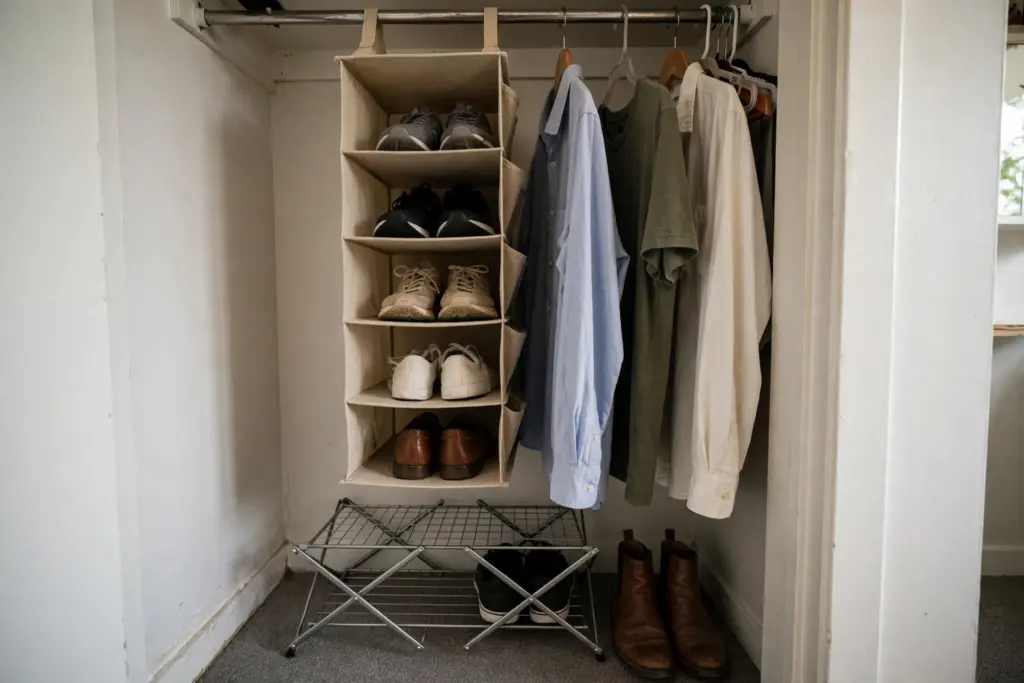
7. Expand a Floor Rack to Fit the Closet Width
Expandable racks telescope to the exact width of a closet floor, so no inches are wasted at the sides. Two tiers under hanging clothes typically hold six to eight pairs. Angled or tiered versions keep heels from sliding; flat wire tiers (shown above) suit trainers and boots standing beside them. Measure the closet floor depth as well as the width — coat-length hanging needs the rack to sit fully underneath.
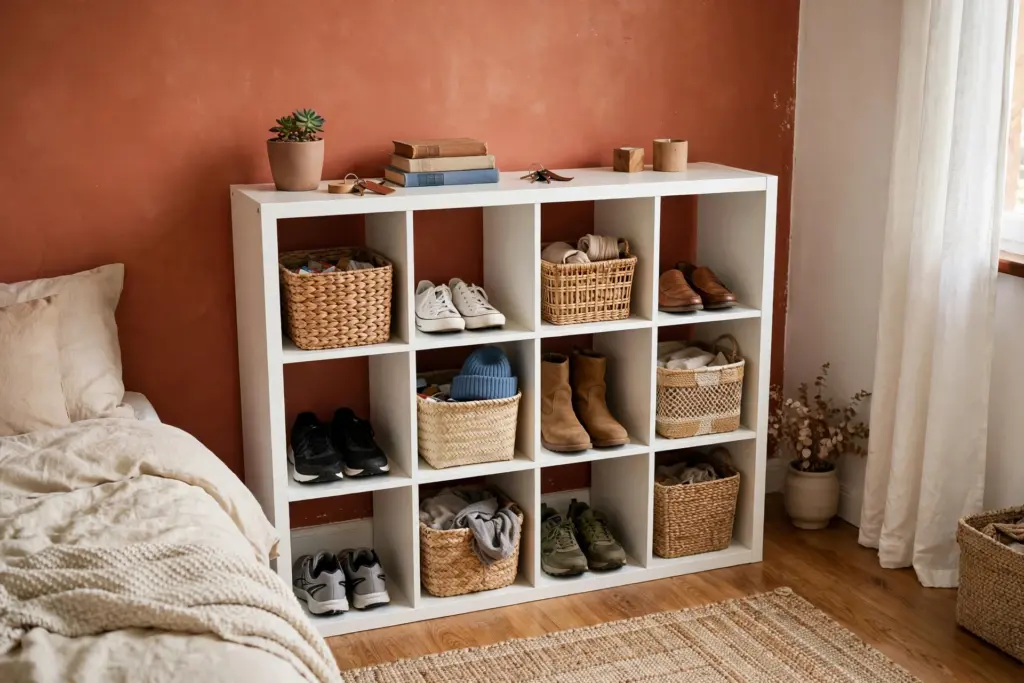
8. Repurpose a Cube Unit or Low Bookshelf
A cube unit is a shoe library: one cube per pair, baskets in some cubes for sandals and shoe-care supplies, boots in a bottom cube. In a bedroom corner it reads as furniture, not storage — the same unit anchors the systems in our small bedroom storage ideas guide. Keep daily pairs in the front-facing cubes and seasonal pairs at the back or top.
Hidden and Vertical Space Renters Forget
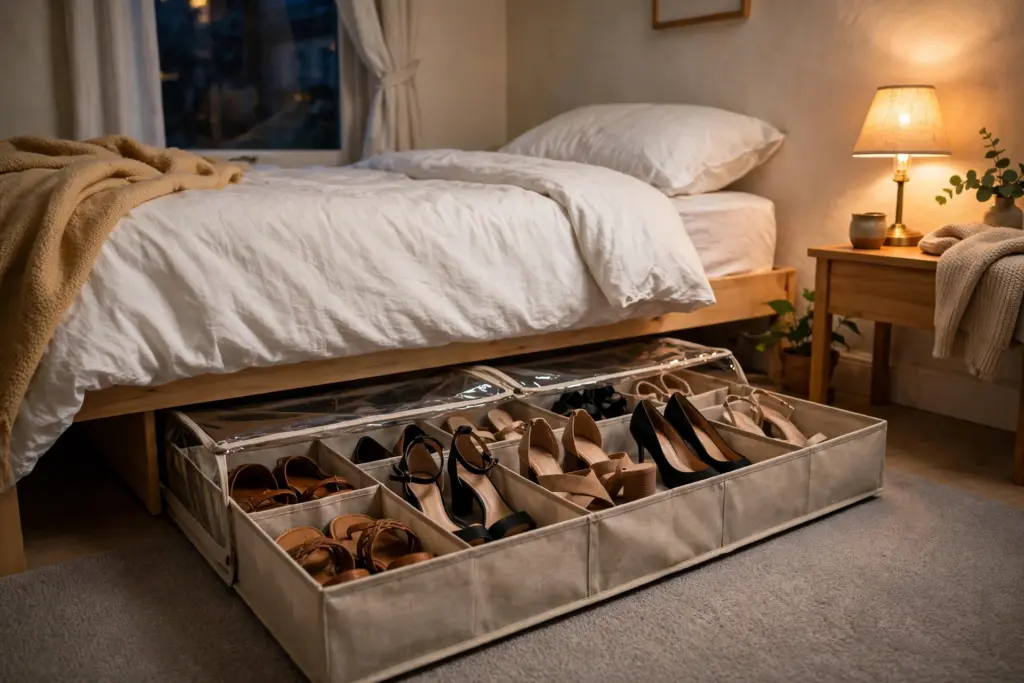
9. Slide Seasonal Pairs Under the Bed
The space under a bed fits a low, zippered organizer with divided compartments — the right home for off-duty pairs: sandals in winter, heavy shoes in summer. Fabric with a clear top beats rigid plastic in low frames because it flexes under slats. Only store shoes clean and fully dry; as standard shoe-care guidance notes, trapped moisture leads to mould and odour, and sealed plastic makes it worse for leather.
10. Take One Corner Vertical With a Tower Shelf
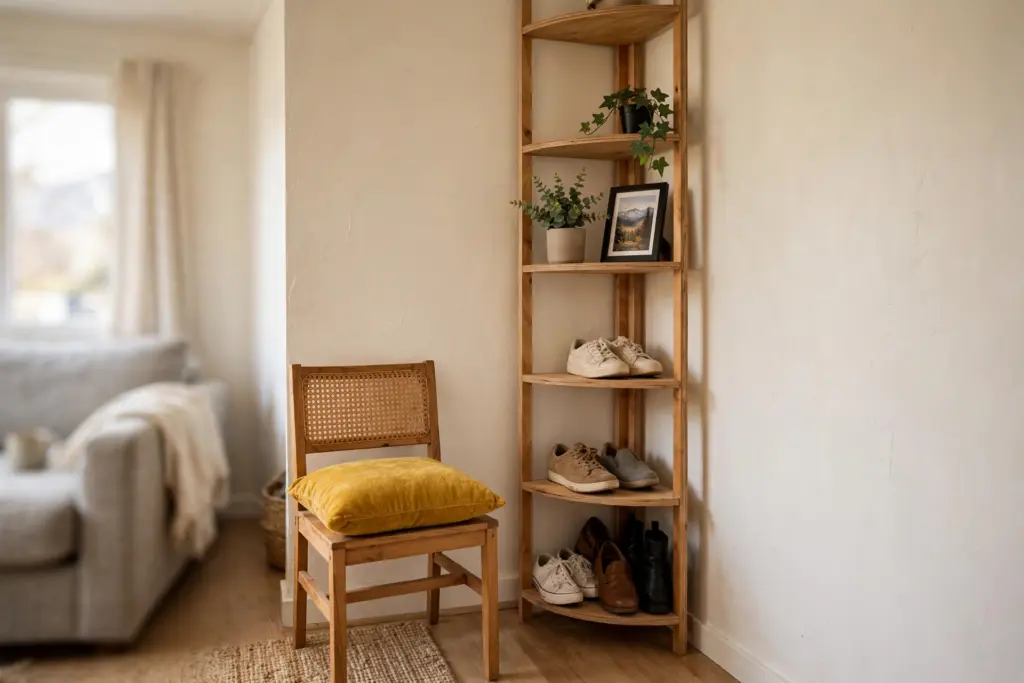
A narrow corner tower uses about one square foot of floor and stacks four to six shelves high. Put daily pairs on the lower shelves and let the top shelves hold a plant or a basket so the tower looks intentional. Freestanding towers need no fixings; load the heaviest pairs at the bottom, and stand the unit away from door swings.
11. Lean a Ladder Shelf (No Fixings, Pads On)
A leaning ladder shelf gives graduated shelves — deep at the bottom for boots, shallow at the top for flats — and simply stands against the wall. Fit the anti-slip pads supplied with most models, keep the load heaviest at the bottom, and position it where it cannot be knocked in a walkway. Because nothing attaches to the wall, it is one of the most lease-friendly vertical options.
12. Hide Pairs Inside a Storage Ottoman
A storage ottoman at the foot of a bed or beside the entry swallows four to six pairs out of sight and doubles as seating or a footrest. It suits the pairs that clutter visually — slippers, house shoes, second trainers — rather than wet footwear, which belongs on a tray. A washable liner keeps the inside fresh.
The Everyday System That Keeps It Tidy
13. Set a Boot Tray and a Daily-Pair Limit at the Door
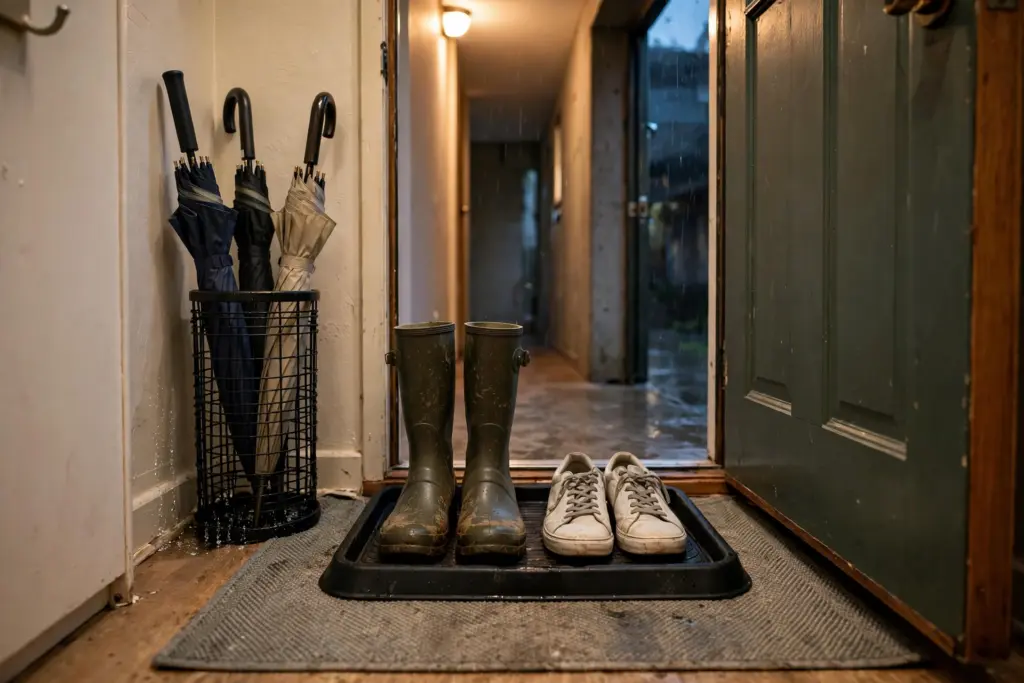
Most entry piles are a policy problem, not a furniture problem. A lipped boot tray defines the only spot where outdoor shoes may land, catches meltwater and grit, and makes the limit physical: what fits on the tray (usually two or three pairs per person) stays; the rest goes to the closet.
14. Stack Open Crates for a Flexible Overflow Zone
Wooden or sturdy plastic crates stack two or three high in a closet corner and flex with the collection: one crate for gym gear, one for kids’ shoes, one for seasonal overflow. Open sides ventilate, and a crate lifts out whole when its category rotates under the bed. Sand rough wooden edges that could scuff leather.
15. Double a Closet Shelf With Freestanding Risers
A single deep closet shelf wastes the air above the shoes. A freestanding shelf riser — the small table-style insert used in kitchen cabinets — creates a second layer for flats and low shoes without touching the shelf itself. Two risers side by side can double one shelf’s capacity. Keep risers for light pairs; heavy boots belong on the shelf surface itself.
16. Rotate by Season Into Labeled Clear Boxes
Twice a year, swap the closet: off-season pairs go into labeled clear boxes on the top shelf or under the bed, and the new season comes down. The rotation is also the care checkpoint — clean each pair, let it dry fully, add a shoe tree or tissue to leather pairs so they hold their shape, and part with anything unworn through two rotations.
Frequently Asked Questions (FAQs)
What is the best shoe storage for a small apartment with no entryway?
The best shoe storage ideas for small apartments with no entryway split the system: a boot tray plus one slim rack or bench where shoes come off, even if that spot is a hallway wall, and the main collection in the closet in drop-front boxes or a hanging organizer. The tray matters most — it creates the boundary that stops shoes spreading room to room.
How deep does shoe storage need to be?
Most adult shoes run about 11 to 12 inches long, so 12 inches of depth fits pairs straight; slimmer 7 to 10 inch cabinets and racks work by storing pairs toe-down, angled, or sideways, which suits smaller sizes best. Always measure your largest pair, including the heel, before buying slim furniture.
Are over-the-door shoe organizers okay in a rental?
Generally yes, because they hang from hooks rather than fixings. Three checks keep them deposit-safe: confirm the door still closes without forcing, add felt pads where metal touches paint, and store light pairs only so the hinges are not carrying boot weight all day.
Can a tilt-out shoe cabinet be used without wall anchoring?
Manufacturers of many slim cabinets require wall fixing for tip-over safety, so treat the instructions as the rule, not a suggestion. Renters can ask the landlord for written permission and patch two small holes later, choose a low and wide model rated to stand on its own, or use a bench or open rack instead.
What is the best shoe rack for renters?
A slim freestanding two- or three-tier rack, 10 to 12 inches deep, is the best all-rounder for renters — it needs no drilling, lifts out in one piece on moving day, and holds daily pairs by the door. For closets, an expandable floor rack is the best fit because it telescopes to the exact width.