Eco Friendly Home Decor Ideas for Small Apartments
Eco friendly home decor works beautifully in a small apartment — in fact, a small rental is one of the easiest places to decorate green. With fewer square feet, every thoughtful choice makes a bigger difference. The trick is picking ideas that respect your lease: nothing drilled, nothing painted without permission, and nothing you cannot take with you on moving day.
This guide covers 12 eco friendly home decor ideas for a studio or one-bedroom rental that protect your deposit and actually look good — each one removable, renter-safe, and chosen to last beyond a single season.
Why Small Rentals Are the Easiest Place to Decorate Green
A small apartment rewards restraint: when a room holds ten objects instead of forty, each one carries more weight, so a solid wood stool or a linen curtain changes the whole feel. Small spaces also use less of everything, so the greenest move is often buying less, and buying better.
Renters have one more advantage: temporary solutions. Peel-and-stick wallpaper, tension rods, adhesive hooks, and freestanding furniture transform a room without altering the walls — see our guide to renter friendly apartment decorating ideas for more.
1. Let Plants Do the Decorating
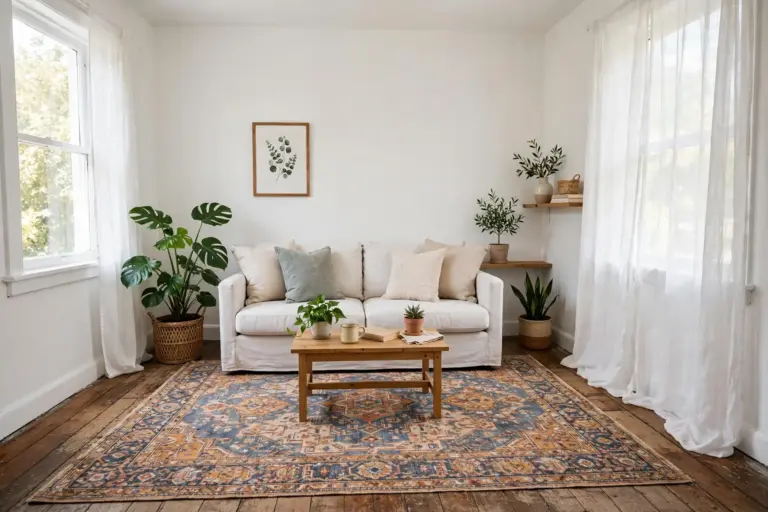
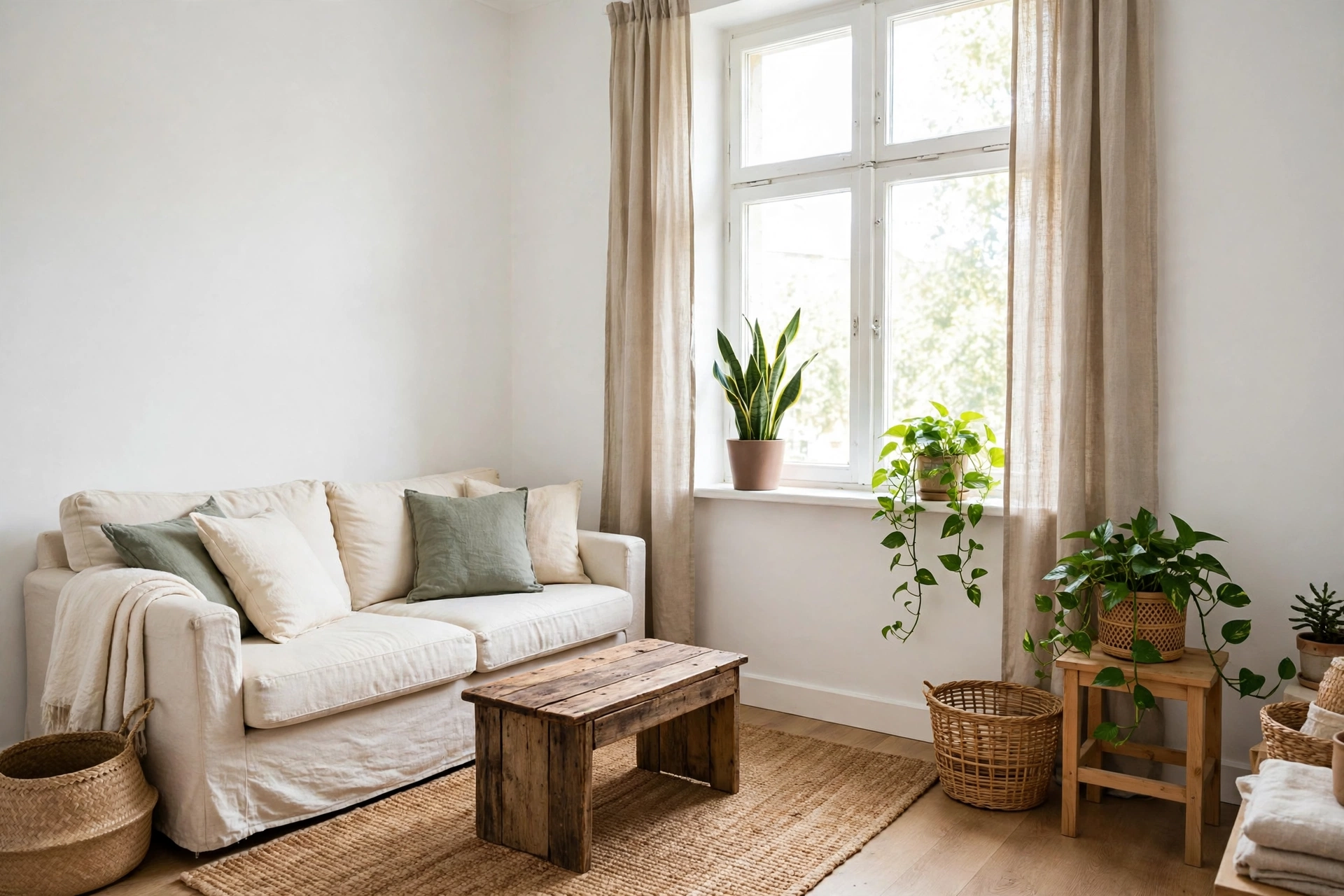
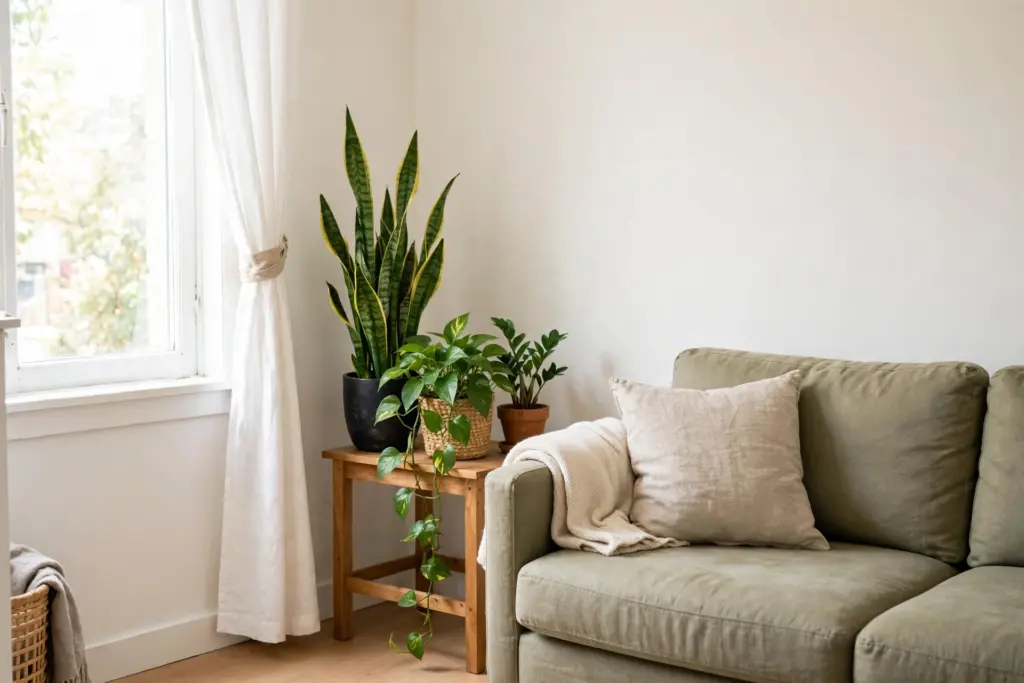
No decor is greener — literally — than a living plant. A snake plant, pothos, or ZZ plant adds color and life to a shelf or windowsill and tolerates the low light most rentals get. Group three plants of different heights on a side table instead of buying a decorative object, and the corner instantly looks finished.
Plants suit renters because they move with you — use a saucer under each pot so water never marks a sill or floor. If your windows face north, start with the toughest varieties: our list of low-light indoor plants for small apartments covers 15 that stay alive with minimal care.
2. Buy Secondhand Before You Buy New
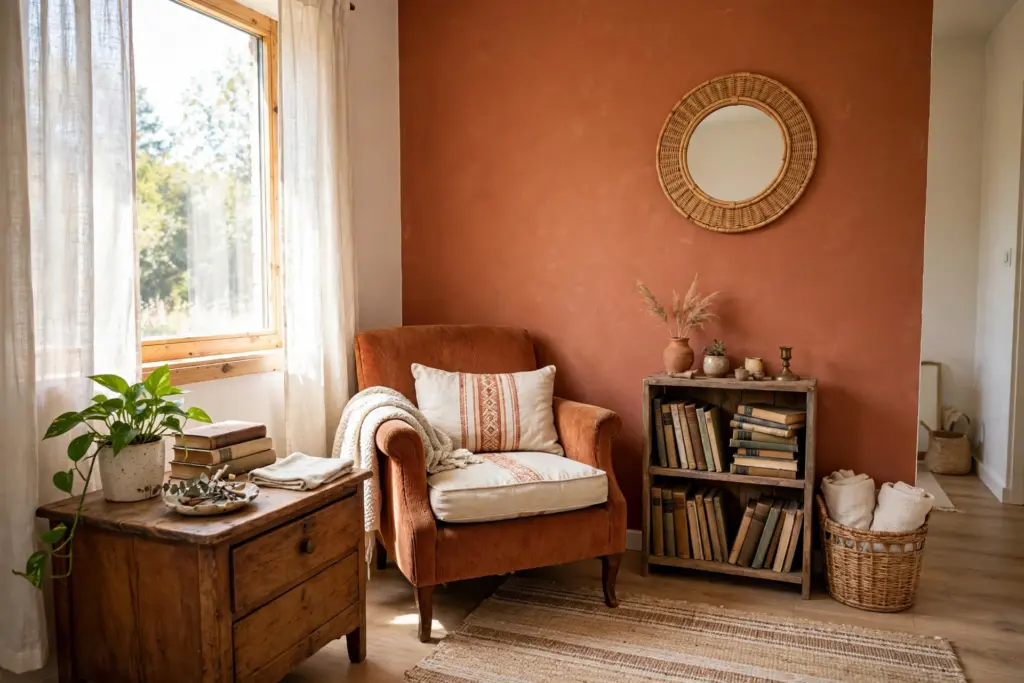
The most sustainable furniture already exists. Thrift stores, estate sales, Buy Nothing groups, and local listings are full of solid wood side tables, mirrors, lamps, and frames for a fraction of retail — and every secondhand piece keeps usable furniture out of landfill.
Before you buy, measure your doorways, elevator, and the spot the piece will live in — small apartments punish impulse buys, and a beautiful armchair that blocks a walkway becomes clutter within a week. Check the piece for stability, smell, and hidden damage, and give wood a wipe-down before it comes inside. A quick wash and a new cushion cover can make a thrifted find look intentional rather than improvised.
3. Choose Natural Materials You Can Feel
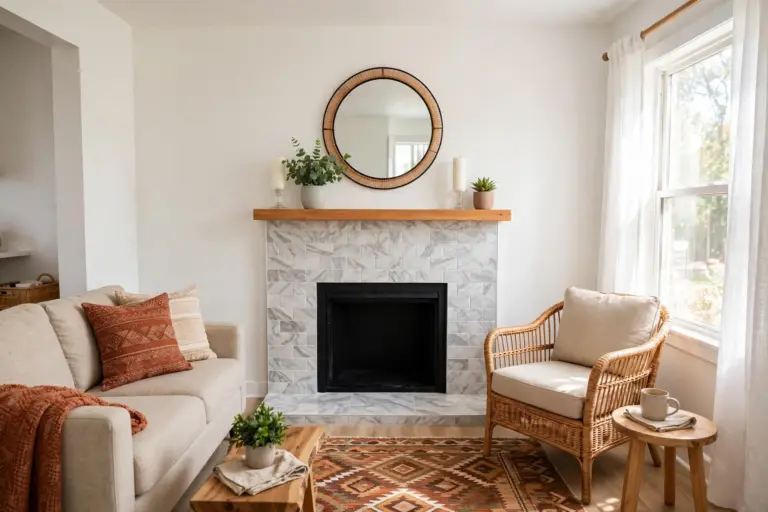
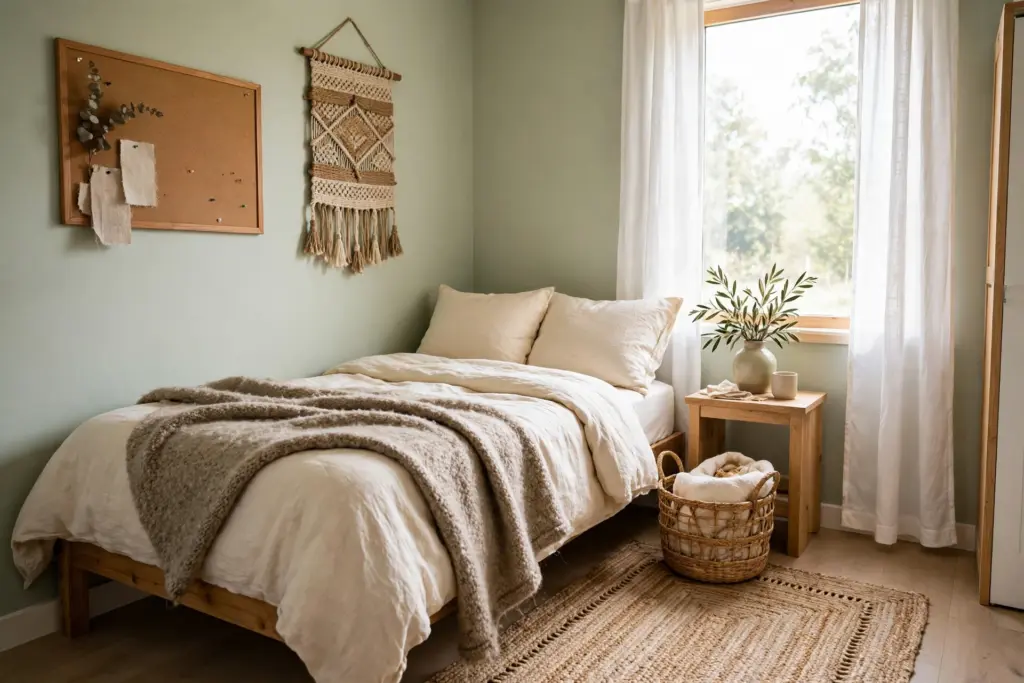
Natural materials — linen, cotton, wool, jute, rattan, cork, and solid wood — age gracefully and usually outlast their synthetic lookalikes. A jute rug, a linen throw, or a rattan basket adds texture without visual bulk, which matters in a small room.
Start with the surfaces you touch daily: bedding, towels, curtains, and rugs. Organic cotton or linen costs more upfront but washes well and lasts years, while cheap polyester sheds microfibres with every wash and looks tired within months. If a label does not say what a fabric is made of, treat that as a warning sign and keep looking.
4. Go Low-VOC With Peel-and-Stick, Not Paint
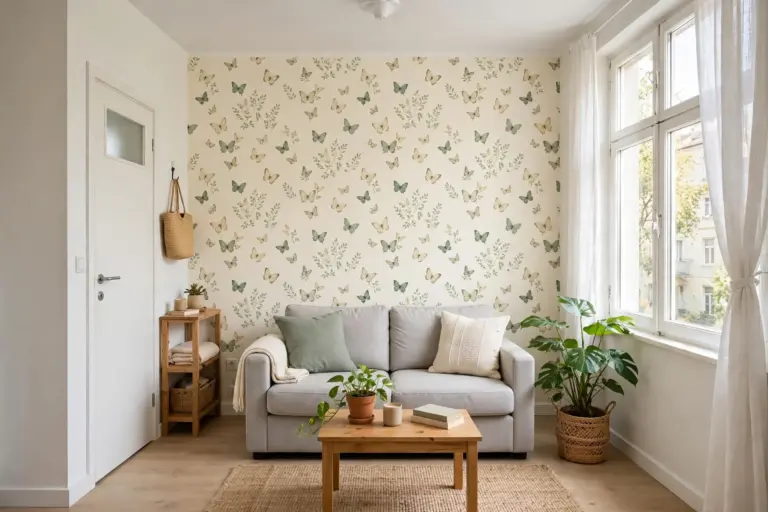
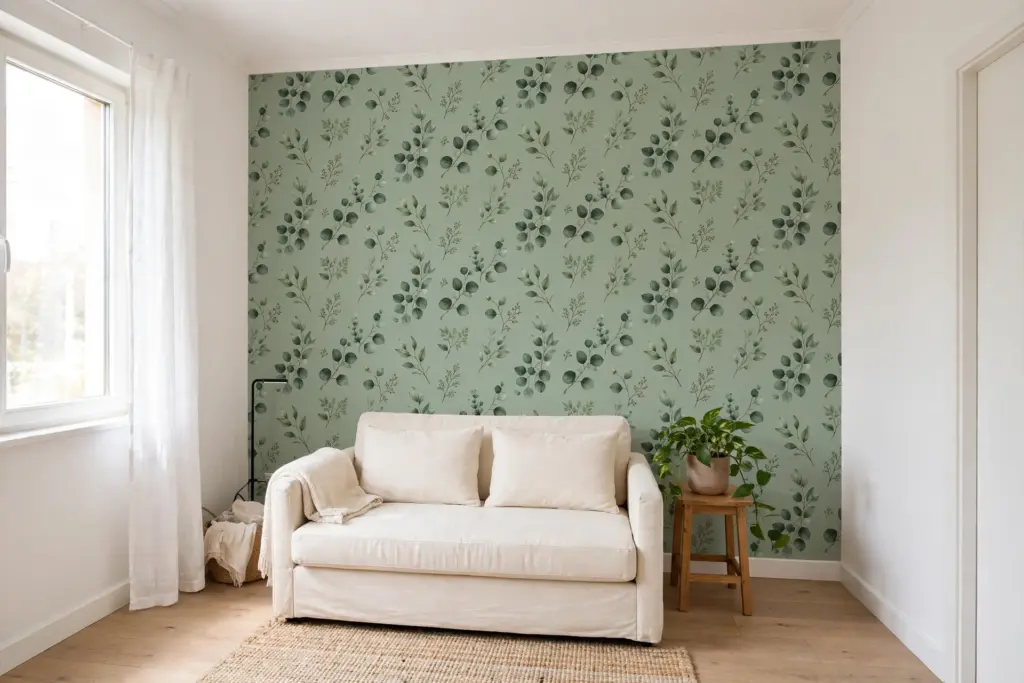
Most leases forbid painting, but that restriction is a gift for eco decorating. Peel-and-stick wallpaper and removable decals give you color and pattern with no paint fumes — and no repainting bill at move-out. Look for products labelled low-VOC or phthalate-free, and test one strip behind furniture for a week before covering a whole wall.
If your landlord does allow paint, choose a low-VOC or zero-VOC paint and ventilate well while it dries. The U.S. Environmental Protection Agency explains how volatile organic compounds affect indoor air quality, and why lower-VOC products matter most in small, tightly sealed apartments. Removable wallpaper is the safer first step — our guide to peel-and-stick wallpaper for renters covers choosing, installing, and removing it cleanly.
5. Switch to Warm LED Lighting
Warm-white LED bulbs use far less energy than old incandescent bulbs, last years longer, and make a small room feel cozy instead of clinical. Swap the bulbs in your existing fixtures first — no permission needed, since you can swap them back at move-out.
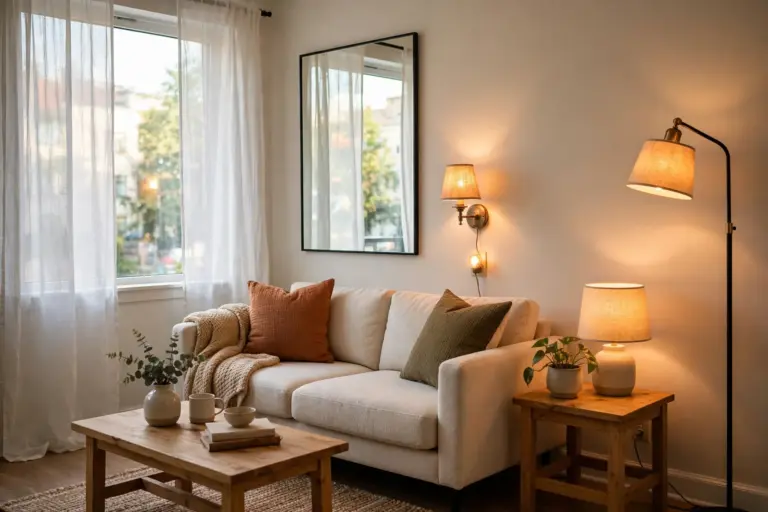
Layer the light instead of relying on one harsh ceiling fixture: a floor lamp with a woven or linen shade, a small table lamp on a shelf, and a battery-operated LED strip under a kitchen shelf. Warm light (around 2700K) flatters wood, plants, and textiles, while cool white makes a small room feel like an office. For no-wiring options, see our renter friendly lighting ideas for dark apartments.
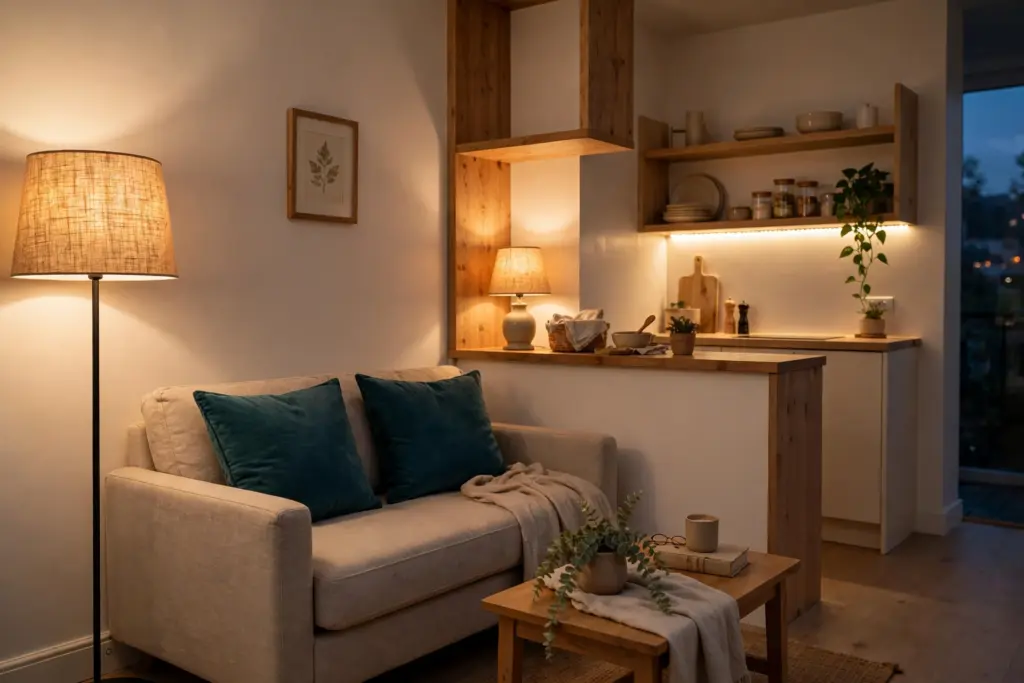
6. Layer Organic, Washable Textiles
Textiles are the fastest way to warm up a rental, and the greenest ones are washable and reusable for years. Choose organic cotton or linen for cushion covers, throws, and curtains, and pick machine-washable fabrics so a spill never means throwing something away. Removable cushion covers beat fixed upholstery: they wash, swap with the seasons, and travel to the next apartment. Keep the palette calm — two or three earthy tones — so the space reads as intentional.
7. Pick Reclaimed or Certified Wood
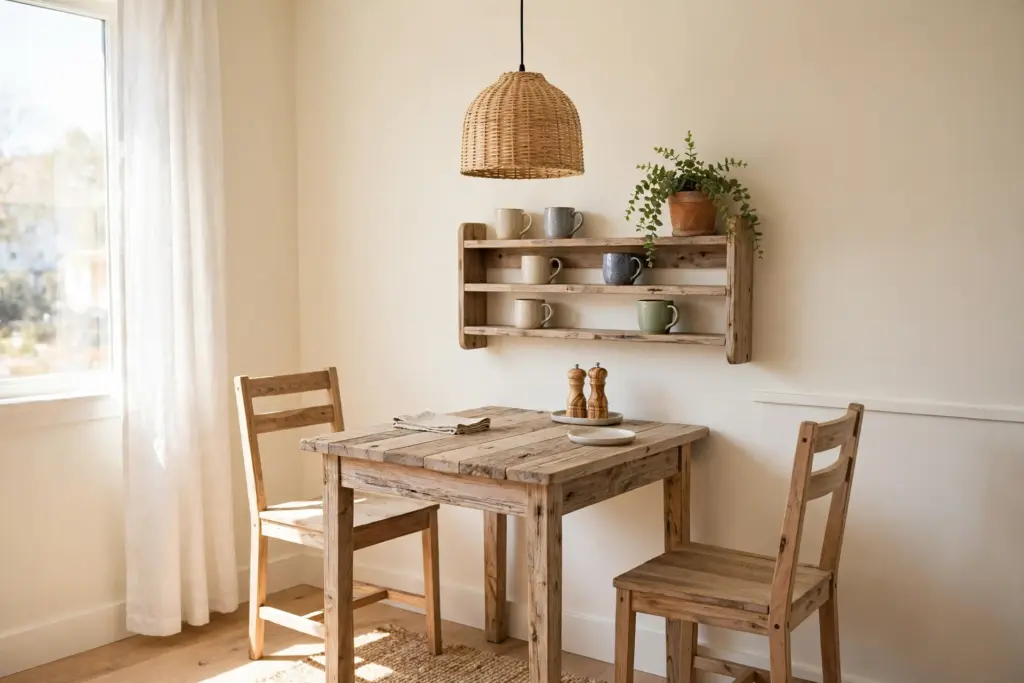
Wood brings warmth no plastic can match, and the greenest wood already exists. A reclaimed-wood shelf, a vintage crate used as a side table, or a secondhand solid-wood stool adds character and keeps timber in use. If you buy new, look for FSC certification — the Forest Stewardship Council explains what the label guarantees.
In a small apartment, choose slim, raised pieces in lighter woods — oak, ash, bamboo — which keep the room open, and use removable adhesive hooks rated for the load rather than drilling into plaster.
8. Use Baskets and Natural-Fibre Storage
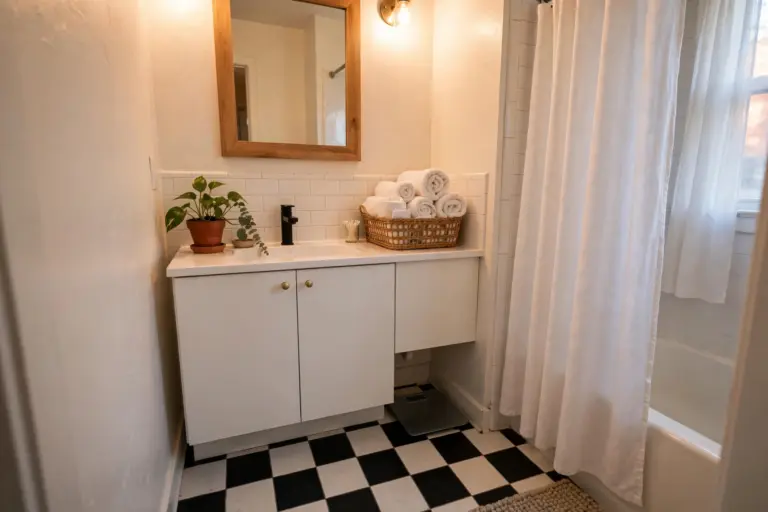
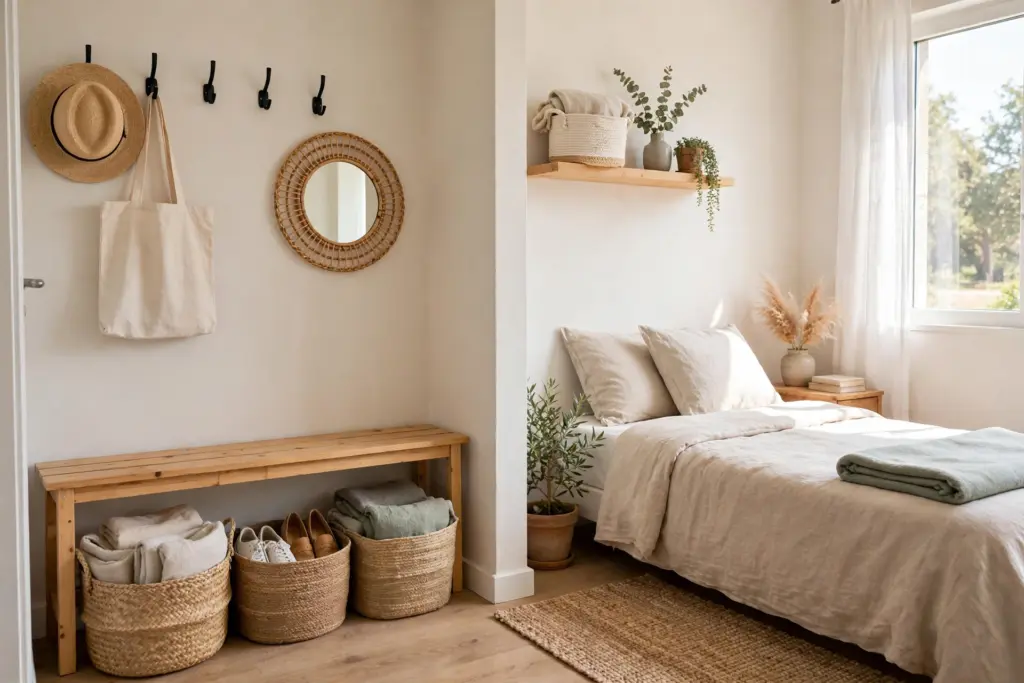
Storage is decor in a small apartment, because it is always visible. Seagrass, jute, rattan, and cotton rope baskets hide clutter while adding warm texture. Use them for throws, shoes, toys, or pantry overflow — one basket per category, so nothing drifts onto surfaces.
Baskets also solve the “where does this live” problem that makes small rentals feel messy. A lidded basket on top of a wardrobe holds off-season clothes; a slim one beside the sofa holds chargers and remotes. Unlike plastic bins, natural-fibre baskets breathe, so they suit linens and clothes — pair them with the closet plan in our small apartment closet organization guide to keep every category in exactly one home.
9. Grow Herbs on the Windowsill
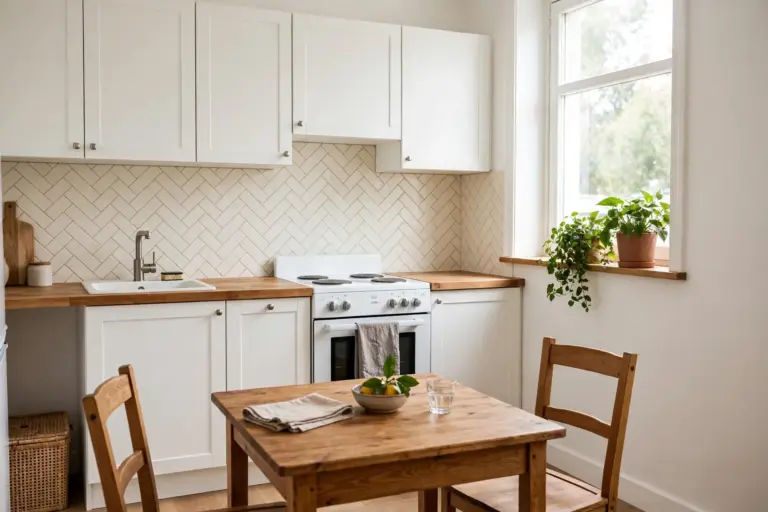
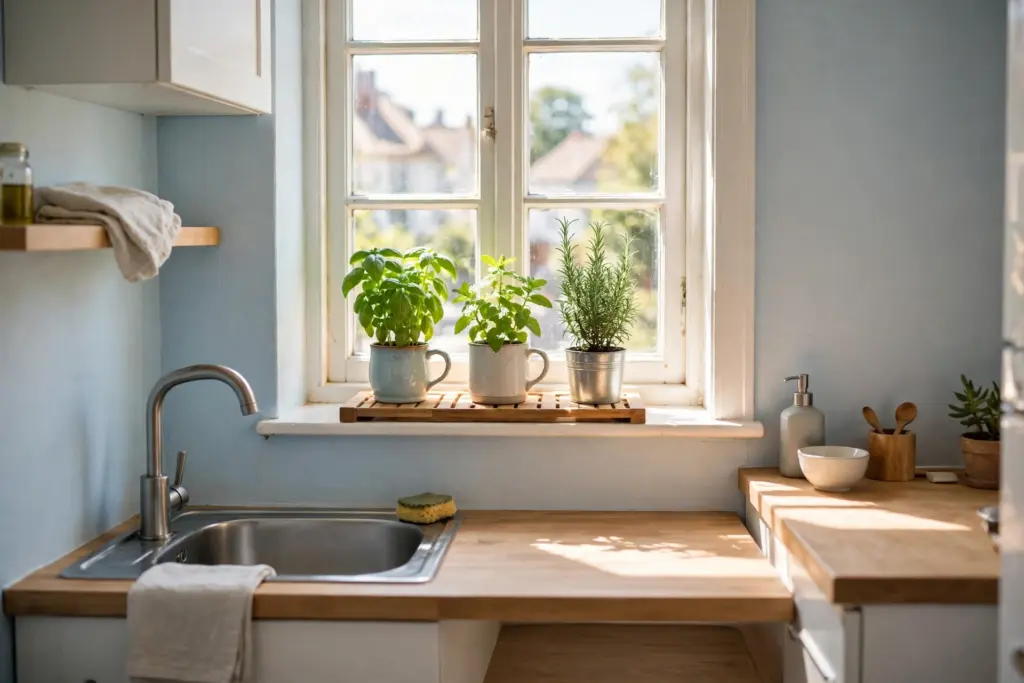
A windowsill herb garden is decor and dinner ingredient in one. Basil, mint, rosemary, and chives grow happily in small pots on a sunny sill and cost less over a season than buying cut herbs weekly. Use pots you already own — a mug, a tin, a glass jar with drainage stones — instead of buying new planters.
Keep the setup simple: one tray under the pots to catch water, and water only when the top inch of soil feels dry. If your kitchen has no sunny sill, a small clip-on grow light works — and the herbs still earn their place visually. For more ways to grow food in a rental, see our small space gardening ideas for apartments.
10. Upcycle Jars and Bottles Into Decor
Before buying a vase, look in your recycling bin. A clean glass jar holds a stem of eucalyptus; a wine bottle becomes a candle holder; a tin can becomes a pen pot. Upcycled decor costs nothing, keeps glass and metal out of the waste stream, and looks genuinely personal. The rule is restraint: three upcycled pieces on a shelf look curated, while ten look like clutter. The EPA’s guide to recycling and reusing household items is a useful check for what can be safely repurposed and what belongs in the recycling bin instead.
11. Skip Fast Seasonal Decor
Cheap seasonal decorations are the fastest route to a full landfill bag: plastic pumpkins and tinsel garlands that shed, break, and get thrown away every January. Instead, decorate with the seasons using things you already own — pinecones in autumn, fresh greenery in winter, cut branches in spring.
If you love a seasonal look, invest in one durable set you will reuse for years: a string of warm LED fairy lights, a woven wreath, or a set of cloth napkins in a seasonal color. Store them carefully in a labelled box so they survive to next year — our seasonal decor storage ideas show how. One good set, reused five times, beats five cheap sets thrown away.
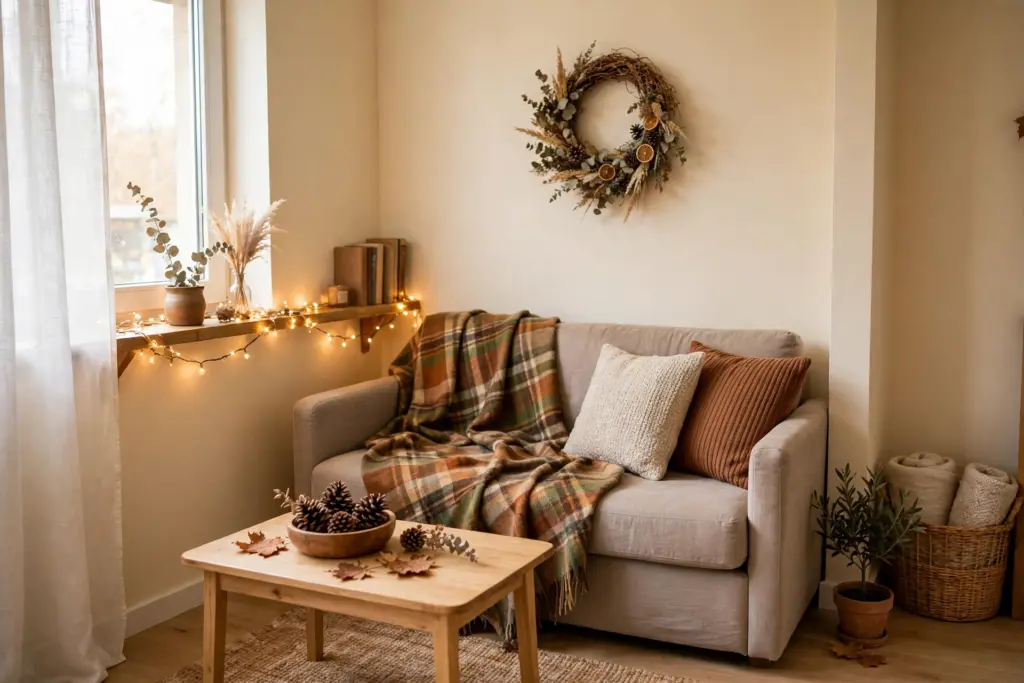
12. Set a One-In, One-Out Rule
The greenest decorating habit is not a purchase at all — it is a rule. For every new decor item that enters your apartment, one leaves: donated, sold, or passed to a friend. Apply it before shopping, not after: when a new cushion catches your eye, decide which cushion it replaces. Over a year, the rule keeps your home at a steady size, your spending down, and your rooms looking edited rather than accumulated — and it makes moving day dramatically easier.
What to Skip: Greenwashing Traps in Rental Decor
Not everything labelled “eco” deserves the name. Watch for vague claims with no certification behind them — “natural” and “earth-friendly” are marketing words, not standards. Check for real labels instead: FSC for wood, GOTS or OEKO-TEX for textiles, and low-VOC or zero-VOC for paints and adhesives.
A Renter’s Eco Checklist Before You Buy
Run through this short checklist before any eco decor purchase, and most mistakes disappear. First, read your lease: does it ban adhesive products or wall mounting? Second, ask whether the item is removable without damage — if it needs a drill or a permanent bond, it is not renter-friendly. Third, check the weight and the fixing: adhesive hooks have published limits, and exceeding them risks both the wall and your deposit.
Fourth, ask where the item goes next: if it only works in this apartment, it is a short-term buy; if it moves with you, it is an investment. Finally, measure twice — a “small” bookshelf that blocks a radiator or a rug that traps a door will be replaced within months, and replacement is the least sustainable outcome of all. Buy once, buy well, and let the room stay calm.
Frequently Asked Questions (FAQ)
Is eco friendly home decor more expensive for renters?
It can cost more per item, but usually costs less overall. Secondhand furniture, upcycled decor, and plants are cheaper than buying new, and durable pieces you keep for years beat cheap items you replace twice. The expensive mistake is buying “eco” items that do not last or do not fit — measure first, and buy once.
Can I use peel-and-stick wallpaper in a rental without losing my deposit?
In most cases, yes — if you choose a quality removable product, prepare the wall properly, and remove it slowly with gentle heat at move-out. Check your lease first, test one strip in a hidden spot for a week, and avoid sticking it over fresh or flaking paint, where removal can lift the finish.
What are the best low-maintenance eco plants for a dark apartment?
Snake plants, pothos, and ZZ plants tolerate low light and irregular watering, which makes them the safest starting point. They need a pot with drainage, a saucer to protect surfaces, and watering only when the soil feels dry an inch down.
How do I know if a product is genuinely sustainable?
Look for third-party certifications rather than marketing words: FSC for wood, GOTS or OEKO-TEX for textiles, and low-VOC or zero-VOC labels for paints and adhesives. Check what the product is made of and whether the maker explains the claim on its own site — if none of that is available, the claim is not verifiable.
Keep Reading
These guides go deeper on the same themes: