12 Art Deco Peel and Stick Wallpaper Ideas for Renters
Art deco peel and stick wallpaper is one of the easiest ways to give a plain rental real glamour without touching a paintbrush or risking your deposit. The bold fans, stepped arches and symmetrical geometry of the 1920s look expensive, but the peel-and-stick format means you can put it up in an afternoon, live with it for a year, and peel it off clean when your lease ends. If your walls are blank and your landlord has a strict no-paint rule, these 12 art deco peel and stick wallpaper ideas will help you pick the right pattern, room and scale for a small space — one more set of renter-friendly apartment decorating ideas that never risk your deposit.
What Makes Art Deco Wallpaper So Renter-Friendly?
Art deco is built on repetition: fans, sunbursts, chevrons and stepped arches in a strict, symmetrical grid. That regularity makes a wall look intentional, and one bold accent wall is usually enough — the rest of the room can stay calm.
The peel-and-stick format suits renters for three reasons. First, there is no paste, no water and no mess, so installation is a dry, reversible job. Second, most quality papers are designed to come off without pulling paint, as long as the wall underneath is smooth, clean and fully cured. Third, you can test a pattern at small scale before committing to a whole wall. Before you order, check your lease for any clause about wall coverings and, if in doubt, ask your landlord in writing.
One caution: metallic finishes look luxurious but highlight every bump underneath. If your walls are not perfectly smooth, a matte or lightly embossed finish is safer, because it hides small flaws instead of advertising them. For the basics, see our guide to peel-and-stick wallpaper for renters.
12 Art Deco Peel and Stick Wallpaper Ideas
1. Black-and-Gold Fan Accent Wall Behind the Bed
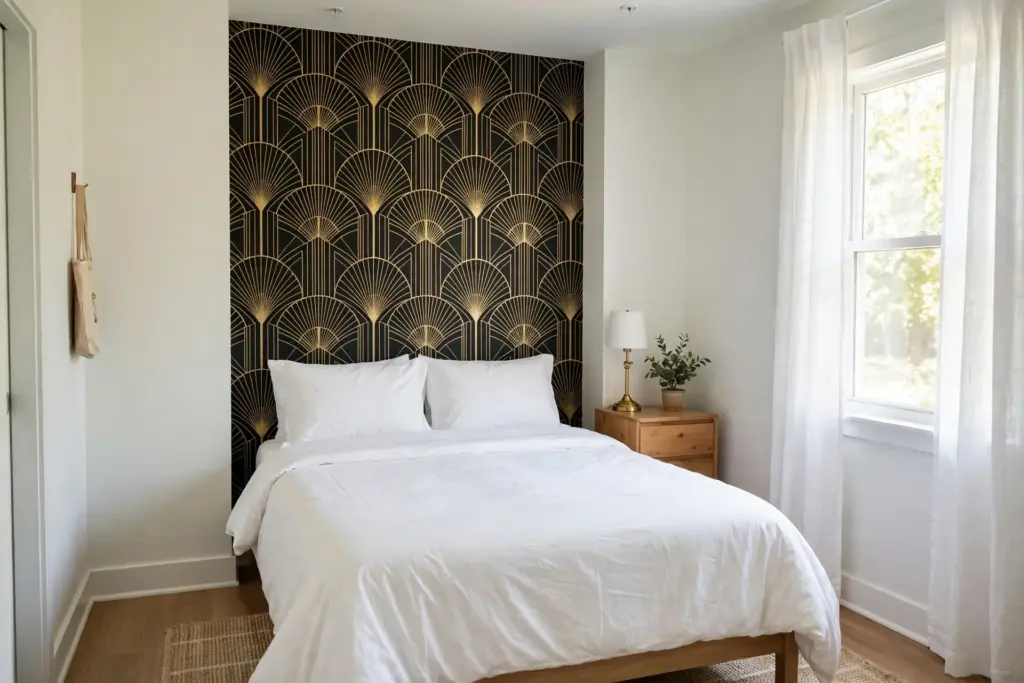
The classic deco fan in black and gold is the single most recognizable art deco motif, and it works best as a headboard wall. One wall behind the bed, dressed with plain white or cream bedding and a brass lamp, turns a plain rental bedroom into something that looks deliberately designed. Keep the other walls pale so the fan pattern stays the star.
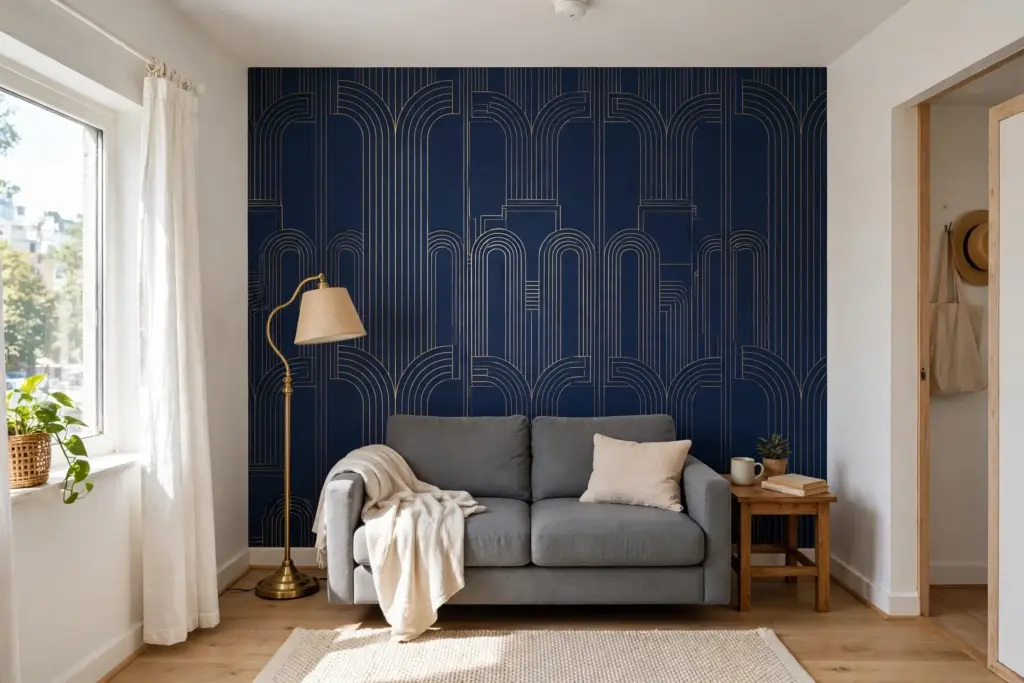
2. Navy-and-Brass Stepped Arches in the Living Room
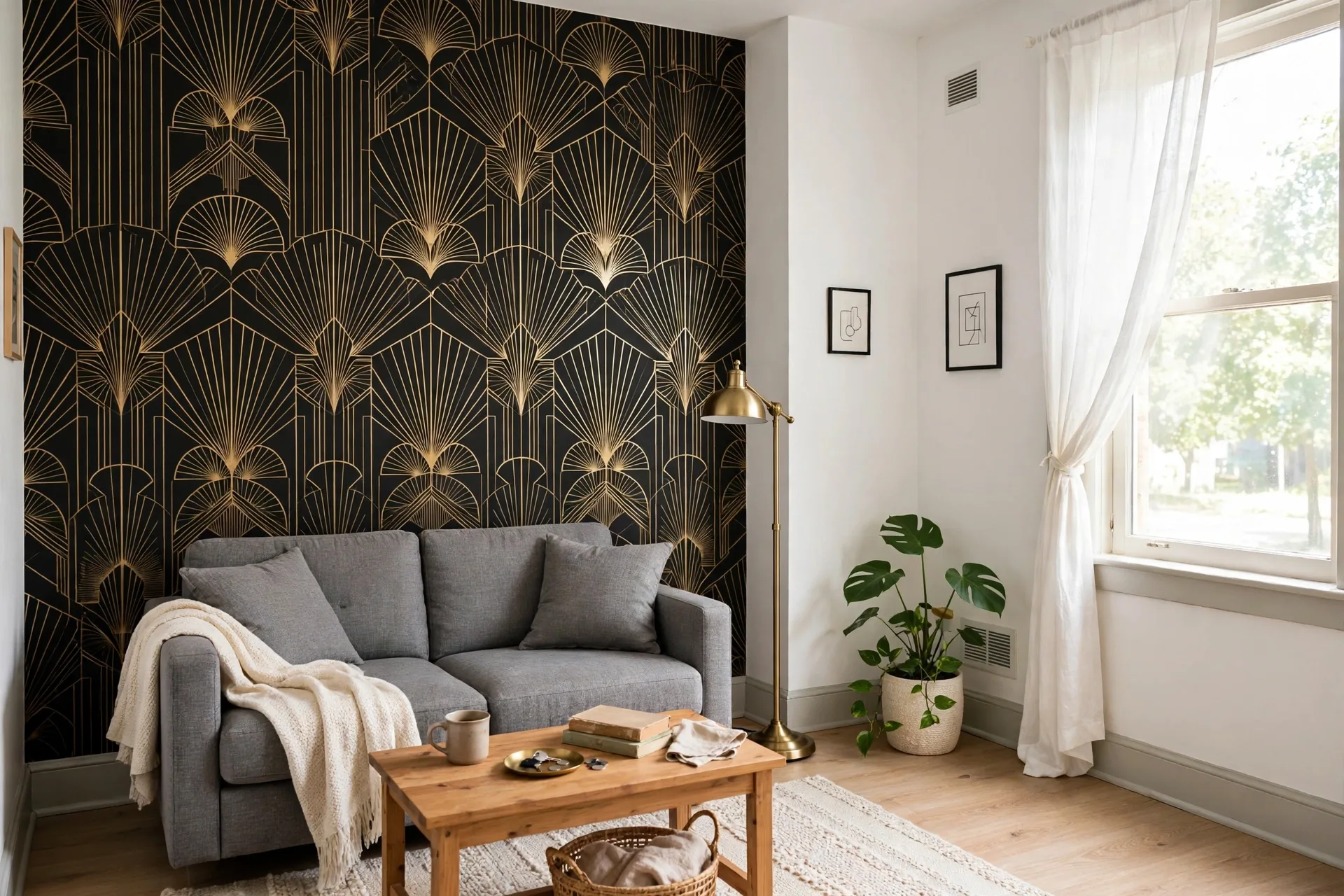
Stepped arches are deco’s most architectural motif, and a navy background with brass linework gives a small living room instant depth. Use it behind the sofa, then echo the brass with a floor lamp or picture frames. The vertical lines draw the eye upward, which makes a low-ceiling rental feel taller. Pair it with a solid-color sofa — a patterned sofa competing with a patterned wall makes a small room feel chaotic.
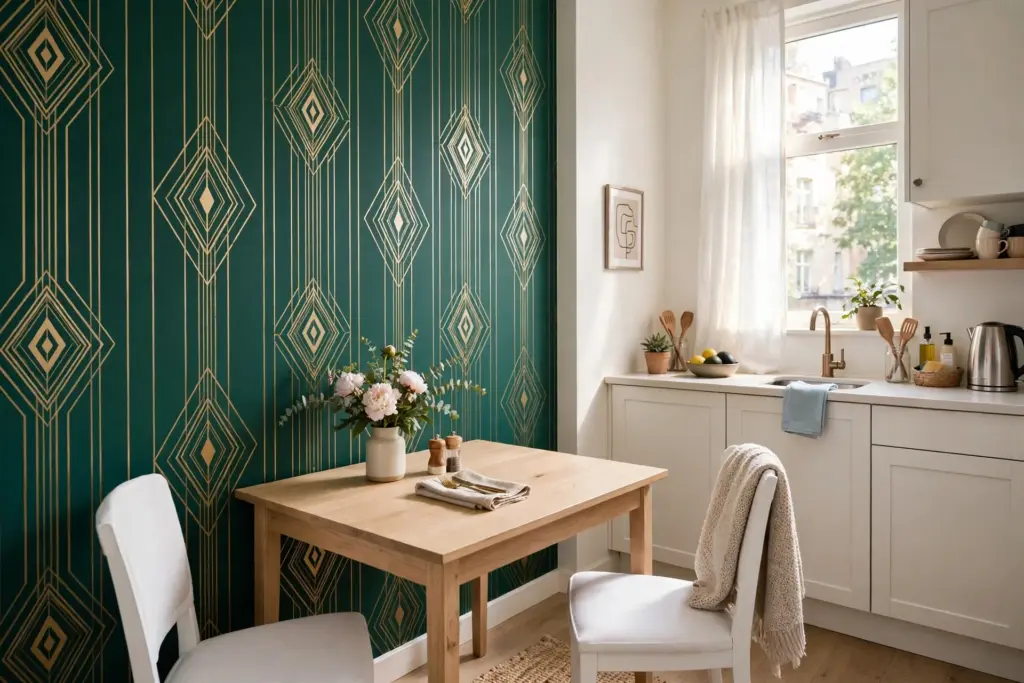
3. Emerald-and-Gold Geometric in the Dining Nook
A small dining nook is the perfect place for a bolder deco palette, because you only see it at mealtimes and it never has to compete with a television or a desk. Emerald green with gold geometric lines feels rich without feeling dark, especially with a light wood table and white chairs. If your nook is just a table pushed against a wall, papering that one wall creates a defined dining zone out of what was previously just a corner of the kitchen.
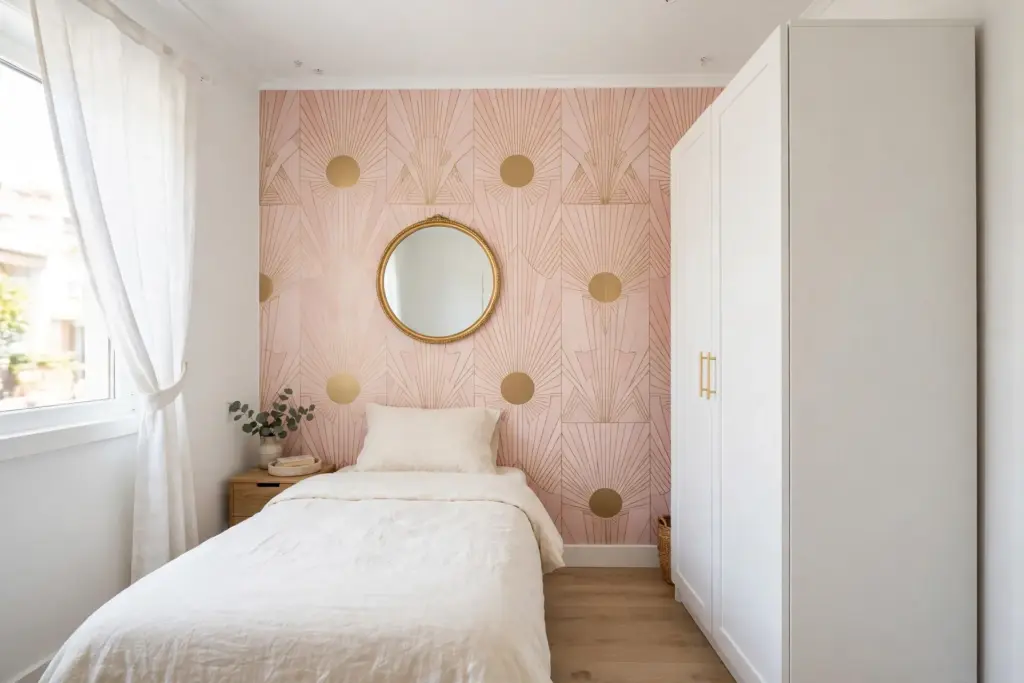
4. Blush-and-Gold Sunburst in a Small Bedroom
Not every deco room has to be dark and dramatic. A blush background with a gold sunburst reads soft and warm, and it suits a small bedroom that needs light more than drama. The sunburst works well on a narrow wall — beside a wardrobe, or on the wall a bed faces — where a full fan pattern would feel cramped. Add cream bedding and a small gold-framed mirror to bounce the light around.
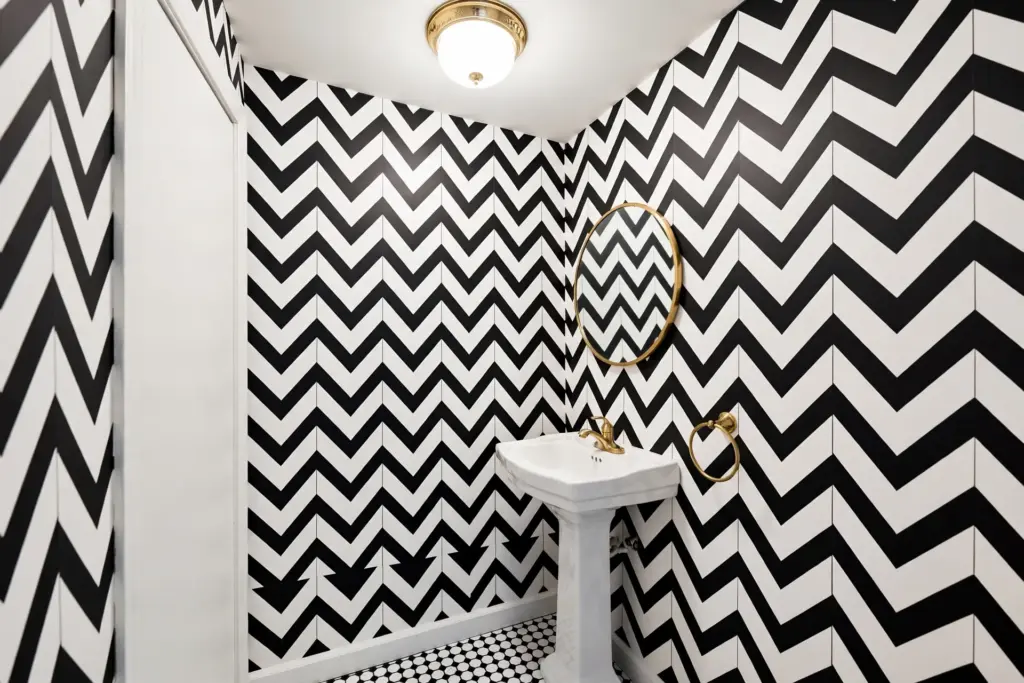
5. Powder Room Drama with a Bold Chevron
Powder rooms are small, windowless and easy to ignore, which makes them the best room for a bold deco chevron. A zigzag in black and white or navy and cream turns a plain half-bath into a jewel box, and because the room is tiny, you only need one or two rolls. If your powder room has textured walls, choose a thicker, embossed paper, which grips better and hides the texture underneath.
6. Hallway or Entry Run in Soft Neutrals
Hallways and entries are narrow, so a loud pattern can feel overwhelming. A deco design in soft neutrals — warm gray, cream and a thin gold line — adds pattern without closing the space in. Run it down one hallway wall, or paper the wall your front door faces.
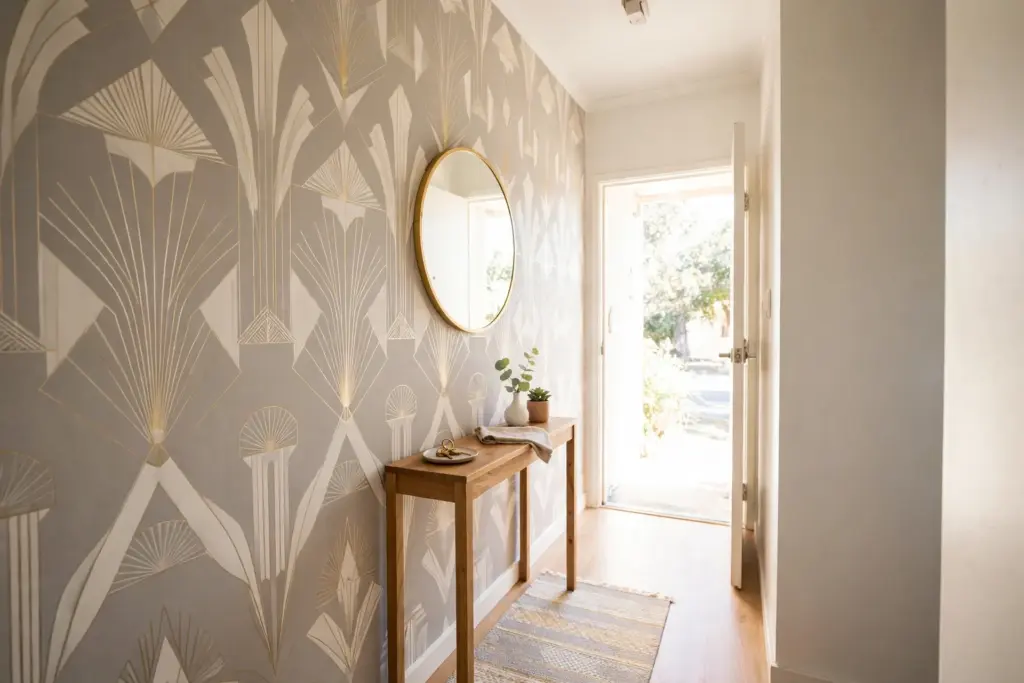
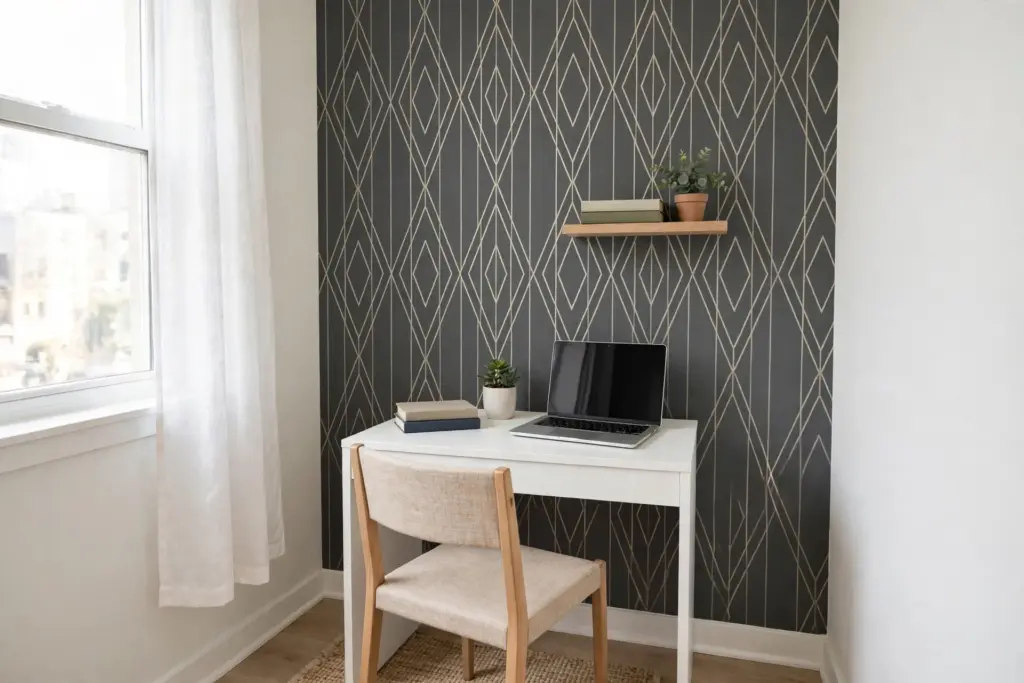
7. Home Office Focus Wall with Symmetrical Geometry
A home office needs a wall that looks good on video calls and helps you focus. A symmetrical deco geometric in muted tones — charcoal on soft gray, or navy on cream — gives your background structure without distraction. Paper the wall behind your desk only and keep shelves minimal, and the pattern reads as a designed backdrop.
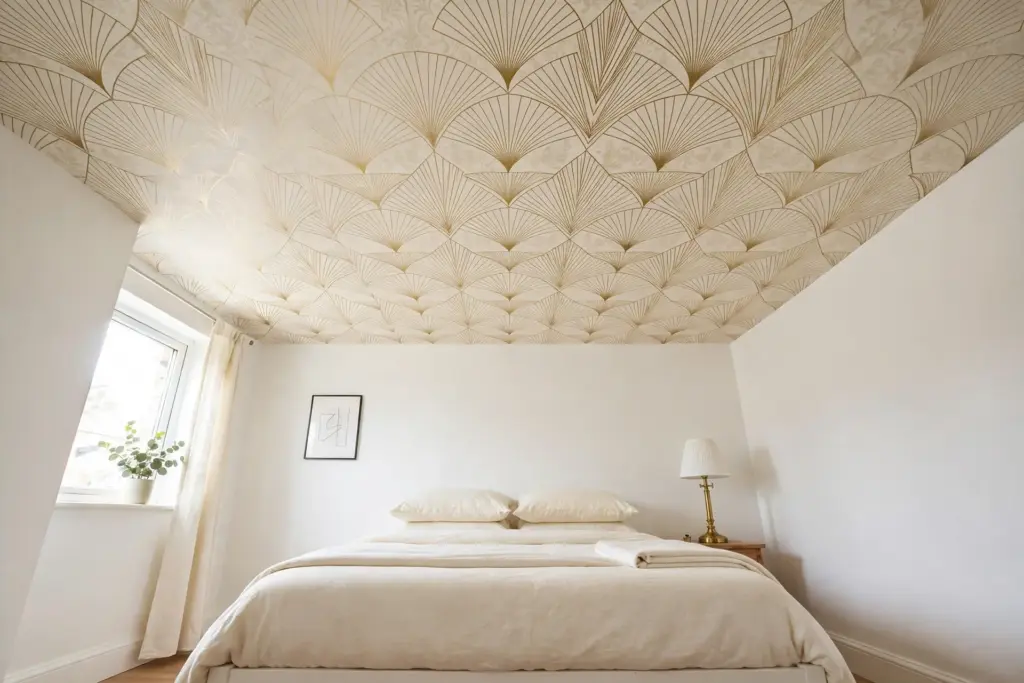
8. The “Fifth Wall” — Art Deco on the Ceiling
Designers call the ceiling the fifth wall, and a small rental is the ideal place to try it. A lightweight deco pattern — a subtle gold fan on cream, or a soft geometric in pale tones — adds glamour without taking a single inch of floor or wall space. It works best in bedrooms and dining nooks, where you spend time looking up. Measure carefully and work with a second person, since ceiling installation is the one place where peel-and-stick is genuinely harder.
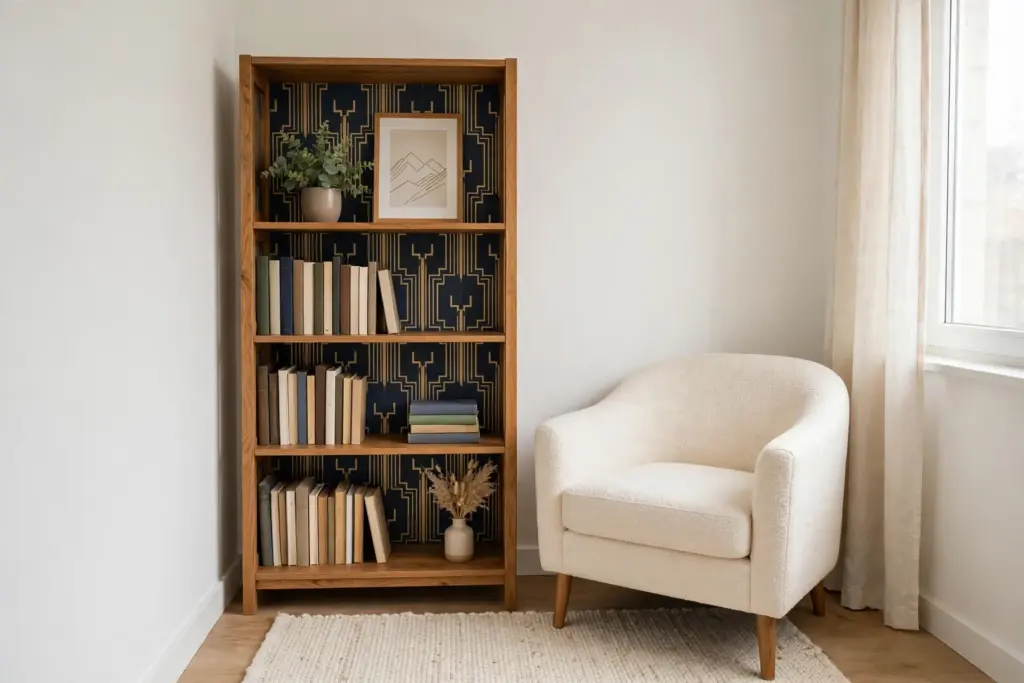
9. Bookshelf Backs in Stepped Deco Motifs
If a full wall feels like too much commitment, start inside a bookshelf. Lining the back panels of an open shelf with a stepped deco motif turns ordinary storage into a display piece, and one roll covers several shelves. It is also the best way to test whether you like living with a pattern before scaling up. Keep shelf objects simple so the pattern stays visible.
10. Stylized Florals for a Softer Deco Look
Art deco is not only fans and chevrons. The era’s stylized florals — symmetrical, geometric flowers in muted gold, sage or dusty pink — give you the deco feeling with a softer edge, and suit homes that lean boho or traditional. A floral deco paper works well in bedrooms and reading corners, pairing naturally with linen and warm wood. If you like the softer side of deco, our boho peel-and-stick wallpaper ideas show how to blend pattern styles without a clash.
11. Matte Finish to Hide Wall Flaws
Older rentals rarely have perfect walls, and the finish matters as much as the pattern. A matte or lightly embossed deco paper hides small dents and uneven paint far better than a shiny metallic one, because it does not reflect light across the flaws. Walk the wall in raking light before you order, and if you can see bumps, choose matte — save metallic gold and brass for the smoothest wall in the room.
12. Mix Deco with Modern — One Wall, Not the Whole Room
The easiest mistake with deco wallpaper is using too much of it. In a small rental, one accent wall plus plain modern furniture beats four patterned walls every time. Let the paper be the only bold pattern in the room: solid-color sofa, plain rug, simple curtains. The deco wall then reads as art, and one wall peels off in minutes when your lease ends, with no patching and no repainting.
How to Choose the Right Pattern Scale for a Small Room
Pattern scale is where most small-room wallpaper jobs go wrong. A motif that looks elegant on a sample can overwhelm a small room if the repeat is too large, and a tiny repeat can turn to visual noise from across the room. Hold a full repeat on the wall and step back: you should see the whole motif clearly without it dominating the wall. Large fans and arches suit the longest wall; smaller chevrons suit narrow walls, alcoves and powder rooms.
Order a sample first whenever the seller offers one — it is the cheapest insurance against a pattern that looks different at full size. Stick it on the wall and live with it for a few days, in morning and evening light, before ordering full rolls. Blues and greens read differently under warm rental lighting than on a screen, so a sample is worth the wait. For color-led inspiration, see our blue peel-and-stick wallpaper ideas.
Wall Prep and Clean Removal
Peel-and-stick wallpaper only sticks as well as the wall underneath it, so preparation matters. Start with smooth, clean, dry walls: wipe them down, let them dry completely, and fill any holes with filler, sanded smooth once dry. Fresh paint needs time to cure — wait at least a few weeks after painting before applying removable paper, because uncured paint can lift with the adhesive. Textured walls are the hardest surface; a thicker embossed paper helps, but heavy texture may never grip well, so test a sample first.
For removal, work slowly from a top corner, pulling the paper back on itself at a low angle rather than straight out from the wall. Gentle heat from a hair dryer on a low setting can soften the adhesive on a stubborn section. Most quality papers come off cleanly, leaving the paint intact — that clean removal is exactly why landlords tend to accept removable wallpaper where they refuse paint. If any adhesive residue remains, a damp cloth usually lifts it; avoid harsh solvents, which can damage paint. For a detailed look at the different removable finishes, This Old House’s guide to peel-and-stick wallpaper covers the main types and where each one works best, and OnDecor’s art deco wallpaper collection is a useful place to compare the fan, arch and chevron motifs side by side before you buy.
Frequently Asked Questions (FAQ)
Will art deco peel and stick wallpaper damage my rental walls?
Applied to smooth, clean, fully cured paint and removed slowly at a low angle, quality peel-and-stick wallpaper usually comes off without damage. The risk rises on fresh paint, textured walls and old flaking paint, so test a sample in a hidden spot first and keep written permission from your landlord.
What pattern scale works best in a small apartment?
Medium repeats usually work best: large fans and arches suit the longest wall, while smaller chevrons and geometrics suit narrow walls, powder rooms and alcoves. Hold a full repeat on the wall and check it from the far side of the room before ordering full rolls.
Can I use peel-and-stick wallpaper in a bathroom?
Yes, in a powder room or a bathroom with good ventilation. Avoid placing it inside a shower or directly above a bathtub, where constant steam and splashing can loosen the adhesive.
How much wallpaper do I need for one accent wall?
Measure the wall’s height and width, then check the roll coverage listed by the seller, allowing extra for pattern matching — most patterns need 10 to 20 percent more paper than a plain design. One accent wall in a small room typically needs two to four rolls.
Does metallic art deco wallpaper work on imperfect walls?
Metallic finishes highlight bumps and dents, so they are best on the smoothest wall in the room. If your walls have flaws, choose a matte or lightly embossed deco paper instead.