14 Small Apartment Reading Nook Ideas
These small apartment reading nook ideas follow one test: every idea must turn space the apartment was already wasting into a corner a reader actually returns to, with no build, no fixings, and a footprint the room can spare. A reading nook is not a spare room, and it is not a chair pushed against a wall. It is a claimed corner, a seat that survives a real reading session, one warm task light, and books within arm’s reach — and every one of the 14 corners below is judged by that test.
The order matters. Claim the spot first, then choose the seat, then fix the light, then sort the books, then add the finishing layer — and stop there. Most failed nooks fail in the opposite order: they start with a throw and a plant, and nobody sits in them after the first week.
1. Claim a Corner the Apartment Was Wasting
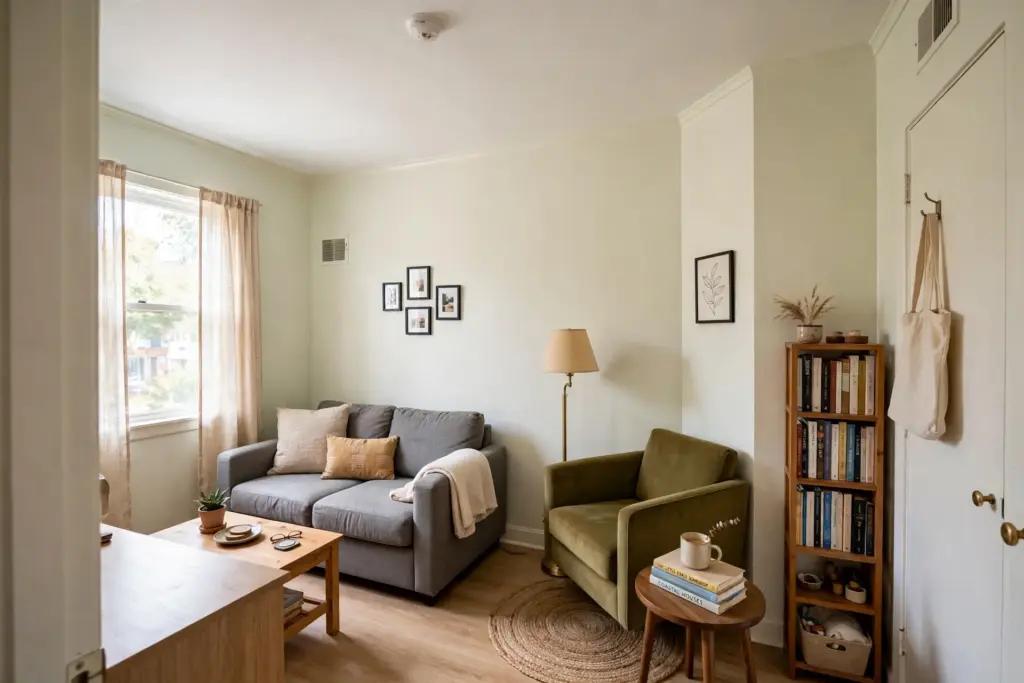
The best small apartment reading nook ideas start with a spot the home was not using, not with furniture shopping. Walk the apartment once and look for dead space: the corner beside the sofa, the end of a hallway, the strip beside a bookshelf, the window nobody sits by. A nook built there costs the room nothing, because the room was not using that space anyway.
Claim the dead corner with a rug and a chair
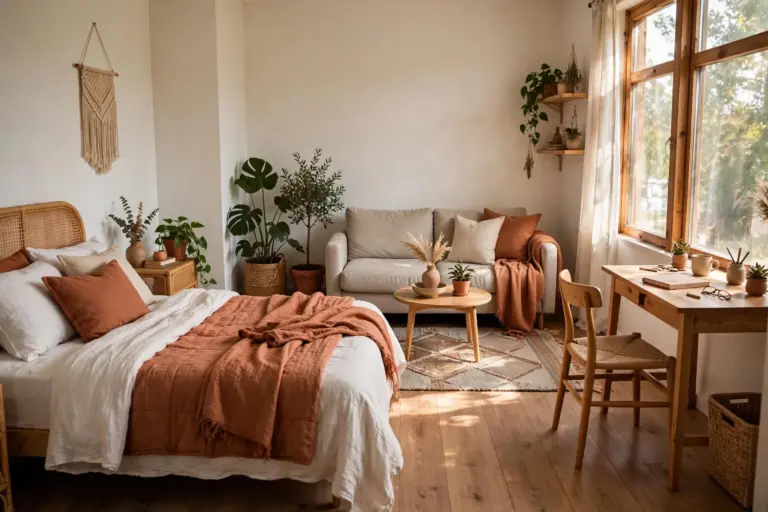
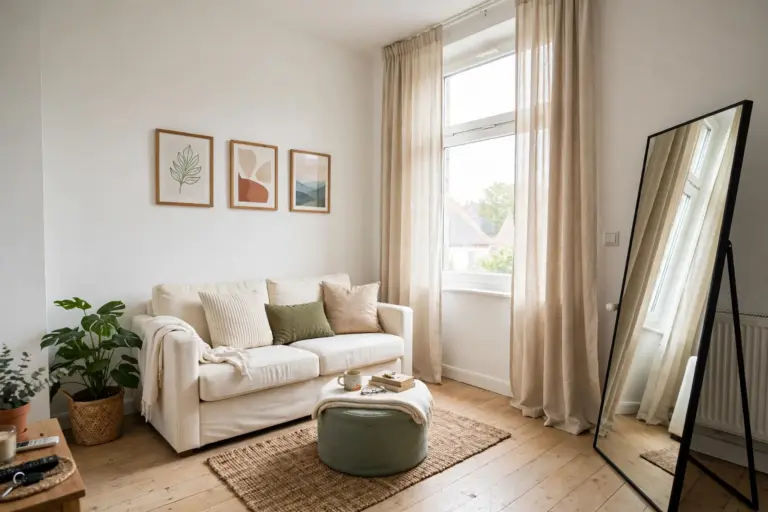
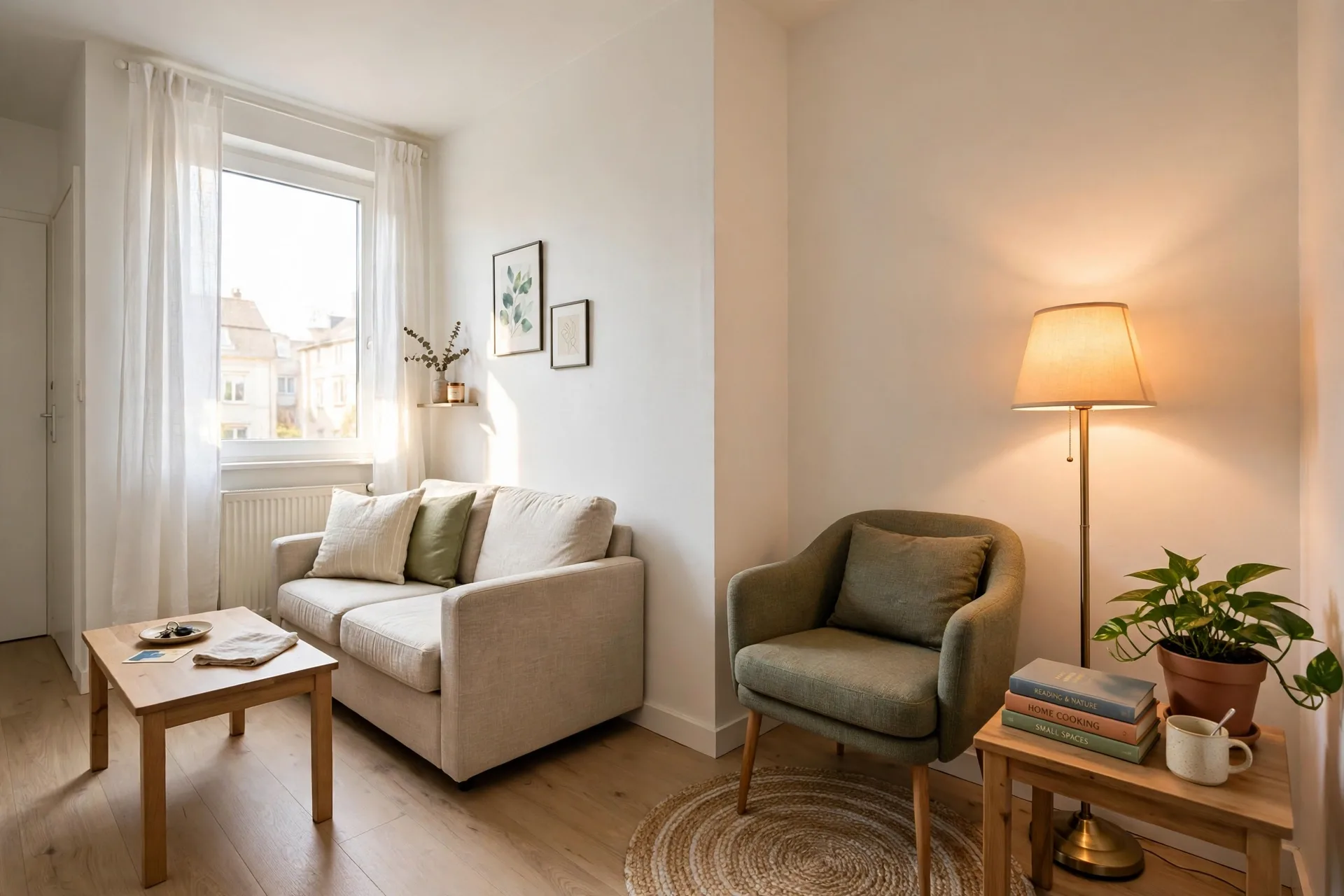
An empty corner becomes a nook the moment it gets a boundary. Lay a small rug down, angle a compact chair across the corner rather than flat against the wall, and add a small side table. The rug tells the eye that this is a place, not leftover space. Keep the chair small enough that the walkway past it stays clear.
Take the window side for daytime reading
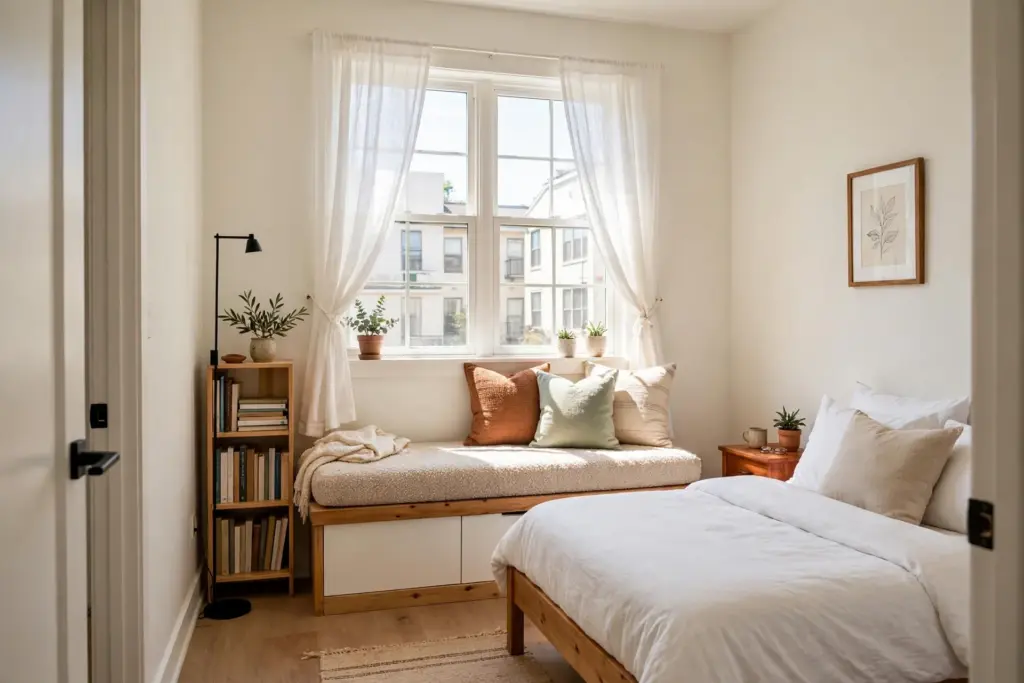
A window seat is the easiest nook of all when the window already has a low bench or a wide sill. A thick cushion on a low storage bench gives a daytime seat with free light, and the cubbies underneath hold books and throws out of sight. With no bench, a purpose-built, weight-rated storage bench made for seating does the same job. Do not sit on an ordinary bookshelf turned on its side: shelving is not rated for body weight unless its manufacturer explicitly approves that use. Add a slim floor lamp anyway: window seats go dim by late afternoon, and a nook that only works at noon gets abandoned.
Use the hallway end, if the hallway allows it
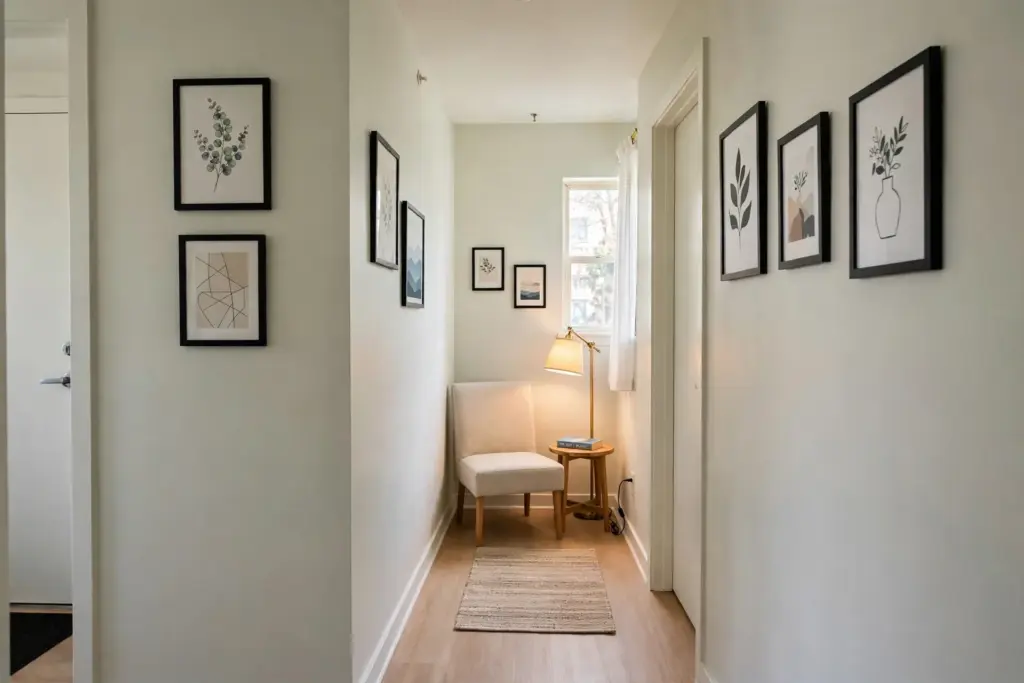
A hallway end is a surprisingly good nook, provided a slim chair and a small table leave a clear walking path. If the chair forces anyone to turn sideways, the hallway is too narrow and the idea does not fit this apartment. Where it does fit, a slipper chair, a small round table, and a warm lamp create a quiet pocket nobody walks through.
Park the chair beside the bookshelf you already own
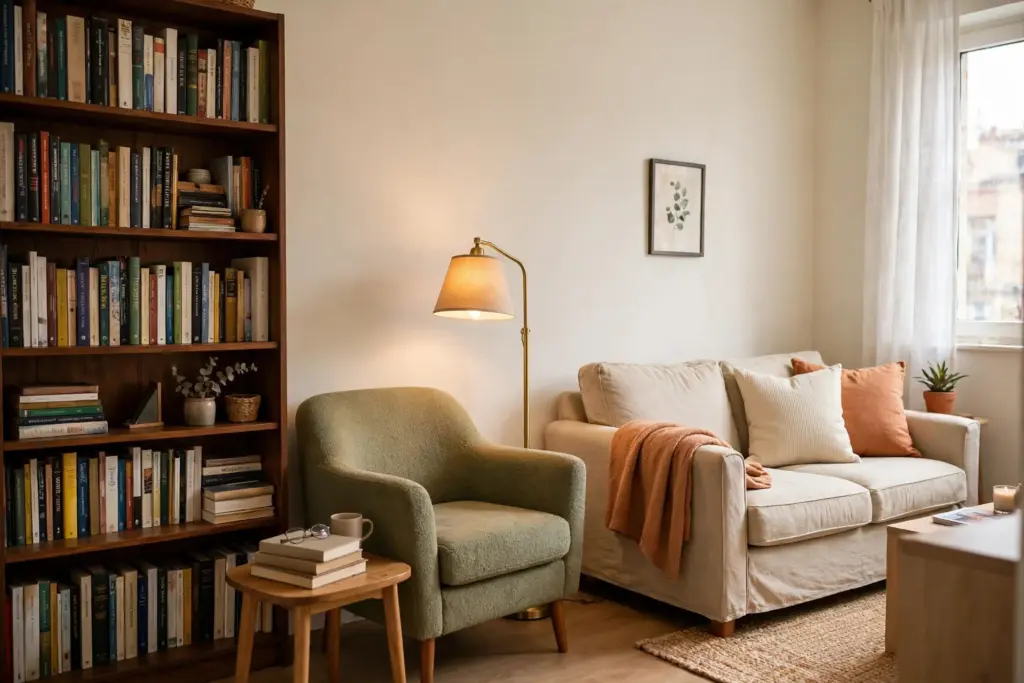
No new storage is needed when the bookshelf is already there. A compact chair beside an existing tall bookcase instantly reads as a library corner, with the books already within reach. Angle the chair slightly toward the room, keep a small table on the free side for a mug and the current book, and let the shelf do the decorating. It may need nothing more than moving a chair a few feet.
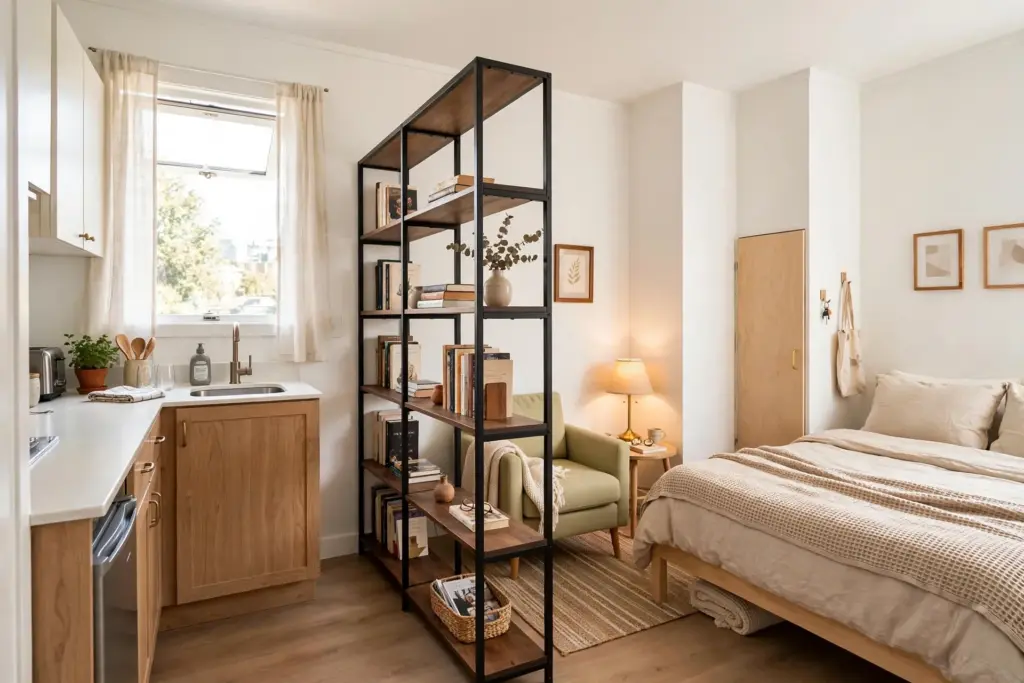
Mark a studio nook with an open-backed bookcase
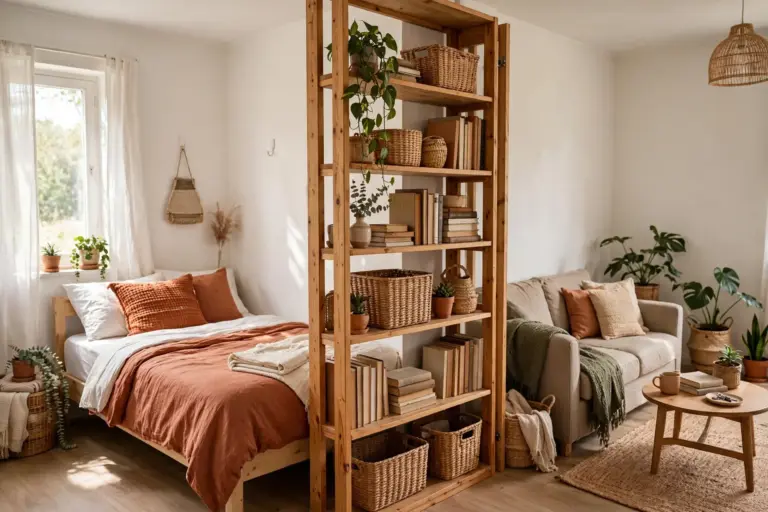
Studios need a boundary more than other apartments, because every zone shares one room. A tall, open-backed bookcase turned at a right angle marks a reading zone without closing it off: light still passes through, and the chair behind it has its own territory. These room divider ideas for studio apartments cover the same trick in more detail — the divider must be stable: where no drilling is permitted, use a stable, purpose-built freestanding divider, and if a tall bookcase requires wall anchoring under the manufacturer’s safety instructions, get the landlord’s permission first and anchor it correctly rather than leaving tip-prone furniture unsecured. Never fix anything to a protected wall without permission.
Consider a closet nook only where the lease allows it
A spare closet with its door removed or left open can become a genuinely private nook, but only where the lease allows the door to come off or stay open, with the door and hardware stored safely for move-out. Never remove a door the lease requires, and never treat a closet conversion as a default. Where allowed, a cushion bench, a small shelf, and a plug-in light inside make a quiet retreat that takes zero floor space from the main room.
2. Choose a Seat That Survives a Real Reading Session
The seat test is plain language: can a reader sit in it comfortably for 30 to 60 minutes without shifting, standing, or moving to the sofa? If not, the corner is decoration, not a nook. Three seat types pass in small apartments, and the right one depends on how much floor the room can spare.
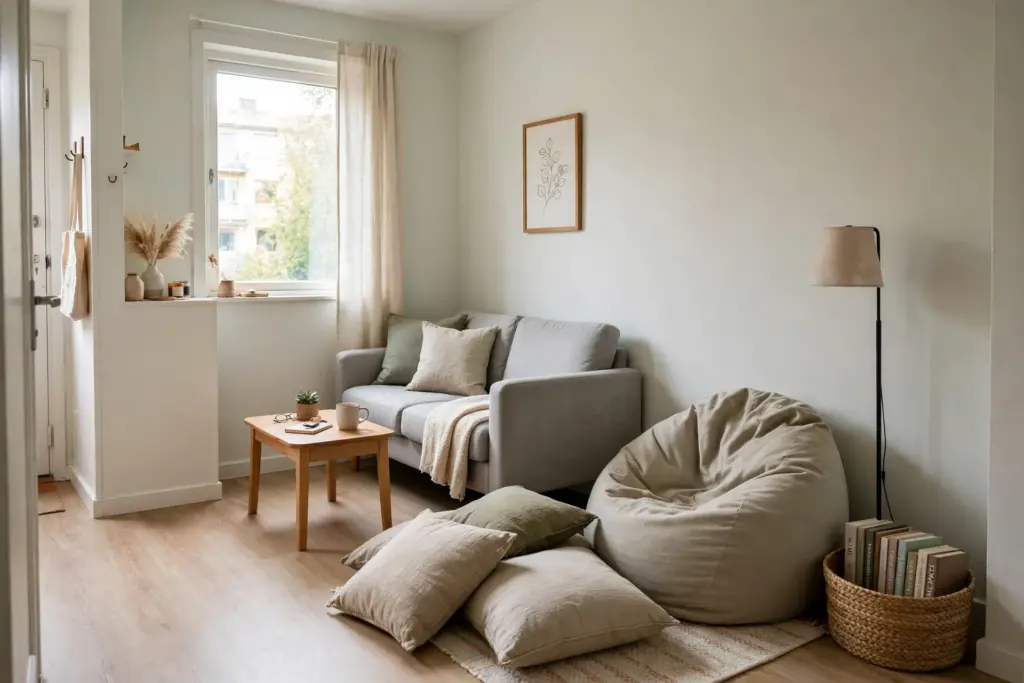
Floor cushions for the smallest footprint
A thick floor cushion setup — a large cushion or soft bean seat, back cushions, and a small rug — is the lowest-footprint seat in this guide. Nothing is fixed or heavy, and the whole nook packs into a basket when guests come over. It suits readers comfortable getting up and down from the floor, and it needs a wall or firm cushions behind it for back support, or the 30-minute test fails.
A slipper chair where a full armchair will not fit
A slipper chair — armless, low, and narrow — fits corners and hallway ends where a full armchair would block the path. Pair it with a small round side table, no wider than the chair itself. Without arms, the reader needs that surface within easy reach for a mug and a book.
A compact armchair with slim legs
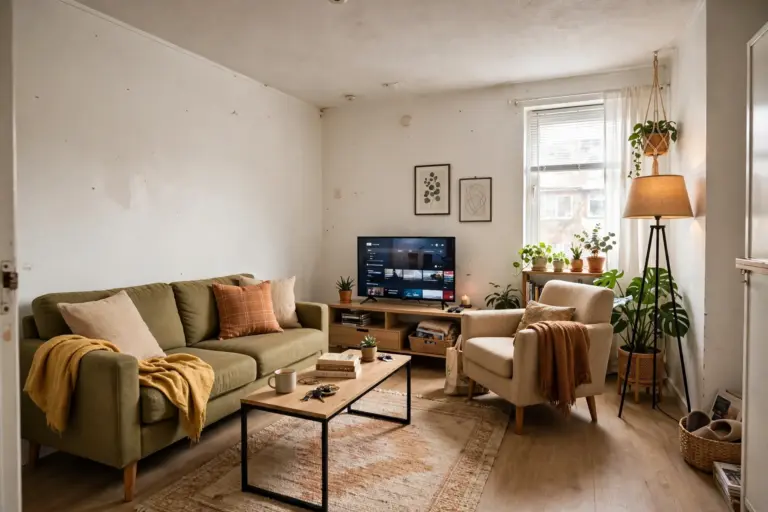
Where the room can spare it, a compact armchair is the most comfortable nook seat. Look for slim, visible legs, which let floor and light show underneath and make the chair feel half its size, and a seat deep enough to tuck feet up without being so deep that a smaller reader slides forward. Bulky recliners and deep wing chairs swallow a corner whole and belong in a larger room.
3. Light It Like a Task, Not a Mood
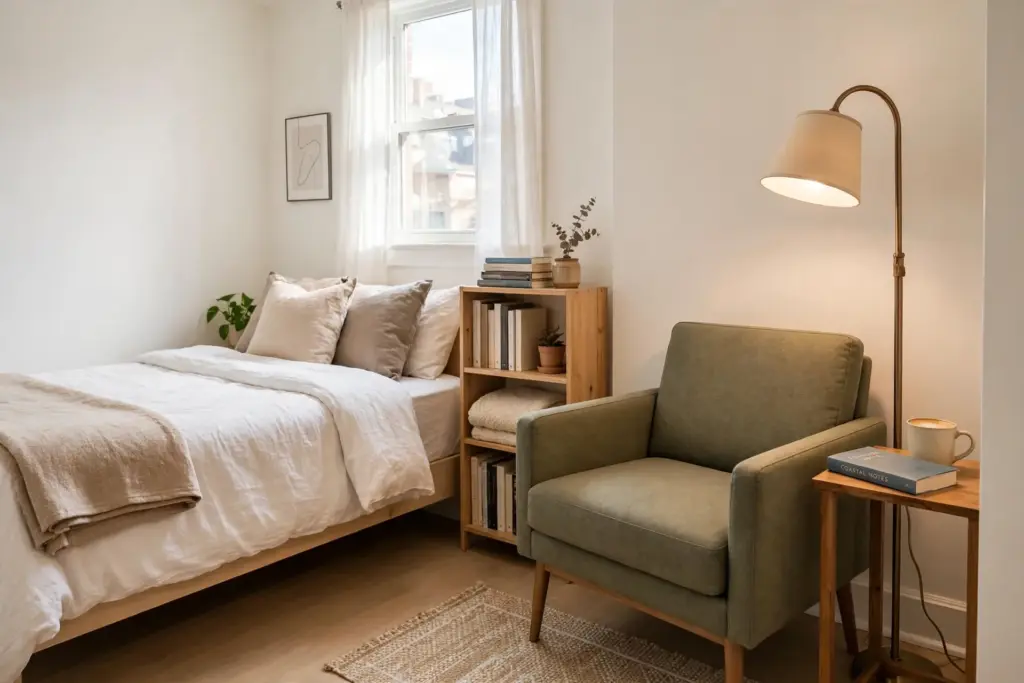
Light is what separates a nook from a corner with a chair in it. An unlit corner is just a corner, and a nook lit only by the ceiling light is a corner with glare. The nook needs one warm task light that puts light onto the page, from over or beside the reader’s shoulder. Apartment List’s guide to lighting a room without ceiling lights makes the same plug-in point for renters: floor lamps and plug-in options that need no wiring.
One warm floor lamp over the shoulder
A slim, adjustable floor lamp is the default nook light for renters: it needs no fixings, stands on the floor, plugs into an existing outlet, and moves with the reader. Angle the head so light falls onto the page rather than into the reader’s eyes, and choose a warm bulb in the 2700K to 3000K range — the warm range printed on bulb boxes. Feit’s color temperature guide explains the same range for living rooms and bedrooms. For wider renter lighting, these renter friendly lighting ideas cover layers and placement in full.
Wall light only with permission, string lights only as atmosphere
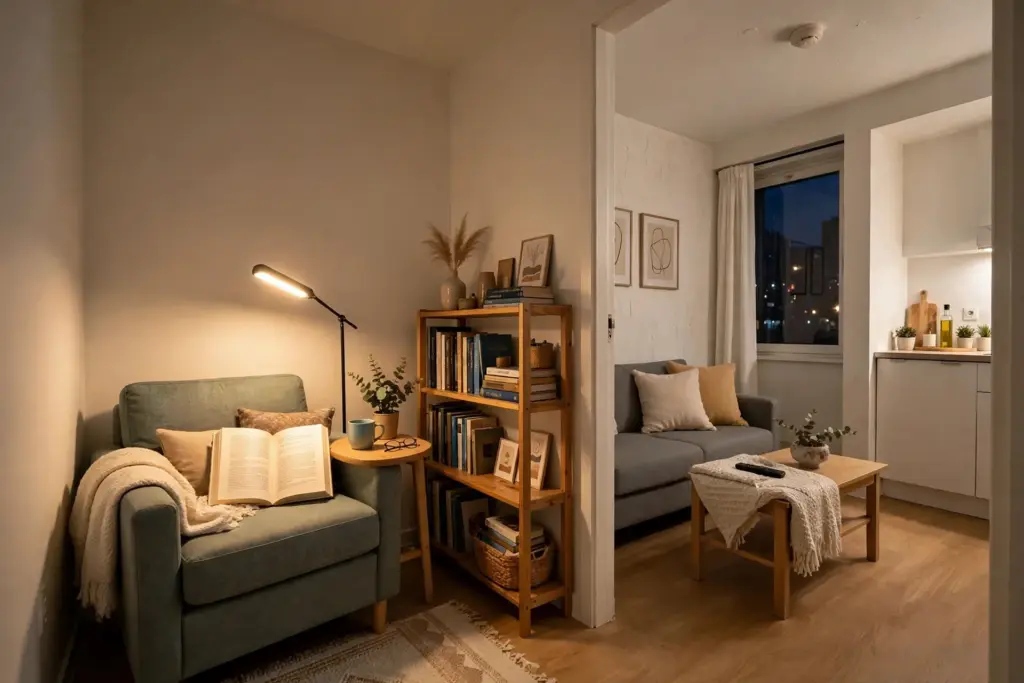
Two distinctions keep this section honest. First, a plug-in wall sconce still screws into the wall, so it is not damage-free — it belongs in the permission-first pile, and the defaults stay floor lamps, table lamps on existing surfaces, and freestanding shelves. A hanging chair has the same status: it needs a ceiling fixing into structure, so it is permission-first at most, never a default. Second, string lights are atmosphere, never the reading light: they sit alongside a task lamp, never instead of one. For glow after the lamp goes off, flameless candles lead — real candles are not the default light or decor here.
4. Keep Books in Reach Without Rebuilding a Library
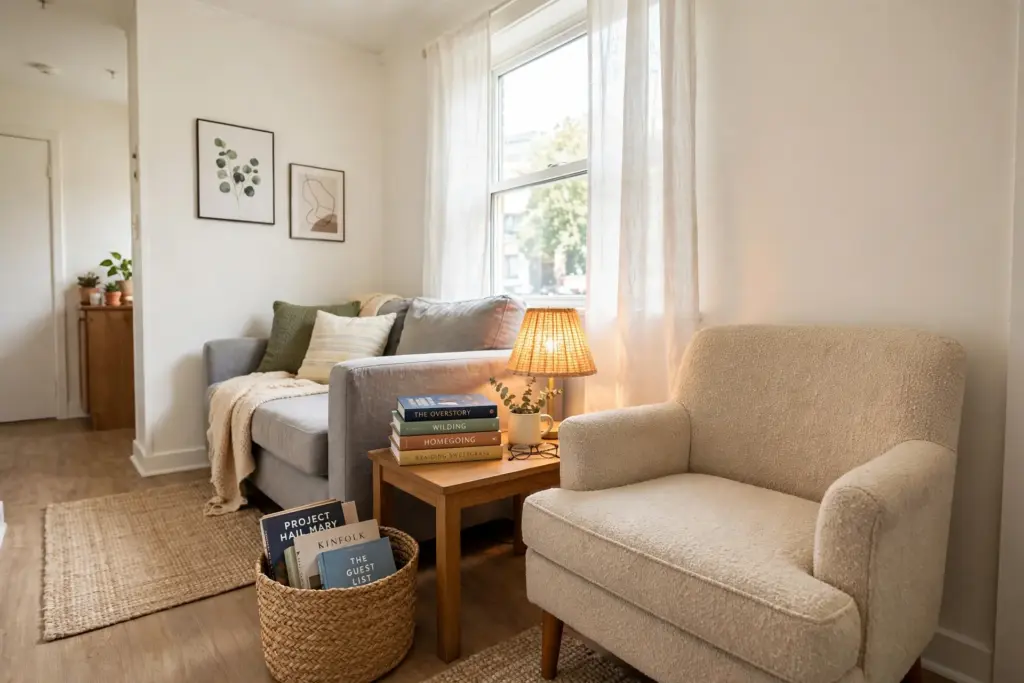
Only the current reads live in the nook. A side-table stack, a small basket, or a narrow case beside the chair holds the book in progress and the next two — and that is enough. The rest of the library belongs to proper storage systems, which these book storage ideas for small apartments cover in full; the nook just borrows their smallest unit. The test is whether the reader can reach the next book without standing up.
5. Finish It in One Layer, Then Stop
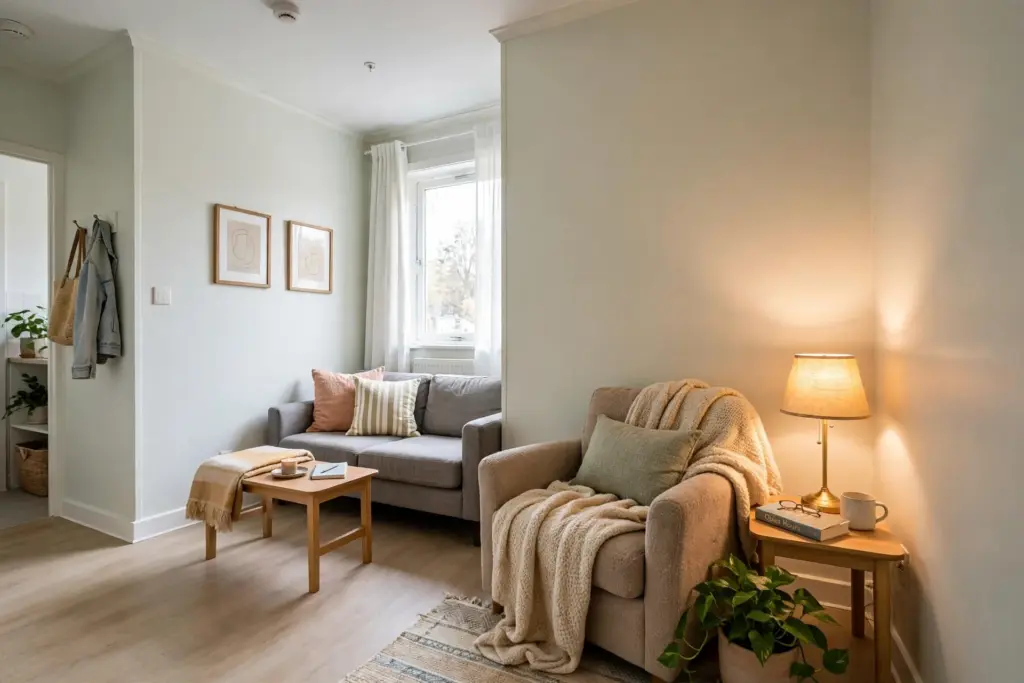
Among these small apartment reading nook ideas, the finishing layer is one throw, one cushion, one small rug, and one plant — enough to make the corner inviting, and stopped before it becomes storage with a chair in it. A throw over the chair arm, a cushion for the lower back, a rug marking the boundary, and a healthy plant beside the table are the whole layer. Anything more turns the nook back into clutter.
Build a portable nook kit for rooms that cannot spare a corner
The fourteenth idea is for apartments where no corner can be claimed at all. A portable kit — a basket holding the current book, a clip-on book light, a folded throw, and a small cushion — turns any chair into a nook for an hour, then packs away. It is not as good as a claimed corner, but it protects the habit, with nothing to undo at move-out. For whole-room warmth, these cozy small apartment ideas layer the rest of the home.
In short: claim the dead corner, take the window side, use the hallway end, park beside the bookshelf, zone a studio with a bookcase, consider a closet only with permission, sit on floor cushions, choose a slipper chair, pick a compact armchair, light it with one warm floor lamp, keep wall lights permission-first, keep current reads in reach, finish with one layer, and carry a portable kit where no corner exists.
Frequently Asked Questions (FAQ)
How much space does a small apartment reading nook need?
A chair, a small table, and a lamp — roughly the footprint of one armchair plus a side table — is enough. The honest test is whether they fit with the walking path still clear.
Can a renter build a reading nook without drilling?
Yes. Every default idea here uses freestanding furniture and plug-in or floor lighting, with no fixings at all. Wall sconces, wall shelves, and hanging chairs are the exceptions, and they need the landlord’s permission first.
What is the best light for a reading nook?
One warm task light — a slim adjustable floor lamp, or a table lamp on an existing surface — angled onto the page from over or beside the shoulder, with a warm bulb in the 2700K to 3000K range. String lights add atmosphere but are not a reading light on their own.
Where should books live in a reading nook?
Only the current reads: a side-table stack or a small basket beside the chair. The full library belongs to a storage system elsewhere in the apartment, linked above, so the nook stays a reading corner rather than a second bookshelf.