Renter-Friendly Window Treatments: 13 No-Drill Curtains, Blinds and Shades
The best renter friendly window treatments start from what is already on the window, not from a shopping list: a bare deep frame, a set of landlord blinds that cannot come down, or a shallow frame and a steel door each need a different fix. All 13 treatments below hang by tension, adhesive, clamps, clips or magnets — no screws as the default anywhere — and the one exception is flagged permission-first. Match the window first, then choose the fabric.
Windows are also where a rental loses its finished feel fastest, which is why they sit inside the bigger plan in these renter-friendly apartment decorating ideas.
Measure First: Four Checks Before Buying Anything
Most renter friendly window treatments fail for fit reasons, not taste reasons. First, mount type: an inside mount needs a frame deep enough to hold a rod or headrail, while a shallow frame pushes the treatment onto the glass, the trim, or the wall beside it. Second, frame material and condition: tension needs two firm, parallel surfaces, adhesive needs a clean, smooth, fully dry surface, and magnets need steel. Third, what is already there: measure the headrail of any existing blinds, because clamp brackets only fit specific headrail sizes and must never be attached to a motorized track. Fourth, weight: every no-drill method has a real limit, and light to medium fabrics are the safe default. Measure the width in three places and use the narrowest figure.
If the Frame Is Deep and Bare: Tension Does the Work
A deep, empty frame is the easiest case in any rental: three treatments lock inside it, and all three leave with the tenant.
1. Hang Sheer or Light Curtains on a Tension Rod
A tension rod twists to length and presses against both sides of the frame, so a sheer or lightweight panel hangs with no hardware at all. Sheers soften glare, add daytime privacy, and keep a small room bright — the reason they suit living rooms better than heavy drapes. The limit is weight and span: an overloaded rod slips, usually at the worst moment, so keep fabrics light, extend the rod only within its stated range, and re-seat it after the first week.

2. Fit a Tension-Mount Cellular Shade for Insulation
Cellular, or honeycomb, shades trap air in their cells, which is why they are the insulating option on this list. The U.S. Department of Energy summary of cellular shade research describes how that trapped-air structure reduces heat moving through a window in both winter and summer. Tension-mount versions lock a headrail inside the frame with a lever or dial instead of screws. Choose cordless, and keep the fit snug — a loose cellular shade insulates poorly.
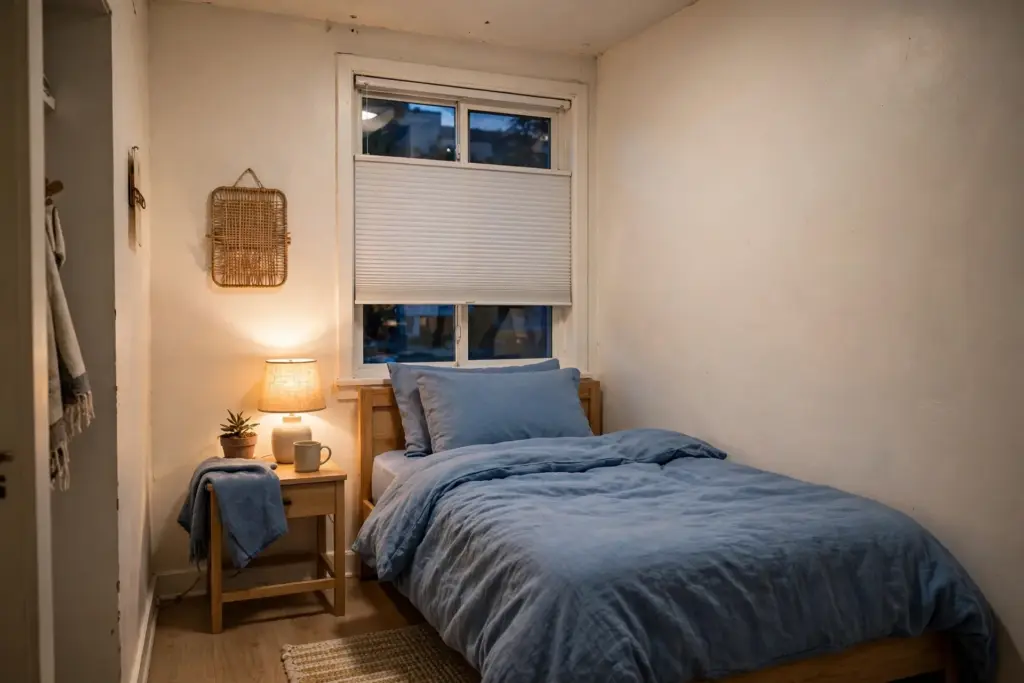
3. Choose a Tension-Fit Roller Shade for Real Darkness
For a bedroom, a tension-fit roller shade in a blackout fabric is the simplest route to a dark room: the headrail locks inside the frame, the fabric rolls away cleanly by day, and there is no stack of slats to dust. Two honest caveats: blackout describes the fabric, not the fit, so a thin line of light at each edge is normal on an inside mount; and a wide window may exceed what one tension headrail can hold, in which case two narrower shades side by side are the safer fit. Pair it with the layering trick in Idea 12 if light still leaks in.
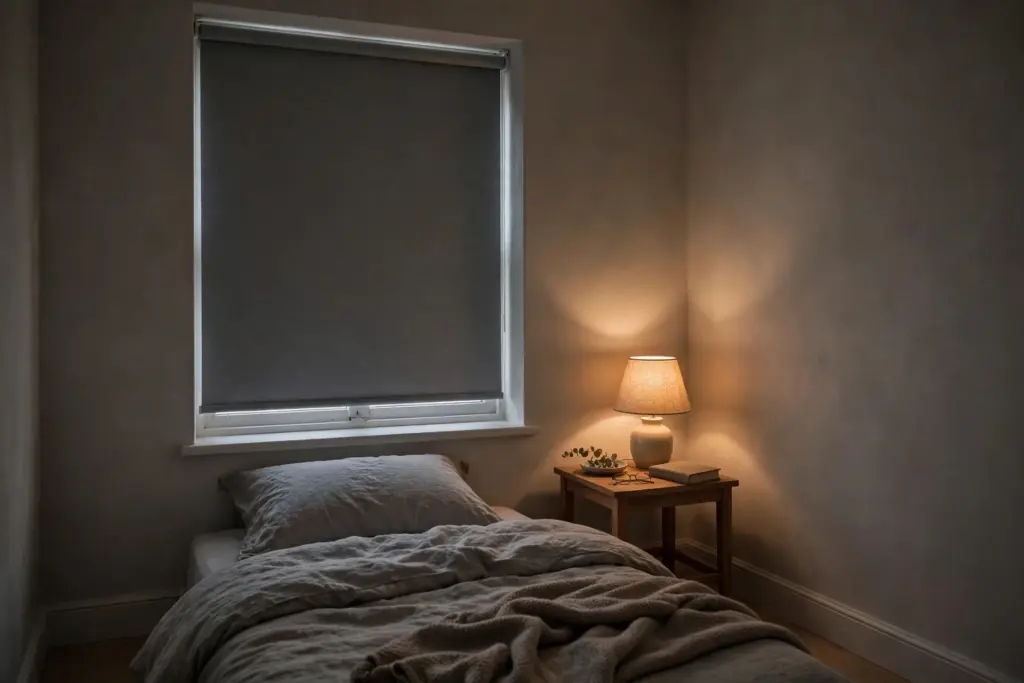
If Landlord Blinds Are Already There: Cover, Clamp, Clip
Most leases forbid removing the blinds, and storing a landlord’s blinds safely is its own risk. The better move is to work over them — the same cover-without-removing logic used for wall decor without nails.
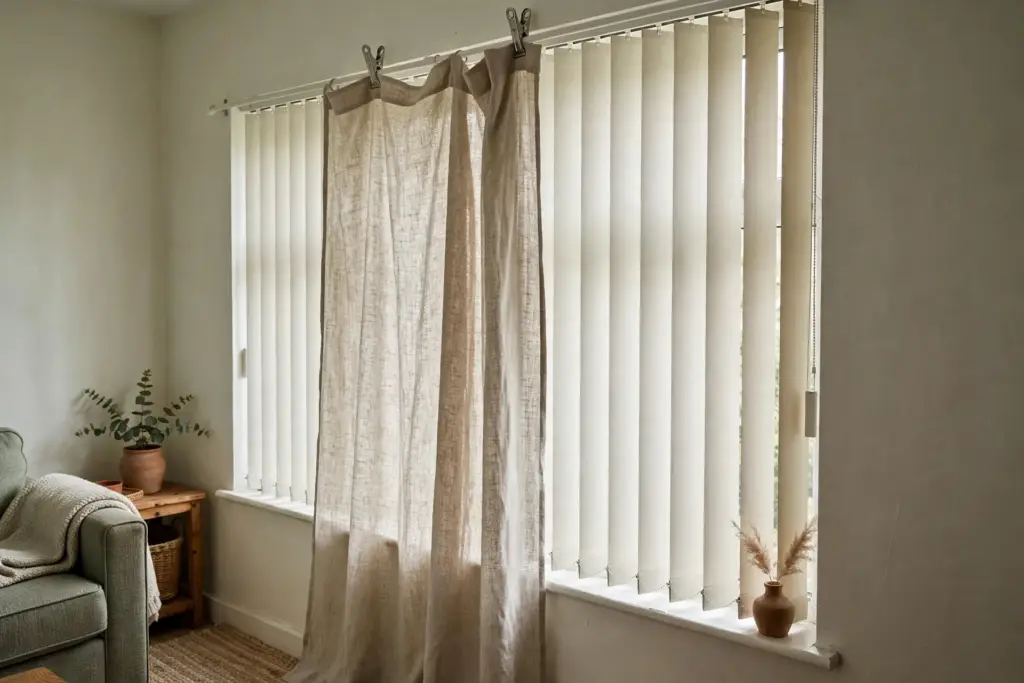
4. Clamp Brackets Onto the Headrail and Hang Curtains Over the Blinds
Clamp-on brackets grip the existing vertical-blind headrail and hold a curtain rod in front of it, so full curtains hang over the blinds and hide them completely. Fit is everything: brackets are made for specific headrail sizes, the rod adds weight the headrail was not designed around, and motorized tracks are off limits entirely. Measure the headrail, confirm the bracket’s stated fit, and keep the curtain fabric on the lighter side.
5. Clip Curtain Panels Into the Existing Blind Clips
Some vertical blinds leave spare or usable clips along the track, and a light panel can hang from those clips with curtain rings or clips — no rod at all. This is the lightest-duty option here: one panel per run of clips, sheer or linen-weight fabric only, and never so much weight that the track sags. It suits a single wide window where one softened panel already changes the room.
6. Use Tap-In Brackets on Wood Trim Only — With Permission First
Tap-in brackets press small pins into the top edge of wood trim and hold a rod without a screw hole in the wall. They are the one treatment here that is not automatically damage-free: the pins suit solid wood trim, can split thin or painted trim, and leave pin marks behind. Treat this as permission-first — ask, check the trim is real wood, and skip it entirely on metal, plastic, or fragile frames.
If the Frame Is Shallow, Smooth or Steel: Stick, Cling, Magnet
Shallow frames, glass doors and steel doors rule out tension. These five options attach to glass or metal instead, and one of them needs no frame at all.
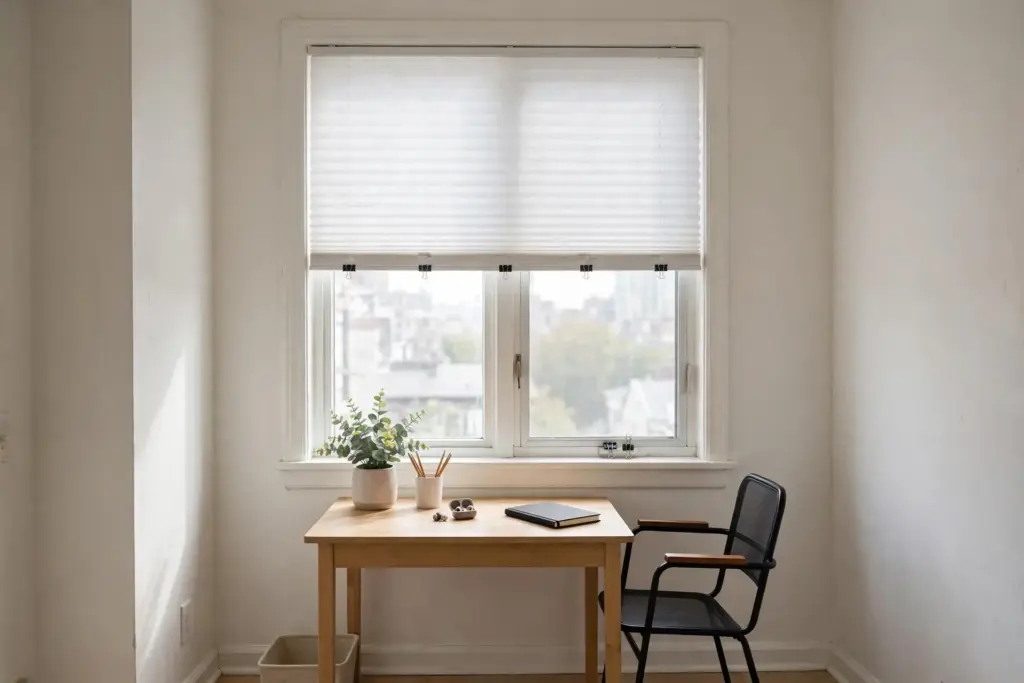
7. Trim a Peel-and-Stick Pleated Shade to Fit
Pleated paper or fabric shades trim with scissors to the exact width, then stick to the top of the frame or the glass with an adhesive strip. They are the fastest full-window fix here and the easiest to replace. Raise them with the clips most include, and expect paper versions to be shorter-term in steamy bathrooms, where adhesive and paper weaken.
8. Carry a Light Rod on Rated Adhesive Brackets
Adhesive rod brackets stick to a smooth frame or the wall just above it and carry a slim rod — the method behind many no-drill curtain setups. Success is in the prep: clean the surface, let the adhesive cure for the full stated time before hanging anything, and stay inside the rated weight — light panels, not lined drapes. Heat and humidity shorten adhesive life, so use Idea 10 in a bathroom instead.

9. Stick On Blackout Panels Where a Shade Cannot Fit
Hook-and-loop blackout panels stick around the edge of the glass or frame and press flat, sealing the edges a roller shade leaves open. They suit shift sleepers, nurseries, and odd-shaped windows, and roll up for daytime or move-out. The trade-off is looks: a panel reads as a panel, not as decor.
10. Apply Static-Cling Window Film for Privacy That Keeps the Light
Static-cling film holds to glass with water and static, no adhesive at all, so it removes in seconds and leaves nothing behind. Frosted versions give a bathroom or street-facing room privacy while the light stays — often the only problem that actually needs solving. Apply it to clean glass with plenty of water, squeegee from the center out, and trim the last fraction with the film in place. In a small room, film also protects the bright feel that the daytime half of a lighting plan depends on.

11. Use Magnetic Shades and Rods on Steel Doors and Frames
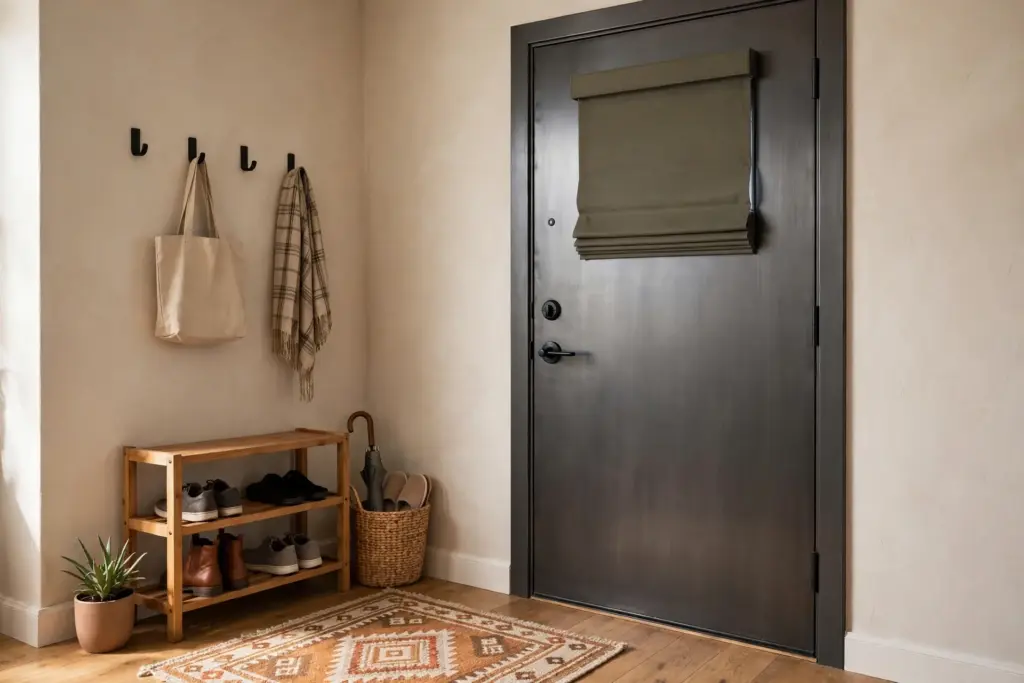
A steel entry door or metal frame is the one surface where magnets do the whole job: magnetic shades fold or roll against the door’s window, and magnetic rods hold a small curtain with no frame depth needed at all. Check the surface with any fridge magnet first — aluminum and wood will not hold. For a door facing a hallway, this is usually the fastest privacy fix available.
The Finished Look: Layer, Then Shrink the Coverage
12. Layer Curtains Over Blinds, Hung Visually High and Wide
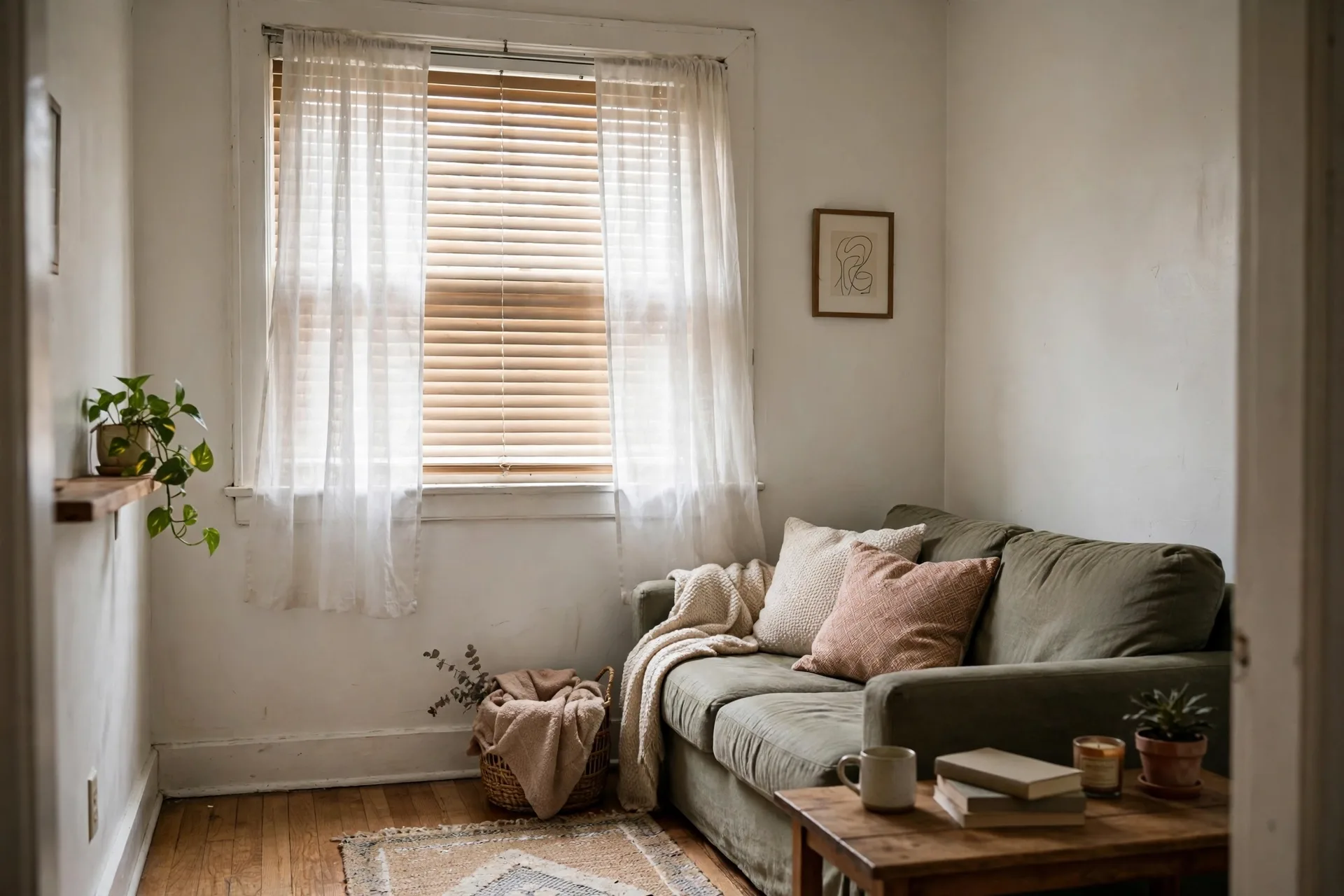
Layering is what makes a working treatment look intentional: curtains in front of blinds or a shade add the color the base layer lacks. Hang the line high and wide — panels starting above the frame and falling outside it — and the window reads larger, a trick shared with these ideas for making a small apartment look bigger. Keep the palette light in a small room, and let the blinds keep doing the light control behind the fabric.

13. Finish Kitchens and Bathrooms With a Café Curtain
A café curtain covers only the lower half of the window on a small tension or spring rod: privacy at sink and street level, open light above it. It suits a kitchen over the sink, where a full panel would crowd counters. Choose a washable fabric and a length that clears the faucet swing.

One safety rule runs through every option above: choose cordless wherever children or pets are in the home. The U.S. Consumer Product Safety Commission guidance on window covering cords recommends cordless coverings as the safest option and explains how to reduce the risk from any cords that remain. Together, these renter friendly window treatments cover every starting point a lease allows — and every one of them removes as cleanly as it went up.
FAQ: Window Treatment Questions, Answered
Will a tension rod hold blackout curtains?
Only light ones. Tension rods are built for sheer and lightweight panels; a heavy lined blackout curtain will usually slip the rod over time. For real darkness, choose a tension-fit blackout roller shade instead, and accept a thin line of light at the edges of an inside mount.
Do peel-and-stick shades and adhesive brackets damage paint or frames?
Used as directed, they are designed to remove cleanly — but the conditions matter: a clean, smooth, dry surface, the full cure time before weight goes on, and a slow peel at removal. Heat and bathroom humidity weaken adhesive sooner, so film or a tension fit is the safer bathroom choice.
How can landlord blinds be covered without removing them?
Work over them instead of around them: clamp brackets on the headrail carry a rod in front, light panels can clip into the existing track clips, and a layered curtain in front hides the blinds while they keep working behind it. Never attach anything to a motorized track.
Are cordless window treatments really safer for kids and pets?
Yes. The U.S. Consumer Product Safety Commission recommends cordless window coverings as the safest option in homes where young children are present, and advises keeping any remaining cords short, anchored, and out of reach. Most tension, adhesive, and magnetic options in this list are available cordless.
What is the best first window treatment to buy on a small budget?
Start where the problem is: a trim-to-fit pleated shade or static-cling film for privacy, a tension rod with sheers for a bare living-room window, and save the layered curtain finish for last. Fit decides success more than price does.