16 Small Entryway Storage Ideas for Apartments With No Mudroom
The best small entryway storage ideas solve one specific problem: everything needed for leaving the house — shoes, coats, keys, mail, bags — lands in the smallest, most awkward space in the apartment, often with no mudroom and no spare wall. The fix is not more furniture. It is one defined zone where each of those things has exactly one home, sized to the entry that actually exists.
Every idea below is renter-safe by default: freestanding, over-door, or adhesive within its rated weight; anything needing screws is flagged permission-first. Start with the measurements, then jump to the group that matches the entry. For the whole-apartment system, begin with these small apartment storage ideas, then come back and finish the door.
Measure First: Three Checks Before Anything Goes by the Door
Entryway pieces fail for three reasons, all measurable in five minutes. First, the door swing: open the door fully and mark its arc with painter’s tape — nothing with real depth belongs inside it. Second, the walking path: the route in must stay clear enough to pass carrying bags — aim for roughly 30 to 36 inches of clear path where the layout allows, as a comfort target, not a code figure. Third, depth: a tall 7-inch-deep cabinet stores the same shoes as a 14-inch-deep one in half the walkway. Also measure the gap above the door, and tape any new footprint on the floor for a day before buying.
If You Only Have the Door Itself
Some apartments, especially studios, have no entry wall at all: the door opens straight into the living space — the same problem the layouts in this guide to studio apartment layout ideas solve by zoning, and the door itself is the storage surface that is always available.
1. Put a Pocket Organizer on the Back of the Front Door
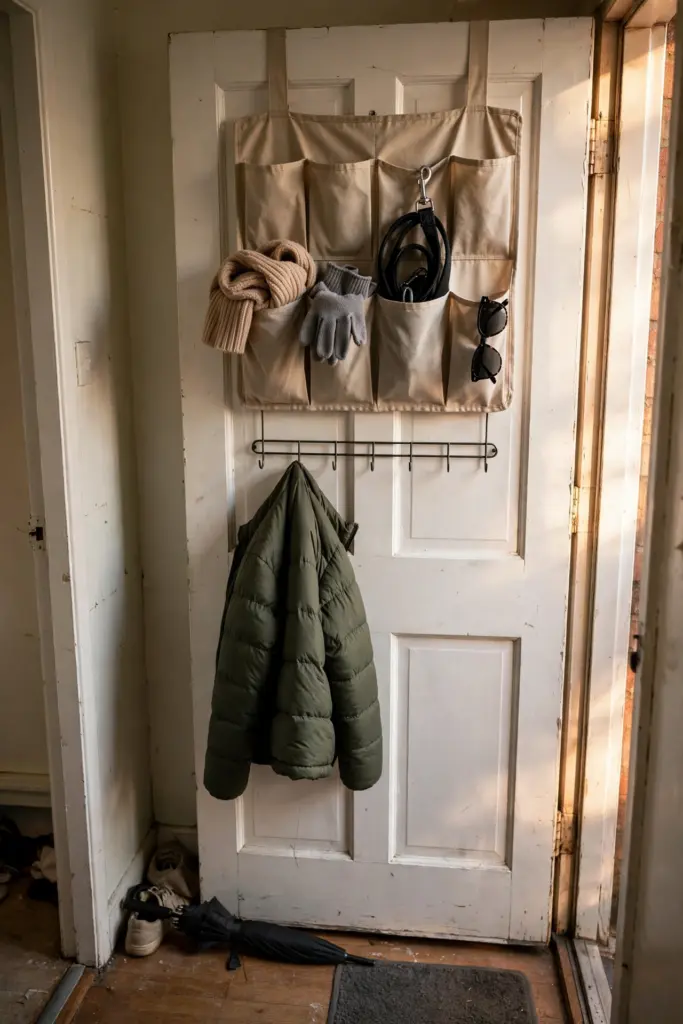
A fabric pocket organizer turns the inside face of the door into flat storage for small, losable things: gloves, a scarf, sunglasses, a dog leash. Fabric flexes as the door moves and will not scuff the door the way rigid plastic can. Assign each pocket one category — an organizer stuffed at random becomes a junk drawer that hangs.
2. Add an Over-Door Hook Rack for Coats and Bags
A metal hook rack over the top of the door carries what pockets cannot: one coat and one bag per person is a realistic load. Check the clearance above the door first, and add the felt pads most racks include where metal meets the door, since bare metal can wear paint. If the door rubs the frame with the rack on, remove it and use Idea 4 instead.
3. Let a Boot Tray Define the Floor Edge
With no wall and no closet, the floor still has one usable strip: beside the door. A lipped boot tray there gives wet shoes a hard boundary, keeps meltwater and grit off the flooring the deposit depends on. Size it for two pairs per person, daily pairs only — an overflowing tray teaches everyone to ignore it.
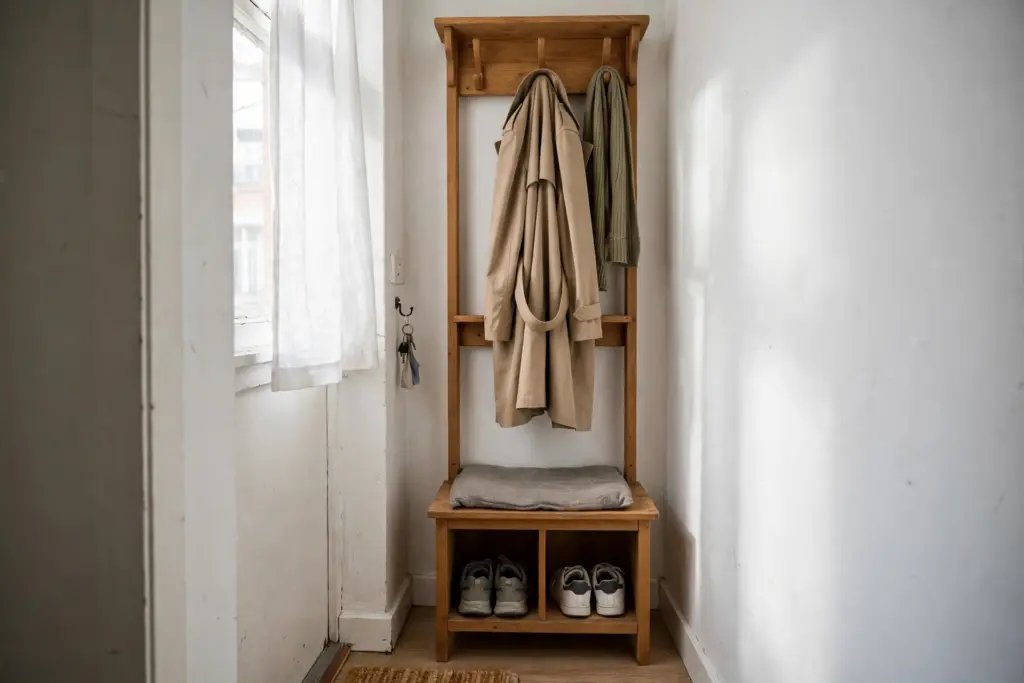
4. Stand a Slim Hall Tree in the Door-Side Corner
A freestanding hall tree packs hooks, a small seat, and shoe cubbies into one narrow footprint that needs no wall at all. Set it flush in the corner and keep the heaviest items low. The U.S. Consumer Product Safety Commission’s furniture tip-over safety guidance explains why unsecured tall furniture is a genuine hazard. Anchoring means a screw, so it is permission-first; without permission, choose a wide-based, low design.
If You Have a Narrow Hall: Depth Decides Everything
A narrow hall fails when storage spreads across the floor. All four ideas here follow one rule: slim against the wall, or vertical above it.
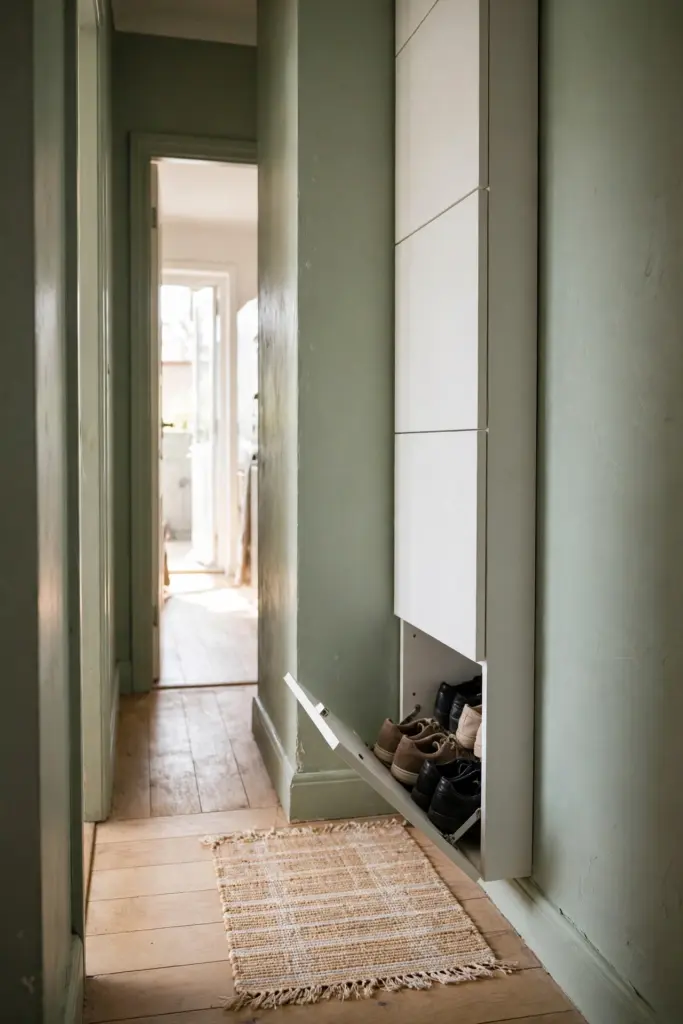
5. Choose a Tipping Shoe Cabinet, Not a Deep One
A tipping, or tilt-out, shoe cabinet stores shoes in compartments that pivot open, so the unit can be far slimmer than a regular cabinet — many models are roughly 6 to 8 inches deep, though sizes vary, so check the listed dimensions against the taped walkway. Most are designed to be fixed to the wall for stability — a screw, so permission-first. Ask, or choose a heavier freestanding design loaded lowest-first.
6. Or Run a Slim Two-Tier Rack Along the Wall
The open alternative is a narrow two-tier shoe rack hugging the wall — two tiers are the practical ceiling, daily pairs only, nothing stacked on top. It should hold a pair heel-to-toe without toes in the walkway — and resist the third tier, which turns a rack into a leaning tower.
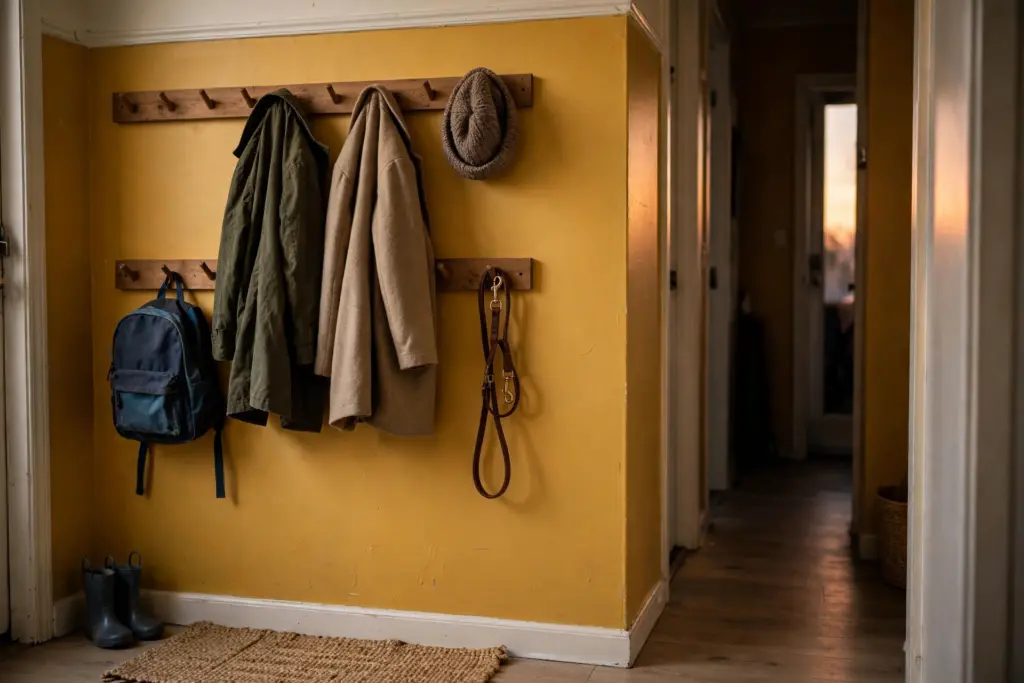
7. Hang One Peg Rail System at Two Heights
A peg rail turns a blank hall wall into adjustable storage, with hooks that move as seasons change. Run the main rail at adult shoulder height for coats, plus a lower section for a child’s backpack or a dog leash. Adhesive hooks are fine for light items within the manufacturer’s rated weight — a wet winter coat weighs far more than it looks — while a screwed rail is stronger and needs written permission first.
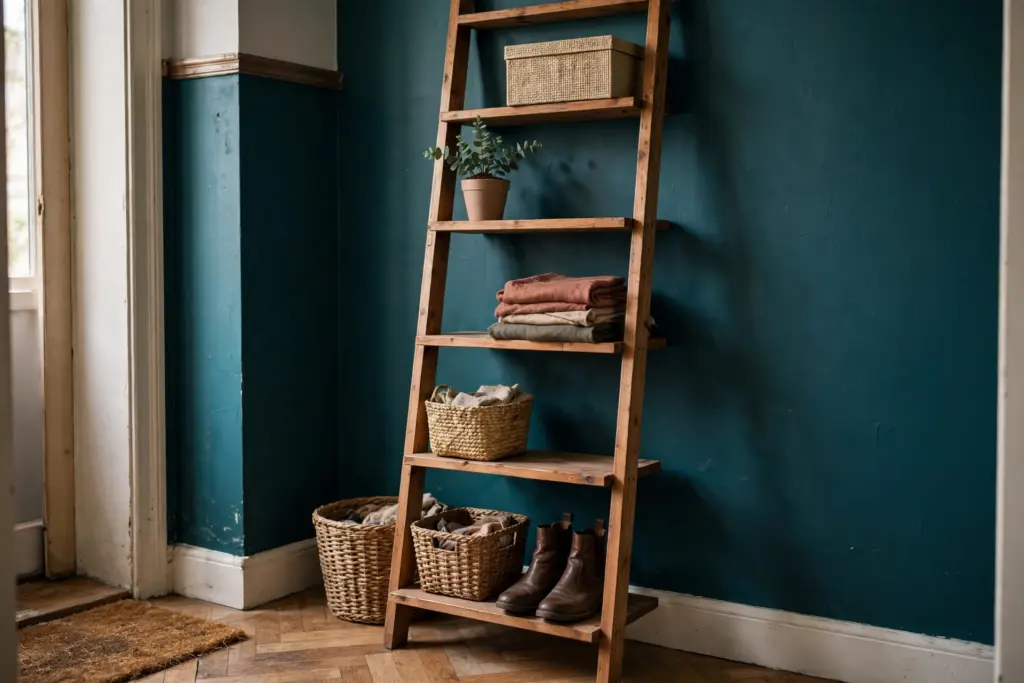
8. Lean a Narrow Ladder Shelf Against the Wall
A leaning ladder shelf adds vertical storage where a bookcase would be too deep: baskets on the wide lower shelves, lighter boxes and one plant higher up. Protect the wall with the pads the shelf ships with, and keep the heaviest basket on the bottom shelf so the lean stays stable. It simply leans — nothing to undo at move-out.
If You Have One Short Wall: Build a Real Drop Zone
A short wall — even four or five feet — can hold the complete landing strip most small entryway storage ideas are really describing: one surface for keys and mail, hooks above it, shoes below it, nothing anywhere else.
9. Give Keys and Mail One Landing Strip
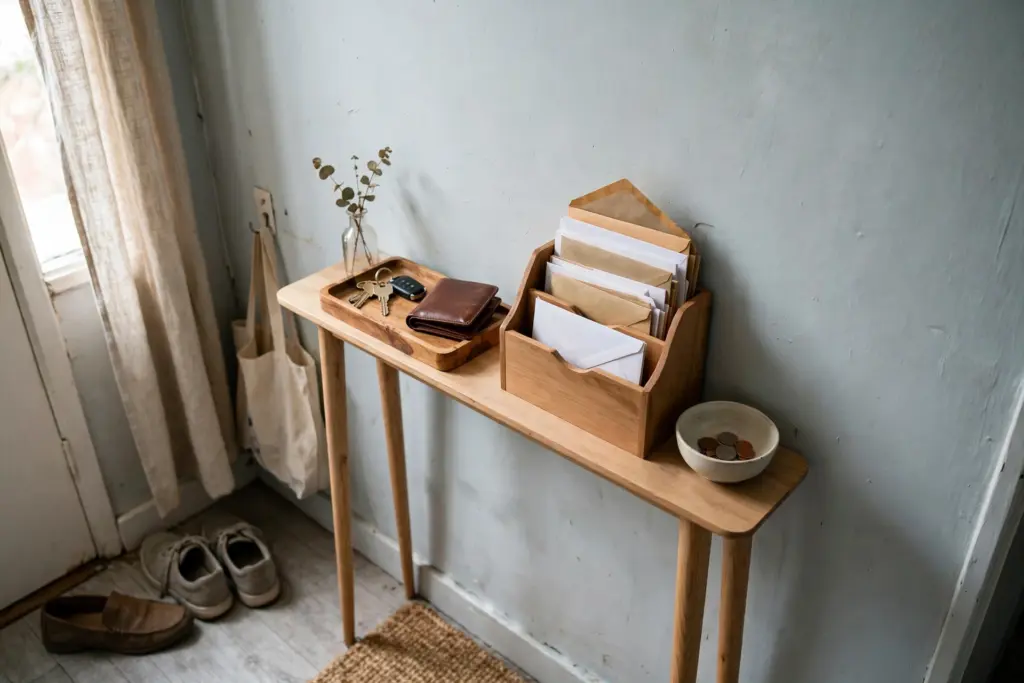
Start with a slim surface: a narrow console or small shelf unit that fits the taped footprint. Its job is specific — the one place keys, wallet, and mail land. Once it also holds tools, cosmetics, and loose paper, it stops being a landing strip and becomes a clutter shelf.
10. Cap the Surface at Two Containers
On that surface, allow exactly two containers: a tray or shallow bowl for keys and small daily items, and one upright sorter for mail. Mail is the entry’s fastest flood, so give it a rule too: junk goes straight to recycling on the way in, and the sorter gets emptied weekly. Two containers is a cap — a third is how a drop zone becomes a storage unit.
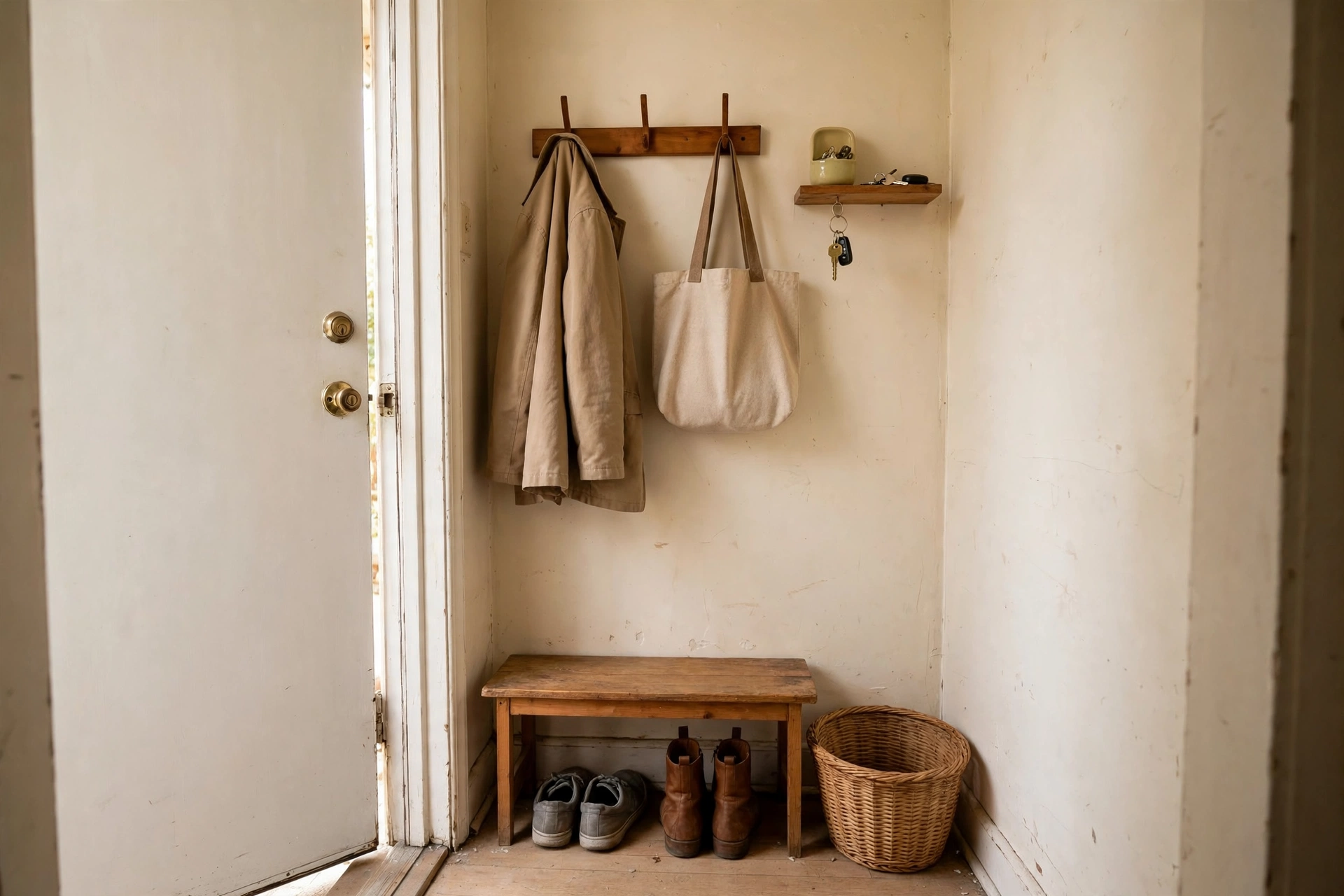
11. Slide a Storage Bench Under the Hooks
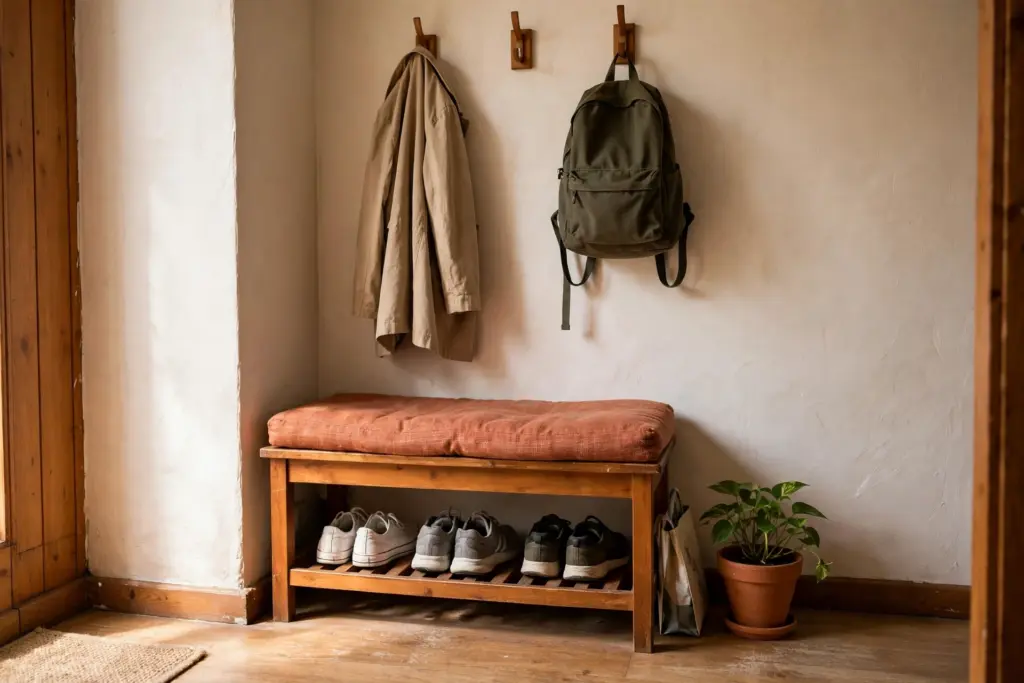
If the walkway check allows the depth, a storage bench under a hook row is the hardest-working combination here: a seat for putting on shoes, a shelf or cubbies underneath for the pairs, and hooks above for coats. Measure seated depth as well as storage depth — a bench too deep to sit on comfortably will be climbed over, not used. Add a cushion, or it becomes one more surface for bags.
12. Finish With a Mirror That Has a Shelf
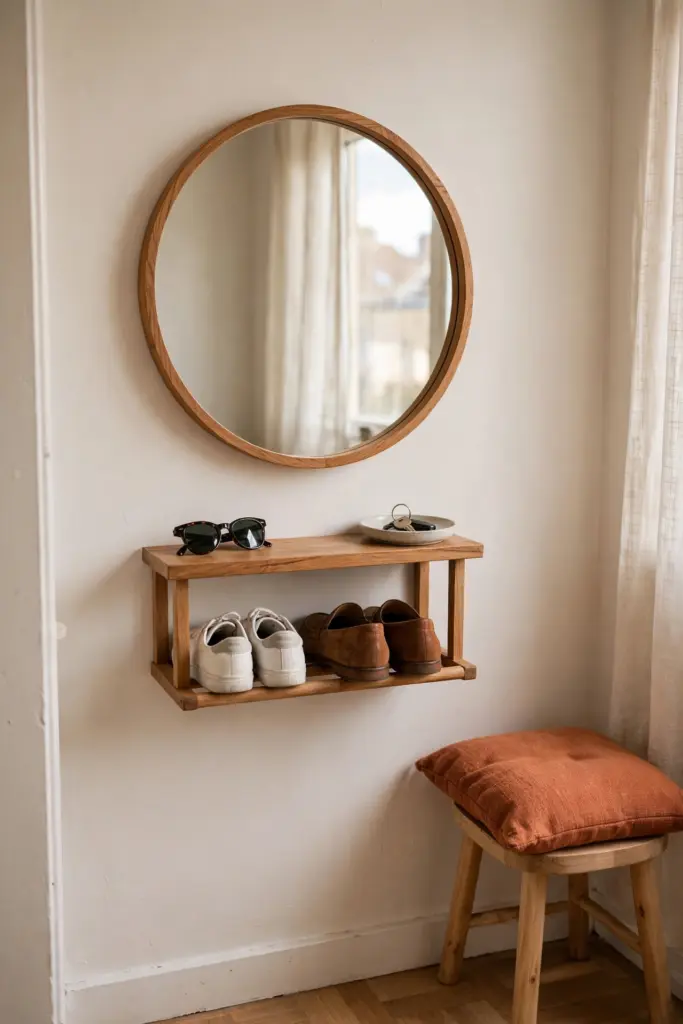
A mirror above the drop zone earns its place three ways: a last outfit check, a small shelf underneath for sunglasses and keys, and extra light, since it bounces daylight into a hall with no window. The U.S. Department of Energy’s daylighting guidance covers how placement changes the light a room receives. A small, light mirror can hang from adhesive strips rated well above its weight on smooth paint; anything heavy belongs on a landlord-approved hook, or leaning on the console.
Keep the Zone From Flooding: The Daily-Only Rule
Every entry here stays tidy only while one rule holds: only items used daily live at the door. The last four ideas enforce that boundary.
13. Assign One Basket per Category
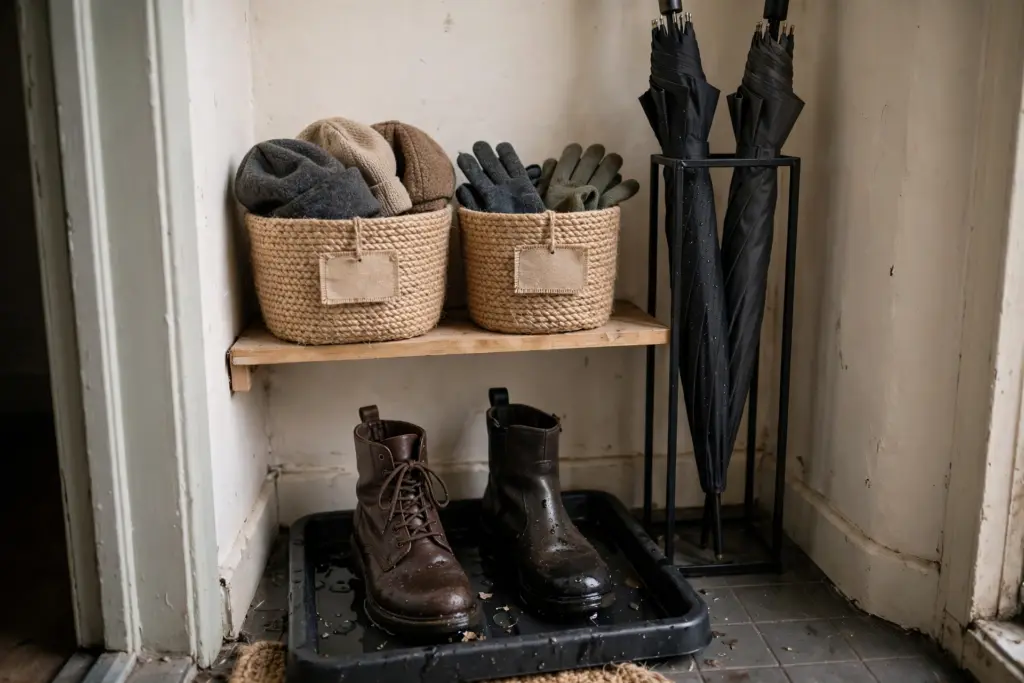
Loose small gear — hats and gloves, leashes and pet supplies, reusable bags — gets one basket each, sized to the category and no bigger. The basket is the limit: when it is full, a pair moves out rather than a second basket appearing. Labels sound fussy and work anyway — everyone returns things without thinking.
14. Stand Wet Gear in One Slim Umbrella Stand
Umbrellas and wet boots create the entry’s worst mess because they arrive dripping and get dropped by the door. A tall, slim umbrella stand beside the boot tray gives wet gear one vertical home, and a drip tray underneath protects the floor.
15. Keep an Outgoing Basket by the Door
Half of entry clutter is not arriving — it is leaving, and never left: returns, library books, donations. One outgoing basket by the door collects all of it, and its contents leave on the next trip out. Without it, outgoing items migrate onto the console, the bench, and the floor.
16. Send Seasonal Overflow to the Closet, Not the Entry
The entry holds the current season only. Off-season coats, boots, and scarves rotate into the bedroom closet, on a schedule tied to the weather. That rotation only works if the closet itself has a system, which is what this step-by-step closet organization plan provides. With overflow given somewhere to go, a two-minute reset returns the entry to clear every evening.
FAQ: Entryway Storage Questions, Answered
How is an entryway created in an apartment with no entry at all?
Define the zone instead of building it: a boot tray marks the floor, over-door storage handles coats and small gear, and one landing surface holds keys and mail. Start with small entryway storage ideas that use the door itself, then add a hall tree or bench only where the measurements allow.
Will over-door hooks damage the door?
They can scuff paint along the top edge if bare metal rubs, which is why the pads matter, and they only work if the door has clearance above it to close with the rack in place. Pad every contact point and keep the load to one coat or bag per hook.
How much clear space should be kept by the front door?
The door must open fully, and the path in should stay comfortable to walk with bags in hand — roughly 30 to 36 inches of clear width is a practical target where the layout allows. Tape the swing arc and any new footprint on the floor for a day before buying.
What should be bought first on a small budget?
In this order: a boot tray for shoes and water, door or hook storage for coats, a tray and sorter for keys and mail, and only then furniture such as a bench or cabinet.
That is the system behind these small entryway storage ideas: measure the swing and the walkway, give the door a job, keep every piece slim or vertical, and let only daily gear live in the zone. Start with the tray and shoe containment, and add the rest only where the measurements say they fit. More fixes are collected in the entryway storage category as it grows.