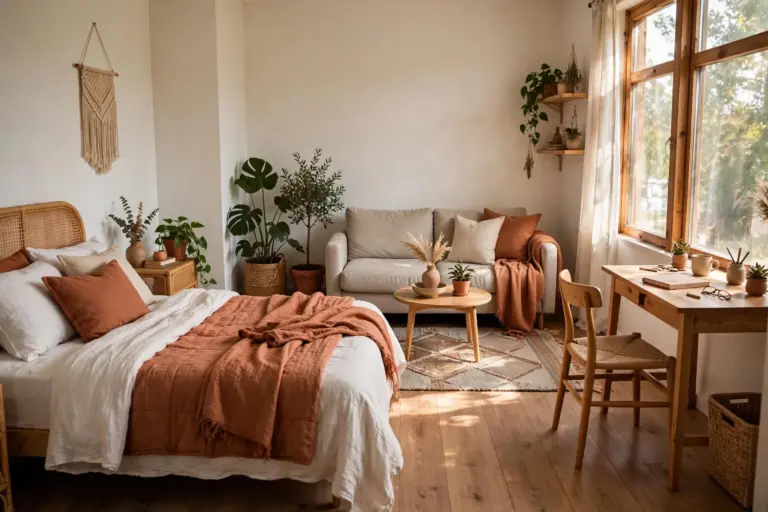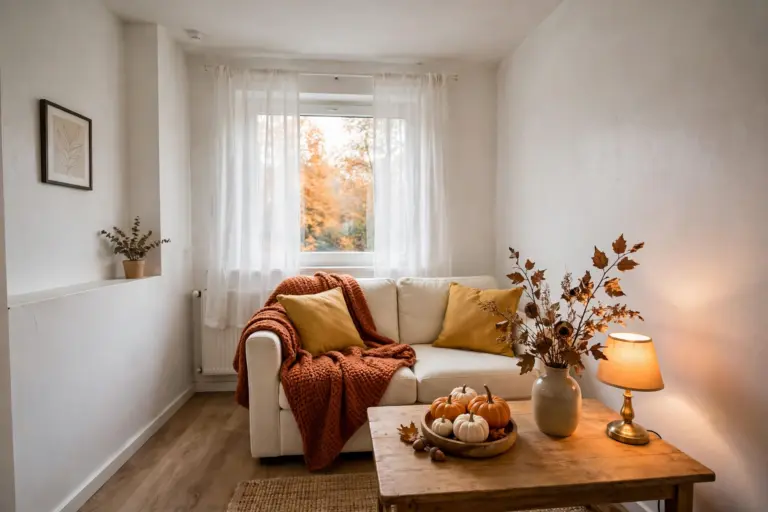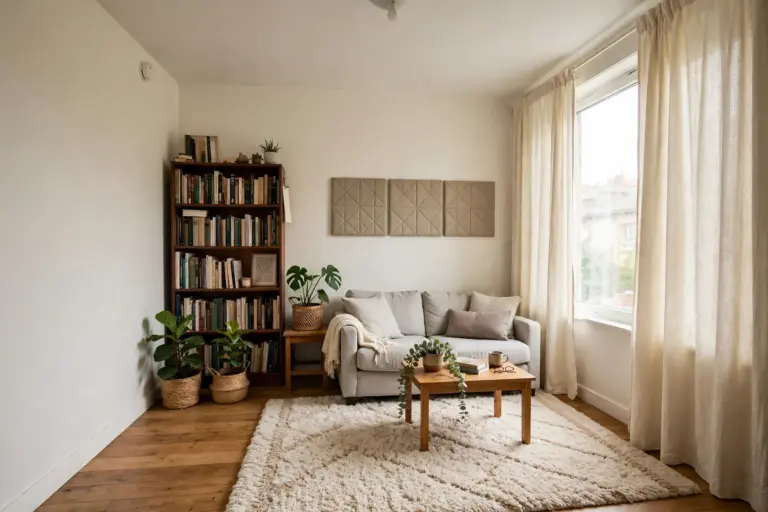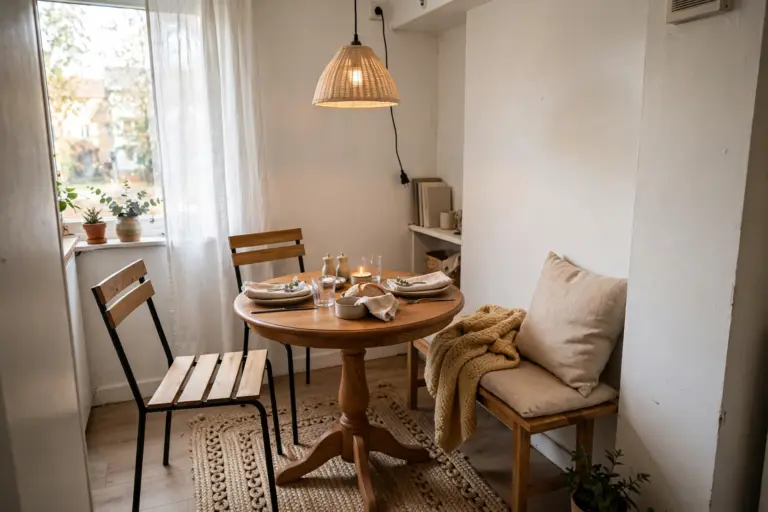
Dog-Friendly Small Apartment Ideas
These dog friendly small apartment ideas are built around zones your dog will actually use: one place to come in muddy, one quiet place to sleep, one tidy place to eat, and one place to play — instead of dog gear spread across every room. A small apartment does not need more space for a dog; it needs clearer space. When every dog need has a named zone, the dog settles faster, the flat stays tidier, and the deposit is easier to protect, because mud, hair, and chewed corners stop wandering into rooms that were never meant for them.
The order below follows the dog’s day: come in, rest, eat, live on the furniture, store the gear, burn energy, and stay on the right side of the lease. Start with the entry and the sleep corner, because those two zones do the most work, then fix surfaces and storage, and finish with routines and lease rules.
Give the Dog Zones, Not the Whole Flat
A dog that owns the whole flat owns none of it: without a defined place, the dog sleeps wherever it drops, eats wherever the bowl lands, and shakes mud off wherever it enters. Zones fix that without any building work. Each zone below is one small, repeatable spot, and the dog learns it by finding the same bed, the same bowls, and the same mat in the same place every day.
The entry zone: mud stops at the door
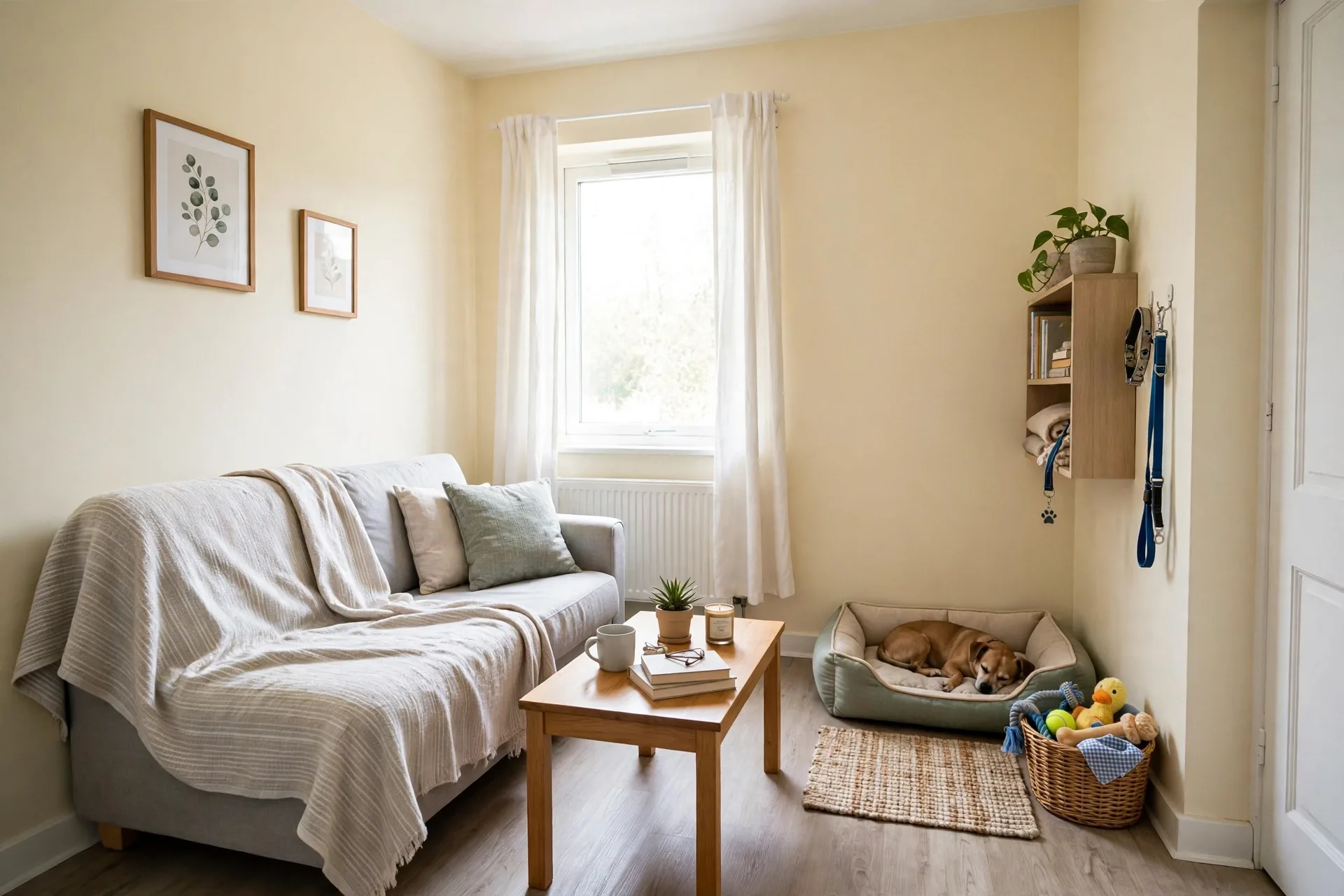
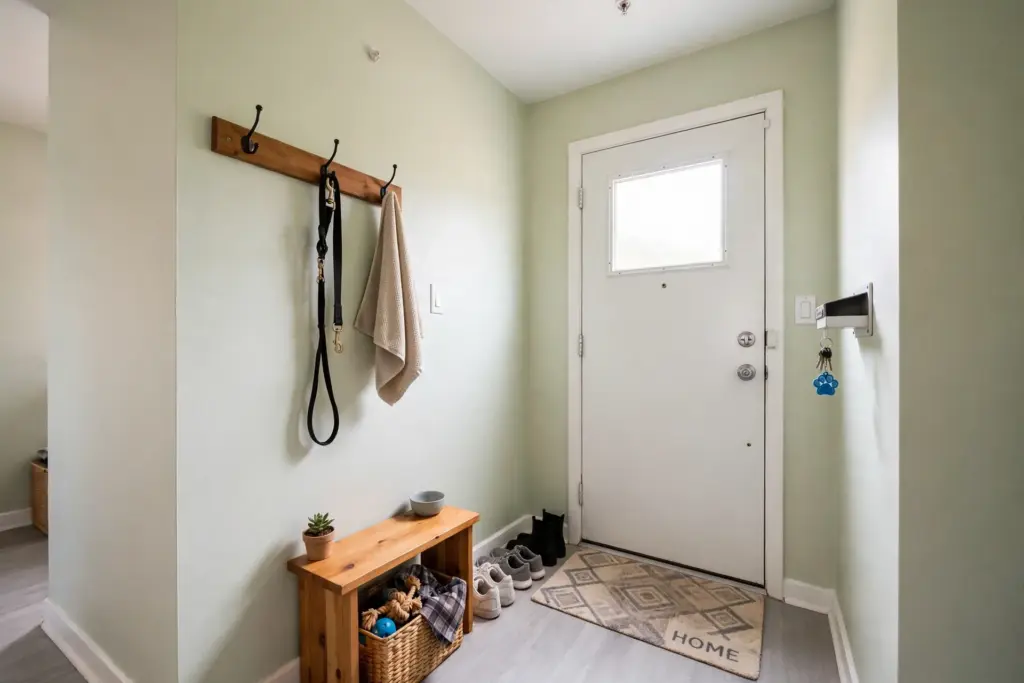
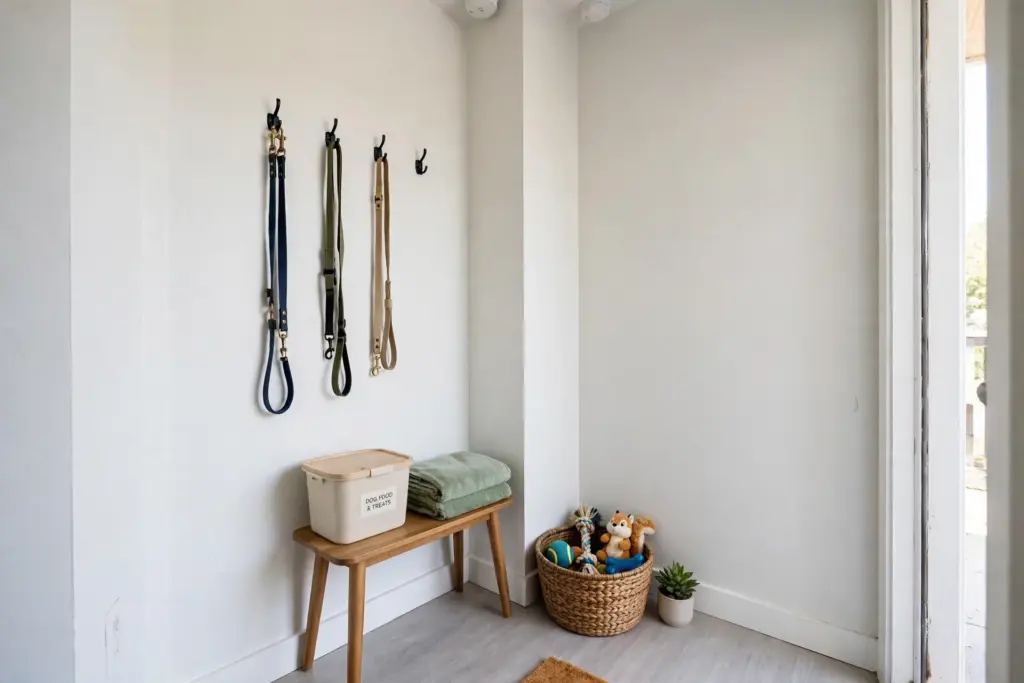
The entry is where a small apartment with a dog either stays clean or does not. A washable mat by the door, a towel on a hook, and a leash hook within reach turn coming home into a two-minute routine: paws wiped on the mat, towel used when it rains, leash hung up instead of dropped on the floor. A small bench with a basket underneath holds the towel, the spare leash, and the waste bags, so the entry never becomes a pile. Hooks deserve one renter caution: screw-in wall hooks need the landlord’s permission where the lease restricts fixings, so the renter-safe defaults are over-door hooks, a freestanding coat rack, or an adhesive hook tested in a hidden spot first. The station in the photo works either way — the routine matters more than how the hook is fixed.
The sleep zone: a quiet corner, not a hallway
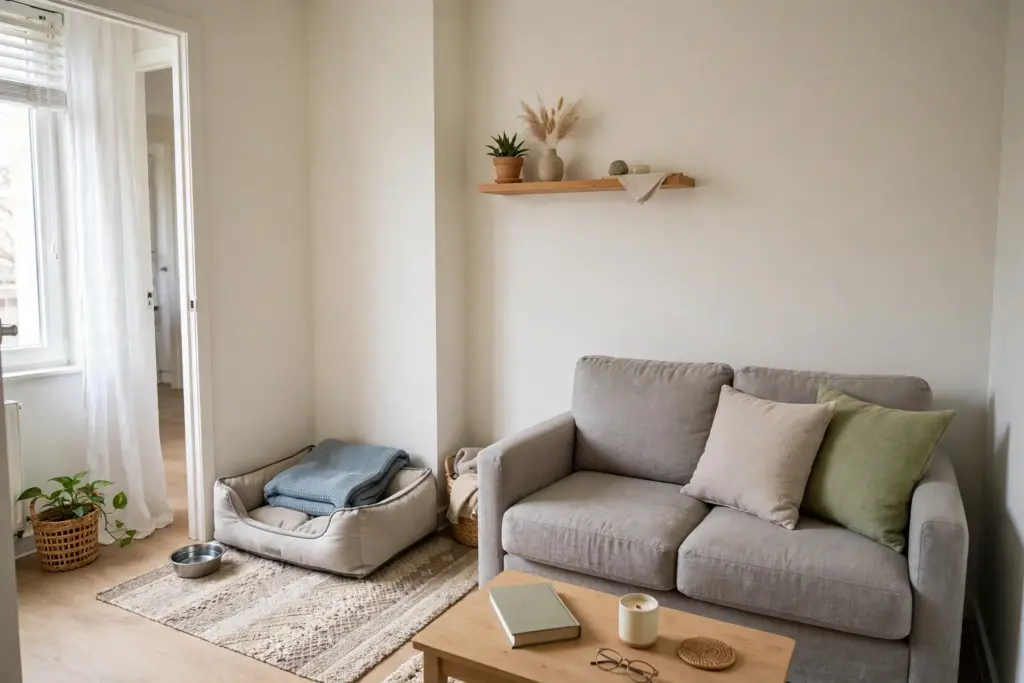
A dog’s bed belongs in a low-traffic corner away from the front door and away from shared walls where possible — not in a hallway people walk through, and not beside a door that bangs. A washable bed with a washable cover is the whole purchase: the cover goes in the laundry, the bed stays, and the corner stays clean. Keep one familiar blanket on the bed and resist moving it around the flat; a bed that stays put becomes the dog’s retreat when the flat gets noisy, and a bed that moves every week never does. A crate works the same way for dogs that like one, with the door left open so it reads as a den, not a cage — and a crate cover is optional, not a requirement.
The feeding zone: bowls on a mat, food in one place
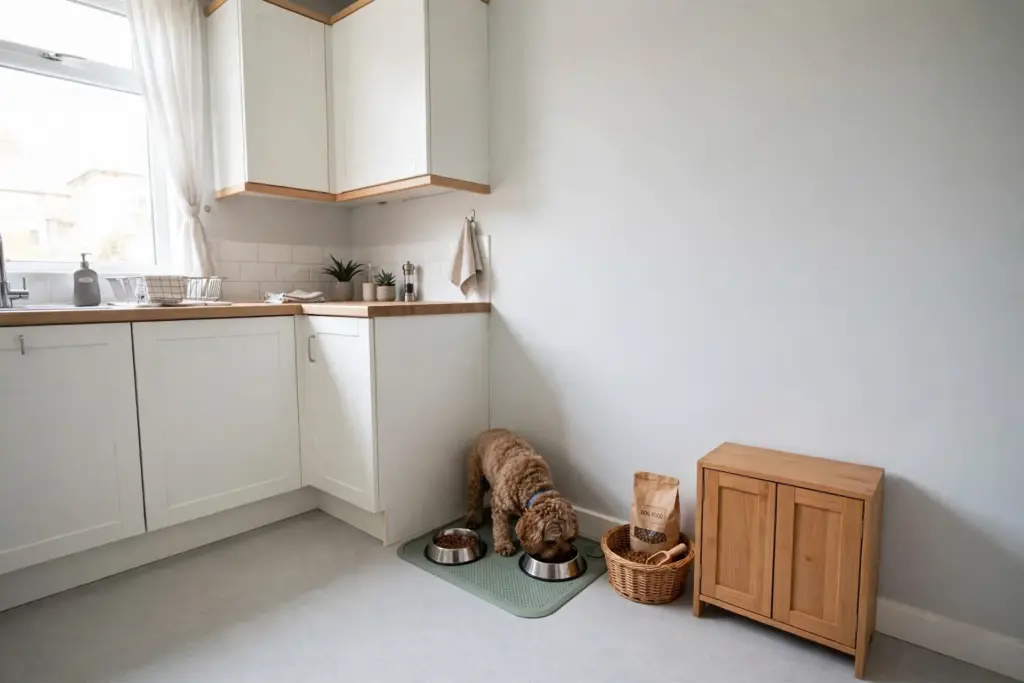
Feeding belongs in one kitchen corner, on a washable mat that catches spills before they reach the floor. Two bowls — food and water — on the mat, with the food bag or bin in a basket or cabinet right beside them, keep the whole routine in one square of floor. Pick the food bowl up between meals where that suits the dog’s feeding plan, and wipe the mat as part of the kitchen routine, not as a separate chore. The water bowl stays down: dogs should normally have continuous access to fresh, clean drinking water unless a veterinarian advises otherwise. The corner in the photo gets the details right: bowls on a mat, food stored beside them, and nothing else in the zone to knock over. Dogs that eat fast or guard food are a separate question — a slow-feeder bowl or a vet’s advice belongs in that conversation, and this guide does not pretend a mat solves it.
Choose Surfaces a Dog Can Actually Live On
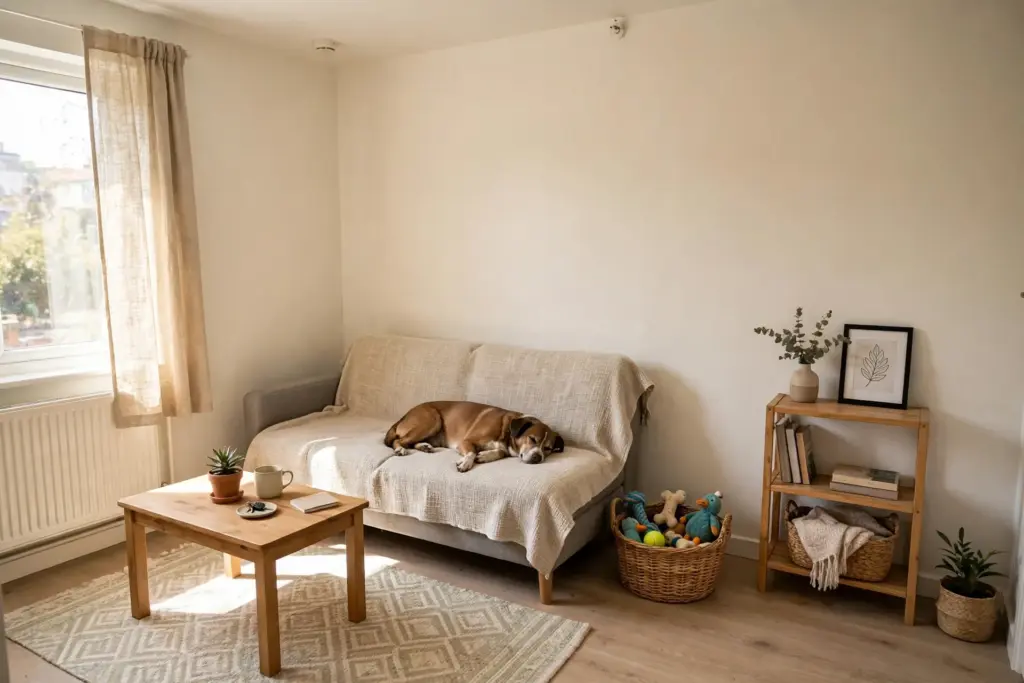
Among dog friendly small apartment ideas, surfaces matter most after zones. Small apartments punish the wrong surface choice faster than large homes do, because the dog is always on the same sofa, the same rug, and the same floor. The renter rule is washable first, precious never: a washable throw over the sofa, a washable rug under the dog’s zone, and hard flooring left bare where the lease already provides it. Leather and tightly woven synthetics wipe cleaner than loose weaves, and a throw that comes off in one pull beats a sofa cover that needs a fight to remove. When guests come, the throw comes off and the sofa underneath is the sofa the landlord saw at move-in.
Two surface habits protect the deposit more than any product. First, keep nails trimmed and paws wiped — scratched floors and muddy prints are the two dog marks landlords notice first, and both are routine, not renovation. Second, keep cords, plants, and small objects out of chewing range, and for tall furniture, follow the manufacturer’s safety instructions and the landlord’s and lease requirements: where anchoring is allowed, anchor it, and where it is not, prefer stable, low freestanding storage instead of leaving tall furniture unsecured. A tall bookcase a dog can bump is a safety question first and a deposit question second. For the wider storage systems that keep the rest of the flat tidy, these small apartment storage ideas cover the same give-everything-a-home discipline, and the dog’s gear follows it exactly.
Store All the Gear in One Place
Dog gear multiplies quietly: leashes, harnesses, waste bags, grooming tools, treats, toys, towels, and the spare collar. In a small flat, that pile needs one home, or it becomes the flat. A basket by the entry holds the toys the dog actually plays with, a lidded bin on a bench holds food and treats, and the leashes hang on the entry hooks from the first zone. Rotate the toys rather than displaying all of them: a basket with five toys the dog uses beats a basket with twenty the dog ignores, and rotation keeps old toys interesting without buying more. The same discipline works for the cat-owning neighbours of this guide — these cat friendly small apartment ideas use the same zone logic for litter-box hiding and perches, and the two guides pair well for multi-pet flats.
Burn Energy Indoors and Keep the Neighbours Happy
A small apartment dog still needs to move, and the flat alone rarely provides it. Walks are the foundation — the daily routine, not the emergency outlet — and indoor play fills the gaps: puzzle feeders, snuffle mats, short training games, and a game of tug on the washable rug all burn energy without needing a yard. A tired dog is often a quieter neighbour, and in an apartment that matters as much as exercise: barking travels through shared walls, and a dog left alone for long stretches without enrichment is the dog most likely to bark, chew, and scratch. Exercise and enrichment can help with some barking, but fear, separation-related distress, and environmental triggers may need different support — take ongoing barking to a trainer or a vet. Soft furnishings help twice here — rugs, throws, and upholstered furniture absorb some sound as well as comfort — and these renter friendly soundproofing ideas cover the wider noise question, from heavy curtains to white noise, without any permanent work.
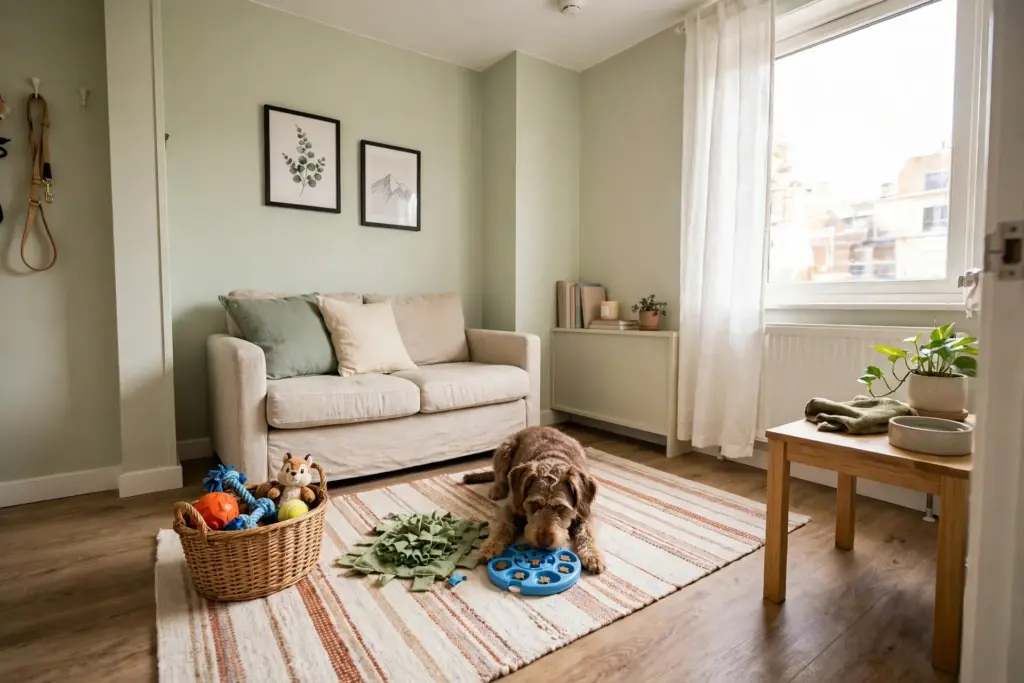
Be honest about the limits: indoor enrichment is a supplement, not a substitute for walks, and a high-energy dog in a studio still needs outdoor time every day. DogVills’ apartment guide makes the same point — the secret is making the space work for the dog, with a dedicated place to rest and indoor exercise options — while Bernie’s small-space guide stresses the dedicated zone and the walk routine as the two foundations. If the dog’s energy consistently exceeds what the flat and the walks provide, that is a routine question to take to a trainer or a vet, not a furniture problem.
Lease, Pet Policy, and Deposit: Read Before You Buy
Every zone in this guide is renter-friendly by design — freestanding furniture, washable layers, and no fixings beyond the hook caution above — but the lease still comes first. Read the pet clause before buying anything: some leases restrict breeds, sizes, or numbers of pets, some charge a pet deposit or monthly pet fee, and some require written permission even where pets are allowed. Those terms vary by lease and by location, so this guide states no figure and no universal rule — the reader’s own lease and any written landlord confirmation are the only sources that count. Photograph the flat’s condition at move-in, keep the photos, and repeat the entry, floor, and sofa checks at move-out: a dog zone that washes clean is the best deposit argument a renter can make, and a dated photo set is the second best.
In short, dog friendly small apartment ideas come down to four zones your dog will use — entry, sleep, feeding, and play — on washable surfaces, with all the gear in one place, energy burned indoors and outdoors, and the lease read before anything is bought. Build the entry and the sleep corner first, and the rest of the flat follows: a dog that knows where it belongs is a dog that stops belonging everywhere.
Frequently Asked Questions (FAQ)
Can a dog be happy in a small apartment?
Yes, when the dog has defined zones, a daily walk routine, and indoor enrichment. Space alone does not make a dog happy — routine, rest, and exercise do, and a small flat with all three beats a large home without them.
Where should a dog’s bed go in a small apartment?
In a low-traffic corner away from the front door and shared walls where possible, with a washable bed and cover that stay in the same spot. A bed that never moves becomes the dog’s retreat.
How do renters protect their deposit with a dog?
Use washable throws and rugs, wipe paws at the entry, keep nails trimmed, photograph the flat at move-in, and read the pet clause first. Pet deposits and fees vary by lease, so the reader’s own lease is the only figure that counts.
What if my dog barks when left alone in an apartment?
Start with routine: walks, indoor enrichment, and a settled sleep zone, plus soft furnishings that absorb some sound. If barking continues, take it to a trainer or a vet — it is a behaviour and routine question, not a furniture problem.