14 Small Apartment Laundry Ideas: Drying and Storage Without a Laundry Room
No laundry room does not mean laundry has to take over the apartment. In most small rentals, wash day fails for one simple reason: there is no system for the four stages every load passes through — collecting, washing, drying and putting away. These small apartment laundry ideas fix each stage with pieces that fold, roll or hang flat, so the setup appears on laundry day and disappears the rest of the week. Every default here is freestanding and lease-safe, with nothing plumbed in and nothing screwed into a wall. Ideas that need permission are flagged honestly, so you can check your lease before spending anything.
Collect and Sort: Stop the Floor Pile Before It Starts
Sorting should happen when clothes come off, not in a heap the night before wash day. A small sorting station turns a chaotic chore into a ten-minute routine, and it takes less space than most people expect.
1. Use a slim divided hamper that fits a gap, not a room
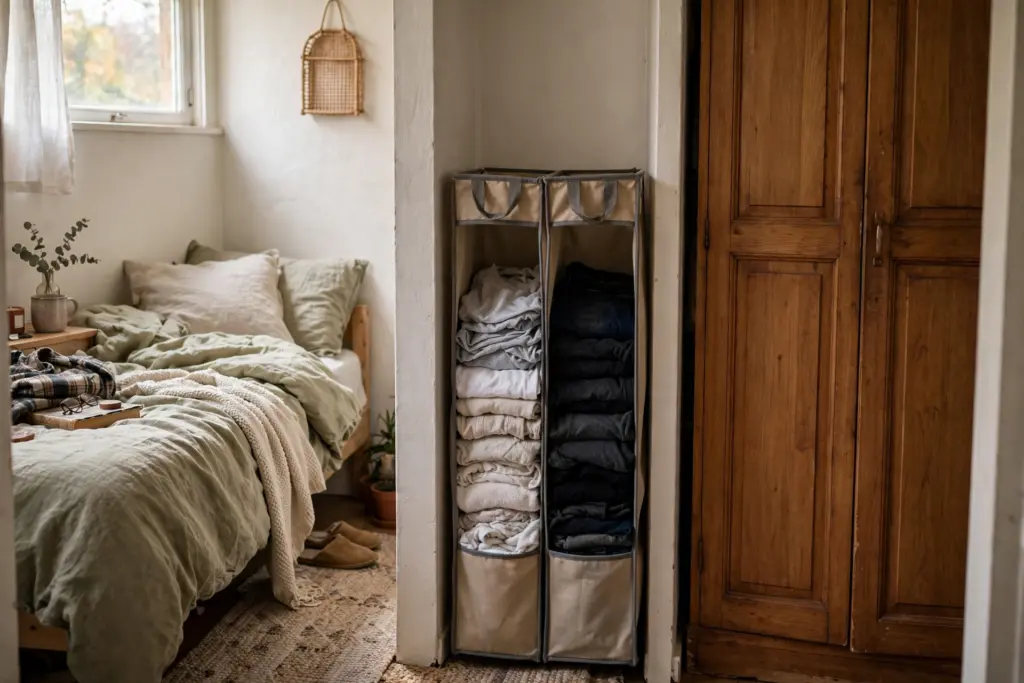
Choose a tall, narrow hamper with two sections — lights and darks — and slide it into the gap beside a wardrobe, behind a bedroom door or at the end of a hallway. Sorting at the hamper means laundry day starts with the loads already made. Measure the gap first: a hamper that is two inches too wide becomes floor clutter instead of storage, which is the same measure-first rule behind most small apartment storage ideas.
2. Add a small delicates bag system
Keep two mesh wash bags hanging on hooks inside the closet door: one for delicates, one for socks and small items. Small items go straight into a bag when they come off, so nothing vanishes between the hamper and the machine, and delicates never get tangled into a heavy load by mistake.
3. Keep a stain kit where clothes come off
A stain stick and a small spray bottle live in a pocket on the hamper or in the top drawer nearby, not in the kitchen. Treating a stain when the item goes into the hamper takes seconds; hunting for the spray on wash day is how stains get forgotten and set. Keep all laundry chemicals together and away from food storage, and out of reach of children and pets.
Wash: Work With the Setup Your Building Actually Has
Most renters have one of three setups: a shared building laundry room, a laundromat nearby, or no machine access at home at all. The routine matters more than the machine — small, regular loads beat one giant weekly load in every setup.
4. Run small loads more often in shared laundry
In a shared building laundry room, two smaller loads a week dry faster, fold faster and are far easier to carry than one overflowing trip. Energy guidance collected by the National Park Service from the Department of Energy makes the same efficiency point: wash full but not overloaded loads, use cold water where the fabric allows, and use a high spin so clothes enter drying with less water in them (NPS laundry practices). Set a timer and collect promptly — shared rooms only work when machines are freed on time.
5. Split the week with a hybrid routine
Wash daily smalls — underwear, gym clothes, kitchen towels — in a basin or on a quick shared-machine cycle, and take bulky items like bedding and bath towels to a laundromat or the building’s larger machines once a week. Bulky items are what overwhelm a small drying rack, so removing them from the home routine is what makes indoor drying realistic.
6. Hand-wash essentials in a basin, the simple way
For a few essentials between washes, a washing basin in the sink with a small amount of detergent, a gentle soak and a thorough rinse is enough. Roll items in a dry towel to press out water before hanging them — that one step cuts drying time noticeably. Keep hand-washing for smalls only; trying to hand-wash a whole wardrobe is how the routine collapses.
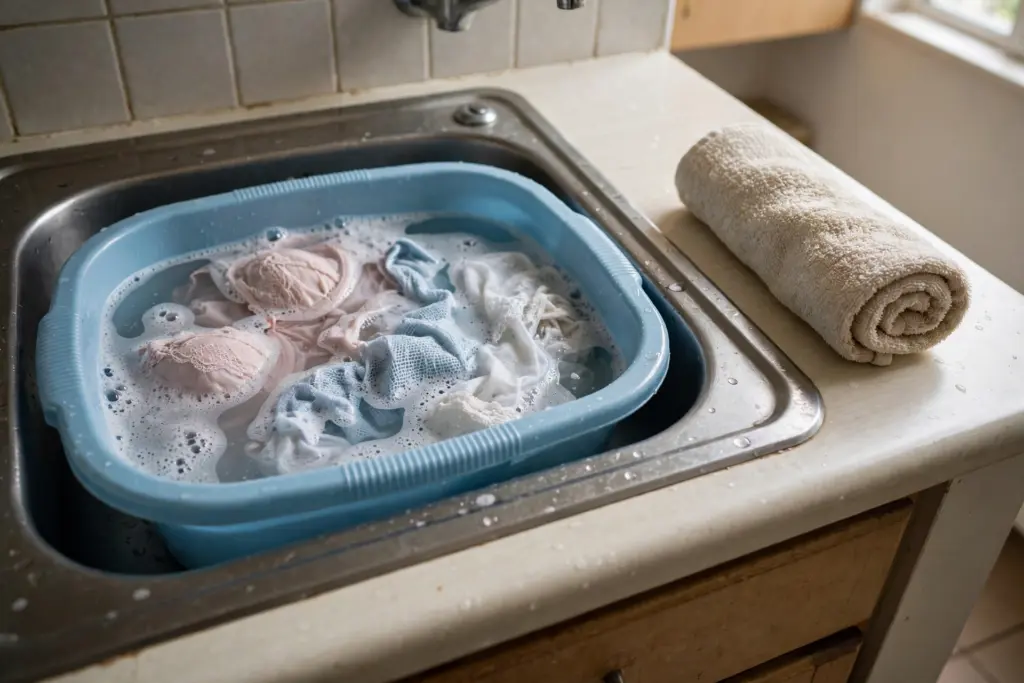
7. Treat a portable washer as a checked option, never a default
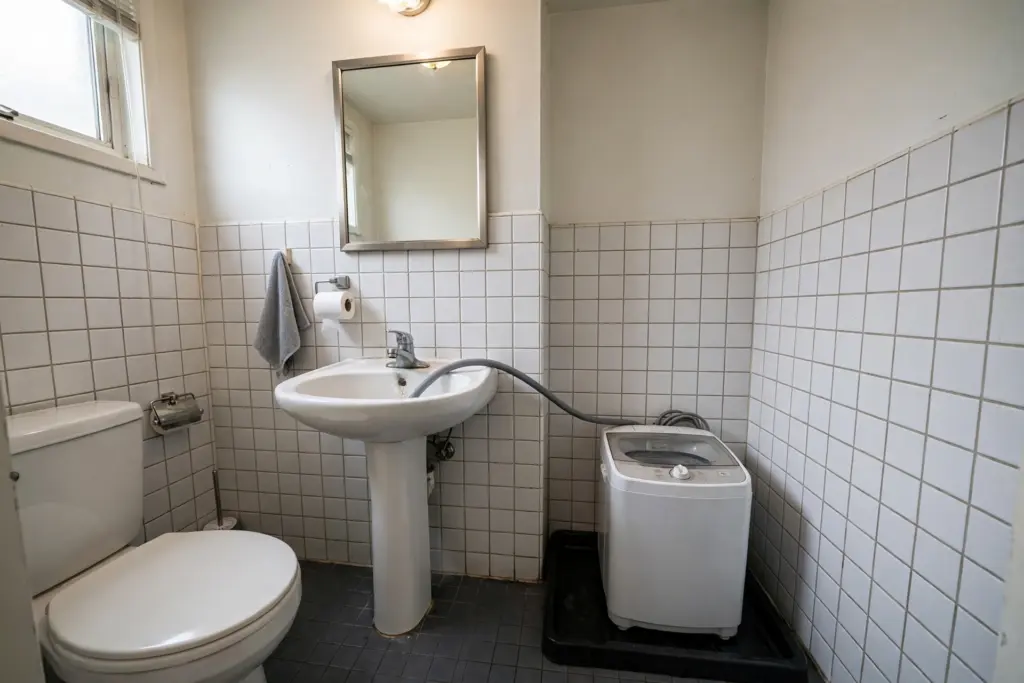
A portable washer can work in some rentals, but it is the one idea on this list that needs real caution. Many leases restrict or ban portable machines because leaks are the landlord’s core concern. Check the lease first, get written permission where it is required, sit the machine on a leak tray, place the drain hose securely before every run, follow the manufacturer’s capacity and connection instructions exactly, and never leave it running unattended. If the lease is silent or says no, the shared-laundry and hybrid routines above are the answer — do not risk a deposit over a machine.
Dry: Airflow First, Floor Space Last
Drying is the stage that usually takes over the living room. The fix is vertical, foldable drying space plus moving air — not a bigger rack left up all week.
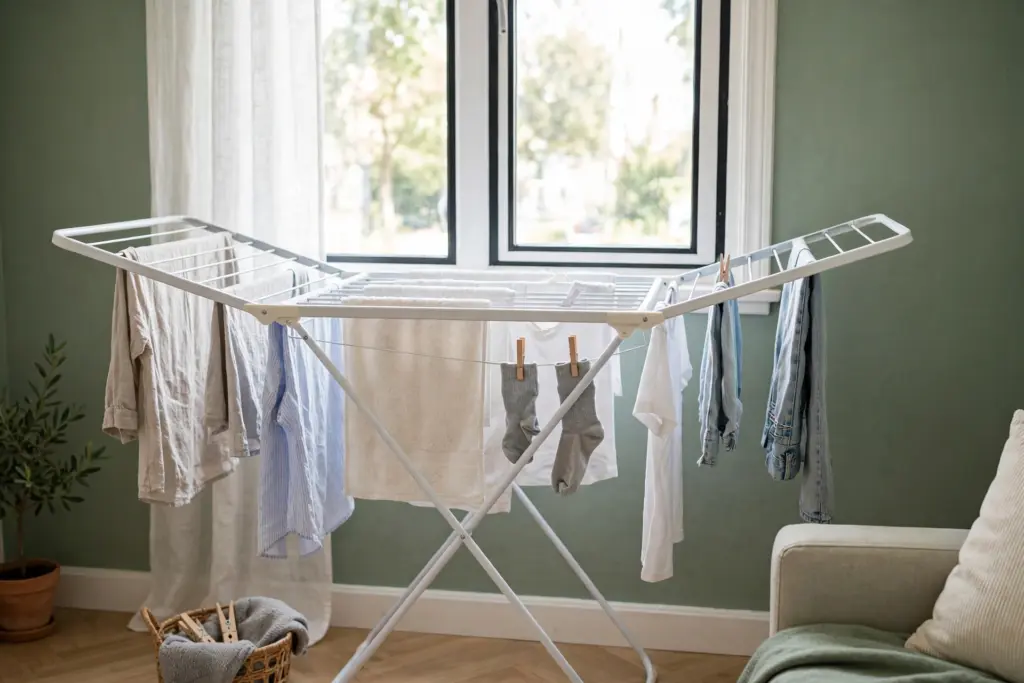
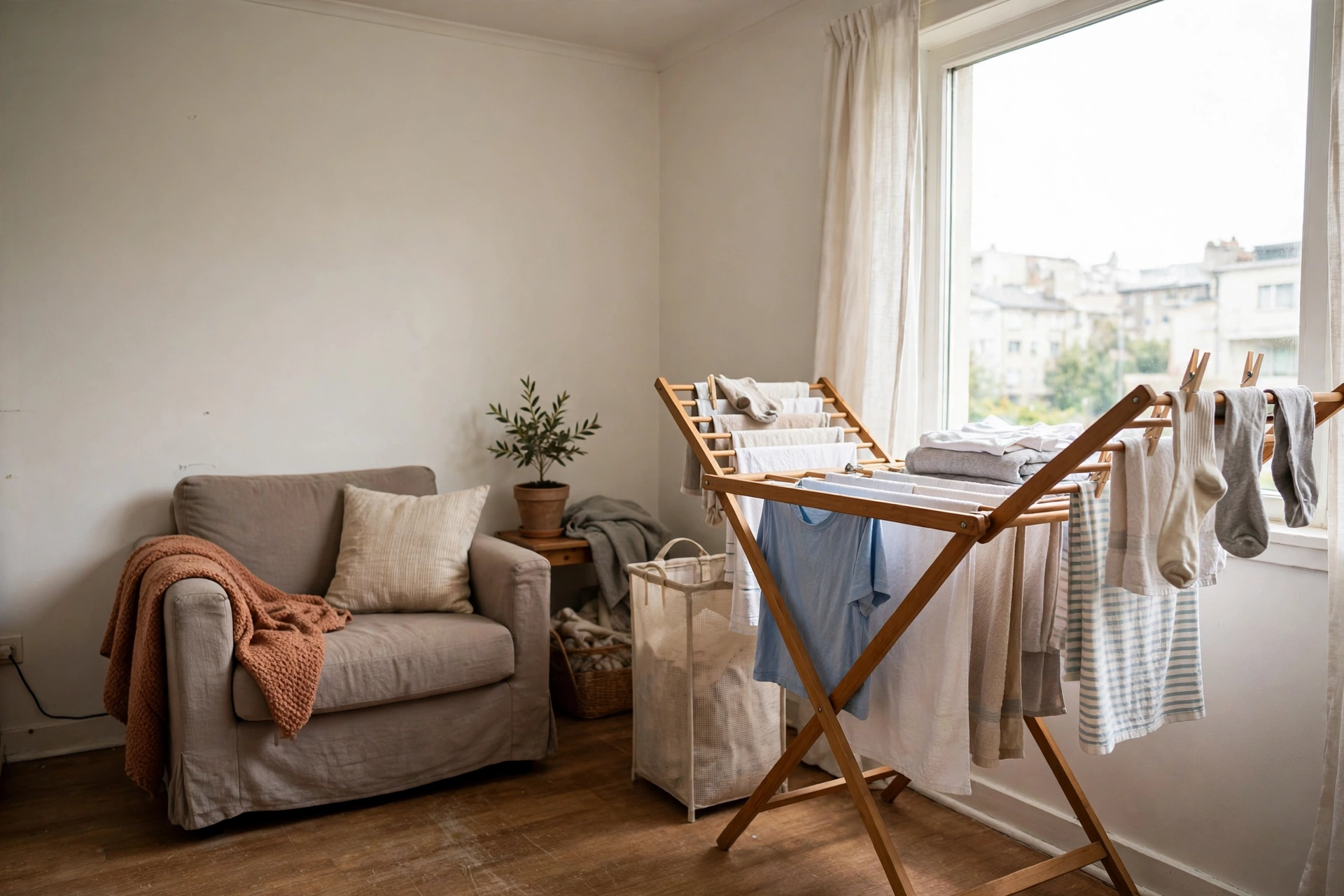
8. Choose a folding rack that stores completely flat
A winged or tiered folding rack gives a full load of hanging space and then folds flat enough to slide behind a door, beside a wardrobe or under the bed. Check the rated load before buying, keep heavier items low and spread out so the rack stays balanced, and keep it out of walkways and door swings. When it is not laundry day, the rack should be invisible — that is the test.
9. Dry with airflow, not heat
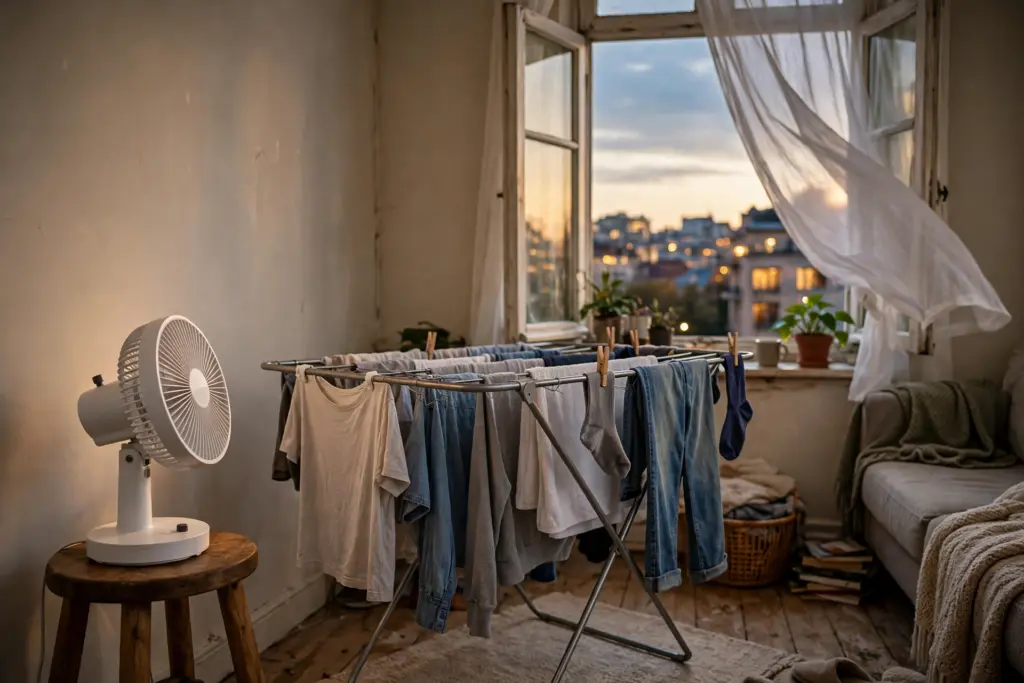
Space items on the rack with gaps between them, put the rack near an open window or a small fan on a low setting, and rotate thick items once. Airflow is what dries clothes indoors; packing a rack tight in a closed room just keeps everything damp. The EPA’s mold guidance is the reason ventilation matters here: indoor humidity should stay below 60 percent, ideally between 30 and 50 percent, so open a window, run a bathroom fan or use a small dehumidifier on big drying days (EPA guide to mold and moisture). Never drape laundry over a heater or portable heater, and never block vents or exits with a rack.
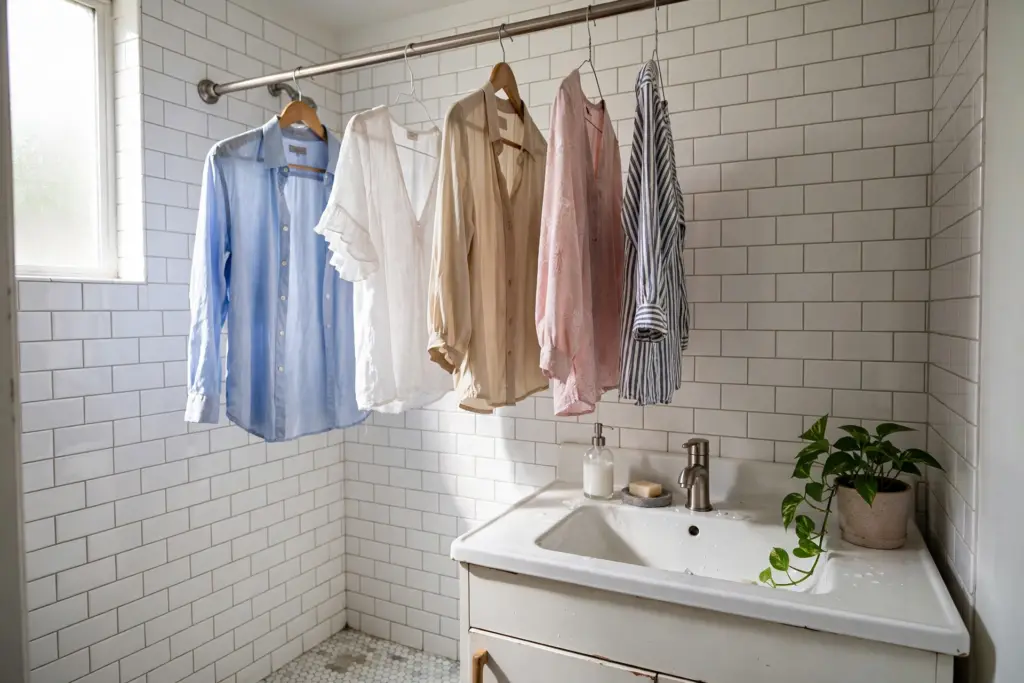
10. Hang shirts straight from the wash on hangers
Shirts, blouses and dresses dry faster and need less ironing when they go straight onto hangers. Hang them from a shower rod, a tension rod in a doorway or the rack’s top bar, with space between each hanger. In a studio, this is also where layout helps: a drying corner planned into the room works far better than a rack improvised in the middle of it, which is the zoning logic in these studio apartment layout ideas.
11. Use over-door drying for smalls
An over-door rack or a row of hooks on the back of a bathroom or closet door handles socks, washcloths and gym gear without using any floor at all. Choose a design with padding where it meets the door, check the door still closes properly, and keep the total weight modest — doors and their hinges are not shelving.
Fold and Store: Give Laundry Gear One Home
The last stage is where small apartments usually give up: clean clothes living on the rack, supplies scattered between three rooms. One folding surface and one supplies home close the loop.
12. Fold on a surface that is not the bed
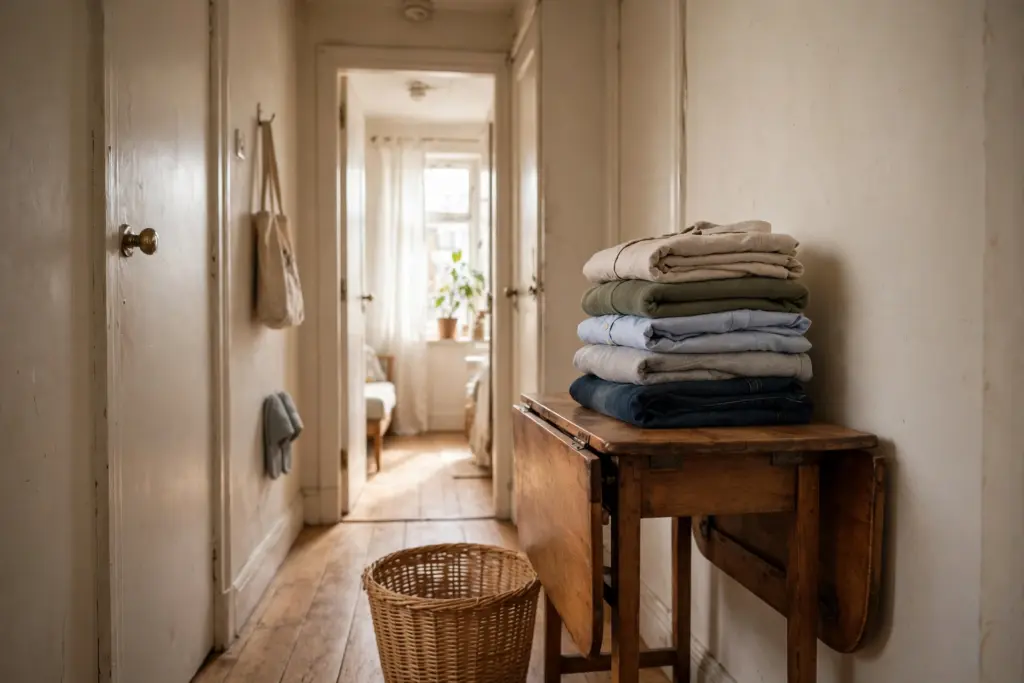
Folding on the bed turns the bed into a storage unit by bedtime. Use a drop-leaf table, a cleared desk, the top of a closed machine or a rolling cart with a flat top instead, and fold straight off the rack. Same-day put-away is the rule that keeps the rack from becoming permanent furniture: when the folding surface is clear, laundry day is officially over. This laundry zone is one of the room systems in the room-by-room small apartment organization plan.
13. Keep every supply in one slim caddy or cart
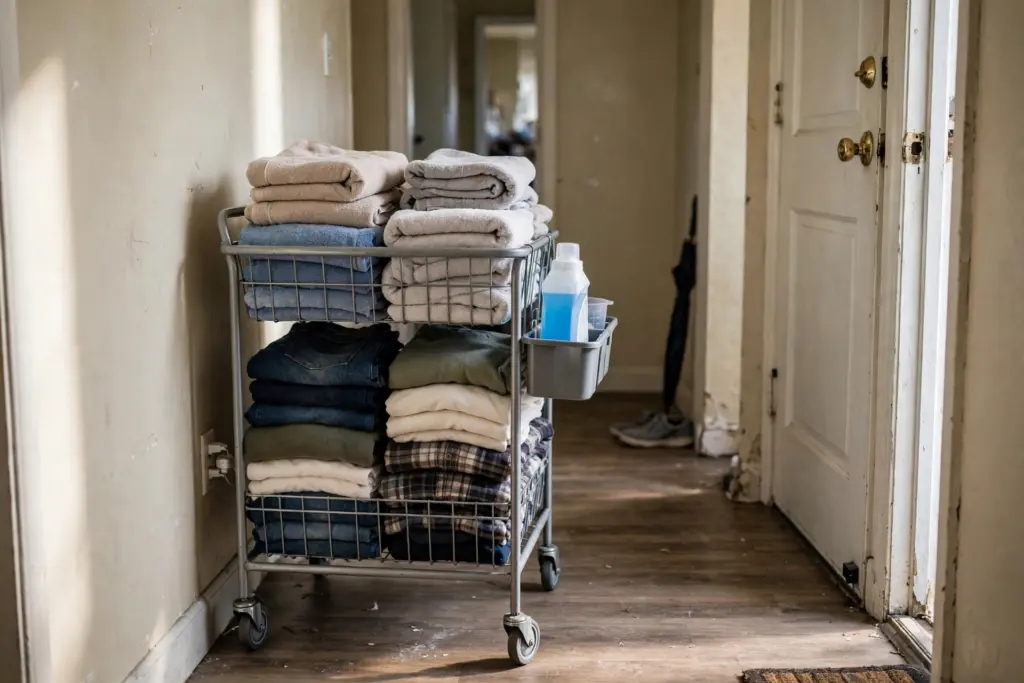
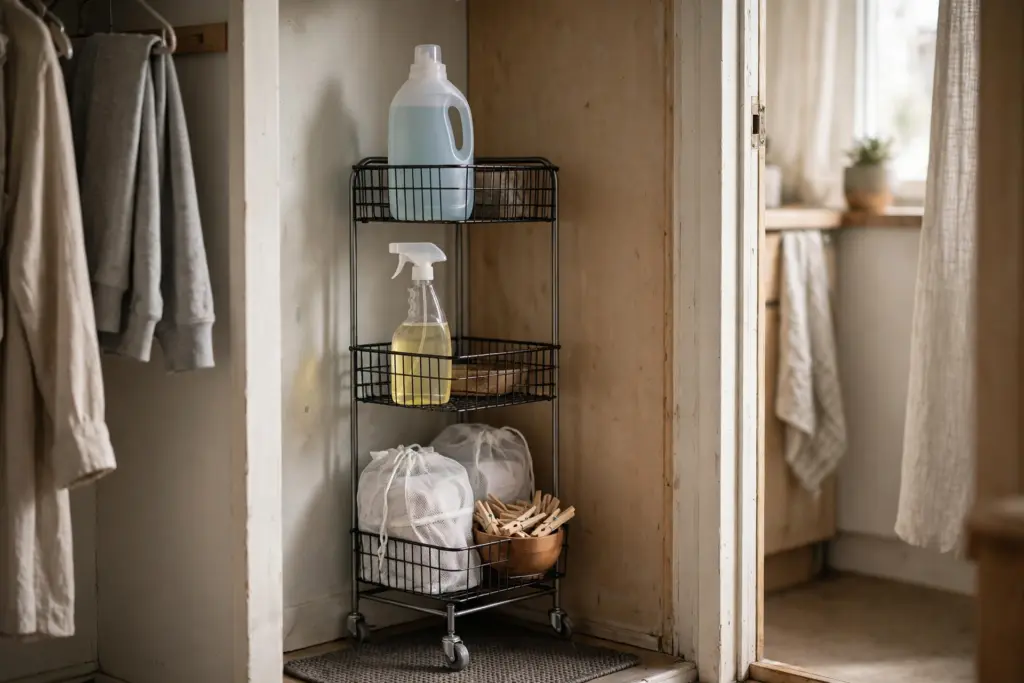
Detergent, stain treatment, mesh bags, pegs and a lint roller belong in a single slim rolling cart or handled caddy that lives in one closet or beside the hamper. One home for supplies means nothing migrates, nothing gets bought twice, and the whole kit travels to a shared laundry room in one trip. Decanting into smaller bottles can save space, but keep the original safety labels or copy the warnings onto the new bottle, and store everything away from food.
14. Store the whole system flat and together
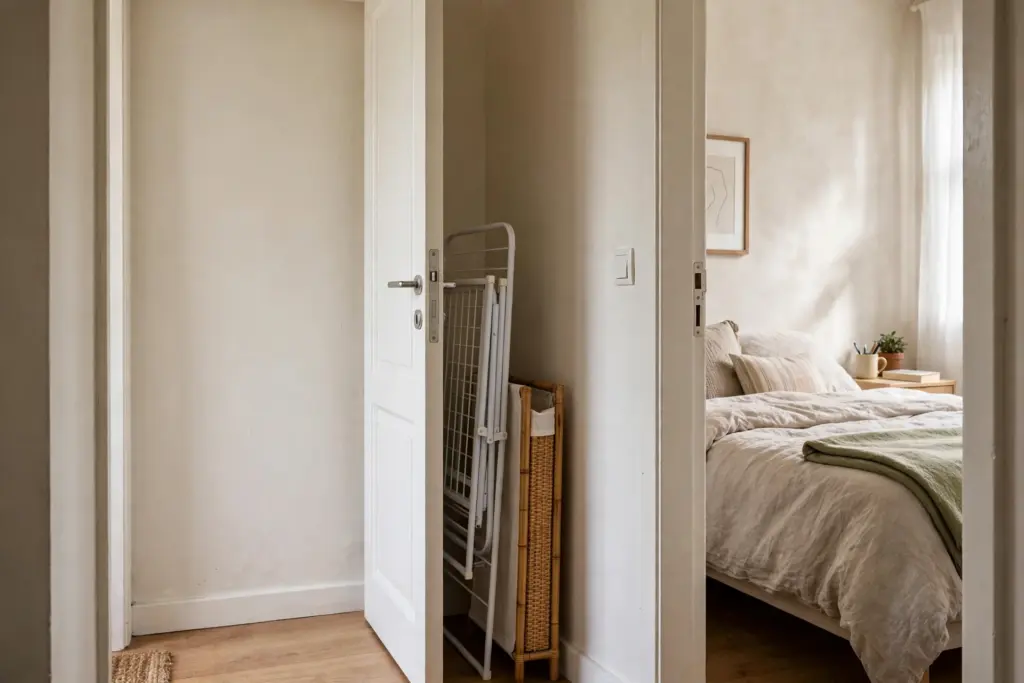
When the load is put away, the rack folds behind the door, the hamper returns to its gap, the caddy rolls back to its closet and the mesh bags hang on their hooks. If every piece has a flat or narrow home within a few steps of where it is used, the system takes under two minutes to pack away — and that, more than any single product, is what makes laundry work without a laundry room.
Frequently Asked Questions (FAQ)
What are the best small apartment laundry ideas with no laundry room?
The strongest small apartment laundry ideas are a slim divided hamper for sorting, a small-loads-more-often routine for shared machines, a folding rack that stores flat, and one slim caddy that holds every supply. Together they cover collecting, washing, drying and putting away without a dedicated room, a hookup or any permanent change to the rental.
How do you dry clothes in a small apartment without a dryer?
Use a folding or tiered rack with space between items, place it near an open window or a small fan, and hang shirts on hangers from a shower or tension rod. Spin clothes well before hanging, avoid overloading the rack, and ventilate the room — the EPA advises keeping indoor humidity below 60 percent, ideally 30 to 50 percent, which matters most on drying days.
Are portable washers allowed in rental apartments?
Often not — many leases restrict or ban portable washers because of leak risk, and some buildings ban them outright. Check the lease, get written permission if it is required, use a leak tray, secure the drain hose and never run the machine unattended. If the lease says no, use shared building laundry or a laundromat routine instead.
Where do you store a drying rack in a small apartment?
A flat-folding rack stores behind a door, beside a wardrobe, under a bed or in the narrow gap next to a closet. The key is choosing a rack that folds completely flat and giving it one set home, so it disappears between laundry days instead of living in the middle of the room.
How often should you do laundry in a small apartment?
For most small homes, two smaller loads a week work better than one large weekly load: they are easier to carry to shared machines, dry faster on an indoor rack, and fold away the same day. Bulky bedding and towels can go in a separate weekly load to a larger machine.