Hosting Thanksgiving in a Small Apartment
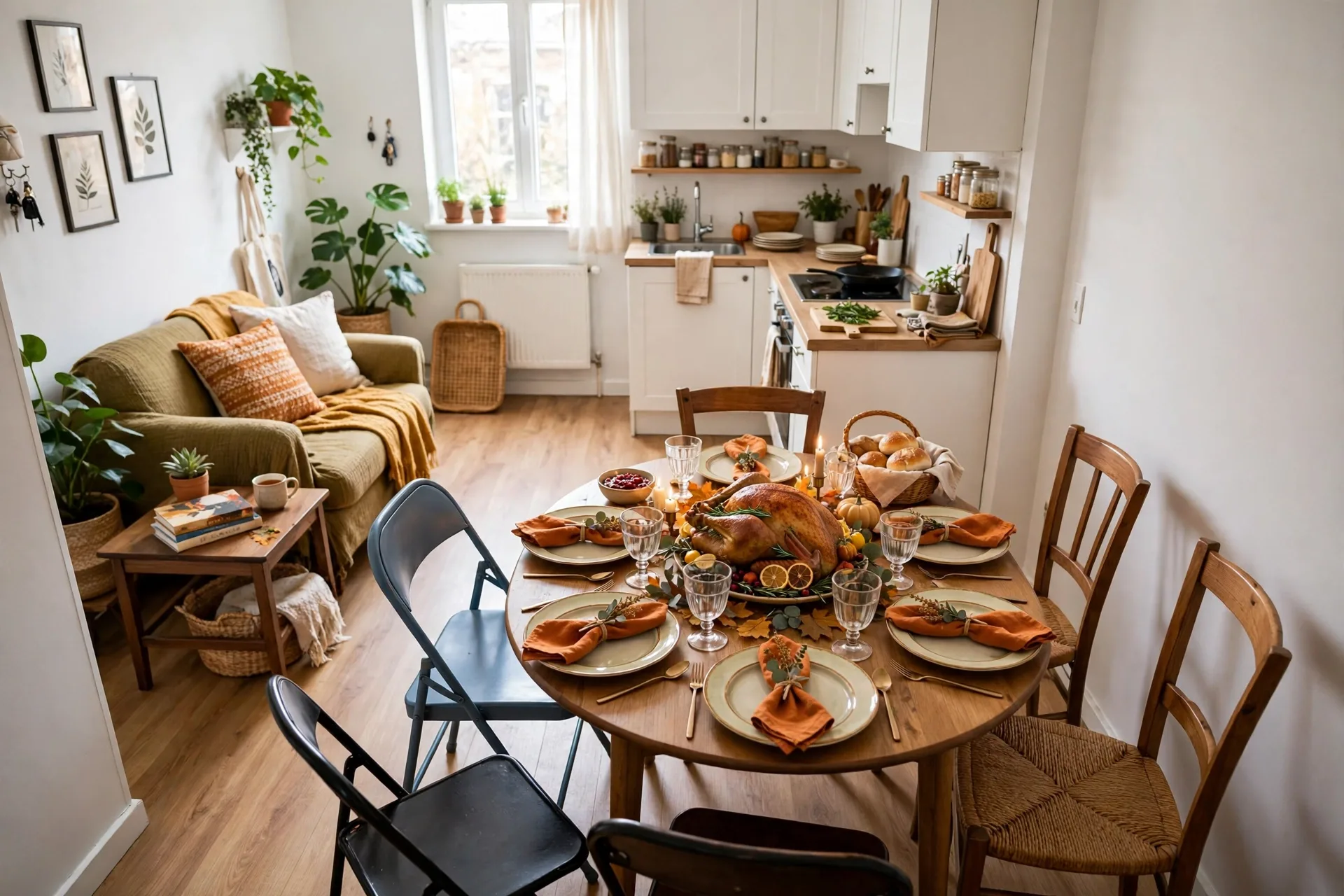
A small apartment does not cancel Thanksgiving. It just changes the plan: one oven instead of two, one table instead of a dining room, and a room that works as kitchen, dining room, and living room all on the same evening. The good news is that hosting thanksgiving in a small apartment is mostly a scheduling and layout problem, not a space problem, and both can be solved before a single guest arrives. This guide walks through the day in order, from rearranging the room to the next-morning reset.
One honest note: the worked example here is dinner for six, a realistic count for a small flat. Treat it as an example to adjust, not a promise. Your count, your room, and your lease are the real inputs.
Start With Your Own Count, Not Someone Else’s
Most Thanksgiving guides assume a spare room, a second oven, or a dining room. A renter’s plan has to start from the opposite end: how many people can actually sit, eat, and move around in this flat at the same time? Count real seats, not hoped-for seats. A seat counts only if the person in it has a stable surface for a plate and can get up without asking three people to move. If that test leaves the count at five instead of eight, the guest list decision is already made, and it is better made now than on the day.
Check the lease and building rules early, too. Some leases and buildings have guest or noise rules that matter for a larger gathering, and a quick check avoids an awkward conversation later. No universal guest limit exists: the rules are the ones in your own lease. The same honesty applies to the menu. A turkey breast or a smaller whole turkey, two or three sides, and one dessert are a full Thanksgiving dinner, and a shorter menu is what makes the one-oven schedule workable.
Judge every choice below by three tests: every guest gets a real seat with a plate surface, one clear walking route stays open from door to kitchen to bathroom all evening, and the oven schedule is written down before the day, not improvised while guests stand in the kitchen. If a choice fails any test, change the choice.
Rearrange the Room for One Day
The day before, or the morning of, the room gets rearranged for one evening only. Nothing here is permanent, and nothing needs drilling or damage to the walls. Push non-essential furniture to the walls or, for the day, into the bedroom: the coffee table blocking the walking route, the extra chair nobody sits in, the drying rack. The goal is one clear route through the flat, wide enough for two people to pass, and a dining area with breathing room around it.
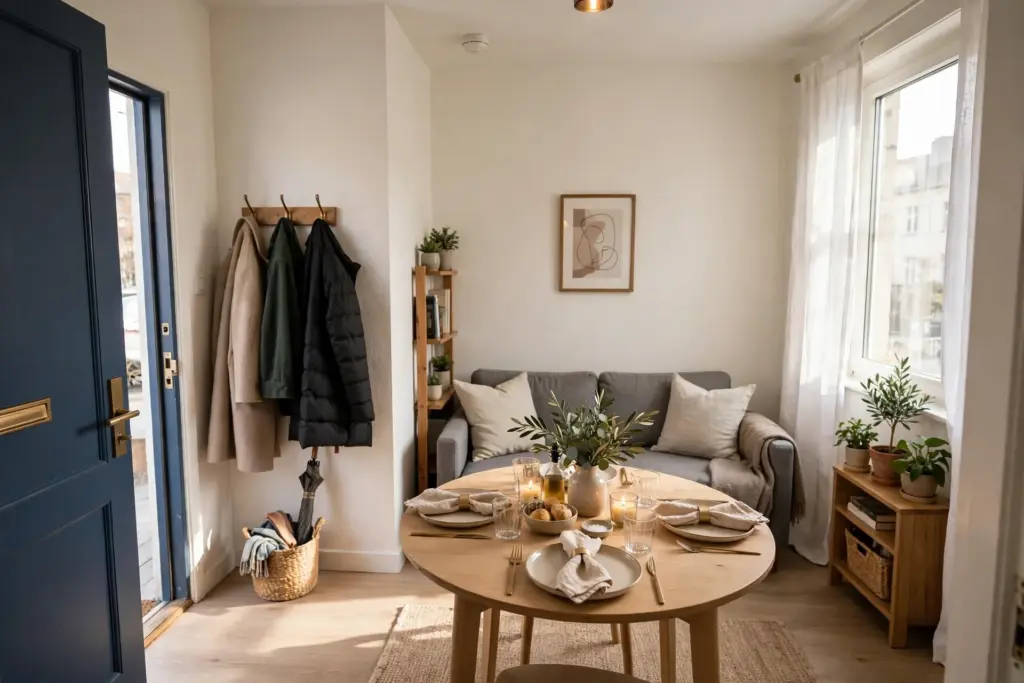
Give coats and bags one home away from the seats: a bedroom door hook, a freed section of a rail, or a chair by the door that is not a dining seat. The point is that coats never end up on the dining chairs or in a pile on a bed guests might use later. For the flow of the whole flat, the layout ideas in our guide to studio apartment layouts use the same principle: zones that stay clear when one room does several jobs.
Seating Every Guest With a Real Plate Surface
Seating is where small-space hosting usually fails, and it fails quietly: everyone technically has a chair, but half the guests are balancing plates on their knees. Build the seating from what is already in the flat plus borrowed pieces: dining chairs, folding chairs, a bench along one side of the table, and sturdy ottomans, all stable and at table height. Collect borrowed folding chairs a week ahead, not on the day, and check that none wobble.
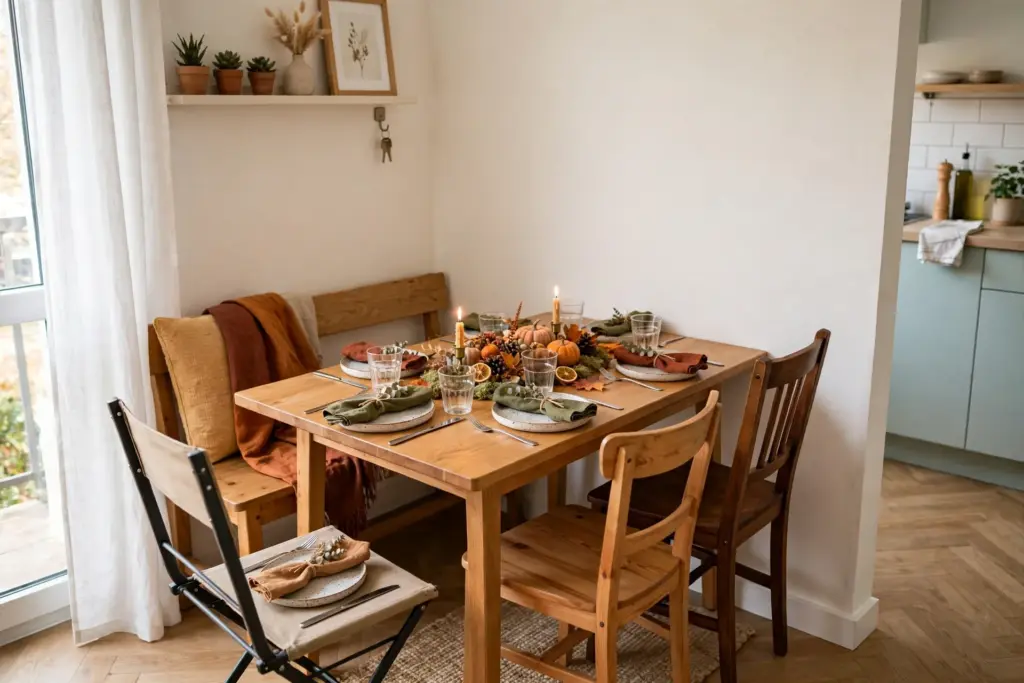
Then run the rehearsal, which takes ten minutes and prevents the evening’s most common failure. Set every seat, put a plate and glass at each one, and actually sit in each seat. Can the person reach the table, is there elbow room, and can they stand up without moving someone else’s chair? If a seat fails, fix it now: swap the chair, shift the table, or move that guest to the bench side. For guests who stay overnight, our guide to hosting overnight guests in a small apartment covers sleep setups that do not need a guest room. For the everyday version of the dining zone, see our small dining area ideas.
The One-Oven Game Plan
The turkey, or turkey breast, owns the oven. Everything else has to fit around that fact, so split the sides into three groups before the day. Group one is make-ahead and reheat: dishes cooked a day or two earlier and warmed late, or in a slow cooker if one is available. Group two is stovetop: gravy, mashed potatoes kept warm on a low burner, anything that never needs the oven. Group three is no-cook: salads, cranberry sauce made ahead, bread, and cheese or fruit. Split this way, the single oven stops being a bottleneck and becomes one station among several.
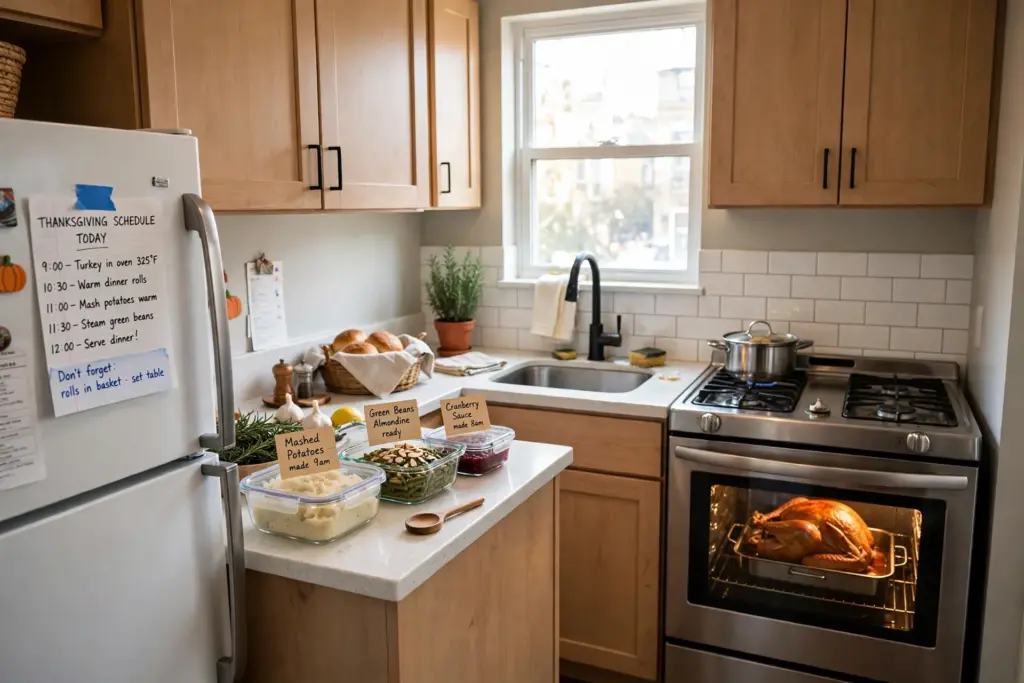
Write the day timeline backwards from serving time, on paper, on the fridge. Start with serving time, then work back through resting the turkey, reheating the make-ahead sides, and the stovetop dishes, so every step has a start time. A written timeline is also what makes potluck help genuinely useful. Assign strategically: guests with oven space at home bring hot dishes, while guests travelling light bring cold dishes, drinks, or dessert, so nobody arrives with a dish that needs your oven while the turkey is in it. This written schedule is the heart of hosting thanksgiving in a small apartment. For more on keeping a small kitchen workable, our small apartment kitchen storage ideas cover the habits that keep prep surfaces clear.
A plain note on food safety: thawing happens in the fridge, never on the counter, and a meat thermometer is the way to check that poultry is cooked through, following published food-safety guidance rather than guesswork or colour alone. This guide gives no cooking temperatures or times from memory: the thermometer and the guidance that comes with the bird are the authority, and leftovers go into containers the same night.
Serve Buffet-Style and Keep the Table Clear
With seating settled and the oven scheduled, the next decision is where the food lives. In a small flat, the answer is almost always a buffet, not the table. Serving dishes go on the kitchen counter, a desk, or a dresser top, and the dining table holds only place settings and a small centerpiece. Guests serve themselves and sit down with a manageable plate, and the table never becomes a crowded serving station.
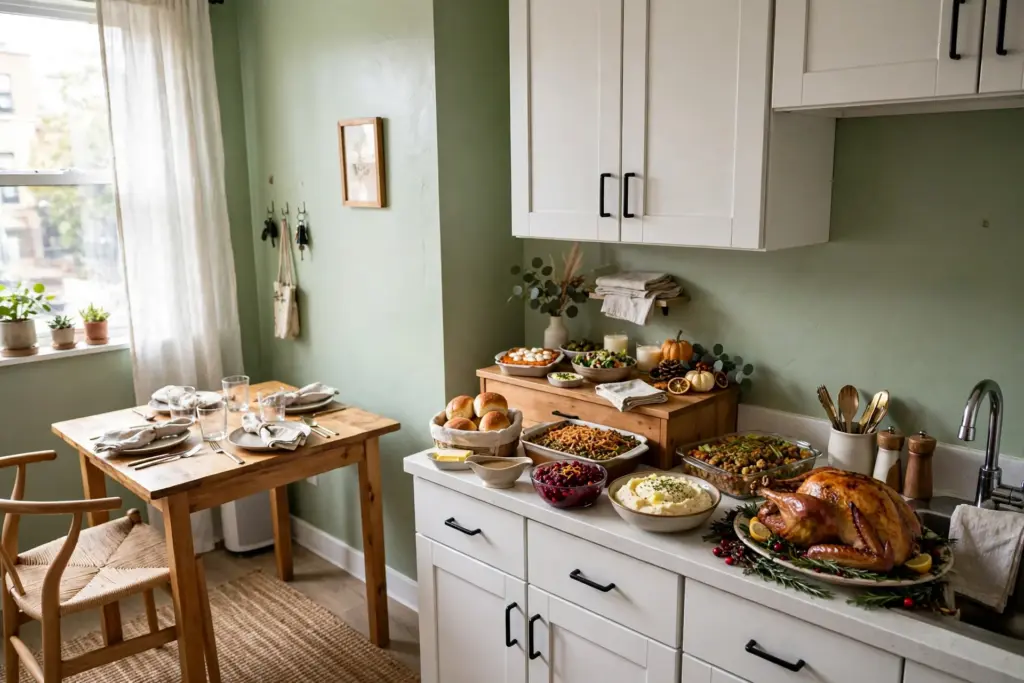
Set the buffet in serving order: plates first, then the main dish, then sides, then bread and condiments last, so the line moves one way and never doubles back through the kitchen. Keep serving utensils with their dishes, so nobody hunts for a spoon while holding a plate. A centerpiece earns its place only if it is low enough that guests can see each other across it.
Stations That Spread People Out
People gather where the food and drink are. In a small flat, that means one crowded kitchen unless the gathering is deliberately spread out. A drinks station in the living room or entry, away from the kitchen work zone, is the most effective fix. A small side table, a bar cart, or a cleared shelf holds a pitcher, glasses, ice made days ahead and stored bagged in the freezer, and whatever guests brought to drink. Guests help themselves without entering the cooking zone.
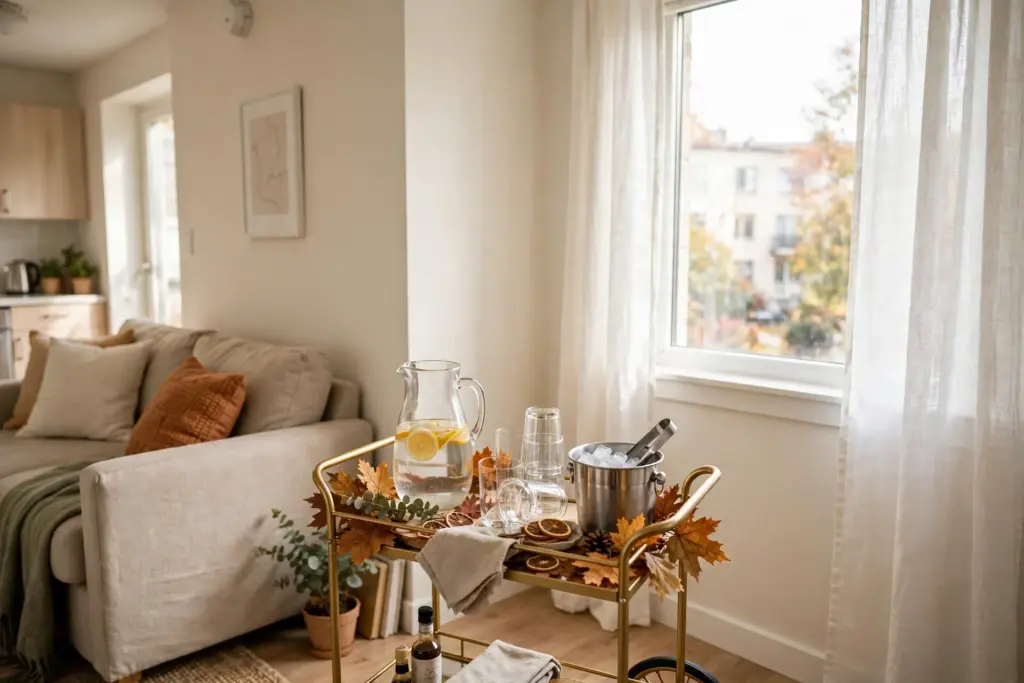
Appetizers get the same treatment: a small board or a few bowls on a surface away from the kitchen, set out before guests arrive. Dessert works best as a reset, not a second full setup: after the main course, clear the buffet and bring out dessert and coffee on the same surfaces. For the flow rules, our small apartment living room layout ideas explain how a clear route keeps a small room comfortable when it is full.
Host the Day Without Disappearing Into the Kitchen
The plan only works if the host is actually at the table, so the day needs two habits. First, clean as you go: the sink stays as empty as possible, the dishwasher or wash basin cycles through the day, and used bowls get scraped and stacked. A visible spot for trash and recycling means guests never have to hunt for one. Second, accept help at the moments it matters: someone to answer the door, someone to refill the drinks station.
Safety runs quietly underneath all of this. Keep the exit path and bathroom route clear of extra chairs, coats, and buffet tables all evening. Use LED candles near paper decor and textiles, keep real flames away from traffic, store nothing on the stovetop while the oven runs, and plan a clear landing surface with oven mitts ready before anything hot comes out.
The Reset: Home Again by Morning
The reset starts the same night, while it is still small. Leftovers go into labeled containers before anyone leaves, dishes that can wait are stacked neatly, and the table is cleared back to its everyday state. The next morning, furniture goes back to its usual places and the buffet surfaces get wiped down. A flat that is easy to reset is a flat the host will happily offer again.
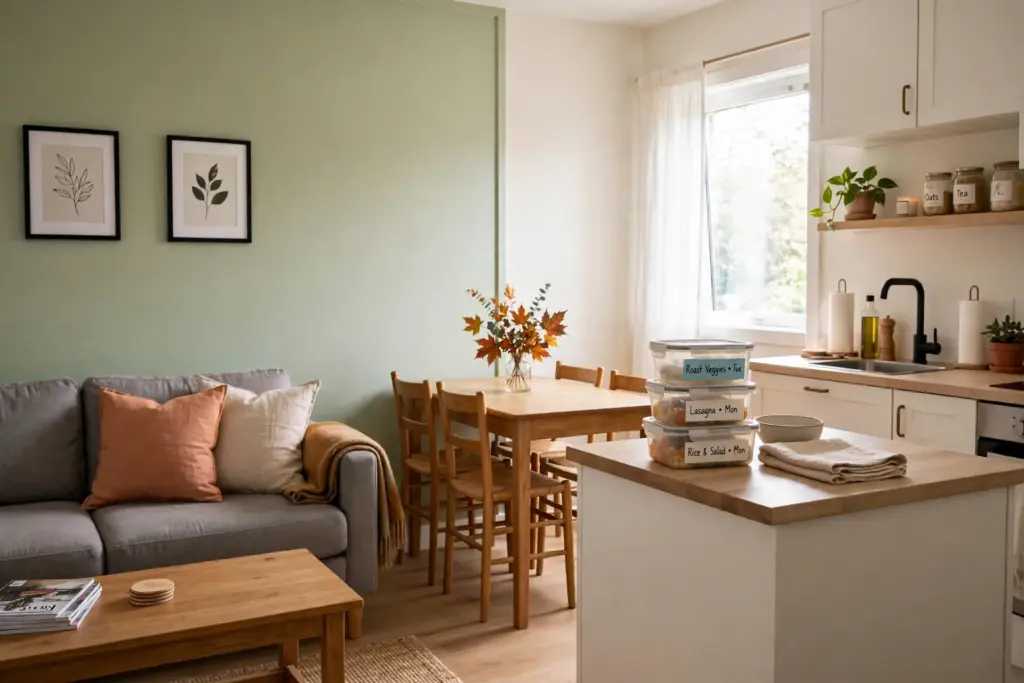
One last note: this same system carries over to Christmas dinner with almost no changes, since the constraints are identical — one oven, one table, one room doing several jobs. And that is the real point of hosting thanksgiving in a small apartment: a written schedule, a tested seating plan, and stations that spread people out turn a small flat into a warm, workable place to gather.
Frequently Asked Questions (FAQ)
Can a small apartment really hold a Thanksgiving dinner?
Yes, with a realistic guest count and a plan built around it: a real seat with a plate surface for every guest, one walking route kept open, and the oven schedule written before the day.
What if there is only one oven?
Give the oven to the turkey and split everything else into make-ahead-and-reheat, stovetop, and no-cook dishes, and assign potluck dishes so no guest brings a hot dish that needs the oven while the turkey is in it.
How do guests eat if the table is too small for serving dishes?
Serve buffet-style from a counter, desk, or dresser top, and keep the table for place settings only.
What should guests bring to a small-apartment Thanksgiving?
Cold dishes, drinks, bread, or dessert are the easiest contributions, since none need the host’s oven or counter space at a critical moment.
How long does the cleanup take?
Cleaning as you go keeps the end short: leftovers into containers the same night, dishes stacked, furniture back the next morning.
Keep Reading
For more menu inspiration, see Good Housekeeping’s Thanksgiving ideas and Delish’s Thanksgiving recipes.