How to Make a Small Apartment Look Bigger: 16 Tricks That Cost Less Than Remodeling
Learning how to make a small apartment look bigger is mostly about tricking the eye, not adding square footage. A room feels small for four repeatable reasons: too little light reaches the walls, nothing draws the eye upward, furniture hides the floor, and too many small objects compete for attention. Fix those four things and the same room reads as calmer, brighter, and more open.
Every trick below is renter-safe and costs less than remodeling. Nothing here requires paint, drilling, or hardwired fixtures as the default. Where a trick normally involves a screw or a wall anchor, the lease-friendly version comes first, with a note to get written permission before anything permanent. Work through the groups in order, starting with light, because each group makes the next one work harder.
Bounce More Light Around the Room
Light is the fastest lever. Dim corners shrink a room visually, while light that reaches the walls and ceiling pushes them outward. The U.S. Department of Energy’s daylighting guidance makes the same basic point: how light enters and spreads through a home changes how the space performs and feels.
1. Lean One Large Mirror Opposite or Beside a Window
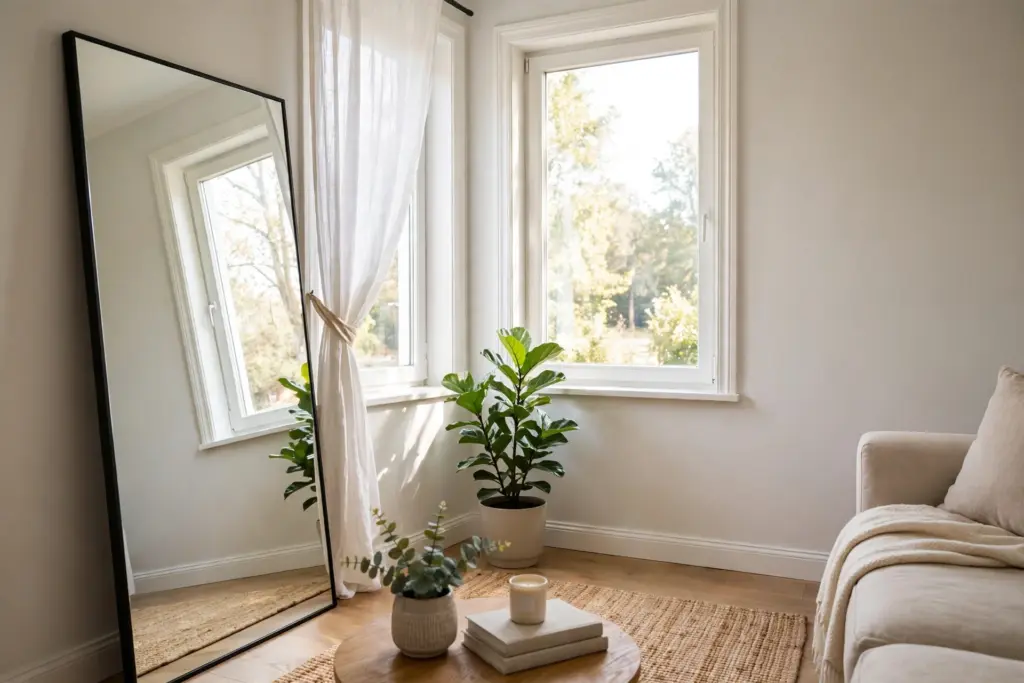
One large mirror does more than several small ones, because it reflects a single, unbroken view of the room and the window light. Lean it against the wall opposite or next to the window so it catches daylight and sends it back across the floor. Keep it safe: a leaning mirror should sit on a level floor at a slight angle and be secured with an anti-tip strap. Anchoring into a wall needs landlord permission first. Adhesive strips are only for small, lightweight mirrors within the manufacturer’s rated weight, never for a heavy floor mirror.
2. Switch to Sheer Curtains and Keep Glass Clear
Heavy drapes and blackout panels swallow the brightest part of the room. Sheer or light-filtering curtains keep privacy while letting daylight pass, so the window reads as a bright opening instead of a dark rectangle. Keep the glass working too: move tall plants, shelves, and furniture that block the lower half of the window. An unblocked window makes the wall around it feel wider.
3. Layer Light at Three Heights
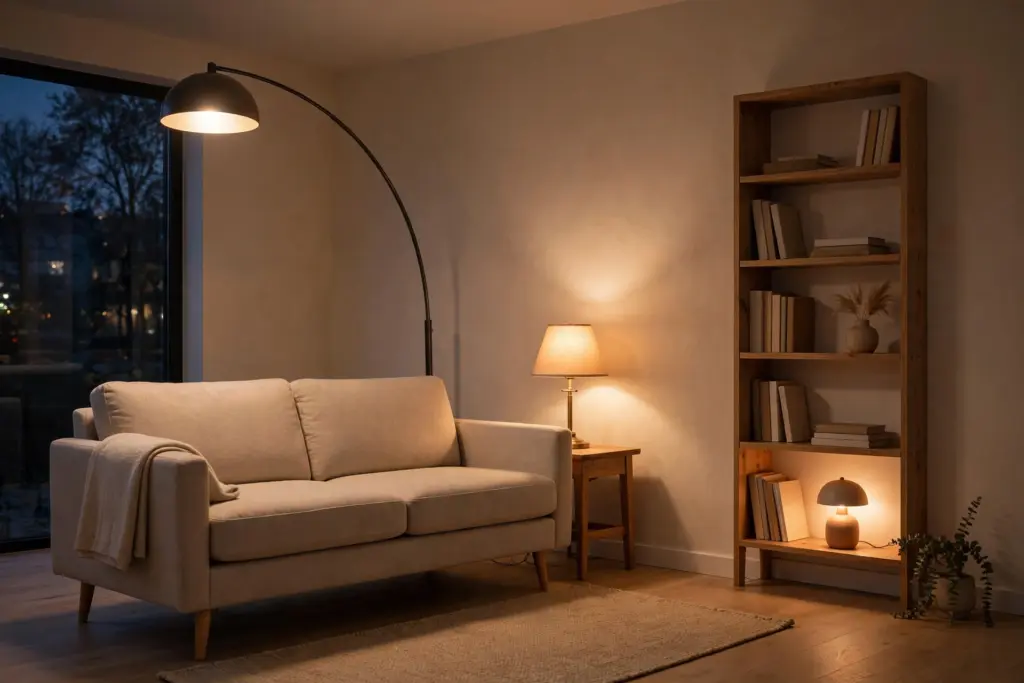
A single overhead fixture flattens everything and leaves the corners dark. Layer plug-in light instead: a tall floor lamp, a table lamp at seating height, and a small lamp low on a shelf. The three levels remove shadows at the edges of the room, where small rooms lose the most visual space. For bulb and placement ideas that need no wiring, see these renter-friendly lighting ideas for a dark apartment.
4. Add a Few Reflective Surfaces, Not a Theme
A glass vase, a metallic frame, or a glossy tray redistributes a little light wherever it sits. Two or three reflective accents are enough; a room full of mirrored furniture reads busy and cold, and busy is the opposite of spacious.
Stretch the Height of the Room
Most renters cannot change the ceiling, but they can change where the eye stops. When decor clusters in the lowest half of the room, the ceiling feels lower. These tricks move the visual weight upward, a core part of how to make a small apartment look bigger without touching a wall or a lease clause.
5. Hang Curtains High and Wide
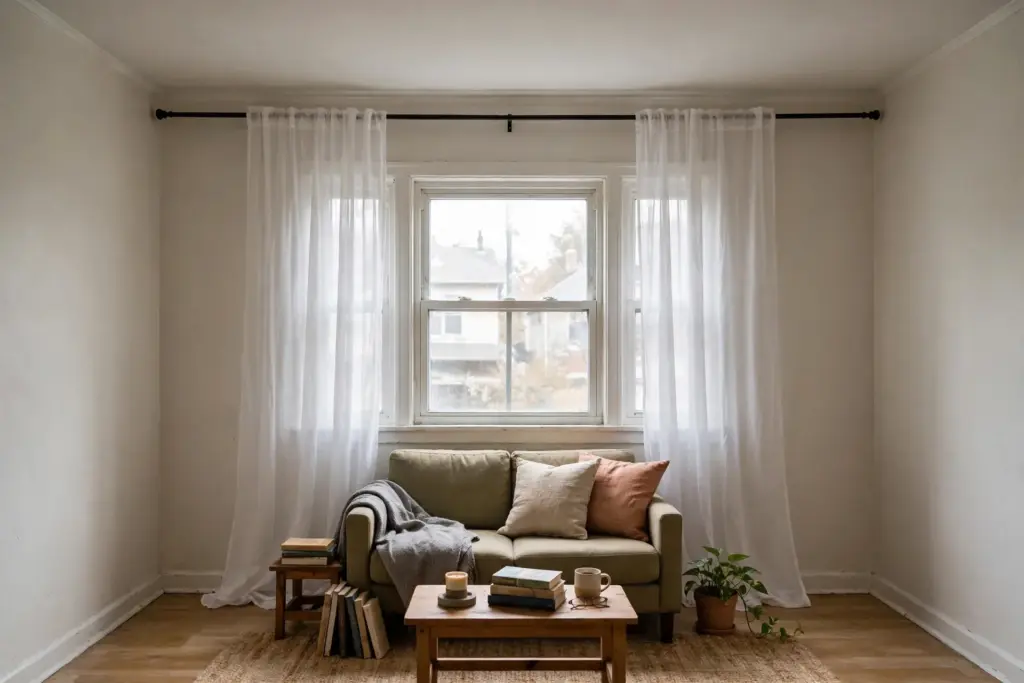
Mount the rod close to the ceiling line instead of just above the window frame, and extend it roughly 6 to 10 inches beyond each side of the frame, adjusted to the room. The curtain then covers wall, not glass, when open, and the long drop creates one strong vertical line. Use a tension rod inside the frame or a no-drill rod rated for the curtain’s weight, and keep panels light: heavy fabric on a tension rod is a fall waiting to happen. Panels ending just at the floor look longest; panels that puddle or stop short break the line.
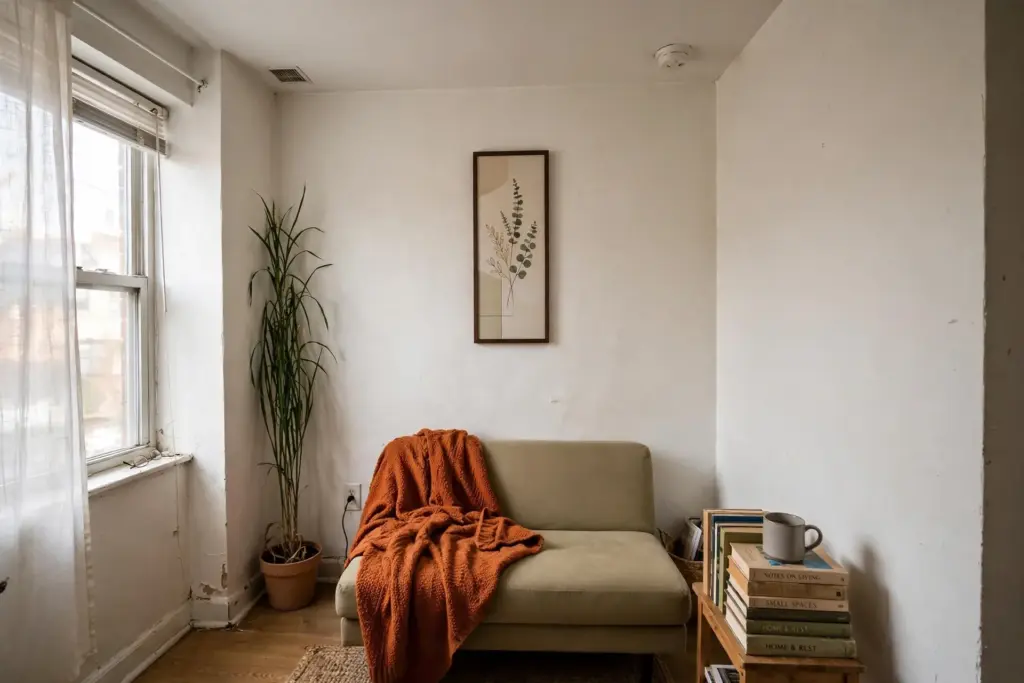
6. Use One Tall Piece of Art
A tall, vertically oriented print hung slightly higher than usual pulls the eye upward every time it enters the room. Lean a large framed piece on a console if hanging is not allowed, or use removable strips rated well above the frame’s weight, and check the wall finish first, since strips can lift weak paint.
7. Keep Furniture Low-Profile
Low backs on sofas and chairs leave more wall visible above them, and visible wall is what the eye measures. A low-profile sofa under tall art makes the gap between furniture and ceiling read as extra height. This does not mean miniature furniture, which looks doll-like and seats nobody. It means standard-depth pieces with lower backs and slimmer arms, and avoiding tall, bulky recliners that tower over everything else.
8. Put One Tall Element in the Corner
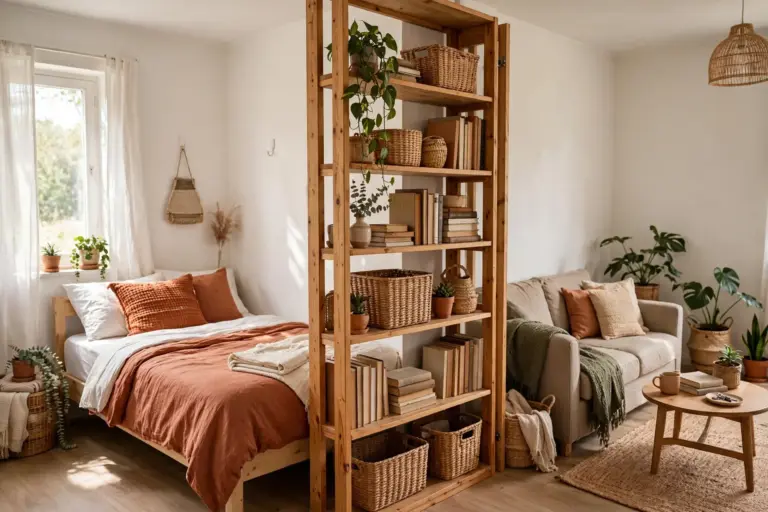
A tall plant, an arc floor lamp, or a narrow tension-pole shelf in one corner gives the eye a reason to travel the full height of the room. One tall element is enough; tall pieces on every wall close the room in. Freestanding and tension-based pieces keep this renter-safe. Any tall bookcase that could tip should be secured, and because anchoring usually means a wall screw, that step needs landlord permission. The U.S. Consumer Product Safety Commission’s furniture tip-over safety guidance explains why unsecured tall furniture is a real hazard, especially around children.
Show More Floor
The eye judges a room’s size largely by how much floor it can see. Furniture that sits flat and heavy hides the floor and fragments it into small patches. These four tricks, closely related to the layouts in this guide to studio apartment layout ideas, reconnect the floor into one readable surface.
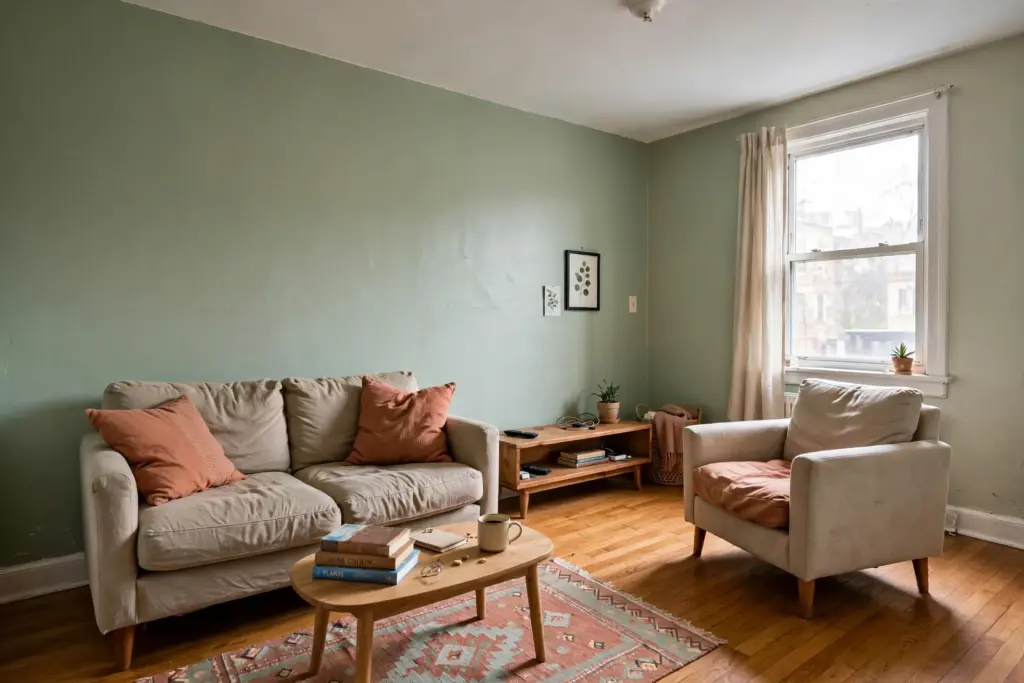
9. Choose Leggy, Raised Furniture
Sofas, chairs, and consoles on legs let light and sightlines pass underneath, so the floor reads as one continuous surface instead of blocked corners. A clearance of roughly 4 to 6 inches under the main pieces is enough to get the effect and still clean underneath. If replacing a piece is not an option, remove a fabric skirt instead, or swap a solid block under a console for baskets set back from the front edge.
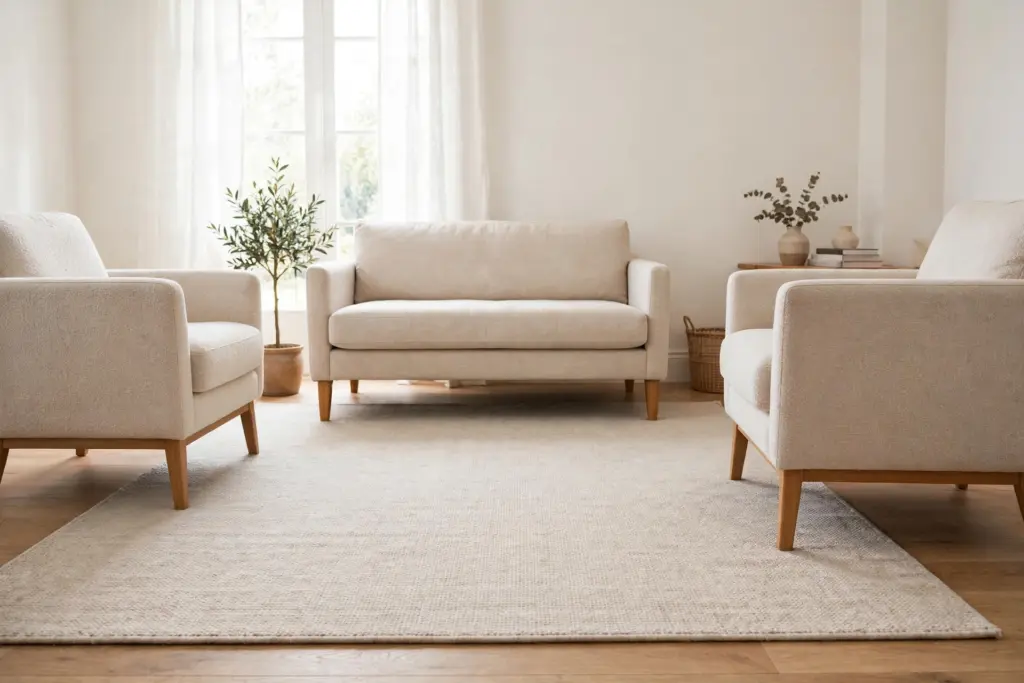
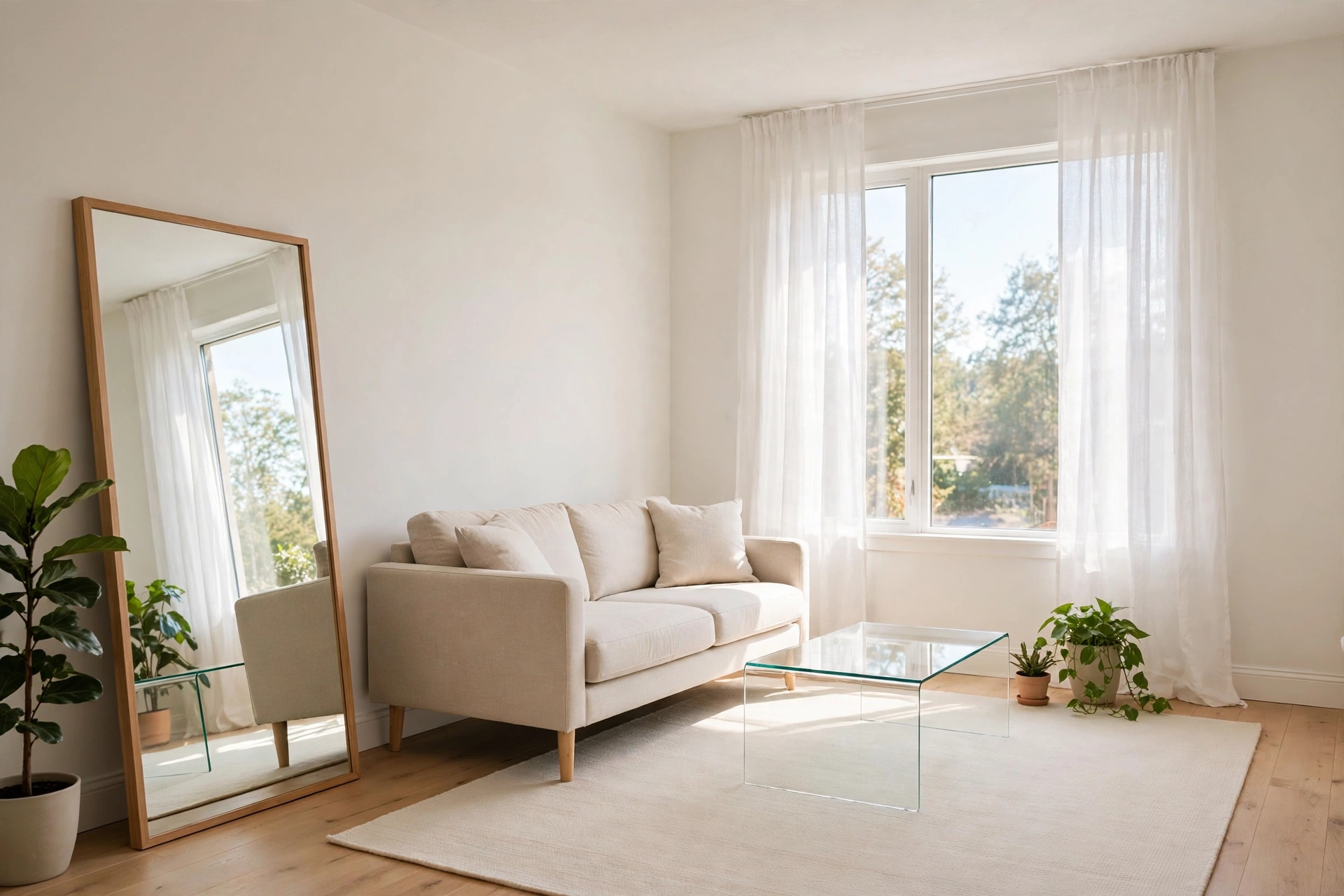
10. Use One Large Rug Instead of Several Small Ones
Several small rugs chop the floor into islands, and the eye adds up the gaps as smallness. One large rug that reaches at least under the front legs of the sofa and chairs defines a single, generous zone. Size up rather than down: a rug floating in the middle with no furniture touching it looks smaller than the room, not bigger. Keep the rug light in tone if the floor is dark.
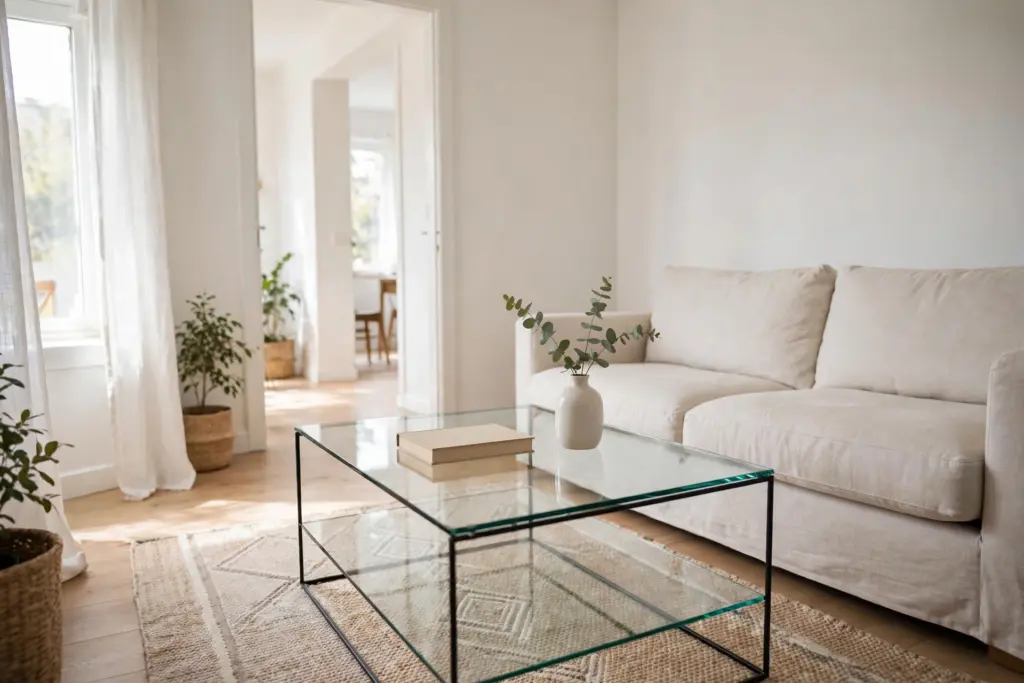
11. Swap One Solid Piece for Glass or Open Frame
A glass or acrylic coffee table, or an open-frame side table, occupies almost no visual space because the eye travels straight through it to the floor below. One see-through piece in the center of the seating zone is usually the highest-impact swap in the room. Keep the surface nearly empty, since clutter on glass reads twice as messy.
12. Keep Walkways and Sightlines Open
Aim for main walkways of about 30 to 36 inches where the layout allows, and resist pushing every piece flat against the walls, which can leave a cramped ring of furniture around an unusable center. Pulling the sofa a few inches off the wall often reads as more depth, not less room. In open-plan spaces, avoid breaking the longest sightline with a tall screen; if a divider is needed, the lower, open options in these room divider ideas for studio apartments keep the view moving.
Cut the Visual Clutter
The last group is the cheapest. Visual clutter is anything that makes the eye stop and restart: clashing colors, crowded surfaces, and too many small objects. Reducing those stops makes the same arrangement look larger, because the eye can travel across the room in one pass.
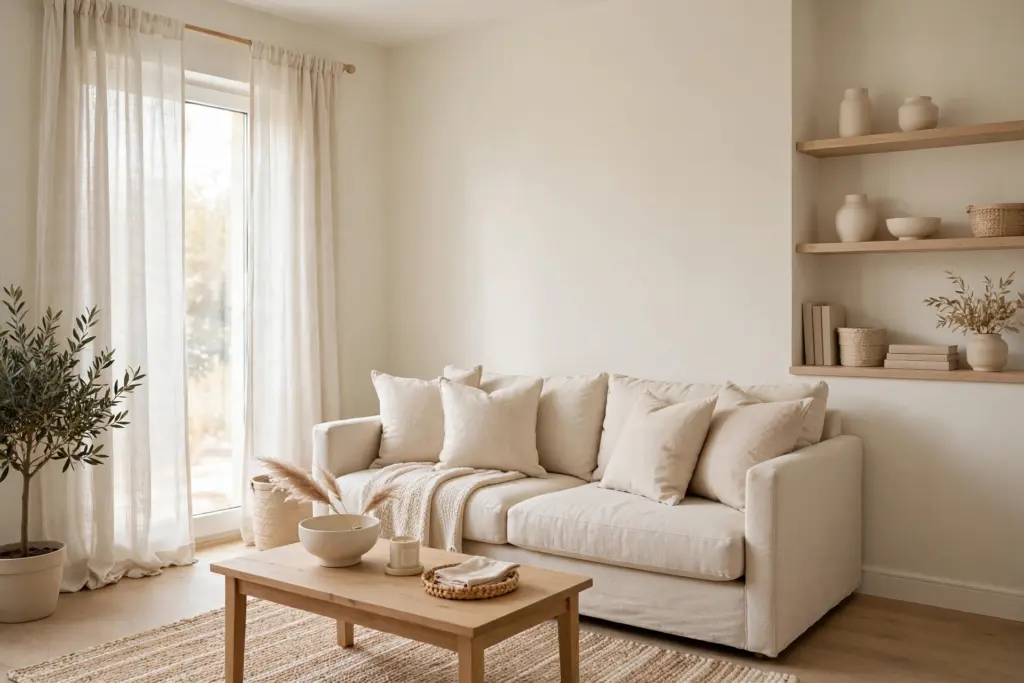
13. Carry a Light, Tonal Palette Through Textiles
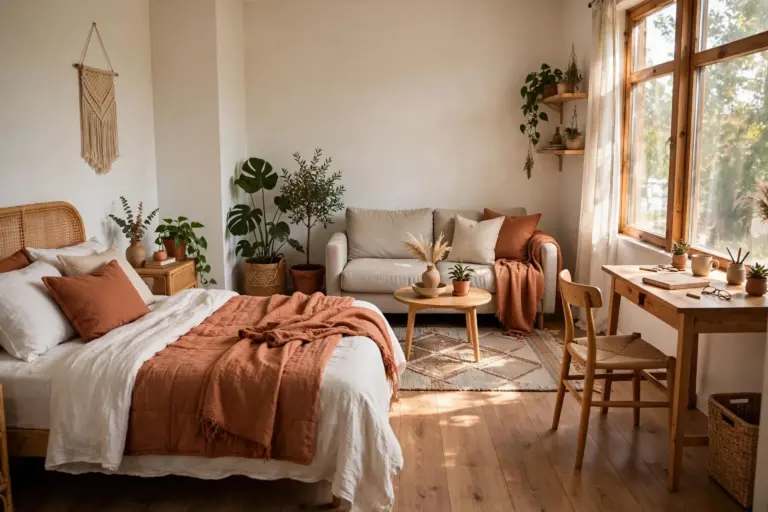
Renters usually cannot repaint, but walls are only part of what the eye sees. Cushions, throws, curtains, and a rug in close tones of one light family create the same unbroken flow as a single paint color. Tonal does not mean all white: warm cream, pale wood, and soft beige count, and one deeper accent keeps it from looking washed out. Contrast breaks are what make a small room feel chopped into pieces, and the palette removes them.
14. Choose Fewer, Larger Pieces
Ten small decorations read as clutter; two large ones read as a decision. Replace a cluster of small frames with one large print, a scattering of small cushions with two generous ones, and three tiny plants with one healthy, full-sized plant. The object count drops, each remaining object gets breathing room, and the room reads calmer and bigger. It is also the easiest trick to reverse at move-out, since nothing is attached to anything.
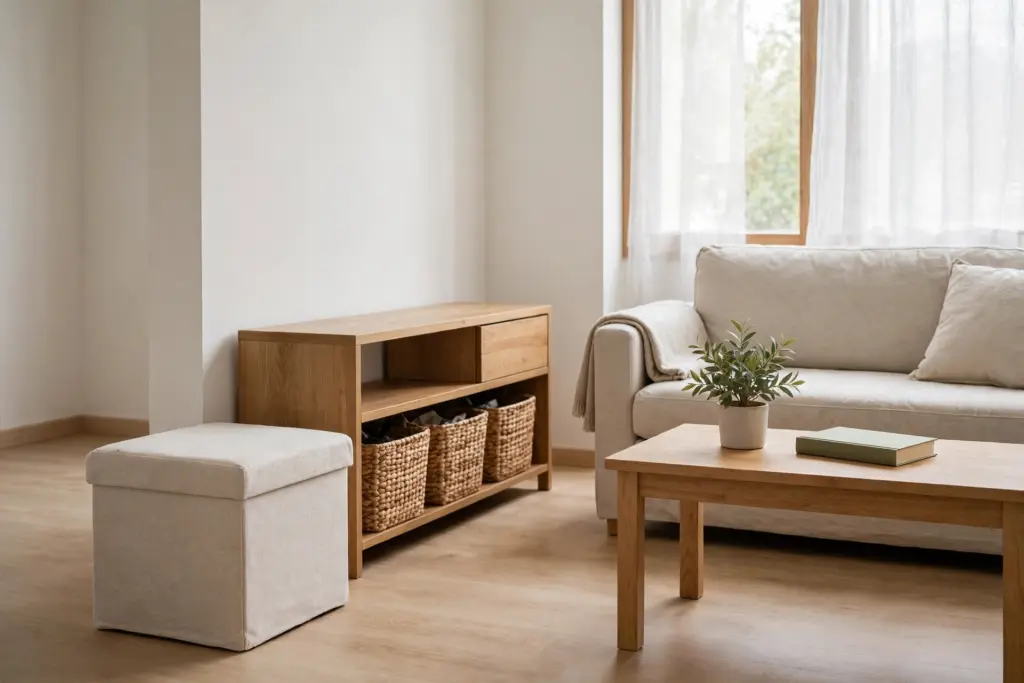
15. Clear Most Surfaces and Hide the Rest
Set a simple standard: most of each surface stays empty, with one or two intentional objects at most. Everything else goes into hidden storage: a lidded ottoman, baskets inside a console, or drawers rather than open shelves. Open storage displays everything it holds, which is why a room can be organized and still look small.
16. Pick Multi-Use Pieces So Fewer Pieces Are Needed
A storage ottoman that works as a seat, a table, and a blanket box replaces three objects with one. A slim desk that doubles as a dining surface removes a whole furniture category from the room. When shopping, apply a simple test: if a new item cannot name the item it replaces or the second job it does, it is probably adding clutter rather than space.
Frequently Asked Questions (FAQ)
What is the fastest trick that costs nothing?
Clearing surfaces and the floor. Moving clutter into closed storage, unblocking the window, and opening the main walkway can change how big a room feels in under an hour, at no cost. It is the fastest answer to how to make a small apartment look bigger when the budget is zero.
Can renters use these tricks without painting or drilling?
Yes. The defaults here are leaning mirrors with anti-tip straps, tension or no-drill curtain rods, plug-in lamps, textiles, and furniture placement. Anything that anchors into a wall, including tall bookcases and heavy mirrors, should only happen with written landlord permission.
Do mirrors really make a room look bigger?
A mirror reflects light and a view of the room, which adds perceived depth, especially opposite or beside a window. It does not add actual space, and a small mirror facing a blank wall does very little. Size and placement make the trick work.
What if the apartment is dark with only one small window?
Prioritize the light group: sheer curtains, an unblocked window, one large mirror beside that window, and layered plug-in light at three heights. Then keep the palette light and tonal so limited light is not absorbed by dark textiles.
That is how to make a small apartment look bigger with light, height, floor, and restraint alone: bounce the light already in the room, pull the eye upward, show the floor as one surface, and let fewer, larger things earn their place. Start with the free tricks, then add the mirror, the curtains, and the rug in that order.