How to Organize a Small Apartment Closet: A Step-by-Step Plan
A small closet rarely fails because it is small. It fails because everything goes back in a random order after laundry day. The fix is not more organizers — it is a sequence. These small apartment closet organization ideas follow one on purpose: empty first, plan second, buy last. Every step below is renter-safe, which means no drilling, no screwed-in closet systems, and nothing your landlord has to approve. Work through the steps in order on one free morning, and the closet you get back holds more, shows you everything at a glance, and — this is the part most guides skip — stays that way.
This closet plan sits inside the same measure-first, damage-free system we use across the whole home in our guide to small apartment storage ideas. The closet just has stricter rules than most rooms, so it gets its own playbook.
Before You Start: The Renter Rules for Closet Projects
Three rules keep this project deposit-safe from start to finish:
- Nothing attaches to the walls. Every tool below is freestanding, tension-based, hanging, or adhesive-free. If a product’s instructions mention a screw or a wall anchor, it does not belong in a rental closet.
- Mind the door swing and the rod limit. Closet rods sag under overload — most standard rods are happiest under roughly 30 to 40 pounds per linear foot. A sagging rod that pulls its brackets out of the wall is a repair bill, not a storage win.
- Keep the receipts and the original parts. Photograph the original shelf and rod setup before you change anything, so move-out day is a five-minute reset.
Step 1: Empty Everything and Declutter Honestly
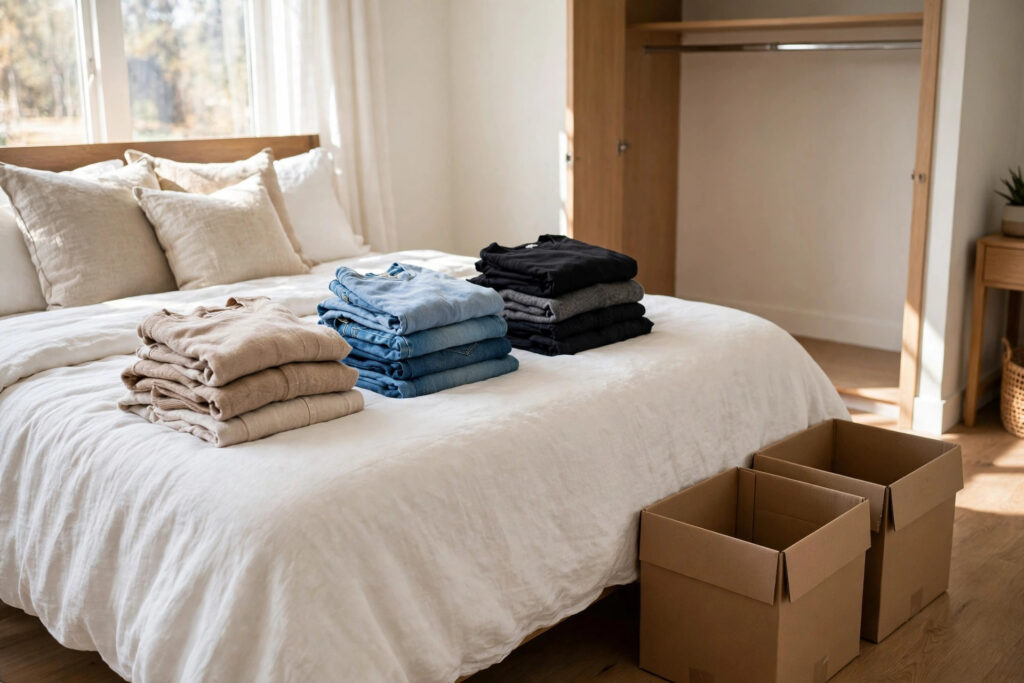
Take everything out — every hanger, shoe, and mystery bag. Yes, everything. An empty closet is the only honest starting point, because it forces you to see how much you own and how much rod space was wasted on clothes you never wear. Wipe the shelves and vacuum the floor while it is empty; you will not get a better chance.
Sort into three piles: keep, donate, toss. Use the one-year rule as your referee — if you have not worn it in twelve months and it is not occasion wear (a suit, a formal dress, ski gear), it is renting space in the most expensive storage unit you own: your closet. Be strictest with duplicates. Four black T-shirts do the job of one. When in doubt, ask whether you would pack it for a two-week trip. The clothes that survive this step are the only ones the rest of the plan has to fit.
Step 2: Measure the Closet and Map Your Zones
Now measure before you buy a single bin. Record four numbers: the rod length, the depth from the rod to the back wall, the height from the floor to the top shelf, and the width of the door opening. These four numbers decide which organizers will actually fit your space.
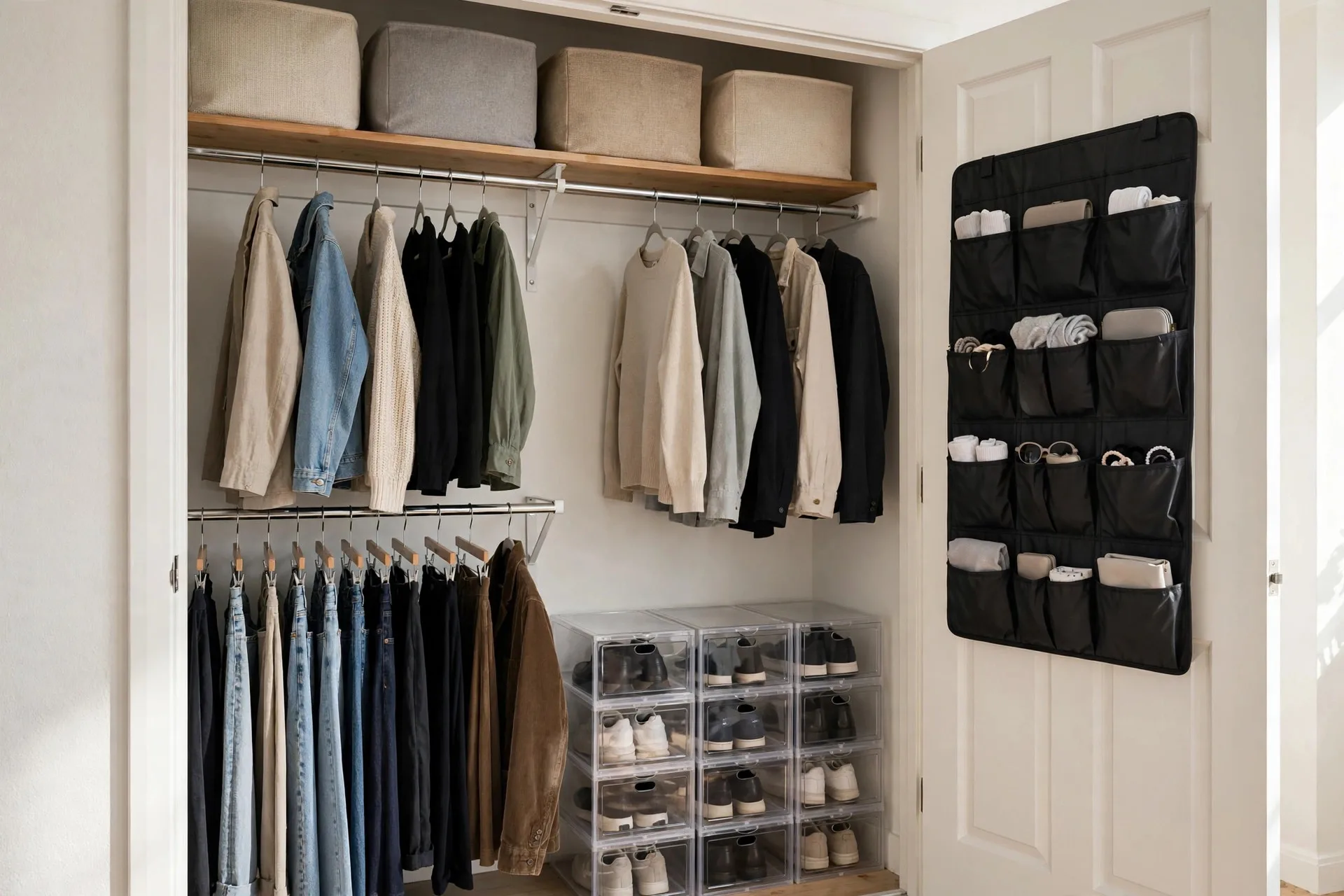
Then map zones on paper. A workable small-closet map has five zones: a long-hang zone for dresses and coats, a double-hang zone for shirts and pants, a top-shelf zone for bins, a floor zone for shoes, and the door zone for accessories. Renter-focused guides such as RentCafe’s small closet organization ideas land on the same zoning logic: group by how you get dressed — work, casual, jackets, accessories — and every item gets one obvious home. Daily-wear zones belong at eye level and within easy reach; the top shelf and the far corners are for things you touch monthly, not daily.
Step 3: Swap to Slim Hangers and Cascading Hangers

The cheapest capacity upgrade in any closet is the hanger swap. Bulky plastic and wooden hangers can each eat half an inch or more of rod; slim velvet hangers take a fraction of that and grip, so blouses stop sliding into a heap at the bottom. Switch the whole rod to one slim style, all facing the same direction, and most renters visibly gain room before anything else changes.
Then go vertical with what is left. Multi-tier and cascading hangers hang four or five pairs of pants or a run of scarves down a single hook’s worth of rod space. Use them for pants, camisoles, and belts — lighter categories that do not distort on a tiered hanger. Keep heavy coats and structured jackets on the sturdiest hangers you own, one per hook, at the end of the rod where they get crushed least.
Step 4: Double Your Hanging Space — Without Drilling
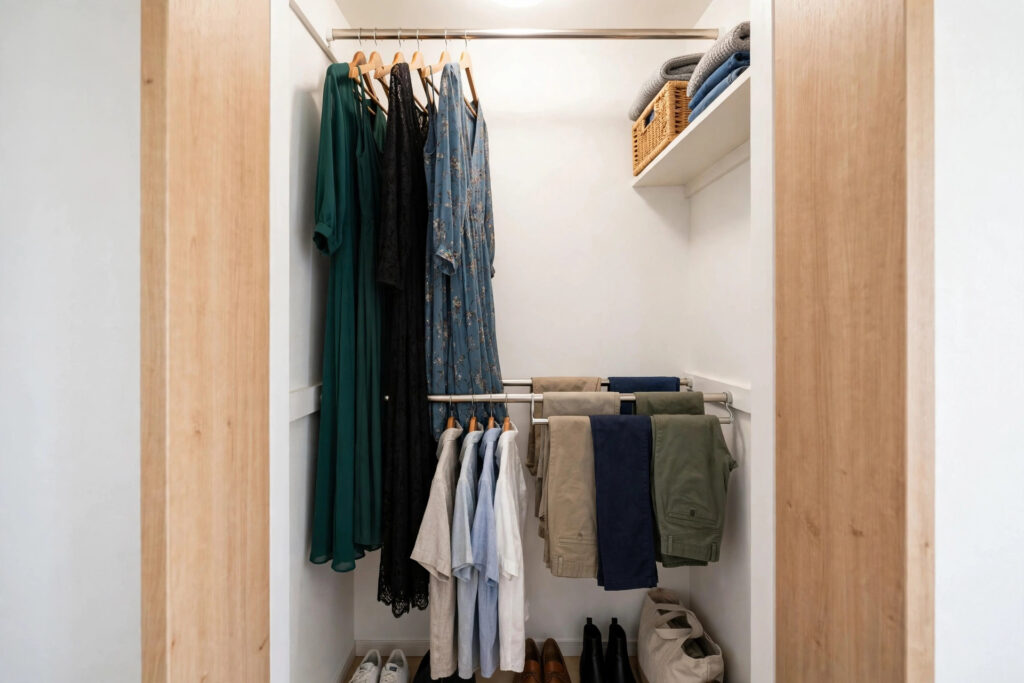
Look at your long-hang zone honestly. Most wardrobes hold only a handful of truly long items, yet the single rod runs the full width and the three feet of air beneath the shirts goes unused. That air is your biggest free upgrade. A tension rod fitted below the hanging shirts creates a second, lower rod for pants folded over hangers or a second row of tops — no screws, because the rod holds itself between the closet walls by spring pressure. Measure the span carefully and choose a rod rated for the load; a rod that slips at 2 a.m. is memorable for the wrong reasons.
No side walls to press against? A hanging fabric organizer with shelves does a similar job from the rod itself, turning a section of hang space into cubbies for folded sweaters and tees. Either way, the principle is the same one behind the best small apartment closet organization ideas: the space is already there — it is just stacked wrong. Keep the long-hang section only as wide as your long items truly need, and give every other inch to double hanging.
Step 5: Claim the Door, the Floor, and the Top Shelf
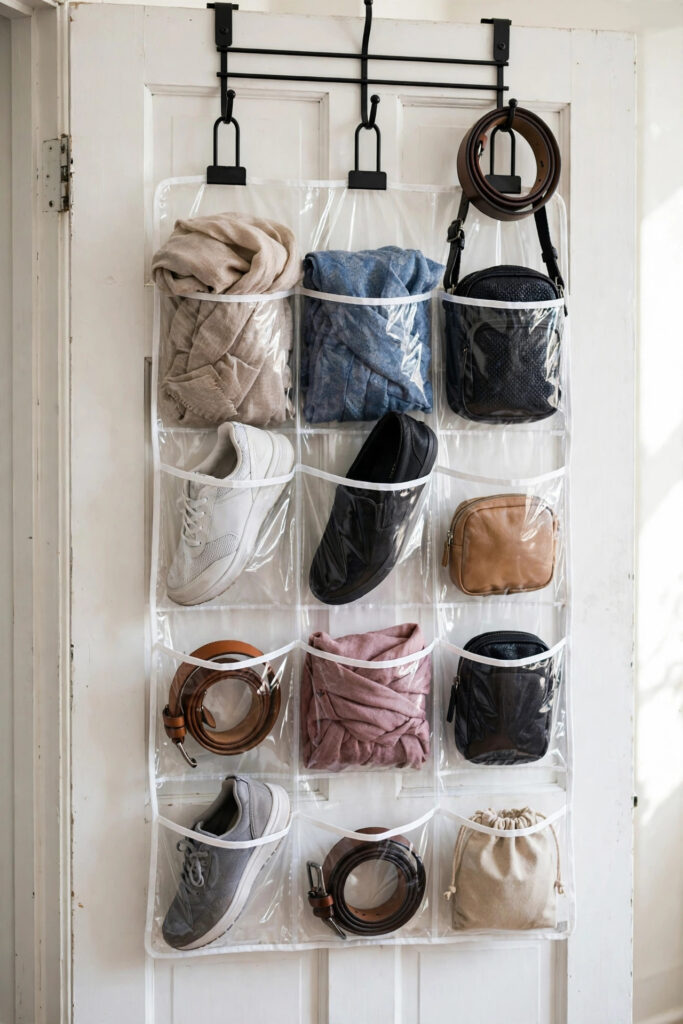
Three surfaces still owe you storage. Start with the door. An over-the-door organizer with clear pockets swallows shoes, scarves, belts, and small bags, hangs from brackets, and leaves zero marks. Add felt pads where the brackets touch the door, check you have roughly an eighth of an inch of clearance at the top of the frame, and confirm the door still latches before you load the pockets. Roundups of renter-safe closet fixes, like ForRent’s small closet storage tips, put the door near the top of the list for the same reason: it is prime space renters already pay for and rarely use.
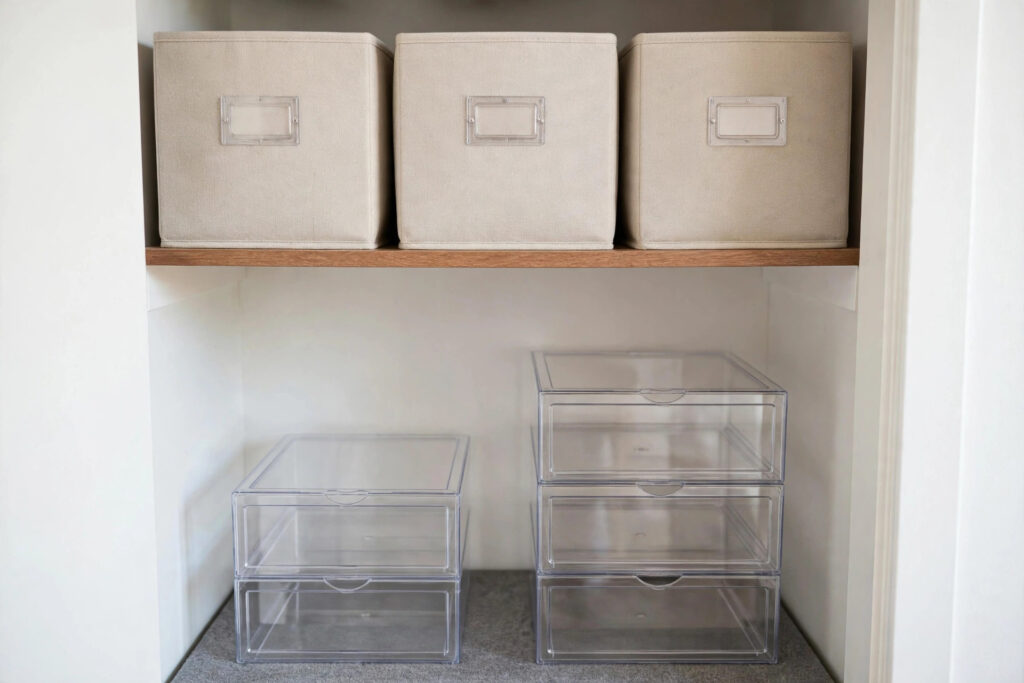
The floor is next. Treat it like a shelf, not a landing strip: stackable clear shoe boxes protect pairs and let you see them, and a low bin corrals the odds and ends that migrate. Keep everyday shoes in the front row and occasional pairs behind them. Finally, the top shelf: matching fabric bins, one category per bin — accessories, off-season extras, occasion items. The same contained-category logic we used for backups in our small bathroom storage ideas for renters works here too: a category with a visible boundary stays organized, and a loose pile never does.
Step 6: Rotate Seasonal Clothes Out of the Closet
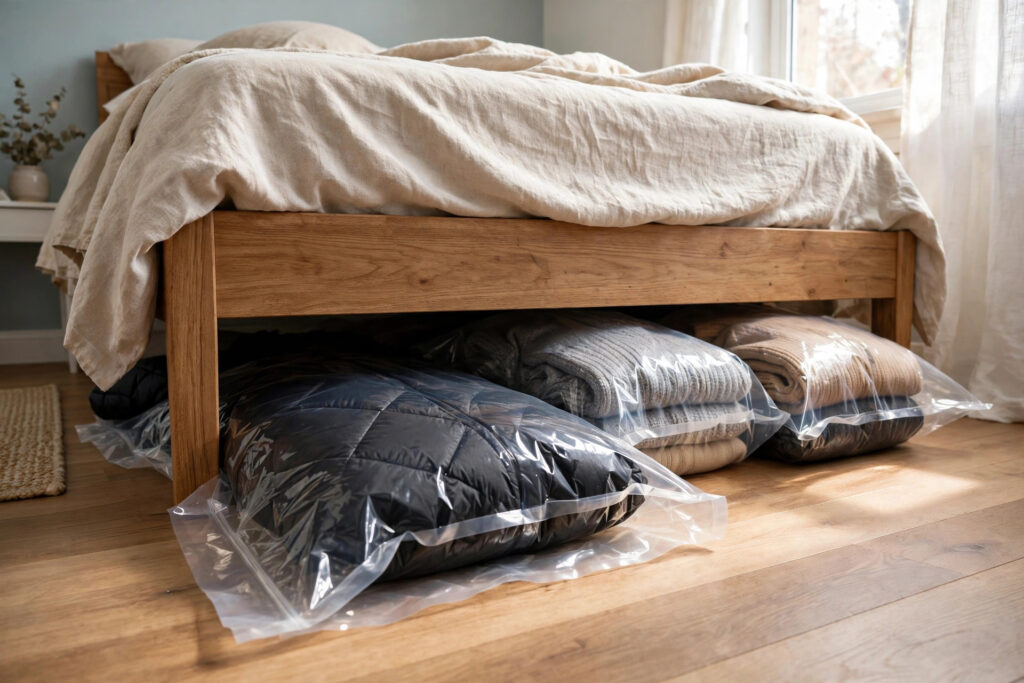
Your closet only has to hold the current season. Everything else is a guest overstaying. Twice a year, pack the off-season wardrobe into vacuum storage bags — bulky sweaters and puffy coats compress to a fraction of their size — and slide the flat bags under the bed or onto the closet’s top shelf. Wash everything before sealing, and leave a small margin when you vacuum: bags sealed rock-hard are harder to store flat and rougher on fabrics over months.
Rotation is also a quiet decluttering engine. Anything you pull out next season and still do not reach for has now failed the one-year test twice; donate it without a second debate. And if your kitchen suffers the same seasonal pile-up — the holiday gear, the backup supplies — the zone-and-bin system in our small apartment kitchen storage ideas applies the same rotation logic there.
Step 7: Label Everything and Set a 10-Minute Weekly Reset
Labels are what separate a closet that was organized once from a closet that stays organized. A label on every bin and box — broad categories, not item-level detail — means anyone putting laundry away can land things in the right zone without thinking, and you can find a belt in the dark. Clip-on or holder-style labels suit renters best: they swap in seconds when a category changes, and nothing adhesive ever touches a shelf.
Then protect the system with a ten-minute weekly reset. Same time each week — Sunday evening works well — hang the week’s strays, return shoes to the floor zone, and pull one thing for the donate bag if anything new came in. Small apartment closet organization ideas only pay off if the system is maintained, and ten honest minutes a week is cheaper than another full empty-and-sort Saturday every spring.
What to Skip in a Rental Closet
A few popular closet upgrades are deposit risks in disguise. Skip screwed-in closet systems and wall-mounted rods — the product photos never show the patch-and-paint bill at move-out. Skip adhesive hooks loaded with heavy bags on painted closet walls; rated weights are real, and paint peel is the most common way they fail. Skip overloading the rod until it bows — a pulled-out bracket costs more than the organizer that caused it. And skip buying any organizer before Step 2: in a small closet, an organizer that is an inch too deep is not storage, it is clutter with a receipt.
Frequently Asked Questions (FAQ)
How can I double my hanging space without drilling?
Add a tension rod below your hanging shirts to create a second, lower row for pants and short items, or hang a fabric shelf organizer from the existing rod. Both use pressure or hooks only, install in minutes, and remove without a trace.
What are the best hangers for a small apartment closet?
Slim velvet or other thin non-slip hangers. They take up far less rod space than bulky plastic or wood, stop clothes sliding off, and a single matching set makes the closet look calmer. Add multi-tier cascading hangers for pants and scarves.
How do I organize a small closet with lots of clothes?
Work in the order in this guide: declutter first with the one-year rule, zone the closet, swap to slim hangers, double the hanging space with a tension rod, and rotate off-season clothes into vacuum bags under the bed. Most overflow is a sequencing problem, not a space problem.
Will an over-the-door organizer damage my closet door?
Not if it fits properly. Choose brackets sized to your door, add felt pads where metal touches paint, and check the door still latches with the organizer loaded. Never force a door closed against the brackets — that pressure is what chips paint.
How often should I reorganize my closet?
Do a full reset twice a year when you rotate seasonal clothes, and a ten-minute tidy once a week to return strays to their zones. That rhythm keeps a small closet working without another major overhaul.